
Intelligence and Automation Versus: Defining the Future in 2026

Share on Facebook
Share on X
Share on LinkedIn

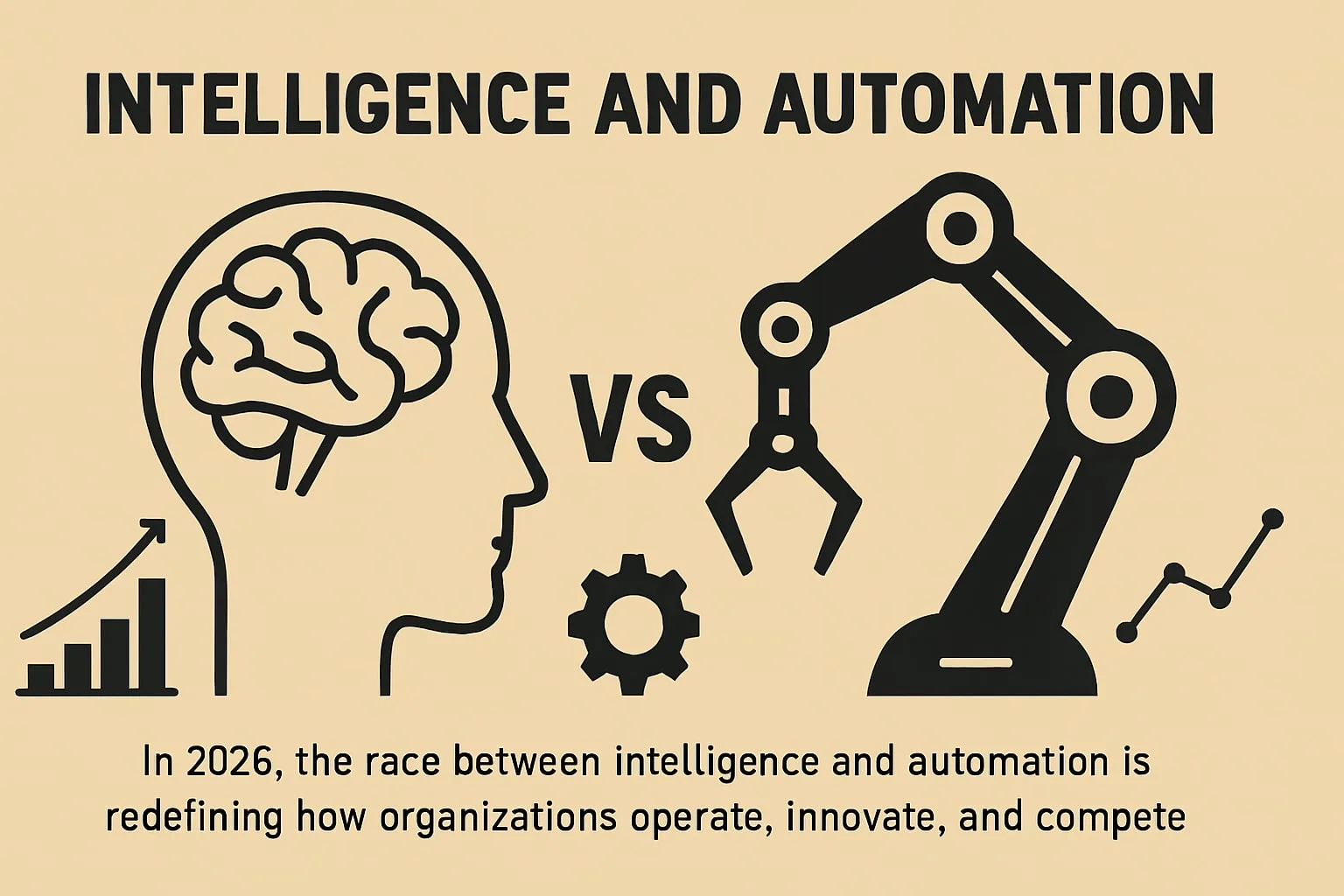
In 2026, intelligence and automation are at the forefront of a major shift in how organizations operate, innovate, and compete. Business leaders, technologists, and employees alike are experiencing rapid changes as these technologies transform the workplace.

Both intelligence and automation promise greater efficiency, cost savings, and improved decision-making. Recognizing their unique strengths, differences, and how they work together is essential for any forward-thinking organization.

This article breaks down the distinctions between intelligence and automation, examines their real-world impacts, and looks ahead to what the future holds. Ready to make sense of this evolving landscape? Read on for an insightful, data-driven exploration designed to help you make informed choices in a digital-first era.

Defining Intelligence and Automation: Core Concepts for 2026

In 2026, intelligence and automation are shaping how organizations operate, compete, and deliver value. To leverage these technologies effectively, it is essential to understand their definitions, capabilities, and where they intersect.
Defining Intelligence and Automation: Core Concepts for 2026

What Is Automation?

Automation refers to the use of technology to perform rule-based and repetitive tasks without human intervention. In 2026, intelligence and automation are often seen in tandem, but automation on its own relies on structured logic and predefined triggers.

Common examples include:

  • Robotic process automation (RPA) in finance for invoice processing
  • Workflow automation in HR for onboarding tasks
  • Automated incident ticketing in IT service desks

Key benefits of automation:

  • Increased speed and accuracy
  • Consistent execution and cost reduction

However, automation has limits. It struggles with unstructured data and cannot adapt to unexpected scenarios. In 2026, adoption is especially high in ITSM, finance, and HR, where processes are well-defined. The distinction between intelligence and automation becomes essential as organizations seek greater flexibility.

What Is Intelligence in Technology?

Intelligence in technology is the capacity of systems to learn, adapt, and make decisions based on data and context. Here, intelligence and automation diverge: intelligent systems leverage AI and machine learning to move beyond fixed rules.

Key drivers include:

  • AI-powered chatbots that understand intent
  • Predictive analytics for forecasting IT incidents
  • Anomaly detection in security monitoring

Unlike automation, intelligence enables context awareness and dynamic decision-making. In 2026, advancements such as AI-native platforms and self-healing systems are prevalent. For example, an AI-powered ITSM platform can route incidents by analyzing historical resolution patterns, highlighting the synergy between intelligence and automation.

Key Differences and Overlap

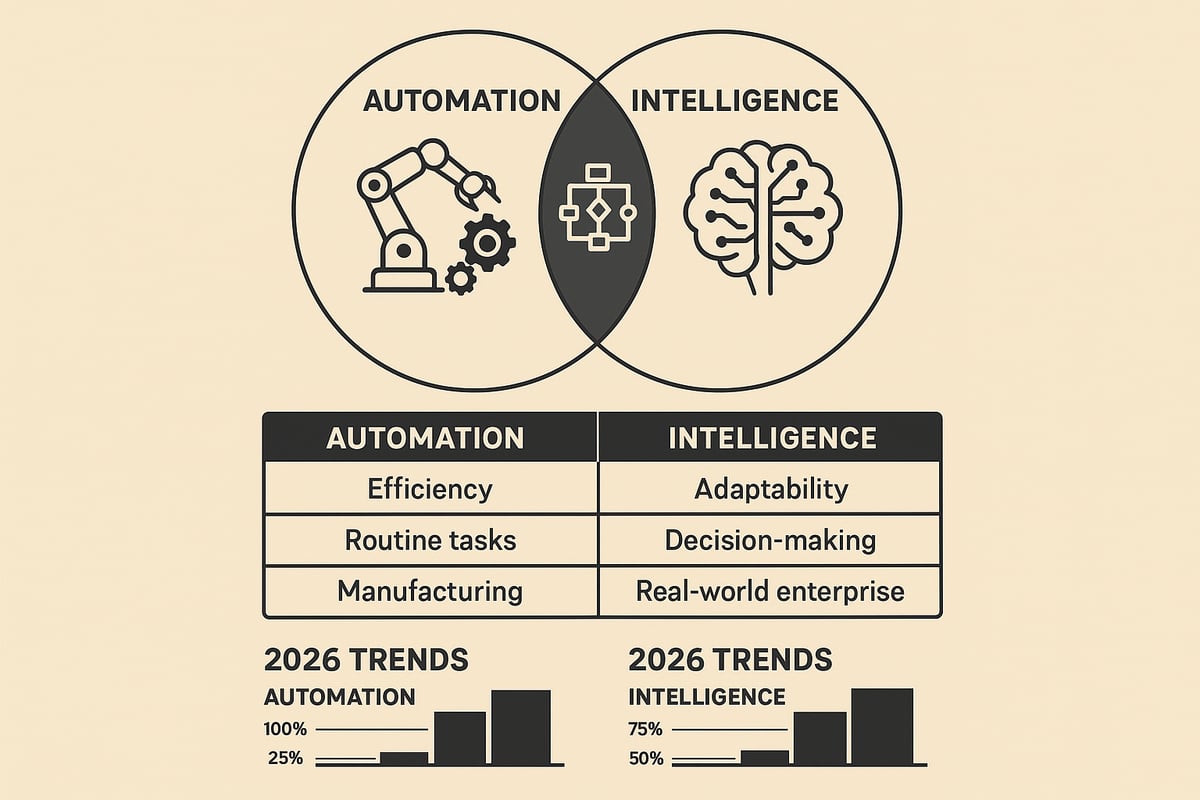
Automation and intelligence serve different roles. Automation excels at executing tasks, while intelligence focuses on decision-making and adaptation. Yet, in modern enterprise platforms, these lines blur.

Feature Automation Intelligence
Task Type Repetitive Complex
Adaptability Low High
Data Needs Structured Both

The spectrum now ranges from simple scripts to autonomous systems that learn and optimize. Both require high-quality data and strong integration. In 2026, the convergence of intelligence and automation is accelerating, with many organizations seeking AI and automation integration to unify their digital strategies.

Why the Distinction Matters in 2026

Understanding the distinction between intelligence and automation is vital for digital transformation. When applied strategically, these technologies can redefine workforce roles and enhance productivity.

However, over-reliance on automation can lead to rigidity, while misapplied intelligence may increase complexity. According to the EMA 2025 report, organizations leveraging both intelligence and automation achieve up to 40 percent higher productivity. Recognizing their differences allows leaders to align technology choices with business goals and prepare for future innovations.

The Business Impact: Efficiency, Cost, and Innovation

The evolution of intelligence and automation is producing measurable business outcomes in 2026. Organizations are leveraging both to transform operations, drive efficiency, and spark innovation. Understanding their distinct contributions is essential for leaders aiming to remain competitive in a rapidly shifting market.
The Business Impact: Efficiency, Cost, and Innovation

Automation’s Value Proposition

Automation continues to reshape business operations in 2026 by eliminating manual, repetitive work. Tasks like data entry, ticket triage, and workflow routing are now executed with remarkable speed and accuracy.

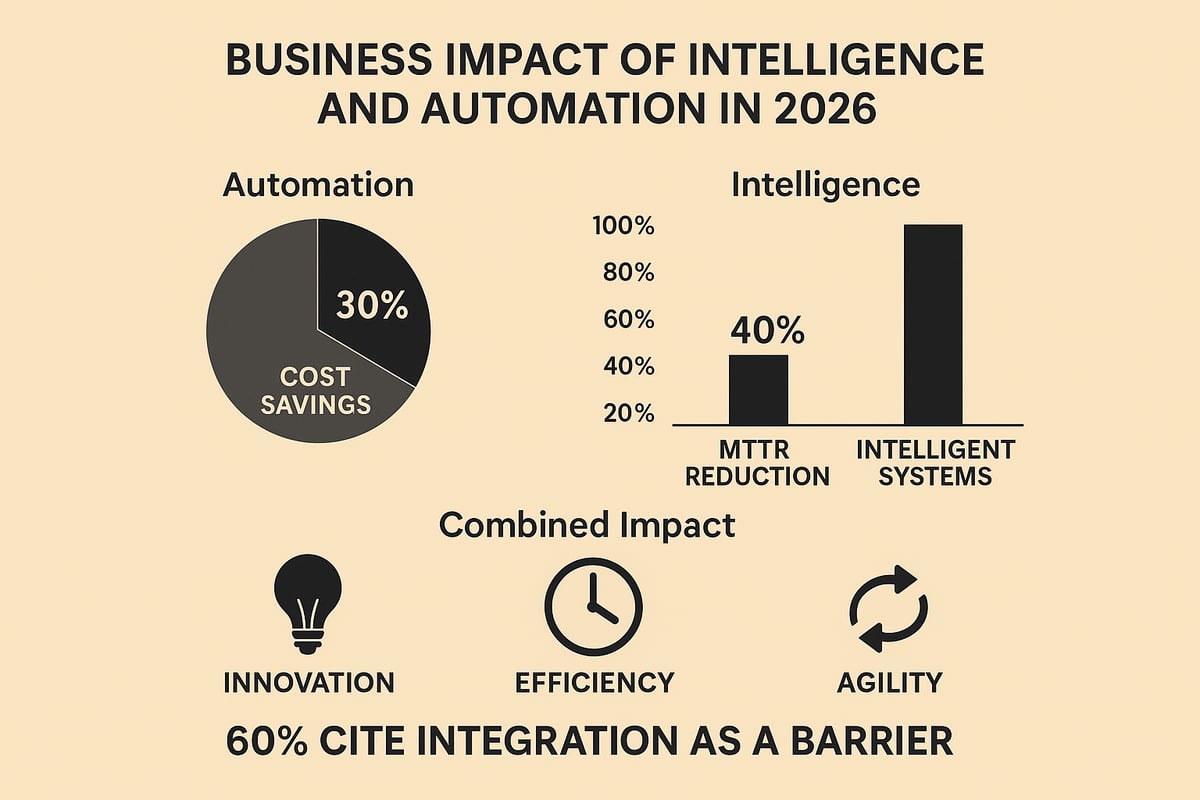
Key benefits include lower operational costs, reduced error rates, and the ability to scale processes as organizations grow. For example, Axsos reports that 50 percent of its IT tasks are automated, which has led to significant workload reductions and savings. According to recent case studies, enterprises achieve up to 30 percent cost savings after automation initiatives.

To further explore the tangible benefits, see this overview of the benefits of business automation. As intelligence and automation become more integrated, their combined value only increases.

Intelligence’s Strategic Edge

Intelligence and automation work together, but intelligence brings unique advantages. AI-powered systems enhance decision-making by delivering real-time insights and enabling organizations to anticipate issues before they escalate.

Intelligent platforms go beyond routine tasks, supporting complex, unstructured challenges like predictive maintenance and anomaly detection. For instance, Shaadi.com uses AI-driven incident management to dramatically reduce mean time to resolution, boosting both customer satisfaction and operational resilience.

Recent research shows that AI-powered ITSM platforms can lower downtime by 40 percent. Intelligence and automation together ensure businesses not only solve problems faster but also make smarter decisions that drive long-term growth.

Innovation and Agility in the Enterprise

Innovation flourishes when intelligence and automation are woven into the fabric of enterprise workflows. Organizations can launch new products and services more rapidly, responding to market changes with agility.

Streamlined processes powered by these technologies lead to faster delivery cycles and improved adaptability. A real-world example is Xurrent’s Sera AI, which optimizes workflows and accelerates resolutions, setting new benchmarks for enterprise responsiveness.

By harnessing intelligence and automation, companies are better equipped to innovate, pivot, and seize emerging opportunities in the competitive landscape of 2026.

Challenges and Limitations

Despite the clear benefits, intelligence and automation present notable challenges. Automation may introduce process rigidity and is often limited to structured tasks, while intelligence depends heavily on high-quality data and can be susceptible to bias.

Integration between legacy and modern systems remains a major hurdle. In fact, 60 percent of organizations cite integration as their top barrier to effective adoption. Intelligence and automation also require significant investment in change management and workforce upskilling.

Overcoming these limitations is essential for organizations aiming to realize the full potential of intelligence and automation.

Case Studies and Real-World Examples

Several organizations illustrate the transformative power of intelligence and automation. Axsos automated half its tasks and achieved 40 percent user self-service adoption, dramatically reducing costs and manual workloads.

Shaadi.com leverages AI-powered alerts to improve incident response, cutting down on critical downtime. Stefanini demonstrates how unified, intelligent platforms can create scalable and resilient service desks, delivering continuous value.

These real-world cases confirm that intelligence and automation are not just buzzwords, but practical solutions driving measurable impact across industries in 2026.

Workforce Transformation: Roles, Skills, and the Human Factor

The journey toward a future shaped by intelligence and automation is fundamentally transforming the workforce. As organizations embrace these technologies, every stakeholder, from leadership to frontline employees, must adapt to new realities. Understanding how roles, skills, and human factors evolve is essential for thriving in 2026.
Workforce Transformation: Roles, Skills, and the Human Factor

Automation’s Impact on Jobs

By 2026, automation has redefined many job roles, especially those based on repetitive or rules-driven tasks. Organizations leverage automation bots to handle routine activities, freeing employees for higher-value work. This shift does not just eliminate jobs, it transforms them.

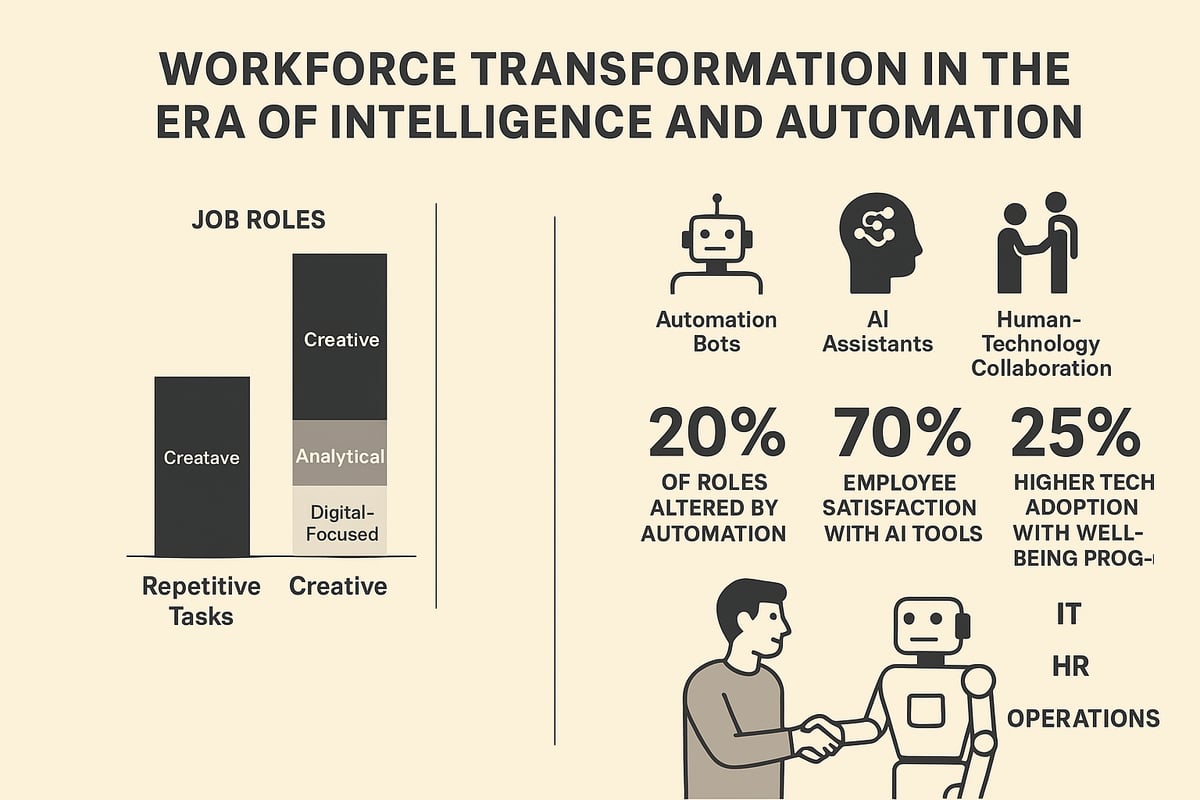
For example, IT support teams now spend less time triaging tickets and more on resolving complex incidents. According to Gartner, up to 20% of roles are significantly altered by automation, with employees moving into monitoring and exception handling positions. The rise of intelligence and automation is prompting a workforce where adaptability and digital fluency are essential.

Intelligence and Augmentation of Human Work

Intelligence and automation work together to augment human capabilities, not simply replace them. Artificial intelligence acts as a collaborator, offering real-time decision support, knowledge management, and even virtual assistants for daily tasks.

New roles are emerging, such as AI trainers and data analysts, to bridge the gap between technology and business needs. ITSM platforms are increasingly using AI to recommend solutions, enhancing the employee experience. A recent EMA report found that 70% of employees report higher satisfaction when using AI-augmented tools, demonstrating the positive impact of intelligence and automation on the workplace.

Skills of the Future: What Organizations Need

To fully harness the benefits of intelligence and automation, organizations must invest in developing future-ready skills. Analytical, creative, and digital proficiencies are now in high demand. Upskilling and reskilling initiatives are crucial to keep pace with evolving technology.

Cross-functional teams that blend IT, HR, and operations expertise are becoming the norm. For example, Xurrent’s training programs focus on equipping staff for AI-native incident management. As intelligence and automation continue to advance, organizations that prioritize continuous learning will remain competitive.

Employee Well-Being and Change Management

The transition to intelligence and automation brings challenges beyond technical skills. Employees often face anxiety about job loss or changes to their roles. Transparent communication and active involvement in transformation initiatives are vital for success.

Forward-thinking companies invest in programs that support mental, physical, and financial health. According to EMA, organizations that prioritize well-being see 25% higher rates of technology adoption. Addressing the human side of intelligence and automation is key to sustainable transformation.

The Human-Machine Partnership

The future of work lies in a balanced partnership between intelligence and automation and human expertise. Instead of replacing people, these technologies empower teams to focus on creativity, problem-solving, and customer experience. Workflows are being redesigned to encourage collaboration between humans and intelligent systems.

Service desks now use AI to resolve routine queries, while complex cases escalate to skilled professionals. As highlighted in Forbes: 2026 Workplace Predictions, hybrid teams are expected to become the norm, blending human judgment with the precision of intelligence and automation. This model will define resilient, future-proof organizations.

Use Cases Across Industries: IT, Healthcare, Finance, and Beyond

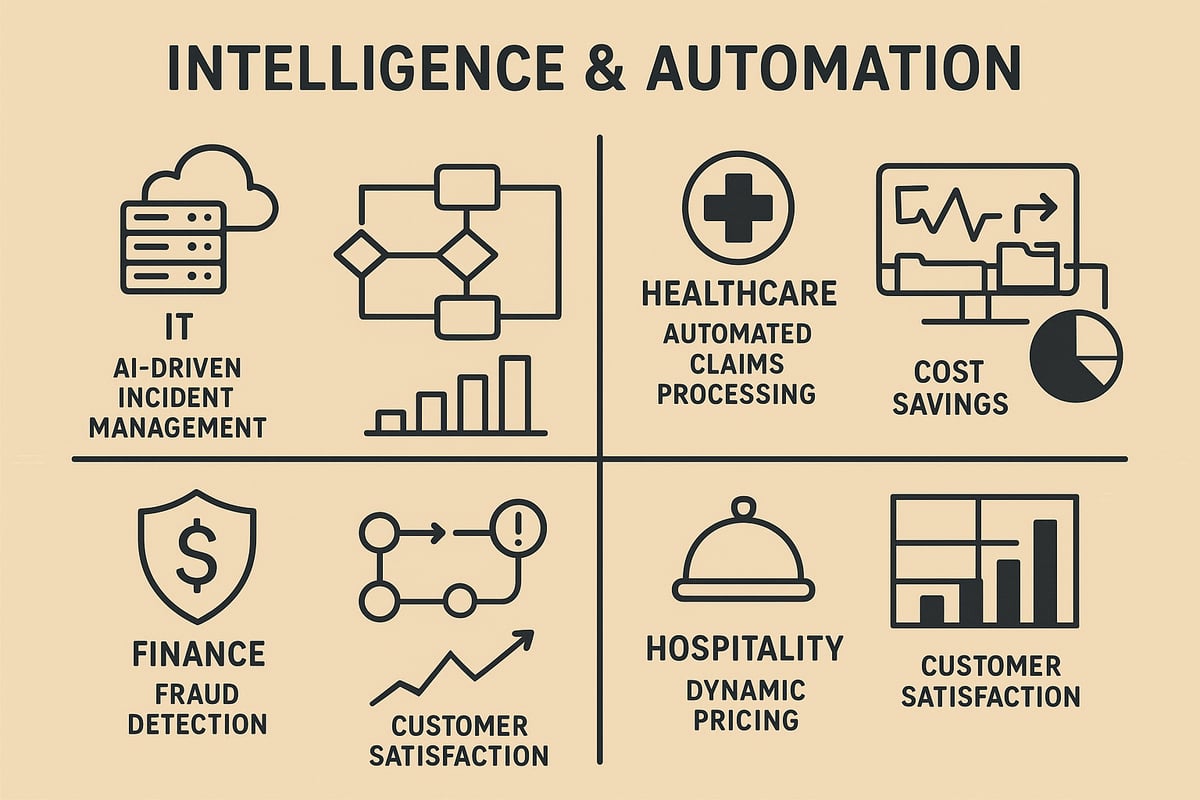
In 2026, intelligence and automation are transforming industries by streamlining operations and unlocking new possibilities. Let us explore how these technologies are reshaping IT, healthcare, finance, hospitality, and more, with real-world examples and measurable results.
Use Cases Across Industries: IT, Healthcare, Finance, and Beyond

IT Service Management and Operations

The impact of intelligence and automation in IT service management is profound. AI-driven incident management systems now handle triage, resolution, and reporting with remarkable speed. Automated ticketing and workflow orchestration eliminate manual steps, reducing mean time to acknowledge (MTTA) and mean time to resolve (MTTR).

For example, the Xurrent IMR platform leverages intelligence and automation to streamline collaboration and accelerate incident resolution. IT teams benefit from automated analytics, gaining actionable insights from data that was previously siloed.

Key benefits include:

  • Faster incident response
  • Reduced manual workload
  • Improved collaboration across teams

Intelligence and automation are now essential for organizations seeking operational excellence in IT.

Healthcare: Patient Care and Revenue Cycle

Healthcare organizations are adopting intelligence and automation to enhance patient care and administrative efficiency. Automation simplifies claims processing, appointment scheduling, and data entry, freeing staff to focus on patient needs.

Intelligent systems provide predictive diagnostics, personalized care, and anomaly detection, improving clinical outcomes. Industry data shows that AI reduces claim denials by 30 percent and shortens revenue cycles, driving financial stability.

Key impacts:

  • Faster claim approvals
  • Personalized treatment plans
  • Proactive identification of health risks

The integration of intelligence and automation is redefining healthcare delivery in 2026.

Finance: Risk, Compliance, and Customer Experience

In finance, intelligence and automation are central to risk management and customer engagement. Automation streamlines transaction processing and compliance checks, ensuring accuracy and regulatory adherence.

AI-driven solutions detect fraud, score credit risk, and offer personalized financial advice. AI-native platforms help institutions complete audits more efficiently and reduce false positives in risk detection.

Key outcomes:

  • Enhanced fraud prevention
  • Efficient regulatory compliance
  • Tailored financial recommendations

The adoption of intelligence and automation is giving financial institutions a strategic edge in a competitive market.

Hospitality and Service Industries

Hospitality businesses use intelligence and automation to elevate guest experiences and optimize operations. Automation handles guest check-in, booking, and inventory management, improving efficiency.

Intelligent platforms enable dynamic pricing, sentiment analysis, and personalized services, responding to real-time guest feedback. According to EMA 2025, customer satisfaction increases by 35 percent with AI-driven service platforms.

Key advantages:

  • Streamlined guest interactions
  • Data-driven pricing strategies
  • Higher customer satisfaction rates

Intelligence and automation are now driving differentiation and loyalty in hospitality.

Cross-Industry Trends and Lessons

Across all sectors, the fusion of intelligence and automation is enabling end-to-end transformation. Secure, API-first platforms support seamless integration, allowing organizations to unify service management across IT, HR, and operations.

Enterprises are increasingly turning to intelligence solutions for business to harness the full potential of AI and automation. Success stories show that combining these technologies results in better data utilization, agility, and resilience.

Key lessons:

  • Integration is vital for scale
  • Security and compliance must be prioritized
  • Unified platforms drive measurable business outcomes

The journey toward intelligent, automated enterprises is accelerating, setting new standards for innovation.

The Road to Autonomous Enterprises: Trends and Predictions for 2026

The journey toward autonomous enterprises is accelerating as intelligence and automation evolve in tandem. Organizations are pushing boundaries, seeking not just efficiency but true adaptability and resilience. Understanding the trends shaping this transformation is essential for leaders aiming to thrive in 2026 and beyond.

The Rise of the Autonomous Enterprise

Autonomous enterprises are defined by their ability to self-manage, predict, and adapt using intelligence and automation. These organizations leverage ServiceOps, unifying IT service management, operations, and enterprise service management for seamless processes. In 2026, businesses adopting this model are outperforming peers in speed, agility, and innovation.

The shift is not just technological but cultural. Companies embracing intelligence and automation are building new norms around data-driven decision-making and continuous improvement. This evolution sets the foundation for the next wave of digital transformation.

Convergence of Automation and Intelligence

A defining trend is the convergence of automation and intelligence into unified platforms. No-code, AI-powered orchestration is becoming standard, allowing teams to automate workflows while integrating real-time AI insights. This convergence streamlines operations and empowers organizations to respond swiftly to change.

According to industry research, 65% of enterprises plan to unify intelligence and automation strategies by 2026. This seamless integration enables companies to move from reactive to proactive operations, unlocking greater value from their technology investments.

Data, Security, and Governance Challenges

As intelligence and automation become deeply embedded in enterprise systems, data security and governance take center stage. Organizations must manage privacy concerns and comply with regulations like DORA and GDPR. Ensuring transparency and explainability in AI-driven decisions is now a business imperative.

Secure integrations and API-first architectures are essential to protect sensitive data and maintain trust. Balancing innovation with robust governance is crucial for sustainable success in the era of intelligence and automation.

Measuring Success: KPIs and Business Outcomes

Measuring the impact of intelligence and automation requires clear, actionable KPIs. Key metrics include mean time to acknowledge (MTTA), mean time to resolve (MTTR), cost savings, and user satisfaction. Real-time analytics and reporting provide leaders with the insights needed for continuous improvement.

KPI Description Impact of Intelligence and Automation
MTTA/MTTR Speed of incident response/resolution Up to 40% reduction (industry average)
Cost Savings Operational expense reductions 30%+ in many enterprises
User Satisfaction End-user experience Significant improvement with AI adoption

As highlighted in the Cognizant Report: AI Unlocking $4.5 Trillion in U.S. Labor Productivity, leveraging intelligence and automation is central to driving measurable business outcomes in the modern enterprise.

Preparing for the Next Wave: Recommendations for Leaders

To future-proof your organization, invest in scalable, flexible platforms that support intelligence and automation. Prioritize upskilling and change management to ensure teams adapt to evolving technology. Foster a culture of innovation, encouraging experimentation and learning across functions.

Leaders should anticipate regulatory and ethical shifts, maintaining agility and resilience by balancing human expertise with technological advancement. Embracing intelligence and automation strategically will position organizations to thrive in the autonomous enterprise era.

Balancing Intelligence and Automation: Strategic Considerations for Decision-Makers

As organizations accelerate digital transformation, the balance between intelligence and automation shapes success. Strategic decisions must consider when to deploy each, how to integrate platforms, and how to safeguard ethics and adaptability. Let us explore the key considerations for leaders navigating this evolving landscape.

When to Choose Automation, When to Choose Intelligence

Selecting between intelligence and automation begins with task complexity and data structure. Automation excels in repetitive, rule-based activities, such as payroll or invoice processing, where structured inputs dominate. In contrast, intelligence is essential for tasks demanding adaptability, context awareness, or nuanced decision-making, like workforce planning or incident prediction.

Decision frameworks help align technology with business goals. For simple, high-volume processes, automation reduces costs and errors. For dynamic scenarios, intelligence provides learning and insights. Combining both can unlock greater value, especially in hybrid workflows.

Careful assessment ensures the right approach, maximizing efficiency while minimizing misapplication of intelligence and automation.

Building a Unified Technology Stack

A unified technology stack is vital for leveraging intelligence and automation at scale. Integration and interoperability are key—API-first, modular platforms allow seamless adoption of new tools and rapid response to change. Plug-and-play AI or automation modules within ITSM systems enable organizations to evolve without disruption.

Leaders often partner with automation consulting services to design strategies that align with enterprise needs. These services provide insights on best practices, platform selection, and roadmap development to ensure cohesive implementation.

A unified stack supports agility, reduces silos, and accelerates business outcomes powered by intelligence and automation.

Risk Management and Ethical Concerns

Risk management is a cornerstone of responsible intelligence and automation deployment. Over-automation can erode human oversight, while unchecked AI may introduce bias or lack transparency. Ethics, accountability, and explainability must be embedded into every stage of adoption.

According to recent reports, 55% of organizations now list ethics as a top concern in 2026. The evolving workforce landscape also demands close attention, as AI and automation will reshape roles and responsibilities. As highlighted in Gartner’s analysis of AI’s impact on IT jobs by 2030, adaptation and oversight are more important than ever.

Proactive governance ensures that intelligence and automation drive sustainable, trustworthy outcomes.

The Future-Proof Organization: Agility and Resilience

To thrive in 2026, organizations must embed agility and resilience at every level. Continuous learning, upskilling, and dynamic team structures allow rapid response to industry shifts. Cross-functional teams, blending IT, HR, and operations, are critical for digital transformation success.

Building a culture that embraces change and experimentation is essential. Organizations balancing intelligence and automation report higher productivity, adaptability, and employee engagement. Real-world examples show those who invest in both achieve superior results and stay ahead of competitors.

A future-proof strategy integrates intelligence and automation, empowering teams to innovate and adapt as technology evolves.

As you look ahead to 2026, it’s clear that the right balance between intelligence and automation can set your organization apart—driving efficiency, boosting revenue, and empowering your people. If you’re wondering how to navigate these shifts, or how to integrate AI and automation in a way that truly benefits both your business and your employees, you’re not alone. We’ve helped organizations streamline operations, improve well-being, and achieve measurable results. If you’d like to explore practical strategies tailored to your goals, I invite you to Book a Consultation.

Intelligence and Automation Versus: Defining the Future in 2026

In 2026, intelligence and automation are at the forefront of a major shift in how organizations operate, innovate, and compete. Business leaders, technologists, and employees alike are experiencing rapid changes as these technologies transform the workplace.

Both intelligence and automation promise greater efficiency, cost savings, and improved decision-making. Recognizing their unique strengths, differences, and how they work together is essential for any forward-thinking organization.

This article breaks down the distinctions between intelligence and automation, examines their real-world impacts, and looks ahead to what the future holds. Ready to make sense of this evolving landscape? Read on for an insightful, data-driven exploration designed to help you make informed choices in a digital-first era.

Defining Intelligence and Automation: Core Concepts for 2026

In 2026, intelligence and automation are shaping how organizations operate, compete, and deliver value. To leverage these technologies effectively, it is essential to understand their definitions, capabilities, and where they intersect.

Defining Intelligence and Automation: Core Concepts for 2026

What Is Automation?

Automation refers to the use of technology to perform rule-based and repetitive tasks without human intervention. In 2026, intelligence and automation are often seen in tandem, but automation on its own relies on structured logic and predefined triggers.

Common examples include:

  • Robotic process automation (RPA) in finance for invoice processing
  • Workflow automation in HR for onboarding tasks
  • Automated incident ticketing in IT service desks

Key benefits of automation:

  • Increased speed and accuracy
  • Consistent execution and cost reduction

However, automation has limits. It struggles with unstructured data and cannot adapt to unexpected scenarios. In 2026, adoption is especially high in ITSM, finance, and HR, where processes are well-defined. The distinction between intelligence and automation becomes essential as organizations seek greater flexibility.

What Is Intelligence in Technology?

Intelligence in technology is the capacity of systems to learn, adapt, and make decisions based on data and context. Here, intelligence and automation diverge: intelligent systems leverage AI and machine learning to move beyond fixed rules.

Key drivers include:

  • AI-powered chatbots that understand intent
  • Predictive analytics for forecasting IT incidents
  • Anomaly detection in security monitoring

Unlike automation, intelligence enables context awareness and dynamic decision-making. In 2026, advancements such as AI-native platforms and self-healing systems are prevalent. For example, an AI-powered ITSM platform can route incidents by analyzing historical resolution patterns, highlighting the synergy between intelligence and automation.

Key Differences and Overlap

Automation and intelligence serve different roles. Automation excels at executing tasks, while intelligence focuses on decision-making and adaptation. Yet, in modern enterprise platforms, these lines blur.

Feature Automation Intelligence
Task Type Repetitive Complex
Adaptability Low High
Data Needs Structured Both

The spectrum now ranges from simple scripts to autonomous systems that learn and optimize. Both require high-quality data and strong integration. In 2026, the convergence of intelligence and automation is accelerating, with many organizations seeking AI and automation integration to unify their digital strategies.

Why the Distinction Matters in 2026

Understanding the distinction between intelligence and automation is vital for digital transformation. When applied strategically, these technologies can redefine workforce roles and enhance productivity.

However, over-reliance on automation can lead to rigidity, while misapplied intelligence may increase complexity. According to the EMA 2025 report, organizations leveraging both intelligence and automation achieve up to 40 percent higher productivity. Recognizing their differences allows leaders to align technology choices with business goals and prepare for future innovations.

The Business Impact: Efficiency, Cost, and Innovation

The evolution of intelligence and automation is producing measurable business outcomes in 2026. Organizations are leveraging both to transform operations, drive efficiency, and spark innovation. Understanding their distinct contributions is essential for leaders aiming to remain competitive in a rapidly shifting market.

The Business Impact: Efficiency, Cost, and Innovation

Automation’s Value Proposition

Automation continues to reshape business operations in 2026 by eliminating manual, repetitive work. Tasks like data entry, ticket triage, and workflow routing are now executed with remarkable speed and accuracy.

Key benefits include lower operational costs, reduced error rates, and the ability to scale processes as organizations grow. For example, Axsos reports that 50 percent of its IT tasks are automated, which has led to significant workload reductions and savings. According to recent case studies, enterprises achieve up to 30 percent cost savings after automation initiatives.

To further explore the tangible benefits, see this overview of the benefits of business automation. As intelligence and automation become more integrated, their combined value only increases.

Intelligence’s Strategic Edge

Intelligence and automation work together, but intelligence brings unique advantages. AI-powered systems enhance decision-making by delivering real-time insights and enabling organizations to anticipate issues before they escalate.

Intelligent platforms go beyond routine tasks, supporting complex, unstructured challenges like predictive maintenance and anomaly detection. For instance, Shaadi.com uses AI-driven incident management to dramatically reduce mean time to resolution, boosting both customer satisfaction and operational resilience.

Recent research shows that AI-powered ITSM platforms can lower downtime by 40 percent. Intelligence and automation together ensure businesses not only solve problems faster but also make smarter decisions that drive long-term growth.

Innovation and Agility in the Enterprise

Innovation flourishes when intelligence and automation are woven into the fabric of enterprise workflows. Organizations can launch new products and services more rapidly, responding to market changes with agility.

Streamlined processes powered by these technologies lead to faster delivery cycles and improved adaptability. A real-world example is Xurrent’s Sera AI, which optimizes workflows and accelerates resolutions, setting new benchmarks for enterprise responsiveness.

By harnessing intelligence and automation, companies are better equipped to innovate, pivot, and seize emerging opportunities in the competitive landscape of 2026.

Challenges and Limitations

Despite the clear benefits, intelligence and automation present notable challenges. Automation may introduce process rigidity and is often limited to structured tasks, while intelligence depends heavily on high-quality data and can be susceptible to bias.

Integration between legacy and modern systems remains a major hurdle. In fact, 60 percent of organizations cite integration as their top barrier to effective adoption. Intelligence and automation also require significant investment in change management and workforce upskilling.

Overcoming these limitations is essential for organizations aiming to realize the full potential of intelligence and automation.

Case Studies and Real-World Examples

Several organizations illustrate the transformative power of intelligence and automation. Axsos automated half its tasks and achieved 40 percent user self-service adoption, dramatically reducing costs and manual workloads.

Shaadi.com leverages AI-powered alerts to improve incident response, cutting down on critical downtime. Stefanini demonstrates how unified, intelligent platforms can create scalable and resilient service desks, delivering continuous value.

These real-world cases confirm that intelligence and automation are not just buzzwords, but practical solutions driving measurable impact across industries in 2026.

Workforce Transformation: Roles, Skills, and the Human Factor

The journey toward a future shaped by intelligence and automation is fundamentally transforming the workforce. As organizations embrace these technologies, every stakeholder, from leadership to frontline employees, must adapt to new realities. Understanding how roles, skills, and human factors evolve is essential for thriving in 2026.

Workforce Transformation: Roles, Skills, and the Human Factor

Automation’s Impact on Jobs

By 2026, automation has redefined many job roles, especially those based on repetitive or rules-driven tasks. Organizations leverage automation bots to handle routine activities, freeing employees for higher-value work. This shift does not just eliminate jobs, it transforms them.

For example, IT support teams now spend less time triaging tickets and more on resolving complex incidents. According to Gartner, up to 20% of roles are significantly altered by automation, with employees moving into monitoring and exception handling positions. The rise of intelligence and automation is prompting a workforce where adaptability and digital fluency are essential.

Intelligence and Augmentation of Human Work

Intelligence and automation work together to augment human capabilities, not simply replace them. Artificial intelligence acts as a collaborator, offering real-time decision support, knowledge management, and even virtual assistants for daily tasks.

New roles are emerging, such as AI trainers and data analysts, to bridge the gap between technology and business needs. ITSM platforms are increasingly using AI to recommend solutions, enhancing the employee experience. A recent EMA report found that 70% of employees report higher satisfaction when using AI-augmented tools, demonstrating the positive impact of intelligence and automation on the workplace.

Skills of the Future: What Organizations Need

To fully harness the benefits of intelligence and automation, organizations must invest in developing future-ready skills. Analytical, creative, and digital proficiencies are now in high demand. Upskilling and reskilling initiatives are crucial to keep pace with evolving technology.

Cross-functional teams that blend IT, HR, and operations expertise are becoming the norm. For example, Xurrent’s training programs focus on equipping staff for AI-native incident management. As intelligence and automation continue to advance, organizations that prioritize continuous learning will remain competitive.

Employee Well-Being and Change Management

The transition to intelligence and automation brings challenges beyond technical skills. Employees often face anxiety about job loss or changes to their roles. Transparent communication and active involvement in transformation initiatives are vital for success.

Forward-thinking companies invest in programs that support mental, physical, and financial health. According to EMA, organizations that prioritize well-being see 25% higher rates of technology adoption. Addressing the human side of intelligence and automation is key to sustainable transformation.

The Human-Machine Partnership

The future of work lies in a balanced partnership between intelligence and automation and human expertise. Instead of replacing people, these technologies empower teams to focus on creativity, problem-solving, and customer experience. Workflows are being redesigned to encourage collaboration between humans and intelligent systems.

Service desks now use AI to resolve routine queries, while complex cases escalate to skilled professionals. As highlighted in Forbes: 2026 Workplace Predictions, hybrid teams are expected to become the norm, blending human judgment with the precision of intelligence and automation. This model will define resilient, future-proof organizations.

Use Cases Across Industries: IT, Healthcare, Finance, and Beyond

In 2026, intelligence and automation are transforming industries by streamlining operations and unlocking new possibilities. Let us explore how these technologies are reshaping IT, healthcare, finance, hospitality, and more, with real-world examples and measurable results.

Use Cases Across Industries: IT, Healthcare, Finance, and Beyond

IT Service Management and Operations

The impact of intelligence and automation in IT service management is profound. AI-driven incident management systems now handle triage, resolution, and reporting with remarkable speed. Automated ticketing and workflow orchestration eliminate manual steps, reducing mean time to acknowledge (MTTA) and mean time to resolve (MTTR).

For example, the Xurrent IMR platform leverages intelligence and automation to streamline collaboration and accelerate incident resolution. IT teams benefit from automated analytics, gaining actionable insights from data that was previously siloed.

Key benefits include:

  • Faster incident response
  • Reduced manual workload
  • Improved collaboration across teams

Intelligence and automation are now essential for organizations seeking operational excellence in IT.

Healthcare: Patient Care and Revenue Cycle

Healthcare organizations are adopting intelligence and automation to enhance patient care and administrative efficiency. Automation simplifies claims processing, appointment scheduling, and data entry, freeing staff to focus on patient needs.

Intelligent systems provide predictive diagnostics, personalized care, and anomaly detection, improving clinical outcomes. Industry data shows that AI reduces claim denials by 30 percent and shortens revenue cycles, driving financial stability.

Key impacts:

  • Faster claim approvals
  • Personalized treatment plans
  • Proactive identification of health risks

The integration of intelligence and automation is redefining healthcare delivery in 2026.

Finance: Risk, Compliance, and Customer Experience

In finance, intelligence and automation are central to risk management and customer engagement. Automation streamlines transaction processing and compliance checks, ensuring accuracy and regulatory adherence.

AI-driven solutions detect fraud, score credit risk, and offer personalized financial advice. AI-native platforms help institutions complete audits more efficiently and reduce false positives in risk detection.

Key outcomes:

  • Enhanced fraud prevention
  • Efficient regulatory compliance
  • Tailored financial recommendations

The adoption of intelligence and automation is giving financial institutions a strategic edge in a competitive market.

Hospitality and Service Industries

Hospitality businesses use intelligence and automation to elevate guest experiences and optimize operations. Automation handles guest check-in, booking, and inventory management, improving efficiency.

Intelligent platforms enable dynamic pricing, sentiment analysis, and personalized services, responding to real-time guest feedback. According to EMA 2025, customer satisfaction increases by 35 percent with AI-driven service platforms.

Key advantages:

  • Streamlined guest interactions
  • Data-driven pricing strategies
  • Higher customer satisfaction rates

Intelligence and automation are now driving differentiation and loyalty in hospitality.

Cross-Industry Trends and Lessons

Across all sectors, the fusion of intelligence and automation is enabling end-to-end transformation. Secure, API-first platforms support seamless integration, allowing organizations to unify service management across IT, HR, and operations.

Enterprises are increasingly turning to intelligence solutions for business to harness the full potential of AI and automation. Success stories show that combining these technologies results in better data utilization, agility, and resilience.

Key lessons:

  • Integration is vital for scale
  • Security and compliance must be prioritized
  • Unified platforms drive measurable business outcomes

The journey toward intelligent, automated enterprises is accelerating, setting new standards for innovation.

The Road to Autonomous Enterprises: Trends and Predictions for 2026

The journey toward autonomous enterprises is accelerating as intelligence and automation evolve in tandem. Organizations are pushing boundaries, seeking not just efficiency but true adaptability and resilience. Understanding the trends shaping this transformation is essential for leaders aiming to thrive in 2026 and beyond.

The Rise of the Autonomous Enterprise

Autonomous enterprises are defined by their ability to self-manage, predict, and adapt using intelligence and automation. These organizations leverage ServiceOps, unifying IT service management, operations, and enterprise service management for seamless processes. In 2026, businesses adopting this model are outperforming peers in speed, agility, and innovation.

The shift is not just technological but cultural. Companies embracing intelligence and automation are building new norms around data-driven decision-making and continuous improvement. This evolution sets the foundation for the next wave of digital transformation.

Convergence of Automation and Intelligence

A defining trend is the convergence of automation and intelligence into unified platforms. No-code, AI-powered orchestration is becoming standard, allowing teams to automate workflows while integrating real-time AI insights. This convergence streamlines operations and empowers organizations to respond swiftly to change.

According to industry research, 65% of enterprises plan to unify intelligence and automation strategies by 2026. This seamless integration enables companies to move from reactive to proactive operations, unlocking greater value from their technology investments.

Data, Security, and Governance Challenges

As intelligence and automation become deeply embedded in enterprise systems, data security and governance take center stage. Organizations must manage privacy concerns and comply with regulations like DORA and GDPR. Ensuring transparency and explainability in AI-driven decisions is now a business imperative.

Secure integrations and API-first architectures are essential to protect sensitive data and maintain trust. Balancing innovation with robust governance is crucial for sustainable success in the era of intelligence and automation.

Measuring Success: KPIs and Business Outcomes

Measuring the impact of intelligence and automation requires clear, actionable KPIs. Key metrics include mean time to acknowledge (MTTA), mean time to resolve (MTTR), cost savings, and user satisfaction. Real-time analytics and reporting provide leaders with the insights needed for continuous improvement.

KPI Description Impact of Intelligence and Automation
MTTA/MTTR Speed of incident response/resolution Up to 40% reduction (industry average)
Cost Savings Operational expense reductions 30%+ in many enterprises
User Satisfaction End-user experience Significant improvement with AI adoption

As highlighted in the Cognizant Report: AI Unlocking $4.5 Trillion in U.S. Labor Productivity, leveraging intelligence and automation is central to driving measurable business outcomes in the modern enterprise.

Preparing for the Next Wave: Recommendations for Leaders

To future-proof your organization, invest in scalable, flexible platforms that support intelligence and automation. Prioritize upskilling and change management to ensure teams adapt to evolving technology. Foster a culture of innovation, encouraging experimentation and learning across functions.

Leaders should anticipate regulatory and ethical shifts, maintaining agility and resilience by balancing human expertise with technological advancement. Embracing intelligence and automation strategically will position organizations to thrive in the autonomous enterprise era.

Balancing Intelligence and Automation: Strategic Considerations for Decision-Makers

As organizations accelerate digital transformation, the balance between intelligence and automation shapes success. Strategic decisions must consider when to deploy each, how to integrate platforms, and how to safeguard ethics and adaptability. Let us explore the key considerations for leaders navigating this evolving landscape.

When to Choose Automation, When to Choose Intelligence

Selecting between intelligence and automation begins with task complexity and data structure. Automation excels in repetitive, rule-based activities, such as payroll or invoice processing, where structured inputs dominate. In contrast, intelligence is essential for tasks demanding adaptability, context awareness, or nuanced decision-making, like workforce planning or incident prediction.

Decision frameworks help align technology with business goals. For simple, high-volume processes, automation reduces costs and errors. For dynamic scenarios, intelligence provides learning and insights. Combining both can unlock greater value, especially in hybrid workflows.

Careful assessment ensures the right approach, maximizing efficiency while minimizing misapplication of intelligence and automation.

Building a Unified Technology Stack

A unified technology stack is vital for leveraging intelligence and automation at scale. Integration and interoperability are key—API-first, modular platforms allow seamless adoption of new tools and rapid response to change. Plug-and-play AI or automation modules within ITSM systems enable organizations to evolve without disruption.

Leaders often partner with automation consulting services to design strategies that align with enterprise needs. These services provide insights on best practices, platform selection, and roadmap development to ensure cohesive implementation.

A unified stack supports agility, reduces silos, and accelerates business outcomes powered by intelligence and automation.

Risk Management and Ethical Concerns

Risk management is a cornerstone of responsible intelligence and automation deployment. Over-automation can erode human oversight, while unchecked AI may introduce bias or lack transparency. Ethics, accountability, and explainability must be embedded into every stage of adoption.

According to recent reports, 55% of organizations now list ethics as a top concern in 2026. The evolving workforce landscape also demands close attention, as AI and automation will reshape roles and responsibilities. As highlighted in Gartner’s analysis of AI’s impact on IT jobs by 2030, adaptation and oversight are more important than ever.

Proactive governance ensures that intelligence and automation drive sustainable, trustworthy outcomes.

The Future-Proof Organization: Agility and Resilience

To thrive in 2026, organizations must embed agility and resilience at every level. Continuous learning, upskilling, and dynamic team structures allow rapid response to industry shifts. Cross-functional teams, blending IT, HR, and operations, are critical for digital transformation success.

Building a culture that embraces change and experimentation is essential. Organizations balancing intelligence and automation report higher productivity, adaptability, and employee engagement. Real-world examples show those who invest in both achieve superior results and stay ahead of competitors.

A future-proof strategy integrates intelligence and automation, empowering teams to innovate and adapt as technology evolves.

As you look ahead to 2026, it’s clear that the right balance between intelligence and automation can set your organization apart—driving efficiency, boosting revenue, and empowering your people. If you’re wondering how to navigate these shifts, or how to integrate AI and automation in a way that truly benefits both your business and your employees, you’re not alone. We’ve helped organizations streamline operations, improve well-being, and achieve measurable results. If you’d like to explore practical strategies tailored to your goals, I invite you to Book a Consultation.

Website developed in accordance with Web Content Accessibility Guidelines 2.2.
If you encounter any issues while using this site, please contact us: 215.526.5126