
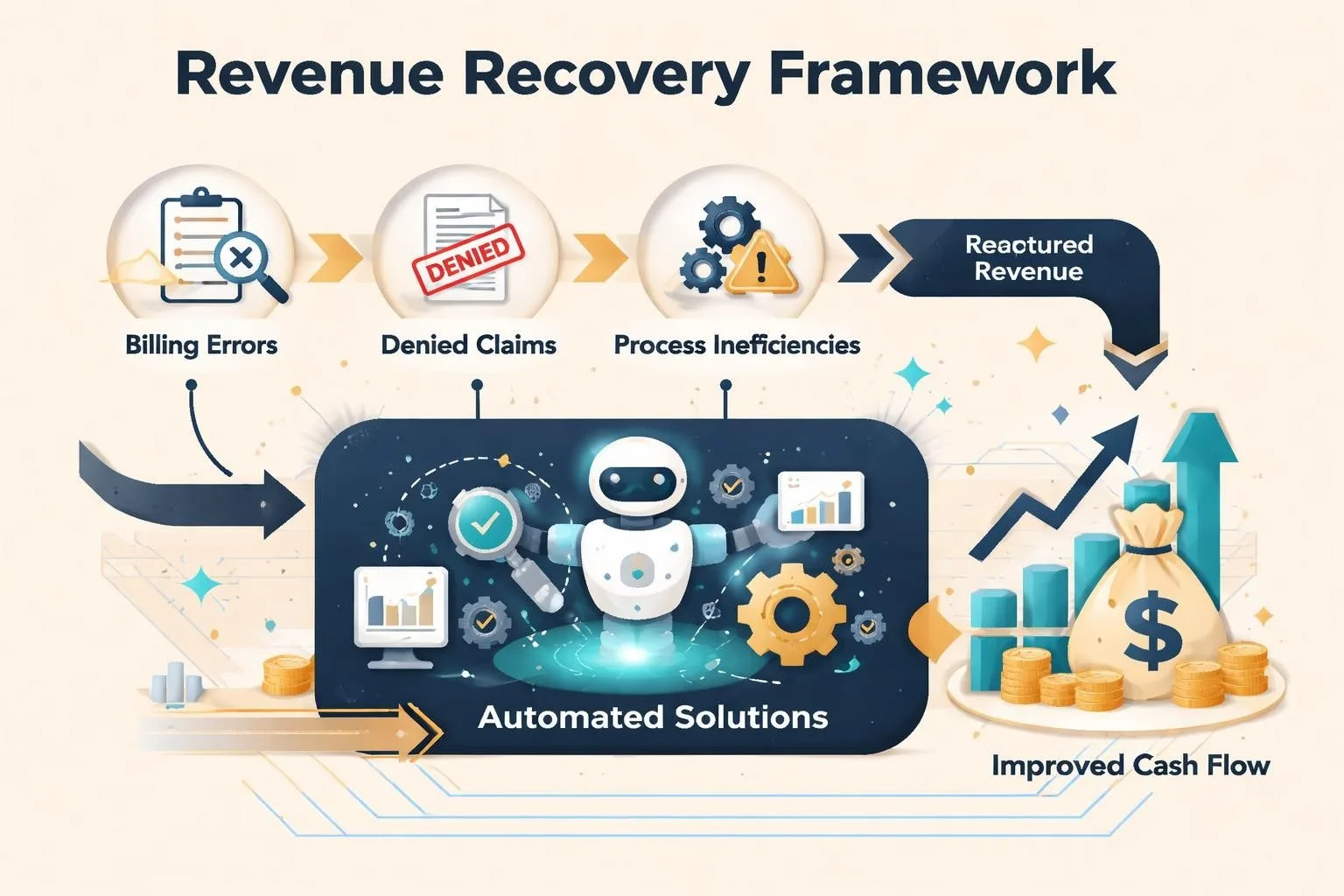
Organizations across industries face a persistent challenge that silently erodes profitability: lost revenue slipping through operational cracks. Whether through billing errors, denied insurance claims, failed payment transactions, or process inefficiencies, businesses leave substantial income on the table each year. Revenue recovery represents the systematic approach to identifying, reclaiming, and preventing these losses, transforming operational weaknesses into opportunities for sustainable financial growth. For companies committed to performance optimization, implementing comprehensive revenue recovery strategies delivers measurable improvements to the bottom line while creating operational efficiencies that compound over time.
Understanding the Revenue Recovery Landscape
Revenue recovery encompasses the processes, technologies, and strategies organizations employ to recapture income lost through various operational inefficiencies. Unlike traditional revenue generation focused on acquiring new customers or expanding market share, revenue recovery targets money already earned but not collected due to system failures, human error, or process gaps.
The scope of potential revenue loss varies significantly across industries. Healthcare organizations face claim denials, underpayments from insurance payers, and coding errors. Subscription-based businesses encounter failed payment transactions, involuntary churn from expired credit cards, and billing disputes. Professional services firms struggle with unbilled hours, scope creep without corresponding invoicing adjustments, and collection challenges.
The Financial Impact of Revenue Leakage
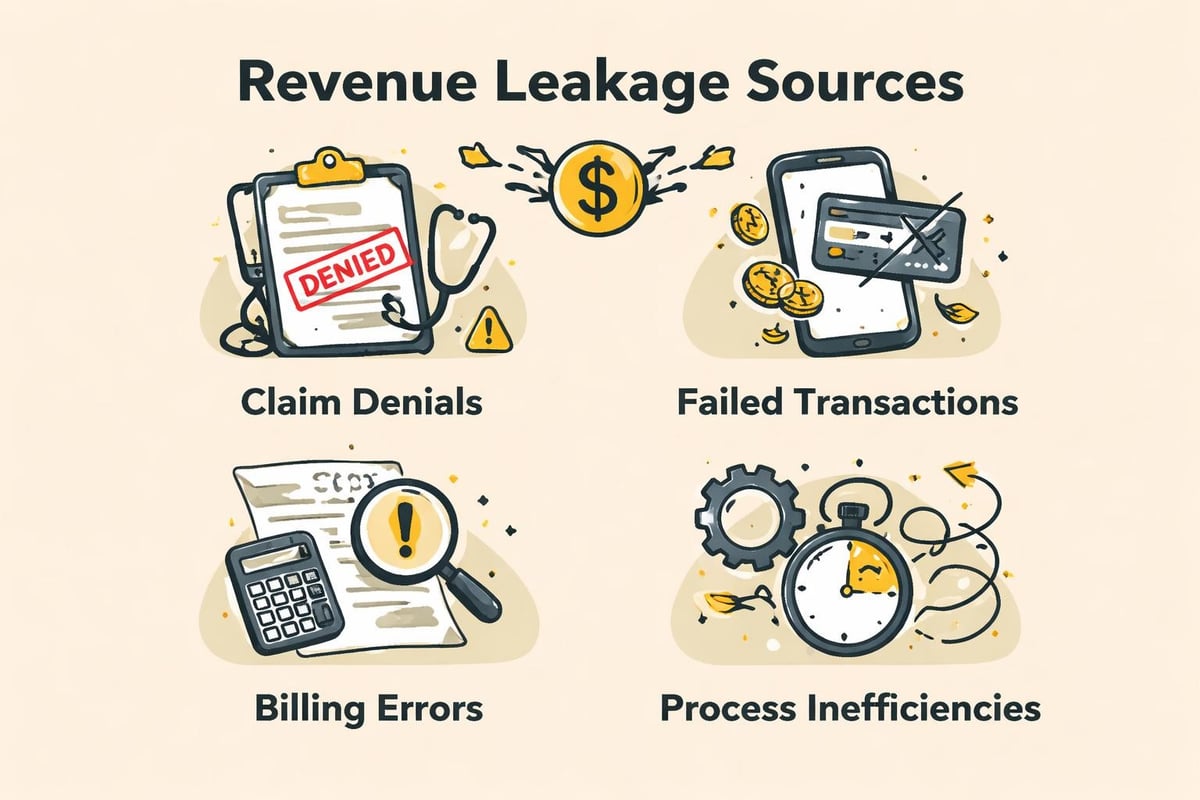
Industry research reveals staggering figures regarding revenue leakage. Healthcare systems routinely experience claim denial rates between 5% and 15%, representing millions in potentially recoverable revenue. Effective denials management and recovery strategies have helped organizations reclaim tens of millions annually.
Subscription businesses face involuntary churn rates averaging 20-40% of total churn, where customers want to continue service but payment failures interrupt the relationship. Each failed transaction represents immediate revenue loss and potential permanent customer attrition. Professional services organizations typically lose 15-25% of billable hours through tracking failures, scope changes without contract amendments, and insufficient follow-through on invoicing.
Key revenue leakage categories include:
- Payment processing failures and transaction declines
- Insurance claim denials and underpayments
- Billing errors and invoice discrepancies
- Unbilled services and untracked billable hours
- Contract compliance gaps and rate discrepancies
- Write-offs without proper recovery attempts
Strategic Approaches to Revenue Recovery
Implementing effective revenue recovery requires a multi-faceted approach combining technology, process optimization, and cultural change. Organizations that view revenue recovery as a strategic initiative rather than a reactive accounting function achieve substantially better results.
Data Analytics and Pattern Recognition
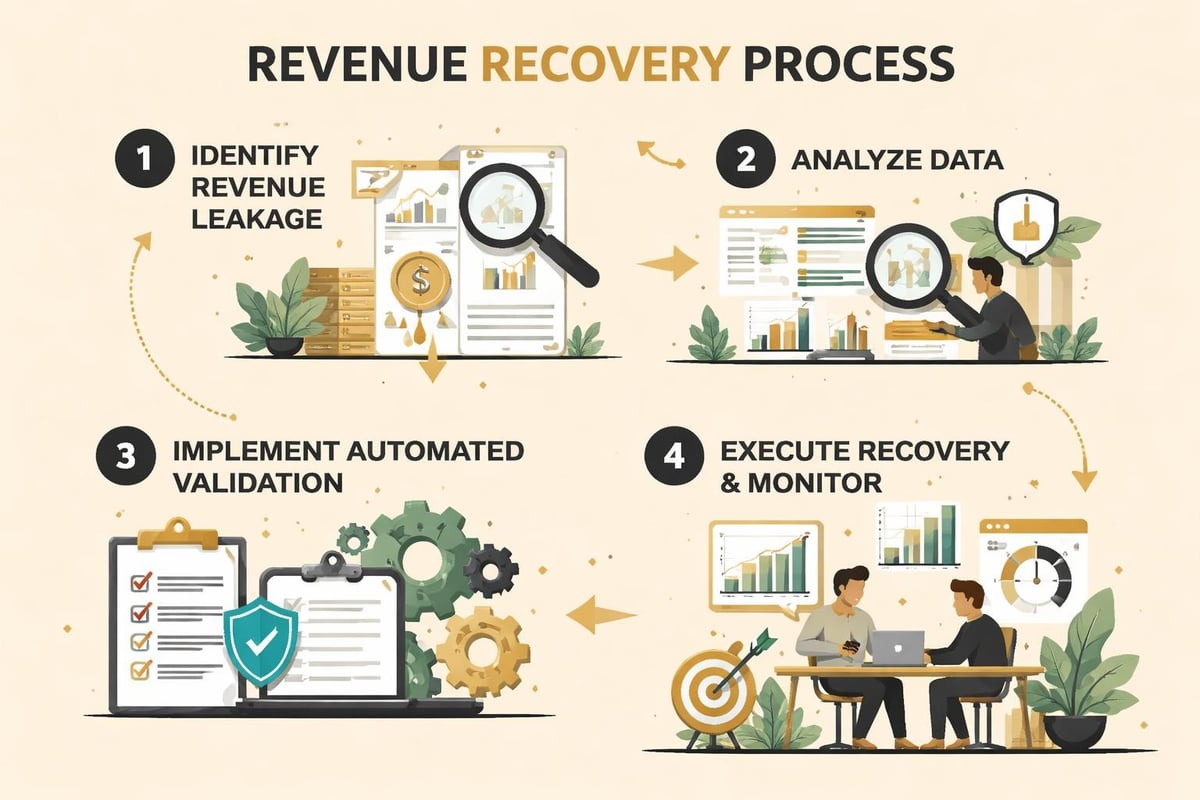
Modern revenue recovery begins with comprehensive data analysis. Organizations must systematically examine where revenue losses occur, identify patterns in these losses, and quantify the financial impact. Advanced analytics platforms can process thousands of transactions to surface anomalies, recurring issues, and opportunities for intervention.
For healthcare organizations, analytics reveals which insurance payers deny claims most frequently, which procedure codes trigger rejections, and which documentation gaps lead to underpayments. Analyzing payer agreements and implementing targeted recovery strategies enables health systems to capture previously lost revenue systematically.
| Analytics Application | Revenue Recovery Benefit | Implementation Timeline |
|---|---|---|
| Payment failure pattern analysis | Identify systematic transaction issues | 2-4 weeks |
| Denial trend identification | Prioritize high-impact recovery efforts | 4-6 weeks |
| Contract compliance monitoring | Detect underpayments automatically | 6-8 weeks |
| Billable hour tracking analysis | Reduce unbilled service leakage | 3-5 weeks |
Professional services firms benefit from analyzing project profitability, comparing contracted rates against actual billing, and identifying clients with consistent payment delays. This intelligence informs both recovery efforts and future relationship management strategies.
Process Optimization and Standardization
Revenue leakage often stems from inconsistent processes, unclear responsibilities, and manual handoffs where information gets lost. Standardizing and documenting revenue-critical processes creates accountability and reduces errors.
Simplifying processes and automating repetitive tasks eliminates human error points while freeing staff to focus on complex recovery cases requiring judgment and negotiation skills. Organizations should map current-state processes, identify failure points, and redesign workflows to prevent revenue loss before it occurs.
Process optimization efforts should address:
- Front-end revenue capture – Ensuring accurate information collection during initial customer interactions
- Real-time validation – Verifying insurance eligibility, credit card validity, and contract terms before service delivery
- Automated error detection – Flagging discrepancies, missing information, or out-of-range values immediately
- Escalation protocols – Establishing clear paths for addressing identified issues
- Follow-up systematization – Creating triggers for recovery attempts at optimal intervals
Technology-Enabled Revenue Recovery Solutions
Technology serves as a force multiplier for revenue recovery efforts, enabling organizations to scale recovery operations without proportional increases in staffing costs. Automation, artificial intelligence, and integration capabilities transform revenue recovery from labor-intensive manual work to systematic, data-driven operations.
Automation and Integration Systems
Modern revenue recovery leverages automation to handle repetitive tasks with perfect consistency. Automated systems can retry failed payment transactions using intelligent retry logic that considers payment failure reasons, timing patterns, and customer behavior. These systems achieve significantly higher payment success rates compared to single-attempt processing.
For healthcare organizations, automation transforms claims management by automatically identifying denial reasons, assembling required documentation for appeals, and routing cases to appropriate specialists. Integration between electronic health record systems, billing platforms, and payer portals eliminates manual data entry and reduces the time between service delivery and payment.
Professional services firms benefit from integrated time tracking, project management, and billing systems that automatically convert logged hours into invoices, flag unbilled work exceeding defined thresholds, and track invoice status through payment.
Artificial Intelligence Applications
Artificial intelligence elevates revenue recovery beyond simple automation to predictive and prescriptive capabilities. Machine learning models analyze historical recovery success rates across different scenarios, recommending optimal recovery strategies for each situation.
AI-powered revenue recovery capabilities include:
- Predicting which denied claims have the highest probability of successful appeal
- Identifying optimal timing and communication channels for payment recovery outreach
- Detecting contract compliance violations through natural language processing of agreements
- Forecasting cash flow considering historical collection patterns and current receivables composition
- Recommending resource allocation to maximize recovery return on investment
Organizations implementing AI-driven revenue recovery typically see 25-40% improvements in recovery rates while reducing the time and cost associated with recovery efforts. The technology continuously learns from outcomes, refining recommendations as it processes more cases.
Industry-Specific Revenue Recovery Strategies
While fundamental revenue recovery principles apply across sectors, effective implementation requires industry-specific approaches addressing unique operational realities and regulatory environments.
Healthcare Revenue Cycle Management
Healthcare revenue recovery centers on claims management, addressing the complex interplay between clinical documentation, medical coding, payer contracts, and regulatory compliance. The revenue cycle extends from patient registration through final payment, with multiple intervention points.
Denial prevention strategies focus on front-end activities: verifying insurance eligibility before service delivery, obtaining necessary prior authorizations, and ensuring documentation supports planned procedure codes. When denials occur despite prevention efforts, systematic recovery processes prioritize high-value claims and those with strong appeal prospects.
Underpayment recovery represents significant opportunity in healthcare. Many organizations lack systems to verify that payer remittances match contracted rates, allowing systematic underpayments to continue undetected. Implementing contract management systems that automatically compare expected versus actual payments identifies recoverable amounts and supports ongoing contract compliance.
Subscription Business Recovery Approaches
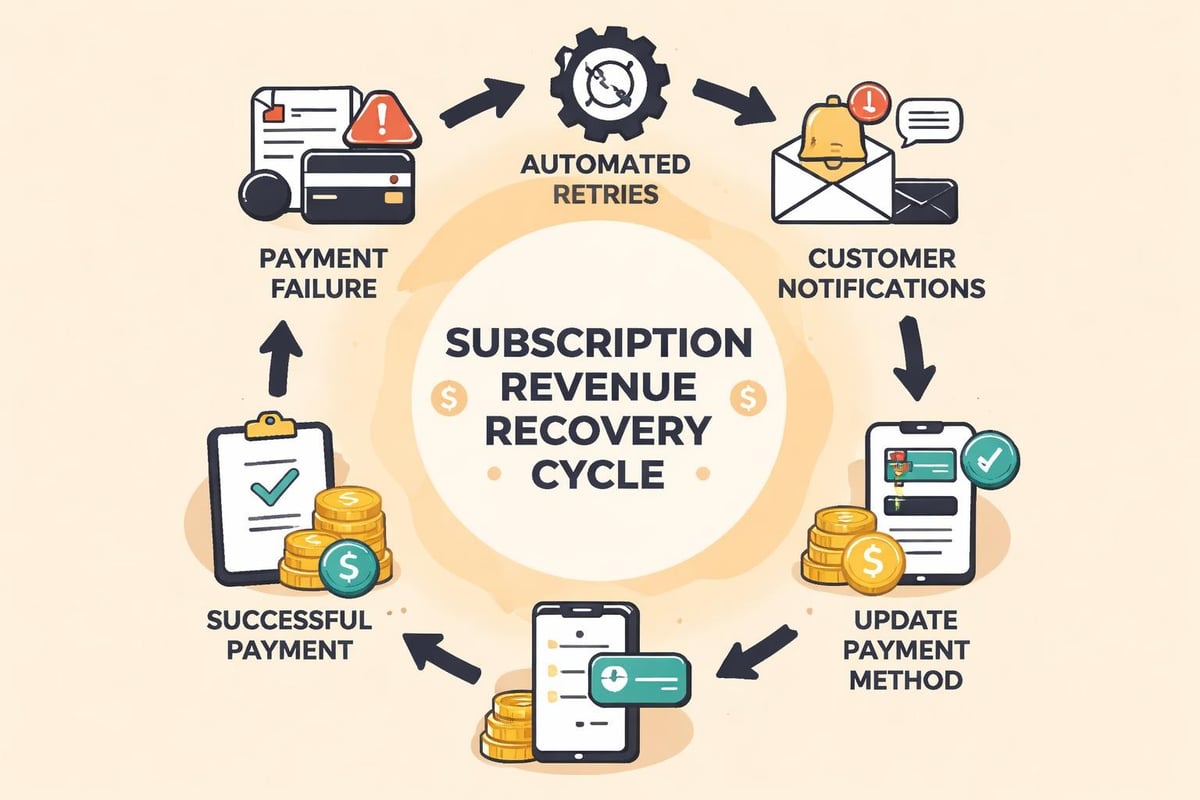
Revenue recovery in subscription businesses primarily addresses involuntary churn caused by payment failures. Subscribers don't intend to cancel, but expired credit cards, insufficient funds, or transaction processing issues interrupt service.
Successful subscription revenue recovery combines multiple tactics:
- Account updater services that automatically refresh expired card information
- Multiple retry attempts with optimized timing based on payment failure type
- Dunning communications that alert customers to payment issues before service interruption
- Alternative payment method collection to provide backup options
- Grace periods allowing continued service while resolving payment issues
Organizations implementing comprehensive payment recovery systems reduce involuntary churn by 30-50%, directly improving customer lifetime value and reducing acquisition cost burden.
Professional Services Revenue Protection
Professional services firms face unique revenue recovery challenges related to scope management, time tracking, and client relationship dynamics. Revenue leakage occurs when billable work goes unrecorded, scope changes happen without contract modifications, or invoice disputes lead to write-offs.
Effective professional services revenue recovery requires:
- Real-time time tracking with mobile accessibility and project integration
- Scope change management processes linking change requests to contract amendments
- Regular work-in-progress reviews identifying unbilled services before periods close
- Client communication protocols addressing billing questions proactively
- Collections strategies balancing relationship preservation with payment recovery
Building Organizational Capacity for Revenue Recovery
Technology and processes provide the foundation for revenue recovery, but organizational capacity determines sustained success. Companies must develop expertise, align incentives, and create cultures that prioritize revenue protection alongside revenue generation.
Team Structure and Expertise Development
Dedicated revenue recovery teams bring focused attention to recapturing lost income. These teams require diverse skill sets combining analytical capabilities, technical proficiency, communication skills, and persistence. Healthcare recovery specialists need clinical knowledge to understand denial reasons and build compelling appeals. Subscription recovery specialists require customer service orientation to maintain relationships while pursuing payment.
Organizations should invest in training existing staff on revenue recovery principles and tools while potentially hiring specialists with specific expertise. Cross-functional collaboration between revenue recovery teams and operational departments prevents silos and ensures learnings from recovery efforts inform process improvements preventing future losses.
| Role | Primary Responsibilities | Key Skills Required |
|---|---|---|
| Revenue Recovery Analyst | Data analysis, pattern identification, performance reporting | Analytics, SQL, data visualization |
| Recovery Specialist | Case investigation, documentation, recovery execution | Attention to detail, communication, persistence |
| Automation Engineer | System integration, workflow automation, tool optimization | Programming, API integration, process mapping |
| Recovery Manager | Strategy development, team leadership, stakeholder communication | Leadership, strategic thinking, change management |
Performance Metrics and Accountability
Measuring revenue recovery performance drives continuous improvement and demonstrates program value. Organizations should establish comprehensive metrics covering recovery volume, recovery rate, cost per dollar recovered, and time to recovery.
Essential revenue recovery metrics include:
- Gross recovery amount (total dollars recaptured)
- Net recovery amount (recovery minus recovery costs)
- Recovery rate (percentage of identified leakage successfully recovered)
- Prevention rate (reduction in new leakage due to process improvements)
- Days to recovery (average time from identification to collection)
- Cost efficiency ratio (recovery costs as percentage of recovered amount)
Regular reporting to executive leadership maintains visibility and secures ongoing investment in recovery capabilities. Tying compensation to recovery metrics for relevant roles aligns individual incentives with organizational goals.
Preventive Revenue Protection Strategies
While recovering lost revenue delivers immediate financial benefits, preventing revenue leakage in the first place provides superior returns. Organizations should evolve from reactive recovery to proactive prevention, using insights from recovery efforts to strengthen operational processes.
Prevention strategies address root causes of revenue leakage. If analytics reveal that specific insurance payers consistently deny claims for particular procedure codes, prevention focuses on documentation requirements, coding accuracy, and prior authorization processes for those combinations. When payment failures concentrate among cards expiring in certain months, prevention implements account updater services and proactive card refresh campaigns.
The prevention mindset extends beyond operational fixes to strategic business decisions. Contract negotiations incorporate lessons from recovery efforts, building in protections against common dispute areas. Service delivery models evolve to reduce ambiguity around billable scope. Billing processes incorporate multiple validation checkpoints before invoice generation.
Organizations achieve optimal results by balancing recovery and prevention investments. Early-stage revenue recovery programs typically emphasize recovery, quickly recapturing significant dollars while building expertise and data. As programs mature, emphasis shifts toward prevention, systematically reducing leakage requiring recovery.
Technology Implementation Considerations
Deploying revenue recovery technology requires careful planning to ensure systems integrate with existing infrastructure, support required workflows, and deliver promised capabilities. Organizations should approach technology selection and implementation systematically.
System Selection Criteria
Revenue recovery technology evaluation should consider functional capabilities, integration requirements, scalability, user experience, and total cost of ownership. Solutions must handle organization-specific revenue streams, support necessary workflows, and provide required reporting and analytics.
Integration capabilities determine how effectively new systems leverage existing data and coordinate with established processes. Healthcare organizations need integration with electronic health records, practice management systems, and clearinghouses. Subscription businesses require connections to payment processors, customer relationship management platforms, and subscription management tools.
Scalability ensures systems accommodate growth in transaction volume, user count, and functional complexity. Cloud-based solutions typically offer superior scalability compared to on-premise alternatives, though security and compliance requirements may influence deployment decisions.
Implementation Best Practices
Successful technology implementation follows structured methodologies addressing technical configuration, data migration, user training, and change management. Organizations should:
- Define clear success criteria before implementation begins
- Assign dedicated project leadership with authority to make decisions
- Involve end users in requirements definition and testing
- Plan for data migration and historical analysis needs
- Develop comprehensive training programs for all user groups
- Implement in phases to manage risk and allow learning
- Establish post-implementation support and optimization processes
Post-implementation optimization often delivers greater value than initial deployment. As users gain familiarity and processes stabilize, organizations can refine configurations, automate additional workflows, and expand system utilization to adjacent use cases.
Measuring Return on Investment
Revenue recovery programs require investment in technology, personnel, and organizational focus. Quantifying return on investment justifies these investments and guides resource allocation decisions. Comprehensive ROI analysis considers both direct financial returns and operational benefits.
Direct financial returns include recovered revenue minus program costs. Organizations should track gross recovery amounts, program operating expenses (technology costs, personnel compensation, external services), and net recovery. Calculating net recovery as a percentage of gross recovery reveals program efficiency, with mature programs typically achieving 70-85% net recovery rates.
Operational benefits extend beyond immediate dollar recovery. Reduced revenue leakage improves cash flow predictability, reducing financing costs and enabling better capital allocation. Process improvements supporting revenue recovery often deliver broader efficiency gains, reducing labor costs and error rates across operations. Prevention capabilities reduce future leakage, creating compounding value over time.
A complete ROI framework considers these elements:
- Hard dollar recovery – Actual cash collected from recovery efforts
- Prevented losses – Revenue that would have leaked without implemented controls
- Efficiency gains – Labor and process cost reductions
- Cash flow improvements – Working capital benefits from faster collection
- Strategic value – Enhanced decision-making from improved data and analytics
Organizations implementing comprehensive revenue recovery programs typically achieve positive ROI within 6-12 months, with returns improving as prevention capabilities mature and organizational expertise deepens.
Revenue recovery represents a critical but often overlooked opportunity for organizations seeking sustainable profitability improvements. By combining data analytics, process optimization, and technology enablement, businesses can systematically recapture lost income while building prevention capabilities that compound value over time. Nero and Associates, Inc. specializes in helping organizations implement performance-based solutions that raise bottom-line results through revenue cycle management, automation, and process optimization. Our expertise in identifying operational inefficiencies and deploying technology-enabled solutions positions clients to recover lost revenue, prevent future leakage, and build sustainable competitive advantages through operational excellence.