

Organizations today face mounting pressure to attract and retain top talent while managing costs effectively. Traditional benefits packages alone no longer meet the diverse needs of a multi-generational workforce. Voluntary benefits have emerged as a strategic solution, allowing employers to expand their benefits offerings without significantly increasing their financial burden. These employee-paid or shared-cost benefits provide workers with access to valuable coverage and services while demonstrating an employer's commitment to comprehensive wellness. As businesses navigate the competitive landscape of 2026, understanding how to implement and optimize these supplemental benefit programs has become essential for sustainable growth and employee satisfaction.
Understanding the Voluntary Benefits Landscape
Voluntary benefits encompass any employer-sponsored benefit program where employees pay all or most of the premium costs through convenient payroll deductions. Unlike core benefits such as health insurance or retirement plans, these supplemental offerings allow employees to customize their benefits package based on individual needs and circumstances.
The range of available options continues to expand beyond traditional offerings. Common categories include:
- Supplemental health insurance (critical illness, accident, hospital indemnity)
- Life insurance and accidental death coverage
- Disability insurance (short-term and long-term)
- Dental and vision insurance
- Legal services plans
- Identity theft protection
- Pet insurance
- Financial wellness programs
- Student loan assistance
- Mental health and counseling services
Research indicates that 83% of employees are more likely to work for a company offering supplemental benefits, demonstrating the significant impact these programs have on talent acquisition and retention strategies.

The Business Case for Implementation
Organizations implementing voluntary benefits programs realize multiple strategic advantages. These offerings enhance the overall value proposition without proportionally increasing labor costs, since employees bear the majority of premium expenses.
Cost containment represents a primary advantage. By offering voluntary options, employers can maintain competitive benefits packages while controlling their direct financial exposure. The group purchasing power often enables employees to access coverage at lower rates than they could obtain individually.
Improved retention metrics follow naturally from enhanced benefits satisfaction. When employees feel their employer supports their diverse needs, engagement levels rise and turnover rates decline. This proves particularly valuable in industries facing talent shortages or high replacement costs.
Enhanced productivity emerges as employees address personal concerns through available benefits. Financial stress, health worries, and family challenges diminish when workers have access to appropriate support resources. Organizations that provide comprehensive solutions through their Human Capital Management approach see measurable improvements in workforce performance.
| Business Benefit | Impact Area | Measurement Metric |
|---|---|---|
| Cost Control | Financial | Premium cost per employee |
| Talent Attraction | Recruitment | Application-to-offer ratio |
| Employee Retention | Turnover | Annual retention rate |
| Productivity | Operations | Output per labor hour |
| Benefits Satisfaction | Engagement | Employee survey scores |
Strategic Implementation Approaches
Successful voluntary benefits programs require thoughtful planning and execution. Organizations must assess their workforce demographics, understand employee needs, and select appropriate offerings that align with both employee expectations and organizational capabilities.
Workforce Analysis and Needs Assessment
The foundation of effective program design begins with comprehensive workforce analysis. Different employee segments require different benefits solutions based on age, income level, family status, and personal circumstances.
Generational considerations shape benefit preferences significantly. Millennials and Gen Z workers often prioritize student loan assistance, mental health resources, and flexible lifestyle benefits. Tailoring voluntary benefits to meet Gen Z expectations has become critical as this demographic gains workforce prominence. Meanwhile, Generation X employees frequently focus on retirement planning and caregiving support, while Baby Boomers may emphasize supplemental health coverage and long-term care options.
Family status influences benefit priorities substantially. Employees with young children value childcare assistance, education savings plans, and family life insurance. Those with aging parents seek elder care resources and legal planning services. Single employees might prioritize pet insurance, travel benefits, or professional development opportunities.
Conducting regular employee surveys and focus groups provides valuable insights into unmet needs and emerging preferences. This data-driven approach ensures that voluntary offerings resonate with the intended audience.

Vendor Selection and Partnership Development
Choosing the right benefits providers determines program success. Organizations should evaluate potential vendors based on multiple criteria beyond simply comparing premium costs.
Product quality and breadth matter significantly. Providers should offer comprehensive coverage options that genuinely address employee needs. Supplemental health plans should feature reasonable exclusions, appropriate benefit levels, and clear policy language that employees can easily understand.
Administrative efficiency reduces implementation burden. The best vendors provide seamless integration with existing payroll systems, robust enrollment platforms, and automated billing reconciliation. These capabilities prove especially valuable for enterprise organizations managing large employee populations across multiple locations.
Educational resources and support enhance program participation. Look for partners who provide comprehensive enrollment communication materials, decision-support tools, and ongoing educational content. Strong customer service capabilities ensure that employees receive prompt assistance when questions arise.
Financial stability and compliance expertise protect both the organization and employees. Verify that vendors maintain appropriate financial ratings and demonstrate consistent claims-paying ability. They should also provide compliance guidance to help navigate complex regulatory requirements.
Enrollment Strategy and Employee Communication
Even the most carefully selected voluntary benefits deliver minimal value if employees do not understand or utilize them. Effective communication and streamlined enrollment processes transform theoretical offerings into practical resources that employees actively engage with.
Multi-Channel Communication Approach
Successful enrollment campaigns leverage multiple communication channels to reach diverse employee populations. Different workers consume information through different media, requiring varied outreach strategies.
Digital communication methods include email campaigns, intranet portals, mobile apps, and video content. These channels work well for younger, tech-savvy employees who prefer self-service options and on-demand information access.
Traditional outreach through printed materials, group meetings, and one-on-one consultations remains essential for many workers. Some employees prefer tangible reference materials and direct conversation when making benefit decisions.
Peer influence significantly impacts enrollment decisions. Employee testimonials, case studies, and success stories demonstrate real-world benefit value. Creating ambassador programs where satisfied participants share their experiences can boost overall participation rates.
Organizations serving diverse industries, from healthcare to hospitality, must tailor communication approaches to match their specific workforce characteristics and operational realities.
Decision Support and Educational Tools
Employees often struggle to evaluate voluntary benefits options, particularly when choosing between similar products or determining appropriate coverage levels. Providing robust decision-support resources improves both enrollment quality and employee satisfaction.
- Needs calculators help employees assess their coverage gaps and financial exposure
- Comparison tools highlight differences between similar product options
- Cost-benefit analysis demonstrates the value proposition of various benefits
- Scenario planning illustrates how specific benefits respond to common life events
- Expert consultation offers personalized guidance for complex decisions
Making enrollment user-friendly through intuitive technology platforms reduces abandonment rates. Mobile-responsive enrollment systems accommodate employees who prefer completing tasks outside traditional work hours or away from desktop computers.
Maximizing Program Value Through Strategic Design
The difference between adequate and exceptional voluntary benefits programs often lies in thoughtful program design choices. Organizations that approach these offerings strategically realize substantially greater returns on their implementation investments.
Innovative Benefit Options for 2026
The voluntary benefits marketplace continues evolving rapidly. Key employee benefits trends for 2025 provide insight into emerging options gaining traction among forward-thinking employers.
Financial wellness programs have expanded beyond basic retirement planning. Comprehensive offerings now include emergency savings programs, debt management assistance, financial coaching, and tools for building long-term wealth. These programs address the financial stress that significantly impacts employee productivity and health.
Mental health and wellbeing resources reflect growing recognition of psychological wellness importance. Voluntary options include expanded counseling services, meditation apps, stress management programs, and resilience training. Supporting employee mental health yields measurable returns through reduced absenteeism and improved performance.
Personalization and flexibility characterize modern program design. Rather than one-size-fits-all offerings, sophisticated programs allow employees to build customized benefits bundles that align with their unique circumstances. This approach particularly resonates with SMBs and mid-market companies seeking competitive advantages.
| Emerging Benefit Category | Primary Appeal | Target Demographic |
|---|---|---|
| Student Loan Assistance | Debt reduction | Millennials, Gen Z |
| Caregiver Support | Family obligations | Gen X, Boomers |
| Financial Coaching | Wealth building | All generations |
| Mental Health Apps | Stress management | All generations |
| Identity Theft Protection | Security concerns | Gen X, Boomers |
| Pet Insurance | Animal care costs | Millennials, Gen Z |
Compliance and Regulatory Considerations
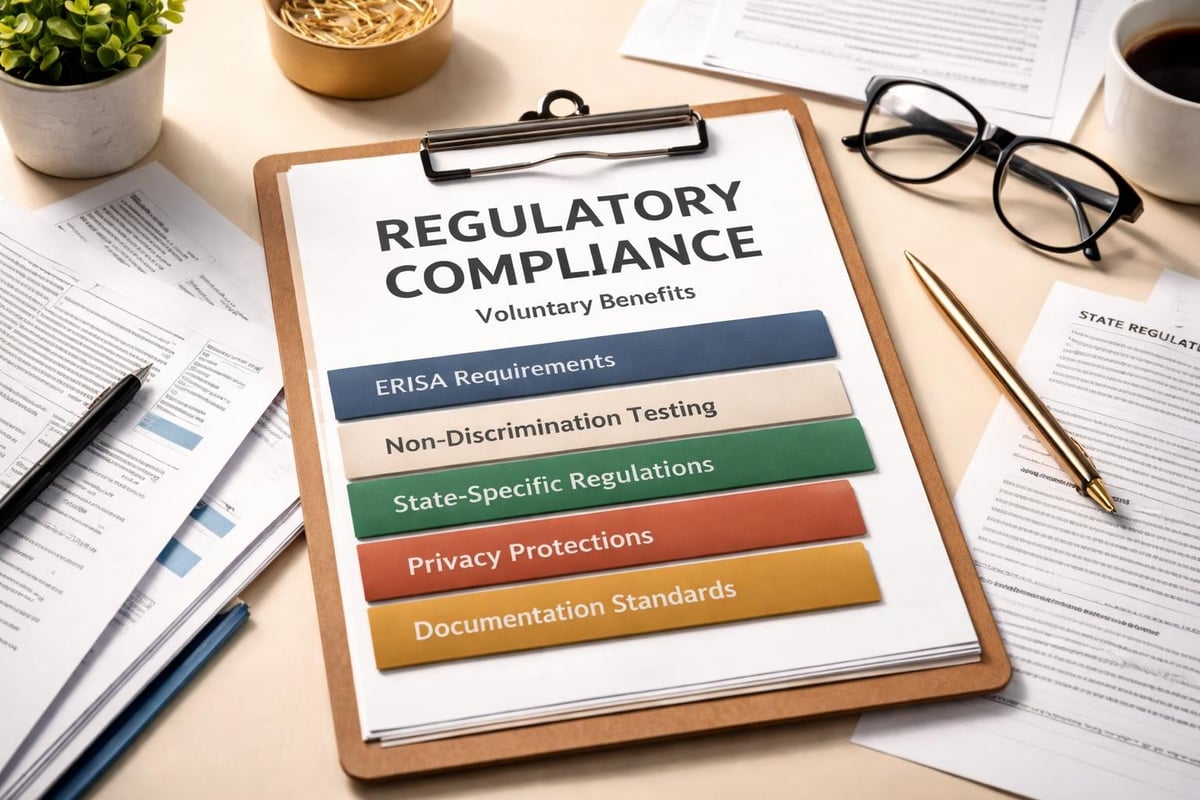
Voluntary benefits programs operate within complex regulatory frameworks requiring ongoing attention. Proper compliance protects organizations from legal exposure while ensuring employees receive promised benefits.
ERISA requirements apply to many voluntary benefit arrangements. Understanding which offerings fall under Employee Retirement Income Security Act jurisdiction determines necessary administrative procedures, reporting obligations, and fiduciary responsibilities. Recent developments highlight compliance importance, as evidenced by the Department of Labor’s recovery of significant funds for employee benefit plans.
Non-discrimination testing ensures that voluntary benefits programs do not disproportionately favor highly compensated employees. Regular testing and program adjustments maintain compliance while promoting equitable access across the workforce.
State-specific regulations add complexity, particularly for multi-state employers. Insurance licensing requirements, mandatory benefit provisions, and consumer protection laws vary significantly by jurisdiction. Partnering with knowledgeable vendors helps navigate this patchwork regulatory landscape.
Privacy and data security obligations protect sensitive employee information. Benefits administration involves collecting and managing substantial personal and health data. Robust security protocols and HIPAA compliance where applicable safeguard employee privacy while meeting legal requirements.
Measuring Success and Continuous Improvement
Implementing voluntary benefits represents only the beginning. Sophisticated organizations establish comprehensive measurement frameworks to assess program effectiveness and identify optimization opportunities.
Key Performance Indicators
Tracking relevant metrics enables data-driven program management. Organizations should monitor both quantitative and qualitative indicators to gain complete performance visibility.
Participation rates by benefit category reveal which offerings resonate with employees. Low enrollment in specific benefits may indicate inadequate communication, poor product fit, or pricing concerns requiring attention.
Employee satisfaction scores gathered through regular surveys assess perceived program value. Tracking satisfaction trends over time highlights whether benefits continue meeting evolving employee needs.
Cost metrics including per-employee administration costs and vendor fees ensure program efficiency. Even though employees pay premiums directly, administrative expenses impact overall program economics.
Retention correlation examines relationships between benefits participation and employee tenure. Analyzing whether enrolled employees demonstrate higher retention rates than non-participants validates program impact.
Utilization patterns for benefits actually used provide insights into practical program value. High enrollment combined with low utilization suggests either coverage misalignment or inadequate employee education about when and how to access benefits.
Ongoing Optimization Strategies
Excellence requires continuous refinement based on performance data and changing workforce needs. Annual program reviews should assess current offerings against employee feedback, market innovations, and organizational objectives.
Vendor performance evaluation ensures partners consistently deliver promised value. Review claims processing timeliness, customer service quality, and technological capabilities. Innovative approaches to managing voluntary benefits emphasize strategic partnership development.
Benefit portfolio adjustments keep offerings fresh and relevant. Adding new options addresses emerging needs while discontinuing underutilized benefits streamlines the program and reduces complexity.
Communication enhancement based on enrollment data improves future campaigns. Analyzing which messages and channels drove participation helps refine outreach strategies.
Technology upgrades maintain competitive enrollment experiences. As consumer expectations evolve, benefits platforms must offer increasing sophistication, personalization, and mobile accessibility.
Organizations serving specialized sectors such as non-profits or private equity portfolio companies may require tailored measurement approaches reflecting their unique operational characteristics.
Integration with Comprehensive Wellness Initiatives
Voluntary benefits achieve maximum impact when integrated within broader organizational wellness strategies. Viewing these offerings as isolated programs limits their potential effectiveness.
Holistic Employee Wellbeing
Modern wellbeing strategies address multiple dimensions of employee health. Physical wellness, mental health, financial security, and social connection all contribute to overall employee satisfaction and productivity.
Physical health support through supplemental medical insurance, fitness programs, and preventive care benefits helps employees maintain good health and manage medical expenses. These offerings complement traditional health insurance while addressing coverage gaps.
Financial wellness extends beyond retirement savings to encompass emergency preparedness, debt management, and long-term planning. Employees experiencing financial stress demonstrate reduced productivity and higher absenteeism. Comprehensive support through voluntary benefits helps address these challenges proactively.
Mental and emotional health resources provide critical support often unavailable through standard health plans. Access to counseling, stress management tools, and resilience programs empowers employees to address psychological challenges before they escalate.
Work-life balance benefits including flexible scheduling, paid time off enhancements, and family support services recognize that employee wellbeing extends beyond the workplace. Supporting employees in managing personal responsibilities improves both satisfaction and performance.
Technology Integration and Automation
Modern benefits administration leverages technology to reduce manual processes and improve employee experiences. Artificial Intelligence and automation solutions transform benefits management from administrative burden to strategic advantage.
Automated enrollment systems guide employees through benefit selection with intelligent recommendations based on demographic profiles and stated preferences. These platforms reduce enrollment errors while improving decision quality.
Integration with HRIS platforms eliminates duplicate data entry and ensures information accuracy across systems. Seamless connectivity between benefits administration and core human resources systems streamlines operations and reduces administrative overhead.
Predictive analytics identify trends and patterns that inform program design. Understanding which employee segments enroll in specific benefits enables targeted communication and more effective benefit portfolio management.
Self-service capabilities empower employees to manage their benefits independently, reducing administrative workload while providing convenient access to information and services.
Organizations implementing comprehensive technology solutions often see dramatic efficiency improvements, eliminating thousands of hours of manual processes while enhancing employee satisfaction.
Future-Proofing Your Voluntary Benefits Strategy
The voluntary benefits landscape will continue evolving as workforce demographics shift, technology advances, and employee expectations change. Organizations must build adaptive strategies that accommodate future developments while meeting current needs.
Emerging Trends and Considerations
Several trends will shape voluntary benefits evolution over the coming years. Forward-thinking organizations position themselves to capitalize on these developments.
Increased personalization driven by advanced analytics will enable truly individualized benefit recommendations. Rather than presenting all employees with identical options, sophisticated systems will curate personalized benefit menus based on comprehensive data analysis.
Expanded mental health support will move beyond traditional counseling to encompass comprehensive psychological wellness programs. Preventive mental health resources, stress resilience training, and lifestyle coaching will become standard voluntary offerings.
Climate and sustainability benefits may emerge as environmentally conscious employees seek support for green transportation, sustainable living, and climate impact reduction. Organizations differentiating through environmental commitment may add related voluntary benefits.
Gig economy adaptations will influence benefit design as workforce models evolve. Even traditional employers increasingly utilize flexible staffing arrangements, requiring benefits approaches that accommodate varied employment relationships.
Legislative changes at federal and state levels will continue reshaping benefits requirements and opportunities. Staying informed about regulatory developments ensures compliance while identifying new program possibilities.
The increasing adoption of voluntary benefits by employers in 2025 demonstrates growing recognition of these programs' strategic value. Organizations that establish robust frameworks now position themselves for long-term success as competition for talent intensifies.
Building Organizational Capability
Sustainable voluntary benefits excellence requires developing internal capabilities and expertise. Organizations should invest in building knowledge, processes, and systems that support ongoing program success.
Benefits expertise development through training and professional development ensures internal teams understand program complexities and best practices. Knowledgeable staff can better serve employees while making informed strategic decisions.
Cross-functional collaboration between human resources, finance, and operations teams aligns benefits strategy with broader organizational objectives. Voluntary benefits impact multiple functional areas, requiring coordinated approaches.
Vendor relationship management capabilities ensure productive partnerships with benefits providers. Strong vendor management balances advocacy for employee interests with operational efficiency and cost effectiveness.
Change management proficiency helps organizations successfully implement new benefits and modify existing programs. Effective change management reduces resistance and accelerates adoption.
Organizations committed to comprehensive employee support recognize that voluntary benefits represent just one component of holistic wellness strategies. Integrating these offerings with other employee support services, from optimized health indemnity plans to comprehensive benefit packages, creates powerful value propositions that attract talent, boost retention, and drive organizational performance.
Voluntary benefits programs represent strategic investments in employee satisfaction, organizational competitiveness, and sustainable growth. By carefully selecting offerings that align with workforce needs, communicating effectively, and continuously optimizing based on performance data, organizations transform these supplemental benefits into powerful competitive advantages. Nero and Associates, Inc. helps organizations design and implement comprehensive benefits strategies that reduce costs, improve efficiency, and empower employees to be proactive with their mental, physical, and financial health through performance-based consulting solutions.