

Revenue Consulting: Strategies to Maximize Growth in 2026

Share on Facebook
Share on X
Share on LinkedIn

Organizations across industries face mounting pressure to optimize revenue streams while controlling costs and improving operational efficiency. Revenue consulting has emerged as a strategic solution that enables businesses to identify untapped growth opportunities, streamline processes, and align teams around common financial objectives. By leveraging specialized expertise and proven methodologies, companies can transform their revenue generation capabilities and achieve sustainable growth in an increasingly competitive marketplace.

Understanding Revenue Consulting and Its Strategic Value

Revenue consulting encompasses a comprehensive approach to analyzing, optimizing, and accelerating an organization's revenue generation capabilities. This specialized practice goes beyond traditional sales consulting by examining the entire revenue ecosystem, including marketing effectiveness, sales processes, customer success initiatives, and operational efficiency.

The foundation of effective revenue consulting lies in data-driven analysis and cross-functional alignment. Consultants examine revenue operations from multiple angles, identifying bottlenecks, inefficiencies, and missed opportunities that prevent organizations from reaching their full potential. This holistic perspective enables businesses to make informed decisions about resource allocation, technology investments, and strategic priorities.

Key Components of Revenue Consulting Services

Modern revenue consulting engagements typically address several critical areas simultaneously:

  • Revenue operations optimization that aligns marketing, sales, and customer success teams
  • Process automation to eliminate manual tasks and reduce operational overhead
  • Data analytics and forecasting for improved decision-making
  • Technology stack evaluation and integration strategies
  • Pricing strategy development and optimization
  • Customer lifecycle management improvements
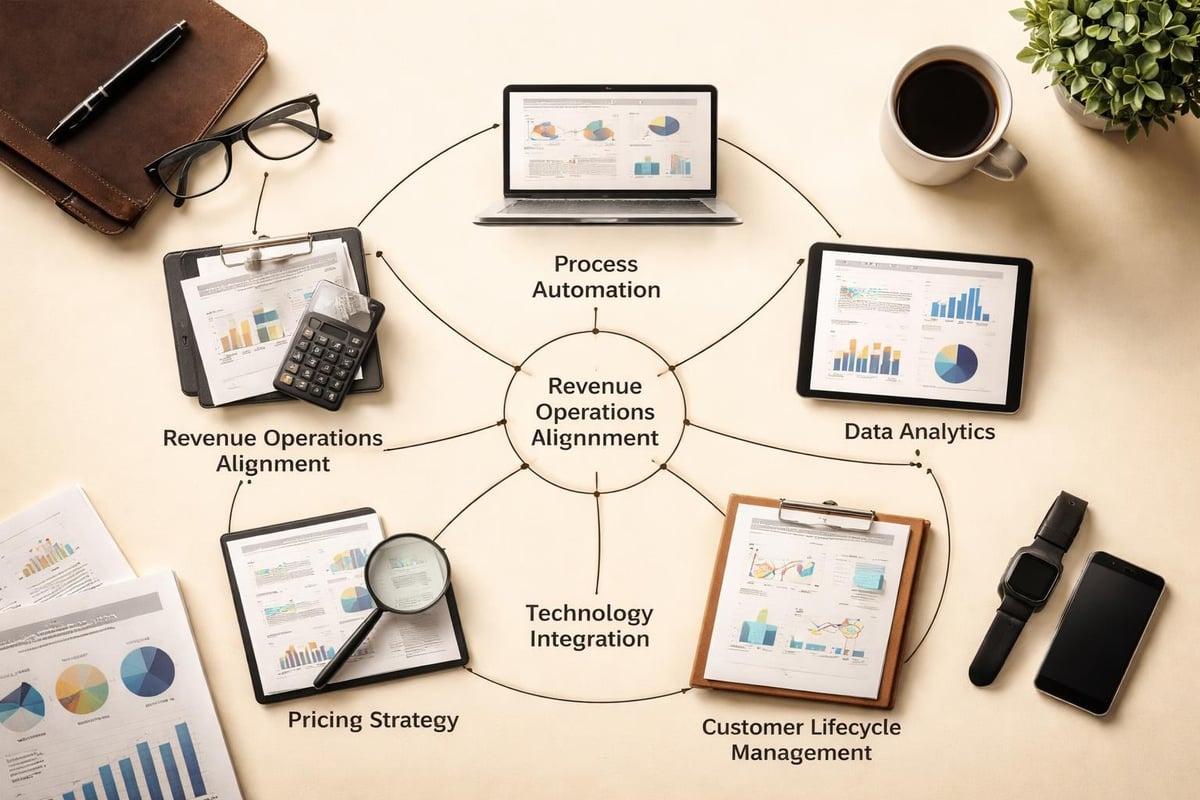
Revenue consulting framework components

Organizations implementing revenue consulting strategies typically see improvements across multiple performance indicators. According to revenue operations consulting best practices, companies that align their revenue teams and processes can accelerate growth by 15-20% while reducing customer acquisition costs.

The Healthcare Revenue Cycle Management Perspective

For healthcare organizations, revenue consulting takes on additional complexity due to regulatory requirements, insurance processes, and patient care considerations. Healthcare revenue cycle management consulting focuses on optimizing the entire patient financial experience from registration through final payment.

Healthcare-specific revenue challenges include:

  1. Insurance claim denials and rejections
  2. Patient billing complexity and confusion
  3. Compliance with changing regulations
  4. Technology integration across disparate systems
  5. Staff training and process standardization

The best practices in revenue cycle management emphasize proactive denial management, patient communication strategies, and technology-enabled automation. Healthcare providers working with revenue consultants can reduce days in accounts receivable by 30-40% while improving patient satisfaction scores.

Challenge Area Traditional Approach Revenue Consulting Approach Typical Improvement
Claim Denials Reactive resolution Predictive analytics and prevention 25-35% reduction
Patient Collections Manual follow-up Automated reminders and payment plans 40-50% increase
Registration Accuracy Staff training only Process redesign and technology 60-70% error reduction
Revenue Leakage Periodic audits Continuous monitoring systems 15-25% recovery

Healthcare organizations benefit significantly from consulting expertise that combines clinical workflow understanding with financial optimization strategies. The integration of artificial intelligence and automation technologies enables real-time claim scrubbing, predictive denial management, and intelligent work queuing.

Optimizing Consulting Investments for Maximum ROI

Organizations investing in revenue consulting must approach the engagement strategically to maximize return on investment. The decision to engage consultants represents a significant resource allocation that requires careful planning and clear objectives.

Optimizing consulting spend requires establishing measurable goals, defining success metrics, and creating accountability frameworks. Companies should develop detailed scopes of work that outline deliverables, timelines, and expected outcomes before engaging consultants.

Establishing Clear Engagement Parameters

Successful revenue consulting engagements begin with alignment between client expectations and consultant capabilities. Organizations should evaluate potential partners based on:

  • Industry-specific experience and proven results
  • Methodology transparency and knowledge transfer
  • Technology expertise and integration capabilities
  • Performance-based compensation models
  • Cultural fit and communication styles

Performance-based consulting models align consultant incentives with client outcomes, creating partnerships focused on measurable results rather than billable hours. These arrangements typically tie a portion of consulting fees to achievement of specific revenue targets, cost reductions, or efficiency improvements.
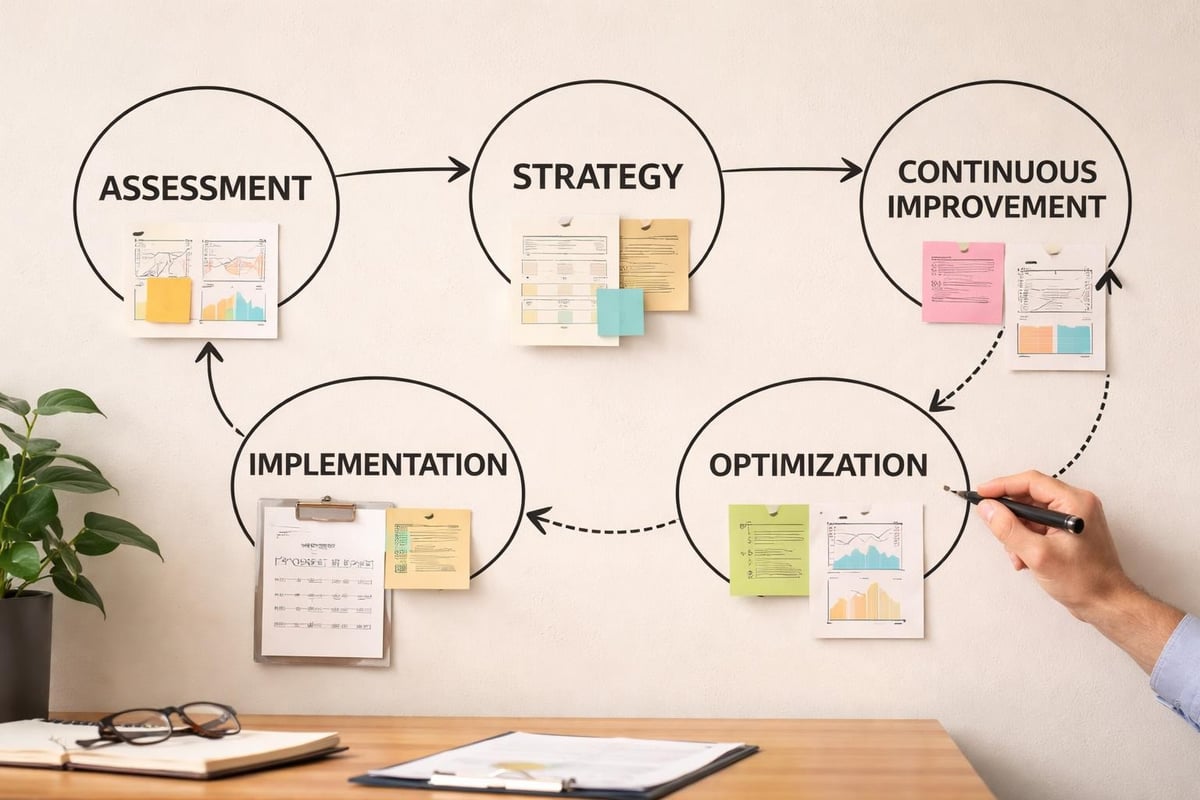
Revenue consulting engagement lifecycle

Organizations should also consider revenue replacement strategies when evaluating their revenue consulting needs. Client filtering and portfolio optimization help businesses focus resources on high-value relationships while developing new revenue streams.

Revenue Marketing Integration and Digital Transformation

The convergence of marketing and revenue operations has created new opportunities for organizations to accelerate growth through integrated strategies. Revenue marketing focuses on activities that directly contribute to pipeline generation and revenue outcomes rather than traditional brand-building metrics.

Revenue marketing best practices emphasize attribution modeling, account-based marketing strategies, and tight alignment between marketing and sales teams. Consultants help organizations implement marketing automation platforms, develop content strategies that support sales conversations, and create measurement frameworks that connect marketing activities to revenue outcomes.

Critical revenue marketing capabilities include:

  • Multi-touch attribution modeling
  • Predictive lead scoring algorithms
  • Account-based marketing campaign orchestration
  • Content personalization and dynamic messaging
  • Revenue forecasting based on pipeline velocity

The technology stack supporting revenue marketing continues to evolve rapidly, with artificial intelligence enabling unprecedented personalization and automation capabilities. Organizations working with revenue consultants can navigate this complex landscape more effectively, selecting and implementing solutions that deliver measurable business value.

Process Automation and Operational Efficiency

Eliminating manual processes represents one of the most significant opportunities for revenue improvement and cost reduction. Revenue consulting engagements frequently identify thousands of hours spent on repetitive tasks that could be automated or eliminated entirely through process redesign.

Automation opportunities span the entire revenue cycle:

  1. Lead capture and qualification through intelligent forms and chatbots
  2. Proposal generation using templated systems with dynamic pricing
  3. Contract management with automated approvals and e-signature workflows
  4. Invoice generation and delivery triggered by service completion
  5. Payment processing and reconciliation with minimal human intervention
  6. Revenue recognition aligned with accounting standards

Organizations implementing comprehensive automation strategies typically reduce operational costs by 30-50% while improving accuracy and speed. The enhanced profitability through consulting comes from both direct cost savings and improved capacity to handle higher transaction volumes without proportional staff increases.

Process Area Manual Hours/Month Automated Hours/Month Time Savings Quality Improvement
Quote Generation 160 20 88% 95% accuracy increase
Invoice Processing 240 40 83% 99% error reduction
Payment Follow-up 320 60 81% 45% faster collection
Revenue Reporting 80 10 88% Real-time visibility

The strategic implementation of automation requires careful process mapping, system integration planning, and change management. Revenue consultants bring expertise in identifying which processes deliver the highest return on automation investment and how to sequence implementation for minimal disruption.

Data-Driven Decision Making and Analytics

Modern revenue consulting relies heavily on data analytics to inform strategy development and measure results. Organizations generate vast amounts of data across their revenue operations, yet most struggle to extract actionable insights from this information.

Consultants help businesses establish data governance frameworks, implement analytics platforms, and develop reporting systems that support decision-making at all organizational levels. The focus extends beyond historical reporting to predictive and prescriptive analytics that forecast future performance and recommend optimal actions.

Building Revenue Intelligence Capabilities

Revenue intelligence platforms aggregate data from multiple sources to provide comprehensive visibility into revenue operations. These systems connect customer relationship management data, marketing automation metrics, financial information, and operational performance indicators.

Key analytics capabilities include:

  • Pipeline velocity analysis and conversion rate optimization
  • Customer lifetime value modeling and segmentation
  • Churn prediction and retention strategy development
  • Win/loss analysis and competitive intelligence
  • Pricing optimization based on market dynamics
  • Territory and quota planning using historical performance

Organizations developing sophisticated analytics capabilities gain significant competitive advantages. The ability to forecast revenue accurately, identify at-risk customers before they churn, and optimize pricing strategies drives substantial financial performance improvements.
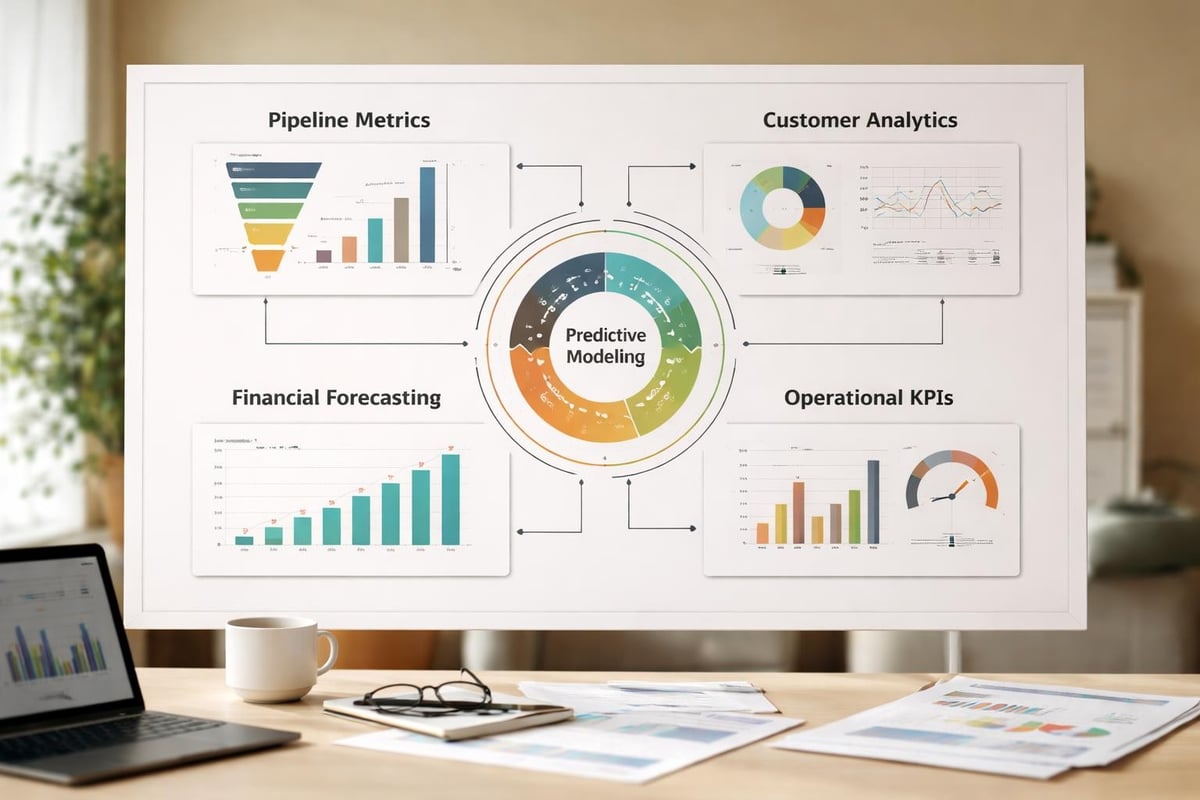
Revenue analytics dashboard concepts

The enhanced efficiency in operations enabled through data-driven decision-making extends beyond revenue functions to impact the entire organization. When teams have access to real-time performance data and predictive insights, they can adjust strategies quickly and capitalize on emerging opportunities.

Human Capital Management and Revenue Performance

Employee engagement, productivity, and wellness directly impact revenue generation capabilities. Revenue consulting increasingly addresses human capital factors that influence sales performance, customer service quality, and operational efficiency.

Organizations investing in employee health and financial wellness programs see measurable improvements in productivity, retention, and customer satisfaction. Consultants help businesses develop comprehensive human capital strategies that align employee incentives with revenue objectives while supporting overall wellbeing.

Human capital initiatives supporting revenue growth:

  • Performance-based compensation design and implementation
  • Sales enablement training and continuous skill development
  • Employee wellness programs reducing absenteeism and turnover
  • Financial literacy education improving employee financial health
  • Career development pathways increasing engagement and retention

The connection between employee wellbeing and business performance continues to strengthen as organizations recognize that sustainable revenue growth requires healthy, engaged teams. Companies that invest in comprehensive human capital management strategies outperform competitors by significant margins.

Technology Integration and System Optimization

The modern revenue technology stack includes dozens of specialized platforms, each addressing specific functions within the revenue ecosystem. Revenue consulting helps organizations evaluate, select, and integrate these technologies to create seamless workflows and data connectivity.

System integration challenges frequently prevent businesses from realizing the full value of their technology investments. Disconnected platforms create data silos, require duplicate data entry, and limit visibility into end-to-end processes. Consultants bring expertise in integration methodologies, API connectivity, and data synchronization strategies.

Integration Type Business Impact Complexity Level Typical Timeline
CRM-Marketing Automation High – enables lead nurturing Medium 4-8 weeks
ERP-CRM Very High – connects finance and sales High 12-16 weeks
Payment-Accounting High – automates reconciliation Low-Medium 2-4 weeks
Analytics-All Systems Very High – comprehensive visibility High 8-12 weeks

Professional services organizations particularly benefit from integrated technology stacks that connect project management, time tracking, billing, and financial systems. The elimination of manual data transfer and reconciliation saves significant time while improving accuracy.

Implementing Continuous Improvement Frameworks

Revenue consulting delivers maximum value when organizations embrace continuous improvement rather than one-time optimization projects. Establishing frameworks for ongoing monitoring, testing, and refinement ensures that revenue operations evolve with changing market conditions and customer expectations.

Successful continuous improvement programs include:

  1. Regular performance reviews against established benchmarks and targets
  2. A/B testing protocols for sales processes, messaging, and pricing strategies
  3. Customer feedback loops informing product and service enhancements
  4. Competitive intelligence gathering and strategic response planning
  5. Technology assessment cycles ensuring optimal tool utilization

Organizations that embed continuous improvement into their culture maintain competitive advantages over time. The discipline of regular evaluation and incremental optimization compounds into significant performance gains.

Measuring Revenue Consulting Success

Defining and tracking appropriate success metrics determines whether revenue consulting engagements deliver expected value. Organizations should establish baseline measurements before implementation and monitor progress against specific, time-bound targets.

Primary revenue consulting success indicators:

  • Revenue growth rate compared to historical trends and industry benchmarks
  • Customer acquisition cost reduction and lifetime value improvement
  • Sales cycle length compression and conversion rate increases
  • Operational cost per transaction or per customer
  • Employee productivity metrics and satisfaction scores
  • Cash flow improvement and days sales outstanding reduction

The professional consulting services team at organizations like Nero and Associates works with clients to establish comprehensive measurement frameworks that capture both quantitative financial results and qualitative improvements in organizational capabilities.

Beyond immediate financial metrics, successful engagements build internal capabilities that enable ongoing optimization. Knowledge transfer from consultants to client teams ensures that improvements sustain after formal engagements conclude. Organizations should evaluate consulting partners based on their commitment to capability building alongside delivering immediate results.


Revenue consulting provides organizations with specialized expertise, proven methodologies, and objective perspectives that accelerate growth and optimize operations. By addressing revenue generation holistically across marketing, sales, operations, and technology, businesses unlock significant performance improvements while building sustainable competitive advantages. Nero and Associates, Inc. helps organizations transform their revenue operations through performance-based consulting that delivers measurable results in efficiency, cost reduction, and employee wellness, enabling businesses to save costs, save time, and ultimately improve their bottom line through integrated solutions.

Revenue Consulting: Strategies to Maximize Growth in 2026

Organizations across industries face mounting pressure to optimize revenue streams while controlling costs and improving operational efficiency. Revenue consulting has emerged as a strategic solution that enables businesses to identify untapped growth opportunities, streamline processes, and align teams around common financial objectives. By leveraging specialized expertise and proven methodologies, companies can transform their revenue generation capabilities and achieve sustainable growth in an increasingly competitive marketplace.

Understanding Revenue Consulting and Its Strategic Value

Revenue consulting encompasses a comprehensive approach to analyzing, optimizing, and accelerating an organization's revenue generation capabilities. This specialized practice goes beyond traditional sales consulting by examining the entire revenue ecosystem, including marketing effectiveness, sales processes, customer success initiatives, and operational efficiency.

The foundation of effective revenue consulting lies in data-driven analysis and cross-functional alignment. Consultants examine revenue operations from multiple angles, identifying bottlenecks, inefficiencies, and missed opportunities that prevent organizations from reaching their full potential. This holistic perspective enables businesses to make informed decisions about resource allocation, technology investments, and strategic priorities.

Key Components of Revenue Consulting Services

Modern revenue consulting engagements typically address several critical areas simultaneously:

  • Revenue operations optimization that aligns marketing, sales, and customer success teams
  • Process automation to eliminate manual tasks and reduce operational overhead
  • Data analytics and forecasting for improved decision-making
  • Technology stack evaluation and integration strategies
  • Pricing strategy development and optimization
  • Customer lifecycle management improvements

Revenue consulting framework components

Organizations implementing revenue consulting strategies typically see improvements across multiple performance indicators. According to revenue operations consulting best practices, companies that align their revenue teams and processes can accelerate growth by 15-20% while reducing customer acquisition costs.

The Healthcare Revenue Cycle Management Perspective

For healthcare organizations, revenue consulting takes on additional complexity due to regulatory requirements, insurance processes, and patient care considerations. Healthcare revenue cycle management consulting focuses on optimizing the entire patient financial experience from registration through final payment.

Healthcare-specific revenue challenges include:

  1. Insurance claim denials and rejections
  2. Patient billing complexity and confusion
  3. Compliance with changing regulations
  4. Technology integration across disparate systems
  5. Staff training and process standardization

The best practices in revenue cycle management emphasize proactive denial management, patient communication strategies, and technology-enabled automation. Healthcare providers working with revenue consultants can reduce days in accounts receivable by 30-40% while improving patient satisfaction scores.

Challenge Area Traditional Approach Revenue Consulting Approach Typical Improvement
Claim Denials Reactive resolution Predictive analytics and prevention 25-35% reduction
Patient Collections Manual follow-up Automated reminders and payment plans 40-50% increase
Registration Accuracy Staff training only Process redesign and technology 60-70% error reduction
Revenue Leakage Periodic audits Continuous monitoring systems 15-25% recovery

Healthcare organizations benefit significantly from consulting expertise that combines clinical workflow understanding with financial optimization strategies. The integration of artificial intelligence and automation technologies enables real-time claim scrubbing, predictive denial management, and intelligent work queuing.

Optimizing Consulting Investments for Maximum ROI

Organizations investing in revenue consulting must approach the engagement strategically to maximize return on investment. The decision to engage consultants represents a significant resource allocation that requires careful planning and clear objectives.

Optimizing consulting spend requires establishing measurable goals, defining success metrics, and creating accountability frameworks. Companies should develop detailed scopes of work that outline deliverables, timelines, and expected outcomes before engaging consultants.

Establishing Clear Engagement Parameters

Successful revenue consulting engagements begin with alignment between client expectations and consultant capabilities. Organizations should evaluate potential partners based on:

  • Industry-specific experience and proven results
  • Methodology transparency and knowledge transfer
  • Technology expertise and integration capabilities
  • Performance-based compensation models
  • Cultural fit and communication styles

Performance-based consulting models align consultant incentives with client outcomes, creating partnerships focused on measurable results rather than billable hours. These arrangements typically tie a portion of consulting fees to achievement of specific revenue targets, cost reductions, or efficiency improvements.

Revenue consulting engagement lifecycle

Organizations should also consider revenue replacement strategies when evaluating their revenue consulting needs. Client filtering and portfolio optimization help businesses focus resources on high-value relationships while developing new revenue streams.

Revenue Marketing Integration and Digital Transformation

The convergence of marketing and revenue operations has created new opportunities for organizations to accelerate growth through integrated strategies. Revenue marketing focuses on activities that directly contribute to pipeline generation and revenue outcomes rather than traditional brand-building metrics.

Revenue marketing best practices emphasize attribution modeling, account-based marketing strategies, and tight alignment between marketing and sales teams. Consultants help organizations implement marketing automation platforms, develop content strategies that support sales conversations, and create measurement frameworks that connect marketing activities to revenue outcomes.

Critical revenue marketing capabilities include:

  • Multi-touch attribution modeling
  • Predictive lead scoring algorithms
  • Account-based marketing campaign orchestration
  • Content personalization and dynamic messaging
  • Revenue forecasting based on pipeline velocity

The technology stack supporting revenue marketing continues to evolve rapidly, with artificial intelligence enabling unprecedented personalization and automation capabilities. Organizations working with revenue consultants can navigate this complex landscape more effectively, selecting and implementing solutions that deliver measurable business value.

Process Automation and Operational Efficiency

Eliminating manual processes represents one of the most significant opportunities for revenue improvement and cost reduction. Revenue consulting engagements frequently identify thousands of hours spent on repetitive tasks that could be automated or eliminated entirely through process redesign.

Automation opportunities span the entire revenue cycle:

  1. Lead capture and qualification through intelligent forms and chatbots
  2. Proposal generation using templated systems with dynamic pricing
  3. Contract management with automated approvals and e-signature workflows
  4. Invoice generation and delivery triggered by service completion
  5. Payment processing and reconciliation with minimal human intervention
  6. Revenue recognition aligned with accounting standards

Organizations implementing comprehensive automation strategies typically reduce operational costs by 30-50% while improving accuracy and speed. The enhanced profitability through consulting comes from both direct cost savings and improved capacity to handle higher transaction volumes without proportional staff increases.

Process Area Manual Hours/Month Automated Hours/Month Time Savings Quality Improvement
Quote Generation 160 20 88% 95% accuracy increase
Invoice Processing 240 40 83% 99% error reduction
Payment Follow-up 320 60 81% 45% faster collection
Revenue Reporting 80 10 88% Real-time visibility

The strategic implementation of automation requires careful process mapping, system integration planning, and change management. Revenue consultants bring expertise in identifying which processes deliver the highest return on automation investment and how to sequence implementation for minimal disruption.

Data-Driven Decision Making and Analytics

Modern revenue consulting relies heavily on data analytics to inform strategy development and measure results. Organizations generate vast amounts of data across their revenue operations, yet most struggle to extract actionable insights from this information.

Consultants help businesses establish data governance frameworks, implement analytics platforms, and develop reporting systems that support decision-making at all organizational levels. The focus extends beyond historical reporting to predictive and prescriptive analytics that forecast future performance and recommend optimal actions.

Building Revenue Intelligence Capabilities

Revenue intelligence platforms aggregate data from multiple sources to provide comprehensive visibility into revenue operations. These systems connect customer relationship management data, marketing automation metrics, financial information, and operational performance indicators.

Key analytics capabilities include:

  • Pipeline velocity analysis and conversion rate optimization
  • Customer lifetime value modeling and segmentation
  • Churn prediction and retention strategy development
  • Win/loss analysis and competitive intelligence
  • Pricing optimization based on market dynamics
  • Territory and quota planning using historical performance

Organizations developing sophisticated analytics capabilities gain significant competitive advantages. The ability to forecast revenue accurately, identify at-risk customers before they churn, and optimize pricing strategies drives substantial financial performance improvements.

Revenue analytics dashboard concepts

The enhanced efficiency in operations enabled through data-driven decision-making extends beyond revenue functions to impact the entire organization. When teams have access to real-time performance data and predictive insights, they can adjust strategies quickly and capitalize on emerging opportunities.

Human Capital Management and Revenue Performance

Employee engagement, productivity, and wellness directly impact revenue generation capabilities. Revenue consulting increasingly addresses human capital factors that influence sales performance, customer service quality, and operational efficiency.

Organizations investing in employee health and financial wellness programs see measurable improvements in productivity, retention, and customer satisfaction. Consultants help businesses develop comprehensive human capital strategies that align employee incentives with revenue objectives while supporting overall wellbeing.

Human capital initiatives supporting revenue growth:

  • Performance-based compensation design and implementation
  • Sales enablement training and continuous skill development
  • Employee wellness programs reducing absenteeism and turnover
  • Financial literacy education improving employee financial health
  • Career development pathways increasing engagement and retention

The connection between employee wellbeing and business performance continues to strengthen as organizations recognize that sustainable revenue growth requires healthy, engaged teams. Companies that invest in comprehensive human capital management strategies outperform competitors by significant margins.

Technology Integration and System Optimization

The modern revenue technology stack includes dozens of specialized platforms, each addressing specific functions within the revenue ecosystem. Revenue consulting helps organizations evaluate, select, and integrate these technologies to create seamless workflows and data connectivity.

System integration challenges frequently prevent businesses from realizing the full value of their technology investments. Disconnected platforms create data silos, require duplicate data entry, and limit visibility into end-to-end processes. Consultants bring expertise in integration methodologies, API connectivity, and data synchronization strategies.

Integration Type Business Impact Complexity Level Typical Timeline
CRM-Marketing Automation High – enables lead nurturing Medium 4-8 weeks
ERP-CRM Very High – connects finance and sales High 12-16 weeks
Payment-Accounting High – automates reconciliation Low-Medium 2-4 weeks
Analytics-All Systems Very High – comprehensive visibility High 8-12 weeks

Professional services organizations particularly benefit from integrated technology stacks that connect project management, time tracking, billing, and financial systems. The elimination of manual data transfer and reconciliation saves significant time while improving accuracy.

Implementing Continuous Improvement Frameworks

Revenue consulting delivers maximum value when organizations embrace continuous improvement rather than one-time optimization projects. Establishing frameworks for ongoing monitoring, testing, and refinement ensures that revenue operations evolve with changing market conditions and customer expectations.

Successful continuous improvement programs include:

  1. Regular performance reviews against established benchmarks and targets
  2. A/B testing protocols for sales processes, messaging, and pricing strategies
  3. Customer feedback loops informing product and service enhancements
  4. Competitive intelligence gathering and strategic response planning
  5. Technology assessment cycles ensuring optimal tool utilization

Organizations that embed continuous improvement into their culture maintain competitive advantages over time. The discipline of regular evaluation and incremental optimization compounds into significant performance gains.

Measuring Revenue Consulting Success

Defining and tracking appropriate success metrics determines whether revenue consulting engagements deliver expected value. Organizations should establish baseline measurements before implementation and monitor progress against specific, time-bound targets.

Primary revenue consulting success indicators:

  • Revenue growth rate compared to historical trends and industry benchmarks
  • Customer acquisition cost reduction and lifetime value improvement
  • Sales cycle length compression and conversion rate increases
  • Operational cost per transaction or per customer
  • Employee productivity metrics and satisfaction scores
  • Cash flow improvement and days sales outstanding reduction

The professional consulting services team at organizations like Nero and Associates works with clients to establish comprehensive measurement frameworks that capture both quantitative financial results and qualitative improvements in organizational capabilities.

Beyond immediate financial metrics, successful engagements build internal capabilities that enable ongoing optimization. Knowledge transfer from consultants to client teams ensures that improvements sustain after formal engagements conclude. Organizations should evaluate consulting partners based on their commitment to capability building alongside delivering immediate results.


Revenue consulting provides organizations with specialized expertise, proven methodologies, and objective perspectives that accelerate growth and optimize operations. By addressing revenue generation holistically across marketing, sales, operations, and technology, businesses unlock significant performance improvements while building sustainable competitive advantages. Nero and Associates, Inc. helps organizations transform their revenue operations through performance-based consulting that delivers measurable results in efficiency, cost reduction, and employee wellness, enabling businesses to save costs, save time, and ultimately improve their bottom line through integrated solutions.

Website developed in accordance with Web Content Accessibility Guidelines 2.2.
If you encounter any issues while using this site, please contact us: 215.526.5126