
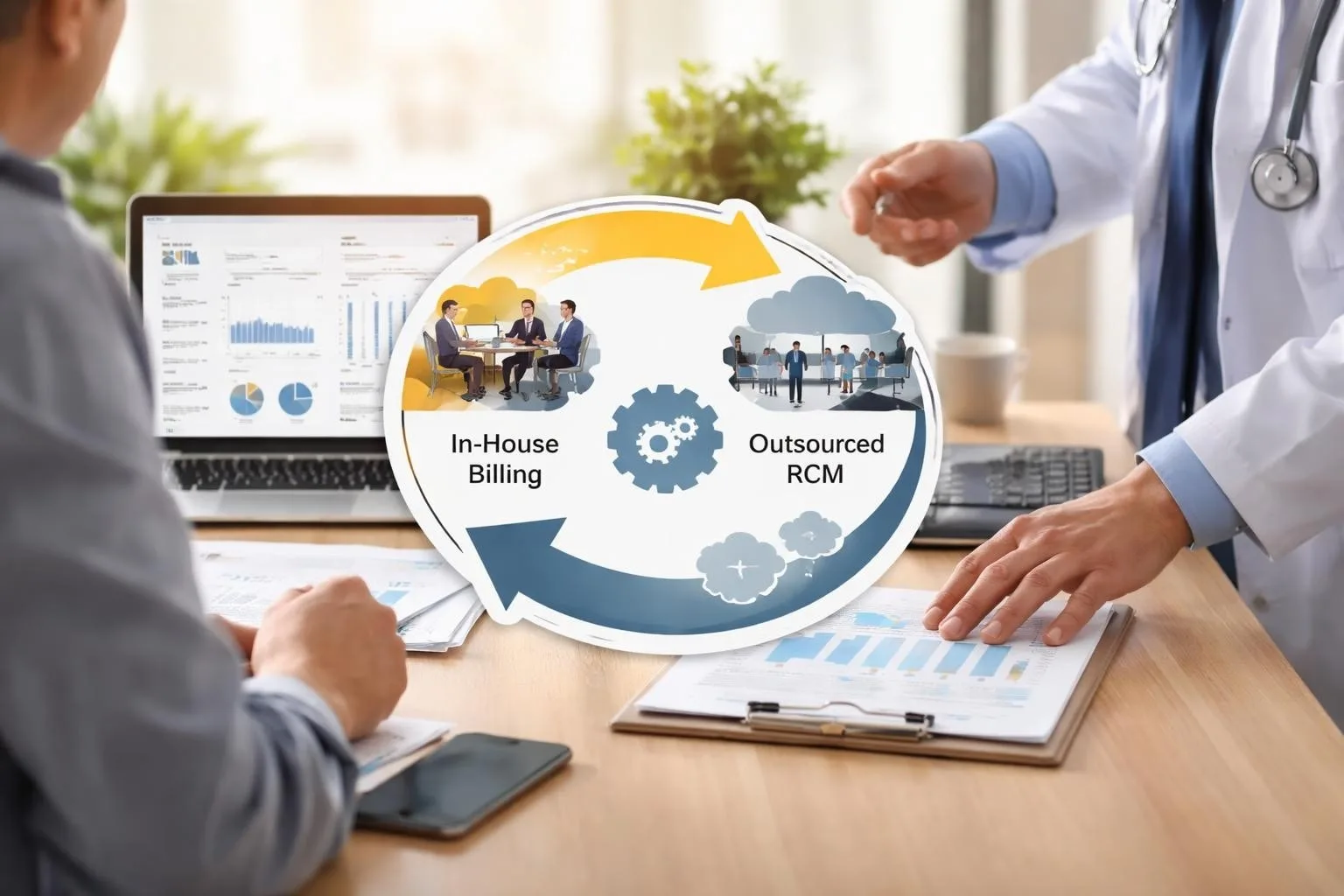
RCM Outsourcing: Strategic Guide for Healthcare Success

Share on Facebook
Share on X
Share on LinkedIn

Healthcare organizations face mounting pressure to optimize their revenue cycle management while controlling costs and maintaining compliance. The complexity of billing, coding, claims processing, and payment collection continues to escalate alongside regulatory changes and staffing challenges. Many organizations are discovering that rcm outsourcing offers a strategic solution to these operational challenges, enabling them to focus resources on patient care while leveraging specialized expertise to maximize revenue.

Understanding the Revenue Cycle Management Landscape

Revenue cycle management encompasses every step from patient registration through final payment collection. This complex process requires expertise in medical coding, insurance verification, claims submission, denial management, and payment posting. Healthcare organizations today must navigate constantly changing payer requirements, coding updates, and compliance mandates while managing staffing shortages and rising operational costs.

The traditional in-house approach to revenue cycle operations demands significant infrastructure investment. Organizations need specialized software, trained staff, ongoing education, and quality assurance programs. These requirements strain budgets and divert attention from core clinical missions.

Revenue cycle management process stages

Key Drivers Behind Outsourcing Decisions

Several factors are pushing healthcare organizations toward external partnerships for revenue cycle functions. Labor shortages remain a critical challenge, with qualified medical coders and billing specialists increasingly difficult to recruit and retain. The specialized knowledge required for accurate coding and claims processing takes years to develop, yet staff turnover disrupts continuity and impacts performance.

Technology investments present another significant consideration. Modern revenue cycle platforms require substantial capital expenditure plus ongoing maintenance and upgrade costs. Many organizations lack the resources to implement cutting-edge automation and analytics tools independently.

Compliance complexity continues to intensify. Healthcare organizations must navigate HIPAA requirements, payer-specific guidelines, and evolving regulatory frameworks. Maintaining compliance requires dedicated resources and expertise that smaller organizations often cannot sustain internally.

According to recent industry research, over 20% of revenue cycle leaders now outsource outpatient RCM services, reflecting the growing recognition of outsourcing benefits across the healthcare sector.

Core Benefits of RCM Outsourcing

Organizations that embrace rcm outsourcing typically experience improvements across multiple performance dimensions. These advantages extend beyond simple cost reduction to encompass operational efficiency, revenue optimization, and strategic flexibility.

Financial Performance Enhancement

External revenue cycle partners bring specialized expertise that translates directly into improved collections. Professional billing companies maintain current knowledge of payer requirements, coding updates, and reimbursement strategies. This expertise reduces claim denials, accelerates payment cycles, and maximizes legitimate reimbursement.

Cost predictability represents another financial advantage. Outsourcing converts variable staffing costs into predictable contracted fees. Organizations eliminate expenses associated with recruitment, training, benefits, and turnover while gaining budget certainty that facilitates financial planning.

  • Reduced days in accounts receivable
  • Lower claim denial rates
  • Improved first-pass resolution percentages
  • Decreased bad debt write-offs
  • Enhanced cash flow consistency

Access to Specialized Expertise

Revenue cycle outsourcing partners maintain teams of certified coders, billing specialists, and denial management experts. These professionals focus exclusively on revenue cycle optimization, developing deep expertise that generalist in-house staff cannot match. Organizations gain access to this specialized knowledge without the burden of developing it internally.

The ten key benefits of outsourcing RCM include access to specialized talent pools that would be cost-prohibitive for individual organizations to assemble and maintain independently.

Scalability and Flexibility

Business demands fluctuate based on patient volumes, seasonal patterns, and organizational changes. External partners provide the flexibility to scale operations up or down without the constraints of fixed staffing models. This adaptability proves particularly valuable during growth phases, mergers, or market fluctuations.

Organizations can adjust service levels based on current needs rather than maintaining permanent infrastructure for peak capacity. This dynamic approach optimizes resource allocation while ensuring consistent performance regardless of volume variations.

Evaluating Outsourcing Models and Vendors

Not all revenue cycle outsourcing arrangements deliver equivalent value. Organizations must carefully assess different models and vendor capabilities to identify partnerships aligned with their specific needs and objectives.

Common Outsourcing Structures

Model Type Scope Best For Considerations
Full Outsourcing Complete revenue cycle Organizations seeking comprehensive solutions Requires strong governance framework
Selective Outsourcing Specific functions (coding, collections) Targeted improvement needs Must manage multiple vendor relationships
Hybrid Model Blended in-house and external resources Organizations with existing infrastructure Requires clear role definition and coordination
Performance-Based Payment tied to results Cost-conscious organizations Alignment of incentives critical

Critical Vendor Selection Criteria

Choosing the right outsourcing partner demands thorough due diligence across multiple dimensions. Technology capabilities should be a primary consideration, as the right blend of technology and expertise determines overall effectiveness and long-term sustainability.

Prospective partners should demonstrate robust automation platforms, advanced analytics capabilities, and integration expertise. The ability to connect seamlessly with existing electronic health records and practice management systems is essential for operational continuity.

Performance metrics and transparency separate exceptional vendors from mediocre providers. Organizations should require detailed reporting on key performance indicators including clean claim rates, days in accounts receivable, denial rates, and collection percentages. Real-time dashboards and regular performance reviews ensure accountability and enable continuous improvement.

RCM vendor evaluation framework

Compliance and Security Considerations

Healthcare revenue cycle operations involve sensitive patient information and financial data. Outsourcing partners must demonstrate rigorous security protocols and compliance with HIPAA regulations. Organizations should verify certifications, audit procedures, and breach response protocols before engaging any vendor.

  1. Request evidence of HIPAA compliance audits and certifications
  2. Review business associate agreements thoroughly
  3. Assess data encryption and access control measures
  4. Evaluate disaster recovery and business continuity plans
  5. Verify staff training programs on privacy and security
  6. Examine incident response and breach notification procedures

Implementation Strategies for Successful Transitions

Moving from in-house operations to rcm outsourcing requires careful planning and execution. Organizations that approach transitions strategically minimize disruption while maximizing the benefits of external partnerships.

Pre-Implementation Planning

Successful transitions begin with comprehensive assessment of current state performance. Organizations should document existing processes, identify pain points, and establish baseline metrics. This foundation enables accurate measurement of post-implementation improvements and informs realistic expectations.

Stakeholder engagement proves critical throughout the transition process. Clinical staff, billing teams, finance departments, and leadership all have perspectives and concerns that must be addressed. Early involvement builds buy-in and surfaces potential obstacles before they derail implementation.

Organizations should also clarify objectives and success criteria. Whether the primary goal is cost reduction, revenue improvement, staff reallocation, or technology access, explicit objectives guide vendor selection and service design. The comprehensive RCM outsourcing services guide offers valuable insights into maximizing ROI while maintaining compliance throughout the implementation process.

Managing the Transition Period

The switchover from internal to external revenue cycle management requires meticulous coordination. Organizations should plan for a phased transition rather than attempting immediate wholesale change. Gradual implementation allows teams to adapt, systems to stabilize, and processes to be refined before full deployment.

Communication protocols between internal teams and external partners must be established from day one. Regular touchpoints, escalation procedures, and feedback mechanisms ensure alignment and enable rapid problem resolution. Clear documentation of roles, responsibilities, and decision authority prevents confusion and delays.

Data migration represents one of the most technically challenging aspects of outsourcing transitions. Historical claims, patient accounts, and payment records must transfer accurately to new systems. Validation procedures and parallel processing during the transition period help catch errors before they impact revenue or patient satisfaction.

Ongoing Partnership Management

RCM outsourcing relationships require active management rather than passive oversight. Organizations should establish governance structures that include regular performance reviews, strategic planning sessions, and continuous improvement initiatives. Just as non-profits multiply mission impact with strategic efficiency, healthcare organizations can amplify financial outcomes through proactive partnership management.

Quarterly business reviews provide forums for assessing performance against targets, identifying improvement opportunities, and adjusting strategies based on changing circumstances. These structured conversations ensure partnerships remain aligned with organizational objectives and deliver sustained value.

Technology Integration and Automation Advantages

Modern rcm outsourcing extends far beyond manual processing by human teams. Leading vendors leverage sophisticated automation, artificial intelligence, and advanced analytics to optimize every aspect of the revenue cycle.

Automation Technologies Transforming Revenue Cycles

Robotic process automation handles repetitive tasks like eligibility verification, claim status checks, and payment posting with speed and accuracy that exceed human capabilities. These technologies work around the clock, processing thousands of transactions without fatigue or error drift.

Artificial intelligence applications identify patterns in denial data, predict payment likelihood, and optimize collection strategies. Machine learning algorithms continuously improve based on outcomes, becoming more effective over time. Natural language processing extracts relevant information from unstructured clinical documentation to support accurate coding.

The emphasis on scalability, automation, and transparency in revenue cycle outsourcing reflects the industry's recognition that technology integration is no longer optional but essential for competitive performance.
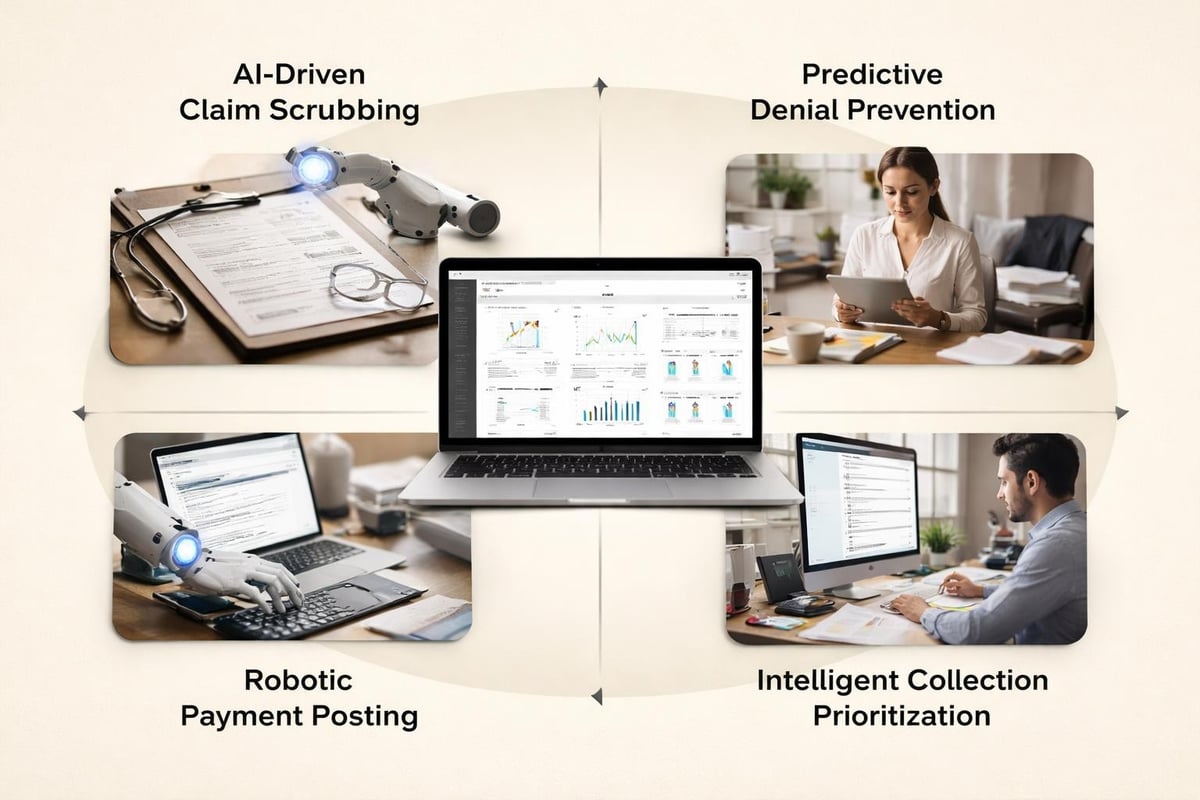
Revenue cycle automation workflow

Analytics and Business Intelligence

Advanced outsourcing partners provide sophisticated analytics that reveal operational insights invisible to traditional reporting. Predictive modeling identifies accounts at risk of becoming bad debt before collection becomes impossible. Trend analysis highlights emerging denial patterns or payer behavior changes requiring strategic response.

  • Real-time dashboard visibility into key performance metrics
  • Predictive analytics for proactive intervention
  • Benchmarking against industry standards and peer organizations
  • Root cause analysis of denial patterns
  • Revenue optimization recommendations based on data insights
  • Patient payment behavior analysis and segmentation

Integration with Existing Systems

Effective rcm outsourcing requires seamless integration with electronic health records, practice management systems, and financial platforms. Modern vendors employ sophisticated integration technologies including APIs, HL7 messaging, and FHIR standards to enable real-time data exchange.

This connectivity ensures clinical and financial systems remain synchronized, eliminating manual data entry and reducing error risk. Providers access complete patient financial information within familiar workflows, while outsourcing partners receive the clinical documentation needed for accurate coding and billing.

Strategic Considerations for Long-Term Success

Organizations approaching rcm outsourcing as a tactical cost-cutting measure miss opportunities for strategic advantage. The most successful partnerships align revenue cycle optimization with broader organizational objectives and long-term vision.

Building Sustainable Partnerships

Vendor relationships should be structured for mutual success rather than adversarial negotiations. Performance-based compensation models align incentives by tying vendor revenue to client outcomes. When partners share financial stakes in clean claim rates, collection percentages, and patient satisfaction, cooperation naturally intensifies.

Long-term contracts with appropriate performance guarantees and exit provisions provide stability while maintaining accountability. Organizations benefit from vendor investments in specialized staff training and technology customization, while vendors gain the revenue predictability needed to justify those investments.

Regular strategic planning ensures partnerships evolve alongside organizational needs. Annual reviews should assess changing market conditions, emerging technologies, and shifting priorities. As detailed in this executive’s insights on RCM outsourcing, successful relationships adapt continuously rather than remaining static.

Measuring and Optimizing Performance

Effective performance management extends beyond monitoring contracted metrics to encompass comprehensive outcome assessment. Organizations should track both financial and operational indicators that reflect overall revenue cycle health.

Performance Category Key Metrics Target Benchmarks
Financial Net collection rate, Cost to collect, Days in AR >95%, <3%, <35 days
Operational Clean claim rate, Denial rate, Appeal success >95%, <5%, >60%
Patient Experience Statement clarity, Payment options, Support responsiveness Survey scores >4.5/5
Compliance Audit findings, Coding accuracy, Privacy incidents Zero violations

Maintaining Internal Expertise

Even with comprehensive outsourcing, organizations must retain sufficient internal knowledge to manage partnerships effectively, make strategic decisions, and ensure compliance. The case study of a top U.S. healthcare provider demonstrates how maintaining internal oversight capabilities while outsourcing execution creates optimal results.

Internal teams should focus on strategy, governance, and exception management rather than routine processing. This approach leverages external efficiency while preserving institutional knowledge and decision-making authority on critical matters.

Risk Management and Contingency Planning

Every outsourcing arrangement introduces dependencies and potential vulnerabilities. Sophisticated organizations anticipate these risks and develop mitigation strategies before problems emerge.

Common Risk Factors

Vendor performance shortfalls represent the most obvious concern. Organizations must establish clear performance standards, regular monitoring procedures, and contractual remedies for underperformance. Service level agreements should specify response times, quality thresholds, and financial penalties for failures.

Business continuity risks arise when critical functions depend on external providers. Natural disasters, cyber incidents, or vendor business failures could disrupt revenue cycle operations. Contracts should require vendors to maintain disaster recovery plans, backup systems, and business continuity protocols that mirror the criticality of revenue cycle functions.

Regulatory compliance remains the client organization's ultimate responsibility regardless of outsourcing arrangements. Business associate agreements must clearly define each party's obligations, but healthcare organizations cannot delegate accountability for HIPAA compliance or other regulatory requirements.

Building Resilience

Organizations can enhance outsourcing resilience through several mechanisms. Hybrid models that maintain some internal capability provide fallback options if vendor relationships deteriorate. Even limited in-house expertise enables organizations to absorb critical functions temporarily during transitions or emergencies.

Multi-vendor strategies distribute risk by avoiding single-source dependency for all revenue cycle functions. While this approach increases management complexity, it prevents total operational paralysis if one vendor relationship fails.

Regular testing of contingency plans ensures they remain viable when needed. Annual exercises that simulate vendor failures or service disruptions reveal gaps in continuity planning before real emergencies occur. These tests also maintain staff familiarity with backup procedures that may not be used regularly.

Future Trends Shaping RCM Outsourcing

The revenue cycle outsourcing landscape continues evolving rapidly as technology advances, regulatory requirements change, and market dynamics shift. Organizations should consider emerging trends when structuring long-term partnerships and making strategic decisions.

Artificial Intelligence Advancement

AI capabilities are expanding beyond current applications to encompass increasingly sophisticated functions. Natural language processing will automate coding with greater accuracy, while predictive analytics will optimize every aspect of revenue cycle operations. Conversational AI may handle patient financial counseling and payment arrangements with minimal human intervention.

Value-Based Care Integration

As healthcare reimbursement shifts from fee-for-service to value-based models, revenue cycle management must adapt accordingly. Outsourcing partners will need expertise in quality reporting, risk adjustment, and population health analytics alongside traditional billing functions. The integration of clinical and financial data will become essential for optimizing reimbursement under alternative payment models.

Patient Financial Experience Focus

Consumer expectations for convenient, transparent financial interactions continue rising. Revenue cycle outsourcing increasingly encompasses patient engagement technologies including mobile payment applications, price transparency tools, and personalized communication strategies. The patient payment needs and technology support highlighted in recent studies reflect this growing emphasis on consumer-centric revenue cycle approaches.


Strategic rcm outsourcing transforms revenue cycle operations from cost centers into competitive advantages by combining specialized expertise, advanced technology, and scalable resources. Organizations that approach outsourcing relationships as strategic partnerships rather than vendor transactions achieve sustained improvements in financial performance, operational efficiency, and organizational focus. Nero and Associates, Inc. helps healthcare organizations and other businesses optimize their revenue cycle operations through performance-based consulting that integrates automation, process improvement, and strategic partnership management, enabling you to maximize revenue while redirecting internal resources toward your core mission.

RCM Outsourcing: Strategic Guide for Healthcare Success

Healthcare organizations face mounting pressure to optimize their revenue cycle management while controlling costs and maintaining compliance. The complexity of billing, coding, claims processing, and payment collection continues to escalate alongside regulatory changes and staffing challenges. Many organizations are discovering that rcm outsourcing offers a strategic solution to these operational challenges, enabling them to focus resources on patient care while leveraging specialized expertise to maximize revenue.

Understanding the Revenue Cycle Management Landscape

Revenue cycle management encompasses every step from patient registration through final payment collection. This complex process requires expertise in medical coding, insurance verification, claims submission, denial management, and payment posting. Healthcare organizations today must navigate constantly changing payer requirements, coding updates, and compliance mandates while managing staffing shortages and rising operational costs.

The traditional in-house approach to revenue cycle operations demands significant infrastructure investment. Organizations need specialized software, trained staff, ongoing education, and quality assurance programs. These requirements strain budgets and divert attention from core clinical missions.

Revenue cycle management process stages

Key Drivers Behind Outsourcing Decisions

Several factors are pushing healthcare organizations toward external partnerships for revenue cycle functions. Labor shortages remain a critical challenge, with qualified medical coders and billing specialists increasingly difficult to recruit and retain. The specialized knowledge required for accurate coding and claims processing takes years to develop, yet staff turnover disrupts continuity and impacts performance.

Technology investments present another significant consideration. Modern revenue cycle platforms require substantial capital expenditure plus ongoing maintenance and upgrade costs. Many organizations lack the resources to implement cutting-edge automation and analytics tools independently.

Compliance complexity continues to intensify. Healthcare organizations must navigate HIPAA requirements, payer-specific guidelines, and evolving regulatory frameworks. Maintaining compliance requires dedicated resources and expertise that smaller organizations often cannot sustain internally.

According to recent industry research, over 20% of revenue cycle leaders now outsource outpatient RCM services, reflecting the growing recognition of outsourcing benefits across the healthcare sector.

Core Benefits of RCM Outsourcing

Organizations that embrace rcm outsourcing typically experience improvements across multiple performance dimensions. These advantages extend beyond simple cost reduction to encompass operational efficiency, revenue optimization, and strategic flexibility.

Financial Performance Enhancement

External revenue cycle partners bring specialized expertise that translates directly into improved collections. Professional billing companies maintain current knowledge of payer requirements, coding updates, and reimbursement strategies. This expertise reduces claim denials, accelerates payment cycles, and maximizes legitimate reimbursement.

Cost predictability represents another financial advantage. Outsourcing converts variable staffing costs into predictable contracted fees. Organizations eliminate expenses associated with recruitment, training, benefits, and turnover while gaining budget certainty that facilitates financial planning.

  • Reduced days in accounts receivable
  • Lower claim denial rates
  • Improved first-pass resolution percentages
  • Decreased bad debt write-offs
  • Enhanced cash flow consistency

Access to Specialized Expertise

Revenue cycle outsourcing partners maintain teams of certified coders, billing specialists, and denial management experts. These professionals focus exclusively on revenue cycle optimization, developing deep expertise that generalist in-house staff cannot match. Organizations gain access to this specialized knowledge without the burden of developing it internally.

The ten key benefits of outsourcing RCM include access to specialized talent pools that would be cost-prohibitive for individual organizations to assemble and maintain independently.

Scalability and Flexibility

Business demands fluctuate based on patient volumes, seasonal patterns, and organizational changes. External partners provide the flexibility to scale operations up or down without the constraints of fixed staffing models. This adaptability proves particularly valuable during growth phases, mergers, or market fluctuations.

Organizations can adjust service levels based on current needs rather than maintaining permanent infrastructure for peak capacity. This dynamic approach optimizes resource allocation while ensuring consistent performance regardless of volume variations.

Evaluating Outsourcing Models and Vendors

Not all revenue cycle outsourcing arrangements deliver equivalent value. Organizations must carefully assess different models and vendor capabilities to identify partnerships aligned with their specific needs and objectives.

Common Outsourcing Structures

Model Type Scope Best For Considerations
Full Outsourcing Complete revenue cycle Organizations seeking comprehensive solutions Requires strong governance framework
Selective Outsourcing Specific functions (coding, collections) Targeted improvement needs Must manage multiple vendor relationships
Hybrid Model Blended in-house and external resources Organizations with existing infrastructure Requires clear role definition and coordination
Performance-Based Payment tied to results Cost-conscious organizations Alignment of incentives critical

Critical Vendor Selection Criteria

Choosing the right outsourcing partner demands thorough due diligence across multiple dimensions. Technology capabilities should be a primary consideration, as the right blend of technology and expertise determines overall effectiveness and long-term sustainability.

Prospective partners should demonstrate robust automation platforms, advanced analytics capabilities, and integration expertise. The ability to connect seamlessly with existing electronic health records and practice management systems is essential for operational continuity.

Performance metrics and transparency separate exceptional vendors from mediocre providers. Organizations should require detailed reporting on key performance indicators including clean claim rates, days in accounts receivable, denial rates, and collection percentages. Real-time dashboards and regular performance reviews ensure accountability and enable continuous improvement.

RCM vendor evaluation framework

Compliance and Security Considerations

Healthcare revenue cycle operations involve sensitive patient information and financial data. Outsourcing partners must demonstrate rigorous security protocols and compliance with HIPAA regulations. Organizations should verify certifications, audit procedures, and breach response protocols before engaging any vendor.

  1. Request evidence of HIPAA compliance audits and certifications
  2. Review business associate agreements thoroughly
  3. Assess data encryption and access control measures
  4. Evaluate disaster recovery and business continuity plans
  5. Verify staff training programs on privacy and security
  6. Examine incident response and breach notification procedures

Implementation Strategies for Successful Transitions

Moving from in-house operations to rcm outsourcing requires careful planning and execution. Organizations that approach transitions strategically minimize disruption while maximizing the benefits of external partnerships.

Pre-Implementation Planning

Successful transitions begin with comprehensive assessment of current state performance. Organizations should document existing processes, identify pain points, and establish baseline metrics. This foundation enables accurate measurement of post-implementation improvements and informs realistic expectations.

Stakeholder engagement proves critical throughout the transition process. Clinical staff, billing teams, finance departments, and leadership all have perspectives and concerns that must be addressed. Early involvement builds buy-in and surfaces potential obstacles before they derail implementation.

Organizations should also clarify objectives and success criteria. Whether the primary goal is cost reduction, revenue improvement, staff reallocation, or technology access, explicit objectives guide vendor selection and service design. The comprehensive RCM outsourcing services guide offers valuable insights into maximizing ROI while maintaining compliance throughout the implementation process.

Managing the Transition Period

The switchover from internal to external revenue cycle management requires meticulous coordination. Organizations should plan for a phased transition rather than attempting immediate wholesale change. Gradual implementation allows teams to adapt, systems to stabilize, and processes to be refined before full deployment.

Communication protocols between internal teams and external partners must be established from day one. Regular touchpoints, escalation procedures, and feedback mechanisms ensure alignment and enable rapid problem resolution. Clear documentation of roles, responsibilities, and decision authority prevents confusion and delays.

Data migration represents one of the most technically challenging aspects of outsourcing transitions. Historical claims, patient accounts, and payment records must transfer accurately to new systems. Validation procedures and parallel processing during the transition period help catch errors before they impact revenue or patient satisfaction.

Ongoing Partnership Management

RCM outsourcing relationships require active management rather than passive oversight. Organizations should establish governance structures that include regular performance reviews, strategic planning sessions, and continuous improvement initiatives. Just as non-profits multiply mission impact with strategic efficiency, healthcare organizations can amplify financial outcomes through proactive partnership management.

Quarterly business reviews provide forums for assessing performance against targets, identifying improvement opportunities, and adjusting strategies based on changing circumstances. These structured conversations ensure partnerships remain aligned with organizational objectives and deliver sustained value.

Technology Integration and Automation Advantages

Modern rcm outsourcing extends far beyond manual processing by human teams. Leading vendors leverage sophisticated automation, artificial intelligence, and advanced analytics to optimize every aspect of the revenue cycle.

Automation Technologies Transforming Revenue Cycles

Robotic process automation handles repetitive tasks like eligibility verification, claim status checks, and payment posting with speed and accuracy that exceed human capabilities. These technologies work around the clock, processing thousands of transactions without fatigue or error drift.

Artificial intelligence applications identify patterns in denial data, predict payment likelihood, and optimize collection strategies. Machine learning algorithms continuously improve based on outcomes, becoming more effective over time. Natural language processing extracts relevant information from unstructured clinical documentation to support accurate coding.

The emphasis on scalability, automation, and transparency in revenue cycle outsourcing reflects the industry's recognition that technology integration is no longer optional but essential for competitive performance.

Revenue cycle automation workflow

Analytics and Business Intelligence

Advanced outsourcing partners provide sophisticated analytics that reveal operational insights invisible to traditional reporting. Predictive modeling identifies accounts at risk of becoming bad debt before collection becomes impossible. Trend analysis highlights emerging denial patterns or payer behavior changes requiring strategic response.

  • Real-time dashboard visibility into key performance metrics
  • Predictive analytics for proactive intervention
  • Benchmarking against industry standards and peer organizations
  • Root cause analysis of denial patterns
  • Revenue optimization recommendations based on data insights
  • Patient payment behavior analysis and segmentation

Integration with Existing Systems

Effective rcm outsourcing requires seamless integration with electronic health records, practice management systems, and financial platforms. Modern vendors employ sophisticated integration technologies including APIs, HL7 messaging, and FHIR standards to enable real-time data exchange.

This connectivity ensures clinical and financial systems remain synchronized, eliminating manual data entry and reducing error risk. Providers access complete patient financial information within familiar workflows, while outsourcing partners receive the clinical documentation needed for accurate coding and billing.

Strategic Considerations for Long-Term Success

Organizations approaching rcm outsourcing as a tactical cost-cutting measure miss opportunities for strategic advantage. The most successful partnerships align revenue cycle optimization with broader organizational objectives and long-term vision.

Building Sustainable Partnerships

Vendor relationships should be structured for mutual success rather than adversarial negotiations. Performance-based compensation models align incentives by tying vendor revenue to client outcomes. When partners share financial stakes in clean claim rates, collection percentages, and patient satisfaction, cooperation naturally intensifies.

Long-term contracts with appropriate performance guarantees and exit provisions provide stability while maintaining accountability. Organizations benefit from vendor investments in specialized staff training and technology customization, while vendors gain the revenue predictability needed to justify those investments.

Regular strategic planning ensures partnerships evolve alongside organizational needs. Annual reviews should assess changing market conditions, emerging technologies, and shifting priorities. As detailed in this executive’s insights on RCM outsourcing, successful relationships adapt continuously rather than remaining static.

Measuring and Optimizing Performance

Effective performance management extends beyond monitoring contracted metrics to encompass comprehensive outcome assessment. Organizations should track both financial and operational indicators that reflect overall revenue cycle health.

Performance Category Key Metrics Target Benchmarks
Financial Net collection rate, Cost to collect, Days in AR >95%, <3%, <35 days
Operational Clean claim rate, Denial rate, Appeal success >95%, <5%, >60%
Patient Experience Statement clarity, Payment options, Support responsiveness Survey scores >4.5/5
Compliance Audit findings, Coding accuracy, Privacy incidents Zero violations

Maintaining Internal Expertise

Even with comprehensive outsourcing, organizations must retain sufficient internal knowledge to manage partnerships effectively, make strategic decisions, and ensure compliance. The case study of a top U.S. healthcare provider demonstrates how maintaining internal oversight capabilities while outsourcing execution creates optimal results.

Internal teams should focus on strategy, governance, and exception management rather than routine processing. This approach leverages external efficiency while preserving institutional knowledge and decision-making authority on critical matters.

Risk Management and Contingency Planning

Every outsourcing arrangement introduces dependencies and potential vulnerabilities. Sophisticated organizations anticipate these risks and develop mitigation strategies before problems emerge.

Common Risk Factors

Vendor performance shortfalls represent the most obvious concern. Organizations must establish clear performance standards, regular monitoring procedures, and contractual remedies for underperformance. Service level agreements should specify response times, quality thresholds, and financial penalties for failures.

Business continuity risks arise when critical functions depend on external providers. Natural disasters, cyber incidents, or vendor business failures could disrupt revenue cycle operations. Contracts should require vendors to maintain disaster recovery plans, backup systems, and business continuity protocols that mirror the criticality of revenue cycle functions.

Regulatory compliance remains the client organization's ultimate responsibility regardless of outsourcing arrangements. Business associate agreements must clearly define each party's obligations, but healthcare organizations cannot delegate accountability for HIPAA compliance or other regulatory requirements.

Building Resilience

Organizations can enhance outsourcing resilience through several mechanisms. Hybrid models that maintain some internal capability provide fallback options if vendor relationships deteriorate. Even limited in-house expertise enables organizations to absorb critical functions temporarily during transitions or emergencies.

Multi-vendor strategies distribute risk by avoiding single-source dependency for all revenue cycle functions. While this approach increases management complexity, it prevents total operational paralysis if one vendor relationship fails.

Regular testing of contingency plans ensures they remain viable when needed. Annual exercises that simulate vendor failures or service disruptions reveal gaps in continuity planning before real emergencies occur. These tests also maintain staff familiarity with backup procedures that may not be used regularly.

Future Trends Shaping RCM Outsourcing

The revenue cycle outsourcing landscape continues evolving rapidly as technology advances, regulatory requirements change, and market dynamics shift. Organizations should consider emerging trends when structuring long-term partnerships and making strategic decisions.

Artificial Intelligence Advancement

AI capabilities are expanding beyond current applications to encompass increasingly sophisticated functions. Natural language processing will automate coding with greater accuracy, while predictive analytics will optimize every aspect of revenue cycle operations. Conversational AI may handle patient financial counseling and payment arrangements with minimal human intervention.

Value-Based Care Integration

As healthcare reimbursement shifts from fee-for-service to value-based models, revenue cycle management must adapt accordingly. Outsourcing partners will need expertise in quality reporting, risk adjustment, and population health analytics alongside traditional billing functions. The integration of clinical and financial data will become essential for optimizing reimbursement under alternative payment models.

Patient Financial Experience Focus

Consumer expectations for convenient, transparent financial interactions continue rising. Revenue cycle outsourcing increasingly encompasses patient engagement technologies including mobile payment applications, price transparency tools, and personalized communication strategies. The patient payment needs and technology support highlighted in recent studies reflect this growing emphasis on consumer-centric revenue cycle approaches.


Strategic rcm outsourcing transforms revenue cycle operations from cost centers into competitive advantages by combining specialized expertise, advanced technology, and scalable resources. Organizations that approach outsourcing relationships as strategic partnerships rather than vendor transactions achieve sustained improvements in financial performance, operational efficiency, and organizational focus. Nero and Associates, Inc. helps healthcare organizations and other businesses optimize their revenue cycle operations through performance-based consulting that integrates automation, process improvement, and strategic partnership management, enabling you to maximize revenue while redirecting internal resources toward your core mission.

Website developed in accordance with Web Content Accessibility Guidelines 2.2.
If you encounter any issues while using this site, please contact us: 215.526.5126