

Financial Wellness: Building a Stronger Workforce in 2026

Share on Facebook
Share on X
Share on LinkedIn

Organizations across every sector are discovering that employee performance and business results are directly tied to one often-overlooked factor: the financial health of their workforce. When employees struggle with money management, debt, or savings concerns, their productivity declines, absenteeism increases, and turnover rates climb. Addressing these challenges through comprehensive financial wellness initiatives has become a strategic imperative for companies aiming to maximize their human capital investment and operational efficiency.

Understanding the Foundation of Financial Wellness

Financial wellness extends far beyond basic paycheck delivery and traditional benefits packages. It represents a holistic approach to helping employees achieve stability, security, and confidence in their financial lives. This encompasses everything from daily money management and debt reduction to retirement planning and emergency preparedness.

The concept has evolved significantly over the past decade. Where financial benefits once meant only retirement accounts and insurance options, today's comprehensive programs address immediate needs alongside long-term goals. Employees need access to tools, education, and resources that help them navigate complex financial decisions at every life stage.

Key Components of Effective Programs

Modern financial wellness programs incorporate several essential elements:

  • Financial education workshops covering budgeting, investing, and debt management
  • One-on-one counseling with certified financial advisors
  • Digital tools and apps for tracking spending and building savings
  • Emergency assistance programs for unexpected financial crises
  • Retirement planning resources tailored to individual circumstances
  • Student loan assistance or refinancing support
  • Credit monitoring services to protect employee financial health

Research demonstrates that financial fragility significantly impacts overall well-being and life satisfaction, as evidenced by studies examining financial control and stability. Organizations that address these concerns proactively see measurable improvements in workforce engagement and performance metrics.

Financial wellness program components

The Business Case for Financial Wellness Investment

Financial stress costs American businesses billions annually through reduced productivity, increased healthcare costs, and higher turnover rates. Employees worried about money spend an average of three hours per week at work dealing with financial issues, representing a significant drain on organizational resources.

Quantifiable Return on Investment

Organizations implementing robust financial wellness programs typically observe:

Metric Average Improvement
Employee Productivity 12-18% increase
Turnover Reduction 20-35% decrease
Healthcare Cost Savings 8-12% reduction
Absenteeism 15-25% decline
401(k) Participation 30-40% increase

These improvements translate directly to bottom-line results. A company with 500 employees experiencing even modest gains across these metrics can realize annual savings exceeding $2 million when accounting for reduced turnover costs, productivity gains, and healthcare expense reduction.

The National Association of State Treasurers research provides extensive documentation of successful program implementations, offering insights into strategies that deliver measurable results across diverse organizational contexts.

Competitive Advantage in Talent Markets

The war for talent continues intensifying across industries. Prospective employees increasingly evaluate potential employers based on comprehensive benefits packages that address their holistic needs. Financial wellness offerings have become a differentiator for organizations seeking to attract and retain top performers.

Companies demonstrating genuine commitment to employee financial health enjoy stronger employer brand positioning. This translates to lower recruiting costs, faster time-to-fill for critical positions, and access to higher-caliber candidates who view the organization as invested in their long-term success.

Building a Strategic Implementation Framework

Successful financial wellness programs require thoughtful planning and execution. Organizations cannot simply bolt on generic solutions and expect transformative results. Instead, they must develop tailored approaches aligned with their workforce demographics, industry challenges, and organizational culture.

Assessment and Needs Analysis

The foundation begins with understanding current employee financial situations and needs. Anonymous surveys provide valuable insights into:

  • Current financial stress levels and primary concerns
  • Existing knowledge gaps in financial management
  • Preferred learning formats and engagement channels
  • Specific life stage challenges affecting different employee segments
  • Awareness and utilization of existing benefits

This data enables organizations to design programs addressing actual needs rather than assumed priorities. A manufacturing workforce may prioritize different financial concerns than technology sector employees, and programs should reflect these distinctions.

Financial wellness implementation

Program Design and Resource Allocation

Effective programs balance breadth and depth across multiple dimensions:

  1. Immediate financial assistance for urgent situations
  2. Educational content delivered through multiple channels
  3. Personalized guidance from qualified professionals
  4. Technology platforms providing 24/7 access to resources
  5. Incentive structures encouraging participation and behavior change
  6. Integration with existing benefits creating a cohesive ecosystem

Budget considerations vary based on organizational size and chosen solutions. Organizations can start with foundational offerings and expand based on utilization data and employee feedback. Solutions like earned wage access benefits provide immediate value without significant ongoing costs.

Vendor Selection and Partnership Development

The financial wellness vendor landscape includes diverse providers offering varying capabilities. Organizations should evaluate potential partners based on:

  • Breadth and quality of educational content
  • Credentials of financial counselors and advisors
  • Technology platform usability and mobile accessibility
  • Integration capabilities with existing HRIS and benefits systems
  • Reporting and analytics functionality
  • Cultural fit and customization flexibility
  • Pricing models and total cost of ownership

Many organizations benefit from working with consultancies specializing in human capital management to navigate vendor selection and ensure optimal program design aligned with broader workforce strategies.

Driving Employee Engagement and Participation

Even the most comprehensive financial wellness program delivers limited value if employees do not actively participate. Organizations must invest in engagement strategies that overcome common barriers including stigma, skepticism, and simple lack of awareness.

Communication Strategies That Resonate

Effective communication about financial wellness initiatives requires multiple touchpoints through varied channels:

  • Leadership messaging establishing organizational commitment from the top
  • Department-level presentations tailored to specific workforce segments
  • Digital campaigns utilizing email, intranet, and mobile notifications
  • Physical materials including posters, desk drops, and paycheck inserts
  • Peer testimonials sharing success stories from actual participants
  • Manager training equipping supervisors to encourage team participation

Messages should emphasize confidentiality, accessibility, and practical benefits rather than focusing solely on program features. Employees need to understand how participation addresses their specific concerns and improves their daily lives.

Removing Participation Barriers

Common obstacles prevent employee engagement even when interest exists:

Barrier Solution Strategy
Stigma about financial struggles Normalize conversations; emphasize universal nature of financial challenges
Time constraints Offer sessions during work hours; provide on-demand digital access
Complexity and overwhelm Create simple entry points; guide participants step-by-step
Distrust of financial industry Use independent, fee-only advisors; demonstrate no-conflict approach
Language or accessibility issues Provide multilingual resources; ensure digital accessibility compliance

Organizations must proactively address these barriers through program design and ongoing refinement based on participation data and employee feedback.

Measuring Impact and Demonstrating Value

Financial wellness programs require ongoing evaluation to ensure they deliver intended outcomes and justify continued investment. Organizations should establish clear metrics aligned with program objectives before implementation begins.

Quantitative Performance Indicators

Key metrics for tracking program success include:

  • Participation rates overall and by employee segment
  • Program utilization across different resource types
  • Financial behavior changes in savings rates, debt levels, emergency fund establishment
  • Employee satisfaction scores related to financial benefits
  • Workforce metrics including turnover, absenteeism, and productivity measures
  • Healthcare utilization patterns potentially affected by financial stress reduction
  • Return on investment calculations comparing program costs to measurable benefits

Advanced analytics can reveal correlations between program participation and business outcomes. Exploratory analysis methodologies help organizations identify distinct financial wellness profiles within their workforce and tailor interventions accordingly.

Qualitative Feedback and Continuous Improvement

Numbers tell only part of the story. Organizations should regularly collect qualitative feedback through:

  • Focus groups exploring employee experiences and unmet needs
  • Individual interviews with program participants and non-participants
  • Open-ended survey questions capturing narrative insights
  • Suggestion channels allowing ongoing input
  • Advisory committees representing diverse employee perspectives

This feedback drives program evolution, ensuring offerings remain relevant as workforce demographics shift and external economic conditions change. Financial wellness represents an ongoing journey rather than a destination, requiring organizational commitment to continuous improvement.
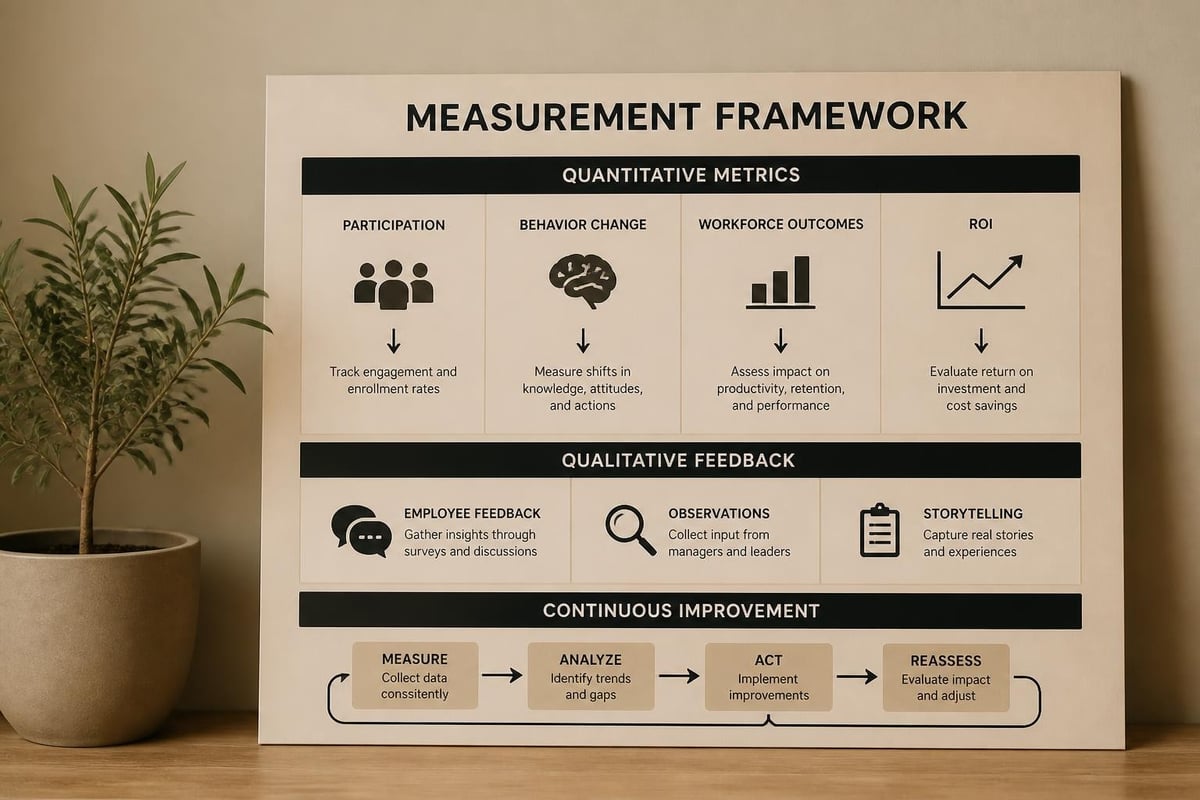
Financial wellness measurement

Integration With Broader Organizational Initiatives

Financial wellness does not exist in isolation. The most successful programs connect to broader organizational strategies around employee health, operational efficiency, and business performance.

Holistic Employee Wellbeing Approach

Progressive organizations recognize that physical health, mental health, and financial health are deeply interconnected. Financial stress contributes to physical health problems, while medical expenses often create financial challenges. Mental health struggles both result from and contribute to financial difficulties.

Integrated wellbeing strategies address these connections systematically. For example, ancillary benefits complement core financial wellness offerings by reducing healthcare costs that strain employee budgets. Mental health resources help employees manage the anxiety and depression often associated with financial struggles.

Organizations serving specific sectors face unique considerations. Healthcare organizations balancing clinical excellence with operational efficiency must ensure their employees are financially stable to deliver optimal patient care. Non-profit organizations maximizing mission impact with limited resources particularly benefit from financial wellness programs that reduce turnover and increase productivity.

Operational Efficiency and Technology Integration

Financial wellness programs benefit significantly from technology integration and process automation. Modern platforms connect employees with resources, track engagement, deliver personalized recommendations, and provide organizations with actionable analytics.

Organizations already investing in business automation solutions can extend similar benefits to financial wellness initiatives. Automated enrollment, personalized communication campaigns, and intelligent resource recommendations reduce administrative burden while improving employee experience.

The same principles driving accounts payable automation efficiency apply to financial wellness program management. Organizations should track key performance indicators, identify bottlenecks, and continuously optimize processes to maximize return on investment.

Future Trends Shaping Financial Wellness

The financial wellness landscape continues evolving as economic conditions shift, technology advances, and workforce expectations change. Organizations must stay informed about emerging trends to maintain competitive programs.

Personalization Through Data and AI

Generic financial advice delivers limited value. Employees need guidance tailored to their specific situations, goals, and constraints. Artificial intelligence and machine learning enable unprecedented personalization at scale.

Modern platforms analyze individual financial data, spending patterns, and life circumstances to deliver customized recommendations. These systems identify when employees face specific challenges, such as unexpected expenses or approaching retirement milestones, and proactively offer relevant resources.

Organizations leveraging AI and automation solutions across their operations can extend these capabilities to financial wellness initiatives, creating more engaging and effective employee experiences.

Expanded Focus on Financial Resilience

Beyond basic financial wellness, leading organizations now emphasize financial resilience-the ability to withstand and recover from economic shocks. The economic disruptions of recent years highlighted the importance of emergency savings, diversified income sources, and adaptable financial planning.

Programs increasingly incorporate:

  • Emergency fund building challenges and incentives
  • Side income and entrepreneurship education
  • Economic change preparation resources
  • Scenario planning tools for major life transitions
  • Community support networks for mutual assistance

Research on intensive longitudinal methods suggests that financial well-being fluctuates significantly over time, supporting the need for ongoing, adaptive support rather than one-time interventions.

Regulatory Considerations and Fiduciary Responsibility

Organizations offering financial wellness programs must navigate evolving regulatory landscapes. Fiduciary responsibilities, data privacy requirements, and consumer protection regulations all impact program design and delivery.

Working with experienced partners helps organizations maintain compliance while delivering maximum value. Professional services firms with expertise in both regulatory requirements and operational efficiency ensure programs meet legal obligations without sacrificing employee experience or business outcomes.


Prioritizing employee financial wellness delivers measurable benefits across productivity, retention, healthcare costs, and organizational performance. By implementing comprehensive programs tailored to workforce needs, organizations create competitive advantages while genuinely improving employee lives. Nero and Associates, Inc. partners with organizations to develop integrated solutions that enhance employee financial wellness while driving operational efficiency and bottom-line results. Our performance-based approach ensures your investment in employee wellbeing translates to measurable business outcomes, creating value for your organization and your people.

Financial Wellness: Building a Stronger Workforce in 2026

Organizations across every sector are discovering that employee performance and business results are directly tied to one often-overlooked factor: the financial health of their workforce. When employees struggle with money management, debt, or savings concerns, their productivity declines, absenteeism increases, and turnover rates climb. Addressing these challenges through comprehensive financial wellness initiatives has become a strategic imperative for companies aiming to maximize their human capital investment and operational efficiency.

Understanding the Foundation of Financial Wellness

Financial wellness extends far beyond basic paycheck delivery and traditional benefits packages. It represents a holistic approach to helping employees achieve stability, security, and confidence in their financial lives. This encompasses everything from daily money management and debt reduction to retirement planning and emergency preparedness.

The concept has evolved significantly over the past decade. Where financial benefits once meant only retirement accounts and insurance options, today's comprehensive programs address immediate needs alongside long-term goals. Employees need access to tools, education, and resources that help them navigate complex financial decisions at every life stage.

Key Components of Effective Programs

Modern financial wellness programs incorporate several essential elements:

  • Financial education workshops covering budgeting, investing, and debt management
  • One-on-one counseling with certified financial advisors
  • Digital tools and apps for tracking spending and building savings
  • Emergency assistance programs for unexpected financial crises
  • Retirement planning resources tailored to individual circumstances
  • Student loan assistance or refinancing support
  • Credit monitoring services to protect employee financial health

Research demonstrates that financial fragility significantly impacts overall well-being and life satisfaction, as evidenced by studies examining financial control and stability. Organizations that address these concerns proactively see measurable improvements in workforce engagement and performance metrics.

Financial wellness program components

The Business Case for Financial Wellness Investment

Financial stress costs American businesses billions annually through reduced productivity, increased healthcare costs, and higher turnover rates. Employees worried about money spend an average of three hours per week at work dealing with financial issues, representing a significant drain on organizational resources.

Quantifiable Return on Investment

Organizations implementing robust financial wellness programs typically observe:

Metric Average Improvement
Employee Productivity 12-18% increase
Turnover Reduction 20-35% decrease
Healthcare Cost Savings 8-12% reduction
Absenteeism 15-25% decline
401(k) Participation 30-40% increase

These improvements translate directly to bottom-line results. A company with 500 employees experiencing even modest gains across these metrics can realize annual savings exceeding $2 million when accounting for reduced turnover costs, productivity gains, and healthcare expense reduction.

The National Association of State Treasurers research provides extensive documentation of successful program implementations, offering insights into strategies that deliver measurable results across diverse organizational contexts.

Competitive Advantage in Talent Markets

The war for talent continues intensifying across industries. Prospective employees increasingly evaluate potential employers based on comprehensive benefits packages that address their holistic needs. Financial wellness offerings have become a differentiator for organizations seeking to attract and retain top performers.

Companies demonstrating genuine commitment to employee financial health enjoy stronger employer brand positioning. This translates to lower recruiting costs, faster time-to-fill for critical positions, and access to higher-caliber candidates who view the organization as invested in their long-term success.

Building a Strategic Implementation Framework

Successful financial wellness programs require thoughtful planning and execution. Organizations cannot simply bolt on generic solutions and expect transformative results. Instead, they must develop tailored approaches aligned with their workforce demographics, industry challenges, and organizational culture.

Assessment and Needs Analysis

The foundation begins with understanding current employee financial situations and needs. Anonymous surveys provide valuable insights into:

  • Current financial stress levels and primary concerns
  • Existing knowledge gaps in financial management
  • Preferred learning formats and engagement channels
  • Specific life stage challenges affecting different employee segments
  • Awareness and utilization of existing benefits

This data enables organizations to design programs addressing actual needs rather than assumed priorities. A manufacturing workforce may prioritize different financial concerns than technology sector employees, and programs should reflect these distinctions.

Financial wellness implementation

Program Design and Resource Allocation

Effective programs balance breadth and depth across multiple dimensions:

  1. Immediate financial assistance for urgent situations
  2. Educational content delivered through multiple channels
  3. Personalized guidance from qualified professionals
  4. Technology platforms providing 24/7 access to resources
  5. Incentive structures encouraging participation and behavior change
  6. Integration with existing benefits creating a cohesive ecosystem

Budget considerations vary based on organizational size and chosen solutions. Organizations can start with foundational offerings and expand based on utilization data and employee feedback. Solutions like earned wage access benefits provide immediate value without significant ongoing costs.

Vendor Selection and Partnership Development

The financial wellness vendor landscape includes diverse providers offering varying capabilities. Organizations should evaluate potential partners based on:

  • Breadth and quality of educational content
  • Credentials of financial counselors and advisors
  • Technology platform usability and mobile accessibility
  • Integration capabilities with existing HRIS and benefits systems
  • Reporting and analytics functionality
  • Cultural fit and customization flexibility
  • Pricing models and total cost of ownership

Many organizations benefit from working with consultancies specializing in human capital management to navigate vendor selection and ensure optimal program design aligned with broader workforce strategies.

Driving Employee Engagement and Participation

Even the most comprehensive financial wellness program delivers limited value if employees do not actively participate. Organizations must invest in engagement strategies that overcome common barriers including stigma, skepticism, and simple lack of awareness.

Communication Strategies That Resonate

Effective communication about financial wellness initiatives requires multiple touchpoints through varied channels:

  • Leadership messaging establishing organizational commitment from the top
  • Department-level presentations tailored to specific workforce segments
  • Digital campaigns utilizing email, intranet, and mobile notifications
  • Physical materials including posters, desk drops, and paycheck inserts
  • Peer testimonials sharing success stories from actual participants
  • Manager training equipping supervisors to encourage team participation

Messages should emphasize confidentiality, accessibility, and practical benefits rather than focusing solely on program features. Employees need to understand how participation addresses their specific concerns and improves their daily lives.

Removing Participation Barriers

Common obstacles prevent employee engagement even when interest exists:

Barrier Solution Strategy
Stigma about financial struggles Normalize conversations; emphasize universal nature of financial challenges
Time constraints Offer sessions during work hours; provide on-demand digital access
Complexity and overwhelm Create simple entry points; guide participants step-by-step
Distrust of financial industry Use independent, fee-only advisors; demonstrate no-conflict approach
Language or accessibility issues Provide multilingual resources; ensure digital accessibility compliance

Organizations must proactively address these barriers through program design and ongoing refinement based on participation data and employee feedback.

Measuring Impact and Demonstrating Value

Financial wellness programs require ongoing evaluation to ensure they deliver intended outcomes and justify continued investment. Organizations should establish clear metrics aligned with program objectives before implementation begins.

Quantitative Performance Indicators

Key metrics for tracking program success include:

  • Participation rates overall and by employee segment
  • Program utilization across different resource types
  • Financial behavior changes in savings rates, debt levels, emergency fund establishment
  • Employee satisfaction scores related to financial benefits
  • Workforce metrics including turnover, absenteeism, and productivity measures
  • Healthcare utilization patterns potentially affected by financial stress reduction
  • Return on investment calculations comparing program costs to measurable benefits

Advanced analytics can reveal correlations between program participation and business outcomes. Exploratory analysis methodologies help organizations identify distinct financial wellness profiles within their workforce and tailor interventions accordingly.

Qualitative Feedback and Continuous Improvement

Numbers tell only part of the story. Organizations should regularly collect qualitative feedback through:

  • Focus groups exploring employee experiences and unmet needs
  • Individual interviews with program participants and non-participants
  • Open-ended survey questions capturing narrative insights
  • Suggestion channels allowing ongoing input
  • Advisory committees representing diverse employee perspectives

This feedback drives program evolution, ensuring offerings remain relevant as workforce demographics shift and external economic conditions change. Financial wellness represents an ongoing journey rather than a destination, requiring organizational commitment to continuous improvement.

Financial wellness measurement

Integration With Broader Organizational Initiatives

Financial wellness does not exist in isolation. The most successful programs connect to broader organizational strategies around employee health, operational efficiency, and business performance.

Holistic Employee Wellbeing Approach

Progressive organizations recognize that physical health, mental health, and financial health are deeply interconnected. Financial stress contributes to physical health problems, while medical expenses often create financial challenges. Mental health struggles both result from and contribute to financial difficulties.

Integrated wellbeing strategies address these connections systematically. For example, ancillary benefits complement core financial wellness offerings by reducing healthcare costs that strain employee budgets. Mental health resources help employees manage the anxiety and depression often associated with financial struggles.

Organizations serving specific sectors face unique considerations. Healthcare organizations balancing clinical excellence with operational efficiency must ensure their employees are financially stable to deliver optimal patient care. Non-profit organizations maximizing mission impact with limited resources particularly benefit from financial wellness programs that reduce turnover and increase productivity.

Operational Efficiency and Technology Integration

Financial wellness programs benefit significantly from technology integration and process automation. Modern platforms connect employees with resources, track engagement, deliver personalized recommendations, and provide organizations with actionable analytics.

Organizations already investing in business automation solutions can extend similar benefits to financial wellness initiatives. Automated enrollment, personalized communication campaigns, and intelligent resource recommendations reduce administrative burden while improving employee experience.

The same principles driving accounts payable automation efficiency apply to financial wellness program management. Organizations should track key performance indicators, identify bottlenecks, and continuously optimize processes to maximize return on investment.

Future Trends Shaping Financial Wellness

The financial wellness landscape continues evolving as economic conditions shift, technology advances, and workforce expectations change. Organizations must stay informed about emerging trends to maintain competitive programs.

Personalization Through Data and AI

Generic financial advice delivers limited value. Employees need guidance tailored to their specific situations, goals, and constraints. Artificial intelligence and machine learning enable unprecedented personalization at scale.

Modern platforms analyze individual financial data, spending patterns, and life circumstances to deliver customized recommendations. These systems identify when employees face specific challenges, such as unexpected expenses or approaching retirement milestones, and proactively offer relevant resources.

Organizations leveraging AI and automation solutions across their operations can extend these capabilities to financial wellness initiatives, creating more engaging and effective employee experiences.

Expanded Focus on Financial Resilience

Beyond basic financial wellness, leading organizations now emphasize financial resilience-the ability to withstand and recover from economic shocks. The economic disruptions of recent years highlighted the importance of emergency savings, diversified income sources, and adaptable financial planning.

Programs increasingly incorporate:

  • Emergency fund building challenges and incentives
  • Side income and entrepreneurship education
  • Economic change preparation resources
  • Scenario planning tools for major life transitions
  • Community support networks for mutual assistance

Research on intensive longitudinal methods suggests that financial well-being fluctuates significantly over time, supporting the need for ongoing, adaptive support rather than one-time interventions.

Regulatory Considerations and Fiduciary Responsibility

Organizations offering financial wellness programs must navigate evolving regulatory landscapes. Fiduciary responsibilities, data privacy requirements, and consumer protection regulations all impact program design and delivery.

Working with experienced partners helps organizations maintain compliance while delivering maximum value. Professional services firms with expertise in both regulatory requirements and operational efficiency ensure programs meet legal obligations without sacrificing employee experience or business outcomes.


Prioritizing employee financial wellness delivers measurable benefits across productivity, retention, healthcare costs, and organizational performance. By implementing comprehensive programs tailored to workforce needs, organizations create competitive advantages while genuinely improving employee lives. Nero and Associates, Inc. partners with organizations to develop integrated solutions that enhance employee financial wellness while driving operational efficiency and bottom-line results. Our performance-based approach ensures your investment in employee wellbeing translates to measurable business outcomes, creating value for your organization and your people.

Website developed in accordance with Web Content Accessibility Guidelines 2.2.
If you encounter any issues while using this site, please contact us: 215.526.5126