

Prior authorization represents one of the most significant administrative challenges facing healthcare organizations today. This process, which requires healthcare providers to obtain approval from insurance companies before delivering certain services or prescribing specific medications, affects millions of patients annually and creates substantial operational burdens. Understanding the mechanics, implications, and optimization strategies for prior authorization has become essential for healthcare organizations seeking to improve efficiency, reduce costs, and maintain high-quality patient care in 2026.
Understanding the Prior Authorization Process
The prior authorization process serves as a cost-control mechanism for insurance companies, requiring providers to demonstrate medical necessity before delivering specific treatments or services. This requirement affects numerous healthcare scenarios, from specialty medications and surgical procedures to advanced imaging and therapeutic interventions.
Healthcare providers must submit detailed documentation justifying the medical necessity of proposed treatments. Insurance companies review these submissions against predetermined criteria, which may include evidence-based guidelines, formulary restrictions, and cost-effectiveness analyses. The approval process typically takes between 24 hours and several weeks, depending on the complexity of the request and the insurance company's review procedures.
Key Components of Authorization Requests
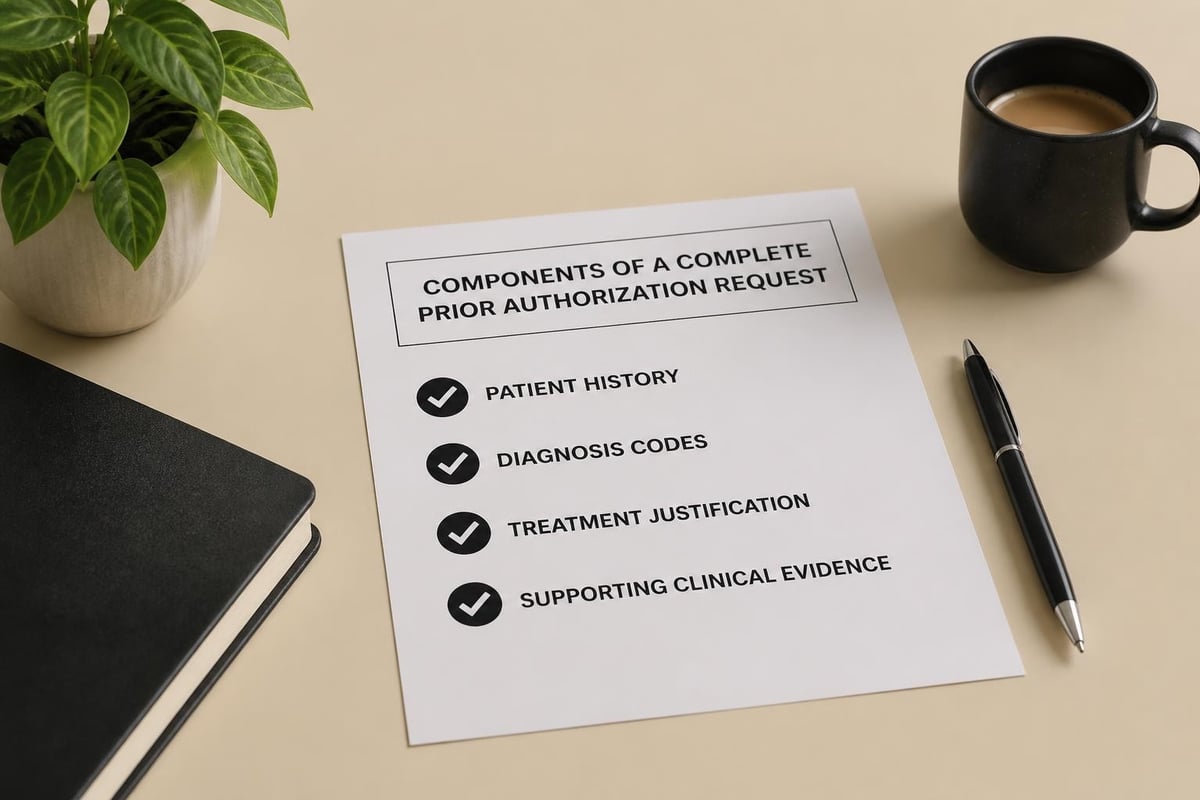
Successful prior authorization submissions require comprehensive documentation that demonstrates clear medical necessity. Providers must include:
- Complete patient medical history and current diagnosis codes
- Detailed treatment plans with specific procedural codes
- Clinical documentation supporting the proposed intervention
- Previous treatment attempts and outcomes
- Relevant laboratory results, imaging studies, and specialist consultations
The documentation requirements vary significantly across insurance carriers, adding complexity to an already time-consuming process. Many healthcare organizations struggle with inconsistent requirements, leading to submission errors, delays, and denials that impact both revenue cycles and patient care delivery.
Administrative Burden and Operational Impact
The administrative burden associated with prior authorization requirements has reached unprecedented levels in healthcare organizations. According to the American Medical Association, medical practices complete an average of 41 prior authorizations per physician per week, consuming approximately 14 hours of staff time.
This substantial time investment diverts resources from patient care activities and contributes to provider burnout. Administrative staff must navigate complex insurance portals, maintain detailed records of submission attempts, and manage follow-up communications with both insurers and patients. The cumulative effect creates significant operational inefficiencies that impact organizational performance.
| Metric | Average Impact | Annual Cost per Provider |
|---|---|---|
| Staff Hours per Week | 14 hours | $42,000 – $56,000 |
| Authorization Requests | 41 per week | 2,132 annually |
| Denied Requests | 18-22% | $12,000 – $18,000 |
| Appeal Time Investment | 3-5 hours each | $8,000 – $15,000 |
Organizations seeking to achieve growth and efficiency in their operations must address these administrative challenges through systematic process improvements and strategic technology investments.
Revenue Cycle Management Implications
Prior authorization requirements create substantial challenges within healthcare revenue cycle management. Delayed authorizations postpone service delivery, pushing revenue recognition further into the future. Denied authorizations result in lost revenue opportunities or require time-intensive appeals processes that strain organizational resources.
Financial Impact Analysis
The financial implications extend beyond direct revenue delays. Organizations must consider:
- Cash flow disruption from delayed service delivery and billing
- Increased days in accounts receivable as authorization processes extend collection timelines
- Higher denial rates when authorizations expire before services are delivered
- Administrative costs associated with resubmissions and appeals
- Patient satisfaction challenges that may affect future revenue streams
Healthcare organizations can efficiently recover underpayments by implementing robust tracking systems that monitor authorization status throughout the revenue cycle. This visibility enables proactive management of potential delays and denials before they impact cash flow.
Authorization denials create particularly challenging scenarios. When insurers deny authorization requests, providers must decide whether to appeal, propose alternative treatments, or proceed without coverage guarantee. Each option carries distinct financial and operational implications that require careful consideration.
Regulatory Changes and Electronic Solutions
The regulatory landscape surrounding prior authorization continues to evolve. The Centers for Medicare & Medicaid Services has implemented initiatives to streamline authorization processes through electronic systems and standardized data exchange protocols. These efforts aim to reduce administrative burden while maintaining appropriate utilization management.
Recent changes to traditional Medicare programs have introduced prior authorization requirements for specific services in certain states. This expansion represents a significant shift in Medicare administration, affecting numerous healthcare providers and beneficiaries across the country.

Electronic prior authorization platforms offer substantial advantages over traditional manual processes. These systems enable:
- Real-time submission and status tracking through integrated portals
- Automated data population from electronic health records
- Standardized formatting that reduces submission errors
- Electronic notifications for approvals, denials, and information requests
- Historical data analytics for denial pattern identification
Organizations implementing electronic solutions report significant improvements in authorization turnaround times and approval rates. The automation capabilities reduce manual data entry errors while freeing staff to focus on complex cases requiring clinical judgment and detailed documentation.
Strategic Approaches for Process Optimization
Healthcare organizations must develop comprehensive strategies to manage prior authorization requirements effectively. Successful approaches combine technology solutions, staff training, and process standardization to minimize administrative burden while maximizing approval rates.
Staff Training and Development
Specialized training programs ensure staff members understand insurance-specific requirements and documentation standards. Regular education sessions keep teams updated on policy changes, new authorization requirements, and best practices for submission preparation. Learning and development consultants can help organizations design training programs that build competency and confidence among authorization teams.
Cross-functional collaboration between clinical and administrative teams improves documentation quality and submission accuracy. When clinicians understand authorization requirements, they can provide more complete initial documentation, reducing the need for supplemental information requests that delay approvals.
Technology Integration Strategies
Modern healthcare organizations leverage integrated technology solutions to streamline authorization workflows. Effective systems connect electronic health records, practice management platforms, and payer portals through standardized data interfaces. This integration eliminates redundant data entry while ensuring consistent information across all systems.
Automation solutions can handle routine authorization requests through rules-based processing. These systems identify authorization requirements based on service codes, automatically populate submission forms with patient and clinical data, and route requests through appropriate approval channels. Staff intervention focuses on complex cases requiring clinical judgment and detailed justification.
Impact on Patient Care and Satisfaction
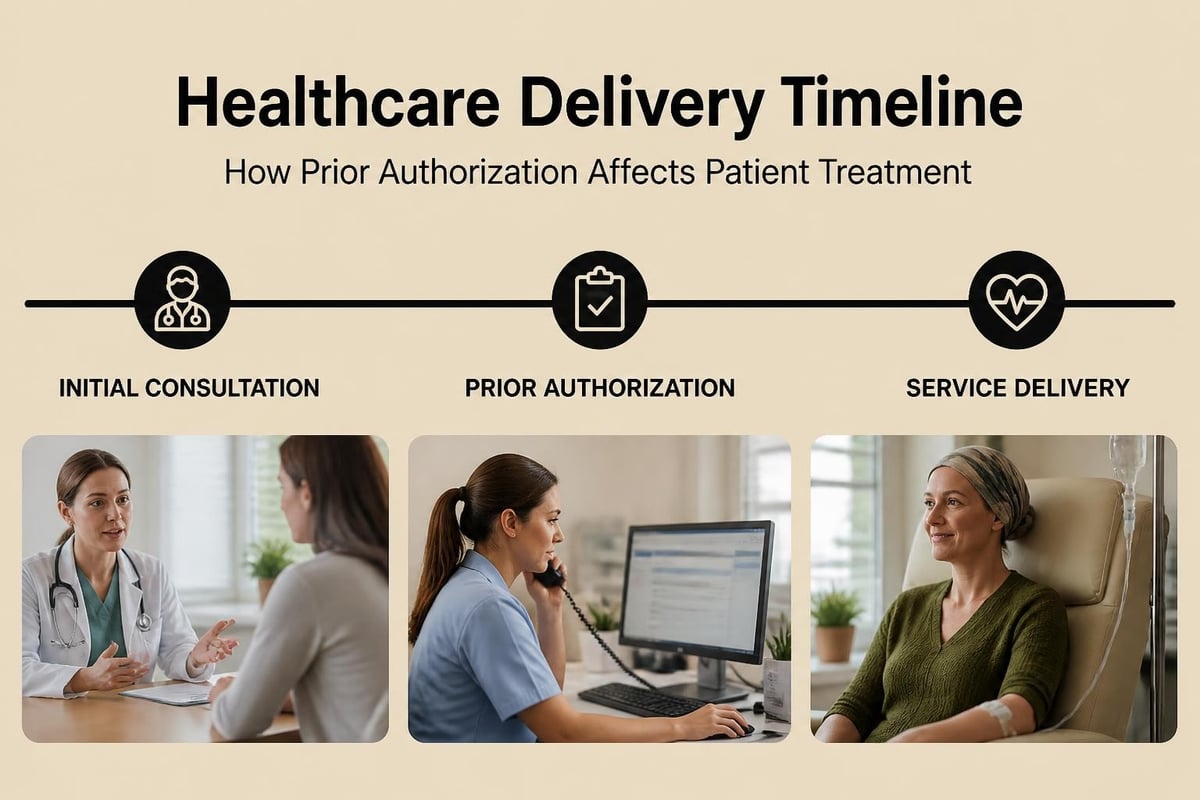
Prior authorization requirements directly affect patient care delivery and satisfaction. Treatment delays while awaiting approval can exacerbate medical conditions, particularly for urgent interventions or progressive diseases. Patients often experience frustration when authorization processes create barriers to recommended treatments.
Communication challenges compound these concerns. Patients may not understand why recommended treatments require additional approval steps or why their providers cannot immediately schedule necessary procedures. Clear explanation of authorization requirements and realistic timeline expectations help manage patient expectations and maintain trust in the care relationship.
| Patient Impact Area | Frequency | Average Delay |
|---|---|---|
| Prescription Fills | 35-40% affected | 3-7 days |
| Diagnostic Imaging | 25-30% affected | 5-10 days |
| Specialty Referrals | 40-45% affected | 7-14 days |
| Surgical Procedures | 15-20% affected | 14-30 days |
Healthcare providers can mitigate negative patient experiences through proactive communication and efficient process management. Informing patients early in the care planning process about potential authorization requirements allows them to participate actively in their care coordination. Regular status updates throughout the authorization process demonstrate commitment to patient advocacy and care progression.
Denial Management and Appeals
Authorization denials require systematic management approaches to protect revenue and ensure patients receive necessary care. Effective denial management programs identify denial patterns, address root causes, and develop standardized appeal processes that maximize overturn rates.
Denial Analysis and Pattern Recognition
Organizations should track denial reasons across payers, service types, and clinical departments. This analysis reveals systemic issues that can be addressed through improved documentation, staff training, or payer negotiations. Common denial reasons include incomplete clinical documentation, medical necessity questions, and administrative errors in submission formatting.
Pattern recognition enables proactive interventions. When specific procedures consistently face denial from particular payers, organizations can develop enhanced documentation templates that address known concerns. This preemptive approach improves initial approval rates and reduces appeal workload.
Appeals Process Optimization
Successful appeals require detailed clinical documentation that directly addresses the denial rationale. Providers must present compelling evidence of medical necessity, often including peer-reviewed literature, clinical guidelines, and patient-specific factors that justify the proposed intervention. Healthcare revenue cycle management solutions can help organizations develop efficient appeals processes that maximize success rates while minimizing resource investment.
Time-sensitive management of appeals deadlines prevents forfeiture of appeal rights. Automated tracking systems monitor appeal windows and trigger timely action, ensuring organizations preserve all available recourse options when facing denials.
The Role of Data Analytics in Authorization Management
Advanced data analytics capabilities transform prior authorization from a reactive administrative burden into a strategic operational component. Organizations leveraging analytics gain insights that drive process improvements, reduce denial rates, and optimize resource allocation.
Predictive analytics identify authorization requirements before submission preparation begins. By analyzing historical patterns, these systems flag services likely to require authorization based on payer rules, patient coverage, and service characteristics. This early identification enables proactive documentation gathering and submission preparation.
Performance metrics provide visibility into authorization team productivity and effectiveness. Key performance indicators include submission accuracy rates, average turnaround times, initial approval percentages, and appeal success rates. Regular monitoring of these metrics enables data-driven management decisions and continuous process improvement initiatives.
Data normalization becomes essential when organizations work with multiple payers, each maintaining distinct authorization requirements and submission formats. Standardizing data collection and storage facilitates efficient submission preparation across varied payer platforms while maintaining comprehensive records for analytics and compliance purposes.
Integration with Broader Operational Excellence
Prior authorization management represents one component of comprehensive operational excellence in healthcare organizations. Effective authorization processes integrate with broader initiatives focused on efficiency improvement, cost reduction, and quality enhancement. Organizations must view authorization optimization as part of larger transformation efforts rather than isolated administrative tasks.
Cross-functional process improvement teams should include authorization specialists alongside clinical, financial, and information technology representatives. This collaborative approach ensures authorization process changes align with clinical workflows, financial objectives, and technology capabilities. Integrated improvement efforts yield greater results than isolated departmental initiatives.
The Kaiser Family Foundation’s examination of prior authorization highlights both the intended benefits and practical challenges of these requirements. Organizations must balance payer expectations for utilization management with provider commitments to patient care and operational efficiency.
Future Trends and Emerging Solutions
The prior authorization landscape continues evolving as technology advances, regulatory requirements change, and stakeholders advocate for process improvements. Several emerging trends will shape authorization management in coming years.
Artificial intelligence and machine learning applications promise substantial improvements in authorization efficiency. These technologies can analyze complex clinical documentation, identify relevant supporting evidence, and generate comprehensive authorization requests with minimal human intervention. Natural language processing capabilities extract pertinent information from clinical notes, automatically populating submission forms with required data elements.
Payer-provider collaboration initiatives seek to reduce unnecessary authorization requirements while maintaining appropriate utilization oversight. Some organizations have implemented "gold card" programs that exempt high-performing providers from certain authorization requirements based on demonstrated adherence to evidence-based practice guidelines. These programs recognize provider expertise while reducing administrative burden for both parties.
Blockchain technology offers potential solutions for secure, transparent authorization tracking across multiple stakeholders. Distributed ledger systems could provide real-time visibility into authorization status while maintaining data security and privacy protections. Early pilot programs demonstrate promise, though widespread adoption remains several years away.
Prior authorization requirements significantly impact healthcare operations, affecting revenue cycles, patient care delivery, and organizational efficiency. By implementing strategic process improvements, leveraging technology solutions, and maintaining focus on both operational excellence and patient advocacy, healthcare organizations can transform authorization management from administrative burden into competitive advantage. Nero and Associates, Inc. helps healthcare organizations streamline revenue cycle management processes, implement automation solutions that eliminate manual administrative tasks, and achieve measurable improvements in operational efficiency and financial performance. Our performance-based approach ensures organizations realize tangible benefits through reduced costs, improved cash flow, and enhanced patient satisfaction.