
Capital Solution Guide: Unlocking Growth Strategies for 2026

Share on Facebook
Share on X
Share on LinkedIn

In 2026, organizations face an unprecedented landscape where agility and adaptability are more important than ever. Navigating this environment requires a robust capital solution that empowers both businesses and nonprofits to achieve sustainable growth. This guide is designed to equip you with actionable insights, proven frameworks, and real-world case studies to leverage innovative financing for expansion, resilience, and impact.

We will explore how capital structures have evolved, examine the most effective financing types, and break down strategic applications for growth. Throughout, you will find step-by-step implementation guidance, essential risk management practices, and inspiring success stories. Discover how leading organizations turn capital optimization into lasting opportunity, and get ready to unlock your next phase of transformative growth.

The Evolution of Capital Solutions: Trends Reshaping 2026

The last decade has redefined how organizations approach the capital solution landscape. As we look toward 2026, flexibility and innovation are at the core of capital solution strategies. Businesses and nonprofits now face a dynamic environment where standard financing no longer fits all circumstances. The demand for adaptive capital solution frameworks has never been higher.
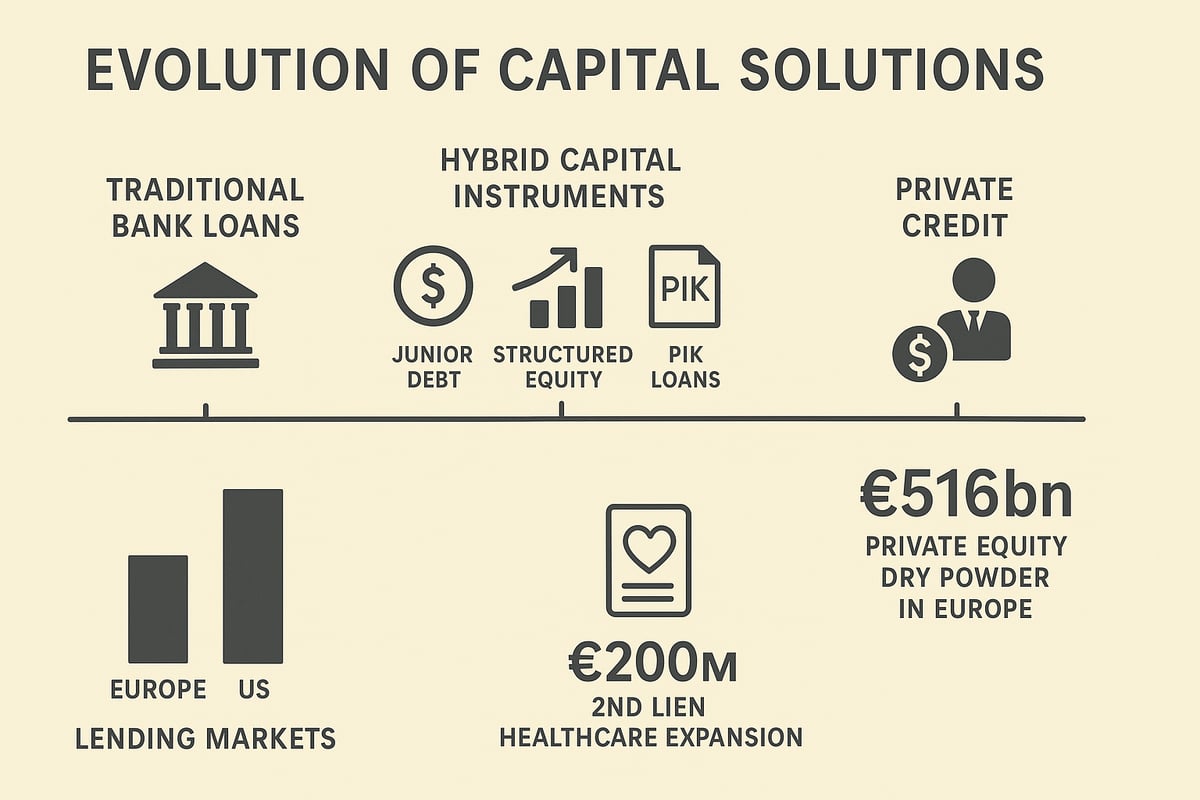
The Evolution of Capital Solutions: Trends Reshaping 2026

The Rise of Hybrid Capital

Hybrid capital instruments have surged to the forefront of the capital solution market. Junior debt, structured equity, and payment-in-kind (PIK) loans now serve as critical tools for organizations seeking both flexibility and resilience. These instruments allow for customization within the capital stack, offering higher yields for investors while providing borrowers with less restrictive terms.

This trend is not isolated. The increased utilization of hybrid capital reflects a broader shift, as explored in Five trends shaping private funds in 2026, where private credit and innovative structures are becoming mainstream in the capital solution space.

Market Drivers and Data

Several forces are propelling the evolution of the capital solution sector. Traditional banks have retrenched, leaving gaps in the market. Muted M&A activity and longer private equity holding periods are changing how organizations plan their capital solution strategies. In 2024 alone, €38 billion in European refinancings signaled a robust appetite for alternative capital solution options. Meanwhile, private equity dry powder reached €516 billion in Europe, underscoring the need for efficient capital deployment.

These conditions have set the stage for more complex, tailored capital solution offerings. Borrowers now require bespoke structures that address unique needs, especially as standard lending terms become less accessible.

Year European Refinancings PE Dry Powder (Europe)
2024 €38bn €516bn

Demand for Tailored Solutions and Private Credit

The appetite for tailored capital solution strategies is driving the rise of private credit and non-bank lenders. These providers can offer more flexible terms, creative structuring, and faster execution compared to traditional banks. As organizations face new challenges, private credit has become a vital source of funding, enabling borrowers to navigate uncertainty and pursue growth.

Complex transactions often require a capital solution that is not available through conventional channels. Non-bank lenders step in to fill this void, offering structures that adapt to changing needs and market cycles. This shift is creating a more resilient and diverse capital solution ecosystem.

Global Perspective and Case Study

Globally, the capital solution landscape is shaped by regional differences. European markets are more fragmented than the US, which presents both challenges and opportunities. Local expertise is critical for navigating regulatory environments and structuring optimal capital solution deals.

A recent example highlights the impact of innovative capital solution strategies. A leading healthcare provider secured €200 million in 2nd lien financing, enabling rapid expansion and modernization. This case underscores how the right capital solution can unlock growth, even in a complex and competitive environment.

As we move through 2026, the capital solution market will continue to evolve, driven by necessity and opportunity. Organizations that embrace flexible, tailored financing will be best positioned to thrive.

Types of Capital Solutions and Their Strategic Uses

Navigating the diverse landscape of capital solution options is essential for organizations aiming to fuel sustainable growth in 2026. Each capital solution is designed to address specific structural, operational, and strategic needs, offering a toolkit for both businesses and nonprofits to thrive. Understanding the major types and their applications is the first step toward optimizing your financial strategy.
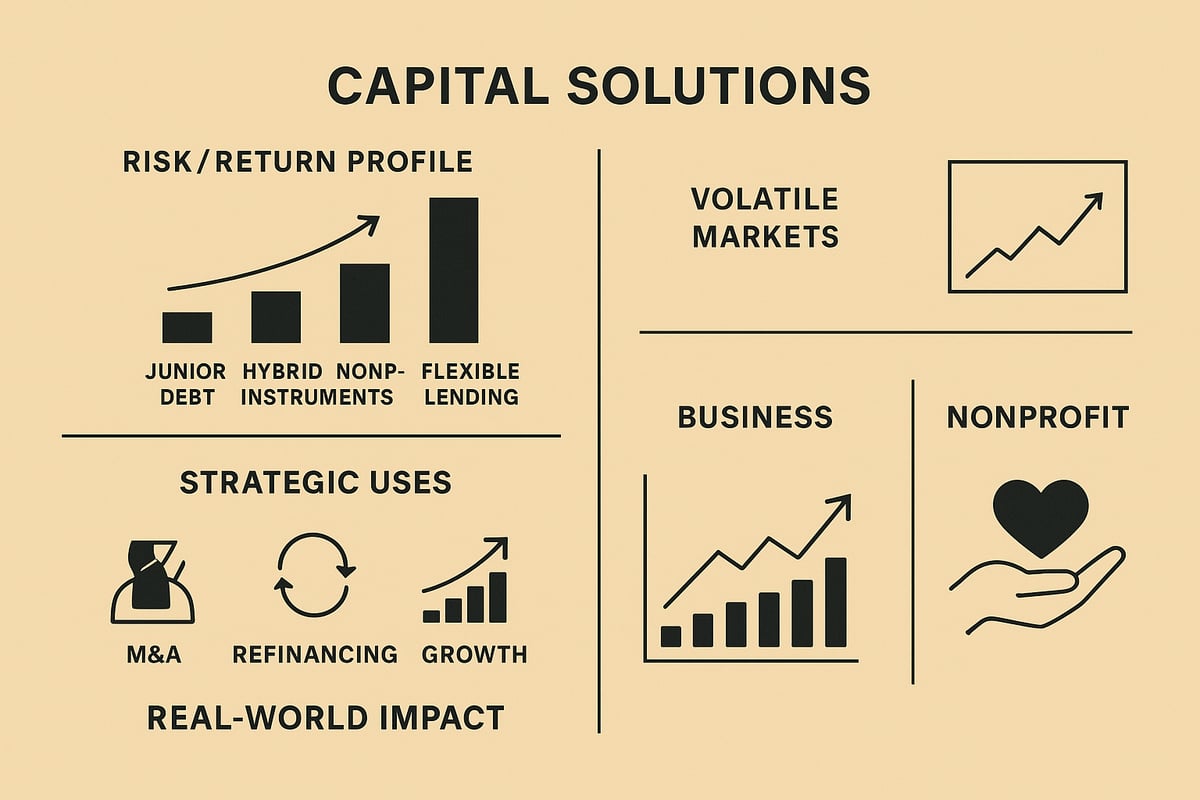
Types of Capital Solutions and Their Strategic Uses

Junior and Hybrid Capital Instruments

Junior and hybrid capital solution instruments occupy a critical position in the capital stack. These include junior debt, second-lien loans, payment-in-kind (PIK) loans, and preferred or structured equity. Positioned beneath senior debt but above common equity, these instruments offer investors higher returns, typically targeting mid-teen IRRs, while providing borrowers with greater flexibility.

A key advantage of a junior capital solution is its ability to balance risk with flexibility. For example, second-lien debt enables organizations to access additional funds without diluting ownership or burdening cash flow with excessive senior debt. Investors in these capital solution instruments accept higher risk in exchange for greater potential returns.

Instrument Position in Capital Stack Typical IRR Use Case Example
Junior Debt Below senior debt 13-16% Growth capital, acquisitions
Second-Lien Loans Below 1st lien, above equity 13-16% Refinancing, expansion
PIK Loans Below senior, flexible 15%+ M&A, cashflow preservation
Structured Equity Above common equity 15%+ Recapitalizations

This spectrum of capital solution instruments enables organizations to tailor financing to their risk appetite and growth objectives.

Flexible Lending for Nonprofits and Community Organizations

Nonprofits and community organizations require capital solution options that reflect their unique missions and funding constraints. Flexible lending products, such as long-term loans, bridge loans, and facility improvement loans, are designed to remove barriers often faced by mission-driven groups. Underwriting for these capital solution products typically focuses less on collateral and more on organizational impact, with lower upfront costs and no appraisals required.

For example, a $5.4 million loan to Seeds of Health enabled the expansion of educational facilities, directly supporting community development. Flexible capital solution structures are also vital for affordable housing and health initiatives, making it possible to address urgent needs without restrictive terms.

Key features of nonprofit-focused capital solution lending include:

  • Terms up to 15 years
  • Loans covering up to 95% of project costs
  • No prepayment penalties
  • Focus on mission impact, not just financial metrics

To explore more on how capital solution strategies can multiply mission impact, visit Nonprofits and Mission Impact.

Strategic Applications: M&A, Refinancing, and Opportunistic Growth

A capital solution plays a pivotal role in enabling mergers and acquisitions, especially when purchase multiples are high or traditional funding is constrained. By leveraging hybrid or junior capital solution structures, organizations can unlock complex transactions, manage upcoming debt maturities, and consolidate existing obligations to improve cash flow.

Refinancing through a tailored capital solution can extend maturities, lower interest burdens, or provide liquidity for operational investments. Strategic recapitalizations or partial exits are also facilitated by these instruments, allowing sponsors and founders to realign their ownership while maintaining growth momentum.

Consider the example of a bridge loan used by PODER to finance a new headquarters. This capital solution enabled a smooth organizational transition and positioned the nonprofit for future expansion. Whether for opportunistic acquisitions or managing balance sheet pressures, a flexible capital solution is a cornerstone of strategic finance.

Capital Solutions in Volatile Markets

During periods of market disruption, a robust capital solution provides a vital safety net for organizations navigating uncertainty. When banks reduce lending or traditional syndications falter, private credit and bespoke capital solution structures step in to fill the gap. Since 2021, Europe has seen over €19 billion in hung syndications, highlighting the importance of adaptable financing.

A capital solution tailored to volatile conditions might include higher equity cushions, directly negotiated terms, and flexible repayment structures. For example, during the volatility of 2020, 2022, and 2025, many companies relied on capital solution providers to maintain operations and pursue strategic opportunities, even as banks pulled back.

The ability to customize a capital solution ensures resilience through every market cycle, allowing organizations to deploy capital steadily regardless of external challenges. This adaptability is what distinguishes a forward-thinking capital solution strategy in 2026.

Step-by-Step Guide: Implementing Capital Solutions for Growth in 2026

Unlocking sustainable growth in 2026 demands a precise, disciplined approach to capital solution implementation. This step-by-step guide empowers leaders to align funding with strategy, navigate evolving markets, and maximize impact. Each step below provides a clear path, from initial assessment to ongoing optimization, ensuring your capital solution delivers measurable results.
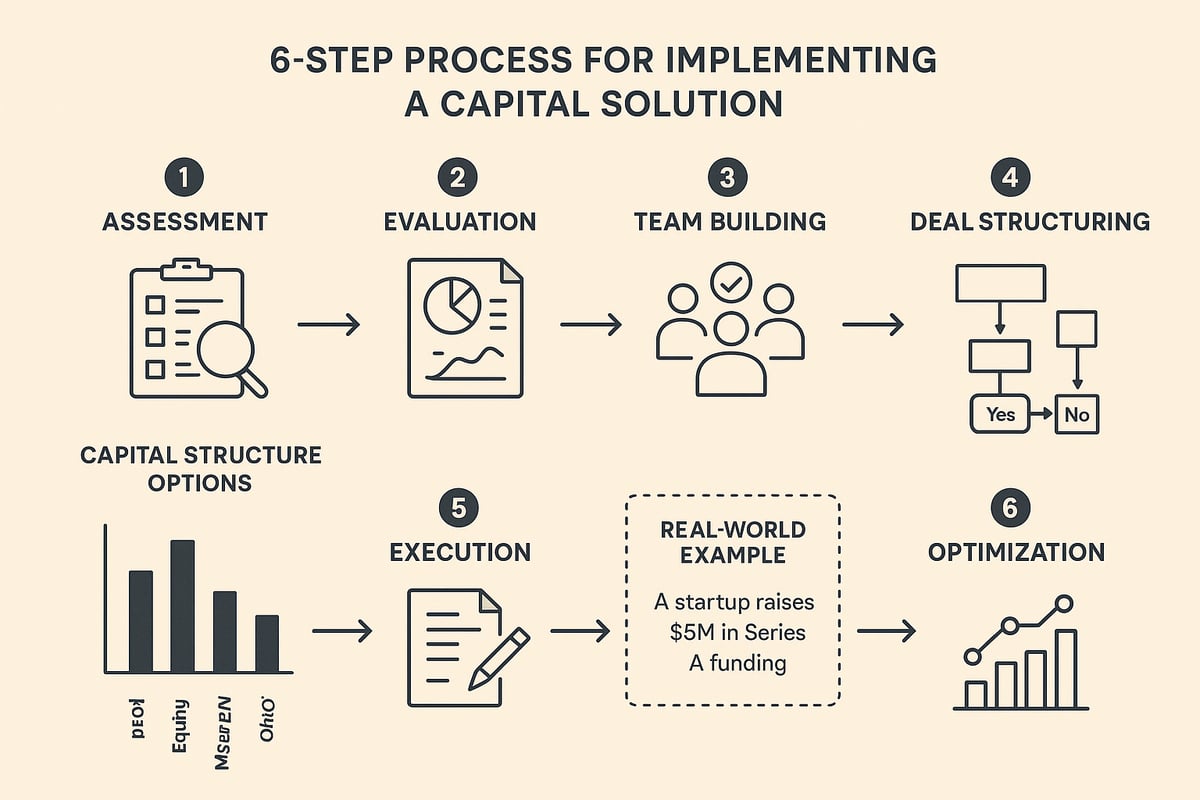
Step-by-Step Guide: Implementing Capital Solutions for Growth in 2026

Step 1: Assess Organizational Needs and Growth Objectives

Begin your capital solution journey with a deep dive into your organization's current capital structure, liquidity, and strategic goals. Review outstanding debt, upcoming maturities, and constraints on your existing funding mix.

Identify pain points that a capital solution can address. Are you facing near-term refinancing needs, seeking non-dilutive growth capital, or evaluating potential mergers and acquisitions? For nonprofits, compare facility or program expansion goals with available funding sources.

Engage senior leadership and key stakeholders in this assessment. Use scenario planning to map out growth objectives against potential capital solution outcomes. This approach ensures alignment between your vision and financial strategy, laying the foundation for successful implementation.

Step 2: Evaluate Capital Solution Options

With clear objectives, compare various capital solution types. Analyze junior debt, hybrid capital, long-term loans, and bridge financing. Assess each option's fit based on risk tolerance, repayment profile, and how quickly the funds are needed.

A comparison table can clarify your choices:

Capital Solution Type Risk Level Repayment Terms Typical Use Case
Junior Debt Medium 5-7 years Growth, M&A, refinancing
Hybrid Capital Medium-High Flexible Expansion, recapitalization
Bridge Loan Low-Medium 1-3 years Transitions, acquisitions
Long-Term Loan Low 10-15 years Facility, community growth

For example, loans can cover up to 95% of project costs with terms up to 15 years and no prepayment penalties, as demonstrated by models like IFF. Consider referencing resources such as Maximizing B2B Growth Opportunities to identify which capital solution best aligns with your expansion strategy.

Step 3: Build the Right Team and Partnerships

Successful capital solution implementation requires assembling a skilled team. Engage experienced capital providers, advisors, and legal counsel with a proven track record in your sector.

Evaluate partners based on their ability to customize capital solution terms, sector expertise, and reputation for transparent communication. Collaboration is essential when structuring complex deals or addressing unique borrower needs.

Consider the example of CVC, which acted as the sole capital provider for a major healthcare expansion, leveraging its network and expertise to deliver a tailored capital solution. The right team not only streamlines execution but also unlocks additional value throughout the process.

Step 4: Structure and Negotiate the Deal

Structuring your capital solution deal involves careful attention to key terms and protections. Focus on attachment points, equity cushions, documentation standards, and downside risk mitigation.

Negotiation strategies should aim for preferential economics, robust covenants, and flexibility to adapt as your organization grows. In fragmented markets, directly negotiated documentation often leads to wider spreads and better terms.

For example, European borrowers have secured competitive capital solution structures through direct negotiation, achieving both flexibility and protection. Diligent negotiation ensures your capital solution supports long-term growth and resilience.

Step 5: Execute and Monitor Performance

Executing a capital solution requires coordinated due diligence, legal review, and alignment with all stakeholders. Ensure thorough risk assessment and transparent communication at each step.

After closing, establish ongoing performance benchmarks and reporting systems to monitor the capital solution's impact. Regular reviews help identify emerging risks, track financial health, and ensure compliance with covenants.

A practical example is IFF’s support for The Paddocks workforce housing project, where ongoing monitoring led to successful project delivery and measurable community benefits. Effective execution and monitoring safeguard your organization’s interests and maximize the value of your capital solution.

Step 6: Adapt and Optimize as Market Conditions Evolve

The final step is building flexibility into your capital solution, allowing you to respond to changing market dynamics or new opportunities. Monitor market trends, such as rising private equity hold periods and increased unrealized value, to inform your strategy.

Strategically refinance, recapitalize, or scale up your capital solution as needed. For instance, with median European PE hold periods at a 10-year high and €1.3 trillion in unrealized value, organizations must remain agile to capture growth.

Continual adaptation ensures your capital solution remains aligned with your objectives, driving sustainable expansion and resilience in any market environment.

Risk Management and Best Practices in Capital Solutions

Effectively managing risk is the cornerstone of a resilient capital solution. Organizations must anticipate challenges, adapt frameworks, and establish strong safeguards to ensure their growth is sustainable. This approach is vital for both businesses and nonprofits navigating the complexities of today's financial environment.
Risk Management and Best Practices in Capital Solutions

Identifying and Mitigating Risks

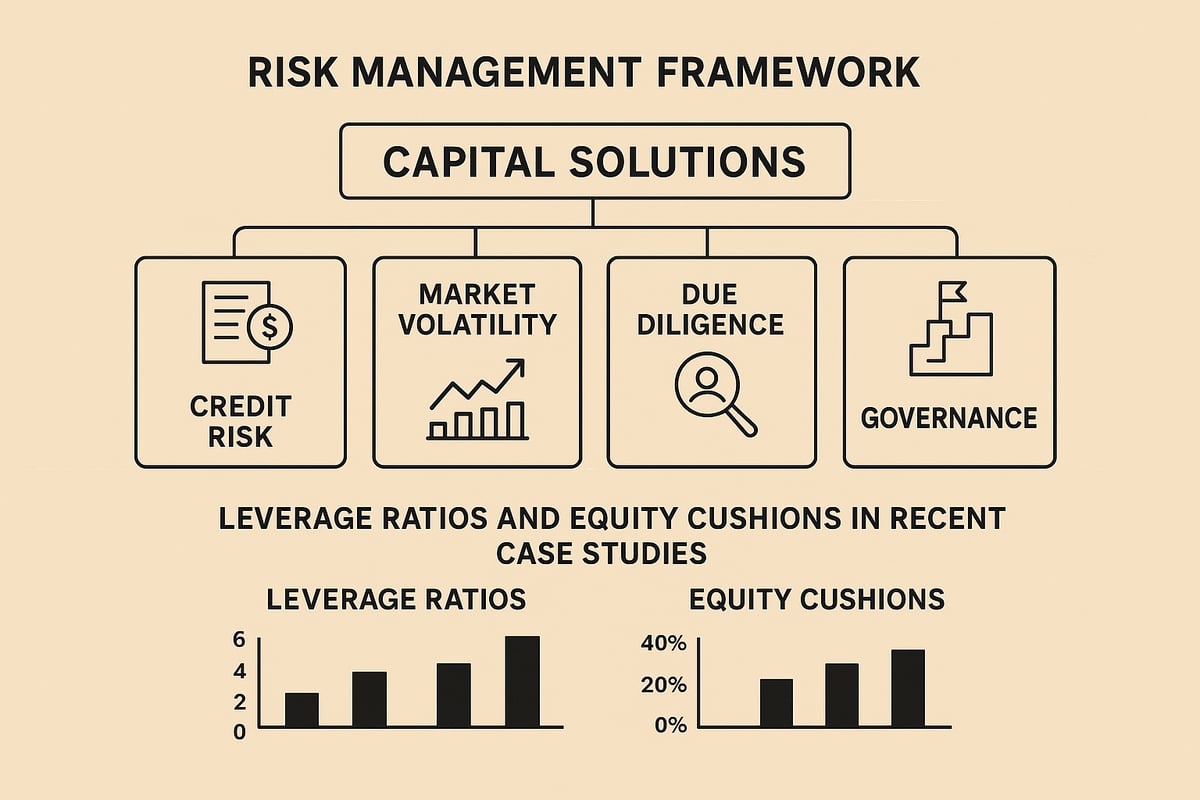
Every capital solution introduces a unique set of risks. The primary challenges include credit risk, market volatility, and the risk of structural subordination within the capital stack. Recognizing these threats early allows organizations to tailor strategies that protect both assets and long-term objectives.

For example, credit risk can be minimized by thorough borrower assessments and setting clear repayment terms. Market volatility, which can disrupt liquidity and valuations, is best addressed by stress-testing scenarios and maintaining flexible terms. Structural subordination is mitigated by negotiating favorable positions in the capital structure and ensuring adequate equity buffers.

Common Risks and Mitigation Strategies

Risk Type Mitigation Approach
Credit Risk Rigorous underwriting, covenants
Market Volatility Flexible terms, stress testing
Structural Subordination Equity cushions, layered financing

Proactively managing these risks is essential for any capital solution to succeed.

Capital Structure Discipline and Equity Cushions

A conservative capital structure is a proven defense against unexpected downturns. Strong equity cushions provide a buffer, lowering the risk of loss even in turbulent markets. For instance, a recent healthcare network expansion utilized a capital solution with leverage at approximately 5.6x and a loan-to-value ratio near 46 percent. This conservative approach increased resilience and protected all stakeholders.

Maintaining discipline in leverage and loan-to-value ensures that organizations are not overexposed. Equity cushions absorb shocks, preserving capital and operational stability. This method is especially important for sponsors and investors seeking steady, risk-adjusted returns.

Due Diligence, Monitoring, and Governance

Successful capital solution strategies hinge on rigorous due diligence and robust governance. Investment processes must include detailed financial analysis, sponsor backing, and customized documentation. Collaborating with experienced partners and advisors further reduces exposure to unforeseen risks.

Ongoing monitoring is equally vital. Regular reporting, performance benchmarks, and transparent communication between capital providers and management foster trust and adaptability. As highlighted in the Private Credit: 2025 Year in Review & 2026 Outlook, market leaders increasingly rely on comprehensive oversight to navigate volatility and deliver value.

Lessons from Past Market Cycles

History demonstrates that disciplined, relationship-driven approaches to capital solution deployment outperform reactive strategies. Past market cycles have shown that organizations prioritizing conservative structures, sponsor alignment, and active governance maintain steady growth even in challenging times.

By embedding these lessons into current practices, businesses and nonprofits can safeguard their mission and financial health. The right capital solution is more than a source of funding—it is a strategic foundation for long-term success.

Real-World Success Stories: Capital Solutions in Action

Capital solution strategies have transformed organizations across sectors, fueling growth, resilience, and impact. The following stories illustrate how these approaches deliver measurable results.

Seeds of Health: Expanding Educational Opportunity

Seeds of Health leveraged a $5.4 million capital solution to acquire and renovate a new campus, directly enhancing educational access for underserved students. This financing enabled timely project delivery, increased enrollment capacity, and improved learning environments.

  • 25% rise in student enrollment within the first year
  • Upgraded facilities supporting STEM and arts programs
  • Long-term stability for the organization’s mission

By tailoring the capital solution to the nonprofit’s needs, the lender ensured both financial sustainability and mission-driven outcomes.

PODER: Bridging to Community Impact

PODER, a Chicago-based nonprofit, secured a $3.317 million bridge loan as a capital solution to launch the city’s first immigrant integration and job center. This flexible financing bridged a funding gap during a critical real estate transition.

  • Enabled rapid acquisition and renovation of new headquarters
  • Created a hub for workforce development and language training
  • Supported over 1,000 immigrants in the first year

This capital solution provided the agility needed to respond to community needs and drive social impact.

The Paddocks: Building Affordable Workforce Housing

The Paddocks project relied on a construction loan as its capital solution to develop affordable workforce housing in rural Indiana. The loan structure prioritized low upfront costs and long-term viability, making the project feasible.

  • Delivered 60 new affordable housing units
  • Supported local economic growth by attracting workers
  • Enhanced community stability and quality of life

A flexible capital solution was key to overcoming funding barriers and addressing regional housing shortages.

Healthcare Champion: Financing Expansion and Modernization

A leading hospital network partnered with a private capital provider for a €200 million 2nd lien capital solution, fueling a major expansion and modernization. The bespoke deal structure balanced risk, supported innovation, and aligned with sponsor objectives.

  • Added two new medical facilities and upgraded equipment
  • Improved patient outcomes through modern infrastructure
  • Strengthened financial resilience and growth capacity

This approach mirrors strategies outlined in Private Equity Value Creation, demonstrating how a capital solution can accelerate value and operational excellence.

Data-Driven Insights: Capital Solution Outcomes

These stories underscore how a well-structured capital solution addresses unique needs in education, community development, housing, and healthcare. Data shows organizations that optimize capital solution strategies report measurable gains in capacity, resilience, and mission impact.

For organizations seeking to maximize their potential, aligning a capital solution with operational goals is crucial. Discover more strategies for achieving growth and efficiency through tailored capital approaches.

The Future of Capital Solutions: Opportunities and Challenges for 2026 and Beyond

The pace of change within the capital solution landscape shows no signs of slowing as we approach 2026. Organizations are benefitting from structural tailwinds, including the increasing maturity of private markets and persistent demand for flexible capital. Regulatory frameworks continue to evolve, creating both opportunities and new requirements for borrowers and investors. According to recent reports, global private credit fundraising increased in 2025, fueling innovation and expanding the pool of available capital solution options.

Structural Tailwinds Driving Capital Solution Growth

Several factors are propelling capital solution adoption. Private credit markets are becoming more sophisticated, offering a wider range of financing structures tailored to diverse needs. The regulatory environment is adapting, opening doors for non-bank lenders and encouraging the creation of customized capital solution approaches. These shifts are making capital solution strategies more accessible to organizations of all sizes, from growth-stage companies to established nonprofits.

New Opportunities: Technology, ESG, and Globalization

Digitalization is transforming how capital solution transactions are sourced, evaluated, and executed. Automation and data analytics are streamlining due diligence and risk assessment, while online platforms are enhancing transparency and access. ESG-focused capital solution products are also gaining traction, aligning investments with social and environmental goals. Additionally, cross-border activity is rising as investors seek diversification and local expertise becomes a differentiator. The growing prevalence of hybrid financing structures, as explored in The Rise Of Hybrid Financing Structures In Private Credit, signals a move toward greater innovation and bespoke solutions.

Key Challenges and the Path Forward

Despite the opportunities, organizations must navigate a competitive landscape. The influx of capital solution providers means greater competition for attractive deals, which could pressure underwriting standards. Regulatory changes may introduce complexity or limit access for some sectors. Ensuring equitable access to capital solution resources remains a challenge, especially for underserved communities. Looking ahead, experts predict continued growth in hybrid capital, deeper customization, and expansion into new sectors like healthcare, technology, and affordable housing.

Preparing for the Next Era: Practical Steps

To thrive, organizations should remain disciplined, invest in strong relationships with capital solution partners, and embrace innovation. Regularly reassessing capital structures and staying informed about market trends will help leaders capitalize on new opportunities while managing risk. By building flexibility into their capital solution strategies, businesses and nonprofits can position themselves for long-term resilience and growth as the landscape continues to evolve.

As you look ahead to 2026, you know that unlocking sustainable growth requires more than just capital—it demands the right solutions, tailored to your organization’s unique goals and challenges. We’ve explored proven frameworks, strategic financing options, and real-world success stories, all designed to help you maximize efficiency, empower your people, and future-proof your operations. If you’re ready to take the next step in transforming your approach to growth and want to see how these strategies can work for you, let’s connect.
Book a Consultation

Capital Solution Guide: Unlocking Growth Strategies for 2026

In 2026, organizations face an unprecedented landscape where agility and adaptability are more important than ever. Navigating this environment requires a robust capital solution that empowers both businesses and nonprofits to achieve sustainable growth. This guide is designed to equip you with actionable insights, proven frameworks, and real-world case studies to leverage innovative financing for expansion, resilience, and impact.

We will explore how capital structures have evolved, examine the most effective financing types, and break down strategic applications for growth. Throughout, you will find step-by-step implementation guidance, essential risk management practices, and inspiring success stories. Discover how leading organizations turn capital optimization into lasting opportunity, and get ready to unlock your next phase of transformative growth.

The Evolution of Capital Solutions: Trends Reshaping 2026

The last decade has redefined how organizations approach the capital solution landscape. As we look toward 2026, flexibility and innovation are at the core of capital solution strategies. Businesses and nonprofits now face a dynamic environment where standard financing no longer fits all circumstances. The demand for adaptive capital solution frameworks has never been higher.

The Evolution of Capital Solutions: Trends Reshaping 2026

The Rise of Hybrid Capital

Hybrid capital instruments have surged to the forefront of the capital solution market. Junior debt, structured equity, and payment-in-kind (PIK) loans now serve as critical tools for organizations seeking both flexibility and resilience. These instruments allow for customization within the capital stack, offering higher yields for investors while providing borrowers with less restrictive terms.

This trend is not isolated. The increased utilization of hybrid capital reflects a broader shift, as explored in Five trends shaping private funds in 2026, where private credit and innovative structures are becoming mainstream in the capital solution space.

Market Drivers and Data

Several forces are propelling the evolution of the capital solution sector. Traditional banks have retrenched, leaving gaps in the market. Muted M&A activity and longer private equity holding periods are changing how organizations plan their capital solution strategies. In 2024 alone, €38 billion in European refinancings signaled a robust appetite for alternative capital solution options. Meanwhile, private equity dry powder reached €516 billion in Europe, underscoring the need for efficient capital deployment.

These conditions have set the stage for more complex, tailored capital solution offerings. Borrowers now require bespoke structures that address unique needs, especially as standard lending terms become less accessible.

Year European Refinancings PE Dry Powder (Europe)
2024 €38bn €516bn

Demand for Tailored Solutions and Private Credit

The appetite for tailored capital solution strategies is driving the rise of private credit and non-bank lenders. These providers can offer more flexible terms, creative structuring, and faster execution compared to traditional banks. As organizations face new challenges, private credit has become a vital source of funding, enabling borrowers to navigate uncertainty and pursue growth.

Complex transactions often require a capital solution that is not available through conventional channels. Non-bank lenders step in to fill this void, offering structures that adapt to changing needs and market cycles. This shift is creating a more resilient and diverse capital solution ecosystem.

Global Perspective and Case Study

Globally, the capital solution landscape is shaped by regional differences. European markets are more fragmented than the US, which presents both challenges and opportunities. Local expertise is critical for navigating regulatory environments and structuring optimal capital solution deals.

A recent example highlights the impact of innovative capital solution strategies. A leading healthcare provider secured €200 million in 2nd lien financing, enabling rapid expansion and modernization. This case underscores how the right capital solution can unlock growth, even in a complex and competitive environment.

As we move through 2026, the capital solution market will continue to evolve, driven by necessity and opportunity. Organizations that embrace flexible, tailored financing will be best positioned to thrive.

Types of Capital Solutions and Their Strategic Uses

Navigating the diverse landscape of capital solution options is essential for organizations aiming to fuel sustainable growth in 2026. Each capital solution is designed to address specific structural, operational, and strategic needs, offering a toolkit for both businesses and nonprofits to thrive. Understanding the major types and their applications is the first step toward optimizing your financial strategy.

Types of Capital Solutions and Their Strategic Uses

Junior and Hybrid Capital Instruments

Junior and hybrid capital solution instruments occupy a critical position in the capital stack. These include junior debt, second-lien loans, payment-in-kind (PIK) loans, and preferred or structured equity. Positioned beneath senior debt but above common equity, these instruments offer investors higher returns, typically targeting mid-teen IRRs, while providing borrowers with greater flexibility.

A key advantage of a junior capital solution is its ability to balance risk with flexibility. For example, second-lien debt enables organizations to access additional funds without diluting ownership or burdening cash flow with excessive senior debt. Investors in these capital solution instruments accept higher risk in exchange for greater potential returns.

Instrument Position in Capital Stack Typical IRR Use Case Example
Junior Debt Below senior debt 13-16% Growth capital, acquisitions
Second-Lien Loans Below 1st lien, above equity 13-16% Refinancing, expansion
PIK Loans Below senior, flexible 15%+ M&A, cashflow preservation
Structured Equity Above common equity 15%+ Recapitalizations

This spectrum of capital solution instruments enables organizations to tailor financing to their risk appetite and growth objectives.

Flexible Lending for Nonprofits and Community Organizations

Nonprofits and community organizations require capital solution options that reflect their unique missions and funding constraints. Flexible lending products, such as long-term loans, bridge loans, and facility improvement loans, are designed to remove barriers often faced by mission-driven groups. Underwriting for these capital solution products typically focuses less on collateral and more on organizational impact, with lower upfront costs and no appraisals required.

For example, a $5.4 million loan to Seeds of Health enabled the expansion of educational facilities, directly supporting community development. Flexible capital solution structures are also vital for affordable housing and health initiatives, making it possible to address urgent needs without restrictive terms.

Key features of nonprofit-focused capital solution lending include:

  • Terms up to 15 years
  • Loans covering up to 95% of project costs
  • No prepayment penalties
  • Focus on mission impact, not just financial metrics

To explore more on how capital solution strategies can multiply mission impact, visit Nonprofits and Mission Impact.

Strategic Applications: M&A, Refinancing, and Opportunistic Growth

A capital solution plays a pivotal role in enabling mergers and acquisitions, especially when purchase multiples are high or traditional funding is constrained. By leveraging hybrid or junior capital solution structures, organizations can unlock complex transactions, manage upcoming debt maturities, and consolidate existing obligations to improve cash flow.

Refinancing through a tailored capital solution can extend maturities, lower interest burdens, or provide liquidity for operational investments. Strategic recapitalizations or partial exits are also facilitated by these instruments, allowing sponsors and founders to realign their ownership while maintaining growth momentum.

Consider the example of a bridge loan used by PODER to finance a new headquarters. This capital solution enabled a smooth organizational transition and positioned the nonprofit for future expansion. Whether for opportunistic acquisitions or managing balance sheet pressures, a flexible capital solution is a cornerstone of strategic finance.

Capital Solutions in Volatile Markets

During periods of market disruption, a robust capital solution provides a vital safety net for organizations navigating uncertainty. When banks reduce lending or traditional syndications falter, private credit and bespoke capital solution structures step in to fill the gap. Since 2021, Europe has seen over €19 billion in hung syndications, highlighting the importance of adaptable financing.

A capital solution tailored to volatile conditions might include higher equity cushions, directly negotiated terms, and flexible repayment structures. For example, during the volatility of 2020, 2022, and 2025, many companies relied on capital solution providers to maintain operations and pursue strategic opportunities, even as banks pulled back.

The ability to customize a capital solution ensures resilience through every market cycle, allowing organizations to deploy capital steadily regardless of external challenges. This adaptability is what distinguishes a forward-thinking capital solution strategy in 2026.

Step-by-Step Guide: Implementing Capital Solutions for Growth in 2026

Unlocking sustainable growth in 2026 demands a precise, disciplined approach to capital solution implementation. This step-by-step guide empowers leaders to align funding with strategy, navigate evolving markets, and maximize impact. Each step below provides a clear path, from initial assessment to ongoing optimization, ensuring your capital solution delivers measurable results.

Step-by-Step Guide: Implementing Capital Solutions for Growth in 2026

Step 1: Assess Organizational Needs and Growth Objectives

Begin your capital solution journey with a deep dive into your organization's current capital structure, liquidity, and strategic goals. Review outstanding debt, upcoming maturities, and constraints on your existing funding mix.

Identify pain points that a capital solution can address. Are you facing near-term refinancing needs, seeking non-dilutive growth capital, or evaluating potential mergers and acquisitions? For nonprofits, compare facility or program expansion goals with available funding sources.

Engage senior leadership and key stakeholders in this assessment. Use scenario planning to map out growth objectives against potential capital solution outcomes. This approach ensures alignment between your vision and financial strategy, laying the foundation for successful implementation.

Step 2: Evaluate Capital Solution Options

With clear objectives, compare various capital solution types. Analyze junior debt, hybrid capital, long-term loans, and bridge financing. Assess each option's fit based on risk tolerance, repayment profile, and how quickly the funds are needed.

A comparison table can clarify your choices:

Capital Solution Type Risk Level Repayment Terms Typical Use Case
Junior Debt Medium 5-7 years Growth, M&A, refinancing
Hybrid Capital Medium-High Flexible Expansion, recapitalization
Bridge Loan Low-Medium 1-3 years Transitions, acquisitions
Long-Term Loan Low 10-15 years Facility, community growth

For example, loans can cover up to 95% of project costs with terms up to 15 years and no prepayment penalties, as demonstrated by models like IFF. Consider referencing resources such as Maximizing B2B Growth Opportunities to identify which capital solution best aligns with your expansion strategy.

Step 3: Build the Right Team and Partnerships

Successful capital solution implementation requires assembling a skilled team. Engage experienced capital providers, advisors, and legal counsel with a proven track record in your sector.

Evaluate partners based on their ability to customize capital solution terms, sector expertise, and reputation for transparent communication. Collaboration is essential when structuring complex deals or addressing unique borrower needs.

Consider the example of CVC, which acted as the sole capital provider for a major healthcare expansion, leveraging its network and expertise to deliver a tailored capital solution. The right team not only streamlines execution but also unlocks additional value throughout the process.

Step 4: Structure and Negotiate the Deal

Structuring your capital solution deal involves careful attention to key terms and protections. Focus on attachment points, equity cushions, documentation standards, and downside risk mitigation.

Negotiation strategies should aim for preferential economics, robust covenants, and flexibility to adapt as your organization grows. In fragmented markets, directly negotiated documentation often leads to wider spreads and better terms.

For example, European borrowers have secured competitive capital solution structures through direct negotiation, achieving both flexibility and protection. Diligent negotiation ensures your capital solution supports long-term growth and resilience.

Step 5: Execute and Monitor Performance

Executing a capital solution requires coordinated due diligence, legal review, and alignment with all stakeholders. Ensure thorough risk assessment and transparent communication at each step.

After closing, establish ongoing performance benchmarks and reporting systems to monitor the capital solution's impact. Regular reviews help identify emerging risks, track financial health, and ensure compliance with covenants.

A practical example is IFF’s support for The Paddocks workforce housing project, where ongoing monitoring led to successful project delivery and measurable community benefits. Effective execution and monitoring safeguard your organization’s interests and maximize the value of your capital solution.

Step 6: Adapt and Optimize as Market Conditions Evolve

The final step is building flexibility into your capital solution, allowing you to respond to changing market dynamics or new opportunities. Monitor market trends, such as rising private equity hold periods and increased unrealized value, to inform your strategy.

Strategically refinance, recapitalize, or scale up your capital solution as needed. For instance, with median European PE hold periods at a 10-year high and €1.3 trillion in unrealized value, organizations must remain agile to capture growth.

Continual adaptation ensures your capital solution remains aligned with your objectives, driving sustainable expansion and resilience in any market environment.

Risk Management and Best Practices in Capital Solutions

Effectively managing risk is the cornerstone of a resilient capital solution. Organizations must anticipate challenges, adapt frameworks, and establish strong safeguards to ensure their growth is sustainable. This approach is vital for both businesses and nonprofits navigating the complexities of today's financial environment.

Risk Management and Best Practices in Capital Solutions

Identifying and Mitigating Risks

Every capital solution introduces a unique set of risks. The primary challenges include credit risk, market volatility, and the risk of structural subordination within the capital stack. Recognizing these threats early allows organizations to tailor strategies that protect both assets and long-term objectives.

For example, credit risk can be minimized by thorough borrower assessments and setting clear repayment terms. Market volatility, which can disrupt liquidity and valuations, is best addressed by stress-testing scenarios and maintaining flexible terms. Structural subordination is mitigated by negotiating favorable positions in the capital structure and ensuring adequate equity buffers.

Common Risks and Mitigation Strategies

Risk Type Mitigation Approach
Credit Risk Rigorous underwriting, covenants
Market Volatility Flexible terms, stress testing
Structural Subordination Equity cushions, layered financing

Proactively managing these risks is essential for any capital solution to succeed.

Capital Structure Discipline and Equity Cushions

A conservative capital structure is a proven defense against unexpected downturns. Strong equity cushions provide a buffer, lowering the risk of loss even in turbulent markets. For instance, a recent healthcare network expansion utilized a capital solution with leverage at approximately 5.6x and a loan-to-value ratio near 46 percent. This conservative approach increased resilience and protected all stakeholders.

Maintaining discipline in leverage and loan-to-value ensures that organizations are not overexposed. Equity cushions absorb shocks, preserving capital and operational stability. This method is especially important for sponsors and investors seeking steady, risk-adjusted returns.

Due Diligence, Monitoring, and Governance

Successful capital solution strategies hinge on rigorous due diligence and robust governance. Investment processes must include detailed financial analysis, sponsor backing, and customized documentation. Collaborating with experienced partners and advisors further reduces exposure to unforeseen risks.

Ongoing monitoring is equally vital. Regular reporting, performance benchmarks, and transparent communication between capital providers and management foster trust and adaptability. As highlighted in the Private Credit: 2025 Year in Review & 2026 Outlook, market leaders increasingly rely on comprehensive oversight to navigate volatility and deliver value.

Lessons from Past Market Cycles

History demonstrates that disciplined, relationship-driven approaches to capital solution deployment outperform reactive strategies. Past market cycles have shown that organizations prioritizing conservative structures, sponsor alignment, and active governance maintain steady growth even in challenging times.

By embedding these lessons into current practices, businesses and nonprofits can safeguard their mission and financial health. The right capital solution is more than a source of funding—it is a strategic foundation for long-term success.

Real-World Success Stories: Capital Solutions in Action

Capital solution strategies have transformed organizations across sectors, fueling growth, resilience, and impact. The following stories illustrate how these approaches deliver measurable results.

Seeds of Health: Expanding Educational Opportunity

Seeds of Health leveraged a $5.4 million capital solution to acquire and renovate a new campus, directly enhancing educational access for underserved students. This financing enabled timely project delivery, increased enrollment capacity, and improved learning environments.

  • 25% rise in student enrollment within the first year
  • Upgraded facilities supporting STEM and arts programs
  • Long-term stability for the organization’s mission

By tailoring the capital solution to the nonprofit’s needs, the lender ensured both financial sustainability and mission-driven outcomes.

PODER: Bridging to Community Impact

PODER, a Chicago-based nonprofit, secured a $3.317 million bridge loan as a capital solution to launch the city’s first immigrant integration and job center. This flexible financing bridged a funding gap during a critical real estate transition.

  • Enabled rapid acquisition and renovation of new headquarters
  • Created a hub for workforce development and language training
  • Supported over 1,000 immigrants in the first year

This capital solution provided the agility needed to respond to community needs and drive social impact.

The Paddocks: Building Affordable Workforce Housing

The Paddocks project relied on a construction loan as its capital solution to develop affordable workforce housing in rural Indiana. The loan structure prioritized low upfront costs and long-term viability, making the project feasible.

  • Delivered 60 new affordable housing units
  • Supported local economic growth by attracting workers
  • Enhanced community stability and quality of life

A flexible capital solution was key to overcoming funding barriers and addressing regional housing shortages.

Healthcare Champion: Financing Expansion and Modernization

A leading hospital network partnered with a private capital provider for a €200 million 2nd lien capital solution, fueling a major expansion and modernization. The bespoke deal structure balanced risk, supported innovation, and aligned with sponsor objectives.

  • Added two new medical facilities and upgraded equipment
  • Improved patient outcomes through modern infrastructure
  • Strengthened financial resilience and growth capacity

This approach mirrors strategies outlined in Private Equity Value Creation, demonstrating how a capital solution can accelerate value and operational excellence.

Data-Driven Insights: Capital Solution Outcomes

These stories underscore how a well-structured capital solution addresses unique needs in education, community development, housing, and healthcare. Data shows organizations that optimize capital solution strategies report measurable gains in capacity, resilience, and mission impact.

For organizations seeking to maximize their potential, aligning a capital solution with operational goals is crucial. Discover more strategies for achieving growth and efficiency through tailored capital approaches.

The Future of Capital Solutions: Opportunities and Challenges for 2026 and Beyond

The pace of change within the capital solution landscape shows no signs of slowing as we approach 2026. Organizations are benefitting from structural tailwinds, including the increasing maturity of private markets and persistent demand for flexible capital. Regulatory frameworks continue to evolve, creating both opportunities and new requirements for borrowers and investors. According to recent reports, global private credit fundraising increased in 2025, fueling innovation and expanding the pool of available capital solution options.

Structural Tailwinds Driving Capital Solution Growth

Several factors are propelling capital solution adoption. Private credit markets are becoming more sophisticated, offering a wider range of financing structures tailored to diverse needs. The regulatory environment is adapting, opening doors for non-bank lenders and encouraging the creation of customized capital solution approaches. These shifts are making capital solution strategies more accessible to organizations of all sizes, from growth-stage companies to established nonprofits.

New Opportunities: Technology, ESG, and Globalization

Digitalization is transforming how capital solution transactions are sourced, evaluated, and executed. Automation and data analytics are streamlining due diligence and risk assessment, while online platforms are enhancing transparency and access. ESG-focused capital solution products are also gaining traction, aligning investments with social and environmental goals. Additionally, cross-border activity is rising as investors seek diversification and local expertise becomes a differentiator. The growing prevalence of hybrid financing structures, as explored in The Rise Of Hybrid Financing Structures In Private Credit, signals a move toward greater innovation and bespoke solutions.

Key Challenges and the Path Forward

Despite the opportunities, organizations must navigate a competitive landscape. The influx of capital solution providers means greater competition for attractive deals, which could pressure underwriting standards. Regulatory changes may introduce complexity or limit access for some sectors. Ensuring equitable access to capital solution resources remains a challenge, especially for underserved communities. Looking ahead, experts predict continued growth in hybrid capital, deeper customization, and expansion into new sectors like healthcare, technology, and affordable housing.

Preparing for the Next Era: Practical Steps

To thrive, organizations should remain disciplined, invest in strong relationships with capital solution partners, and embrace innovation. Regularly reassessing capital structures and staying informed about market trends will help leaders capitalize on new opportunities while managing risk. By building flexibility into their capital solution strategies, businesses and nonprofits can position themselves for long-term resilience and growth as the landscape continues to evolve.

As you look ahead to 2026, you know that unlocking sustainable growth requires more than just capital—it demands the right solutions, tailored to your organization’s unique goals and challenges. We’ve explored proven frameworks, strategic financing options, and real-world success stories, all designed to help you maximize efficiency, empower your people, and future-proof your operations. If you’re ready to take the next step in transforming your approach to growth and want to see how these strategies can work for you, let’s connect.
Book a Consultation

Website developed in accordance with Web Content Accessibility Guidelines 2.2.
If you encounter any issues while using this site, please contact us: 215.526.5126