
In 2026, organizations face an unprecedented surge in regulatory demands and operational complexity. Are you confident your business is prepared for the next compliance audits?
This guide breaks down the process, demystifying compliance audits with a clear, actionable roadmap. You will discover what these audits involve, why they are critical, the latest requirements for 2026, and a step-by-step approach to passing each stage.
We will also highlight common pitfalls and proven strategies, helping you build a culture of ongoing compliance. Stay ahead of evolving standards and ensure your organization not only meets, but exceeds expectations.
Understanding Compliance Audits in 2026
In 2026, organizations face an increasingly complex compliance landscape shaped by rapid regulatory evolution and technological advances. Compliance audits are no longer optional—they are essential for navigating this new environment. Let’s break down what’s changed, the types of audits you might encounter, why they matter, and common misconceptions that could put your organization at risk.
The Evolving Regulatory Landscape
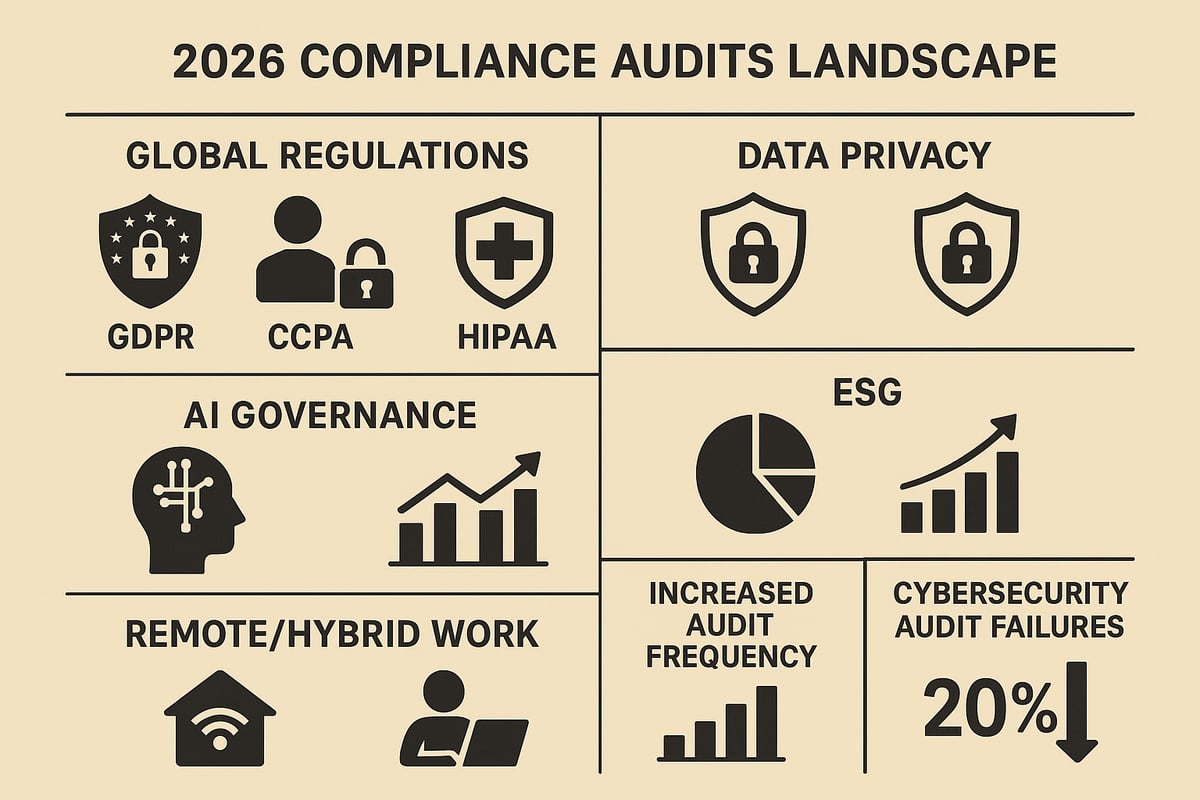
Regulations are expanding at an unprecedented pace. Not only are global standards like GDPR, CCPA, HIPAA, and SOX evolving, but new requirements are emerging around AI governance and ESG reporting. Digitalization is driving more data collection, while remote and hybrid work environments increase the complexity of compliance audits.
For example, recent years have seen significant fines in healthcare and finance due to non-compliance. According to industry reports, 62% of organizations have experienced more frequent audits since 2024. For a deeper look at these trends and how automation is shaping the future, explore compliance automation trends for 2026.
Key Types of Compliance Audits
Compliance audits take many forms. Internal audits are conducted by your own teams to assess controls and processes, while external audits involve third-party evaluators. Industry-specific audits target sectors like healthcare, finance, technology, and manufacturing, each with unique requirements.
IT and cybersecurity audits have gained prominence in 2026, with frameworks such as PCI DSS for payment processing and SOC 2 for SaaS providers becoming standard. Notably, cybersecurity audit failures rose by 18% in 2025, underscoring the need for robust controls and vigilant risk management.
Why Compliance Audits Matter
The consequences of failing compliance audits are severe. Legal and financial penalties can cripple operations, while reputational damage erodes stakeholder trust. Staying compliant can also be a market differentiator, helping organizations win contracts and speed up approvals.
For instance, businesses with strong compliance programs report contract approvals that are 30% faster than their competitors. According to an IBM report, the average cost of a compliance breach in 2025 soared to $5.87 million, making prevention through diligent audits a business imperative.
Common Misconceptions About Audits
Many believe compliance audits are only for large organizations or that compliance is a one-time event. Others assume technology alone ensures compliance. These misconceptions can be costly.
In reality, compliance audits require ongoing attention, a culture of awareness, and regular staff training. Even small businesses have faced fines, especially for violations like GDPR non-compliance. Building a proactive, organization-wide approach is essential to avoid these pitfalls.
2026 Compliance Audit Requirements: What’s Changed?
Facing 2026, organizations must adapt to a rapidly shifting compliance landscape. Regulatory requirements are evolving, and compliance audits are more complex than ever. Understanding what has changed is essential for staying ahead. Here is what you need to know about the latest compliance audits environment.
New and Emerging Standards
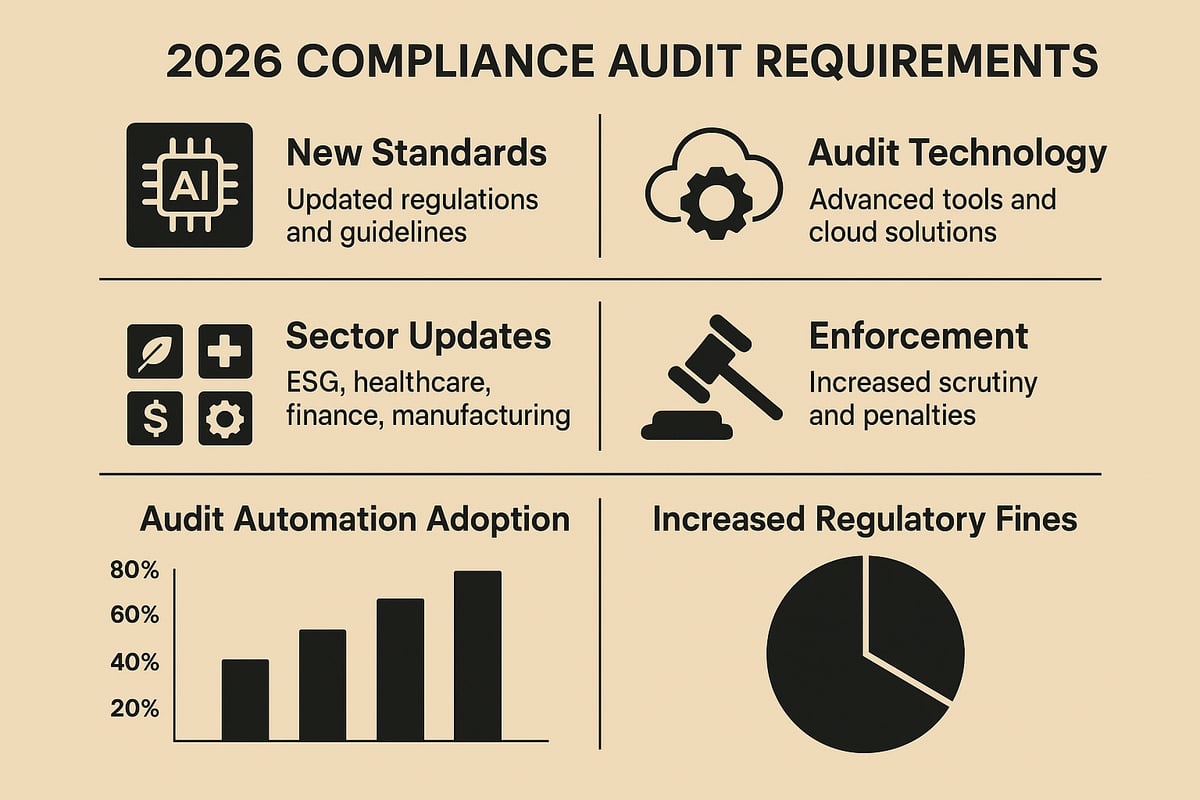
In 2026, compliance audits must address a wave of new standards. AI ethics and transparency regulations now require organizations to disclose how artificial intelligence impacts decision-making. Data privacy laws have expanded, with more regions enacting rules modeled after GDPR and CCPA. ESG (Environmental, Social, Governance) reporting is no longer optional for public companies, as governments demand greater accountability for social impact and sustainability.
For example, the EU AI Act and new SEC climate disclosure rules set stricter expectations for both technology and financial transparency. Staying audit-ready means tracking these standards and integrating them into daily operations.
Technology’s Role in Modern Audits
Technology is reshaping compliance audits in 2026. Automation and artificial intelligence streamline monitoring, evidence collection, and reporting. Cloud-based compliance dashboards offer real-time visibility into risk and controls. Blockchain technology is also emerging as a tool for secure, immutable audit trails.
According to a recent Gartner survey on audit departments embracing AI, 74% of firms now leverage automated compliance solutions. This shift reduces manual workloads and improves accuracy, enabling organizations to respond faster to regulatory changes. Adopting these tools is now a best practice for successful compliance audits.
Sector-Specific Updates
Compliance audits in 2026 are highly specialized by industry. Healthcare organizations must navigate updated HIPAA rules and telehealth regulations, ensuring secure patient data management. Financial institutions face enhanced anti-money laundering (AML) and Know Your Customer (KYC) protocols, making transaction monitoring more rigorous.
Manufacturers deal with new requirements for supply chain transparency and product traceability, tracking materials from source to sale. For example, the FDA now mandates cybersecurity safeguards for connected medical devices. To pass compliance audits, each sector must address its unique set of standards and operational risks.
Increased Enforcement and Penalties
Regulatory bodies have ramped up enforcement, making compliance audits more consequential. Penalties for non-compliance are steeper, with real-time reporting expectations and expanded whistleblower protections in place. Major enforcement actions in 2025 led to a 28% increase in fines through 2026.
Organizations can no longer afford to treat compliance audits as routine checklists. Continuous monitoring and prompt remediation are now essential to avoid costly breaches or reputational damage. Proactive compliance management is key to navigating this stricter environment.
Step-by-Step Guide to a Successful Compliance Audit in 2026
Preparing for compliance audits in 2026 requires a strategic, structured approach. This step-by-step guide will help your organization navigate the process with confidence, minimize risk, and drive continuous improvement. By following each stage, you can ensure readiness, foster a culture of compliance, and position your business for ongoing success.
Step 1: Pre-Audit Preparation
Effective compliance audits begin with meticulous pre-audit planning. Assemble a cross-functional team that brings together compliance, IT, operations, and legal expertise. Define the audit’s scope, objectives, and a clear timeline to set expectations across your organization.
Create a comprehensive inventory of policies, procedures, and relevant records. Conduct a gap analysis against the latest regulatory standards to identify areas needing attention. For example, healthcare organizations often use a pre-audit checklist to ensure all HIPAA and telehealth documentation is in order.
Sample Pre-Audit Checklist Table:
| Task | Responsible Party | Status |
|---|---|---|
| Policy Review | Compliance Lead | In Progress |
| Data Privacy Documentation | IT Manager | Complete |
| Employee Training Records | HR | Pending |
| Gap Analysis | Audit Team | In Progress |
Thorough preparation sets the foundation for successful compliance audits and reduces the risk of surprises.
Step 2: Risk Assessment and Internal Controls
Next, conduct a comprehensive risk assessment to identify the most significant threats to compliance. Focus on data privacy, operational processes, and financial controls. Evaluate the effectiveness of your existing internal controls and prioritize remediation based on risk severity.
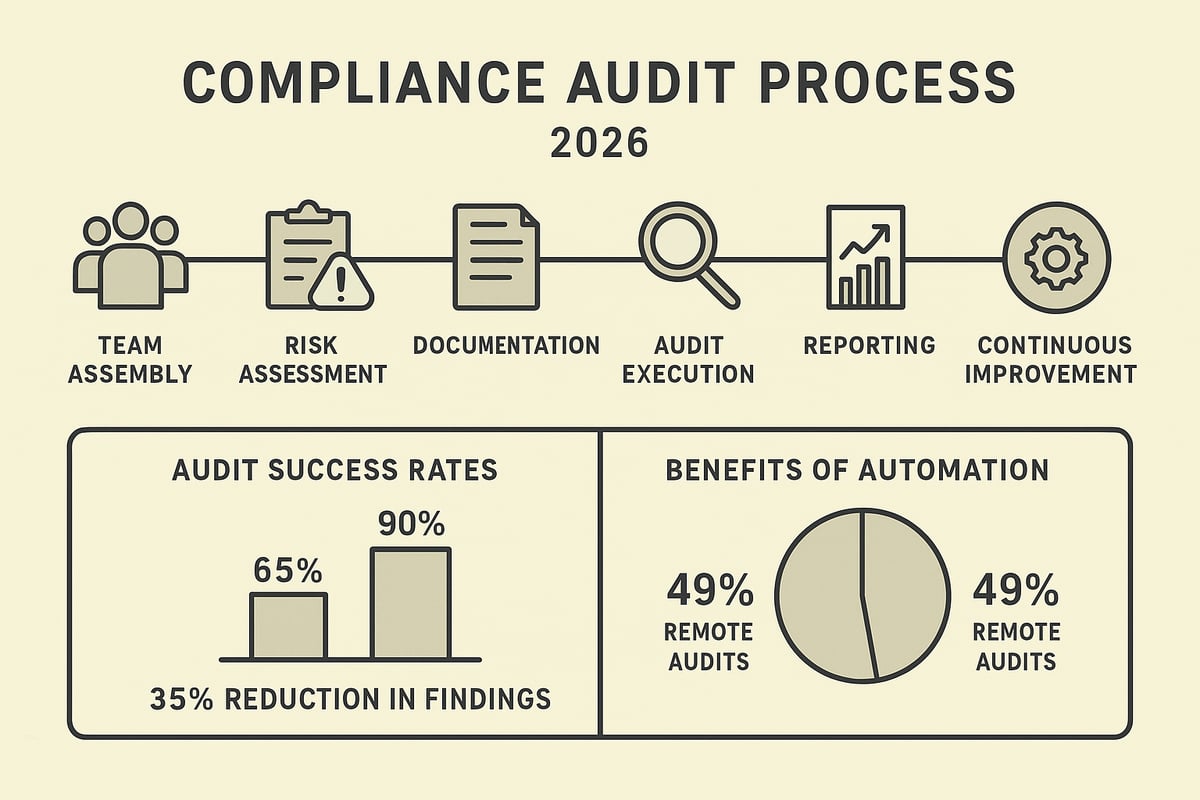
Utilize established risk management frameworks such as COSO or ISO 31000 to guide your assessment. Organizations that perform regular risk assessments as part of their compliance audits process report 35% fewer audit findings.
- Identify key compliance risks
- Assess control effectiveness
- Prioritize actions by risk level
- Implement risk management frameworks
A robust risk assessment ensures your compliance audits target the most critical vulnerabilities.
Step 3: Documentation and Evidence Collection
Maintaining accurate, up-to-date documentation is vital for passing compliance audits. Ensure all policies, logs, and training records are current and accessible. Digital tools offer version control and secure access management, reducing errors and ensuring audit trails for every activity.
Automated documentation platforms can streamline this process. For instance, accounts payable process automation solutions help centralize records and support audit readiness by minimizing manual errors.
Tips for Effective Evidence Collection:
- Use cloud-based platforms for secure storage
- Implement role-based access controls
- Regularly review and update documentation
Strong documentation supports compliance audits by providing clear, traceable evidence for every requirement.
Step 4: Conducting the Audit
When it is time to execute the audit, clarify the roles of internal and external auditors. Determine if the audit will be conducted on-site or remotely, as nearly half of compliance audits in 2026 are now remote.
Auditors will interview staff, observe processes, and use sampling methodologies to test evidence. Prepare your team by reviewing audit protocols and ensuring all documentation is readily available.
- Internal vs. external auditors: define responsibilities
- On-site vs. remote: prepare technology and access
- Evidence testing: ensure sample accuracy
A well-orchestrated audit increases transparency and builds trust with regulators.
Step 5: Reporting and Remediation
After the audit, draft clear and actionable reports outlining findings and recommended corrective actions. Communicate these results to leadership and all relevant stakeholders promptly.
Develop a structured remediation plan, assigning responsibilities and deadlines for corrective actions. Use project management tools to track progress and ensure timely completion. For example, a data privacy violation may require immediate policy updates and employee retraining.
- Draft detailed reports
- Assign remediation tasks
- Monitor progress and document completion
Efficient reporting and follow-up are essential for successful compliance audits.
Step 6: Post-Audit Monitoring and Continuous Improvement
Compliance audits do not end with reporting. Establish ongoing monitoring using automated alerts and regular internal reviews. Schedule mini-audits to catch emerging issues early and keep policies updated as regulations evolve.
Continuous monitoring reduces repeat audit issues by 40% and helps maintain audit readiness year-round. Integrate compliance monitoring tools with your business systems for seamless oversight.
- Set up automated alerts
- Conduct regular mini-audits
- Update policies proactively
Ongoing vigilance ensures that compliance audits remain a cornerstone of your risk management strategy.
Best Practices for Audit Success
To maximize the benefits of compliance audits, foster a culture of transparency and accountability throughout your organization. Invest in regular employee training and leverage technology to increase efficiency and accuracy.
Engage executive leadership in compliance initiatives to drive faster remediation and lasting improvements. Companies with executive buy-in achieve remediation 25% faster, underscoring the value of top-down support.
Best Practices Summary:
- Promote compliance culture
- Provide ongoing training
- Use digital tools for audits
- Involve leadership in compliance efforts
Adopting these best practices will help your organization excel in compliance audits and adapt to future regulatory changes.
Common Compliance Audit Pitfalls and How to Avoid Them
Even the most diligent organizations can stumble during compliance audits, but awareness of common pitfalls is the first step toward prevention. Addressing these challenges early ensures better outcomes and reduces costly surprises.
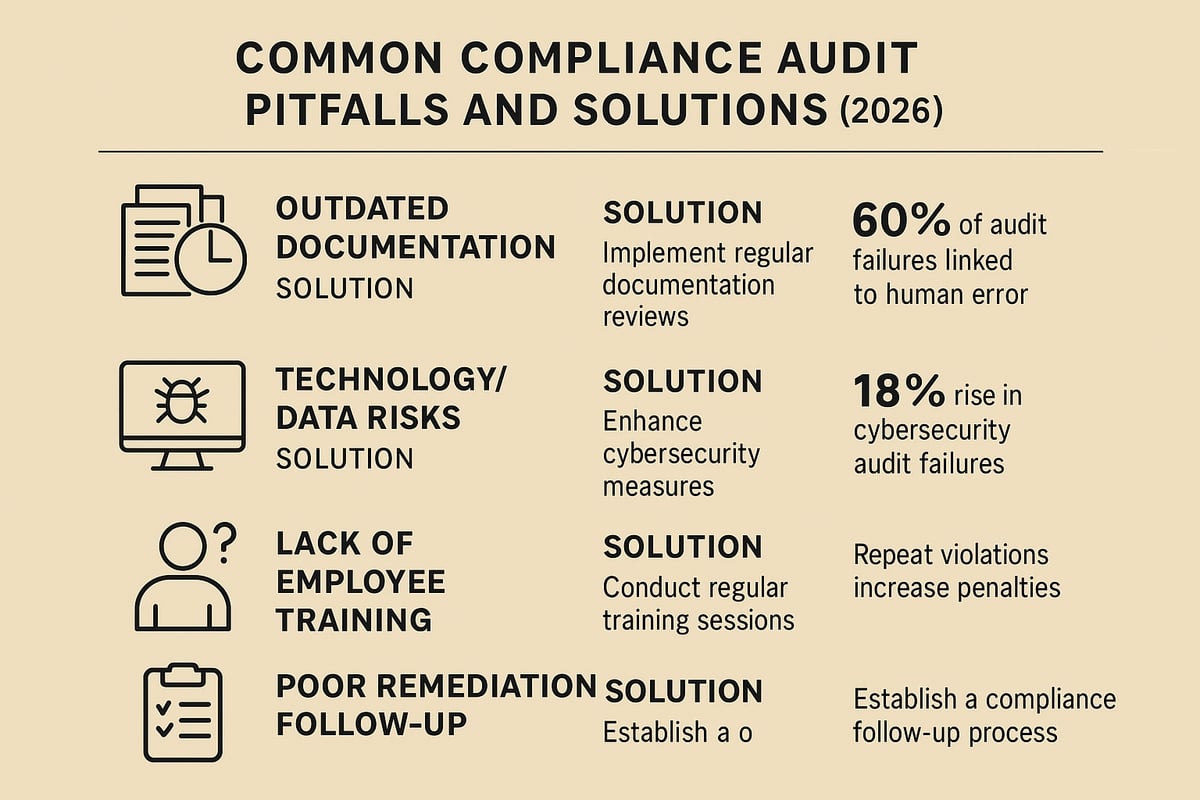
Inadequate Preparation and Documentation
Incomplete records and outdated documentation remain persistent threats during compliance audits. Many organizations struggle with poor version control, missing employee training logs, or scattered policy files. This lack of preparation can trigger failed audits, especially when regulators demand precise evidence.
- Outdated or missing records
- Disorganized document storage
- No standardized checklist
To avoid these pitfalls, implement a centralized document management system that tracks updates, maintains audit trails, and ensures easy access. Regularly review and update all compliance materials to match current requirements. Consistent preparation is essential for successful compliance audits.
Underestimating Technology and Data Risks
Overlooking technology gaps can undermine compliance audits, particularly as digital systems become central to operations. Legacy systems, unpatched software, and weak access controls create vulnerabilities that may go undetected until an audit exposes them.
- Ignored cybersecurity updates
- Overreliance on outdated systems
- Poor monitoring of digital assets
Automated monitoring and regular IT audits are critical. Leveraging audit technology for underpaid claims can enhance detection of risks and ensure real-time compliance tracking. Proactive management of technology risks strengthens compliance audits overall.
Lack of Employee Engagement and Training
Employees are often the weak link in compliance audits when they lack proper training or awareness of key policies. Irregular or insufficient training sessions can result in costly errors, as 60% of audit failures are linked directly to human mistakes.
- Unclear or outdated training materials
- Infrequent compliance briefings
- Employees unaware of reporting procedures
Establish ongoing, role-specific compliance training programs. Incorporate interactive sessions and regular assessments to reinforce knowledge. Engaged, well-trained employees are vital for passing compliance audits and minimizing risk.
Failure to Act on Audit Findings
Ignoring audit findings or delaying remediation can lead to repeated violations, increasing both penalties and regulatory scrutiny. Organizations sometimes lack clear accountability or structured follow-up, resulting in unresolved issues surfacing in future compliance audits.
- No action plans for findings
- Delayed remediation efforts
- Poor tracking of corrective actions
Assign accountability for each audit finding and use project management tools to monitor progress. Timely, transparent remediation demonstrates a commitment to compliance audits and builds trust with stakeholders.
Building a Future-Proof Compliance Culture
Creating a resilient compliance culture is the foundation for success with compliance audits in 2026. As regulations shift and expectations rise, organizations must embed compliance into every layer of their operations. This means moving beyond one-time efforts and focusing on sustainable practices that adapt to new risks and rules.
Embedding Compliance into Organizational DNA
A future-proof approach to compliance audits begins with leadership commitment. When executives set a clear tone and prioritize compliance, it becomes an integral part of business strategy and values. Board-level oversight ensures accountability and demonstrates to regulators and stakeholders that compliance is non-negotiable.
To make compliance audits effective, organizations must align policies with day-to-day operations. This alignment is achieved through clear communication, regular policy reviews, and integrating compliance goals into performance metrics. Companies with robust compliance cultures experience 50% fewer violations, highlighting the value of a proactive mindset.
Leveraging Technology for Ongoing Compliance
Modern compliance audits demand real-time oversight and rapid adaptation. Leveraging technology is essential for maintaining continuous compliance. Automated alerts, AI-driven anomaly detection, and integrated compliance tools streamline monitoring and reduce manual errors.
Connecting compliance systems with business platforms, such as ERP and HRM, provides a holistic view of risk. According to the Cybersecurity GRC benchmarks report, organizations that adopt advanced governance, risk, and compliance platforms report stronger audit outcomes and improved third-party risk management. Embedding these technologies ensures that compliance audits remain accurate and actionable.
Measuring and Reporting Compliance Performance
Transparent measurement drives accountability in compliance audits. Organizations should track key compliance metrics, such as audit pass rates, remediation speed, and incident frequency. Establishing clear KPIs provides insight into the effectiveness of compliance programs and helps prioritize improvement efforts.
Regularly reporting these metrics builds trust with stakeholders and demonstrates regulatory responsibility. Benchmarking against industry standards further ensures that compliance audits stay relevant and competitive. In fact, 70% of executives now view compliance KPIs as critical components of risk management.
Preparing for the Next Wave of Regulatory Change
To succeed in future compliance audits, organizations must build agility into their processes. Scenario planning, proactive risk assessments, and continuous learning help teams anticipate and respond to new standards. Early adoption of upcoming regulations, such as ESG requirements, positions companies ahead of the curve.
Encouraging a culture of curiosity and adaptability enables organizations to pivot quickly as laws evolve. Regular training and open communication ensure that everyone is prepared for the challenges ahead, making compliance audits a tool for growth rather than a source of stress.
As you navigate the evolving landscape of compliance audits in 2026, it’s clear that staying proactive is more crucial than ever. We’ve covered how regulations are shifting, why continuous improvement is essential, and how technology and expert guidance can make all the difference. If you’re looking to boost efficiency, minimize risks, and empower your team to thrive in this new era, let’s take the next step together. You don’t have to tackle compliance challenges alone—let’s build a roadmap tailored to your organization’s unique needs. Book a Consultation