
End-to-End RCM: Optimizing Healthcare Revenue Cycles

Share on Facebook
Share on X
Share on LinkedIn

Healthcare organizations face mounting pressure to maximize revenue while controlling costs and maintaining exceptional patient care. The complexity of modern healthcare billing, combined with evolving payer requirements and regulatory changes, demands a comprehensive approach to financial operations. End-to-end RCM represents a holistic strategy that integrates every stage of the revenue cycle, from the moment a patient schedules an appointment through final payment reconciliation, creating seamless workflows that reduce errors, accelerate reimbursements, and improve financial outcomes.

Understanding the Complete Revenue Cycle Framework

End-to-end RCM encompasses all financial and administrative processes that healthcare organizations use to track patient care episodes from registration and appointment scheduling through the final payment of balances. Unlike fragmented approaches that treat billing, coding, and collections as separate functions, this comprehensive methodology recognizes that each stage directly impacts overall financial performance.

The traditional revenue cycle suffered from disconnected systems, manual handoffs between departments, and limited visibility into process bottlenecks. These inefficiencies created revenue leakage, increased denial rates, and frustrated both staff and patients. Modern end-to-end revenue cycle management solutions address these challenges by establishing integrated workflows that connect front-end, mid-cycle, and back-end operations.

Front-End Operations: Setting the Foundation

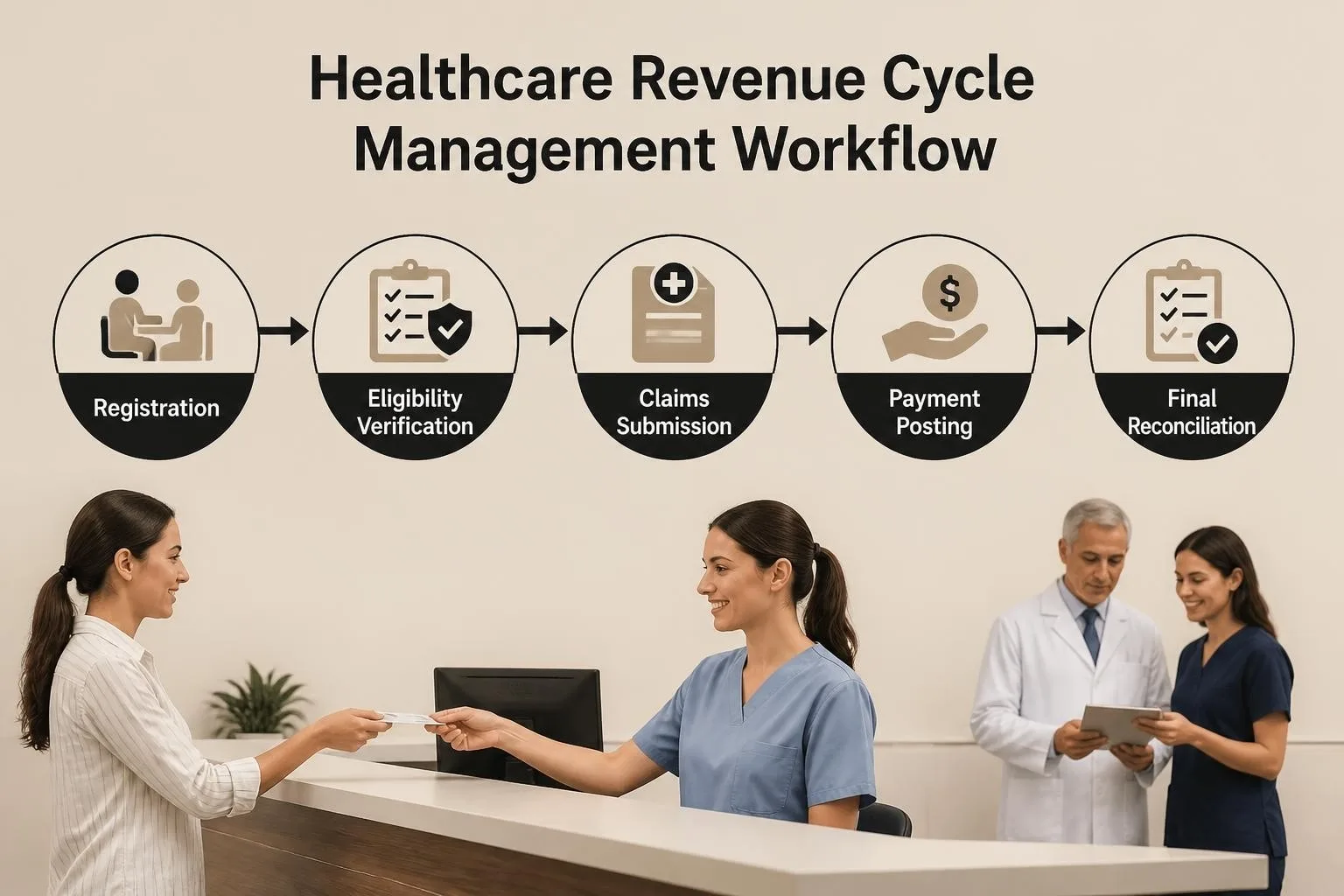
The revenue cycle begins well before clinical services are delivered. Front-end processes establish the financial foundation for successful reimbursement. Patient registration, demographic data collection, and insurance verification form the critical first steps that determine whether claims will be paid accurately and promptly.

Key front-end activities include:

  • Patient scheduling and pre-registration
  • Insurance eligibility verification and authorization
  • Financial counseling and payment estimation
  • Co-pay and deductible collection at point of service

Organizations implementing end-to-end RCM invest heavily in these early stages because errors introduced during registration multiply throughout the cycle. Incorrect patient demographics, invalid insurance information, or missing authorizations inevitably lead to claim denials, delayed payments, and increased administrative burden.

Patient registration and insurance verification workflow

Mid-Cycle Excellence: Clinical Documentation and Coding

Once services are delivered, the mid-cycle phase translates clinical documentation into billable claims. This transformation requires precise coordination between clinical staff, health information management teams, and professional coders. The accuracy and completeness of clinical documentation directly impacts coding specificity, which in turn affects reimbursement levels.

Charge capture represents a critical mid-cycle function where all billable services, procedures, and supplies are identified and recorded. Healthcare organizations lose significant revenue when charges go uncaptured due to workflow gaps, inadequate documentation, or system limitations. End-to-end RCM addresses these vulnerabilities through automated charge capture systems, real-time documentation review, and comprehensive audit trails.

Coding Accuracy and Compliance

Medical coding serves as the bridge between clinical care and financial reimbursement. Coders assign standardized codes (ICD-10, CPT, HCPCS) that describe diagnoses, procedures, and services provided. Best practices across RCM stages emphasize the importance of certified coders, ongoing education, and quality assurance programs that maintain coding accuracy while ensuring regulatory compliance.

Mid-Cycle Component Impact on Revenue Risk of Errors
Clinical Documentation High Medium
Charge Capture Very High High
Medical Coding Very High Medium
Charge Review Medium Low

Back-End Operations: Claims Management and Collections

The back-end revenue cycle encompasses claims submission, payment posting, denial management, and patient collections. This phase determines how quickly and completely healthcare organizations convert accounts receivable into actual cash flow. Breaking down back-end revenue cycle processes reveals numerous opportunities for optimization through automation, standardization, and continuous improvement.

Claims scrubbing technology has become essential for reducing rejection rates. Pre-submission edits identify common errors such as invalid codes, missing modifiers, or incorrect patient demographics before claims reach payers. This proactive approach prevents the costly cycle of rejection, correction, and resubmission that extends days in accounts receivable.

Critical back-end processes include:

  1. Electronic claims submission and tracking
  2. Remittance advice processing and payment posting
  3. Denial identification and categorization
  4. Appeals preparation and submission
  5. Patient statement generation and follow-up
  6. Payment plan negotiation and management

Denial Management as Strategic Advantage

Effective end-to-end RCM treats denial management as both a tactical priority and a strategic opportunity. While resolving individual denials recovers immediate revenue, analyzing denial patterns reveals systemic issues that, when corrected, prevent future revenue loss. Organizations should track denial rates by payer, service type, denial reason, and provider to identify improvement opportunities.

The most sophisticated healthcare organizations implement revenue cycle management best practices for 2026 that include root cause analysis protocols, staff education based on denial trends, and performance metrics that hold departments accountable for denial prevention. This proactive approach yields better results than simply increasing collection effort on the back end.

Denial management workflow

Technology Integration for Seamless Operations

Modern end-to-end RCM depends on technology platforms that integrate disparate systems and automate manual processes. Electronic health records, practice management systems, clearinghouses, and specialized RCM software must communicate seamlessly to eliminate redundant data entry, reduce errors, and provide real-time visibility into revenue cycle performance.

Application programming interfaces (APIs) and data integration platforms enable healthcare organizations to build connected ecosystems where information flows automatically between systems. When a patient checks in at the front desk, integrated systems can immediately verify insurance eligibility, check for outstanding balances, and flag potential issues before services are delivered.

Artificial Intelligence and Automation Applications

Artificial intelligence transforms end-to-end RCM by automating routine tasks, predicting payment outcomes, and identifying optimization opportunities. AI solutions for healthcare operations include predictive denial analytics, intelligent claim routing, automated coding suggestions, and chatbots that handle patient payment inquiries.

Machine learning algorithms analyze historical claim data to identify patterns associated with denials, underpayments, and slow-paying accounts. These insights enable organizations to take preemptive action, prioritize follow-up activities, and allocate resources more effectively. Automation eliminates thousands of hours spent on manual tasks such as eligibility verification, claim status checks, and payment posting.

Performance Metrics and Continuous Improvement

Organizations cannot optimize what they do not measure. End-to-end RCM requires comprehensive key performance indicators (KPIs) that provide visibility into every stage of the revenue cycle. Tracking these metrics enables data-driven decision-making and identifies areas requiring intervention.

Essential revenue cycle KPIs include:

  • Days in accounts receivable (A/R)
  • Clean claim rate (first-pass acceptance)
  • Net collection rate
  • Denial rate and denial overturn rate
  • Cost to collect
  • Point-of-service collection percentage
  • Coding accuracy rate
  • A/R aging distribution
Metric Industry Benchmark Excellence Target
Clean Claim Rate 85-90% >95%
Days in A/R 40-50 days <35 days
Net Collection Rate 95-97% >98%
Denial Rate 5-10% <5%

Regular performance reviews should examine trends over time, compare results against industry benchmarks, and investigate significant variances. Many healthcare organizations conduct monthly revenue cycle meetings where stakeholders review metrics, discuss challenges, and implement corrective actions. This disciplined approach to performance management distinguishes high-performing organizations from those struggling with revenue cycle dysfunction.

Staff Training and Change Management

Technology alone cannot transform revenue cycle performance. Successful end-to-end RCM implementations require skilled staff who understand their roles within the larger revenue cycle ecosystem. Organizations must invest in comprehensive training programs that educate employees about how their daily activities impact financial outcomes.

Cross-functional training helps staff appreciate interdependencies between departments. When registration staff understand how incomplete demographic information leads to claim denials, they become more diligent about data quality. When clinical staff recognize that poor documentation limits coding specificity and reimbursement, they improve their charting practices.

Building a Culture of Financial Accountability

Healthcare organizations focused on financial and operational excellence cultivate cultures where every employee understands their contribution to revenue integrity. This requires transparent communication about financial performance, recognition programs that celebrate revenue cycle achievements, and accountability structures that address performance gaps.

Change management becomes particularly important when implementing new end-to-end RCM systems or processes. Staff may resist changes to familiar workflows, especially if they do not understand the rationale behind modifications. Effective leaders communicate the vision clearly, involve staff in solution design, provide adequate training and support, and celebrate early wins that demonstrate value.
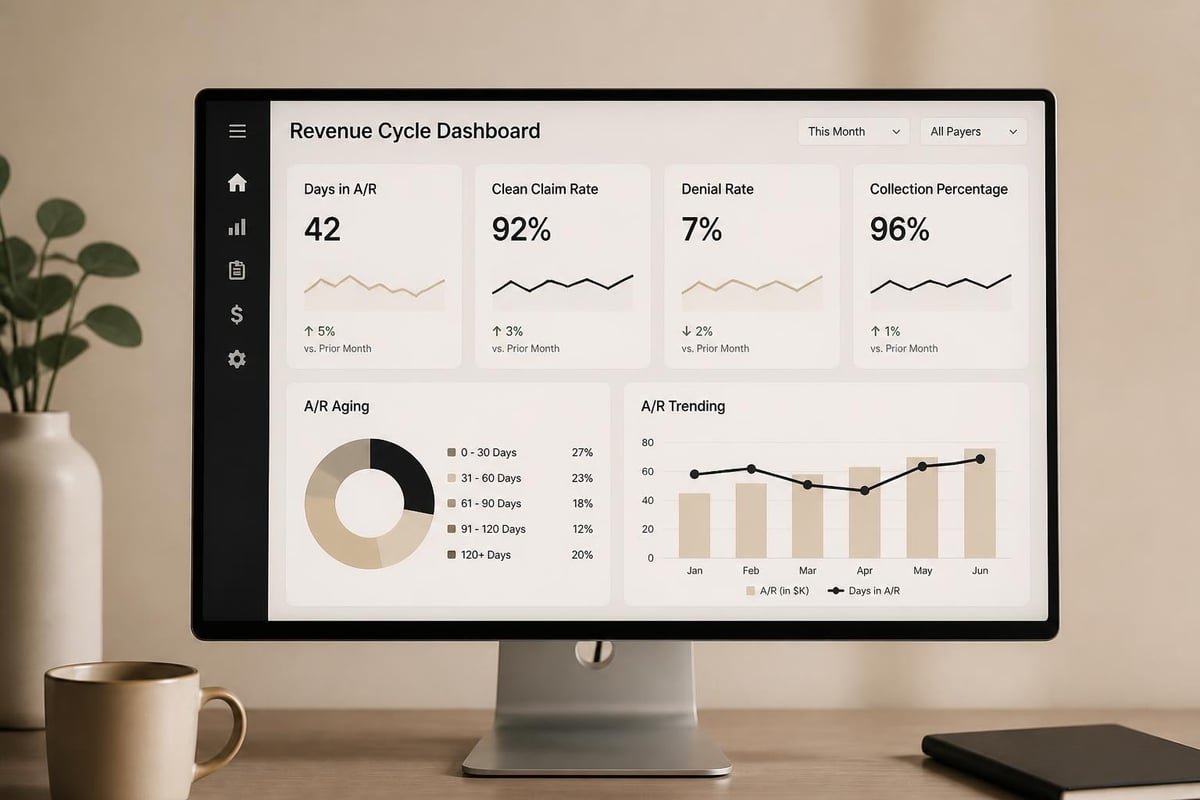
Revenue cycle performance dashboard

Vendor Selection and Partnership Strategies

Many healthcare organizations partner with specialized revenue cycle management companies to supplement internal capabilities or outsource specific functions entirely. Comprehensive end-to-end RCM partnerships can provide expertise, technology, and economies of scale that smaller organizations cannot achieve independently.

When evaluating RCM vendors, healthcare organizations should assess technical capabilities, industry experience, transparency in reporting, and cultural alignment. The most successful partnerships feature collaborative relationships where vendors function as extensions of internal teams rather than distant service providers.

Vendor evaluation criteria include:

  • Proven track record with similar organizations
  • Technology platform capabilities and integration options
  • Transparent pricing models and performance guarantees
  • Staff qualifications and training programs
  • Reporting capabilities and data access
  • Compliance and security certifications

Some organizations adopt hybrid models where they retain certain revenue cycle functions internally while outsourcing others. For example, they might manage patient access and registration internally while partnering with specialists for coding, billing, and collections. This approach allows organizations to maintain control over patient-facing activities while leveraging external expertise for technical functions.

Regulatory Compliance and Risk Mitigation

End-to-end RCM must incorporate rigorous compliance protocols that address evolving regulatory requirements. Healthcare billing regulations are complex, vary by payer and service type, and change frequently. Non-compliance risks include claim denials, payment recoupments, civil monetary penalties, and exclusion from federal healthcare programs.

Compliance programs should include regular audits of coding accuracy, proper use of modifiers, medical necessity documentation, and adherence to billing rules. Many organizations conduct internal audits quarterly or monthly, supplemented by external audits annually to provide independent validation. Data normalization processes help ensure consistency across systems and reduce compliance risks associated with data integrity issues.

Privacy and Security Considerations

Patient financial information requires the same protections as clinical data under HIPAA regulations. End-to-end RCM systems must incorporate robust security controls including encryption, access controls, audit logging, and regular security assessments. Organizations should establish clear policies governing who can access patient financial data and under what circumstances.

Business associate agreements (BAAs) are mandatory when sharing protected health information with RCM vendors or clearinghouses. These agreements specify each party's responsibilities for protecting patient data and outline procedures for breach notification and remediation.

Financial Impact and Return on Investment

Organizations implementing comprehensive end-to-end RCM strategies typically realize measurable financial benefits within the first year. Improvements in clean claim rates, reductions in days in A/R, and decreased denial rates directly translate to increased cash flow and reduced operating costs. The benefits of end-to-end revenue cycle management extend beyond immediate financial gains to include operational efficiencies, improved patient satisfaction, and enhanced staff productivity.

Calculating ROI requires comparing implementation and ongoing costs against quantifiable benefits such as increased collections, reduced bad debt write-offs, decreased staffing requirements, and accelerated payment timelines. Many organizations achieve ROI within 12 to 18 months, with ongoing annual benefits that compound over time.

Financial Benefit Typical Improvement Annual Impact (500-bed hospital)
Clean Claim Rate Increase 5-10 percentage points $2-4 million
Days in A/R Reduction 5-10 days $3-6 million
Denial Rate Decrease 2-3 percentage points $1-3 million
Collection Rate Improvement 1-2 percentage points $2-4 million

Patient Experience and Engagement

Modern end-to-end RCM recognizes that patients are consumers who expect transparent pricing, convenient payment options, and clear communication about financial responsibilities. Organizations that prioritize patient financial experience build loyalty, reduce bad debt, and differentiate themselves in competitive markets.

Price transparency tools allow patients to estimate their out-of-pocket costs before receiving services. While perfect accuracy remains elusive due to variable insurance contracts and unpredictable clinical outcomes, reasonable estimates help patients make informed decisions and plan financially for care.

Patient-centered financial practices include:

  • Upfront cost estimates and financial counseling
  • Flexible payment plans without interest charges
  • Multiple payment channels (online, phone, mail, in-person)
  • Clear, easy-to-understand statements
  • Proactive communication about balances
  • Financial assistance programs for eligible patients

Organizations should train staff to discuss financial matters with empathy and professionalism. Conversations about money can be uncomfortable, particularly when patients face serious health challenges. Staff who balance financial accountability with compassionate communication create positive experiences even in difficult circumstances.

Future Trends and Strategic Considerations

The healthcare industry continues evolving toward value-based care models that tie reimbursement to quality outcomes rather than volume of services. This transformation affects end-to-end RCM by introducing new payment methodologies, quality reporting requirements, and risk-sharing arrangements. Organizations must adapt their revenue cycle processes to handle bundled payments, shared savings programs, and quality-based payment adjustments.

Interoperability standards such as FHIR (Fast Healthcare Interoperability Resources) promise to improve data exchange between systems, reducing manual data entry and enabling real-time information sharing. As these standards mature and achieve broader adoption, end-to-end RCM platforms will become more integrated and responsive.

Consumer-directed healthcare plans with high deductibles shift more financial responsibility to patients, making patient collections an increasingly important component of revenue cycle management. Organizations must develop sophisticated strategies for patient engagement, payment facilitation, and bad debt prevention that recognize patients' role as significant payers.

Telehealth expansion creates new billing complexities around originating sites, distant sites, technology requirements, and payer-specific telehealth policies. End-to-end RCM systems must accommodate these unique scenarios while maintaining compliance with evolving regulations governing virtual care reimbursement.

Strategic Implementation Roadmap

Organizations embarking on end-to-end RCM transformation should develop comprehensive implementation roadmaps that sequence initiatives logically, establish clear milestones, and allocate sufficient resources for success. Attempting to change everything simultaneously often leads to disruption, staff burnout, and failed implementations.

Recommended implementation sequence:

  1. Conduct comprehensive revenue cycle assessment identifying gaps and opportunities
  2. Define future-state vision and establish measurable objectives
  3. Prioritize initiatives based on impact, feasibility, and interdependencies
  4. Select technology platforms and vendor partners
  5. Design new workflows and update policies/procedures
  6. Execute phased implementation with adequate testing
  7. Train staff comprehensively on new systems and processes
  8. Monitor performance closely and adjust as needed
  9. Establish continuous improvement processes for ongoing optimization

Change management and communication deserve special attention throughout implementation. Regular updates keep stakeholders informed, two-way communication channels allow staff to raise concerns and provide feedback, and celebration of milestones maintains momentum and morale.


End-to-end RCM represents a comprehensive approach to healthcare financial operations that integrates all revenue cycle stages into cohesive, optimized workflows. Organizations that embrace this methodology achieve superior financial performance, operational efficiency, and patient satisfaction compared to those relying on fragmented, siloed approaches. If your organization seeks to optimize revenue cycle performance, eliminate manual inefficiencies, and leverage advanced technology solutions, Nero and Associates, Inc. delivers performance-based consulting that transforms financial operations while empowering your teams to focus on delivering exceptional care. Our revenue cycle management expertise helps healthcare organizations save costs, save time, and improve their bottom line through integrated solutions tailored to your unique operational challenges.

End-to-End RCM: Optimizing Healthcare Revenue Cycles

Healthcare organizations face mounting pressure to maximize revenue while controlling costs and maintaining exceptional patient care. The complexity of modern healthcare billing, combined with evolving payer requirements and regulatory changes, demands a comprehensive approach to financial operations. End-to-end RCM represents a holistic strategy that integrates every stage of the revenue cycle, from the moment a patient schedules an appointment through final payment reconciliation, creating seamless workflows that reduce errors, accelerate reimbursements, and improve financial outcomes.

Understanding the Complete Revenue Cycle Framework

End-to-end RCM encompasses all financial and administrative processes that healthcare organizations use to track patient care episodes from registration and appointment scheduling through the final payment of balances. Unlike fragmented approaches that treat billing, coding, and collections as separate functions, this comprehensive methodology recognizes that each stage directly impacts overall financial performance.

The traditional revenue cycle suffered from disconnected systems, manual handoffs between departments, and limited visibility into process bottlenecks. These inefficiencies created revenue leakage, increased denial rates, and frustrated both staff and patients. Modern end-to-end revenue cycle management solutions address these challenges by establishing integrated workflows that connect front-end, mid-cycle, and back-end operations.

Front-End Operations: Setting the Foundation

The revenue cycle begins well before clinical services are delivered. Front-end processes establish the financial foundation for successful reimbursement. Patient registration, demographic data collection, and insurance verification form the critical first steps that determine whether claims will be paid accurately and promptly.

Key front-end activities include:

  • Patient scheduling and pre-registration
  • Insurance eligibility verification and authorization
  • Financial counseling and payment estimation
  • Co-pay and deductible collection at point of service

Organizations implementing end-to-end RCM invest heavily in these early stages because errors introduced during registration multiply throughout the cycle. Incorrect patient demographics, invalid insurance information, or missing authorizations inevitably lead to claim denials, delayed payments, and increased administrative burden.

Patient registration and insurance verification workflow

Mid-Cycle Excellence: Clinical Documentation and Coding

Once services are delivered, the mid-cycle phase translates clinical documentation into billable claims. This transformation requires precise coordination between clinical staff, health information management teams, and professional coders. The accuracy and completeness of clinical documentation directly impacts coding specificity, which in turn affects reimbursement levels.

Charge capture represents a critical mid-cycle function where all billable services, procedures, and supplies are identified and recorded. Healthcare organizations lose significant revenue when charges go uncaptured due to workflow gaps, inadequate documentation, or system limitations. End-to-end RCM addresses these vulnerabilities through automated charge capture systems, real-time documentation review, and comprehensive audit trails.

Coding Accuracy and Compliance

Medical coding serves as the bridge between clinical care and financial reimbursement. Coders assign standardized codes (ICD-10, CPT, HCPCS) that describe diagnoses, procedures, and services provided. Best practices across RCM stages emphasize the importance of certified coders, ongoing education, and quality assurance programs that maintain coding accuracy while ensuring regulatory compliance.

Mid-Cycle Component Impact on Revenue Risk of Errors
Clinical Documentation High Medium
Charge Capture Very High High
Medical Coding Very High Medium
Charge Review Medium Low

Back-End Operations: Claims Management and Collections

The back-end revenue cycle encompasses claims submission, payment posting, denial management, and patient collections. This phase determines how quickly and completely healthcare organizations convert accounts receivable into actual cash flow. Breaking down back-end revenue cycle processes reveals numerous opportunities for optimization through automation, standardization, and continuous improvement.

Claims scrubbing technology has become essential for reducing rejection rates. Pre-submission edits identify common errors such as invalid codes, missing modifiers, or incorrect patient demographics before claims reach payers. This proactive approach prevents the costly cycle of rejection, correction, and resubmission that extends days in accounts receivable.

Critical back-end processes include:

  1. Electronic claims submission and tracking
  2. Remittance advice processing and payment posting
  3. Denial identification and categorization
  4. Appeals preparation and submission
  5. Patient statement generation and follow-up
  6. Payment plan negotiation and management

Denial Management as Strategic Advantage

Effective end-to-end RCM treats denial management as both a tactical priority and a strategic opportunity. While resolving individual denials recovers immediate revenue, analyzing denial patterns reveals systemic issues that, when corrected, prevent future revenue loss. Organizations should track denial rates by payer, service type, denial reason, and provider to identify improvement opportunities.

The most sophisticated healthcare organizations implement revenue cycle management best practices for 2026 that include root cause analysis protocols, staff education based on denial trends, and performance metrics that hold departments accountable for denial prevention. This proactive approach yields better results than simply increasing collection effort on the back end.

Denial management workflow

Technology Integration for Seamless Operations

Modern end-to-end RCM depends on technology platforms that integrate disparate systems and automate manual processes. Electronic health records, practice management systems, clearinghouses, and specialized RCM software must communicate seamlessly to eliminate redundant data entry, reduce errors, and provide real-time visibility into revenue cycle performance.

Application programming interfaces (APIs) and data integration platforms enable healthcare organizations to build connected ecosystems where information flows automatically between systems. When a patient checks in at the front desk, integrated systems can immediately verify insurance eligibility, check for outstanding balances, and flag potential issues before services are delivered.

Artificial Intelligence and Automation Applications

Artificial intelligence transforms end-to-end RCM by automating routine tasks, predicting payment outcomes, and identifying optimization opportunities. AI solutions for healthcare operations include predictive denial analytics, intelligent claim routing, automated coding suggestions, and chatbots that handle patient payment inquiries.

Machine learning algorithms analyze historical claim data to identify patterns associated with denials, underpayments, and slow-paying accounts. These insights enable organizations to take preemptive action, prioritize follow-up activities, and allocate resources more effectively. Automation eliminates thousands of hours spent on manual tasks such as eligibility verification, claim status checks, and payment posting.

Performance Metrics and Continuous Improvement

Organizations cannot optimize what they do not measure. End-to-end RCM requires comprehensive key performance indicators (KPIs) that provide visibility into every stage of the revenue cycle. Tracking these metrics enables data-driven decision-making and identifies areas requiring intervention.

Essential revenue cycle KPIs include:

  • Days in accounts receivable (A/R)
  • Clean claim rate (first-pass acceptance)
  • Net collection rate
  • Denial rate and denial overturn rate
  • Cost to collect
  • Point-of-service collection percentage
  • Coding accuracy rate
  • A/R aging distribution
Metric Industry Benchmark Excellence Target
Clean Claim Rate 85-90% >95%
Days in A/R 40-50 days <35 days
Net Collection Rate 95-97% >98%
Denial Rate 5-10% <5%

Regular performance reviews should examine trends over time, compare results against industry benchmarks, and investigate significant variances. Many healthcare organizations conduct monthly revenue cycle meetings where stakeholders review metrics, discuss challenges, and implement corrective actions. This disciplined approach to performance management distinguishes high-performing organizations from those struggling with revenue cycle dysfunction.

Staff Training and Change Management

Technology alone cannot transform revenue cycle performance. Successful end-to-end RCM implementations require skilled staff who understand their roles within the larger revenue cycle ecosystem. Organizations must invest in comprehensive training programs that educate employees about how their daily activities impact financial outcomes.

Cross-functional training helps staff appreciate interdependencies between departments. When registration staff understand how incomplete demographic information leads to claim denials, they become more diligent about data quality. When clinical staff recognize that poor documentation limits coding specificity and reimbursement, they improve their charting practices.

Building a Culture of Financial Accountability

Healthcare organizations focused on financial and operational excellence cultivate cultures where every employee understands their contribution to revenue integrity. This requires transparent communication about financial performance, recognition programs that celebrate revenue cycle achievements, and accountability structures that address performance gaps.

Change management becomes particularly important when implementing new end-to-end RCM systems or processes. Staff may resist changes to familiar workflows, especially if they do not understand the rationale behind modifications. Effective leaders communicate the vision clearly, involve staff in solution design, provide adequate training and support, and celebrate early wins that demonstrate value.

Revenue cycle performance dashboard

Vendor Selection and Partnership Strategies

Many healthcare organizations partner with specialized revenue cycle management companies to supplement internal capabilities or outsource specific functions entirely. Comprehensive end-to-end RCM partnerships can provide expertise, technology, and economies of scale that smaller organizations cannot achieve independently.

When evaluating RCM vendors, healthcare organizations should assess technical capabilities, industry experience, transparency in reporting, and cultural alignment. The most successful partnerships feature collaborative relationships where vendors function as extensions of internal teams rather than distant service providers.

Vendor evaluation criteria include:

  • Proven track record with similar organizations
  • Technology platform capabilities and integration options
  • Transparent pricing models and performance guarantees
  • Staff qualifications and training programs
  • Reporting capabilities and data access
  • Compliance and security certifications

Some organizations adopt hybrid models where they retain certain revenue cycle functions internally while outsourcing others. For example, they might manage patient access and registration internally while partnering with specialists for coding, billing, and collections. This approach allows organizations to maintain control over patient-facing activities while leveraging external expertise for technical functions.

Regulatory Compliance and Risk Mitigation

End-to-end RCM must incorporate rigorous compliance protocols that address evolving regulatory requirements. Healthcare billing regulations are complex, vary by payer and service type, and change frequently. Non-compliance risks include claim denials, payment recoupments, civil monetary penalties, and exclusion from federal healthcare programs.

Compliance programs should include regular audits of coding accuracy, proper use of modifiers, medical necessity documentation, and adherence to billing rules. Many organizations conduct internal audits quarterly or monthly, supplemented by external audits annually to provide independent validation. Data normalization processes help ensure consistency across systems and reduce compliance risks associated with data integrity issues.

Privacy and Security Considerations

Patient financial information requires the same protections as clinical data under HIPAA regulations. End-to-end RCM systems must incorporate robust security controls including encryption, access controls, audit logging, and regular security assessments. Organizations should establish clear policies governing who can access patient financial data and under what circumstances.

Business associate agreements (BAAs) are mandatory when sharing protected health information with RCM vendors or clearinghouses. These agreements specify each party's responsibilities for protecting patient data and outline procedures for breach notification and remediation.

Financial Impact and Return on Investment

Organizations implementing comprehensive end-to-end RCM strategies typically realize measurable financial benefits within the first year. Improvements in clean claim rates, reductions in days in A/R, and decreased denial rates directly translate to increased cash flow and reduced operating costs. The benefits of end-to-end revenue cycle management extend beyond immediate financial gains to include operational efficiencies, improved patient satisfaction, and enhanced staff productivity.

Calculating ROI requires comparing implementation and ongoing costs against quantifiable benefits such as increased collections, reduced bad debt write-offs, decreased staffing requirements, and accelerated payment timelines. Many organizations achieve ROI within 12 to 18 months, with ongoing annual benefits that compound over time.

Financial Benefit Typical Improvement Annual Impact (500-bed hospital)
Clean Claim Rate Increase 5-10 percentage points $2-4 million
Days in A/R Reduction 5-10 days $3-6 million
Denial Rate Decrease 2-3 percentage points $1-3 million
Collection Rate Improvement 1-2 percentage points $2-4 million

Patient Experience and Engagement

Modern end-to-end RCM recognizes that patients are consumers who expect transparent pricing, convenient payment options, and clear communication about financial responsibilities. Organizations that prioritize patient financial experience build loyalty, reduce bad debt, and differentiate themselves in competitive markets.

Price transparency tools allow patients to estimate their out-of-pocket costs before receiving services. While perfect accuracy remains elusive due to variable insurance contracts and unpredictable clinical outcomes, reasonable estimates help patients make informed decisions and plan financially for care.

Patient-centered financial practices include:

  • Upfront cost estimates and financial counseling
  • Flexible payment plans without interest charges
  • Multiple payment channels (online, phone, mail, in-person)
  • Clear, easy-to-understand statements
  • Proactive communication about balances
  • Financial assistance programs for eligible patients

Organizations should train staff to discuss financial matters with empathy and professionalism. Conversations about money can be uncomfortable, particularly when patients face serious health challenges. Staff who balance financial accountability with compassionate communication create positive experiences even in difficult circumstances.

Future Trends and Strategic Considerations

The healthcare industry continues evolving toward value-based care models that tie reimbursement to quality outcomes rather than volume of services. This transformation affects end-to-end RCM by introducing new payment methodologies, quality reporting requirements, and risk-sharing arrangements. Organizations must adapt their revenue cycle processes to handle bundled payments, shared savings programs, and quality-based payment adjustments.

Interoperability standards such as FHIR (Fast Healthcare Interoperability Resources) promise to improve data exchange between systems, reducing manual data entry and enabling real-time information sharing. As these standards mature and achieve broader adoption, end-to-end RCM platforms will become more integrated and responsive.

Consumer-directed healthcare plans with high deductibles shift more financial responsibility to patients, making patient collections an increasingly important component of revenue cycle management. Organizations must develop sophisticated strategies for patient engagement, payment facilitation, and bad debt prevention that recognize patients' role as significant payers.

Telehealth expansion creates new billing complexities around originating sites, distant sites, technology requirements, and payer-specific telehealth policies. End-to-end RCM systems must accommodate these unique scenarios while maintaining compliance with evolving regulations governing virtual care reimbursement.

Strategic Implementation Roadmap

Organizations embarking on end-to-end RCM transformation should develop comprehensive implementation roadmaps that sequence initiatives logically, establish clear milestones, and allocate sufficient resources for success. Attempting to change everything simultaneously often leads to disruption, staff burnout, and failed implementations.

Recommended implementation sequence:

  1. Conduct comprehensive revenue cycle assessment identifying gaps and opportunities
  2. Define future-state vision and establish measurable objectives
  3. Prioritize initiatives based on impact, feasibility, and interdependencies
  4. Select technology platforms and vendor partners
  5. Design new workflows and update policies/procedures
  6. Execute phased implementation with adequate testing
  7. Train staff comprehensively on new systems and processes
  8. Monitor performance closely and adjust as needed
  9. Establish continuous improvement processes for ongoing optimization

Change management and communication deserve special attention throughout implementation. Regular updates keep stakeholders informed, two-way communication channels allow staff to raise concerns and provide feedback, and celebration of milestones maintains momentum and morale.


End-to-end RCM represents a comprehensive approach to healthcare financial operations that integrates all revenue cycle stages into cohesive, optimized workflows. Organizations that embrace this methodology achieve superior financial performance, operational efficiency, and patient satisfaction compared to those relying on fragmented, siloed approaches. If your organization seeks to optimize revenue cycle performance, eliminate manual inefficiencies, and leverage advanced technology solutions, Nero and Associates, Inc. delivers performance-based consulting that transforms financial operations while empowering your teams to focus on delivering exceptional care. Our revenue cycle management expertise helps healthcare organizations save costs, save time, and improve their bottom line through integrated solutions tailored to your unique operational challenges.

Website developed in accordance with Web Content Accessibility Guidelines 2.2.
If you encounter any issues while using this site, please contact us: 215.526.5126