
9 Game-Changing HCM Company Strategies for 2026

Share on Facebook
Share on X
Share on LinkedIn

The human capital management landscape is transforming at a pace never seen before. By 2026, organizations will face new challenges and opportunities as they strive to stay ahead.

This article explores how an hcm company can thrive in this shifting environment. We reveal nine innovative strategies designed to help leaders adapt to digital transformation, evolving workforce demands, and increased operational efficiency.

You will discover actionable insights on everything from AI-driven automation and analytics to employee well-being and agile talent management. Each strategy is backed by real-world examples and practical guidance.

Prepare to future-proof your approach and turn disruption into a competitive advantage. Dive in to unlock the next era of HCM success.

The HCM Landscape in 2026: Trends and Challenges

The HCM company landscape is undergoing dramatic transformation as 2026 approaches. Organizations face new challenges and opportunities shaped by rapid digitalization, shifting workforce expectations, and evolving regulatory requirements.
The HCM Landscape in 2026: Trends and Challenges

Remote and Hybrid Work: The New Normal

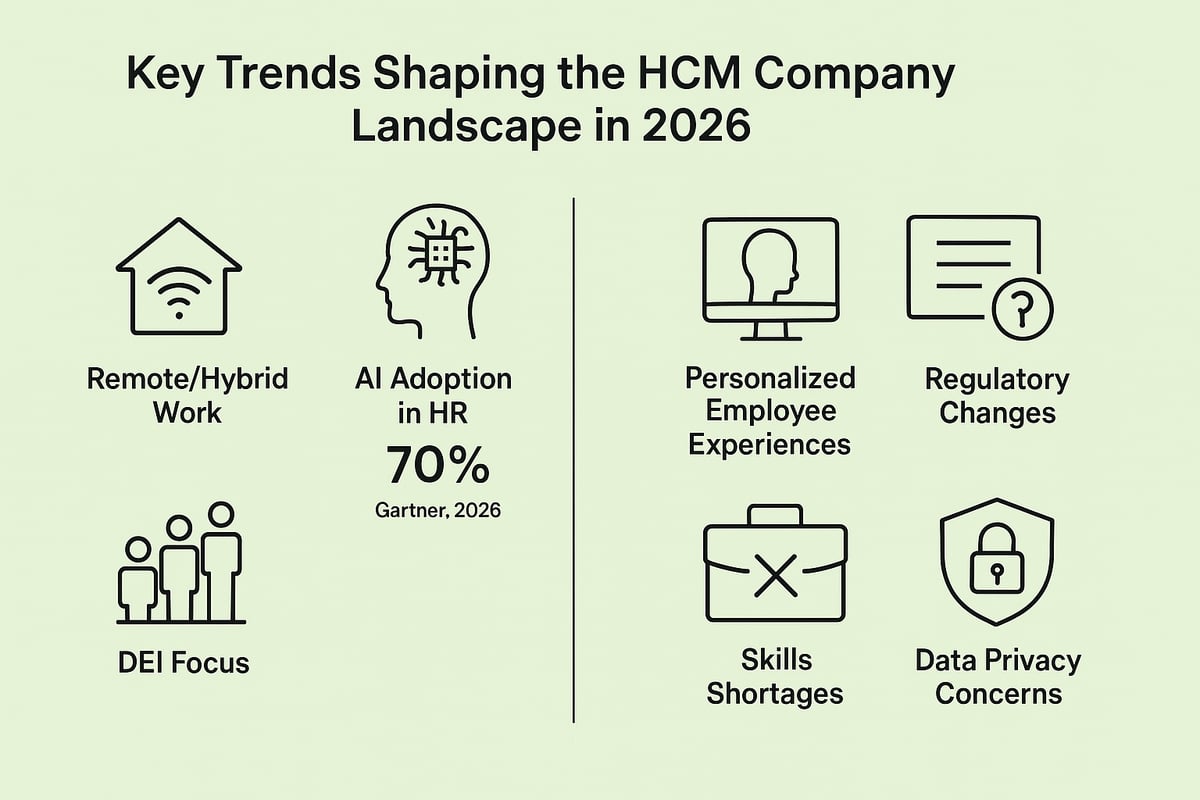
The rise of remote and hybrid work is redefining how every hcm company operates. Flexible arrangements have become standard, demanding new tools for collaboration, performance tracking, and employee engagement.

Companies now manage distributed teams across time zones, which brings both efficiency and complexity. This shift requires robust digital solutions to ensure seamless communication and consistent company culture.

AI, Automation, and Analytics Revolution

By 2026, almost every hcm company will integrate AI, automation, and advanced analytics into their HR processes. AI-driven tools are streamlining repetitive tasks, enhancing talent acquisition, and enabling predictive decision-making.

According to recent industry research, 43 percent of organizations now leverage AI in HR tasks, a number expected to climb to 70 percent by 2026, as Gartner predicts. These technologies help reduce administrative workload and improve accuracy, but also require careful consideration of data quality and integration challenges.

Employee Experience, DEI, and Skills Gaps

Personalized employee experiences are now essential for any hcm company seeking to attract and retain top talent. Customized learning, rewards, and career paths are delivered through advanced platforms.

There is also heightened focus on diversity, equity, and inclusion. DEI strategies are embedded in recruitment, promotion, and leadership programs. At the same time, skills shortages persist, making continuous upskilling and reskilling a business imperative.

Compliance, Data Security, and Ethical Challenges

Operating in a global, digital environment exposes every hcm company to new compliance and data security risks. Regulations like GDPR and CCPA require strict adherence to data privacy standards.

Cybersecurity threats and ethical concerns around AI-driven HR processes are increasing. Companies must balance innovation with transparent, ethical practices to protect both organizational and employee interests.

Summary Table: Key 2026 HCM Company Trends

Trend 2026 Impact
Remote/Hybrid Work Flexible teams, new engagement challenges
AI/Automation 70 percent adoption, streamlined HR tasks
Personalized Experience Higher retention, tailored HR platforms
DEI Focus Embedded in all HR strategies
Compliance & Security Stricter data privacy, global regulations
Skills Gaps Continuous upskilling, talent shortages

In summary, the 2026 HCM company environment demands agility, innovation, and a proactive approach to workforce management. Leaders must stay ahead of these trends to build resilient, future-ready organizations.

9 Game-Changing HCM Company Strategies for 2026

The coming years promise a transformation in how every hcm company approaches human capital management. Rapid technological advances, shifting workforce expectations, and new regulatory demands are reshaping the industry. To remain competitive in 2026, organizations must adopt innovative strategies that go beyond traditional HR practices. Below, discover nine essential approaches every hcm company should consider to future-proof operations and unlock long-term value.
9 Game-Changing HCM Company Strategies for 2026

1. [Implementing AI-Driven HR Automation]

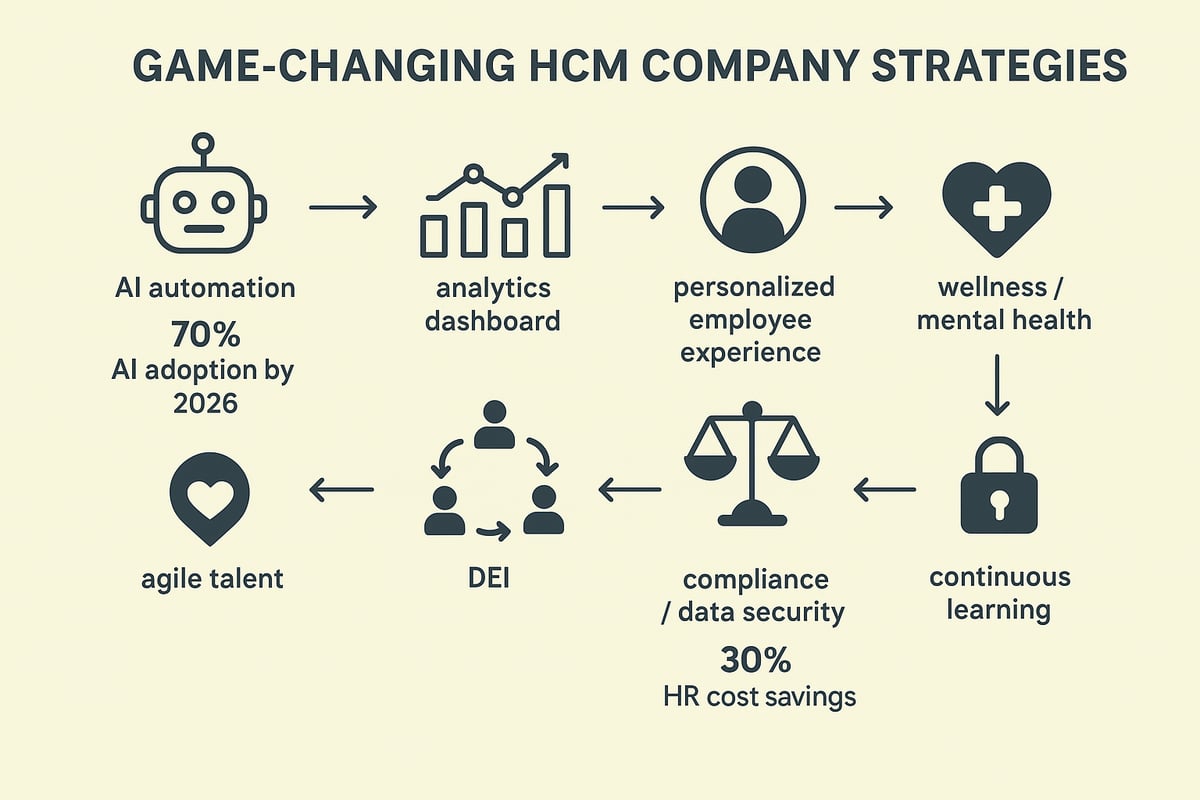
For any hcm company, leveraging AI-driven automation is now a competitive necessity. Automating repetitive HR tasks, such as payroll, onboarding, and benefits administration, streamlines workflows and reduces manual errors. AI-powered tools enhance talent acquisition by screening candidates efficiently, freeing up HR professionals to focus on strategic initiatives.

Predictive analytics further empower decision-makers with actionable insights. For example, organizations report up to 40% reduction in administrative workload after adopting AI solutions. The key benefits include cost savings, improved compliance, and more accurate processes.

However, integration with legacy systems and managing organizational change can pose challenges. To learn more about how AI and automation can elevate your hcm company, explore AI Automation Integration Solutions.

2. [Adopting People Analytics for Data-Driven Decisions]

A modern hcm company needs robust people analytics to stay ahead. Real-time dashboards and advanced analytics platforms allow HR teams to measure employee performance, engagement, and turnover risks with unprecedented precision.

These insights fuel smarter workforce planning and succession strategies. Companies using people analytics often see retention rates rise by 25%. Yet, data quality issues and privacy considerations must be addressed to ensure reliable outcomes.

By making data-driven decisions, an hcm company can proactively address workforce gaps and optimize talent management. Investing in analytics platforms is no longer optional but critical for success.

3. [Personalizing Employee Experiences Through Technology]

Personalization is a cornerstone for any hcm company aiming to boost engagement. Deploying digital platforms that tailor learning opportunities, career paths, and rewards helps employees feel valued. Mobile-first solutions are particularly effective for distributed and diverse teams.

AI-powered feedback systems and sentiment analysis tools provide continuous, personalized support. Firms that implement these technologies report a 30% increase in employee engagement. Addressing generational differences and unique employee needs ensures inclusivity.

A forward-thinking hcm company leverages technology to create experiences that attract and retain top talent, driving overall organizational performance.

4. [Prioritizing Employee Well-being and Mental Health Initiatives]

A successful hcm company understands that employee well-being is fundamental to productivity and retention. Comprehensive wellness programs, covering mental, physical, and financial health, are becoming standard. Integrating digital health platforms and Employee Assistance Programs (EAPs) supports staff at every level.

Tracking well-being KPIs and measuring the ROI of health investments reveals tangible results. For example, companies focusing on well-being typically see absenteeism drop by 20%. Overcoming stigma and ensuring inclusivity are ongoing priorities.

Investing in well-being initiatives signals that an hcm company values its people, leading to a healthier, more engaged workforce.

5. [Enabling Agile Talent Management and Workforce Flexibility]

Agility is now a must-have for every hcm company. Dynamic workforce planning and the integration of gig or freelance talent enable organizations to respond quickly to changing business needs. Skills mapping and rapid reskilling initiatives ensure that critical roles are filled efficiently.

Agile performance management and real-time feedback loops keep employees aligned with organizational objectives. Success stories show that companies using agile talent models can fill roles 50% faster.

Balancing flexibility with structure requires clear processes and communication, but the payoff is a resilient, future-ready hcm company.

6. [Strengthening Diversity, Equity, and Inclusion (DEI) Programs]

A leading hcm company embeds DEI principles across recruitment, promotions, and leadership development. Leveraging analytics to identify and close equity gaps makes these programs more effective. Transparent reporting creates accountability and drives continuous improvement.

Diverse teams are proven to outperform peers by 35% in innovation. Tackling unconscious bias with technology further supports fair and inclusive workplaces.

By prioritizing DEI, an hcm company not only enhances its reputation but also drives better business outcomes through diverse perspectives and ideas.

7. [Enhancing Compliance and Data Security in HCM]

Navigating evolving labor laws and global regulations is a top concern for any hcm company. Implementing secure, compliant HCM systems ensures that employee data is protected and that organizations avoid costly fines.

Best practices include regular employee training on data privacy and keeping systems updated to address the latest threats. The real-world impact is significant: organizations that prioritize compliance and security safeguard their reputation and maintain stakeholder trust.

Balancing innovation with regulatory requirements is essential for long-term success in every hcm company.

8. [Leveraging Integrated HCM Platforms for End-to-End Efficiency]

Consolidating HR, payroll, benefits, and talent management into unified platforms streamlines operations for any hcm company. Seamless integration with third-party tools, such as finance or learning systems, further enhances efficiency.

Integrated platforms reduce manual processes, improve reporting accuracy, and offer scalability as companies grow. Organizations using these solutions often save up to 30% on HR costs.

Selecting the right vendor and managing change effectively are crucial steps to unlocking the full potential of integrated HCM platforms for your hcm company.

9. [Fostering a Culture of Continuous Learning and Development]

Continuous learning is vital for a thriving hcm company. Modern learning management systems (LMS) and microlearning platforms provide on-demand training, empowering employees to direct their own development.

Linking learning outcomes to performance and business goals demonstrates clear ROI. Case studies show that firms with strong learning and development programs achieve 24% higher productivity.

Overcoming adoption barriers and measuring effectiveness ensures ongoing improvement, making continuous learning a strategic advantage for any hcm company.

Technology and Tools Powering HCM Transformation

The rapid evolution of technology is reshaping what it means to be an hcm company in 2026. Selecting the right platforms and tools is now fundamental for organizations seeking agility, compliance, and a competitive edge. Let us explore the core solutions, innovations, and trends that are powering this transformation.
Technology and Tools Powering HCM Transformation

Leading HCM Platforms

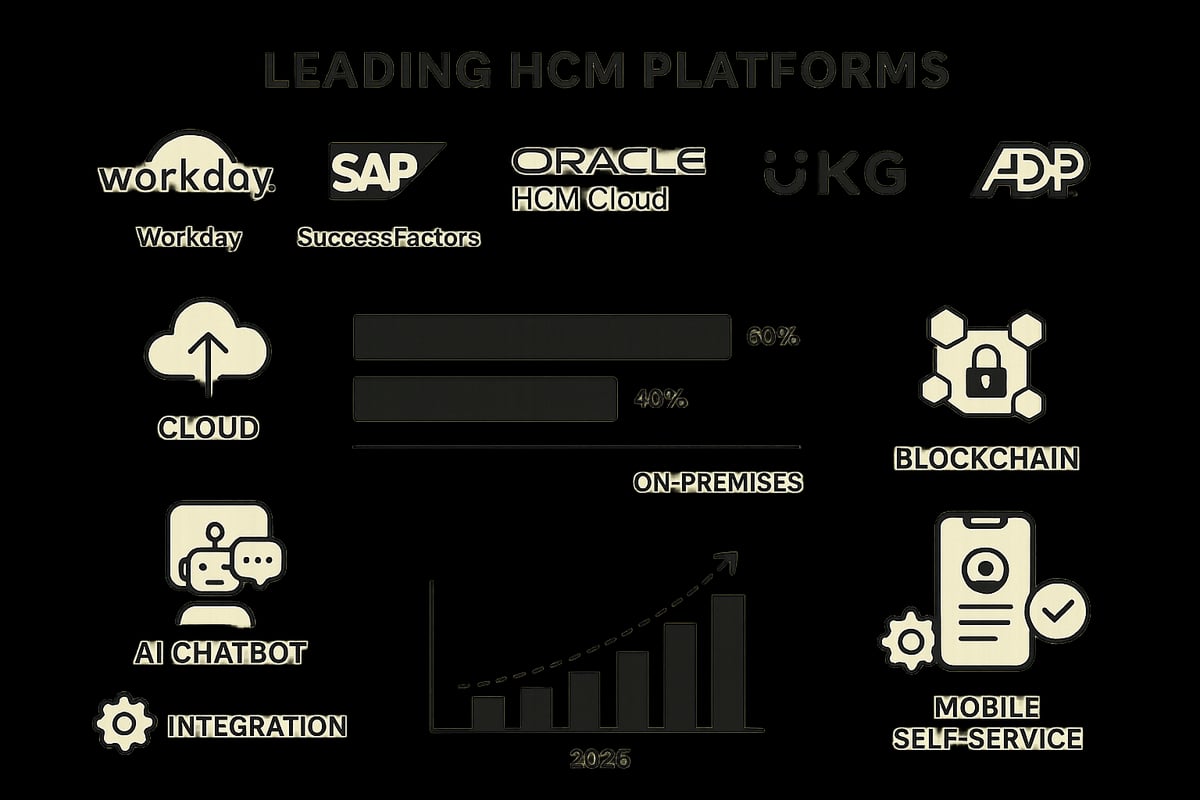
Modern hcm company operations depend on robust platforms that unify HR, payroll, talent management, and analytics. The top solutions in 2026 include:

Platform Key Features Deployment
Workday Unified HR & finance, analytics Cloud
SAP SuccessFactors Talent, core HR, learning Cloud
Oracle HCM Cloud Global HR, payroll, analytics Cloud
UKG Workforce management, payroll Cloud
ADP Payroll, HR, time, benefits Cloud/Hybrid

Selecting an hcm company partner with a comprehensive suite—like those highlighted above—enables seamless management of the employee lifecycle. For organizations seeking integrated payroll and HCM solutions, Payroll and Human Capital Management platforms are fundamental to success.

Emerging HR Tech Trends

The next wave of hcm company innovation is being driven by intelligent automation and immersive technologies. AI-powered chatbots handle HR queries instantly, while predictive analytics transform data into actionable insights. Some organizations are piloting blockchain for secure credential verification and transparent recordkeeping.

Virtual reality is entering onboarding and training, providing interactive experiences for remote and hybrid teams. As these trends mature, they will shape how every hcm company delivers value to both employees and employers.

Cloud vs. On-Premises & Integration

The debate between cloud and on-premises deployments remains central for any hcm company. Cloud-based systems offer scalability, automatic updates, and easy access from anywhere. They are now favored by the majority, with IDC reporting that 60% of enterprises plan to upgrade their HCM technology by 2026.

Integration is equally critical. Open APIs allow hcm company platforms to connect seamlessly with finance, ERP, and learning tools. This interconnected ecosystem reduces manual work and enables real-time data flows, supporting more informed decision-making.

Mobile and Self-Service Tools

Empowering employees is a top priority for every hcm company. Mobile apps and self-service portals allow staff to manage benefits, submit requests, and access learning resources on demand. These tools boost engagement and productivity, especially in remote or distributed workforces.

By prioritizing mobile-first design and intuitive user experiences, an hcm company ensures its solutions meet the expectations of a diverse, tech-savvy workforce. This focus on convenience and accessibility will define the future of HCM technology.

Building the Business Case for HCM Innovation

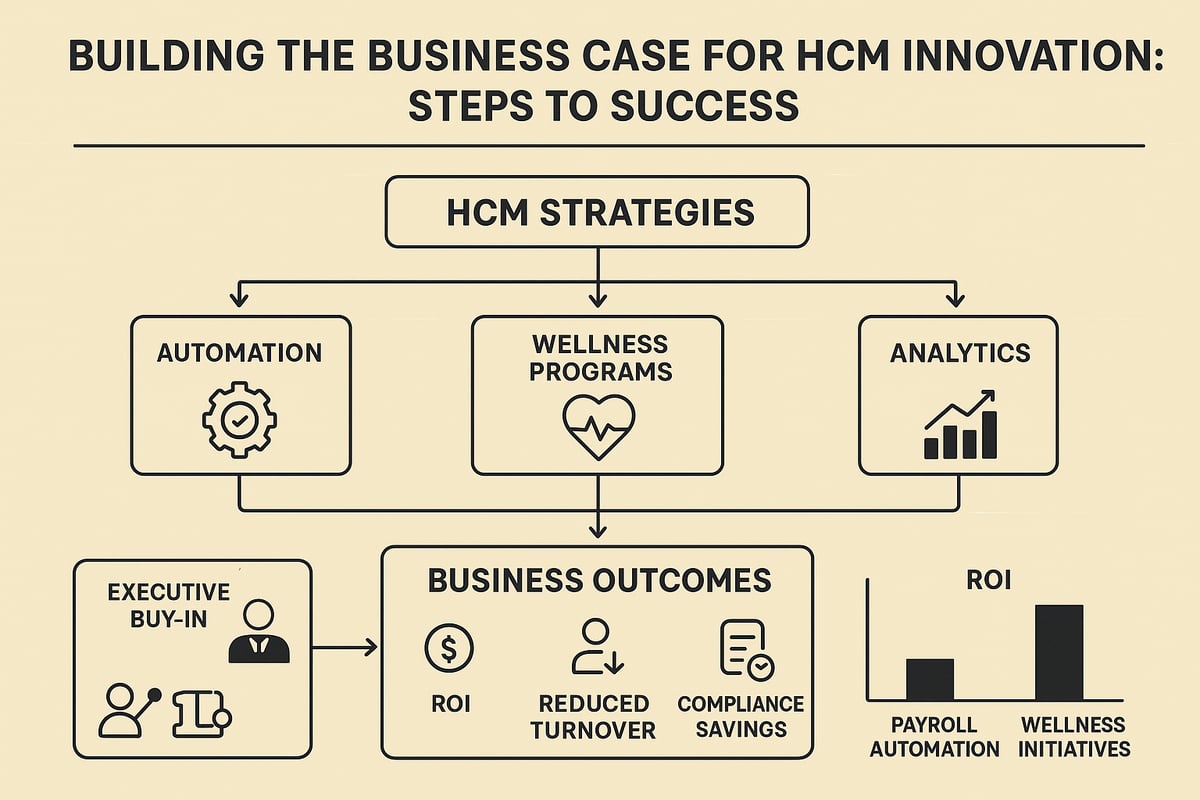
Building a compelling business case for HCM innovation is essential for any hcm company aiming to thrive in 2026. Start by aligning HCM strategies with your organization's core objectives. This means connecting workforce initiatives directly to outcomes like revenue growth, customer satisfaction, and market expansion.

Demonstrate how investments in HCM drive measurable returns. For instance, automating payroll processes not only saves time but also minimizes costly errors and improves compliance. Many organizations have seen substantial ROI by streamlining operations—learn more about the benefits of automating payroll to support your business case with real data.
Building the Business Case for HCM Innovation

Aligning Stakeholders and Overcoming Resistance

Securing executive buy-in is critical for a successful hcm company transformation. Clearly communicate the strategic value of HCM innovation to leaders and stakeholders across departments. Use data-driven arguments and industry benchmarks to highlight potential gains.

Resistance to change can be a barrier, so engage teams early, address concerns, and provide training. Share real-world examples of companies that have reduced absenteeism and boosted productivity by investing in employee well-being. For instance, studies show that wellness programs can significantly cut absenteeism within a year, strengthening your case for HCM investment.

Tracking and Communicating HCM Impact

To sustain momentum, an hcm company must continuously measure and report the impact of HCM initiatives. Use dashboards and analytics tools to track key performance indicators like turnover rates, engagement scores, and compliance metrics.

Regularly share results with executives and stakeholders, linking improvements to business outcomes. This transparency not only reinforces the value of HCM innovation but also supports ongoing investment and organizational buy-in.

Future-Proofing Your HCM Strategy: Action Steps for 2026

Staying ahead in the evolving HCM landscape requires proactive planning and a willingness to adapt. Every hcm company should begin by conducting comprehensive audits to assess current strengths, gaps, and readiness for upcoming changes. These audits help uncover hidden risks, process inefficiencies, and opportunities to leverage new technologies.

Next, prioritize strategies that align with your organization's unique needs and maturity level. Focus on initiatives that deliver measurable value, such as adopting innovative benefits like earned wage access, which can improve employee satisfaction and retention. Invest in ongoing leadership development and training to ensure your team remains agile, skilled, and prepared for new challenges.

Building cross-functional teams is essential for driving HCM innovation. Encourage collaboration between HR, IT, finance, and operations to ensure seamless integration of new systems and processes. Benchmark your hcm company against industry peers to identify best practices and stay informed about emerging trends that could impact your workforce strategy.

Finally, set clear KPIs and establish timelines to track progress and ensure continuous improvement. Regularly review these metrics to measure the impact of your hcm company initiatives and make data-driven adjustments as needed. By embedding continuous learning, feedback, and adaptability into your culture, you will position your organization for lasting success in 2026 and beyond.

9 Game-Changing HCM Company Strategies for 2026

The human capital management landscape is transforming at a pace never seen before. By 2026, organizations will face new challenges and opportunities as they strive to stay ahead.

This article explores how an hcm company can thrive in this shifting environment. We reveal nine innovative strategies designed to help leaders adapt to digital transformation, evolving workforce demands, and increased operational efficiency.

You will discover actionable insights on everything from AI-driven automation and analytics to employee well-being and agile talent management. Each strategy is backed by real-world examples and practical guidance.

Prepare to future-proof your approach and turn disruption into a competitive advantage. Dive in to unlock the next era of HCM success.

The HCM Landscape in 2026: Trends and Challenges

The HCM company landscape is undergoing dramatic transformation as 2026 approaches. Organizations face new challenges and opportunities shaped by rapid digitalization, shifting workforce expectations, and evolving regulatory requirements.

The HCM Landscape in 2026: Trends and Challenges

Remote and Hybrid Work: The New Normal

The rise of remote and hybrid work is redefining how every hcm company operates. Flexible arrangements have become standard, demanding new tools for collaboration, performance tracking, and employee engagement.

Companies now manage distributed teams across time zones, which brings both efficiency and complexity. This shift requires robust digital solutions to ensure seamless communication and consistent company culture.

AI, Automation, and Analytics Revolution

By 2026, almost every hcm company will integrate AI, automation, and advanced analytics into their HR processes. AI-driven tools are streamlining repetitive tasks, enhancing talent acquisition, and enabling predictive decision-making.

According to recent industry research, 43 percent of organizations now leverage AI in HR tasks, a number expected to climb to 70 percent by 2026, as Gartner predicts. These technologies help reduce administrative workload and improve accuracy, but also require careful consideration of data quality and integration challenges.

Employee Experience, DEI, and Skills Gaps

Personalized employee experiences are now essential for any hcm company seeking to attract and retain top talent. Customized learning, rewards, and career paths are delivered through advanced platforms.

There is also heightened focus on diversity, equity, and inclusion. DEI strategies are embedded in recruitment, promotion, and leadership programs. At the same time, skills shortages persist, making continuous upskilling and reskilling a business imperative.

Compliance, Data Security, and Ethical Challenges

Operating in a global, digital environment exposes every hcm company to new compliance and data security risks. Regulations like GDPR and CCPA require strict adherence to data privacy standards.

Cybersecurity threats and ethical concerns around AI-driven HR processes are increasing. Companies must balance innovation with transparent, ethical practices to protect both organizational and employee interests.

Summary Table: Key 2026 HCM Company Trends

Trend 2026 Impact
Remote/Hybrid Work Flexible teams, new engagement challenges
AI/Automation 70 percent adoption, streamlined HR tasks
Personalized Experience Higher retention, tailored HR platforms
DEI Focus Embedded in all HR strategies
Compliance & Security Stricter data privacy, global regulations
Skills Gaps Continuous upskilling, talent shortages

In summary, the 2026 HCM company environment demands agility, innovation, and a proactive approach to workforce management. Leaders must stay ahead of these trends to build resilient, future-ready organizations.

9 Game-Changing HCM Company Strategies for 2026

The coming years promise a transformation in how every hcm company approaches human capital management. Rapid technological advances, shifting workforce expectations, and new regulatory demands are reshaping the industry. To remain competitive in 2026, organizations must adopt innovative strategies that go beyond traditional HR practices. Below, discover nine essential approaches every hcm company should consider to future-proof operations and unlock long-term value.

9 Game-Changing HCM Company Strategies for 2026

1. [Implementing AI-Driven HR Automation]

For any hcm company, leveraging AI-driven automation is now a competitive necessity. Automating repetitive HR tasks, such as payroll, onboarding, and benefits administration, streamlines workflows and reduces manual errors. AI-powered tools enhance talent acquisition by screening candidates efficiently, freeing up HR professionals to focus on strategic initiatives.

Predictive analytics further empower decision-makers with actionable insights. For example, organizations report up to 40% reduction in administrative workload after adopting AI solutions. The key benefits include cost savings, improved compliance, and more accurate processes.

However, integration with legacy systems and managing organizational change can pose challenges. To learn more about how AI and automation can elevate your hcm company, explore AI Automation Integration Solutions.

2. [Adopting People Analytics for Data-Driven Decisions]

A modern hcm company needs robust people analytics to stay ahead. Real-time dashboards and advanced analytics platforms allow HR teams to measure employee performance, engagement, and turnover risks with unprecedented precision.

These insights fuel smarter workforce planning and succession strategies. Companies using people analytics often see retention rates rise by 25%. Yet, data quality issues and privacy considerations must be addressed to ensure reliable outcomes.

By making data-driven decisions, an hcm company can proactively address workforce gaps and optimize talent management. Investing in analytics platforms is no longer optional but critical for success.

3. [Personalizing Employee Experiences Through Technology]

Personalization is a cornerstone for any hcm company aiming to boost engagement. Deploying digital platforms that tailor learning opportunities, career paths, and rewards helps employees feel valued. Mobile-first solutions are particularly effective for distributed and diverse teams.

AI-powered feedback systems and sentiment analysis tools provide continuous, personalized support. Firms that implement these technologies report a 30% increase in employee engagement. Addressing generational differences and unique employee needs ensures inclusivity.

A forward-thinking hcm company leverages technology to create experiences that attract and retain top talent, driving overall organizational performance.

4. [Prioritizing Employee Well-being and Mental Health Initiatives]

A successful hcm company understands that employee well-being is fundamental to productivity and retention. Comprehensive wellness programs, covering mental, physical, and financial health, are becoming standard. Integrating digital health platforms and Employee Assistance Programs (EAPs) supports staff at every level.

Tracking well-being KPIs and measuring the ROI of health investments reveals tangible results. For example, companies focusing on well-being typically see absenteeism drop by 20%. Overcoming stigma and ensuring inclusivity are ongoing priorities.

Investing in well-being initiatives signals that an hcm company values its people, leading to a healthier, more engaged workforce.

5. [Enabling Agile Talent Management and Workforce Flexibility]

Agility is now a must-have for every hcm company. Dynamic workforce planning and the integration of gig or freelance talent enable organizations to respond quickly to changing business needs. Skills mapping and rapid reskilling initiatives ensure that critical roles are filled efficiently.

Agile performance management and real-time feedback loops keep employees aligned with organizational objectives. Success stories show that companies using agile talent models can fill roles 50% faster.

Balancing flexibility with structure requires clear processes and communication, but the payoff is a resilient, future-ready hcm company.

6. [Strengthening Diversity, Equity, and Inclusion (DEI) Programs]

A leading hcm company embeds DEI principles across recruitment, promotions, and leadership development. Leveraging analytics to identify and close equity gaps makes these programs more effective. Transparent reporting creates accountability and drives continuous improvement.

Diverse teams are proven to outperform peers by 35% in innovation. Tackling unconscious bias with technology further supports fair and inclusive workplaces.

By prioritizing DEI, an hcm company not only enhances its reputation but also drives better business outcomes through diverse perspectives and ideas.

7. [Enhancing Compliance and Data Security in HCM]

Navigating evolving labor laws and global regulations is a top concern for any hcm company. Implementing secure, compliant HCM systems ensures that employee data is protected and that organizations avoid costly fines.

Best practices include regular employee training on data privacy and keeping systems updated to address the latest threats. The real-world impact is significant: organizations that prioritize compliance and security safeguard their reputation and maintain stakeholder trust.

Balancing innovation with regulatory requirements is essential for long-term success in every hcm company.

8. [Leveraging Integrated HCM Platforms for End-to-End Efficiency]

Consolidating HR, payroll, benefits, and talent management into unified platforms streamlines operations for any hcm company. Seamless integration with third-party tools, such as finance or learning systems, further enhances efficiency.

Integrated platforms reduce manual processes, improve reporting accuracy, and offer scalability as companies grow. Organizations using these solutions often save up to 30% on HR costs.

Selecting the right vendor and managing change effectively are crucial steps to unlocking the full potential of integrated HCM platforms for your hcm company.

9. [Fostering a Culture of Continuous Learning and Development]

Continuous learning is vital for a thriving hcm company. Modern learning management systems (LMS) and microlearning platforms provide on-demand training, empowering employees to direct their own development.

Linking learning outcomes to performance and business goals demonstrates clear ROI. Case studies show that firms with strong learning and development programs achieve 24% higher productivity.

Overcoming adoption barriers and measuring effectiveness ensures ongoing improvement, making continuous learning a strategic advantage for any hcm company.

Technology and Tools Powering HCM Transformation

The rapid evolution of technology is reshaping what it means to be an hcm company in 2026. Selecting the right platforms and tools is now fundamental for organizations seeking agility, compliance, and a competitive edge. Let us explore the core solutions, innovations, and trends that are powering this transformation.

Technology and Tools Powering HCM Transformation

Leading HCM Platforms

Modern hcm company operations depend on robust platforms that unify HR, payroll, talent management, and analytics. The top solutions in 2026 include:

Platform Key Features Deployment
Workday Unified HR & finance, analytics Cloud
SAP SuccessFactors Talent, core HR, learning Cloud
Oracle HCM Cloud Global HR, payroll, analytics Cloud
UKG Workforce management, payroll Cloud
ADP Payroll, HR, time, benefits Cloud/Hybrid

Selecting an hcm company partner with a comprehensive suite—like those highlighted above—enables seamless management of the employee lifecycle. For organizations seeking integrated payroll and HCM solutions, Payroll and Human Capital Management platforms are fundamental to success.

Emerging HR Tech Trends

The next wave of hcm company innovation is being driven by intelligent automation and immersive technologies. AI-powered chatbots handle HR queries instantly, while predictive analytics transform data into actionable insights. Some organizations are piloting blockchain for secure credential verification and transparent recordkeeping.

Virtual reality is entering onboarding and training, providing interactive experiences for remote and hybrid teams. As these trends mature, they will shape how every hcm company delivers value to both employees and employers.

Cloud vs. On-Premises & Integration

The debate between cloud and on-premises deployments remains central for any hcm company. Cloud-based systems offer scalability, automatic updates, and easy access from anywhere. They are now favored by the majority, with IDC reporting that 60% of enterprises plan to upgrade their HCM technology by 2026.

Integration is equally critical. Open APIs allow hcm company platforms to connect seamlessly with finance, ERP, and learning tools. This interconnected ecosystem reduces manual work and enables real-time data flows, supporting more informed decision-making.

Mobile and Self-Service Tools

Empowering employees is a top priority for every hcm company. Mobile apps and self-service portals allow staff to manage benefits, submit requests, and access learning resources on demand. These tools boost engagement and productivity, especially in remote or distributed workforces.

By prioritizing mobile-first design and intuitive user experiences, an hcm company ensures its solutions meet the expectations of a diverse, tech-savvy workforce. This focus on convenience and accessibility will define the future of HCM technology.

Building the Business Case for HCM Innovation

Building a compelling business case for HCM innovation is essential for any hcm company aiming to thrive in 2026. Start by aligning HCM strategies with your organization's core objectives. This means connecting workforce initiatives directly to outcomes like revenue growth, customer satisfaction, and market expansion.

Demonstrate how investments in HCM drive measurable returns. For instance, automating payroll processes not only saves time but also minimizes costly errors and improves compliance. Many organizations have seen substantial ROI by streamlining operations—learn more about the benefits of automating payroll to support your business case with real data.

Building the Business Case for HCM Innovation

Aligning Stakeholders and Overcoming Resistance

Securing executive buy-in is critical for a successful hcm company transformation. Clearly communicate the strategic value of HCM innovation to leaders and stakeholders across departments. Use data-driven arguments and industry benchmarks to highlight potential gains.

Resistance to change can be a barrier, so engage teams early, address concerns, and provide training. Share real-world examples of companies that have reduced absenteeism and boosted productivity by investing in employee well-being. For instance, studies show that wellness programs can significantly cut absenteeism within a year, strengthening your case for HCM investment.

Tracking and Communicating HCM Impact

To sustain momentum, an hcm company must continuously measure and report the impact of HCM initiatives. Use dashboards and analytics tools to track key performance indicators like turnover rates, engagement scores, and compliance metrics.

Regularly share results with executives and stakeholders, linking improvements to business outcomes. This transparency not only reinforces the value of HCM innovation but also supports ongoing investment and organizational buy-in.

Future-Proofing Your HCM Strategy: Action Steps for 2026

Staying ahead in the evolving HCM landscape requires proactive planning and a willingness to adapt. Every hcm company should begin by conducting comprehensive audits to assess current strengths, gaps, and readiness for upcoming changes. These audits help uncover hidden risks, process inefficiencies, and opportunities to leverage new technologies.

Next, prioritize strategies that align with your organization's unique needs and maturity level. Focus on initiatives that deliver measurable value, such as adopting innovative benefits like earned wage access, which can improve employee satisfaction and retention. Invest in ongoing leadership development and training to ensure your team remains agile, skilled, and prepared for new challenges.

Building cross-functional teams is essential for driving HCM innovation. Encourage collaboration between HR, IT, finance, and operations to ensure seamless integration of new systems and processes. Benchmark your hcm company against industry peers to identify best practices and stay informed about emerging trends that could impact your workforce strategy.

Finally, set clear KPIs and establish timelines to track progress and ensure continuous improvement. Regularly review these metrics to measure the impact of your hcm company initiatives and make data-driven adjustments as needed. By embedding continuous learning, feedback, and adaptability into your culture, you will position your organization for lasting success in 2026 and beyond.

Website developed in accordance with Web Content Accessibility Guidelines 2.2.
If you encounter any issues while using this site, please contact us: 215.526.5126