
Hr Directors Guide: Strategies for Success in 2026

Share on Facebook
Share on X
Share on LinkedIn

The role of hr directors is undergoing a major transformation as we approach 2026, with new challenges and opportunities reshaping the workplace. This comprehensive guide is designed to empower hr directors with actionable strategies to thrive, lead, and future-proof their organizations. You will discover the latest insights, essential tools, and proven frameworks to drive success in a rapidly evolving workforce environment. Explore future-focused talent management, technology integration, DEI, regulatory compliance, and employee well-being strategies. Stay ahead by learning expert-backed approaches and practical steps that will help you turn emerging trends into organizational advantages.

Understanding the 2026 HR Landscape

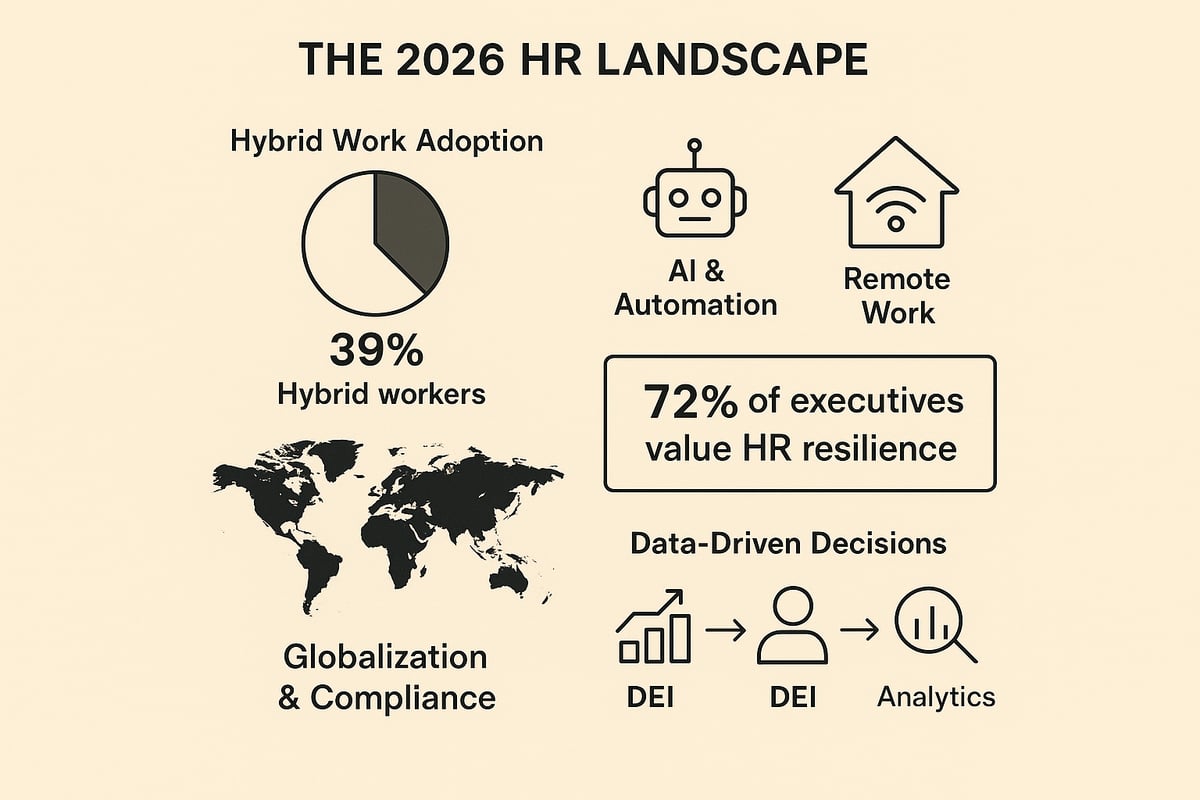
HR directors face a dramatically shifting landscape in 2026, with new trends and technologies redefining workforce management. Understanding these changes is essential for strategic decision-making and organizational resilience. Let us explore the major forces shaping the future of HR.
Understanding the 2026 HR Landscape

Key Workforce Trends Shaping HR

The workforce in 2026 is more dynamic than ever. HR directors must navigate the rise of hybrid and remote work, with Gartner predicting that 39 percent of global knowledge workers will adopt this model. Digital literacy and reskilling are now core priorities, as Gen Z and millennials reshape workplace culture with their expectations for flexibility and purpose.

Contingent and gig workers are becoming a strategic part of talent pools, requiring fresh approaches to engagement and management. For a deeper look at these trends and how they impact hr directors, explore the Top 6 HR Trends to Follow in 2026.

Regulatory and Compliance Changes

Regulatory complexity is increasing for hr directors, with evolving labor laws and data privacy requirements at the forefront. In 2026, updates related to artificial intelligence in hiring and people management are anticipated. The EU’s AI Act, for example, is poised to influence HR technologies and compliance strategies globally.

Cross-border employment is more common, making it crucial for hr directors to master international regulations and standards. Staying current with these changes helps organizations avoid penalties and maintain a trustworthy employer brand.

HR’s Strategic Role in Business Resilience

Business resilience depends more than ever on the strategic leadership of hr directors. Today, HR is expected to drive agility, continuity, and digital transformation. This means taking a proactive role in crisis management and supporting rapid organizational change.

According to a SHRM survey, 72 percent of executives now consider HR the backbone of resilience planning. HR directors who collaborate across departments can ensure readiness for disruptions and support sustainable growth.

The Impact of AI and Automation

AI and automation are reshaping HR operations. HR directors leverage automation for repetitive tasks, freeing time for high-value strategic work. AI-driven analytics enhance talent acquisition and retention, allowing for smarter, data-backed decisions.

However, successful hr directors balance technology with human-centric leadership. They ensure new tools enhance, not replace, the employee experience, maintaining empathy and ethical standards in their approach.

Data-Driven Decision Making

Data is now the foundation of effective HR strategy. HR directors use people analytics to plan workforce needs, forecast turnover, and identify talent trends. Predictive analytics can double retention rates, giving organizations a competitive edge.

By visualizing HR metrics and sharing actionable insights with leadership, hr directors demonstrate their impact and position HR as a strategic partner. Data-driven cultures empower teams to adapt quickly and make informed decisions in a rapidly changing environment.

Building a Future-Ready Talent Strategy

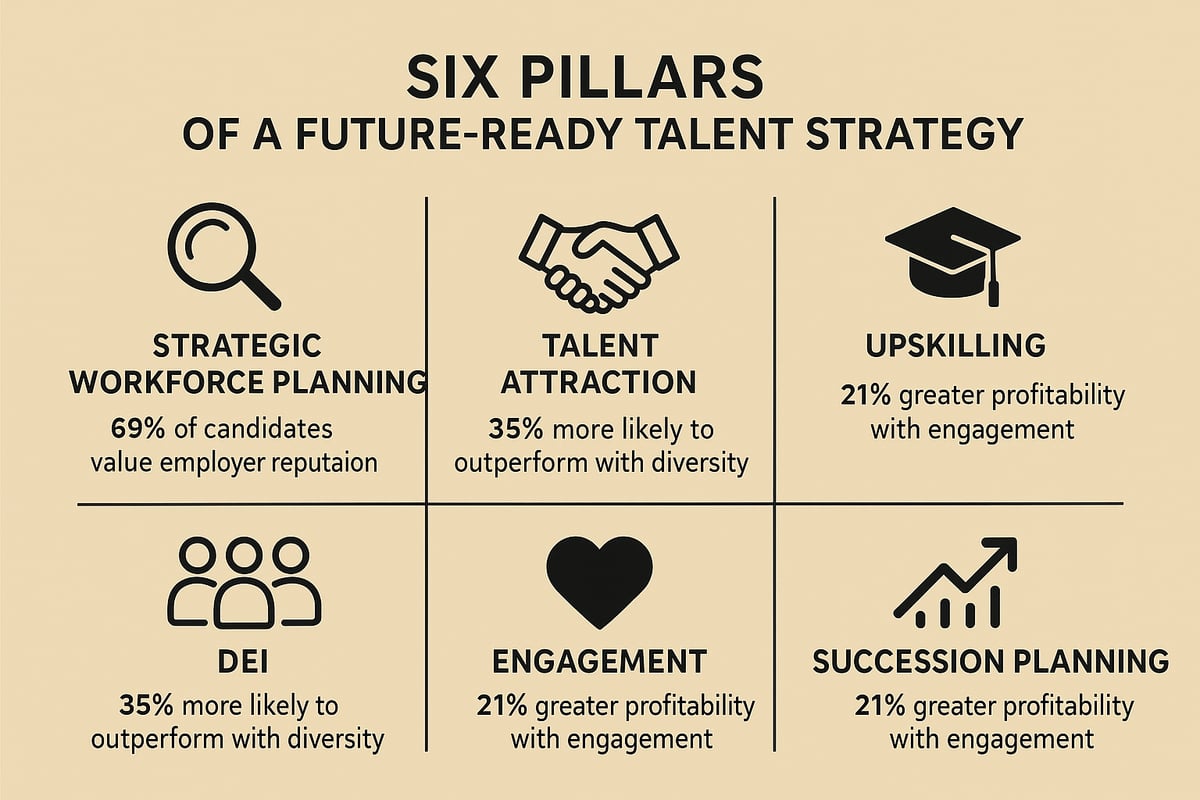
Staying ahead in 2026 requires hr directors to anticipate and act on shifting talent trends. The evolving workforce landscape demands a proactive, strategic approach. This section explores six pillars for building a future-ready talent strategy, equipping hr directors to lead with confidence and agility.
Building a Future-Ready Talent Strategy

Strategic Workforce Planning

For hr directors, strategic workforce planning is about anticipating skill gaps and aligning talent needs with business objectives. Scenario planning helps map out future capabilities, allowing organizations to adapt to shifting market demands.

A practical approach involves regular reviews of workforce data, skill inventories, and succession risks. For example, Unilever uses talent mapping to proactively identify future leadership and technical roles.

Key steps include:

  • Conducting regular skills assessments
  • Aligning workforce plans with strategic goals
  • Using scenario analysis to prepare for multiple futures

By embedding these practices, hr directors ensure their teams remain agile and competitive.

Attracting and Retaining Top Talent

In a competitive talent market, hr directors must elevate employer branding and deliver personalized candidate experiences. Reputation matters—69% of candidates prioritize employer image when considering roles.

Personalization starts at recruitment and continues through onboarding, with tailored programs that foster connection and engagement.

Strategies for success:

  • Highlight organizational values and mission in job postings
  • Offer flexible work arrangements and benefits
  • Create structured onboarding for a welcoming start

By focusing on these elements, hr directors can attract high-quality applicants while building long-term loyalty among new hires.

Upskilling, Reskilling, and Continuous Learning

Future-ready organizations depend on hr directors to drive upskilling and reskilling initiatives. Identifying critical roles and potential skill gaps is essential as technology and business models evolve.

Digital platforms and microlearning modules make learning accessible and relevant. Amazon’s $1.2B upskilling initiative demonstrates the scale and impact of investing in continuous learning.

Actionable steps include:

  • Conducting regular skill gap analyses
  • Implementing digital learning platforms
  • Encouraging a growth mindset culture

Through these initiatives, hr directors ensure employees are equipped for tomorrow’s challenges.

Diversity, Equity, and Inclusion (DEI) as a Talent Imperative

For hr directors, embedding DEI is not just a moral imperative but a strategic advantage. Setting measurable goals and tracking progress drives accountability.

Inclusive recruitment and advancement practices foster innovation and resilience. According to McKinsey, companies with diverse teams are 35% more likely to outperform peers.

Best practices for DEI success:

  • Establish clear DEI metrics
  • Provide bias training for all employees
  • Create resource groups to support underrepresented talent

By championing DEI, hr directors build stronger, more adaptive organizations.

Employee Engagement and Experience

Engaged employees are the backbone of organizational success, and hr directors play a central role in shaping this experience. Creating a culture of feedback, recognition, and purpose boosts morale and performance.

Pulse surveys and real-time engagement tools provide actionable insights. Gallup reports that highly engaged teams achieve 21% greater profitability.

Effective engagement strategies:

  • Implement regular feedback cycles
  • Recognize achievements publicly
  • Connect roles to organizational mission

By prioritizing engagement, hr directors foster a workplace where people thrive.

Succession Planning and Leadership Development

Succession planning is critical for hr directors aiming to future-proof leadership pipelines. Identifying high-potential talent early and nurturing them through mentorship and coaching ensures continuity.

Structured programs support leadership growth and organizational resilience. IBM’s leadership pipeline model highlights the benefits of investing in future-ready leaders.

For practical tools and insights, Succession Planning Tools for HR Leaders offers resources tailored for hr directors.

By embracing these strategies, hr directors secure long-term organizational success.

Leveraging Technology for HR Excellence

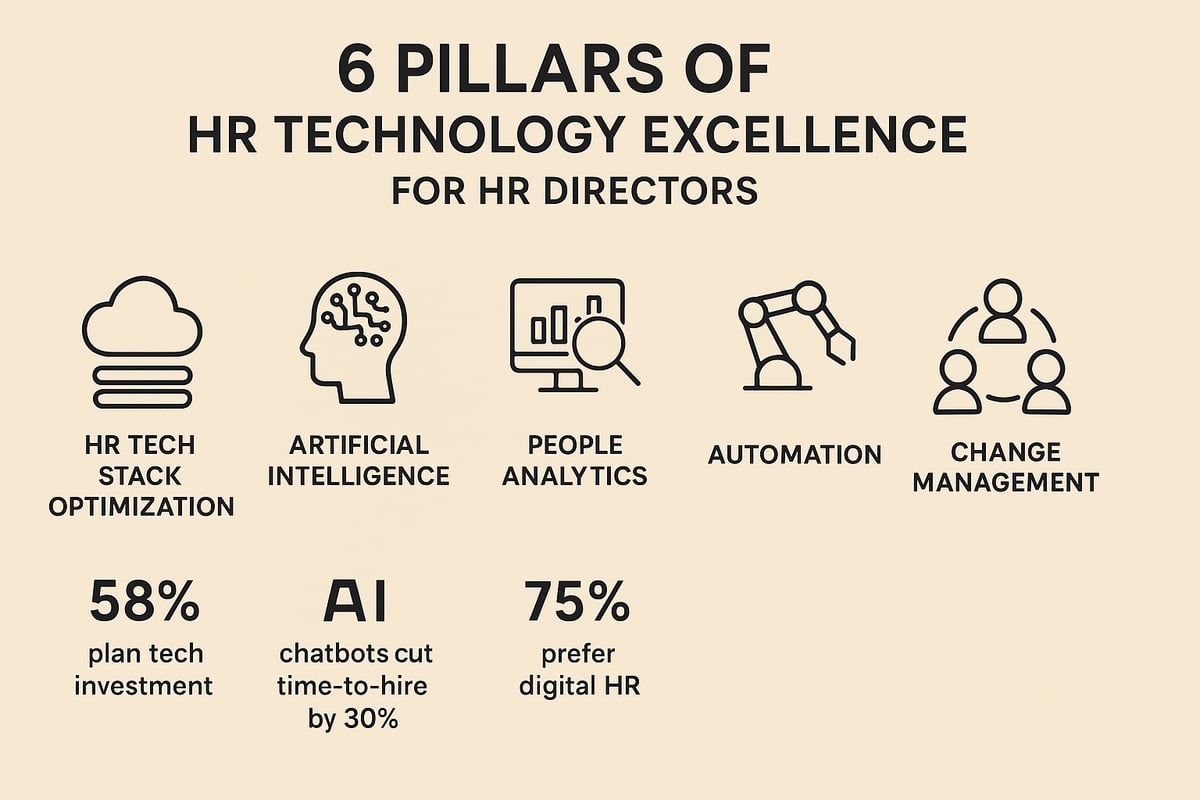
The digital revolution is transforming every facet of HR, requiring hr directors to master a sophisticated blend of strategy, technology, and people skills. To excel in 2026, leaders must optimize their HR tech stack, embrace artificial intelligence, adopt data-driven insights, automate processes, enhance employee experiences, and drive successful change adoption. Let us explore how these pillars can empower hr directors to deliver measurable impact.
Leveraging Technology for HR Excellence

HR Tech Stack Optimization

For hr directors, building a future-ready HR tech stack is essential. The right combination of HRIS, ATS, and learning platforms streamlines operations, boosts data accuracy, and enhances compliance. Interoperability and robust data security must be prioritized to ensure seamless workflows.

A growing number of organizations are integrating platforms that allow real-time data sharing and analytics. According to PwC, 58% of HR leaders plan to increase investments in HR technology by 2025. For practical guidance on optimizing workforce management systems, explore Payroll and Human Capital Management solutions tailored for hr directors seeking operational excellence.

Artificial Intelligence in HR

Artificial intelligence is reshaping how hr directors approach talent sourcing, screening, and onboarding. AI-powered tools automate repetitive tasks, freeing up time for strategic initiatives. They also enhance candidate matching, reduce bias, and provide real-time analytics.

Ethical considerations remain top of mind. Hr directors must ensure algorithms are transparent, regularly audited, and aligned with organizational values. The result is a more efficient, fair, and agile hiring process. Notably, AI-driven chatbots can reduce time-to-hire by 30%, allowing teams to focus on high-impact areas.

People Analytics and Predictive Insights

People analytics empowers hr directors to move from intuition to evidence-based decisions. By leveraging advanced analytics, leaders can predict turnover, identify skill gaps, and optimize workforce planning.

Tools that visualize HR metrics in dashboards make it easier to communicate insights to executives. For example, Google’s Project Oxygen used data to identify leadership behaviors that drive success. Companies using predictive analytics report up to twice the improvement in retention rates, demonstrating the tangible value of data-driven HR leadership.

Automation of HR Processes

Automation is crucial for hr directors aiming to reduce manual effort and eliminate errors. Robotic Process Automation (RPA) can streamline payroll, benefits administration, and compliance reporting, providing significant time savings.

With automation, HR teams spend less time on administrative tasks and more on strategic initiatives. Organizations leveraging automation have reported saving up to 40% of administrative hours. Prioritizing automation ensures hr directors lead more agile and responsive departments that can adapt quickly to new challenges.

Enhancing Employee Self-Service and Experience

Modern employees expect seamless digital interactions. Hr directors are adopting mobile HR apps and self-service portals to empower staff with instant access to pay, benefits, and learning resources.

Personalization is key. AI-driven recommendations help tailor resources for individual employee needs, increasing satisfaction and engagement. According to Deloitte, 75% of employees now prefer digital HR interactions, making self-service platforms a must-have for innovative hr directors.

Change Management and Tech Adoption

Successful tech adoption hinges on effective change management. Hr directors must prepare teams for transformation with clear communication, training, and iterative feedback.

Strong change management practices lead to higher project success rates. Prosci’s research shows that 70% of tech initiatives succeed when proper change strategies are in place. By fostering a culture of adaptability and continuous learning, hr directors ensure technology investments deliver lasting value.

Fostering a Culture of Well-Being and Inclusion

Creating a resilient, high-performing organization requires hr directors to champion both well-being and inclusion. As the workforce evolves, fostering a supportive, equitable environment is no longer optional—it is essential for attracting, engaging, and retaining top talent.

Prioritizing Employee Mental and Physical Health

For hr directors, supporting the whole employee starts with robust mental and physical health initiatives. Expanding employee assistance programs, wellness offerings, and flexible benefits helps address burnout and absenteeism. According to the World Health Organization, depression and anxiety cost organizations $1 trillion in lost productivity each year.

Effective strategies include:

  • On-demand counseling and mental health apps
  • Flexible schedules and remote work options
  • Proactive health screenings and fitness programs

Partnering with an employee benefits consulting company can help hr directors tailor programs to employee needs and maximize wellness ROI.

Financial Wellness as an HR Priority

In 2026, hr directors recognize that financial stress directly impacts job performance and engagement. Over half of employees report that money worries affect their productivity. By offering financial education, student loan repayment, and emergency savings plans, organizations can reduce stress and build loyalty.

Practical financial wellness programs include:

  • Workshops on budgeting and debt management
  • Access to financial advisors
  • Matching contributions to savings or retirement plans

These resources empower employees to make informed decisions and feel secure in their roles.

Embedding DEI in Organizational DNA

Embedding diversity, equity, and inclusion into the workplace is a core responsibility for hr directors. Ongoing DEI training, resource groups, and transparent reporting set the foundation for sustainable change. Companies with inclusive cultures enjoy 2.3 times higher cash flow per employee, according to recent data.

Key actions for hr directors:

  • Set measurable DEI goals and monitor progress
  • Create resource groups for underrepresented employees
  • Report regularly on DEI outcomes to leadership

Sustained commitment to these practices drives innovation and organizational growth.

Building Psychological Safety and Trust

Psychological safety is a proven catalyst for creativity and team success. Hr directors play a critical role in fostering environments where employees feel safe to share ideas, raise concerns, and learn from mistakes. Teams reporting high psychological safety are 27 percent more likely to innovate.

To build trust, hr directors can:

  • Encourage open, two-way communication
  • Address microaggressions and bias quickly
  • Provide regular feedback and recognition

These steps help eliminate fear and cultivate a culture of continuous improvement.

Supporting Employee Belonging and Purpose

A true sense of belonging and purpose inspires employees to do their best work. Hr directors should connect individual roles to the organization's mission and consistently recognize diverse contributions. Harvard Business Review found that 80 percent of employees say meaning at work drives engagement.

Ways to foster belonging include:

  • Sharing stories of impact and achievement
  • Celebrating cultural moments and personal milestones
  • Aligning work with core values and organizational vision

When employees feel valued and connected, retention and performance soar.

Navigating Change: Agility, Compliance, and Crisis Response

Change is a constant in today’s business world, and hr directors must be ready to adapt quickly. As we approach 2026, the landscape is defined by rapid technological advances, shifting workforce expectations, and regulatory updates. This section explores how hr directors can successfully lead their organizations through uncertainty and position HR as a key driver of resilience and growth.

Agile HR Practices for Rapid Change

Agility is now a core expectation for hr directors. Implementing agile methodologies in HR projects enables teams to pivot quickly and respond to evolving business needs. By breaking initiatives into smaller, iterative cycles, hr directors foster continuous improvement and faster delivery.

Key practices include:

  • Adopting rapid feedback loops to adjust strategies
  • Engaging cross-functional teams for diverse perspectives
  • Prioritizing transparency and adaptability in all HR processes

According to research, agile HR teams typically see a 30% improvement in time-to-market for new initiatives. For a broader perspective on the evolving HR landscape, see 5 HR Trends Shaping the Road in 2026.

Crisis Management and Business Continuity Planning

Crisis management is an essential skill set for hr directors. Whether facing a pandemic, economic disruption, or geopolitical event, HR must develop robust business continuity plans. These plans should include clear crisis communication protocols and the flexibility to shift to remote or hybrid models as needed.

Key steps include:

  • Conducting regular risk assessments
  • Creating detailed response playbooks
  • Ensuring all employees are trained on emergency procedures

Since 2020, 60% of organizations have updated their crisis plans, underscoring the growing importance of proactive planning. Hr directors play a central role in keeping the workforce safe, informed, and engaged during challenging times.

Ensuring Regulatory Compliance in a Dynamic Environment

Regulatory landscapes are continuously shifting, and hr directors must stay ahead of new labor, privacy, and safety requirements. Leveraging compliance technology, such as automated tracking and auditing tools, can help mitigate risks and streamline processes.

Key focus areas:

  • Monitoring upcoming changes in employment and data laws
  • Conducting regular internal audits to ensure compliance
  • Partnering with legal experts for complex, cross-border issues

Non-compliance can be costly, with average expenses reaching $14.8 million per organization. A proactive approach ensures hr directors protect both their employees and their organizations from regulatory pitfalls.

Data Privacy and Security in HR

Protecting sensitive employee data is a top priority for hr directors. Increased cyber threats and stricter regulations, such as GDPR, require rigorous privacy protocols. Training staff on best practices and investing in secure HR technology solutions are critical steps.

Best practices include:

  • Encrypting all personal and payroll data
  • Restricting access based on role and necessity
  • Regularly reviewing security policies and incident response plans

In 2023, GDPR fines reached €1.6 billion, highlighting the importance of robust data protection. Hr directors must champion a culture of security and accountability throughout the organization.

Scenario Planning for Future Disruptions

Scenario planning equips hr directors to handle future uncertainties. By analyzing “what if” scenarios, HR can anticipate risks and prepare strategic responses. Collaboration with other departments ensures a holistic approach to risk mitigation.

Key actions:

  • Developing multiple response scenarios for various disruptions
  • Engaging stakeholders in regular scenario planning exercises
  • Reviewing and updating plans based on lessons learned

Organizations that invest in scenario planning can reduce operational downtime by 25%. For additional insights on how skills development and AI integration are shaping the future, consider reading 5 trends that will shape HR in 2026.

Partnering for Strategic HR Success

HR directors play a pivotal role in driving organizational evolution by forging strategic partnerships both inside and outside the company. As the business environment grows more complex, the ability to collaborate, leverage expert insight, and measure impact becomes essential for long-term HR success.

Cross-Functional Collaboration

Effective HR directors break down silos by actively engaging with IT, finance, and operations teams. This cross-functional approach ensures HR strategies align with business objectives and technology initiatives. For example, close collaboration with IT accelerates digital adoption, while working with finance helps optimize workforce budgets and resource allocation.

  • Joint project teams enhance innovation
  • Shared data improves decision-making
  • Unified goals drive better business outcomes

By fostering these partnerships, HR directors can champion holistic solutions and create a more agile organization.

Leveraging External Expertise and Consulting

Sometimes, internal resources and perspectives are not enough. Leading HR directors know when to bring in external consultants, legal advisors, or technology vendors to address complex challenges. Consulting engagements can provide unbiased assessments, specialized knowledge, and scalable solutions for transformation initiatives.

  • Legal advisors ensure compliance in global markets
  • Consultants guide digital transformation
  • Tech vendors offer cutting-edge tools and platforms

According to Deloitte, 45% of firms utilize external consultants for strategic transformation, enabling HR directors to achieve faster, more sustainable results.

Nero & Associates, Inc.: Empowering HR Directors with Performance-Based Solutions

Nero & Associates, Inc. specializes in performance-based consulting tailored for HR directors across industries such as healthcare, hospitality, and private equity. Their solutions span AI and automation, human capital management, revenue cycle optimization, and tax incentives, ensuring measurable outcomes for clients.
Hr Directors Guide: Strategies for Success in 2026 - Nero & Associates, Inc.: Empowering HR Directors with Performance-Based Solutions

What sets Nero & Associates apart is their payment model: no upfront fees, only payment on delivered results. Organizations benefit from reduced manual processes, improved employee well-being, and integrated technology solutions. To explore how AI and automation can drive efficiency, see AI and Automation Integration Solutions.

Building Vendor and Technology Partnerships

Selecting the right HR technology and service providers is a critical responsibility for HR directors. It is vital to ensure that vendor offerings align with the company’s talent strategy and long-term goals. Strong partnerships enable seamless platform integration, robust support, and ongoing innovation.

  • Evaluate vendors based on expertise and cultural fit
  • Set clear performance expectations and KPIs
  • Foster open communication for continuous improvement

By cultivating these relationships, HR directors can future-proof their HR tech stack and adapt swiftly to changing needs.

Measuring and Communicating HR Impact

Quantifying and reporting on HR’s value is essential for strategic credibility. HR directors must track key performance indicators (KPIs) such as retention rates, engagement scores, and cost savings to demonstrate ROI. Presenting these metrics to leadership and boards builds support for ongoing initiatives.

HR Metric Description Strategic Value
Retention Rate % of employees retained Reduces turnover cost
Engagement Score Employee satisfaction index Drives productivity
Cost Savings Efficiency improvements Increases profitability

Transparent reporting ensures that HR directors position themselves as indispensable business partners.

Continuous Learning and Professional Development for HR Directors

To remain effective, HR directors must continually update their knowledge and skills. Ongoing education through certifications, conferences, and peer networks is crucial for staying ahead of trends. According to HRCI, 82% of HR leaders invest in professional development annually.

  • Attend webinars and industry events
  • Pursue advanced HR certifications
  • Join peer learning communities

Lifelong learning empowers HR directors to lead confidently in a rapidly evolving landscape.

As you look ahead to 2026 and consider the evolving landscape for HR Directors, it's clear that preparing your organization for success means mastering talent strategy, tech integration, and employee well-being—all while staying agile and compliant. If you're ready to translate these insights into transformative action and see measurable results in efficiency, cost savings, and employee engagement, we’re here to help. Let’s explore how you can leverage performance-based solutions tailored to your unique challenges and goals. If you want to take the next step, I invite you to Book a Consultation and discuss your roadmap to HR excellence.

Hr Directors Guide: Strategies for Success in 2026

The role of hr directors is undergoing a major transformation as we approach 2026, with new challenges and opportunities reshaping the workplace. This comprehensive guide is designed to empower hr directors with actionable strategies to thrive, lead, and future-proof their organizations. You will discover the latest insights, essential tools, and proven frameworks to drive success in a rapidly evolving workforce environment. Explore future-focused talent management, technology integration, DEI, regulatory compliance, and employee well-being strategies. Stay ahead by learning expert-backed approaches and practical steps that will help you turn emerging trends into organizational advantages.

Understanding the 2026 HR Landscape

HR directors face a dramatically shifting landscape in 2026, with new trends and technologies redefining workforce management. Understanding these changes is essential for strategic decision-making and organizational resilience. Let us explore the major forces shaping the future of HR.

Understanding the 2026 HR Landscape

Key Workforce Trends Shaping HR

The workforce in 2026 is more dynamic than ever. HR directors must navigate the rise of hybrid and remote work, with Gartner predicting that 39 percent of global knowledge workers will adopt this model. Digital literacy and reskilling are now core priorities, as Gen Z and millennials reshape workplace culture with their expectations for flexibility and purpose.

Contingent and gig workers are becoming a strategic part of talent pools, requiring fresh approaches to engagement and management. For a deeper look at these trends and how they impact hr directors, explore the Top 6 HR Trends to Follow in 2026.

Regulatory and Compliance Changes

Regulatory complexity is increasing for hr directors, with evolving labor laws and data privacy requirements at the forefront. In 2026, updates related to artificial intelligence in hiring and people management are anticipated. The EU’s AI Act, for example, is poised to influence HR technologies and compliance strategies globally.

Cross-border employment is more common, making it crucial for hr directors to master international regulations and standards. Staying current with these changes helps organizations avoid penalties and maintain a trustworthy employer brand.

HR’s Strategic Role in Business Resilience

Business resilience depends more than ever on the strategic leadership of hr directors. Today, HR is expected to drive agility, continuity, and digital transformation. This means taking a proactive role in crisis management and supporting rapid organizational change.

According to a SHRM survey, 72 percent of executives now consider HR the backbone of resilience planning. HR directors who collaborate across departments can ensure readiness for disruptions and support sustainable growth.

The Impact of AI and Automation

AI and automation are reshaping HR operations. HR directors leverage automation for repetitive tasks, freeing time for high-value strategic work. AI-driven analytics enhance talent acquisition and retention, allowing for smarter, data-backed decisions.

However, successful hr directors balance technology with human-centric leadership. They ensure new tools enhance, not replace, the employee experience, maintaining empathy and ethical standards in their approach.

Data-Driven Decision Making

Data is now the foundation of effective HR strategy. HR directors use people analytics to plan workforce needs, forecast turnover, and identify talent trends. Predictive analytics can double retention rates, giving organizations a competitive edge.

By visualizing HR metrics and sharing actionable insights with leadership, hr directors demonstrate their impact and position HR as a strategic partner. Data-driven cultures empower teams to adapt quickly and make informed decisions in a rapidly changing environment.

Building a Future-Ready Talent Strategy

Staying ahead in 2026 requires hr directors to anticipate and act on shifting talent trends. The evolving workforce landscape demands a proactive, strategic approach. This section explores six pillars for building a future-ready talent strategy, equipping hr directors to lead with confidence and agility.

Building a Future-Ready Talent Strategy

Strategic Workforce Planning

For hr directors, strategic workforce planning is about anticipating skill gaps and aligning talent needs with business objectives. Scenario planning helps map out future capabilities, allowing organizations to adapt to shifting market demands.

A practical approach involves regular reviews of workforce data, skill inventories, and succession risks. For example, Unilever uses talent mapping to proactively identify future leadership and technical roles.

Key steps include:

  • Conducting regular skills assessments
  • Aligning workforce plans with strategic goals
  • Using scenario analysis to prepare for multiple futures

By embedding these practices, hr directors ensure their teams remain agile and competitive.

Attracting and Retaining Top Talent

In a competitive talent market, hr directors must elevate employer branding and deliver personalized candidate experiences. Reputation matters—69% of candidates prioritize employer image when considering roles.

Personalization starts at recruitment and continues through onboarding, with tailored programs that foster connection and engagement.

Strategies for success:

  • Highlight organizational values and mission in job postings
  • Offer flexible work arrangements and benefits
  • Create structured onboarding for a welcoming start

By focusing on these elements, hr directors can attract high-quality applicants while building long-term loyalty among new hires.

Upskilling, Reskilling, and Continuous Learning

Future-ready organizations depend on hr directors to drive upskilling and reskilling initiatives. Identifying critical roles and potential skill gaps is essential as technology and business models evolve.

Digital platforms and microlearning modules make learning accessible and relevant. Amazon’s $1.2B upskilling initiative demonstrates the scale and impact of investing in continuous learning.

Actionable steps include:

  • Conducting regular skill gap analyses
  • Implementing digital learning platforms
  • Encouraging a growth mindset culture

Through these initiatives, hr directors ensure employees are equipped for tomorrow’s challenges.

Diversity, Equity, and Inclusion (DEI) as a Talent Imperative

For hr directors, embedding DEI is not just a moral imperative but a strategic advantage. Setting measurable goals and tracking progress drives accountability.

Inclusive recruitment and advancement practices foster innovation and resilience. According to McKinsey, companies with diverse teams are 35% more likely to outperform peers.

Best practices for DEI success:

  • Establish clear DEI metrics
  • Provide bias training for all employees
  • Create resource groups to support underrepresented talent

By championing DEI, hr directors build stronger, more adaptive organizations.

Employee Engagement and Experience

Engaged employees are the backbone of organizational success, and hr directors play a central role in shaping this experience. Creating a culture of feedback, recognition, and purpose boosts morale and performance.

Pulse surveys and real-time engagement tools provide actionable insights. Gallup reports that highly engaged teams achieve 21% greater profitability.

Effective engagement strategies:

  • Implement regular feedback cycles
  • Recognize achievements publicly
  • Connect roles to organizational mission

By prioritizing engagement, hr directors foster a workplace where people thrive.

Succession Planning and Leadership Development

Succession planning is critical for hr directors aiming to future-proof leadership pipelines. Identifying high-potential talent early and nurturing them through mentorship and coaching ensures continuity.

Structured programs support leadership growth and organizational resilience. IBM’s leadership pipeline model highlights the benefits of investing in future-ready leaders.

For practical tools and insights, Succession Planning Tools for HR Leaders offers resources tailored for hr directors.

By embracing these strategies, hr directors secure long-term organizational success.

Leveraging Technology for HR Excellence

The digital revolution is transforming every facet of HR, requiring hr directors to master a sophisticated blend of strategy, technology, and people skills. To excel in 2026, leaders must optimize their HR tech stack, embrace artificial intelligence, adopt data-driven insights, automate processes, enhance employee experiences, and drive successful change adoption. Let us explore how these pillars can empower hr directors to deliver measurable impact.

Leveraging Technology for HR Excellence

HR Tech Stack Optimization

For hr directors, building a future-ready HR tech stack is essential. The right combination of HRIS, ATS, and learning platforms streamlines operations, boosts data accuracy, and enhances compliance. Interoperability and robust data security must be prioritized to ensure seamless workflows.

A growing number of organizations are integrating platforms that allow real-time data sharing and analytics. According to PwC, 58% of HR leaders plan to increase investments in HR technology by 2025. For practical guidance on optimizing workforce management systems, explore Payroll and Human Capital Management solutions tailored for hr directors seeking operational excellence.

Artificial Intelligence in HR

Artificial intelligence is reshaping how hr directors approach talent sourcing, screening, and onboarding. AI-powered tools automate repetitive tasks, freeing up time for strategic initiatives. They also enhance candidate matching, reduce bias, and provide real-time analytics.

Ethical considerations remain top of mind. Hr directors must ensure algorithms are transparent, regularly audited, and aligned with organizational values. The result is a more efficient, fair, and agile hiring process. Notably, AI-driven chatbots can reduce time-to-hire by 30%, allowing teams to focus on high-impact areas.

People Analytics and Predictive Insights

People analytics empowers hr directors to move from intuition to evidence-based decisions. By leveraging advanced analytics, leaders can predict turnover, identify skill gaps, and optimize workforce planning.

Tools that visualize HR metrics in dashboards make it easier to communicate insights to executives. For example, Google’s Project Oxygen used data to identify leadership behaviors that drive success. Companies using predictive analytics report up to twice the improvement in retention rates, demonstrating the tangible value of data-driven HR leadership.

Automation of HR Processes

Automation is crucial for hr directors aiming to reduce manual effort and eliminate errors. Robotic Process Automation (RPA) can streamline payroll, benefits administration, and compliance reporting, providing significant time savings.

With automation, HR teams spend less time on administrative tasks and more on strategic initiatives. Organizations leveraging automation have reported saving up to 40% of administrative hours. Prioritizing automation ensures hr directors lead more agile and responsive departments that can adapt quickly to new challenges.

Enhancing Employee Self-Service and Experience

Modern employees expect seamless digital interactions. Hr directors are adopting mobile HR apps and self-service portals to empower staff with instant access to pay, benefits, and learning resources.

Personalization is key. AI-driven recommendations help tailor resources for individual employee needs, increasing satisfaction and engagement. According to Deloitte, 75% of employees now prefer digital HR interactions, making self-service platforms a must-have for innovative hr directors.

Change Management and Tech Adoption

Successful tech adoption hinges on effective change management. Hr directors must prepare teams for transformation with clear communication, training, and iterative feedback.

Strong change management practices lead to higher project success rates. Prosci’s research shows that 70% of tech initiatives succeed when proper change strategies are in place. By fostering a culture of adaptability and continuous learning, hr directors ensure technology investments deliver lasting value.

Fostering a Culture of Well-Being and Inclusion

Creating a resilient, high-performing organization requires hr directors to champion both well-being and inclusion. As the workforce evolves, fostering a supportive, equitable environment is no longer optional—it is essential for attracting, engaging, and retaining top talent.

Prioritizing Employee Mental and Physical Health

For hr directors, supporting the whole employee starts with robust mental and physical health initiatives. Expanding employee assistance programs, wellness offerings, and flexible benefits helps address burnout and absenteeism. According to the World Health Organization, depression and anxiety cost organizations $1 trillion in lost productivity each year.

Effective strategies include:

  • On-demand counseling and mental health apps
  • Flexible schedules and remote work options
  • Proactive health screenings and fitness programs

Partnering with an employee benefits consulting company can help hr directors tailor programs to employee needs and maximize wellness ROI.

Financial Wellness as an HR Priority

In 2026, hr directors recognize that financial stress directly impacts job performance and engagement. Over half of employees report that money worries affect their productivity. By offering financial education, student loan repayment, and emergency savings plans, organizations can reduce stress and build loyalty.

Practical financial wellness programs include:

  • Workshops on budgeting and debt management
  • Access to financial advisors
  • Matching contributions to savings or retirement plans

These resources empower employees to make informed decisions and feel secure in their roles.

Embedding DEI in Organizational DNA

Embedding diversity, equity, and inclusion into the workplace is a core responsibility for hr directors. Ongoing DEI training, resource groups, and transparent reporting set the foundation for sustainable change. Companies with inclusive cultures enjoy 2.3 times higher cash flow per employee, according to recent data.

Key actions for hr directors:

  • Set measurable DEI goals and monitor progress
  • Create resource groups for underrepresented employees
  • Report regularly on DEI outcomes to leadership

Sustained commitment to these practices drives innovation and organizational growth.

Building Psychological Safety and Trust

Psychological safety is a proven catalyst for creativity and team success. Hr directors play a critical role in fostering environments where employees feel safe to share ideas, raise concerns, and learn from mistakes. Teams reporting high psychological safety are 27 percent more likely to innovate.

To build trust, hr directors can:

  • Encourage open, two-way communication
  • Address microaggressions and bias quickly
  • Provide regular feedback and recognition

These steps help eliminate fear and cultivate a culture of continuous improvement.

Supporting Employee Belonging and Purpose

A true sense of belonging and purpose inspires employees to do their best work. Hr directors should connect individual roles to the organization's mission and consistently recognize diverse contributions. Harvard Business Review found that 80 percent of employees say meaning at work drives engagement.

Ways to foster belonging include:

  • Sharing stories of impact and achievement
  • Celebrating cultural moments and personal milestones
  • Aligning work with core values and organizational vision

When employees feel valued and connected, retention and performance soar.

Navigating Change: Agility, Compliance, and Crisis Response

Change is a constant in today’s business world, and hr directors must be ready to adapt quickly. As we approach 2026, the landscape is defined by rapid technological advances, shifting workforce expectations, and regulatory updates. This section explores how hr directors can successfully lead their organizations through uncertainty and position HR as a key driver of resilience and growth.

Agile HR Practices for Rapid Change

Agility is now a core expectation for hr directors. Implementing agile methodologies in HR projects enables teams to pivot quickly and respond to evolving business needs. By breaking initiatives into smaller, iterative cycles, hr directors foster continuous improvement and faster delivery.

Key practices include:

  • Adopting rapid feedback loops to adjust strategies
  • Engaging cross-functional teams for diverse perspectives
  • Prioritizing transparency and adaptability in all HR processes

According to research, agile HR teams typically see a 30% improvement in time-to-market for new initiatives. For a broader perspective on the evolving HR landscape, see 5 HR Trends Shaping the Road in 2026.

Crisis Management and Business Continuity Planning

Crisis management is an essential skill set for hr directors. Whether facing a pandemic, economic disruption, or geopolitical event, HR must develop robust business continuity plans. These plans should include clear crisis communication protocols and the flexibility to shift to remote or hybrid models as needed.

Key steps include:

  • Conducting regular risk assessments
  • Creating detailed response playbooks
  • Ensuring all employees are trained on emergency procedures

Since 2020, 60% of organizations have updated their crisis plans, underscoring the growing importance of proactive planning. Hr directors play a central role in keeping the workforce safe, informed, and engaged during challenging times.

Ensuring Regulatory Compliance in a Dynamic Environment

Regulatory landscapes are continuously shifting, and hr directors must stay ahead of new labor, privacy, and safety requirements. Leveraging compliance technology, such as automated tracking and auditing tools, can help mitigate risks and streamline processes.

Key focus areas:

  • Monitoring upcoming changes in employment and data laws
  • Conducting regular internal audits to ensure compliance
  • Partnering with legal experts for complex, cross-border issues

Non-compliance can be costly, with average expenses reaching $14.8 million per organization. A proactive approach ensures hr directors protect both their employees and their organizations from regulatory pitfalls.

Data Privacy and Security in HR

Protecting sensitive employee data is a top priority for hr directors. Increased cyber threats and stricter regulations, such as GDPR, require rigorous privacy protocols. Training staff on best practices and investing in secure HR technology solutions are critical steps.

Best practices include:

  • Encrypting all personal and payroll data
  • Restricting access based on role and necessity
  • Regularly reviewing security policies and incident response plans

In 2023, GDPR fines reached €1.6 billion, highlighting the importance of robust data protection. Hr directors must champion a culture of security and accountability throughout the organization.

Scenario Planning for Future Disruptions

Scenario planning equips hr directors to handle future uncertainties. By analyzing “what if” scenarios, HR can anticipate risks and prepare strategic responses. Collaboration with other departments ensures a holistic approach to risk mitigation.

Key actions:

  • Developing multiple response scenarios for various disruptions
  • Engaging stakeholders in regular scenario planning exercises
  • Reviewing and updating plans based on lessons learned

Organizations that invest in scenario planning can reduce operational downtime by 25%. For additional insights on how skills development and AI integration are shaping the future, consider reading 5 trends that will shape HR in 2026.

Partnering for Strategic HR Success

HR directors play a pivotal role in driving organizational evolution by forging strategic partnerships both inside and outside the company. As the business environment grows more complex, the ability to collaborate, leverage expert insight, and measure impact becomes essential for long-term HR success.

Cross-Functional Collaboration

Effective HR directors break down silos by actively engaging with IT, finance, and operations teams. This cross-functional approach ensures HR strategies align with business objectives and technology initiatives. For example, close collaboration with IT accelerates digital adoption, while working with finance helps optimize workforce budgets and resource allocation.

  • Joint project teams enhance innovation
  • Shared data improves decision-making
  • Unified goals drive better business outcomes

By fostering these partnerships, HR directors can champion holistic solutions and create a more agile organization.

Leveraging External Expertise and Consulting

Sometimes, internal resources and perspectives are not enough. Leading HR directors know when to bring in external consultants, legal advisors, or technology vendors to address complex challenges. Consulting engagements can provide unbiased assessments, specialized knowledge, and scalable solutions for transformation initiatives.

  • Legal advisors ensure compliance in global markets
  • Consultants guide digital transformation
  • Tech vendors offer cutting-edge tools and platforms

According to Deloitte, 45% of firms utilize external consultants for strategic transformation, enabling HR directors to achieve faster, more sustainable results.

Nero & Associates, Inc.: Empowering HR Directors with Performance-Based Solutions

Nero & Associates, Inc. specializes in performance-based consulting tailored for HR directors across industries such as healthcare, hospitality, and private equity. Their solutions span AI and automation, human capital management, revenue cycle optimization, and tax incentives, ensuring measurable outcomes for clients.

Hr Directors Guide: Strategies for Success in 2026 - Nero & Associates, Inc.: Empowering HR Directors with Performance-Based Solutions

What sets Nero & Associates apart is their payment model: no upfront fees, only payment on delivered results. Organizations benefit from reduced manual processes, improved employee well-being, and integrated technology solutions. To explore how AI and automation can drive efficiency, see AI and Automation Integration Solutions.

Building Vendor and Technology Partnerships

Selecting the right HR technology and service providers is a critical responsibility for HR directors. It is vital to ensure that vendor offerings align with the company’s talent strategy and long-term goals. Strong partnerships enable seamless platform integration, robust support, and ongoing innovation.

  • Evaluate vendors based on expertise and cultural fit
  • Set clear performance expectations and KPIs
  • Foster open communication for continuous improvement

By cultivating these relationships, HR directors can future-proof their HR tech stack and adapt swiftly to changing needs.

Measuring and Communicating HR Impact

Quantifying and reporting on HR’s value is essential for strategic credibility. HR directors must track key performance indicators (KPIs) such as retention rates, engagement scores, and cost savings to demonstrate ROI. Presenting these metrics to leadership and boards builds support for ongoing initiatives.

HR Metric Description Strategic Value
Retention Rate % of employees retained Reduces turnover cost
Engagement Score Employee satisfaction index Drives productivity
Cost Savings Efficiency improvements Increases profitability

Transparent reporting ensures that HR directors position themselves as indispensable business partners.

Continuous Learning and Professional Development for HR Directors

To remain effective, HR directors must continually update their knowledge and skills. Ongoing education through certifications, conferences, and peer networks is crucial for staying ahead of trends. According to HRCI, 82% of HR leaders invest in professional development annually.

  • Attend webinars and industry events
  • Pursue advanced HR certifications
  • Join peer learning communities

Lifelong learning empowers HR directors to lead confidently in a rapidly evolving landscape.

As you look ahead to 2026 and consider the evolving landscape for HR Directors, it's clear that preparing your organization for success means mastering talent strategy, tech integration, and employee well-being—all while staying agile and compliant. If you're ready to translate these insights into transformative action and see measurable results in efficiency, cost savings, and employee engagement, we’re here to help. Let’s explore how you can leverage performance-based solutions tailored to your unique challenges and goals. If you want to take the next step, I invite you to Book a Consultation and discuss your roadmap to HR excellence.

Website developed in accordance with Web Content Accessibility Guidelines 2.2.
If you encounter any issues while using this site, please contact us: 215.526.5126