
In a rapidly evolving business landscape, implementation solutions are the foundation of sustainable success in 2026. Organizations face rising complexity, demanding new approaches to bridge strategy and execution effectively. This guide delivers a clear roadmap for achieving operational excellence, efficiency, and measurable outcomes using proven implementation solutions.
With the right implementation solutions, businesses can overcome challenges, drive meaningful transformation, and gain a competitive edge. In this article, you will discover the fundamentals of implementation solutions, step-by-step strategies for deployment, technology and governance considerations, industry-specific insights, ways to measure success, and the top trends shaping 2026.
Understanding Implementation Solutions: Foundations for 2026
In today’s rapidly shifting business environment, implementation solutions have become the backbone of successful organizations. These solutions connect high-level strategies to real-world execution, allowing companies to move from vision to measurable outcomes. But what exactly are implementation solutions, and why are they so critical as we look toward 2026?
Defining Implementation Solutions
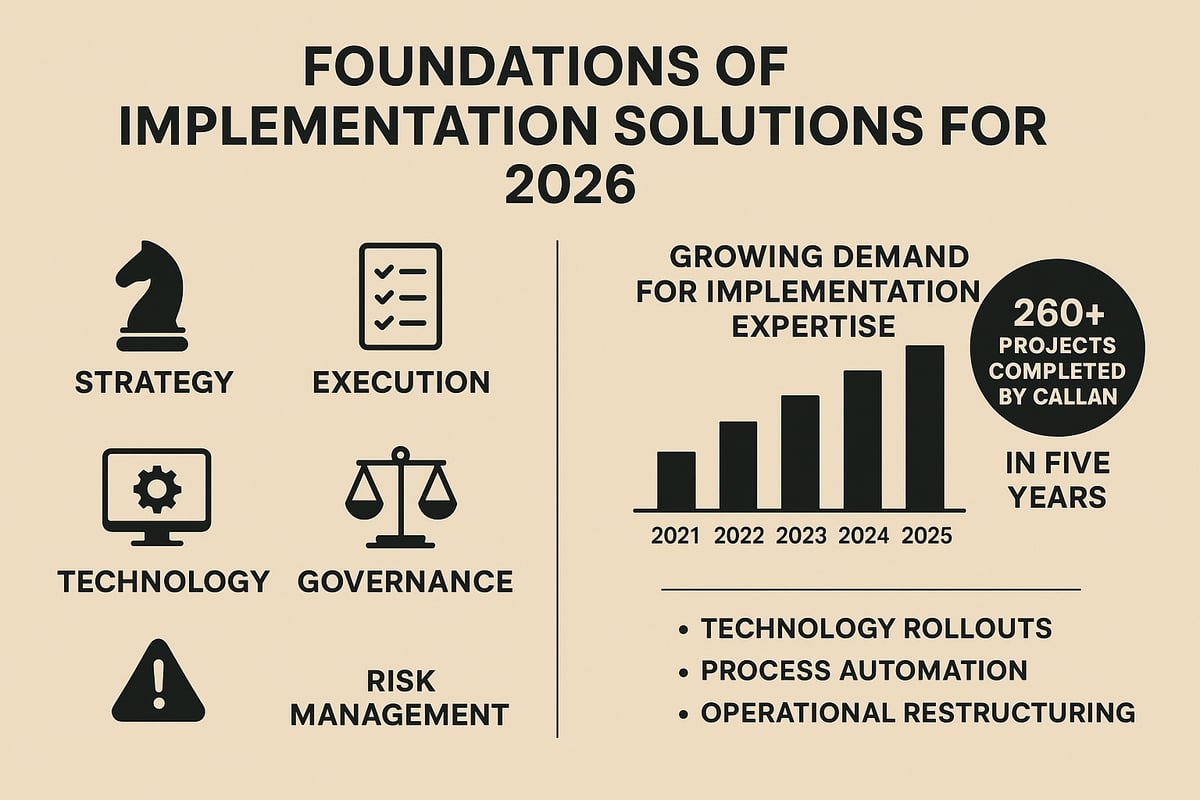
Implementation solutions are structured approaches that bridge the gap between strategic planning and effective execution. Unlike simple integration, which focuses on connecting systems, or transformation, which often means a fundamental organizational shift, implementation solutions emphasize turning plans into operational reality.
These solutions play a critical role in aligning people, processes, and technology. For instance, in investment operations, experts like Callan have led over 260 trust and custody projects in just five years, demonstrating the increasing demand for tailored expertise. The right implementation solutions can include technology rollouts, process automation, or operational restructuring, all customized to an organization’s unique needs.
A one-size-fits-all approach rarely works. Each industry, whether healthcare, finance, or nonprofit, faces its own challenges and requirements. Tailoring implementation solutions ensures alignment with organizational size, goals, and regulatory environments. For organizations looking to harness the latest advancements, exploring AI, Automation, and Integration Solutions is vital for scalable, future-proof deployments.
Key Components of Successful Implementation
To deliver results, implementation solutions must be built on strong foundations. Clear governance structures are essential, providing leadership and accountability from the top down. Operational optimization focuses on streamlining workflows and removing bottlenecks, while efficiency and risk management rely on analytics for ongoing improvement.
Technology enablement is at the core, whether leveraging AI, automation, or cloud integration. Stakeholder alignment ensures that everyone, from leadership to frontline staff, is invested in the project’s success. Data-driven decision making allows organizations to pivot strategies based on real-time insights. For example, in investment settings, performance measurement and benchmarking support continuous improvement and transparency.
These components work together to create an environment where implementation solutions can thrive. By embedding best practices and robust frameworks, organizations position themselves for long-term operational excellence.
Challenges Facing Organizations in 2026
As we move into 2026, organizations face a host of new and evolving challenges that make implementation solutions more important than ever. Technology and regulatory landscapes are growing increasingly complex, demanding sophisticated approaches to change management.
Expectations for transparency and accountability continue to rise, fueled by stakeholders and regulators alike. Many organizations also contend with talent shortages, making upskilling and training a top priority. The integration of ESG (Environmental, Social, and Governance) factors adds another layer of complexity, particularly for institutional investors who must modernize operations and reporting.
These challenges require organizations to adopt agile, resilient implementation solutions. By proactively addressing these issues, companies can maintain a competitive edge and deliver value to all stakeholders.
Step-by-Step Guide: Implementing Solutions for Success
Implementing solutions that drive real change requires a structured, practical approach. This step-by-step guide breaks down the journey, ensuring organizations can confidently deploy implementation solutions for measurable results.
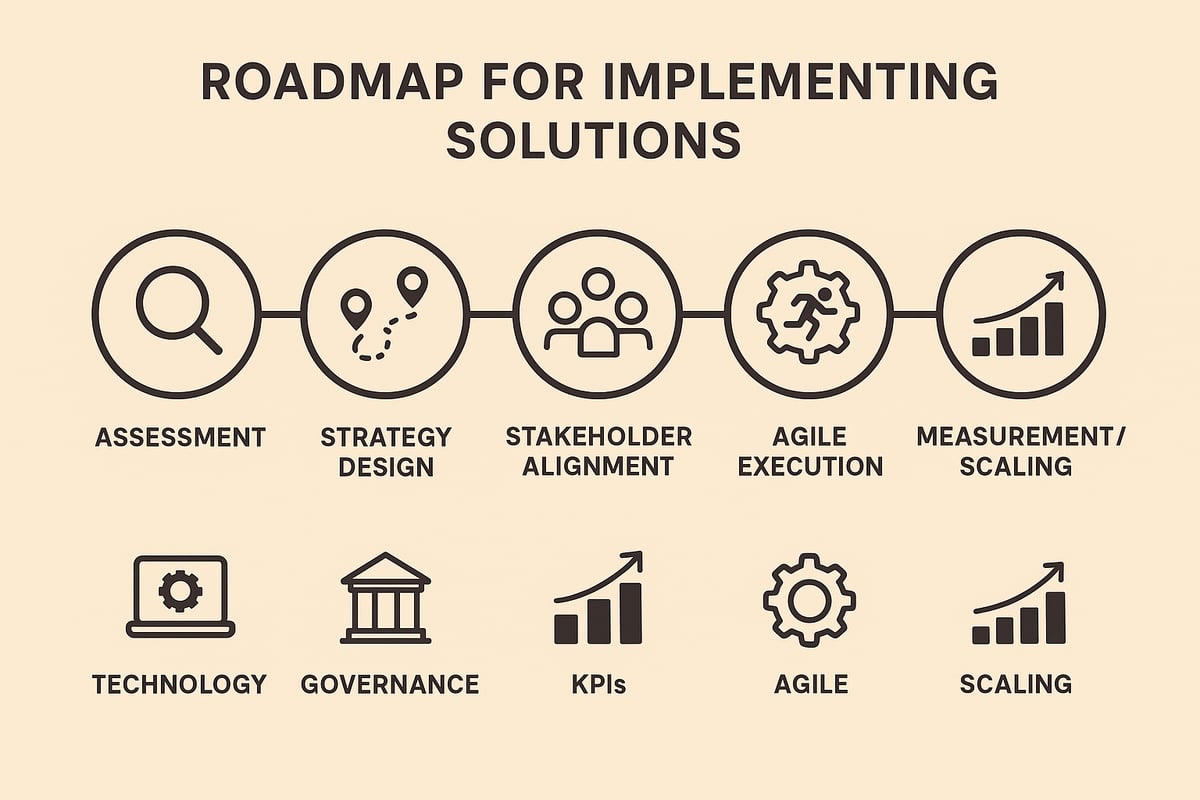
Step 1: Assessing Organizational Needs and Readiness
The foundation of successful implementation solutions is a deep understanding of your organization's current state. Start with a comprehensive operational and technology assessment. Map existing processes, systems, and governance structures to uncover gaps and inefficiencies.
Gather input from stakeholders at all organizational levels. Use tools such as due diligence reviews, operational audits, and technology readiness checklists. Align findings with your strategic goals to ensure the implementation solutions you select are tailored, scalable, and actionable.
A thorough assessment also helps you gauge readiness for change. By identifying areas that need support or upskilling, you can proactively address obstacles and set priorities that align with your vision for the future.
Step 2: Designing a Custom Implementation Strategy
A well-crafted strategy is the backbone of any effective implementation solutions effort. Start by defining clear objectives and measurable success metrics. Develop a phased roadmap that includes milestones, deliverables, and key responsibilities.
Address both technology and human capital needs in your strategy. Include a robust risk analysis with contingency planning. Leverage industry benchmarks and best practices to inform your approach. For organizations weighing different paths, consider insights from Implementation Strategies: Build, Buy, or Hybrid to choose the right model for your needs.
Tailoring your strategy to your organization's unique context ensures that implementation solutions deliver lasting value and can adapt to changing conditions.
Step 3: Securing Stakeholder Buy-In and Communication
Gaining buy-in is critical for the success of implementation solutions. Assemble a cross-functional team that represents all key departments and roles. Develop a communication plan that keeps stakeholders informed and engaged throughout the process.
Address resistance by offering training sessions, feedback forums, and transparent updates. Highlight early wins through pilot programs to build momentum and demonstrate value quickly. Engaging stakeholders at every step ensures smoother adoption and minimizes disruption.
Prioritize open dialogue and collaboration to foster a sense of ownership and shared purpose across the organization.
Step 4: Executing the Solution with Agility
Execution is where implementation solutions come to life. Use iterative sprints to roll out technology and process changes, allowing for quick adjustments based on real-time feedback. Monitor progress with analytics dashboards and regular check-ins.
Maintain flexibility to respond to emerging challenges or opportunities. Always ensure compliance and data security standards are met. Consider managed services for ongoing support, especially during complex technology rollouts.
Agile execution helps organizations remain resilient and responsive, maximizing the impact of their implementation solutions.
Step 5: Measuring, Optimizing, and Scaling Success
Measuring results ensures that implementation solutions achieve their intended goals. Track performance against established KPIs and benchmarks using real-time dashboards and regular operational reviews.
Conduct post-implementation audits to identify opportunities for further optimization. Look for areas where automation or process improvements can drive even greater efficiency. When success is proven, scale solutions across departments or locations to amplify impact.
Continuous improvement is essential for long-term value. By refining your approach and learning from each phase, you ensure that implementation solutions remain relevant and effective as your organization evolves.
Technology, Automation, and Integration in Implementation Solutions
Technology is redefining the landscape of implementation solutions, offering organizations new ways to optimize operations, boost efficiency, and future-proof their strategies. As we approach 2026, the convergence of AI, automation, and integration platforms is transforming how businesses execute change and achieve measurable results.
The Role of Advanced Technologies in Modern Implementation
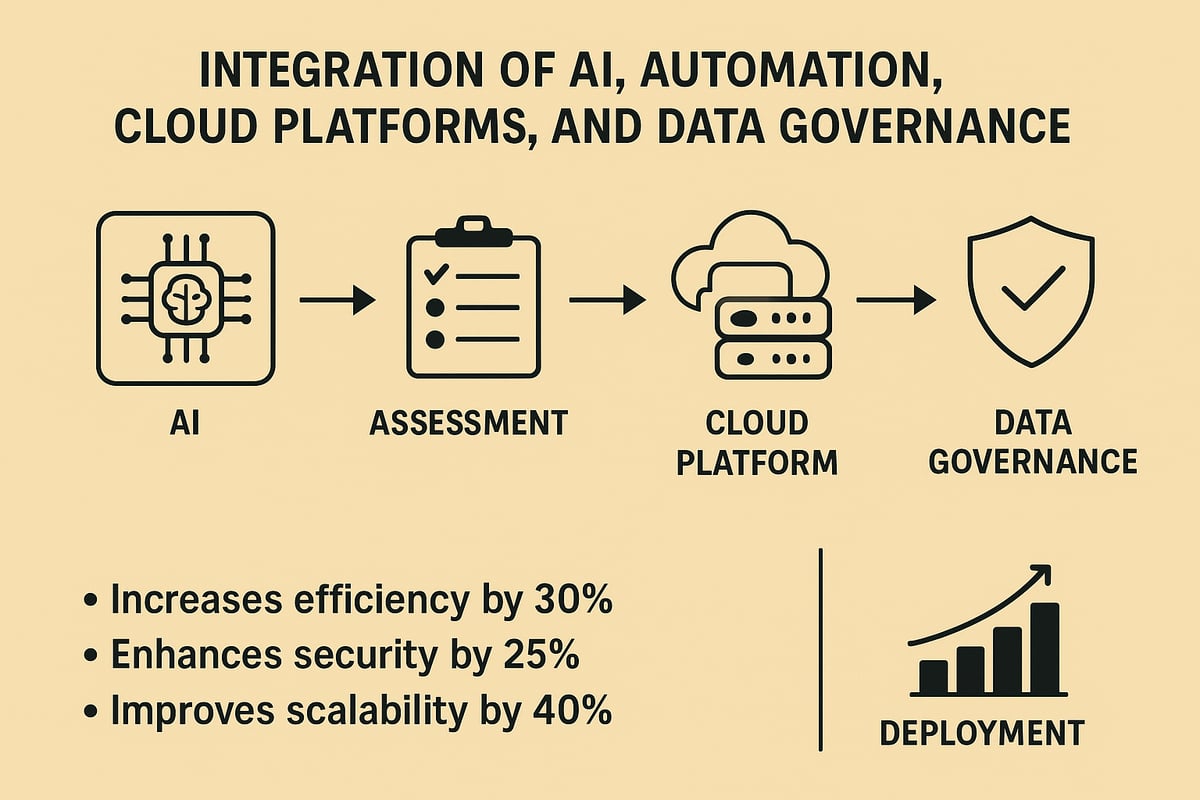
Advanced technologies are at the core of successful implementation solutions in 2026. Artificial intelligence and automation are eliminating thousands of manual hours, streamlining workflows, and enabling organizations to respond to change with agility.
For example, AI-driven automation can process vast data sets, flag anomalies, and execute repetitive tasks with high accuracy. Business intelligence tools such as PowerBI and Tableau provide actionable insights, allowing decision-makers to monitor performance and identify trends in real time.
Cloud platforms like Salesforce and AWS offer unparalleled scalability. They enable seamless integration, support remote collaboration, and ensure that systems can grow with organizational needs. Data migration and management are also critical, as clean, accessible data underpins every successful implementation.
To stay ahead of the curve, organizations rely on Gartner’s Top Strategic Technology Trends for 2026 to inform their technology adoption strategies and ensure their implementation solutions remain relevant.
Balancing Human Capital and Technology
While technology accelerates transformation, people remain central to effective implementation solutions. Upskilling employees is essential, as new systems demand updated competencies and a culture of continuous learning.
Organizations that invest in human capital management drive higher engagement and smoother transitions. Structured training programs empower staff to leverage new technologies, turning potential resistance into enthusiasm for innovation.
It is crucial to address concerns about job displacement. By focusing on value-added roles, businesses can ensure that automation complements the workforce, rather than replacing it. This balanced approach fosters both operational excellence and employee satisfaction.
Security, Compliance, and Data Governance
As technology adoption expands, robust security, compliance, and data governance frameworks become non-negotiable pillars of implementation solutions. Ensuring data privacy and meeting regulatory requirements, such as GDPR or HIPAA, protects organizations from risk and builds stakeholder trust.
Clear governance structures provide oversight for technology use, and regular audits help maintain compliance. In investment operations, for instance, custody reviews play a key role in managing operational risk, ensuring that sensitive information is handled securely and transparently.
Ongoing vigilance and adaptation to regulatory changes are vital for maintaining the integrity of implementation processes and safeguarding organizational reputation.
Future-Proofing with Emerging Tech Trends
Looking to the future, implementation solutions must anticipate and embrace emerging technologies. AI advancements, increasing automation, and digital transformation are shaping new operational models, demanding proactive preparation.
Integration with ESG and sustainability metrics is another growing priority. Organizations are leveraging technology not only for operational efficiency but also for comprehensive ESG reporting and impact measurement.
By continuously monitoring tech trends and aligning strategies with future demands, organizations can build resilient, adaptable implementation solutions that drive long-term success in a rapidly evolving business environment.
Industry-Specific Approaches to Implementation Solutions
Tailoring implementation solutions to specific industries is critical for achieving operational excellence. Each sector faces unique challenges, regulatory requirements, and performance goals. By leveraging industry-specific knowledge, organizations can maximize the impact of their implementation solutions and accelerate measurable outcomes.
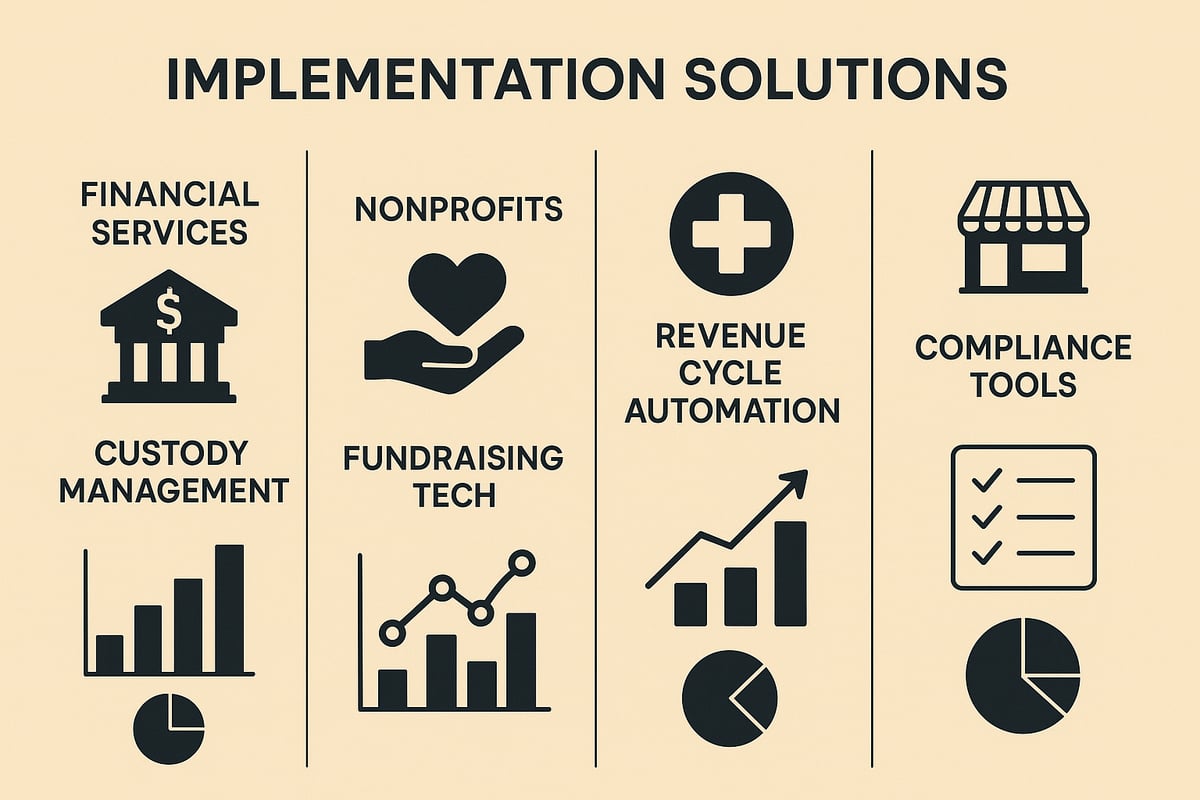
Institutional Investors and Financial Services
For institutional investors and financial services, implementation solutions are essential for managing complexity and ensuring compliance. These organizations must address operational challenges such as custody, securities lending, and transition management. Fee benchmarking and performance analytics play a pivotal role in optimizing strategies for pension plans, endowments, insurance companies, and healthcare assets.
A notable example is Callan’s Implementation Solutions team, which advised on over $1.4 trillion in assets in 2019. Their approach includes:
- Customizing solutions for each asset class and organizational goal
- Leveraging advanced analytics for fee and performance benchmarking
- Streamlining operational processes to reduce risk and increase transparency
By adopting a tailored approach, financial institutions can enhance efficiency and maintain their competitive edge.
Nonprofits and Social Impact Organizations
Nonprofits require implementation solutions that address their distinctive priorities, including donor engagement, grant management, and outcome measurement. Technology platforms like Salesforce and Amp Impact are often used to unify data across fundraising and program management activities.
Vera Solutions, for example, has supported over 1,650 projects with more than 430 organizations globally. Their strategies focus on:
- Automating data collection and reporting for greater efficiency
- Improving transparency for stakeholders and funders
- Ensuring scalability as organizations grow and diversify their impact
This sector’s implementation solutions often prioritize flexibility, rapid deployment, and measurable results.
Healthcare and Revenue Cycle Management
Healthcare organizations rely on implementation solutions to streamline patient, provider, and payer processes. By integrating AI and automation, these organizations can reduce claim denials, enhance cash flow, and improve overall financial health.
Key strategies include:
- Automating revenue cycle management tasks to minimize manual errors
- Ensuring compliance with healthcare regulations and data privacy standards
- Implementing analytics to track and optimize operational performance
For a comprehensive approach, many organizations turn to End-to-End Revenue Cycle Management services, which support everything from billing to compliance reviews. These solutions help healthcare providers remain agile and financially resilient in a dynamic environment.
Enterprise and SMB Optimization
Enterprises and SMBs face the ongoing challenge of balancing growth with operational efficiency. Implementation solutions in this context often focus on back-office automation, compliance management, and tailoring technology to unique business models.
Common approaches include:
- Streamlining payroll and human capital management processes
- Leveraging automation tools to handle repetitive tasks
- Customizing solutions for industry-specific requirements and scalability
SMBs, in particular, benefit from industry-focused support, as highlighted in SMBs Championing Mid-Market Growth. By adopting these best practices, organizations can position themselves for sustained growth and innovation.
Measuring Success: Metrics, Benchmarks, and Continuous Improvement
Measuring the impact of implementation solutions is essential for organizations aiming to achieve operational excellence. In 2026, the ability to track, benchmark, and optimize results will determine which organizations stay ahead. By establishing clear metrics and leveraging continuous improvement practices, leaders can ensure every implementation delivers measurable value.
Establishing Clear KPIs and Success Metrics
Defining specific KPIs is the foundation of effective implementation solutions. Align metrics with strategic business goals and stakeholder expectations to ensure relevance. Common KPIs include time saved, cost reductions, revenue growth, and employee engagement.
A well-crafted scorecard helps teams monitor progress and course-correct quickly. For example, organizations often track project completion rates and quality of outcomes to gauge the effectiveness of implementation solutions.
Benchmarking Against Industry Standards
Benchmarking places internal results in context. By comparing outcomes to industry standards, organizations can identify strengths and improvement areas. Tools such as fee benchmarking and performance analytics, like those offered by Callan, provide actionable insights.
Participation in industry indices, such as the DC Index or Target Date Index, ensures that implementation solutions are evaluated against up-to-date market trends. This approach keeps organizations competitive and informed about evolving best practices.
Leveraging Analytics for Ongoing Optimization
Advanced analytics and real-time dashboards are revolutionizing how organizations monitor and refine implementation solutions. Business intelligence platforms turn complex data into actionable insights, highlighting trends and revealing new opportunities.
AI-driven analytics, as discussed in AI’s Impact on Health and Well-being Programs, can proactively identify risks and optimize performance. Continuous monitoring fuels a culture of improvement, ensuring that implementation solutions adapt to changing conditions.
Case Studies and Real-World Results
Real-world examples demonstrate the tangible benefits of effective implementation solutions. For instance, Callan has completed over 260 trust and custody projects in five years, delivering measurable outcomes for institutional investors.
In the social sector, Vera Solutions has supported more than 1,650 projects worldwide, showcasing the versatility and impact of tailored implementation solutions. These case studies validate the importance of data-driven strategies and operational audits.
Best Practices for Sustained Success
Sustaining success with implementation solutions requires regular operational reviews and continuous training. Engaging stakeholders at every stage fosters resilience and adaptability.
Human capital considerations are vital for ongoing improvement, as highlighted in Payroll and Human Capital Management. Adapting to regulatory and technology changes ensures that implementation solutions remain effective over time.
Future Trends and Innovations in Implementation Solutions for 2026
In 2026, implementation solutions are being shaped by groundbreaking innovations and evolving business demands. Organizations must anticipate these shifts to remain agile, resilient, and competitive. Let us explore the essential trends influencing the future of implementation solutions.
The Rise of AI, Automation, and Predictive Analytics
AI and automation are revolutionizing implementation solutions by accelerating workflows and reducing manual tasks. Predictive analytics now enables organizations to anticipate risks, optimize processes, and make data-driven decisions in real time. According to Emerging Technology Trends in 2026, advancements in AI, cloud computing, and analytics will continue to drive operational efficiency.
Business intelligence tools are empowering teams to visualize performance and identify opportunities faster than ever. Automated systems also help minimize errors and maintain compliance. As these technologies mature, implementation solutions will become more adaptive and insightful, setting new industry benchmarks.
Integration of ESG and Sustainability into Implementation
Environmental, Social, and Governance (ESG) factors are becoming core components of implementation solutions. Organizations are embedding sustainability metrics into their strategies to meet stakeholder expectations and regulatory requirements. Tools designed for ESG reporting help measure social and environmental impact while ensuring transparency.
A tailored approach is essential, as different industries require unique frameworks for ESG integration. By aligning sustainability goals with operational objectives, companies can enhance their brand value and secure long-term success through robust implementation solutions.
Evolving Governance and Operational Models
Governance models are shifting toward more decentralized and agile frameworks. This evolution is crucial for effective implementation solutions in an era of rapid change. Organizations increasingly rely on managed services and external expertise to achieve operational excellence.
Clear accountability, leadership, and flexible decision-making structures support faster adaptation. As governance evolves, implementation solutions must ensure compliance, safeguard data, and maintain high performance standards across all business units.
Workforce Transformation and Human Capital Evolution
The workforce is undergoing profound transformation alongside implementation solutions. Upskilling and reskilling employees are now strategic imperatives, ensuring teams can leverage new technologies and workflows. Human capital management focuses on employee wellness—mental, physical, and financial—to drive engagement and boost productivity.
By investing in training and development, organizations empower staff to create value in a tech-enabled environment. This approach reduces resistance to change and strengthens the foundation for successful implementation solutions.
Industry Collaboration and Ecosystem Partnerships
Collaboration across industries and with ecosystem partners is amplifying the impact of implementation solutions. Consulting firms, technology providers, and client organizations are joining forces to deliver comprehensive, end-to-end transformation.
These partnerships foster innovation, share risk, and accelerate problem-solving. By leveraging collective expertise, organizations can address complex challenges more efficiently and deploy implementation solutions that are both scalable and sustainable.
Preparing for Regulatory and Market Disruption
Regulatory changes and market disruptions are inevitable, making adaptability a critical feature of modern implementation solutions. Organizations are proactively monitoring compliance requirements and industry standards to stay ahead of potential risks.
Robust contingency planning, regular audits, and continuous improvement cycles help organizations build resilience. By anticipating disruption, businesses can update their implementation solutions swiftly and maintain a competitive edge in any environment.
As you look ahead to 2026, implementing the right solutions can mean the difference between simply keeping up and truly excelling. We’ve explored how a thoughtful approach—blending technology, streamlined processes, and a focus on your team’s well-being—can unlock operational excellence and sustainable growth. If you’re ready to discuss how these strategies could fit your organization’s unique goals, I invite you to take the next step. Let’s work together to build a tailored roadmap for your success. Book a Consultation