

Industrial property represents a critical category of intellectual property rights that businesses leverage to protect their innovations, brand identities, and competitive advantages in the marketplace. As organizations increasingly rely on technology, automation, and distinctive branding to differentiate themselves, understanding the nuances of industrial property becomes essential for sustainable growth and operational excellence. This comprehensive guide explores the fundamental aspects of industrial property and how businesses can strategically utilize these protections to enhance their market position.
Understanding the Foundations of Industrial Property
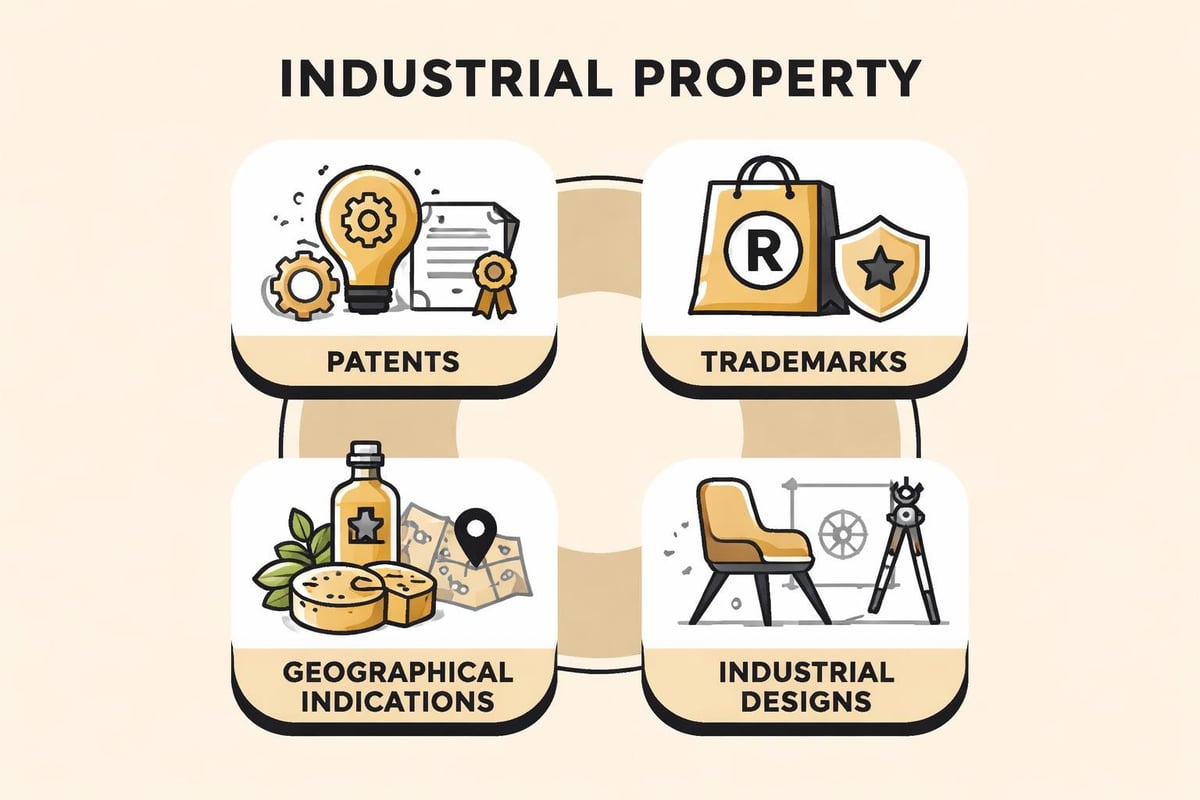
Industrial property encompasses several distinct categories of intellectual property rights designed to protect commercial innovations and business assets. The World Intellectual Property Organization (WIPO) defines industrial property as including patents, trademarks, industrial designs, and geographical indications, each serving a unique protective function.
Unlike copyrights that protect artistic and literary works, industrial property focuses specifically on innovations and identifiers used in business and commercial contexts. These rights enable companies to safeguard their technological advancements, brand equity, and product aesthetics from unauthorized use by competitors.
The primary categories of industrial property include:
- Patents for technological innovations and processes
- Trademarks for brand names, logos, and slogans
- Industrial designs protecting product appearance
- Geographical indications identifying regional origins
- Trade secrets and proprietary information
Understanding these distinctions allows businesses to develop comprehensive intellectual property strategies that align with their operational goals and market positioning.
Patents: Protecting Technological Innovation
Patents represent the most technically complex form of industrial property, granting inventors exclusive rights to their innovations for a defined period. The United States Patent and Trademark Office administers patent applications and provides detailed guidance on navigating the patent process.
In 2026, the patent landscape continues to evolve rapidly, particularly in fields like artificial intelligence, automation systems, and healthcare technology. Organizations implementing advanced automation and integration solutions must consider patent protection for their proprietary algorithms, processes, and technological innovations.
Types of Patents and Their Applications
| Patent Type | Protection Duration | Best For |
|---|---|---|
| Utility Patents | 20 years from filing | New processes, machines, or compositions |
| Design Patents | 15 years from grant | Ornamental product designs |
| Plant Patents | 20 years from filing | New plant varieties |
Utility patents provide the broadest protection, covering how inventions function and operate. For consulting firms developing proprietary software or automated systems, utility patents protect the underlying processes and methodologies that deliver value to clients.
Design patents focus exclusively on aesthetic elements, protecting how a product looks rather than how it works. While less common in professional services, design patents can protect unique interface designs or visual representations of data systems.
The patent application process requires substantial documentation, including detailed specifications, claims defining the invention's scope, and often technical drawings. Organizations should budget 18-36 months for the examination process and engage qualified patent attorneys to navigate the complexities effectively.
Trademarks: Building and Protecting Brand Identity
Trademarks serve as powerful tools for establishing brand recognition and customer loyalty in competitive markets. Industrial property protection through trademarks extends beyond simple logos to encompass brand names, taglines, colors, sounds, and even product packaging configurations.
For consulting firms and professional services organizations, trademark protection becomes particularly valuable as brand reputation directly influences client acquisition and retention. A distinctive trademark communicates expertise, reliability, and quality assurance to prospective clients.
Strategic Trademark Considerations
Successful trademark strategies involve several key components. First, selecting distinctive marks that stand out in the marketplace increases the likelihood of approval and strengthens legal protection. Arbitrary or fanciful marks receive the strongest protection, while descriptive terms face significant registration challenges.
Second, conducting comprehensive trademark searches before adoption prevents costly conflicts with existing marks. Professional trademark searches examine federal registrations, state registrations, common law uses, and domain name registrations.
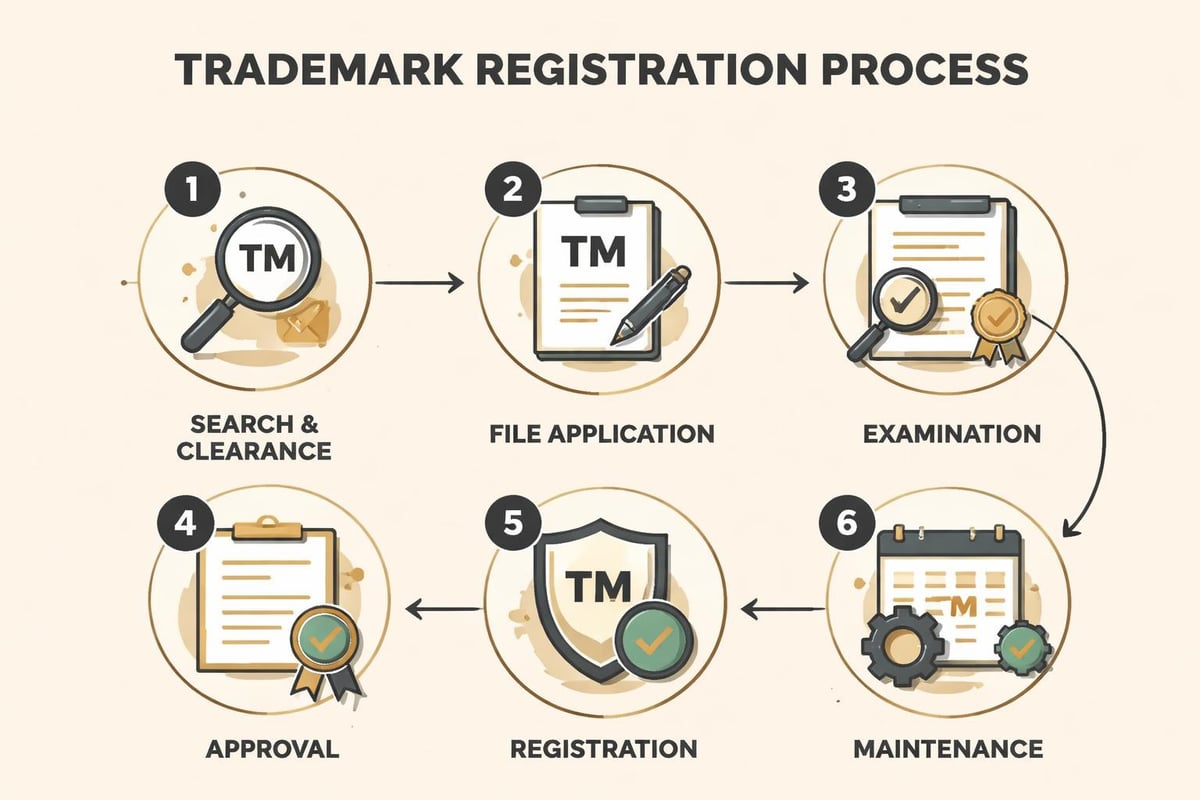
Essential steps in trademark registration:
- Conduct a comprehensive trademark search
- File an application with the appropriate office
- Respond to any office actions or objections
- Receive approval and registration certificate
- Maintain the registration through renewals and use
Third, actively using trademarks in commerce strengthens legal rights and prevents abandonment claims. Consistent usage across all marketing materials, client communications, and digital platforms reinforces brand identity while maintaining industrial property protections.
Industrial Designs: Protecting Aesthetic Innovation
Industrial designs protect the visual characteristics of products, including shape, configuration, pattern, and ornamentation. While often overlooked in service-oriented businesses, design rights can protect software interfaces, presentation templates, and proprietary visual systems used in client deliverables.
The protection of industrial property through design rights typically lasts 10-25 years depending on jurisdiction and renewal actions. Design protection requires that the aesthetic features be new, original, and non-functional, distinguishing it from utility patent protection.
For organizations developing proprietary dashboards, reporting tools, or visual analytics platforms, industrial design protection can prevent competitors from copying distinctive visual elements that contribute to user experience and brand differentiation.
Design Rights in Digital Products
Modern industrial property considerations extend significantly into digital environments. Software interfaces, mobile applications, and web-based platforms all contain protectable design elements. The visual hierarchy, color schemes, icon systems, and layout configurations can receive design protection when they meet originality requirements.
Organizations investing in custom technology solutions should document their design development processes, maintain records of creative decisions, and consider formal registration for distinctive visual elements that provide competitive advantages.
Geographical Indications and Specialized Protections
Geographical indications represent a specialized category of industrial property that identifies products originating from specific regions where quality, reputation, or characteristics result from geographic origin. While less common in professional services, understanding these protections helps organizations advising clients in agricultural, food, beverage, and artisanal sectors.
Geographic indications prevent unauthorized use of regional designations, protecting both producers and consumers. Examples include Champagne for sparkling wine from France's Champagne region or Roquefort for cheese from specific French caves.
For consulting firms working with healthcare organizations or regional economic development initiatives, understanding geographical indications supports comprehensive intellectual property strategies for clients operating in relevant industries.
Enforcement and Protection Strategies
Securing industrial property rights represents only the first step in a comprehensive intellectual property strategy. Enforcement mechanisms ensure that these rights translate into practical business advantages and competitive protection.
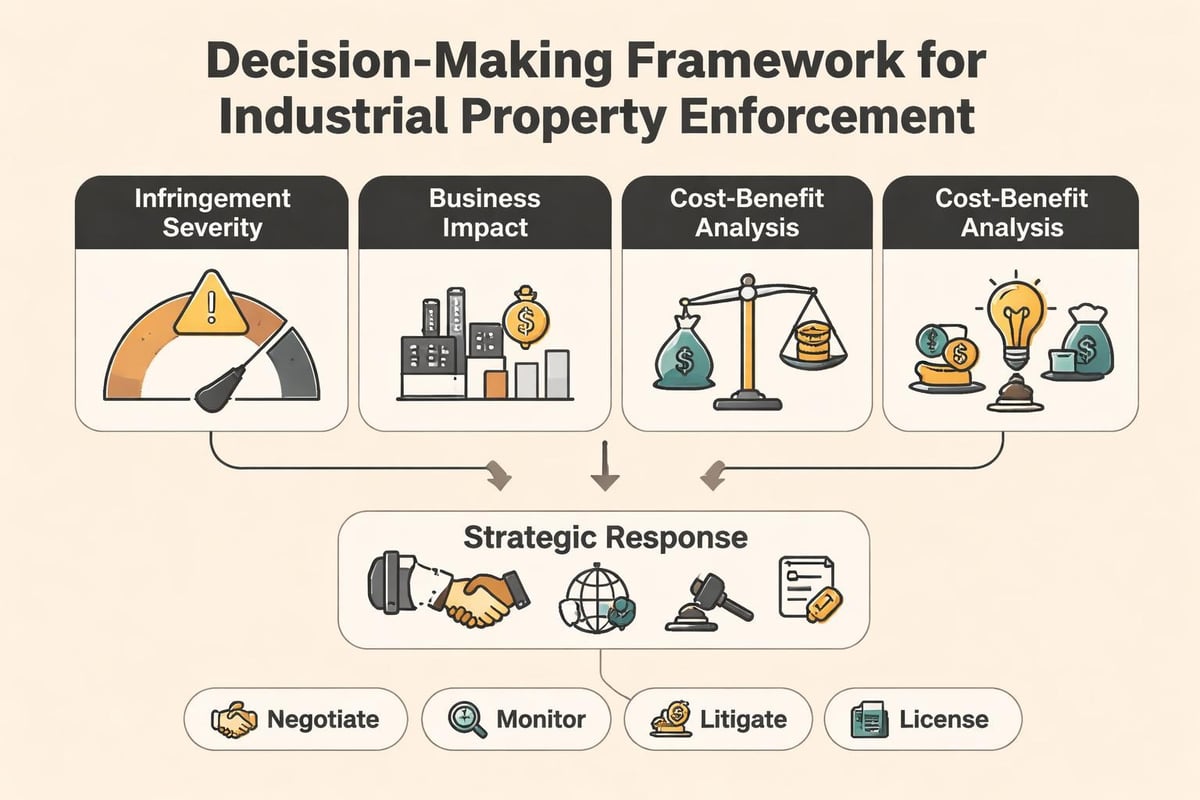
Effective enforcement requires vigilant monitoring of the marketplace for potential infringements. Organizations should establish systematic surveillance programs that track competitor activities, new product launches, and trademark applications in related fields.
Common enforcement actions include:
- Cease and desist letters to infringers
- Opposition proceedings against conflicting applications
- Litigation for substantial violations
- Customs recordation to prevent importation of infringing goods
- Alternative dispute resolution methods
The costs of enforcement vary substantially based on the nature and severity of infringement. Early intervention through cease and desist letters often resolves disputes efficiently, while litigation can require substantial financial resources and time commitments.
Organizations should establish clear protocols for identifying, evaluating, and responding to potential infringements. Decision frameworks help prioritize enforcement actions based on business impact, likelihood of success, and strategic importance of the affected industrial property assets.
Industrial Property for Small and Medium Enterprises
Small and medium-sized enterprises face unique challenges in developing and managing industrial property portfolios. Limited resources require strategic prioritization and cost-effective approaches to intellectual property protection.
For SMEs, focusing on core differentiators proves more effective than attempting comprehensive protection across all potential assets. Identifying the innovations, brands, and designs that most directly contribute to competitive advantage allows efficient resource allocation.
Cost-Effective IP Strategies for Growing Businesses
| Strategy | Benefits | Considerations |
|---|---|---|
| Provisional Patents | Lower cost, faster filing | Must convert within 12 months |
| Madrid System | Centralized international trademark filing | Limited to member countries |
| Trade Secret Protection | No registration costs | Requires strong confidentiality measures |
| Selective Design Filing | Protects key visual elements | Narrow scope of protection |
Professional services firms often benefit most from trademark protection and trade secret management rather than extensive patent portfolios. Building strong brands through consistent trademark use and protecting proprietary methodologies through confidentiality agreements provides substantial competitive advantages without excessive costs.
The team of experts at consulting firms can help organizations develop tailored industrial property strategies aligned with business objectives, growth trajectories, and resource constraints.
Integration with Business Operations
Industrial property considerations should integrate seamlessly with broader business operations rather than existing as isolated legal functions. Organizations achieving optimal results embed intellectual property awareness into product development, marketing, human resources, and strategic planning processes.
During product development, engineering and design teams should document innovations systematically, enabling efficient patent application preparation. Marketing teams must understand trademark limitations and ensure consistent brand usage. Human resources departments should implement robust confidentiality agreements and employee intellectual property assignment clauses.
Operational integration touchpoints:
- New product launch checklists including IP reviews
- Marketing material approval processes verifying trademark compliance
- Employee onboarding with IP education and agreement execution
- Competitive intelligence gathering with IP monitoring components
- Strategic planning incorporating IP asset valuations
For organizations leveraging artificial intelligence and automation technologies, industrial property considerations become particularly complex. AI-generated innovations, automated systems, and machine learning algorithms raise novel questions about inventorship, ownership, and protectability under existing frameworks.
International Industrial Property Considerations
As businesses expand globally, industrial property protection must extend across multiple jurisdictions. International frameworks like the Madrid System for trademark registration streamline the process of securing protection in multiple countries through centralized filing procedures.
Patent protection remains fundamentally territorial, requiring separate applications in each country where protection is desired. The Patent Cooperation Treaty (PCT) facilitates this process by allowing a single international application to serve as the basis for national applications in member countries.
Organizations expanding internationally must carefully prioritize markets for industrial property protection based on manufacturing locations, sales territories, and competitive landscapes. Filing in every country proves cost-prohibitive for most businesses, making strategic selection essential.
Regional Protection Systems
Several regional systems offer unified industrial property protection across multiple countries through single applications. The European Union Intellectual Property Office administers EU-wide trademark and design protections, while regional patent systems exist for Africa, Eurasia, and the Gulf Cooperation Council states.
For consulting firms serving private equity clients, understanding international industrial property strategies supports portfolio company development and exit planning. Due diligence processes must assess industrial property assets, identify gaps in protection, and evaluate enforcement risks in key markets.
Valuation and Financial Implications
Industrial property assets carry substantial financial value that organizations should quantify and leverage strategically. Patent portfolios, trademark portfolios, and design rights contribute to overall enterprise value and can serve as collateral for financing arrangements.
| Valuation Method | Application | Strengths |
|---|---|---|
| Cost Approach | Development-stage IP | Based on investment amounts |
| Market Approach | Licensed IP assets | Reflects actual market transactions |
| Income Approach | Revenue-generating IP | Projects future cash flows |
Professional valuation becomes particularly important during mergers, acquisitions, licensing negotiations, and tax planning activities. Organizations should periodically assess their industrial property portfolios to ensure adequate insurance coverage, optimize tax positions, and support strategic decision-making.
The income approach typically provides the most reliable valuations for established industrial property assets generating measurable revenue or cost savings. This method projects future cash flows attributable to the IP asset and discounts them to present value using appropriate risk-adjusted rates.
Risk Management and Industrial Property
Comprehensive risk management programs must address both the protection of owned industrial property and the mitigation of infringement risks related to third-party rights. Organizations face potential liability when their products, services, or marketing materials infringe others' industrial property rights.
Freedom-to-operate analyses examine whether proposed products or services infringe existing patents, providing critical risk assessment before product launches or significant investments. These analyses require comprehensive patent searches and expert legal opinions evaluating infringement likelihood.
Key risk management components:
- Regular portfolio audits identifying gaps and vulnerabilities
- Clearance searches before adopting new trademarks
- Freedom-to-operate analyses for new products
- Insurance coverage for IP litigation costs
- Employee training on IP compliance requirements
For organizations implementing automation and integration solutions, ensuring freedom to operate becomes particularly important given the complex technology landscapes and extensive patent portfolios held by major technology companies.
Future Trends in Industrial Property
The industrial property landscape continues to evolve in response to technological advances, globalization, and changing business models. Artificial intelligence raises fundamental questions about inventorship requirements, as current patent systems require human inventors despite AI systems increasingly generating novel solutions independently.
Blockchain technologies enable new approaches to industrial property management, including decentralized trademark registries and automated licensing systems through smart contracts. These innovations may fundamentally transform how organizations register, manage, and monetize industrial property assets.
The rise of the metaverse and digital products creates new frontiers for industrial property protection. Virtual goods, digital fashion, and NFT-based assets require adapted protection strategies as traditional frameworks encounter novel challenges in purely digital environments.
Organizations positioning themselves for future success must monitor these developments and adapt their industrial property strategies accordingly. Flexibility and forward-thinking approaches separate market leaders from organizations that struggle to protect their innovations in rapidly changing technological landscapes.
Industrial property rights provide essential protections that enable businesses to compete effectively, monetize innovations, and build valuable brand equity in competitive markets. Strategic management of patents, trademarks, industrial designs, and related rights requires ongoing attention, professional expertise, and integration with broader business operations. Nero and Associates, Inc. helps organizations optimize their operational efficiency and competitive positioning through comprehensive consulting solutions that address the full spectrum of business challenges, from technology implementation to process automation and strategic planning.