

2026 stands as a defining year for any managed services consultant determined to rise above the competition. Rapid industry transformation, changing client demands, and breakthrough technologies are rewriting the rules of engagement.
This guide offers a proven blueprint for managed services consultant success, blending actionable strategies with deep market insights. You will uncover the essential skills, future trends, and practical steps needed to achieve sustained profitability and client satisfaction.
Are you ready to adapt, lead, and excel? Explore the comprehensive framework that will set you apart and position you for long-term growth.
Understanding the Managed Services Landscape in 2026
The role of a managed services consultant is evolving rapidly as organizations demand more from their external partners. In 2026, consultants are expected to deliver not just technical solutions but also strategic guidance that aligns with business goals. The landscape is expanding, and those who adapt will find themselves at the forefront of a thriving industry.
Defining Managed Services Consulting in 2026
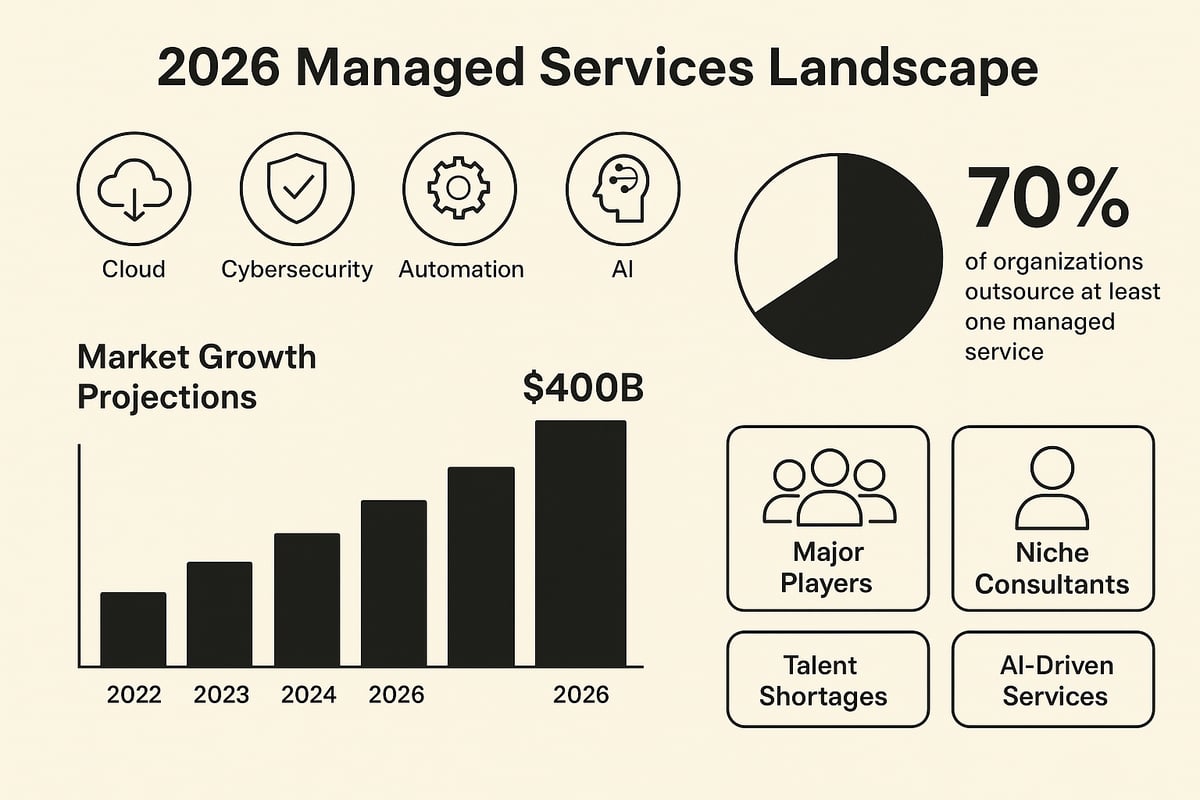
In 2026, a managed services consultant operates beyond traditional IT support. The scope now includes cybersecurity, cloud solutions, automation, and business process outsourcing. Clients expect proactive, strategic partnerships rather than reactive service.
For example, 70% of organizations now outsource at least one managed service, reflecting the growing reliance on external expertise. This shift means a managed services consultant must be adept at integrating new technologies and aligning them with business objectives.
The modern consultant is a trusted advisor, guiding clients through complex environments and ensuring continuous improvement. Their role is essential for businesses seeking agility and long-term growth.
Key Industry Trends and Market Drivers
Several forces are shaping the future for every managed services consultant. The acceleration of digital transformation following the pandemic is pushing organizations to adopt new technologies faster than ever.
Hybrid cloud and edge computing are becoming standard, while compliance and risk management are top priorities. The managed services market is projected to reach $400 billion by 2026, driven by these trends (Managed Services Market Growth Projections).
Consultants who stay ahead of these shifts will be positioned for success. Understanding these drivers is crucial for identifying opportunities and delivering value to clients.
Competitive Landscape and Differentiation
The competitive landscape is crowded, with major players and boutique consultancies both vying for market share. For a managed services consultant, specialization and deep vertical expertise are key differentiators.
Niche consultants are outpacing generalists by 25% in client retention, according to CompTIA. This advantage comes from a tailored approach and deep understanding of specific industry challenges.
To stand out, consultants must clearly communicate their unique value proposition. Those who focus on a particular sector or technology will build stronger client relationships and drive better results.
Challenges Facing Consultants in 2026
A managed services consultant faces significant challenges in 2026. Talent shortages and the need for continuous upskilling are top concerns across the industry.
Managing remote and hybrid client teams requires new strategies for collaboration and engagement. Security threats and increasing regulatory complexity add further pressure, with 60% of MSPs citing cybersecurity as their primary concern.
Addressing these challenges demands agility, robust training programs, and a commitment to staying current with evolving regulations and technologies.
Opportunities for Growth and Innovation
Looking ahead, there are substantial opportunities for growth. Expansion into AI-driven services and automation opens new revenue streams for consultants.
Offering value-added advisory roles and integrating advanced solutions can further differentiate a practice. Those who innovate will not only meet client needs but also drive industry standards forward.
Essential Skills and Competencies for Managed Services Consultants
To thrive as a managed services consultant in 2026, you must master a diverse set of skills. The competitive landscape demands technical expertise, business acumen, and the ability to foster strong client relationships. Let us break down the essential competencies every top consultant will need.
Technical Proficiency and Continuous Learning
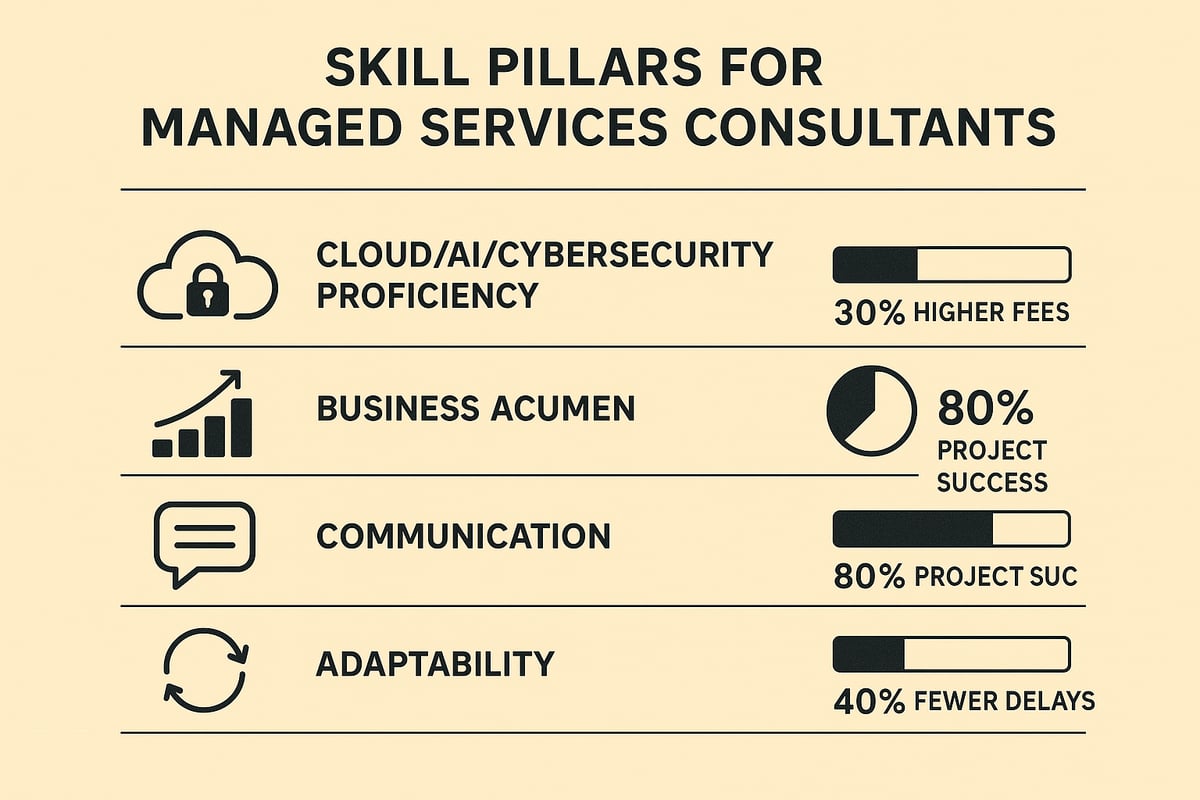
A successful managed services consultant in 2026 must demonstrate advanced technical proficiency. Mastery of cloud platforms, AI, automation, and cybersecurity is essential. Clients expect you to recommend, implement, and optimize the latest technologies.
Continuous learning is non-negotiable. Regularly updating certifications, such as AWS, Azure, or CompTIA, keeps your expertise relevant. In fact, consultants skilled in AI command 30% higher fees (Forrester).
Exploring resources like AI automation integration solutions can help you stay ahead in automation and integration trends. This ensures you deliver tangible value as a managed services consultant.
Business Acumen and Strategic Thinking
Aligning IT solutions with business outcomes sets a managed services consultant apart. You must analyze client goals, model financial outcomes, and articulate ROI clearly.
Strategic thinking involves anticipating market shifts and positioning services for growth. Consultants who master these skills drive double the revenue growth for their clients, according to IDC.
Practical financial modeling and outcome-based recommendations elevate your advisory role. Clients want a partner who understands both technology and business results.
Communication and Relationship Management
Clear communication is the backbone of every successful managed services consultant. Building trust through transparency, consistent updates, and open dialogue is vital.
Effective stakeholder engagement ensures alignment and reduces project friction. According to PMI, 80% of successful projects attribute their results to strong communication.
Use regular reporting, feedback sessions, and collaborative tools to foster lasting client relationships. This approach leads to higher satisfaction and repeat business.
Problem-Solving and Adaptability
The managed services consultant must be agile in addressing evolving client needs. Rapid changes in technology and business priorities require adaptable thinking.
Creative problem-solving is critical, especially in complex, multi-cloud environments. Agile consultants decrease project delays by 40% (Deloitte), underscoring the value of flexibility.
Approach every challenge with an open mindset, leveraging frameworks and best practices to deliver timely, effective solutions.
Leadership and Team Collaboration
Leadership is not just for managers. A managed services consultant should inspire and guide cross-functional teams toward shared objectives.
Mentoring junior consultants and fostering a culture of learning builds organizational resilience. Strong team collaboration accelerates skill development and project success.
Cultivate an environment where every team member feels empowered to contribute. This multiplier effect propels both individual and organizational growth.
The 2026 Success Blueprint: Step-by-Step Consulting Process
For every managed services consultant, excelling in 2026 means following a proven, structured approach. With competition rising and client expectations evolving, a disciplined, step-by-step consulting process is essential for repeatable success.
Below, discover how top managed services consultant teams systematically drive value, client satisfaction, and profitability by mastering each critical phase of the consulting journey.
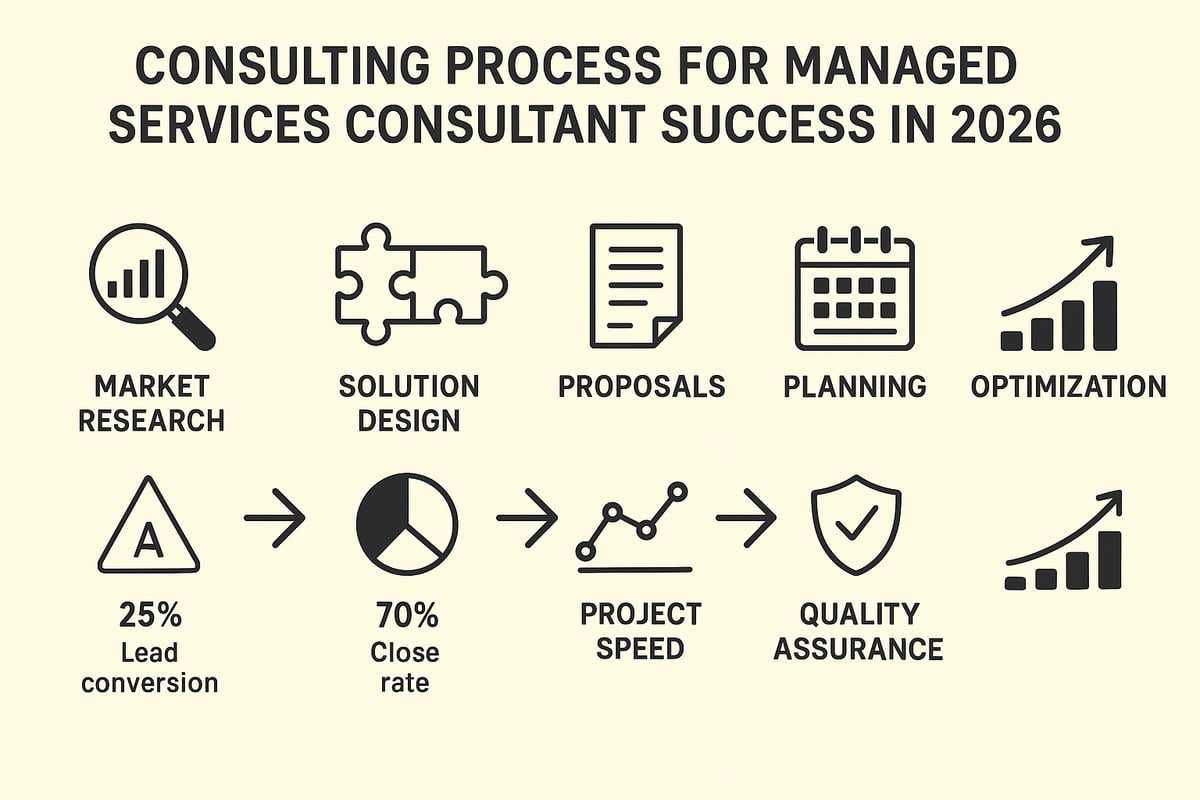
Step 1: Market Research and Client Targeting
The journey for a managed services consultant begins with targeted market research. Identifying high-growth industries—such as healthcare, finance, and manufacturing—ensures your services are aligned with sectors experiencing rapid digital transformation.
Utilize data analytics platforms to uncover trends, pain points, and emerging technology adoption. This allows the managed services consultant to prioritize prospects that fit their core competencies and strategic objectives.
A data-driven approach to prospecting, including segmentation by company size, region, or compliance needs, leads to more effective outreach. For example, focused targeting increases lead conversion rates by 35 percent, according to HubSpot.
Consider building a table to compare target industries:
| Industry | Growth Rate | Key Needs |
|---|---|---|
| Healthcare | High | Compliance, Security |
| Finance | Moderate | Automation, Analytics |
| Manufacturing | High | Integration, IoT |
By strategically selecting prospects and leveraging smart analytics, the managed services consultant sets the foundation for higher conversion and long-term client relationships.
Step 2: Needs Assessment and Solution Design
Once a potential client is identified, the managed services consultant conducts a comprehensive needs assessment. This step involves evaluating the client's IT environment, operational workflows, compliance requirements, and pain points.
A successful managed services consultant uses structured interviews, technical audits, and process mapping to uncover both immediate issues and future growth opportunities. Prioritizing transparency and collaboration helps build trust and ensures the client feels heard.
Next, custom solutions are designed to address the unique challenges uncovered. This tailored approach is critical—Salesforce reports that customized proposals yield a 50 percent higher close rate compared to generic offerings.
For clarity, consider this checklist:
- Assess IT infrastructure and current managed services
- Identify compliance gaps and security risks
- Map business processes and automation opportunities
- Document client objectives and desired outcomes
By focusing on detailed assessments and bespoke solution design, the managed services consultant maximizes client satisfaction from the start.
Step 3: Proposal Development and Value Articulation
After designing the solution, the managed services consultant crafts a compelling proposal. This document must articulate business outcomes, not just technical specifications.
Emphasize how the proposed services will deliver measurable ROI, enhance efficiency, and reduce risk. Visual tools like ROI calculators or business impact charts are invaluable, as they concretely demonstrate value.
A successful proposal includes:
- Executive summary with client-centric goals
- Clear deliverables and success metrics
- Timeline and milestones
- Visuals highlighting projected ROI
Research shows that proposals featuring visual ROI elements increase client buy-in by 60 percent. Effective value articulation also differentiates the managed services consultant from competitors, especially in a crowded market.
Transparency about pricing, engagement models, and expected results builds trust and sets the stage for a strong partnership.
Step 4: Implementation Planning and Project Management
With a proposal accepted, the managed services consultant shifts to implementation planning. This involves developing a detailed roadmap, identifying milestones, and assigning responsibilities across both client and consultant teams.
Adopting agile methodologies allows for iterative progress, rapid feedback, and course corrections. Project management tools such as Gantt charts, Kanban boards, or dashboards ensure visibility and accountability.
A sample project plan might include:
- Detailed task breakdowns and owner assignments
- Timeline with key deliverables and checkpoints
- Risk assessment and mitigation strategies
- Communication plan for stakeholders
According to the Standish Group, agile projects deliver 28 percent faster than traditional approaches. For the managed services consultant, effective project management is the key to meeting deadlines, managing scope, and exceeding client expectations.
Step 5: Service Delivery and Quality Assurance
During the service delivery phase, the managed services consultant manages execution against defined service level agreements (SLAs) and key performance indicators (KPIs). Proactive monitoring systems are set up to detect issues before they impact operations.
A robust quality assurance process includes:
- Continuous system and process monitoring
- Automated alerts for potential disruptions
- Regular performance reporting to stakeholders
- Scheduled client reviews for feedback and alignment
The managed services consultant leverages monitoring and automation tools to reduce downtime—proactive monitoring has been shown to cut downtime by 70 percent, according to MSP Alliance.
This relentless focus on quality and transparency builds trust, strengthens relationships, and sets the stage for ongoing optimization.
Step 6: Ongoing Optimization and Upsell Opportunities
The final step for the managed services consultant involves continuous optimization and identifying new value opportunities. Regular performance reviews help uncover areas for improvement, process automation, or expanded service offerings.
The consultant should systematically analyze operational data, client satisfaction metrics, and industry trends. This approach not only improves outcomes but also highlights upsell and cross-sell opportunities, boosting client lifetime value by 40 percent (TSIA).
Key optimization activities include:
- Quarterly business reviews and performance benchmarking
- Identifying automation or AI integration opportunities
- Recommending additional services based on evolving needs
For practical strategies on advancing operational efficiency and sustainable growth, explore achieving growth and efficiency in your operations.
By bringing a proactive, advisory mindset, the managed services consultant transforms one-time projects into long-term, value-driven partnerships.
Tools, Technologies, and Frameworks Powering Managed Services
Today’s managed services consultant must master a dynamic technology stack to deliver consistent value for clients. The right tools and frameworks directly influence efficiency, security, and client satisfaction. In 2026, adopting best-in-class platforms and smart automation is no longer optional, but a baseline for success.
Essential Software Platforms
A managed services consultant relies on a robust suite of platforms to manage client environments efficiently. Core categories include Remote Monitoring and Management (RMM), Professional Services Automation (PSA), and IT Service Management (ITSM). Leading vendors such as ConnectWise, Datto, and ServiceNow dominate the landscape.
| Platform Type | Top Vendors | Key Benefit |
|---|---|---|
| RMM | ConnectWise | Proactive device oversight |
| PSA | Datto | Project billing accuracy |
| ITSM | ServiceNow | Service workflow control |
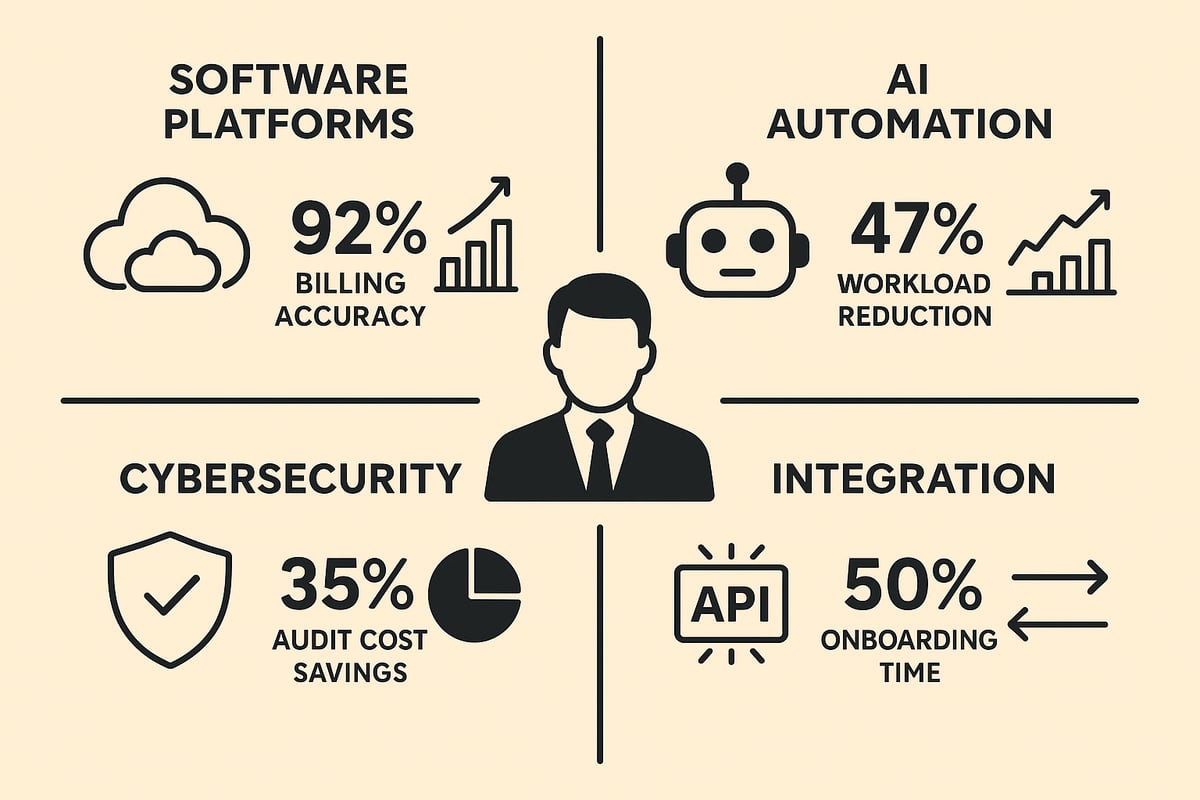
Adopting PSA platforms can improve project billing accuracy by 45 percent. For the managed services consultant, seamless integration across these systems reduces administrative overhead and enhances overall service delivery.
Automation and Artificial Intelligence
Automation and AI are transforming how the managed services consultant approaches daily operations. AI-driven ticketing systems and predictive analytics help consultants resolve incidents before they escalate. Self-healing systems and automated workflows cut down on manual tasks.
Chatbots and virtual assistants now handle routine client support, freeing up time for higher value work. According to IBM, AI can reduce the manual workload by 60 percent. For the managed services consultant, embracing these technologies means more responsive service and increased scalability.
Cybersecurity and Compliance Solutions
Cybersecurity remains a top priority for every managed services consultant. Integrated security platforms provide real-time threat detection and rapid response. Compliance management tools simplify adherence to regulations such as GDPR, HIPAA, and CCPA.
Automated compliance processes reduce audit costs by 30 percent, which is essential as regulatory demands grow. These solutions enable the managed services consultant to protect client data, respond quickly to incidents, and maintain trust in a complex threat landscape.
Integration and Workflow Optimization
Efficient integration is critical for the managed services consultant striving to streamline client operations. API-driven integrations connect disparate client systems, while workflow automation accelerates tasks like onboarding, reporting, and billing.
Integration platforms can cut onboarding time by half, enabling a faster path to value. To stay updated on the latest integration trends and best practices, consultants can leverage Articles and industry insights as a resource hub. This empowers the managed services consultant to deliver seamless, future-ready solutions.
Building a Future-Proof Managed Services Consulting Practice
Adapting to the future means a managed services consultant must build a practice that thrives amid disruption and continuous change. Success in 2026 depends on strategic branding, innovative pricing, top-tier talent, and scalable service offerings. Let us break down the foundational pillars for future-proofing your consulting business.
Branding and Positioning for 2026
A managed services consultant must prioritize branding to stand out in a crowded market. Establishing authority through thought leadership is crucial. Publish industry insights, contribute to reputable publications, and share success stories. Utilizing case studies and client testimonials demonstrates proven value and reliability. According to the Managed Services Market Size and Trends, the sector’s rapid growth makes differentiation essential. Building a strong personal brand helps consultants win three times more business, ensuring their expertise remains top of mind for potential clients.
Pricing Models and Value-Based Billing
Transitioning to value-based pricing is a winning move for any managed services consultant. Moving away from hourly billing, consultants should embrace outcome-based, subscription, or retainer models. These approaches offer predictable revenue and align consultant incentives with client results. Value-based models have been shown to increase margins by 20 percent, making them attractive for both consultants and clients. By clearly defining deliverables and measurable business outcomes, consultants foster trust and long-term relationships, which are key to sustained profitability in the evolving managed services landscape.
Talent Acquisition and Development
Attracting and retaining top talent is a core responsibility for a managed services consultant aiming to future-proof their practice. Focus recruitment on professionals with emerging technology skills, such as AI and automation. Foster a culture of continuous learning through ongoing training, certifications, and mentorship programs. Organizations that invest in upskilling experience 50 percent lower turnover, which directly impacts client satisfaction and service quality. Prioritizing employee growth not only secures a competitive edge but also positions consultants as employers of choice in a dynamic industry.
Scaling and Expanding Service Offerings
To remain competitive, a managed services consultant should continuously explore ways to scale and diversify their service portfolio. Strategic partnerships with complementary firms enable entry into new verticals and geographies. Expanding into integrated solutions, like end-to-end revenue cycle management, unlocks additional value for clients. Consultants who adopt this approach see a 35 percent boost in revenue growth. Embracing innovation and collaboration ensures that consulting practices are agile and responsive to evolving client needs.
[Partnering with Performance-Based Experts: Nero and Associates, Inc.] (https://neroassociates.wpenginepowered.com/)
In an era where every managed services consultant seeks to deliver measurable results, Nero and Associates, Inc. stands out as a performance-driven leader. Specializing in AI, automation, and integration for managed services, their team empowers organizations to eliminate manual processes, optimize human capital, and maximize revenue cycle management. For consultants navigating a rapidly evolving marketplace, partnering with such experts brings a significant competitive edge.
What makes Nero and Associates unique is their performance-based engagement model. Clients face no up-front fees and only pay for actual, quantifiable outcomes. This results-focused approach is proven through real-world case studies, where organizations have consistently saved costs, improved operational efficiency, and empowered their workforce. By aligning their compensation directly with results, Nero and Associates ensures true partnership and trust.
Custom, integrated solutions are at the core of Nero and Associates’ methodology. Each engagement is tailored to the client’s operational and financial goals, ensuring sustainable success. As the managed services market is poised for substantial growth, according to the Managed Services Market Forecast, collaborating with performance-based experts like Nero and Associates is a strategic move for any managed services consultant aiming to thrive in 2026 and beyond.