

When employees leave an organization, whether through resignation, retirement, or termination, the manner in which their departure is managed can significantly impact business operations, data security, and company reputation. A structured offboarding process ensures continuity, protects sensitive information, and maintains positive relationships with departing talent. For professional services firms handling client data and proprietary methodologies, implementing comprehensive offboarding procedures is not optional; it's essential for operational integrity and regulatory compliance.
Why the Offboarding Process Matters More Than Ever
The stakes surrounding employee departures have never been higher. Organizations face mounting cybersecurity threats, stricter data privacy regulations, and increased scrutiny from both clients and regulatory bodies. When employees exit without proper procedures, companies expose themselves to data breaches, knowledge loss, and potential legal liabilities.
Employee offboarding encompasses far more than collecting company property and processing final paychecks. This critical transition phase requires coordinated efforts across human resources, information technology, finance, and departmental leadership. Without systematic protocols, businesses risk losing institutional knowledge, maintaining unnecessary system access for former employees, and creating gaps in client service delivery.
Professional services organizations particularly struggle with offboarding complexities because departing consultants often possess specialized client relationships and technical expertise. The departure of a single team member can disrupt multiple client engagements, delay project timelines, and strain remaining staff members who absorb additional responsibilities.
Research consistently demonstrates that formal offboarding procedures reduce compliance risks and protect company assets. Organizations that implement structured protocols experience fewer security incidents, maintain stronger alumni networks, and preserve valuable intellectual property that might otherwise walk out the door.
Building Your Offboarding Framework
Creating an effective framework requires collaboration between multiple stakeholders and clearly defined responsibilities. The foundation begins with establishing standardized procedures that apply consistently across all employee departures, regardless of position or circumstances.
Timeline and Notification Protocols
Offboarding timelines vary based on role complexity and notice period, but planning should begin immediately upon receiving resignation notice or making termination decisions. For senior consultants managing multiple client accounts, organizations typically need two to four weeks for thorough knowledge transfer and transition planning.
Key timeline considerations include:
- Immediate notification to IT security teams for access monitoring
- HR coordination with payroll for final compensation calculations
- Department heads scheduling knowledge transfer sessions
- Client relationship managers preparing account transition communications
- Facilities coordinating physical security badge deactivation
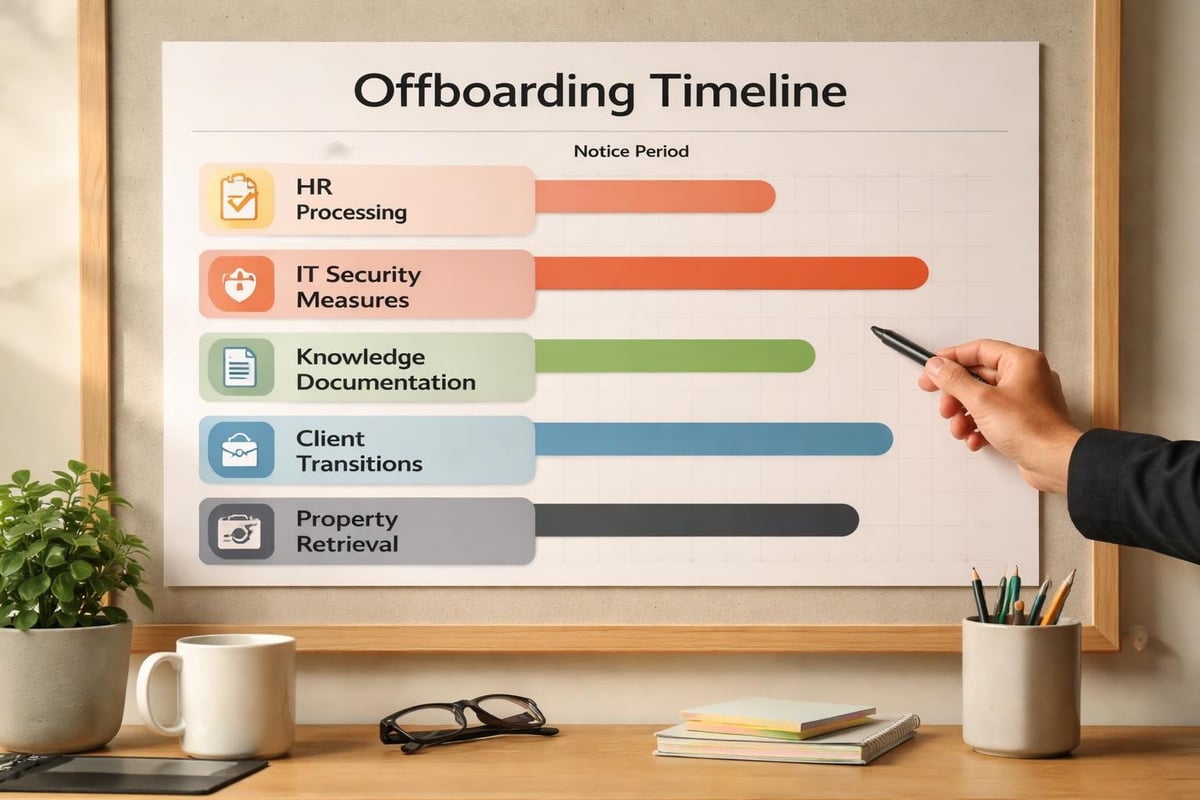
The notification process should maintain confidentiality while ensuring all necessary parties receive timely information. Human resources typically serves as the central coordinator, distributing departure details to relevant departments through secure channels. For organizations utilizing automation tools, workflow triggers can initiate standardized task assignments automatically.
Security and Access Management
Information security represents the highest priority during employee transitions. Departing employees, whether voluntarily or involuntarily, may pose insider threats through data theft, sabotage, or inadvertent security lapses. According to identity management best practices, immediate access revocation prevents unauthorized data access and potential cyberattacks.
A comprehensive security protocol addresses multiple access layers:
| Access Type | Deactivation Timing | Responsible Party | Verification Method |
|---|---|---|---|
| Email and collaboration tools | Final day or immediately | IT Security | Login attempt test |
| Client systems and databases | Final day | IT with client approval | Access log review |
| Physical building access | Final day | Facilities | Badge scan test |
| VPN and remote access | Immediately | Network security | Connection attempt |
| Cloud storage and file shares | Final day | IT Security | Permission audit |
Organizations must also address personal devices accessing company systems through mobile device management platforms. Remote wipe capabilities should be executed for company-owned devices, while personal devices require profile removal to eliminate corporate data access.
Knowledge Transfer and Documentation
The most challenging aspect of any offboarding process involves capturing and transferring institutional knowledge before it disappears. Professional services firms depend heavily on individual expertise, client relationships, and proprietary methodologies that often exist primarily in employees' minds rather than documented systems.
Structured knowledge transfer requires dedicated time and systematic approaches. Departing employees should create comprehensive documentation covering:
- Active project status reports with timelines and dependencies
- Client contact information with relationship history and preferences
- Pending decisions requiring immediate attention
- Undocumented processes and workarounds
- Passwords and access credentials for role-specific tools
Scheduling formal handoff meetings between departing employees and their successors enables real-time knowledge exchange and question clarification. These sessions should be recorded when appropriate, providing reference materials for future consultation. For client-facing roles, consider arranging three-way introductions where departing consultants introduce successors to key client contacts, facilitating relationship continuity.
Legal and Compliance Considerations
Navigating the legal landscape during employee departures requires careful attention to employment laws, contractual obligations, and industry regulations. Professional services organizations handling sensitive client data must maintain strict compliance standards throughout the transition.
Key legal considerations during offboarding include final wage payments, benefits continuation notices, non-compete agreement enforcement, and reference request procedures. Federal and state laws mandate specific timelines for final paychecks, unused vacation payout, and COBRA notification for healthcare continuation.
Intellectual property protection becomes paramount when employees transition to competitors or launch independent practices. Reviewing and reinforcing confidentiality agreements, non-solicitation clauses, and intellectual property ownership during exit discussions helps prevent future disputes. Documentation of these conversations provides evidence of proper procedure should legal questions arise.
Exit Interviews and Feedback Collection
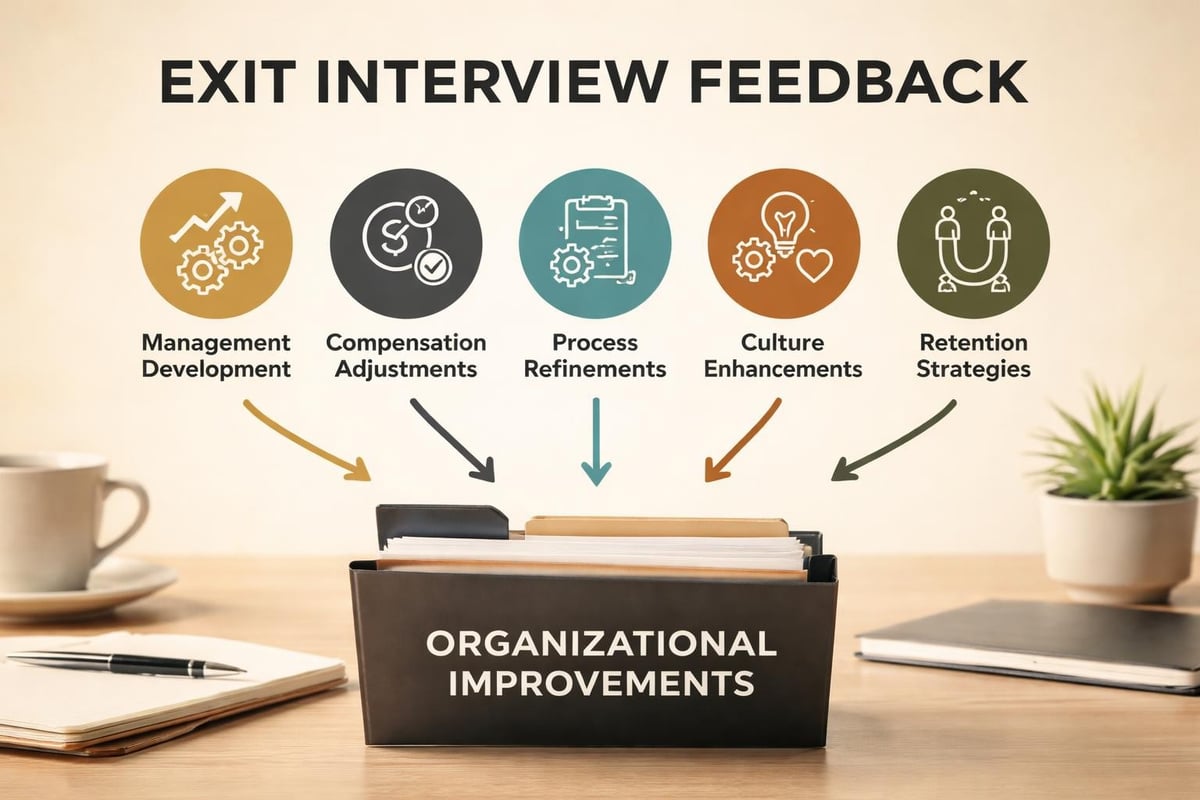
Exit interviews serve dual purposes: gathering honest feedback about organizational culture and identifying improvement opportunities. When conducted properly, these conversations yield valuable insights into management effectiveness, compensation competitiveness, and workplace satisfaction drivers.
Effective exit interview approaches include:
- Using neutral third-party interviewers rather than direct supervisors
- Conducting interviews after resignation notice but before final departure
- Asking open-ended questions about experiences and improvement suggestions
- Recording responses anonymously for pattern analysis
- Sharing aggregated feedback with leadership quarterly
Organizations increasingly utilize digital exit survey platforms that allow departing employees to provide candid feedback anonymously. This approach often generates more honest responses than face-to-face conversations, particularly regarding management concerns or workplace culture issues.
Property and Asset Recovery
Physical and digital asset recovery prevents losses and ensures compliance with corporate policies and client agreements. Professional services consultants often possess multiple company assets including laptops, mobile devices, security tokens, client files, and proprietary software licenses.
Creating itemized checklists specific to each role streamlines the recovery process and reduces oversight. Human resources should maintain master inventory lists tracking all assets assigned to individual employees, updating records as items are distributed or returned.
Digital Asset Management
Beyond physical equipment, digital assets require careful handling during offboarding. Departing employees often maintain personal file stores, email archives, and collaboration platform content that contains proprietary information or client data. IT departments should archive these digital materials before account deactivation, preserving records for regulatory compliance and potential future reference.
Comprehensive offboarding checklists ensure systematic completion of all required tasks, from credential collection to final documentation review. These templates should be customized for different employee levels, with additional requirements for managers, client-facing roles, and system administrators.
Financial Closeout Procedures
Financial finalization extends beyond final paycheck processing to encompass expense reimbursements, benefits reconciliation, and accounting system updates. Payroll teams must calculate prorated bonuses, commission payments, and unused paid time off according to company policies and legal requirements.
Professional services firms billing clients based on consultant time must reconcile all outstanding time entries and expense reports before processing final payments. Unsubmitted billable hours represent lost revenue, making thorough time record reviews essential during the final weeks of employment.
Financial closeout components include:
- Processing final expense reimbursement requests
- Calculating and distributing prorated incentive compensation
- Reconciling company credit card charges and closing accounts
- Updating payroll systems to prevent erroneous future payments
- Providing tax documentation for retirement account distributions
- Canceling direct deposit authorizations
Organizations should establish clear deadlines for expense submission, typically requiring all reimbursement requests within five business days of departure. This timeline allows adequate processing time while memories of business expenses remain fresh.
Maintaining Positive Alumni Relationships
Forward-thinking organizations recognize departing employees as potential future clients, partners, or boomerang hires returning with enhanced skills and experience. The manner in which companies handle separations significantly influences whether former employees become brand ambassadors or vocal critics.
Best practices for offboarding emphasize treating departures as transitions rather than endings, maintaining professional relationships that benefit both parties long-term. Professional services firms particularly benefit from strong alumni networks that generate referrals, partnership opportunities, and industry intelligence.
Creating formal alumni programs keeps former employees engaged with organizational developments and career opportunities. These initiatives might include:
- Quarterly alumni newsletters featuring company updates and success stories
- Annual networking events reconnecting former colleagues
- Alumni-only job boards advertising open positions
- Continued access to professional development resources
- Recognition programs celebrating alumni achievements
LinkedIn groups dedicated to company alumni facilitate ongoing connections and provide platforms for former employees to maintain professional relationships. Organizations can leverage these networks for recruitment referrals, business development leads, and industry trend insights.
Technology and Automation Integration
Modern offboarding processes increasingly rely on integrated technology platforms that automate routine tasks and ensure procedural consistency. Human capital management systems can trigger automated workflows upon employee status changes, distributing tasks to responsible parties and tracking completion progress.
Automation particularly benefits organizations managing high employee volumes or distributed workforces where manual coordination becomes unwieldy. Streamlining offboarding through technology reduces administrative burden, minimizes human error, and ensures compliance with established protocols.
System Integration Opportunities
| Business System | Offboarding Function | Automation Capability |
|---|---|---|
| HRIS platform | Status tracking and task assignment | Automated workflow initiation |
| Email system | Account archiving and forwarding setup | Scheduled deactivation |
| Identity management | Access revocation across applications | Single sign-on removal |
| Asset tracking | Equipment recovery monitoring | Return verification alerts |
| Payroll system | Final payment calculation | Automatic tax withholding |
Artificial intelligence applications enhance offboarding through predictive analytics identifying flight risk employees, enabling proactive retention interventions. Natural language processing analyzes exit interview transcripts, surfacing common themes and actionable improvement opportunities without manual review.
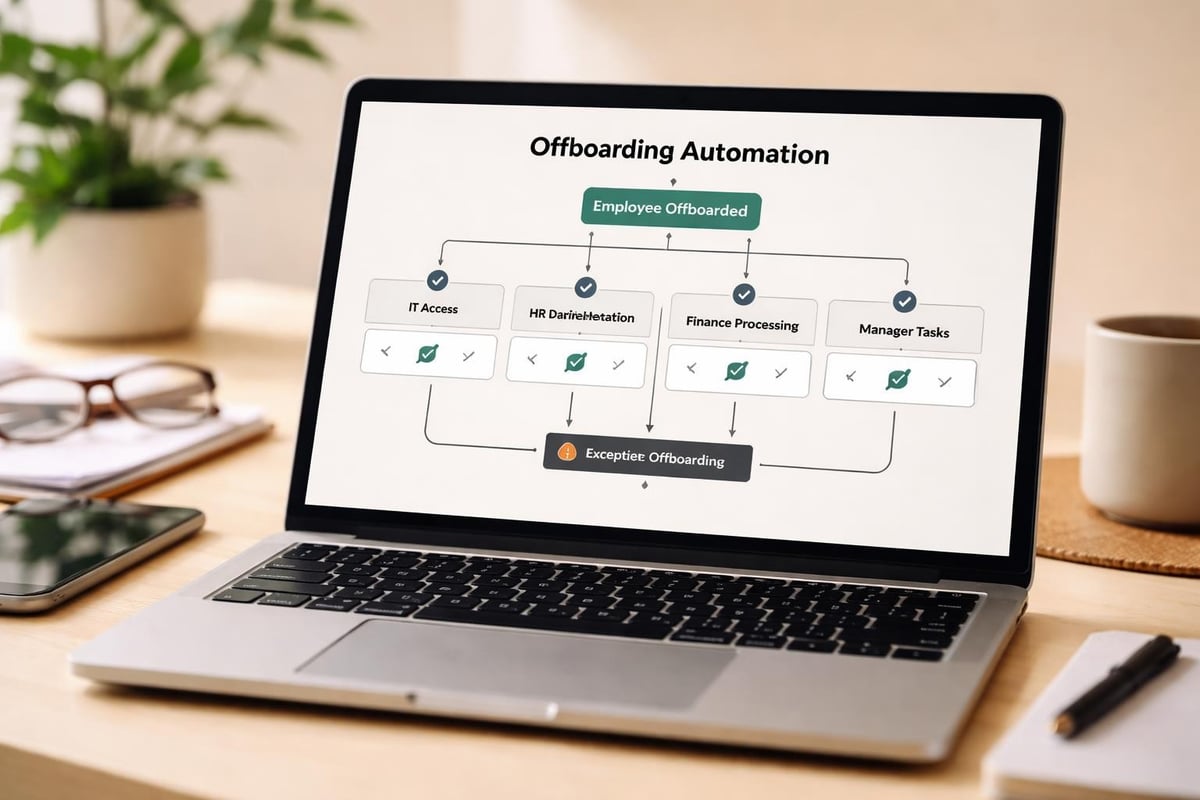
For professional services consultancies implementing automation solutions, offboarding represents an ideal process for demonstrating efficiency gains and error reduction. Organizations can eliminate thousands of manual hours annually by systematizing these repetitive procedures, freeing human resources professionals to focus on strategic talent initiatives.
Manager Responsibilities and Support
Department managers and team leaders play critical roles in offboarding success, yet they often receive insufficient guidance and support for navigating these sensitive transitions. When consultants announce departures, managers must balance emotional responses with procedural requirements while maintaining team morale and client service continuity.
Providing managers with comprehensive offboarding guides and templates reduces stress and ensures consistent employee experiences. These resources should outline specific responsibilities, recommended conversation approaches, and escalation procedures for complex situations.
Managers typically handle:
- Conducting initial resignation conversations with empathy and professionalism
- Coordinating knowledge transfer schedules with incoming replacements
- Communicating departures to team members at appropriate times
- Redistributing responsibilities among remaining staff members
- Participating in exit interviews when requested by human resources
- Maintaining team productivity and morale during transition periods
Training programs preparing managers for offboarding conversations improve outcomes significantly. Role-playing exercises help leaders practice responding to resignation announcements, negotiating notice periods, and addressing counter-offer requests professionally.
Cross-Functional Coordination
Successful offboarding requires synchronized efforts across multiple departments, each contributing specialized expertise to the overall process. Without clear communication channels and defined responsibilities, tasks fall through cracks, creating compliance gaps and operational disruptions.
Establishing an offboarding task force with representatives from human resources, information technology, finance, legal, and facilities ensures comprehensive perspective during protocol development. This cross-functional team can identify interdependencies, establish realistic timelines, and resolve conflicting requirements.
Weekly offboarding status meetings during departure transitions keep all stakeholders informed and aligned. These brief check-ins allow teams to report progress, escalate obstacles, and adjust plans based on emerging circumstances. For remote teams, virtual collaboration platforms facilitate real-time coordination despite geographic distribution.
Continuous Improvement and Metrics
Like any business process, offboarding benefits from regular assessment and refinement based on performance metrics and stakeholder feedback. Organizations should establish key performance indicators measuring efficiency, compliance, and experience quality.
Relevant offboarding metrics include:
- Average days to complete full offboarding cycle
- Percentage of departures completing all checklist items
- Security incidents attributed to incomplete access revocation
- Alumni rehire rates indicating positive departure experiences
- Exit interview participation rates and satisfaction scores
- Cost per offboarding event including administrative time
Quarterly reviews of offboarding data reveal trends, identify bottlenecks, and highlight improvement opportunities. Comparing metrics across departments can surface best practices worth replicating organization-wide or problematic patterns requiring intervention.
Soliciting feedback from recently departed employees through follow-up surveys provides external perspective on process effectiveness. Questions might address clarity of instructions, responsiveness of support staff, and overall departure experience satisfaction. This input directly informs protocol refinements that enhance future employee experiences.
Industry-Specific Considerations
Professional services organizations face unique offboarding challenges stemming from client relationships, billable hour models, and knowledge-intensive work. When senior consultants depart, they often take with them years of client history, technical expertise, and relationship capital that cannot be easily replaced.
Client communication strategies become particularly important during consultant transitions. Proactive outreach explaining departures and introducing replacement team members helps maintain trust and service continuity. For high-value accounts, consider arranging transition meetings where departing and incoming consultants jointly present continuity plans, demonstrating organizational commitment to seamless service.
Consulting firms should also address non-compete and non-solicitation agreements during offboarding, ensuring departing employees understand post-employment restrictions. Legal compliance during employee transitions protects client relationships and proprietary methodologies from competitive threats.
Project-based work models require special attention to milestone timing and deliverable ownership. Ideally, consultants should complete current project phases before departing, but this isn't always possible. Establishing clear handoff protocols for in-progress work prevents client dissatisfaction and revenue recognition issues.
For organizations serving mid-market companies, offboarding efficiency directly impacts operational agility and resource allocation. Streamlined processes allow businesses to maintain momentum during personnel changes without sacrificing service quality or financial performance.
Risk Mitigation Strategies
Every employee departure introduces risks that organizations must actively manage through thoughtful planning and proactive measures. Beyond security threats and knowledge loss, companies face reputational risks, client retention challenges, and team morale impacts.
Creating contingency plans for critical role departures ensures business continuity even when unexpected resignations occur. These plans identify backup personnel, document essential procedures, and establish escalation protocols for urgent situations. Regular updates keep contingency plans current as roles evolve and team compositions change.
Security best practices during offboarding emphasize immediate action on access revocation, particularly for high-privilege accounts with administrative capabilities. Delayed deactivation creates windows for potential data exfiltration or system compromise, whether intentional or accidental.
Monitoring departing employee activities during notice periods provides early warning of suspicious behavior without creating hostile work environments. Unusual data downloads, excessive printing, or unauthorized system access should trigger immediate security team investigation and potential access restriction.
The Human Element
While checklists and automation streamline logistics, remembering the human dimension of departures ensures respectful, dignified transitions for all parties. Employees dedicate significant portions of their lives to organizational success, and their contributions deserve recognition regardless of departure circumstances.
Simple gestures like farewell gatherings, personalized thank-you notes from leadership, or small departure gifts demonstrate appreciation and leave lasting positive impressions. These investments in relationship maintenance pay dividends when former employees recommend the organization to talented peers or return as clients.
Treating departing employees fairly and respectfully also signals to remaining staff how the organization values people. Teams closely observe how leadership handles departures, drawing conclusions about company culture and their own future treatment. Negative offboarding experiences can trigger retention concerns among high performers who question their long-term prospects.
Organizations serious about employee experience must apply the same attention to offboarding that they devote to recruiting and onboarding. This holistic lifecycle approach recognizes that every interaction shapes employer brand and influences future talent attraction success.
For those seeking to optimize their offboarding process and broader human capital management practices, connecting with experienced consultants provides valuable expertise and implementation support. Professional guidance helps organizations identify improvement opportunities, select appropriate technologies, and develop customized protocols aligned with business objectives.
Implementing a comprehensive offboarding process protects organizational assets, maintains operational continuity, and preserves valuable professional relationships that extend beyond employment tenure. By systematically addressing security, knowledge transfer, compliance, and human elements, businesses transform potentially disruptive departures into manageable transitions. Nero and Associates, Inc. helps professional services organizations streamline their human capital management processes through automation integration and strategic consulting, enabling them to reduce administrative burden while improving employee experiences throughout the entire employment lifecycle.