

On-Demand Pay: Transform Employee Financial Wellness

Share on Facebook
Share on X
Share on LinkedIn

The traditional two-week pay cycle no longer meets the financial realities employees face in 2026. As living costs continue to rise and unexpected expenses become increasingly common, workers need more flexible access to their earned wages. On-demand pay represents a fundamental shift in how organizations approach compensation, enabling employees to access their earned wages before the standard payday. This innovation in human capital management delivers measurable benefits for both workforce financial wellness and organizational performance metrics.

Understanding On-Demand Pay in Modern Workplaces

On-demand pay, also known as earned wage access, allows employees to withdraw a portion of their already-earned wages before their scheduled payday. Unlike traditional payday loans or advances, this system provides workers access to money they have already earned through completed work hours.

The mechanism operates through integrated payroll systems that track employee hours in real-time. When an employee completes a shift or workday, the system calculates their earned wages immediately. Employees can then request access to a percentage of these earnings through a mobile app or web portal, typically receiving funds within hours or even minutes.

The Technology Behind Wage Access Solutions

Modern on-demand pay platforms integrate directly with existing timekeeping and payroll infrastructure. These systems leverage automation to calculate available earnings, process requests, and transfer funds while maintaining complete payroll accuracy for standard pay periods.

Key technological components include:

  • Real-time hours tracking and wage calculation engines
  • Secure banking integrations for immediate fund transfers
  • Automated reconciliation systems that sync with payroll cycles
  • Mobile-first interfaces for employee accessibility
  • Compliance monitoring tools for regulatory adherence

The integration capabilities determine implementation success. Organizations with sophisticated human capital management systems can deploy these solutions with minimal disruption to existing processes.
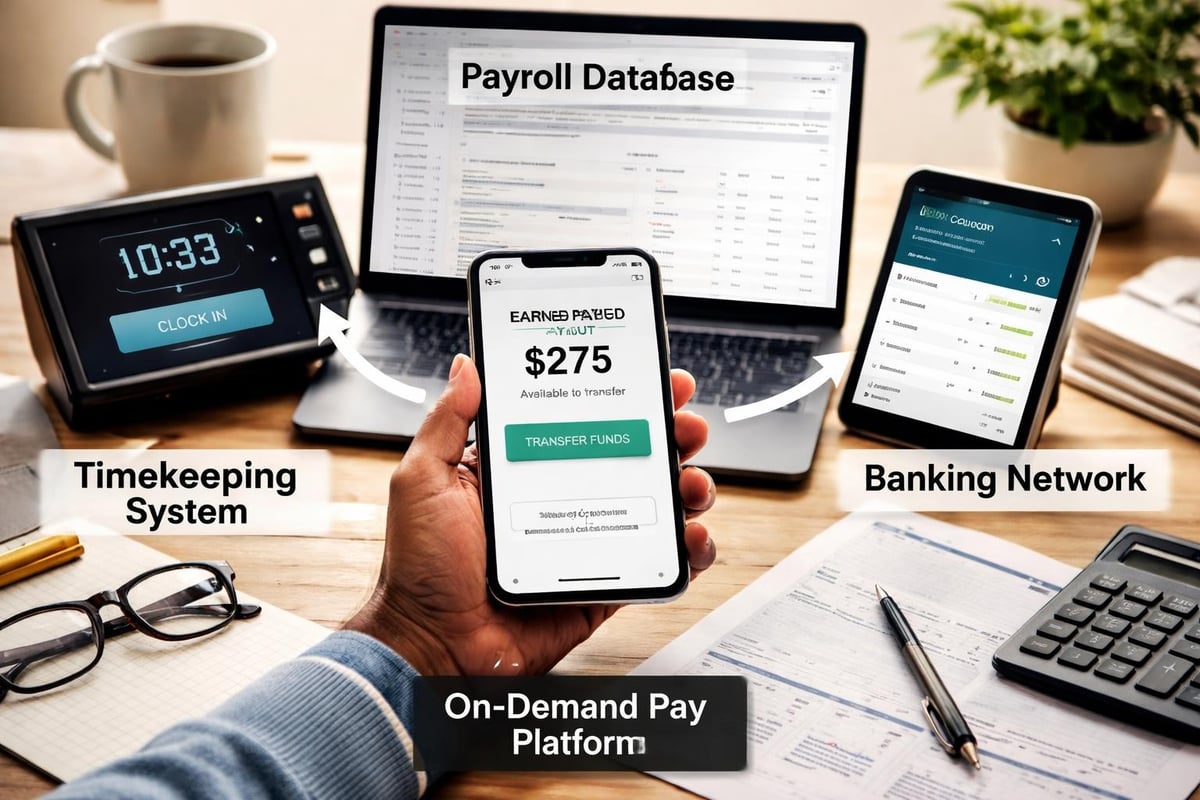
On-demand pay technology integration

Financial Wellness Impact on Employee Performance

Research consistently demonstrates that on-demand pay enhances employee financial wellness and motivation, creating measurable improvements in workplace engagement. Financial stress directly affects productivity, with workers spending significant work time managing personal financial concerns.

When employees access earned wages as needed, they reduce reliance on high-interest payday loans, overdraft fees, and credit card debt. This shift creates a positive financial cycle rather than a debt spiral. Studies show that workers using earned wage access save an average of $1,200 annually in fees and interest charges alone.

Financial Impact Category Without On-Demand Pay With On-Demand Pay
Average Overdraft Fees Annually $450 $120
Payday Loan Usage 37% of employees 8% of employees
Credit Card Interest (Annual) $890 $340
Financial Stress Levels High (68%) Moderate (29%)

Quantifiable Performance Improvements

Organizations implementing earned wage access report substantial improvements in key performance indicators. Attendance rates improve by an average of 13% as employees face fewer financial emergencies that disrupt work schedules. Turnover decreases by 19-27% in hourly positions where financial stress typically drives job changes.

The benefits of on-demand pay for employers extend beyond retention metrics. Productivity measurements show 8-12% improvements when workers experience reduced financial anxiety. These gains translate directly to bottom-line improvements for service organizations.

Implementation Strategies for Professional Services Firms

Professional services organizations face unique considerations when deploying on-demand pay solutions. The complexity of project-based billing, variable compensation structures, and professional employee classifications requires thoughtful implementation planning.

Planning Your Deployment Approach

  1. Assess current payroll infrastructure compatibility with earned wage access platforms
  2. Identify employee segments most likely to benefit from immediate wage access
  3. Evaluate vendor solutions for integration capabilities and compliance features
  4. Design communication strategies to educate employees about responsible usage
  5. Establish metrics for measuring financial wellness and operational impact
  6. Create governance policies for access limits and usage guidelines
  7. Plan rollout phases starting with pilot groups before organization-wide deployment

The implementation timeline typically spans 60-90 days for mid-sized organizations. Larger enterprises with complex payroll systems may require 120-150 days for full integration and testing.

Critical success factors include:

  • Executive sponsorship from finance and human resources leadership
  • Clear communication about how the benefit differs from loans or advances
  • Integration testing to ensure payroll accuracy remains intact
  • Employee education on financial wellness principles
  • Ongoing monitoring of usage patterns and impact metrics
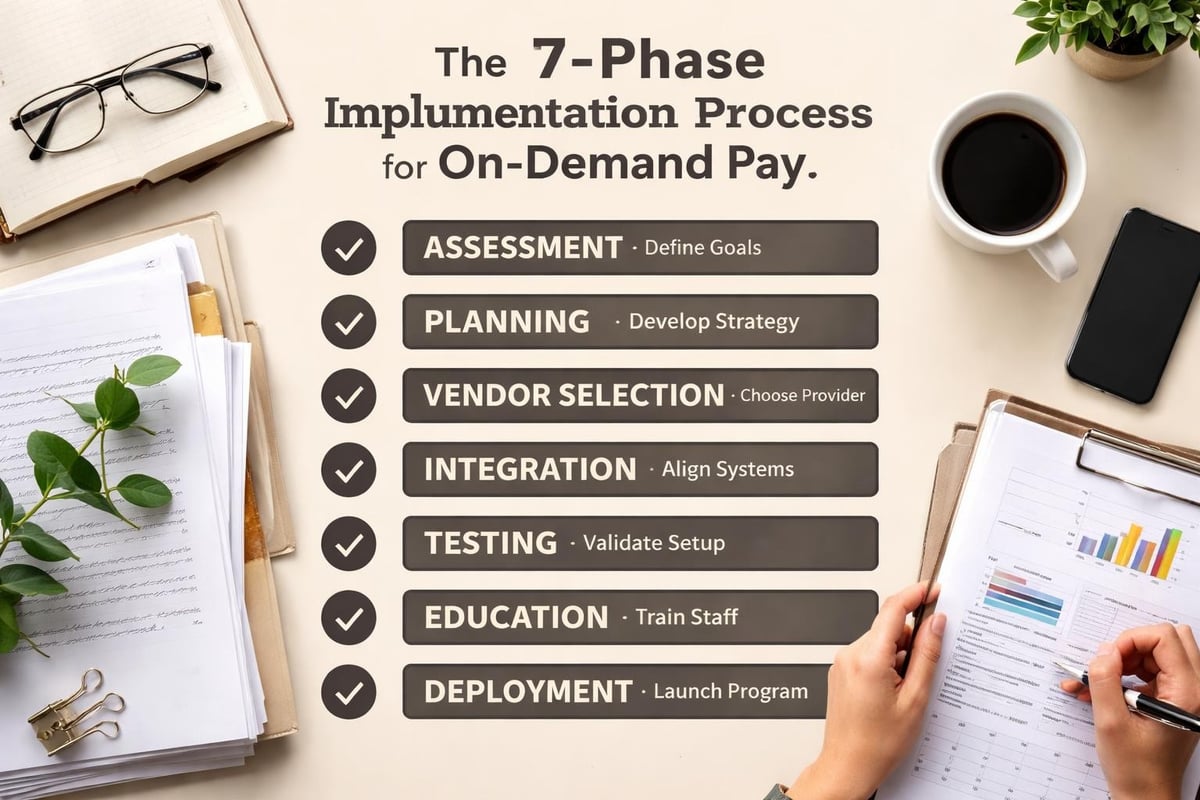
On-demand pay implementation roadmap

Navigating Compliance and Regulatory Considerations

The regulatory landscape surrounding on-demand pay continues to evolve in 2026. Organizations must navigate federal wage and hour laws, state-specific earned wage access regulations, and financial services compliance requirements.

Common challenges with on-demand pay center on tax reconciliation, compliance documentation, and proper classification of the service. The Consumer Financial Protection Bureau maintains guidelines distinguishing earned wage access from credit products, which determines regulatory obligations.

Tax and Payroll Reconciliation Requirements

Tax withholding creates complexity when employees access wages before standard pay periods. Systems must accurately calculate federal, state, and local tax obligations on both the advanced amount and the remaining balance paid on the regular schedule.

Solutions involve sophisticated reconciliation engines that track:

  • Gross wages earned per pay period
  • Advanced amounts already disbursed
  • Remaining balance for standard payday
  • Tax withholdings allocated across both disbursements
  • Benefit deductions and garnishments

Professional services firms must ensure their on-demand pay provider maintains accurate year-end tax documentation, including proper W-2 reporting that reflects total annual compensation regardless of distribution timing.

Cost-Benefit Analysis for Organizations

The financial case for on-demand pay involves both direct costs and substantial returns on investment. Understanding the promise and potential pitfalls enables organizations to make informed decisions based on their specific workforce dynamics.

Direct Implementation Costs

Setup and integration expenses:

  • Platform licensing fees: $2,500-$15,000 annually depending on employee count
  • Integration costs: $5,000-$25,000 for complex payroll systems
  • Employee communication and education: $1,500-$5,000
  • Ongoing administration: 10-15 hours monthly for reconciliation and support

Return on Investment Metrics

Organizations typically achieve ROI within 6-9 months through reduced turnover costs alone. For a 200-employee professional services firm with 20% annual turnover, the calculations reveal compelling economics.

Cost/Benefit Category Annual Impact
Turnover Reduction (5 percentage points) $125,000 saved
Productivity Improvement (8%) $180,000 value
Recruitment Cost Savings $45,000 saved
Implementation and Operating Costs ($32,000)
Net Annual Benefit $318,000

The significant financial shift represented by earned wage access extends across industries, with professional services organizations particularly positioned to benefit from improved talent retention and engagement.

Designing Employee-Centric Access Policies

Effective on-demand pay programs balance employee flexibility with responsible financial management guidance. Organizations must establish clear policies that protect both workers and operational requirements.

Access Limits and Frequency Controls

Most successful implementations limit earned wage access to 40-50% of current period earnings. This approach ensures sufficient funds remain for tax withholdings, benefit deductions, and other payroll obligations. Frequency limits typically allow 2-4 access transactions per pay period.

Policy considerations include:

  • Maximum percentage of earned wages available for early access
  • Transaction frequency limits to encourage planning rather than impulse use
  • Minimum threshold amounts to reduce administrative processing
  • Blackout periods around standard paydays for reconciliation
  • Education requirements before first-time usage

These guardrails help employees develop better financial planning habits while accessing emergency funds when genuinely needed. Research shows that on-demand pay helps workers manage bills effectively and avoid debt cycles when combined with financial literacy resources.

On-demand pay usage guidelines

Integration with Broader Financial Wellness Initiatives

On-demand pay delivers maximum impact when positioned as one component within a comprehensive financial wellness strategy. Organizations that combine earned wage access with education, planning tools, and benefit programs create synergistic effects.

Building a Complete Financial Wellness Ecosystem

Complementary program elements include:

  1. Financial literacy education covering budgeting, saving, and debt management
  2. Emergency savings programs that encourage building reserves
  3. Student loan repayment assistance for professional employees
  4. Retirement planning resources and enhanced matching programs
  5. Access to financial coaching and counseling services

Professional services firms can partner with consultancies like Nero and Associates, Inc. to design integrated human capital management solutions that address the full spectrum of employee financial health while optimizing operational efficiency.

The strategic value emerges when organizations view compensation timing flexibility as part of total rewards architecture rather than an isolated benefit. This perspective enables better alignment between employee needs and organizational objectives.

Competitive Advantage in Talent Markets

The 2026 talent market demands differentiated employee value propositions. On-demand pay represents a low-cost, high-impact benefit that distinguishes employers in competitive recruiting environments, particularly for roles where financial stress traditionally impacts retention.

Recruitment and Retention Impact Data

Organizations offering earned wage access report 27% faster time-to-fill for hourly positions and 31% more applications per opening. For professional roles, the benefit signals broader organizational commitment to employee wellbeing, enhancing employer brand perception.

Talent market advantages include:

  • Differentiation in job postings and recruitment materials
  • Improved offer acceptance rates for competitive candidates
  • Enhanced employee referral program participation
  • Positive employer review site ratings related to benefits
  • Reduced recruiting costs through improved retention

The importance of on-demand pay for employers and employees continues growing as younger workforce segments prioritize flexibility and financial wellness support in employment decisions.

Technology Selection and Vendor Evaluation

Choosing the right on-demand pay platform requires thorough evaluation of technical capabilities, compliance features, and long-term scalability. The vendor landscape includes specialized earned wage access providers, comprehensive HCM platforms with embedded features, and payroll processors offering add-on modules.

Essential Platform Capabilities

Evaluation Criterion Why It Matters Questions to Ask
Payroll Integration Determines implementation complexity Which HCM/payroll systems integrate natively?
Compliance Management Reduces regulatory risk How does the platform handle multi-state compliance?
Mobile Experience Drives employee adoption What is the mobile app rating and functionality?
Reporting Analytics Enables impact measurement What usage and financial wellness metrics are available?
Support Services Ensures smooth operation What employer and employee support is included?

The evaluation process should include pilot testing with representative employee groups. This approach reveals user experience issues, integration challenges, and operational considerations before full deployment.

Measuring Success and Optimizing Performance

Effective on-demand pay programs require ongoing monitoring and optimization based on usage patterns, employee feedback, and organizational impact metrics. Establishing clear measurement frameworks enables continuous improvement and ROI validation.

Key Performance Indicators to Track

Employee engagement metrics:

  • Adoption rate (percentage of eligible employees using the benefit)
  • Average transaction frequency and amount
  • User satisfaction scores and feedback themes
  • Financial wellness survey results

Organizational impact metrics:

  • Turnover rates for users versus non-users
  • Absenteeism and attendance pattern changes
  • Recruitment metrics (time-to-fill, offer acceptance rates)
  • Employee productivity measurements

Financial and operational metrics:

  • Total program costs including platform fees and administration
  • Reconciliation accuracy and payroll processing time
  • Support ticket volume and resolution time
  • ROI calculations based on retention and productivity gains

Organizations should review these metrics quarterly, adjusting policies and communication strategies based on emerging patterns. High-frequency usage may indicate either strong benefit value or potential financial distress requiring additional support resources.

Addressing Common Misconceptions and Concerns

Despite growing adoption, on-demand pay still faces misconceptions that can hinder implementation decisions. Understanding and addressing these concerns enables more informed strategic discussions.

"This is Just Another Form of Debt"

The fundamental distinction lies in access to already-earned wages rather than borrowed future income. Employees receive money they have legitimately earned through completed work, eliminating the debt cycle associated with payday loans. Proper vendor selection ensures platforms operate as wage access rather than credit products.

"It Will Complicate Our Payroll Processing"

Modern platforms integrate seamlessly with existing payroll systems, automating reconciliation and maintaining accuracy. The initial integration requires planning and testing, but ongoing administration typically adds minimal burden when properly implemented.

"Employees Will Become Dependent and Never Plan Ahead"

Research shows opposite effects when combined with financial education. Most employees use earned wage access for genuine emergencies rather than routine expenses. Usage typically decreases over time as workers build emergency savings and improve financial planning skills.

Supporting evidence demonstrates:

  • 73% of users access funds for unexpected expenses only
  • Average usage frequency decreases 40% after six months
  • Emergency savings account balances increase 56% among regular users
  • Financial stress self-reporting improves significantly

Understanding the pros and cons of on-demand pay enables balanced implementation that maximizes benefits while mitigating potential drawbacks through proper program design.

Future Trends Shaping Earned Wage Access

The on-demand pay landscape continues evolving rapidly with technological advances, regulatory developments, and changing workforce expectations. Organizations planning implementations should consider emerging trends that will shape future capabilities.

Artificial Intelligence and Predictive Analytics

Advanced platforms now incorporate AI-driven insights that help employees optimize their financial decisions. Predictive analytics identify patterns suggesting financial distress, enabling proactive support interventions. Machine learning algorithms personalize recommendations for optimal wage access timing and amounts based on individual spending patterns and upcoming obligations.

Embedded Financial Services Expansion

The convergence of earned wage access with broader financial services creates comprehensive solutions. Platforms increasingly offer integrated savings programs, budgeting tools, bill payment services, and even investment options. This evolution transforms simple wage access into complete financial wellness ecosystems.

Regulatory Standardization Efforts

As adoption accelerates, regulatory frameworks become more standardized across states. Industry associations work with government agencies to establish clear guidelines distinguishing earned wage access from regulated credit products. This standardization reduces compliance complexity and enables broader adoption.

Emerging capabilities to watch:

  • Real-time financial coaching through AI-powered chatbots
  • Automated savings programs triggered by wage access usage
  • Integration with gig economy and multiple employer scenarios
  • Blockchain-based instant settlement technologies
  • Predictive cash flow modeling for employees

Organizations implementing on-demand pay today position themselves to leverage these advanced capabilities as platforms evolve, creating sustained competitive advantages in talent management and employee satisfaction.


On-demand pay represents a strategic investment in employee financial wellness that delivers measurable returns through improved retention, productivity, and organizational performance. As workforce expectations continue evolving, earned wage access transitions from innovative benefit to competitive necessity. Nero and Associates, Inc. helps organizations implement comprehensive human capital management solutions that integrate on-demand pay with broader financial wellness initiatives, automation, and performance optimization strategies. Our consultancy approach ensures implementations align with your operational requirements while maximizing employee benefit and business impact.

On-Demand Pay: Transform Employee Financial Wellness

The traditional two-week pay cycle no longer meets the financial realities employees face in 2026. As living costs continue to rise and unexpected expenses become increasingly common, workers need more flexible access to their earned wages. On-demand pay represents a fundamental shift in how organizations approach compensation, enabling employees to access their earned wages before the standard payday. This innovation in human capital management delivers measurable benefits for both workforce financial wellness and organizational performance metrics.

Understanding On-Demand Pay in Modern Workplaces

On-demand pay, also known as earned wage access, allows employees to withdraw a portion of their already-earned wages before their scheduled payday. Unlike traditional payday loans or advances, this system provides workers access to money they have already earned through completed work hours.

The mechanism operates through integrated payroll systems that track employee hours in real-time. When an employee completes a shift or workday, the system calculates their earned wages immediately. Employees can then request access to a percentage of these earnings through a mobile app or web portal, typically receiving funds within hours or even minutes.

The Technology Behind Wage Access Solutions

Modern on-demand pay platforms integrate directly with existing timekeeping and payroll infrastructure. These systems leverage automation to calculate available earnings, process requests, and transfer funds while maintaining complete payroll accuracy for standard pay periods.

Key technological components include:

  • Real-time hours tracking and wage calculation engines
  • Secure banking integrations for immediate fund transfers
  • Automated reconciliation systems that sync with payroll cycles
  • Mobile-first interfaces for employee accessibility
  • Compliance monitoring tools for regulatory adherence

The integration capabilities determine implementation success. Organizations with sophisticated human capital management systems can deploy these solutions with minimal disruption to existing processes.

On-demand pay technology integration

Financial Wellness Impact on Employee Performance

Research consistently demonstrates that on-demand pay enhances employee financial wellness and motivation, creating measurable improvements in workplace engagement. Financial stress directly affects productivity, with workers spending significant work time managing personal financial concerns.

When employees access earned wages as needed, they reduce reliance on high-interest payday loans, overdraft fees, and credit card debt. This shift creates a positive financial cycle rather than a debt spiral. Studies show that workers using earned wage access save an average of $1,200 annually in fees and interest charges alone.

Financial Impact Category Without On-Demand Pay With On-Demand Pay
Average Overdraft Fees Annually $450 $120
Payday Loan Usage 37% of employees 8% of employees
Credit Card Interest (Annual) $890 $340
Financial Stress Levels High (68%) Moderate (29%)

Quantifiable Performance Improvements

Organizations implementing earned wage access report substantial improvements in key performance indicators. Attendance rates improve by an average of 13% as employees face fewer financial emergencies that disrupt work schedules. Turnover decreases by 19-27% in hourly positions where financial stress typically drives job changes.

The benefits of on-demand pay for employers extend beyond retention metrics. Productivity measurements show 8-12% improvements when workers experience reduced financial anxiety. These gains translate directly to bottom-line improvements for service organizations.

Implementation Strategies for Professional Services Firms

Professional services organizations face unique considerations when deploying on-demand pay solutions. The complexity of project-based billing, variable compensation structures, and professional employee classifications requires thoughtful implementation planning.

Planning Your Deployment Approach

  1. Assess current payroll infrastructure compatibility with earned wage access platforms
  2. Identify employee segments most likely to benefit from immediate wage access
  3. Evaluate vendor solutions for integration capabilities and compliance features
  4. Design communication strategies to educate employees about responsible usage
  5. Establish metrics for measuring financial wellness and operational impact
  6. Create governance policies for access limits and usage guidelines
  7. Plan rollout phases starting with pilot groups before organization-wide deployment

The implementation timeline typically spans 60-90 days for mid-sized organizations. Larger enterprises with complex payroll systems may require 120-150 days for full integration and testing.

Critical success factors include:

  • Executive sponsorship from finance and human resources leadership
  • Clear communication about how the benefit differs from loans or advances
  • Integration testing to ensure payroll accuracy remains intact
  • Employee education on financial wellness principles
  • Ongoing monitoring of usage patterns and impact metrics

On-demand pay implementation roadmap

Navigating Compliance and Regulatory Considerations

The regulatory landscape surrounding on-demand pay continues to evolve in 2026. Organizations must navigate federal wage and hour laws, state-specific earned wage access regulations, and financial services compliance requirements.

Common challenges with on-demand pay center on tax reconciliation, compliance documentation, and proper classification of the service. The Consumer Financial Protection Bureau maintains guidelines distinguishing earned wage access from credit products, which determines regulatory obligations.

Tax and Payroll Reconciliation Requirements

Tax withholding creates complexity when employees access wages before standard pay periods. Systems must accurately calculate federal, state, and local tax obligations on both the advanced amount and the remaining balance paid on the regular schedule.

Solutions involve sophisticated reconciliation engines that track:

  • Gross wages earned per pay period
  • Advanced amounts already disbursed
  • Remaining balance for standard payday
  • Tax withholdings allocated across both disbursements
  • Benefit deductions and garnishments

Professional services firms must ensure their on-demand pay provider maintains accurate year-end tax documentation, including proper W-2 reporting that reflects total annual compensation regardless of distribution timing.

Cost-Benefit Analysis for Organizations

The financial case for on-demand pay involves both direct costs and substantial returns on investment. Understanding the promise and potential pitfalls enables organizations to make informed decisions based on their specific workforce dynamics.

Direct Implementation Costs

Setup and integration expenses:

  • Platform licensing fees: $2,500-$15,000 annually depending on employee count
  • Integration costs: $5,000-$25,000 for complex payroll systems
  • Employee communication and education: $1,500-$5,000
  • Ongoing administration: 10-15 hours monthly for reconciliation and support

Return on Investment Metrics

Organizations typically achieve ROI within 6-9 months through reduced turnover costs alone. For a 200-employee professional services firm with 20% annual turnover, the calculations reveal compelling economics.

Cost/Benefit Category Annual Impact
Turnover Reduction (5 percentage points) $125,000 saved
Productivity Improvement (8%) $180,000 value
Recruitment Cost Savings $45,000 saved
Implementation and Operating Costs ($32,000)
Net Annual Benefit $318,000

The significant financial shift represented by earned wage access extends across industries, with professional services organizations particularly positioned to benefit from improved talent retention and engagement.

Designing Employee-Centric Access Policies

Effective on-demand pay programs balance employee flexibility with responsible financial management guidance. Organizations must establish clear policies that protect both workers and operational requirements.

Access Limits and Frequency Controls

Most successful implementations limit earned wage access to 40-50% of current period earnings. This approach ensures sufficient funds remain for tax withholdings, benefit deductions, and other payroll obligations. Frequency limits typically allow 2-4 access transactions per pay period.

Policy considerations include:

  • Maximum percentage of earned wages available for early access
  • Transaction frequency limits to encourage planning rather than impulse use
  • Minimum threshold amounts to reduce administrative processing
  • Blackout periods around standard paydays for reconciliation
  • Education requirements before first-time usage

These guardrails help employees develop better financial planning habits while accessing emergency funds when genuinely needed. Research shows that on-demand pay helps workers manage bills effectively and avoid debt cycles when combined with financial literacy resources.

On-demand pay usage guidelines

Integration with Broader Financial Wellness Initiatives

On-demand pay delivers maximum impact when positioned as one component within a comprehensive financial wellness strategy. Organizations that combine earned wage access with education, planning tools, and benefit programs create synergistic effects.

Building a Complete Financial Wellness Ecosystem

Complementary program elements include:

  1. Financial literacy education covering budgeting, saving, and debt management
  2. Emergency savings programs that encourage building reserves
  3. Student loan repayment assistance for professional employees
  4. Retirement planning resources and enhanced matching programs
  5. Access to financial coaching and counseling services

Professional services firms can partner with consultancies like Nero and Associates, Inc. to design integrated human capital management solutions that address the full spectrum of employee financial health while optimizing operational efficiency.

The strategic value emerges when organizations view compensation timing flexibility as part of total rewards architecture rather than an isolated benefit. This perspective enables better alignment between employee needs and organizational objectives.

Competitive Advantage in Talent Markets

The 2026 talent market demands differentiated employee value propositions. On-demand pay represents a low-cost, high-impact benefit that distinguishes employers in competitive recruiting environments, particularly for roles where financial stress traditionally impacts retention.

Recruitment and Retention Impact Data

Organizations offering earned wage access report 27% faster time-to-fill for hourly positions and 31% more applications per opening. For professional roles, the benefit signals broader organizational commitment to employee wellbeing, enhancing employer brand perception.

Talent market advantages include:

  • Differentiation in job postings and recruitment materials
  • Improved offer acceptance rates for competitive candidates
  • Enhanced employee referral program participation
  • Positive employer review site ratings related to benefits
  • Reduced recruiting costs through improved retention

The importance of on-demand pay for employers and employees continues growing as younger workforce segments prioritize flexibility and financial wellness support in employment decisions.

Technology Selection and Vendor Evaluation

Choosing the right on-demand pay platform requires thorough evaluation of technical capabilities, compliance features, and long-term scalability. The vendor landscape includes specialized earned wage access providers, comprehensive HCM platforms with embedded features, and payroll processors offering add-on modules.

Essential Platform Capabilities

Evaluation Criterion Why It Matters Questions to Ask
Payroll Integration Determines implementation complexity Which HCM/payroll systems integrate natively?
Compliance Management Reduces regulatory risk How does the platform handle multi-state compliance?
Mobile Experience Drives employee adoption What is the mobile app rating and functionality?
Reporting Analytics Enables impact measurement What usage and financial wellness metrics are available?
Support Services Ensures smooth operation What employer and employee support is included?

The evaluation process should include pilot testing with representative employee groups. This approach reveals user experience issues, integration challenges, and operational considerations before full deployment.

Measuring Success and Optimizing Performance

Effective on-demand pay programs require ongoing monitoring and optimization based on usage patterns, employee feedback, and organizational impact metrics. Establishing clear measurement frameworks enables continuous improvement and ROI validation.

Key Performance Indicators to Track

Employee engagement metrics:

  • Adoption rate (percentage of eligible employees using the benefit)
  • Average transaction frequency and amount
  • User satisfaction scores and feedback themes
  • Financial wellness survey results

Organizational impact metrics:

  • Turnover rates for users versus non-users
  • Absenteeism and attendance pattern changes
  • Recruitment metrics (time-to-fill, offer acceptance rates)
  • Employee productivity measurements

Financial and operational metrics:

  • Total program costs including platform fees and administration
  • Reconciliation accuracy and payroll processing time
  • Support ticket volume and resolution time
  • ROI calculations based on retention and productivity gains

Organizations should review these metrics quarterly, adjusting policies and communication strategies based on emerging patterns. High-frequency usage may indicate either strong benefit value or potential financial distress requiring additional support resources.

Addressing Common Misconceptions and Concerns

Despite growing adoption, on-demand pay still faces misconceptions that can hinder implementation decisions. Understanding and addressing these concerns enables more informed strategic discussions.

"This is Just Another Form of Debt"

The fundamental distinction lies in access to already-earned wages rather than borrowed future income. Employees receive money they have legitimately earned through completed work, eliminating the debt cycle associated with payday loans. Proper vendor selection ensures platforms operate as wage access rather than credit products.

"It Will Complicate Our Payroll Processing"

Modern platforms integrate seamlessly with existing payroll systems, automating reconciliation and maintaining accuracy. The initial integration requires planning and testing, but ongoing administration typically adds minimal burden when properly implemented.

"Employees Will Become Dependent and Never Plan Ahead"

Research shows opposite effects when combined with financial education. Most employees use earned wage access for genuine emergencies rather than routine expenses. Usage typically decreases over time as workers build emergency savings and improve financial planning skills.

Supporting evidence demonstrates:

  • 73% of users access funds for unexpected expenses only
  • Average usage frequency decreases 40% after six months
  • Emergency savings account balances increase 56% among regular users
  • Financial stress self-reporting improves significantly

Understanding the pros and cons of on-demand pay enables balanced implementation that maximizes benefits while mitigating potential drawbacks through proper program design.

Future Trends Shaping Earned Wage Access

The on-demand pay landscape continues evolving rapidly with technological advances, regulatory developments, and changing workforce expectations. Organizations planning implementations should consider emerging trends that will shape future capabilities.

Artificial Intelligence and Predictive Analytics

Advanced platforms now incorporate AI-driven insights that help employees optimize their financial decisions. Predictive analytics identify patterns suggesting financial distress, enabling proactive support interventions. Machine learning algorithms personalize recommendations for optimal wage access timing and amounts based on individual spending patterns and upcoming obligations.

Embedded Financial Services Expansion

The convergence of earned wage access with broader financial services creates comprehensive solutions. Platforms increasingly offer integrated savings programs, budgeting tools, bill payment services, and even investment options. This evolution transforms simple wage access into complete financial wellness ecosystems.

Regulatory Standardization Efforts

As adoption accelerates, regulatory frameworks become more standardized across states. Industry associations work with government agencies to establish clear guidelines distinguishing earned wage access from regulated credit products. This standardization reduces compliance complexity and enables broader adoption.

Emerging capabilities to watch:

  • Real-time financial coaching through AI-powered chatbots
  • Automated savings programs triggered by wage access usage
  • Integration with gig economy and multiple employer scenarios
  • Blockchain-based instant settlement technologies
  • Predictive cash flow modeling for employees

Organizations implementing on-demand pay today position themselves to leverage these advanced capabilities as platforms evolve, creating sustained competitive advantages in talent management and employee satisfaction.


On-demand pay represents a strategic investment in employee financial wellness that delivers measurable returns through improved retention, productivity, and organizational performance. As workforce expectations continue evolving, earned wage access transitions from innovative benefit to competitive necessity. Nero and Associates, Inc. helps organizations implement comprehensive human capital management solutions that integrate on-demand pay with broader financial wellness initiatives, automation, and performance optimization strategies. Our consultancy approach ensures implementations align with your operational requirements while maximizing employee benefit and business impact.

Website developed in accordance with Web Content Accessibility Guidelines 2.2.
If you encounter any issues while using this site, please contact us: 215.526.5126