

Operations Leaders: Driving Excellence in 2026

Share on Facebook
Share on X
Share on LinkedIn

The modern business landscape demands more from operations leaders than ever before. These strategic professionals sit at the intersection of technology, human capital, and process optimization, tasked with transforming organizational performance while navigating unprecedented complexity. As we move through 2026, the role has evolved from traditional management oversight to strategic partnership, requiring leaders to balance automation capabilities with employee empowerment, cost reduction with value creation, and immediate operational needs with long-term strategic vision.

The Evolving Role of Operations Leaders in Modern Organizations

Operations leaders today function as the central nervous system of their organizations. They coordinate cross-functional teams, implement transformative technologies, and ensure that strategic initiatives translate into measurable results. This role has expanded significantly beyond traditional oversight responsibilities.

The contemporary operations leader manages multiple critical functions:

  • Strategic planning and execution alignment
  • Technology implementation and digital transformation
  • Process optimization and efficiency improvement
  • Team development and organizational culture
  • Risk management and compliance oversight
  • Performance metrics and data analytics

The comprehensive best practices for COOs and operations executives emphasize that modern leadership requires both strategic vision and operational excellence. These professionals must understand how individual processes connect to broader organizational goals while maintaining focus on daily execution.

Strategic Vision Meets Operational Execution

Operations leaders bridge the gap between executive vision and ground-level implementation. They translate board-level strategy into actionable plans that teams can execute, while simultaneously communicating operational realities back to senior leadership. This bidirectional communication creates alignment throughout the organization.

Strategic alignment framework

The ability to maintain this dual perspective separates exceptional operations leaders from average managers. They must think strategically about three-year transformation roadmaps while simultaneously addressing immediate operational challenges that arise daily.

Technology Adoption and Digital Transformation

Digital transformation represents one of the most significant responsibilities for operations leaders in 2026. Organizations across industries are implementing artificial intelligence, automation platforms, and integrated systems to improve efficiency and reduce manual processes.

Operations leaders drive these initiatives by identifying opportunities for technological improvement, evaluating solutions, managing implementation, and ensuring adoption across teams. The recent developments in operations industry trends highlight how workforce transformation and data-driven decision-making have become central to operational success.

Implementing Automation and Integration

Automation eliminates repetitive manual tasks, freeing employees to focus on higher-value activities. Operations leaders must identify which processes offer the greatest return on automation investment while managing the human aspects of technological change.

Automation Priority Expected Impact Implementation Timeline
Data entry and processing 60-80% time reduction 3-6 months
Report generation 70-90% time reduction 2-4 months
Workflow routing 50-70% efficiency gain 4-8 months
Compliance tracking 80-95% accuracy improvement 6-12 months

Integration connects disparate systems, creating seamless data flow across organizational functions. When operations leaders successfully implement integrated platforms, organizations gain real-time visibility into performance metrics, customer interactions, and resource utilization.

The hospitality sector offers compelling examples of integration benefits, where optimizing employee management systems creates substantial improvements in both operational efficiency and employee satisfaction.

Data-Driven Decision Making and Performance Management

Operations leaders in 2026 rely heavily on data analytics to inform decisions, identify improvement opportunities, and measure progress toward organizational goals. The shift from intuition-based to evidence-based management has fundamentally changed how these professionals approach their responsibilities.

Key performance indicators that operations leaders monitor include:

  • Operational efficiency ratios
  • Cost per transaction or output unit
  • Employee productivity metrics
  • Quality and error rates
  • Customer satisfaction scores
  • Process cycle times
  • Resource utilization percentages

The principles of operational leadership excellence emphasize systematic data collection and performance evaluation as foundations for continuous improvement. Operations leaders establish measurement frameworks that provide visibility into organizational performance while avoiding metric overload that overwhelms teams.

Creating Accountability Through Metrics

Effective operations leaders use metrics to create accountability without fostering unhealthy competition or gaming behaviors. They design balanced scorecards that measure what matters most while encouraging collaboration across departments.
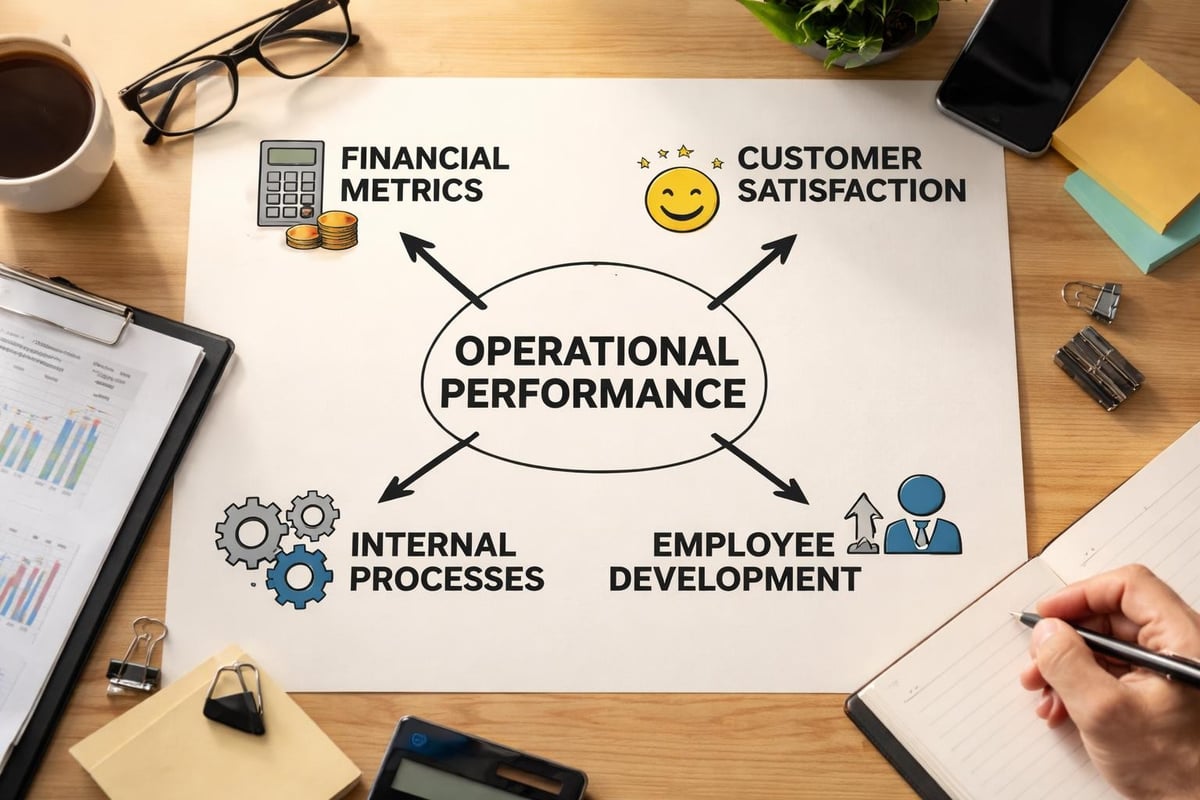
Balanced scorecard framework

This balanced approach recognizes that not everything valuable can be easily quantified. Operations leaders supplement quantitative metrics with qualitative assessments, ensuring that organizational culture, innovation, and employee wellbeing receive appropriate attention alongside traditional performance measures.

Building High-Performing Operations Teams

The success of operations leaders depends largely on their ability to build, develop, and retain talented teams. In 2026's competitive talent market, this requires intentional strategies for recruitment, development, and retention.

High-performing teams don't emerge by accident. They result from deliberate choices about team composition, clear communication of expectations, investment in professional development, and creation of environments where people can do their best work.

Talent Development and Succession Planning

Operations leaders invest in developing their teams' capabilities through training programs, mentorship opportunities, and stretch assignments that build new skills. They identify high-potential employees early and create development pathways that prepare them for increased responsibility.

Effective talent development strategies include:

  1. Cross-functional rotation programs that broaden perspective
  2. Formal mentorship matching senior and junior team members
  3. Skills-based training in emerging technologies and methodologies
  4. Leadership development programs for management track employees
  5. External conference attendance and professional networking opportunities

The lessons from high-performing operations teams demonstrate that clear goals, innovation encouragement, and diversity embrace distinguish exceptional teams from average ones. Operations leaders who prioritize these elements create competitive advantages that compound over time.

Process Optimization and Continuous Improvement

Operations leaders maintain relentless focus on process improvement, recognizing that small efficiency gains across multiple processes create substantial cumulative impact. They establish methodologies for identifying inefficiencies, testing solutions, and scaling successful improvements.

Modern approaches to process optimization combine traditional methodologies like Lean and Six Sigma with newer frameworks emphasizing agility and experimentation. Operations leaders adapt these approaches to their organizational context rather than rigidly following prescribed formulas.

Implementing Systematic Improvement Frameworks

Successful operations leaders establish structured approaches to continuous improvement that engage employees at all levels. They create safe environments for experimentation where teams can test new approaches without fear of punishment for failed experiments.

Improvement Methodology Best Application Typical Results
Lean principles Waste elimination in repetitive processes 20-40% efficiency improvement
Six Sigma Quality improvement and defect reduction 50-90% error reduction
Agile frameworks Project management and product development 30-50% faster delivery
Kaizen events Focused improvement sprints 15-25% process enhancement

The best practices for operations leadership success emphasize scalable solutions and technology adoption as critical components of sustainable improvement. Operations leaders who implement these practices position their organizations for long-term competitive advantage.

Managing Change and Transformation Initiatives

Change management represents one of the most challenging aspects of operations leadership. Even beneficial changes face resistance from employees comfortable with existing processes, and operations leaders must skillfully navigate the human dimensions of organizational transformation.

Successful change management requires clear communication about why changes are necessary, involvement of affected stakeholders in solution design, adequate training and support during transitions, and patience as new approaches become established routines.
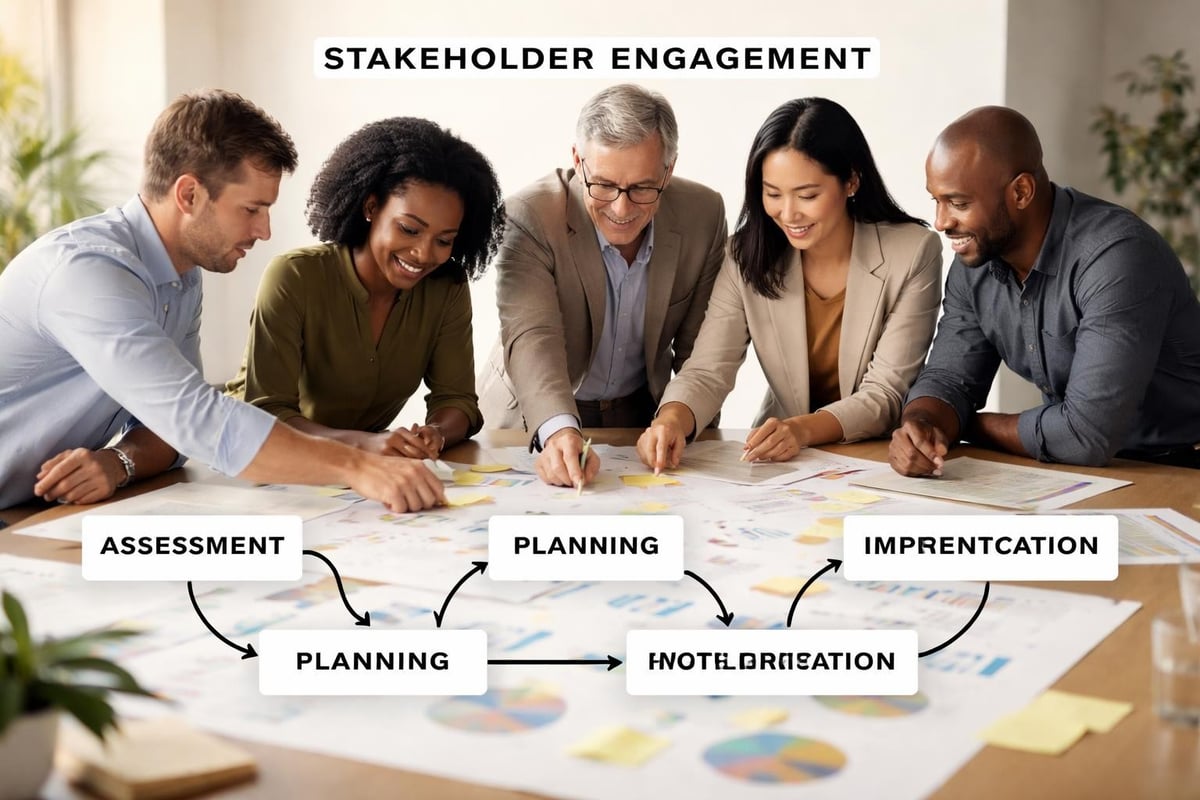
Change management process

Operations leaders who excel at change management recognize that technical solutions alone rarely succeed. They address the emotional and psychological aspects of change, acknowledging concerns while maintaining momentum toward necessary improvements.

Communication Strategies for Transformation

Effective operations leaders over-communicate during change initiatives, recognizing that people need to hear messages multiple times through various channels before truly internalizing them. They use town halls, team meetings, written communications, and one-on-one conversations to reinforce key messages.

Communication best practices during transformation:

  • Explain the business case and urgency clearly
  • Share the vision of the desired future state
  • Acknowledge challenges and concerns honestly
  • Celebrate early wins and progress milestones
  • Provide regular updates on implementation status
  • Create feedback channels for employee input

This comprehensive communication approach builds trust and engagement, increasing the likelihood that transformative initiatives achieve their intended outcomes.

Financial Stewardship and Budget Management

Operations leaders bear significant responsibility for financial performance, managing budgets that often represent the largest expense categories in their organizations. They balance cost control pressures with the need to invest in capabilities that drive future growth.

Effective budget management requires understanding both the numbers themselves and the operational realities they represent. Operations leaders develop budgets that align with strategic priorities while maintaining flexibility to respond to unexpected challenges or opportunities.

Optimizing Resource Allocation

Operations leaders continuously evaluate resource allocation, asking whether current investments deliver optimal returns or whether reallocation could create greater value. They use zero-based budgeting approaches for certain expense categories, questioning whether historical spending patterns still make sense.

The relationship between operational efficiency and financial performance has never been clearer. Organizations that empower operations leaders to eliminate wasteful processes and implement automation see direct bottom-line impact through reduced labor costs, improved productivity, and enhanced quality that reduces rework expenses.

Understanding key trends in operations management helps leaders anticipate how factors like sustainability requirements and supply chain complexity will affect future budget needs, allowing proactive planning rather than reactive adjustment.

Employee Wellbeing and Organizational Culture

Forward-thinking operations leaders recognize that employee health and wellness directly impact operational performance. Organizations with healthy, engaged employees experience lower absenteeism, higher productivity, better quality output, and reduced turnover costs.

These leaders champion initiatives that support physical health through ergonomic workspaces and wellness programs, mental health through stress management resources and supportive policies, and financial health through education and benefit programs.

Components of comprehensive employee wellbeing programs:

  1. Preventive healthcare access and health screenings
  2. Mental health resources and counseling services
  3. Financial wellness education and planning tools
  4. Flexible work arrangements supporting work-life balance
  5. Professional development opportunities

Operations leaders who invest in employee wellbeing create virtuous cycles where healthier, more engaged employees deliver better operational results, which creates organizational success that enables further investment in people.

The connection between operational excellence and employee empowerment becomes evident when examining successful organizations. Companies that treat people as their most valuable asset rather than as cost centers to minimize consistently outperform competitors who take short-sighted approaches to human capital management.

Strategic Partnerships and Vendor Management

Operations leaders manage complex networks of vendors, partners, and service providers who contribute to organizational success. Effective vendor management requires clear performance expectations, regular communication, relationship investment, and willingness to change providers when necessary.

The shift toward strategic partnerships represents a maturation of vendor relationships. Rather than purely transactional arrangements focused on price minimization, operations leaders cultivate collaborative relationships where vendors understand organizational goals and contribute ideas for improvement.

Evaluating and Selecting Service Providers

When evaluating potential partners, operations leaders consider multiple factors beyond price. They assess capabilities, cultural fit, implementation support, ongoing service quality, and alignment with organizational values.

Evaluation Criteria Weight Assessment Method
Technical capabilities 30% Solution demonstrations and reference checks
Implementation support 25% Project plan review and resource commitment
Ongoing service quality 20% SLA agreements and customer testimonials
Cultural alignment 15% Leadership meetings and value assessment
Total cost of ownership 10% Financial analysis including hidden costs

This comprehensive evaluation approach helps operations leaders select partners who will contribute to long-term success rather than creating short-term savings that lead to future problems.

Risk Management and Business Continuity

Operations leaders shoulder primary responsibility for identifying operational risks and implementing mitigation strategies. They develop business continuity plans that ensure organizational resilience when disruptions occur, whether from natural disasters, technology failures, supply chain interruptions, or other challenges.

Effective risk management balances protective measures against their costs, recognizing that perfect security is neither achievable nor economically rational. Operations leaders identify critical vulnerabilities where risk mitigation delivers substantial value and accept residual risks where protection costs exceed potential losses.

Building Organizational Resilience

Resilient organizations recover quickly from disruptions because they've planned for various scenarios and built redundancy into critical systems. Operations leaders conduct scenario planning exercises, maintain updated contact information for crisis response, and regularly test backup systems.

The lessons learned from recent global disruptions have elevated business continuity planning from theoretical exercise to practical necessity. Operations leaders who take these responsibilities seriously protect their organizations from preventable losses while positioning them to capitalize on competitors' difficulties during challenging periods.

Learning from our history of helping organizations navigate change provides valuable context for understanding how operational resilience develops through intentional preparation and continuous refinement.

The Future of Operations Leadership

As we progress through 2026, operations leaders face an environment characterized by rapid technological change, evolving workforce expectations, increasing complexity, and persistent pressure for improved performance. Success requires continuous learning, adaptability, strategic thinking, and unwavering commitment to operational excellence.

The most effective operations leaders balance apparently contradictory demands: short-term results and long-term capability building, cost reduction and strategic investment, standardization and innovation, efficiency and resilience. They recognize that sustainable success requires attention to all these dimensions simultaneously.

Organizations that empower their operations leaders with appropriate authority, resources, and support position themselves for competitive advantage. Those that treat operations as purely tactical execution miss opportunities to leverage operational excellence as strategic differentiator.


Operations leaders who master strategic vision, technology adoption, team development, and continuous improvement create substantial value for their organizations through enhanced efficiency, increased revenue, and improved employee wellbeing. If your organization is ready to transform its operational performance and empower your people to achieve extraordinary results, Nero and Associates, Inc. can help you implement performance-based solutions that save costs, save time, and create lasting competitive advantage. Contact us to explore how our expertise in automation, human capital management, and process optimization can elevate your operations to new levels of excellence.

Operations Leaders: Driving Excellence in 2026

The modern business landscape demands more from operations leaders than ever before. These strategic professionals sit at the intersection of technology, human capital, and process optimization, tasked with transforming organizational performance while navigating unprecedented complexity. As we move through 2026, the role has evolved from traditional management oversight to strategic partnership, requiring leaders to balance automation capabilities with employee empowerment, cost reduction with value creation, and immediate operational needs with long-term strategic vision.

The Evolving Role of Operations Leaders in Modern Organizations

Operations leaders today function as the central nervous system of their organizations. They coordinate cross-functional teams, implement transformative technologies, and ensure that strategic initiatives translate into measurable results. This role has expanded significantly beyond traditional oversight responsibilities.

The contemporary operations leader manages multiple critical functions:

  • Strategic planning and execution alignment
  • Technology implementation and digital transformation
  • Process optimization and efficiency improvement
  • Team development and organizational culture
  • Risk management and compliance oversight
  • Performance metrics and data analytics

The comprehensive best practices for COOs and operations executives emphasize that modern leadership requires both strategic vision and operational excellence. These professionals must understand how individual processes connect to broader organizational goals while maintaining focus on daily execution.

Strategic Vision Meets Operational Execution

Operations leaders bridge the gap between executive vision and ground-level implementation. They translate board-level strategy into actionable plans that teams can execute, while simultaneously communicating operational realities back to senior leadership. This bidirectional communication creates alignment throughout the organization.

Strategic alignment framework

The ability to maintain this dual perspective separates exceptional operations leaders from average managers. They must think strategically about three-year transformation roadmaps while simultaneously addressing immediate operational challenges that arise daily.

Technology Adoption and Digital Transformation

Digital transformation represents one of the most significant responsibilities for operations leaders in 2026. Organizations across industries are implementing artificial intelligence, automation platforms, and integrated systems to improve efficiency and reduce manual processes.

Operations leaders drive these initiatives by identifying opportunities for technological improvement, evaluating solutions, managing implementation, and ensuring adoption across teams. The recent developments in operations industry trends highlight how workforce transformation and data-driven decision-making have become central to operational success.

Implementing Automation and Integration

Automation eliminates repetitive manual tasks, freeing employees to focus on higher-value activities. Operations leaders must identify which processes offer the greatest return on automation investment while managing the human aspects of technological change.

Automation Priority Expected Impact Implementation Timeline
Data entry and processing 60-80% time reduction 3-6 months
Report generation 70-90% time reduction 2-4 months
Workflow routing 50-70% efficiency gain 4-8 months
Compliance tracking 80-95% accuracy improvement 6-12 months

Integration connects disparate systems, creating seamless data flow across organizational functions. When operations leaders successfully implement integrated platforms, organizations gain real-time visibility into performance metrics, customer interactions, and resource utilization.

The hospitality sector offers compelling examples of integration benefits, where optimizing employee management systems creates substantial improvements in both operational efficiency and employee satisfaction.

Data-Driven Decision Making and Performance Management

Operations leaders in 2026 rely heavily on data analytics to inform decisions, identify improvement opportunities, and measure progress toward organizational goals. The shift from intuition-based to evidence-based management has fundamentally changed how these professionals approach their responsibilities.

Key performance indicators that operations leaders monitor include:

  • Operational efficiency ratios
  • Cost per transaction or output unit
  • Employee productivity metrics
  • Quality and error rates
  • Customer satisfaction scores
  • Process cycle times
  • Resource utilization percentages

The principles of operational leadership excellence emphasize systematic data collection and performance evaluation as foundations for continuous improvement. Operations leaders establish measurement frameworks that provide visibility into organizational performance while avoiding metric overload that overwhelms teams.

Creating Accountability Through Metrics

Effective operations leaders use metrics to create accountability without fostering unhealthy competition or gaming behaviors. They design balanced scorecards that measure what matters most while encouraging collaboration across departments.

Balanced scorecard framework

This balanced approach recognizes that not everything valuable can be easily quantified. Operations leaders supplement quantitative metrics with qualitative assessments, ensuring that organizational culture, innovation, and employee wellbeing receive appropriate attention alongside traditional performance measures.

Building High-Performing Operations Teams

The success of operations leaders depends largely on their ability to build, develop, and retain talented teams. In 2026's competitive talent market, this requires intentional strategies for recruitment, development, and retention.

High-performing teams don't emerge by accident. They result from deliberate choices about team composition, clear communication of expectations, investment in professional development, and creation of environments where people can do their best work.

Talent Development and Succession Planning

Operations leaders invest in developing their teams' capabilities through training programs, mentorship opportunities, and stretch assignments that build new skills. They identify high-potential employees early and create development pathways that prepare them for increased responsibility.

Effective talent development strategies include:

  1. Cross-functional rotation programs that broaden perspective
  2. Formal mentorship matching senior and junior team members
  3. Skills-based training in emerging technologies and methodologies
  4. Leadership development programs for management track employees
  5. External conference attendance and professional networking opportunities

The lessons from high-performing operations teams demonstrate that clear goals, innovation encouragement, and diversity embrace distinguish exceptional teams from average ones. Operations leaders who prioritize these elements create competitive advantages that compound over time.

Process Optimization and Continuous Improvement

Operations leaders maintain relentless focus on process improvement, recognizing that small efficiency gains across multiple processes create substantial cumulative impact. They establish methodologies for identifying inefficiencies, testing solutions, and scaling successful improvements.

Modern approaches to process optimization combine traditional methodologies like Lean and Six Sigma with newer frameworks emphasizing agility and experimentation. Operations leaders adapt these approaches to their organizational context rather than rigidly following prescribed formulas.

Implementing Systematic Improvement Frameworks

Successful operations leaders establish structured approaches to continuous improvement that engage employees at all levels. They create safe environments for experimentation where teams can test new approaches without fear of punishment for failed experiments.

Improvement Methodology Best Application Typical Results
Lean principles Waste elimination in repetitive processes 20-40% efficiency improvement
Six Sigma Quality improvement and defect reduction 50-90% error reduction
Agile frameworks Project management and product development 30-50% faster delivery
Kaizen events Focused improvement sprints 15-25% process enhancement

The best practices for operations leadership success emphasize scalable solutions and technology adoption as critical components of sustainable improvement. Operations leaders who implement these practices position their organizations for long-term competitive advantage.

Managing Change and Transformation Initiatives

Change management represents one of the most challenging aspects of operations leadership. Even beneficial changes face resistance from employees comfortable with existing processes, and operations leaders must skillfully navigate the human dimensions of organizational transformation.

Successful change management requires clear communication about why changes are necessary, involvement of affected stakeholders in solution design, adequate training and support during transitions, and patience as new approaches become established routines.

Change management process

Operations leaders who excel at change management recognize that technical solutions alone rarely succeed. They address the emotional and psychological aspects of change, acknowledging concerns while maintaining momentum toward necessary improvements.

Communication Strategies for Transformation

Effective operations leaders over-communicate during change initiatives, recognizing that people need to hear messages multiple times through various channels before truly internalizing them. They use town halls, team meetings, written communications, and one-on-one conversations to reinforce key messages.

Communication best practices during transformation:

  • Explain the business case and urgency clearly
  • Share the vision of the desired future state
  • Acknowledge challenges and concerns honestly
  • Celebrate early wins and progress milestones
  • Provide regular updates on implementation status
  • Create feedback channels for employee input

This comprehensive communication approach builds trust and engagement, increasing the likelihood that transformative initiatives achieve their intended outcomes.

Financial Stewardship and Budget Management

Operations leaders bear significant responsibility for financial performance, managing budgets that often represent the largest expense categories in their organizations. They balance cost control pressures with the need to invest in capabilities that drive future growth.

Effective budget management requires understanding both the numbers themselves and the operational realities they represent. Operations leaders develop budgets that align with strategic priorities while maintaining flexibility to respond to unexpected challenges or opportunities.

Optimizing Resource Allocation

Operations leaders continuously evaluate resource allocation, asking whether current investments deliver optimal returns or whether reallocation could create greater value. They use zero-based budgeting approaches for certain expense categories, questioning whether historical spending patterns still make sense.

The relationship between operational efficiency and financial performance has never been clearer. Organizations that empower operations leaders to eliminate wasteful processes and implement automation see direct bottom-line impact through reduced labor costs, improved productivity, and enhanced quality that reduces rework expenses.

Understanding key trends in operations management helps leaders anticipate how factors like sustainability requirements and supply chain complexity will affect future budget needs, allowing proactive planning rather than reactive adjustment.

Employee Wellbeing and Organizational Culture

Forward-thinking operations leaders recognize that employee health and wellness directly impact operational performance. Organizations with healthy, engaged employees experience lower absenteeism, higher productivity, better quality output, and reduced turnover costs.

These leaders champion initiatives that support physical health through ergonomic workspaces and wellness programs, mental health through stress management resources and supportive policies, and financial health through education and benefit programs.

Components of comprehensive employee wellbeing programs:

  1. Preventive healthcare access and health screenings
  2. Mental health resources and counseling services
  3. Financial wellness education and planning tools
  4. Flexible work arrangements supporting work-life balance
  5. Professional development opportunities

Operations leaders who invest in employee wellbeing create virtuous cycles where healthier, more engaged employees deliver better operational results, which creates organizational success that enables further investment in people.

The connection between operational excellence and employee empowerment becomes evident when examining successful organizations. Companies that treat people as their most valuable asset rather than as cost centers to minimize consistently outperform competitors who take short-sighted approaches to human capital management.

Strategic Partnerships and Vendor Management

Operations leaders manage complex networks of vendors, partners, and service providers who contribute to organizational success. Effective vendor management requires clear performance expectations, regular communication, relationship investment, and willingness to change providers when necessary.

The shift toward strategic partnerships represents a maturation of vendor relationships. Rather than purely transactional arrangements focused on price minimization, operations leaders cultivate collaborative relationships where vendors understand organizational goals and contribute ideas for improvement.

Evaluating and Selecting Service Providers

When evaluating potential partners, operations leaders consider multiple factors beyond price. They assess capabilities, cultural fit, implementation support, ongoing service quality, and alignment with organizational values.

Evaluation Criteria Weight Assessment Method
Technical capabilities 30% Solution demonstrations and reference checks
Implementation support 25% Project plan review and resource commitment
Ongoing service quality 20% SLA agreements and customer testimonials
Cultural alignment 15% Leadership meetings and value assessment
Total cost of ownership 10% Financial analysis including hidden costs

This comprehensive evaluation approach helps operations leaders select partners who will contribute to long-term success rather than creating short-term savings that lead to future problems.

Risk Management and Business Continuity

Operations leaders shoulder primary responsibility for identifying operational risks and implementing mitigation strategies. They develop business continuity plans that ensure organizational resilience when disruptions occur, whether from natural disasters, technology failures, supply chain interruptions, or other challenges.

Effective risk management balances protective measures against their costs, recognizing that perfect security is neither achievable nor economically rational. Operations leaders identify critical vulnerabilities where risk mitigation delivers substantial value and accept residual risks where protection costs exceed potential losses.

Building Organizational Resilience

Resilient organizations recover quickly from disruptions because they've planned for various scenarios and built redundancy into critical systems. Operations leaders conduct scenario planning exercises, maintain updated contact information for crisis response, and regularly test backup systems.

The lessons learned from recent global disruptions have elevated business continuity planning from theoretical exercise to practical necessity. Operations leaders who take these responsibilities seriously protect their organizations from preventable losses while positioning them to capitalize on competitors' difficulties during challenging periods.

Learning from our history of helping organizations navigate change provides valuable context for understanding how operational resilience develops through intentional preparation and continuous refinement.

The Future of Operations Leadership

As we progress through 2026, operations leaders face an environment characterized by rapid technological change, evolving workforce expectations, increasing complexity, and persistent pressure for improved performance. Success requires continuous learning, adaptability, strategic thinking, and unwavering commitment to operational excellence.

The most effective operations leaders balance apparently contradictory demands: short-term results and long-term capability building, cost reduction and strategic investment, standardization and innovation, efficiency and resilience. They recognize that sustainable success requires attention to all these dimensions simultaneously.

Organizations that empower their operations leaders with appropriate authority, resources, and support position themselves for competitive advantage. Those that treat operations as purely tactical execution miss opportunities to leverage operational excellence as strategic differentiator.


Operations leaders who master strategic vision, technology adoption, team development, and continuous improvement create substantial value for their organizations through enhanced efficiency, increased revenue, and improved employee wellbeing. If your organization is ready to transform its operational performance and empower your people to achieve extraordinary results, Nero and Associates, Inc. can help you implement performance-based solutions that save costs, save time, and create lasting competitive advantage. Contact us to explore how our expertise in automation, human capital management, and process optimization can elevate your operations to new levels of excellence.

Website developed in accordance with Web Content Accessibility Guidelines 2.2.
If you encounter any issues while using this site, please contact us: 215.526.5126