

Managing payroll manually consumes valuable resources that could be directed toward strategic business initiatives. Organizations today face increasing pressure to reduce operational costs while maintaining accuracy and compliance with complex regulations. Payroll automation has emerged as a transformative solution that eliminates time-consuming manual tasks, reduces errors, and allows finance teams to focus on higher-value activities. For professional services firms and consulting organizations, the shift toward automated payroll systems represents an opportunity to demonstrate the operational efficiency they advocate for their clients.
Understanding the Business Case for Automated Payroll Systems
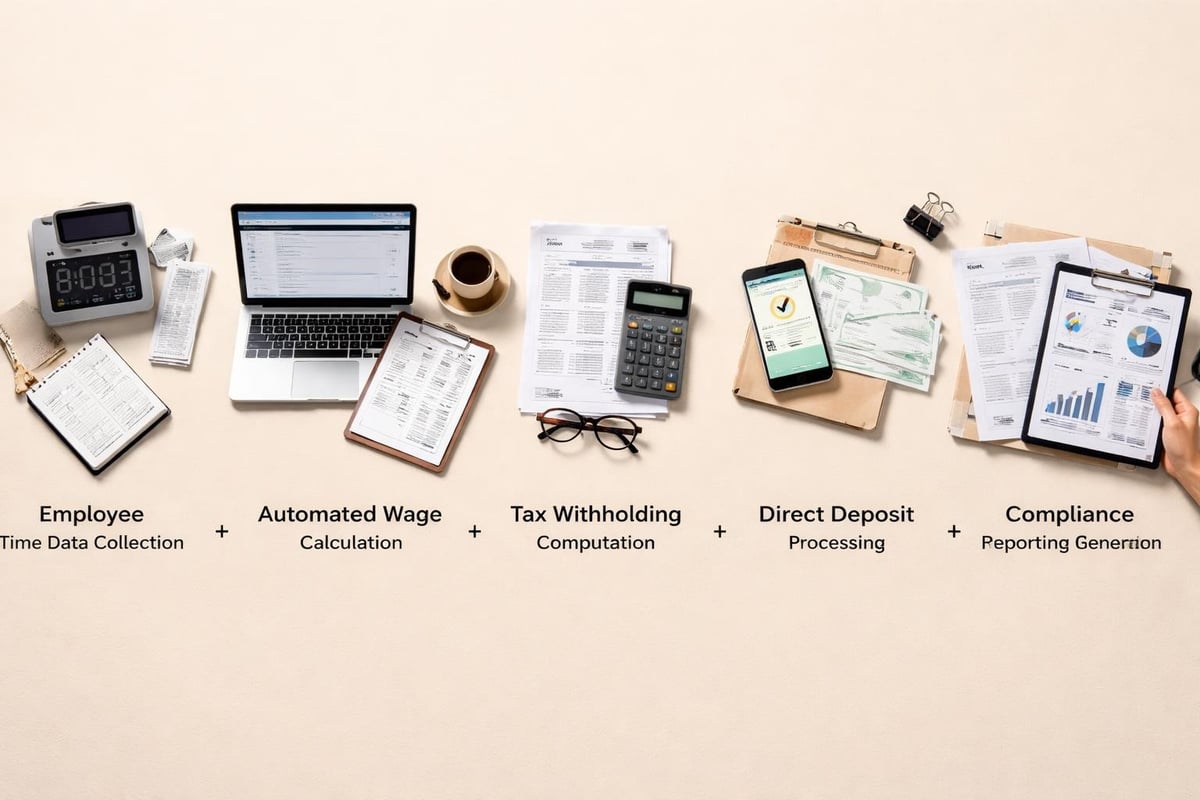
The financial impact of manual payroll processing extends far beyond the hours spent on calculations and data entry. Companies typically invest 30-40 hours per month on payroll-related tasks when relying on traditional methods. This time translates directly into labor costs that accumulate throughout the year.
Payroll automation delivers measurable returns through several key mechanisms:
- Error reduction: Manual calculations introduce mistakes that trigger costly corrections, tax penalties, and compliance issues
- Time savings: Automated systems process hundreds of employees in the time required to manually handle a dozen
- Compliance assurance: Built-in tax tables and regulatory updates eliminate the risk of outdated information
- Resource reallocation: Finance personnel can shift focus from data entry to strategic financial planning
Beyond immediate cost savings, organizations implementing automation solutions for accounts payable and payroll processes report improved employee satisfaction. Workers receive accurate paychecks on predictable schedules, and self-service portals reduce the volume of HR inquiries regarding pay stubs and tax forms.
Quantifying the Return on Investment
Organizations evaluating payroll automation should examine both direct and indirect cost benefits. Direct savings include reduced labor hours, eliminated paper costs, and decreased error correction expenses. Indirect benefits encompass improved compliance, enhanced data security, and better employee retention through reliable payment processing.
| Cost Category | Manual Processing | Automated Processing | Annual Savings |
|---|---|---|---|
| Labor hours (100 employees) | 480 hours/year | 120 hours/year | 360 hours |
| Error correction | $8,000/year | $800/year | $7,200 |
| Compliance penalties | $5,000/year | $500/year | $4,500 |
| Paper and storage | $2,400/year | $400/year | $2,000 |
The table above illustrates conservative estimates for a mid-sized organization. Companies with more complex payroll structures, multiple locations, or frequent regulatory changes often see even greater returns.
Implementation Strategies That Minimize Disruption
Successful payroll automation requires careful planning and phased execution. Organizations that rush implementation without adequate preparation often encounter resistance, data migration issues, and temporary productivity losses.
The most effective approach follows a structured methodology:
- Audit current processes: Document existing workflows, pain points, and manual touchpoints
- Define requirements: Identify must-have features versus nice-to-have capabilities
- Select appropriate technology: Evaluate platforms based on scalability, integration capabilities, and vendor support
- Plan data migration: Clean and validate employee records before transferring to new systems
- Conduct parallel processing: Run automated and manual systems simultaneously for 2-3 pay cycles
- Train stakeholders: Ensure finance teams, managers, and employees understand new procedures
- Monitor and optimize: Track performance metrics and refine processes based on actual usage
Organizations seeking guidance on achieving growth and efficiency in their operations recognize that technology implementation extends beyond software installation. Cultural adoption and change management determine whether automation delivers its promised benefits.
Addressing Common Implementation Challenges
Even well-planned automation projects encounter obstacles. The most frequent challenges include resistance to change, integration complexities with existing HR systems, and data quality issues within legacy records. Understanding common HR automation challenges helps organizations proactively address potential roadblocks.
Data migration represents a critical vulnerability point. Incomplete employee records, inconsistent formatting, and outdated information create problems that multiply once transferred to automated systems. Dedicating adequate time to data cleanup before migration prevents cascading issues that undermine confidence in the new platform.
Integration requirements demand careful attention when organizations use multiple systems for time tracking, benefits administration, and general ledger accounting. Modern payroll automation platforms offer API connections and pre-built integrations, but customization may be necessary for legacy systems or unique workflows.
Key Features That Drive Maximum Value
Not all payroll automation solutions deliver equivalent capabilities. Organizations should prioritize features that address their specific operational challenges while providing flexibility for future growth.
Essential Automation Capabilities
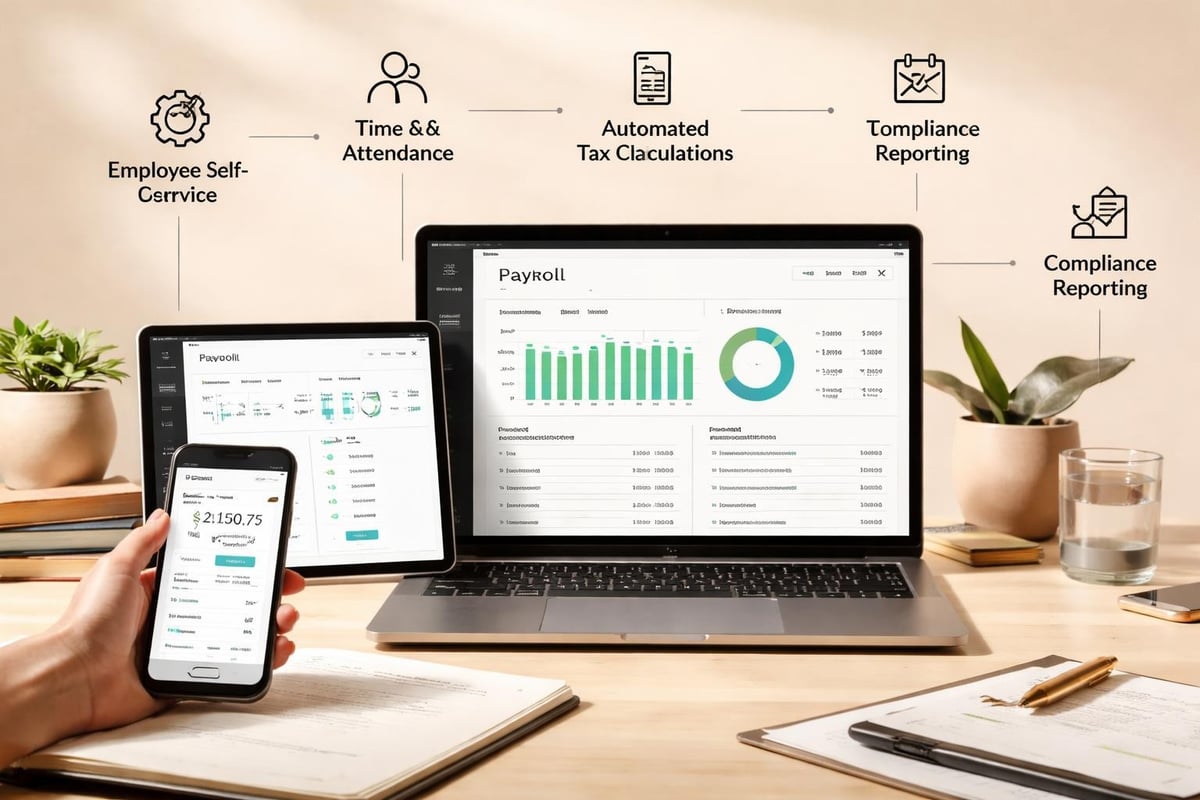
Employee self-service portals reduce administrative burden by allowing workers to access pay stubs, update direct deposit information, and download tax forms without HR intervention. This single feature can eliminate 40-60% of routine payroll inquiries.
Integrated time tracking creates seamless data flow from clock-in systems to payroll calculations. Manual time entry introduces errors and creates opportunities for time theft or inaccurate reporting. Payroll challenges and their solutions often center on time data accuracy and validation.
Automated tax compliance removes the burden of monitoring changing federal, state, and local tax regulations. Quality systems update tax tables automatically, calculate withholdings correctly, and generate required filings without manual intervention. According to research on how automation saves time and improves accuracy, tax compliance features deliver some of the highest risk reduction benefits.
Multi-state and multi-jurisdiction support becomes critical as organizations expand geographically. Manual tracking of varying state income taxes, local wage taxes, and unemployment insurance rates creates complexity that automation handles effortlessly.
Advanced Functionality for Growing Organizations
Beyond basic automation, sophisticated platforms offer capabilities that support strategic workforce management:
- Predictive analytics: Forecast labor costs based on historical data and planned hiring
- Custom reporting: Generate insights on overtime trends, department-level expenses, and budget variance
- Mobile access: Enable managers to approve timecards and review reports from any device
- Audit trails: Maintain detailed logs of all changes for compliance and security purposes
- Scalable architecture: Accommodate growth without requiring platform migration
Organizations implementing comprehensive data analytics capabilities use payroll data to inform broader business decisions around staffing levels, compensation strategies, and operational efficiency.
Compliance and Risk Management Benefits
Regulatory compliance represents one of the most compelling drivers for payroll automation. The complexity of employment law continues to increase, with new requirements emerging at federal, state, and local levels. Manual compliance tracking creates significant liability exposure.
Multi-Layered Compliance Protection
Wage and hour regulations vary by jurisdiction and change frequently. Automated systems apply current minimum wage rates, overtime rules, and meal break requirements based on employee location and classification. This protection extends to complex scenarios like traveling workers who perform duties across multiple states.
Tax withholding accuracy protects organizations from penalties that result from incorrect calculations or late payments. The IRS and state tax agencies impose substantial fines for payroll tax errors, even when mistakes are unintentional. Automation eliminates calculation errors while ensuring timely remittance.
Record retention requirements demand that organizations maintain detailed payroll records for specified periods. Digital systems automatically archive required documentation and provide instant retrieval capabilities during audits. This capability proves particularly valuable for organizations in regulated industries or those undergoing compliance reviews.
| Compliance Area | Manual Risk Level | Automation Protection |
|---|---|---|
| Tax calculations | High (frequent formula errors) | Low (automated updates) |
| Overtime rules | Medium (complex rules) | Low (automated application) |
| Record retention | Medium (paper storage issues) | Low (digital archiving) |
| Multi-state compliance | High (tracking difficulty) | Low (jurisdiction awareness) |
Integration With Broader HR Technology Ecosystems
Payroll automation delivers maximum value when integrated with other human capital management systems. Standalone payroll tools create data silos that limit organizational insights and require duplicate data entry across platforms.
Modern human capital management approaches connect multiple systems:
- Applicant tracking systems that feed new hire information directly into payroll
- Benefits administration platforms that automatically deduct correct premium amounts
- Time and attendance systems that eliminate manual hour entry
- Performance management tools that link compensation to achievement metrics
- Financial systems that update general ledger accounts automatically
Organizations should evaluate how well payroll integration aligns with best practices for data security and system interoperability. API-based connections provide more flexibility than file-based transfers while reducing the risk of data corruption during transmission.

Creating a Unified Data Environment
Single source of truth architecture eliminates the discrepancies that occur when employee information exists in multiple disconnected systems. When a worker updates their address in the self-service portal, that change should flow automatically to payroll, benefits, and other relevant systems without manual intervention.
Reporting consolidation becomes possible when systems share common data structures. HR leaders can generate comprehensive workforce analytics that combine payroll costs, turnover rates, benefits utilization, and performance metrics in unified dashboards.
Avoiding Critical Implementation Mistakes
Organizations transitioning to automated payroll should learn from the mistakes others have made. Understanding critical mistakes to avoid during HR automation helps prevent delays, cost overruns, and user adoption failures.
Strategic Planning Oversights
Underestimating change management needs ranks among the most common failures. Technology alone does not drive transformation-people must embrace new processes and workflows. Allocate adequate resources for training, communication, and support during the transition period.
Neglecting data quality before migration creates problems that persist throughout the system's lifecycle. Invest time in cleaning employee records, validating Social Security numbers, verifying addresses, and standardizing data formats before initiating transfer to automated platforms.
Choosing features over fit tempts organizations to select systems with impressive capability lists that do not align with actual business needs. Prioritize solutions that excel at core requirements rather than platforms that offer numerous features you will never use.
Technical and Operational Pitfalls
- Inadequate testing: Skipping parallel processing or abbreviated testing periods leads to errors that damage credibility
- Poor vendor evaluation: Selecting providers based solely on price without assessing implementation support and ongoing service quality
- Ignoring scalability: Choosing systems that work for current headcount but cannot accommodate planned growth
- Overlooking security: Failing to verify that platforms meet industry standards for data protection and encryption
Organizations can reference comprehensive guidance on payroll implementation best practices to develop thorough project plans that address both technical and organizational success factors.
Measuring Success Beyond Cost Savings
While financial returns justify automation investments, organizations should track broader performance indicators that demonstrate operational improvements and strategic benefits.
Operational Metrics
Processing time per pay period provides direct evidence of efficiency gains. Measure the hours required from initiating payroll to final payment distribution. High-performing organizations reduce this metric by 70-80% after implementing automation.
Error rates track the accuracy of calculations, tax withholdings, and payment amounts. Monitor both the frequency of errors and the time required to identify and correct mistakes. Quality automation should reduce error rates below 0.5% while dramatically decreasing correction time.
Employee inquiry volume reflects how well the system serves end users. Successful implementations see 50-70% reductions in payroll-related questions as self-service portals provide immediate access to information.
Strategic Impact Indicators
- Audit readiness: Time required to compile records for compliance reviews
- Finance team capacity: Hours redirected to strategic analysis versus transactional processing
- Employee satisfaction: Survey responses regarding pay accuracy and access to information
- Scalability demonstrated: Ability to onboard new employees or expand to new locations without adding headcount
Organizations seeking to understand how payroll automation optimizes efficiency should establish baseline metrics before implementation to quantify improvements accurately.
Future-Proofing Payroll Operations
The evolution of work continues to accelerate, with remote teams, gig workers, and flexible arrangements becoming standard practice. Payroll automation must accommodate these trends while adapting to emerging regulatory requirements and technological capabilities.
Artificial intelligence and machine learning enhance automation by identifying patterns, predicting issues before they occur, and optimizing processes based on historical performance. Forward-thinking platforms incorporate these capabilities to deliver continuous improvement without manual intervention.
Blockchain technology may transform how organizations process and verify payroll transactions, creating immutable audit trails and enabling instant payments without traditional banking delays.
Global payroll consolidation becomes increasingly important as organizations expand internationally. Systems that handle multiple currencies, diverse tax regimes, and varying employment laws provide competitive advantages for growing companies.
Understanding anticipated payroll challenges in 2025 and beyond helps organizations select platforms positioned to adapt as business requirements evolve. The most valuable investments support current needs while providing flexibility for future growth.
Selecting the Right Automation Partner
Successful payroll automation depends not only on technology selection but also on the expertise and support provided by implementation partners. Organizations should evaluate potential vendors across multiple dimensions beyond software capabilities.
Vendor Evaluation Criteria
Industry experience matters significantly when selecting automation partners. Providers who understand the specific challenges faced by professional services firms, consulting organizations, or healthcare providers deliver more relevant solutions and anticipate industry-specific requirements.
Implementation methodology varies widely among vendors. Look for partners who assign dedicated project managers, follow structured implementation frameworks, and provide adequate training resources. Understanding the pros and cons of payroll management software helps organizations ask informed questions during vendor evaluations.
Ongoing support quality determines long-term success. Evaluate response times, support channels, and the availability of resources like knowledge bases, user communities, and regular training webinars.
| Vendor Attribute | Questions to Ask | Why It Matters |
|---|---|---|
| Implementation support | What is the typical timeline and what resources are required from our team? | Ensures realistic planning |
| Training programs | What training is included and how do you support ongoing learning? | Drives user adoption |
| System updates | How frequently do you release updates and how are they communicated? | Maintains compliance |
| Data security | What certifications do you hold and how is data protected? | Reduces risk exposure |
Organizations benefit from selecting partners who understand the connection between payroll efficiency and broader operational goals. Companies like Nero and Associates, Inc. that specialize in performance-based solutions can help organizations evaluate options within the context of comprehensive efficiency initiatives.
Maximizing Employee Experience Through Automation
While operational efficiency drives most automation decisions, the employee experience significantly impacts workforce satisfaction and retention. Modern payroll automation provides capabilities that empower workers and demonstrate organizational commitment to transparency and service quality.
Earned wage access represents an emerging benefit that automated systems enable effectively. This capability allows employees to access earned wages before traditional pay dates, providing financial flexibility that should be part of comprehensive benefits packages. Automation makes this possible without creating administrative burden for finance teams.
Mobile accessibility meets employees where they already spend time. Workers expect to check pay information, update tax withholdings, and download documents from smartphones rather than accessing desktop systems during business hours.
Transparent calculations build trust when employees can see exactly how gross pay translates to net pay. Detailed breakdowns of taxes, deductions, and contributions eliminate confusion and reduce inquiries to HR departments.
Self-Service Capabilities That Matter Most
- Pay stub access: Immediate availability of current and historical earnings statements
- Tax form retrieval: W-2 and 1099 download without waiting for mail delivery
- Direct deposit management: Employee-initiated updates to banking information
- Time-off tracking: Visibility into accrual balances and usage history
- Benefit deductions: Clear explanations of insurance premiums and retirement contributions
These features transform payroll from a black-box process into a transparent system that employees understand and trust. The result is improved satisfaction and reduced administrative overhead for HR teams managing routine inquiries.
Payroll automation transforms one of the most time-consuming administrative functions into a streamlined, accurate, and compliant process that frees resources for strategic initiatives. Organizations that implement automation thoughtfully realize substantial cost savings while improving employee satisfaction and reducing compliance risk. Nero and Associates, Inc. helps organizations implement performance-based solutions that eliminate manual processes, reduce operational costs, and empower employees through integrated automation and human capital management strategies.