
People Management Guide: Strategies for Success in 2026

Share on Facebook
Share on X
Share on LinkedIn

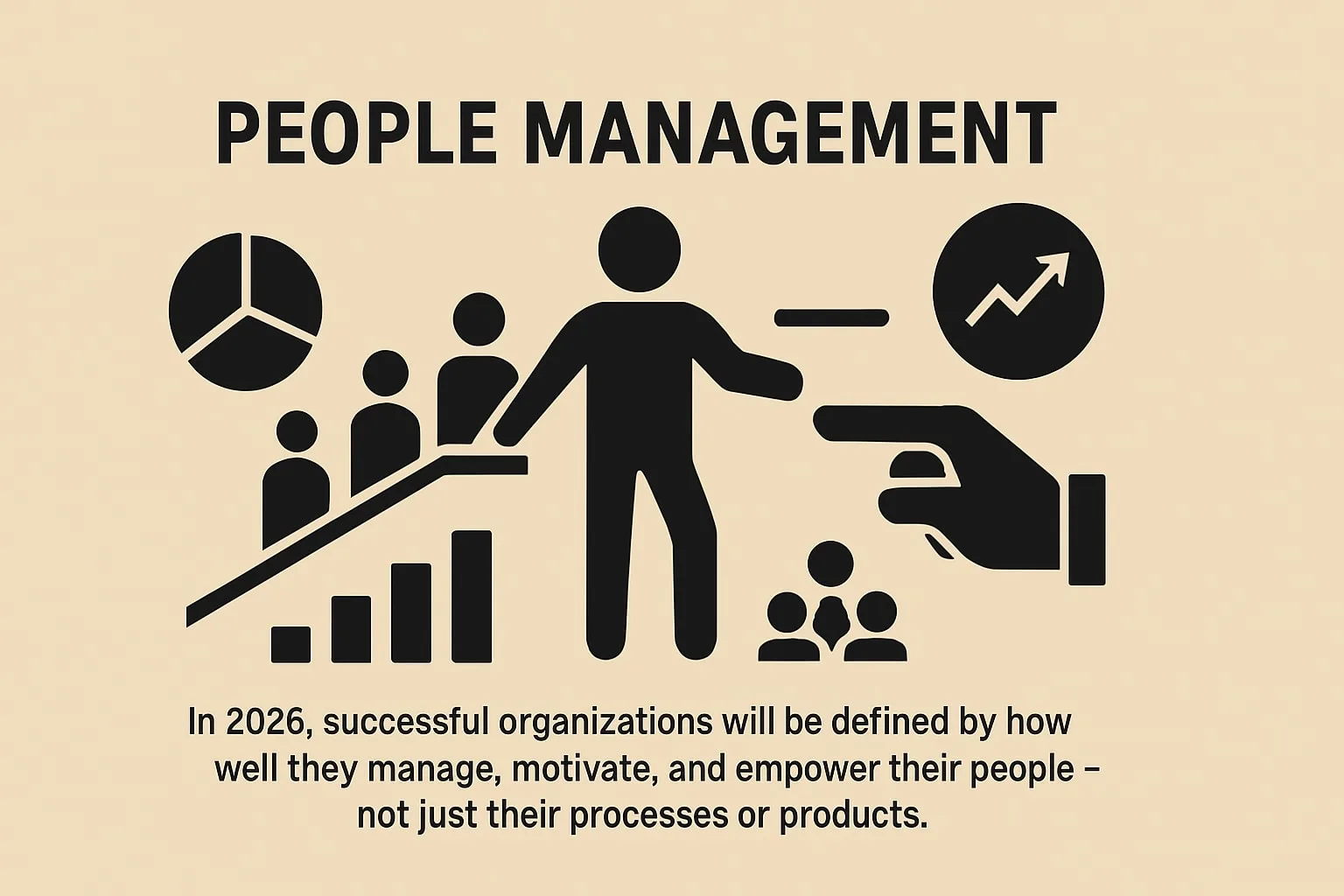
In 2026, organizations that excel at people management will outpace their competition. The ability to inspire, support, and develop people is now the true driver of success, surpassing even the importance of innovative products or efficient processes.

As work evolves, leaders face new challenges like remote collaboration, AI integration, and the urgent need to prioritize employee well-being. This guide will help you navigate the complex world of people management, offering practical strategies, essential skills, and forward-looking insights.

Ready to transform your approach? Apply these expert-backed methods to boost team performance and build a thriving workplace culture.

Understanding People Management in 2026

People management in 2026 goes far beyond routine supervision or administrative tasks. It encompasses every stage of the employee experience, from recruitment and onboarding to development, engagement, and long-term retention. Effective people management guides how organizations attract, nurture, and empower talent.

The field is rapidly evolving. Modern people management now emphasizes holistic well-being, data-driven insights, and the flexibility of hybrid or remote work. Leaders must consider not only productivity but also mental, physical, and emotional health as core priorities. This shift is reshaping workplace expectations and outcomes.

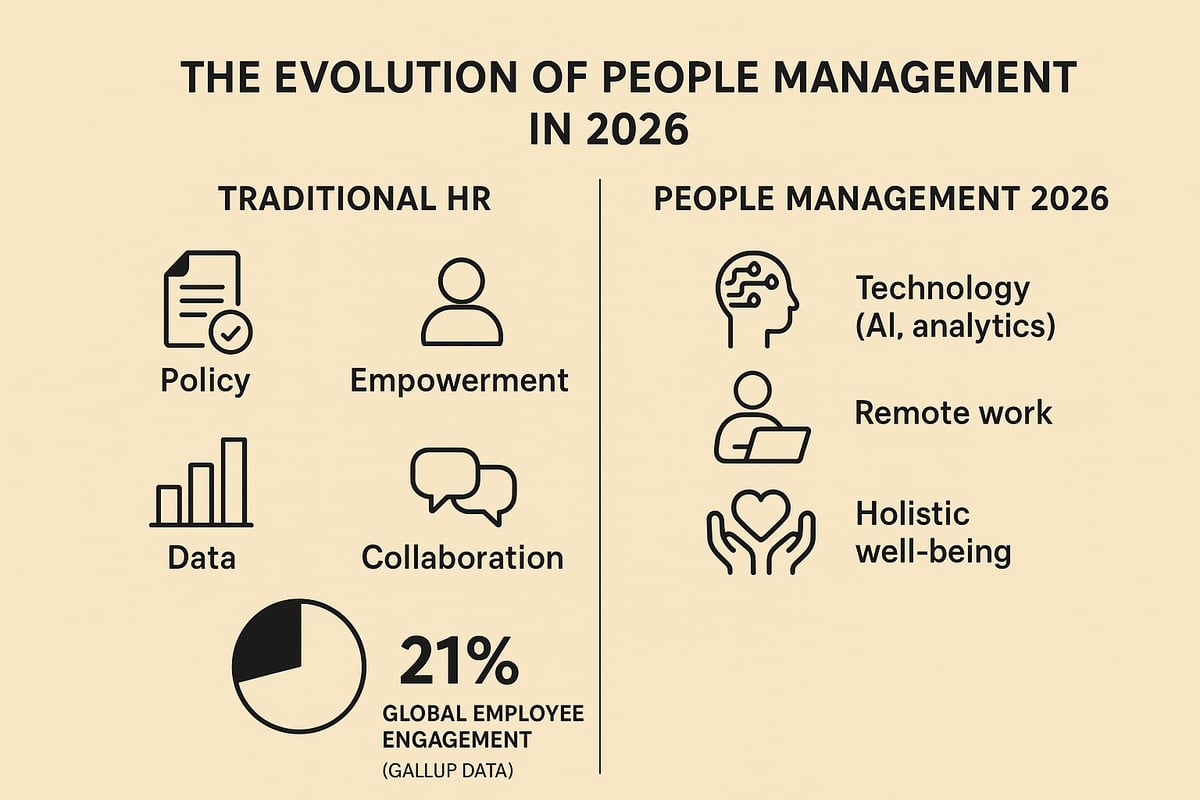
Unlike traditional HR, which focused primarily on compliance and policies, people management is about empowerment and team orchestration. It encourages continuous learning, skill development, and a collaborative approach where employees are seen as active contributors to success.

Technology plays a transformative role. AI, automation, and advanced analytics streamline people management processes, making it easier to monitor engagement, predict attrition, and personalize development plans. These tools help leaders make informed decisions and allocate resources strategically.

Soft skills are now essential for people management. Communication, empathy, adaptability, and problem-solving are valued just as highly as technical abilities. Managers, HR professionals, and employees themselves all share responsibility for building a positive workplace culture.

A strong example is Airbnb, which prioritizes employee experience through open communication, flexible work policies, and ongoing development opportunities. This approach has boosted retention and performance, setting a benchmark for others. Notably, only 21% of global employees reported being engaged at work in 2024, according to the State of the Global Workplace 2025 Report. This statistic highlights the urgent need for innovative people management strategies.

Traditional HR People Management 2026
Policy and compliance focus Empowerment and engagement
Reactive problem solving Proactive, data-driven approach
Siloed roles Collaborative, cross-functional
Annual reviews Continuous feedback and learning
Transactional relationships Employee experience-centric

As organizations adapt to these trends, people management will continue to be the foundation of organizational success in 2026. Leaders who invest in these evolving practices position their teams for growth, resilience, and lasting achievement.
Understanding People Management in 2026

The Core Skills and Traits of Effective People Managers

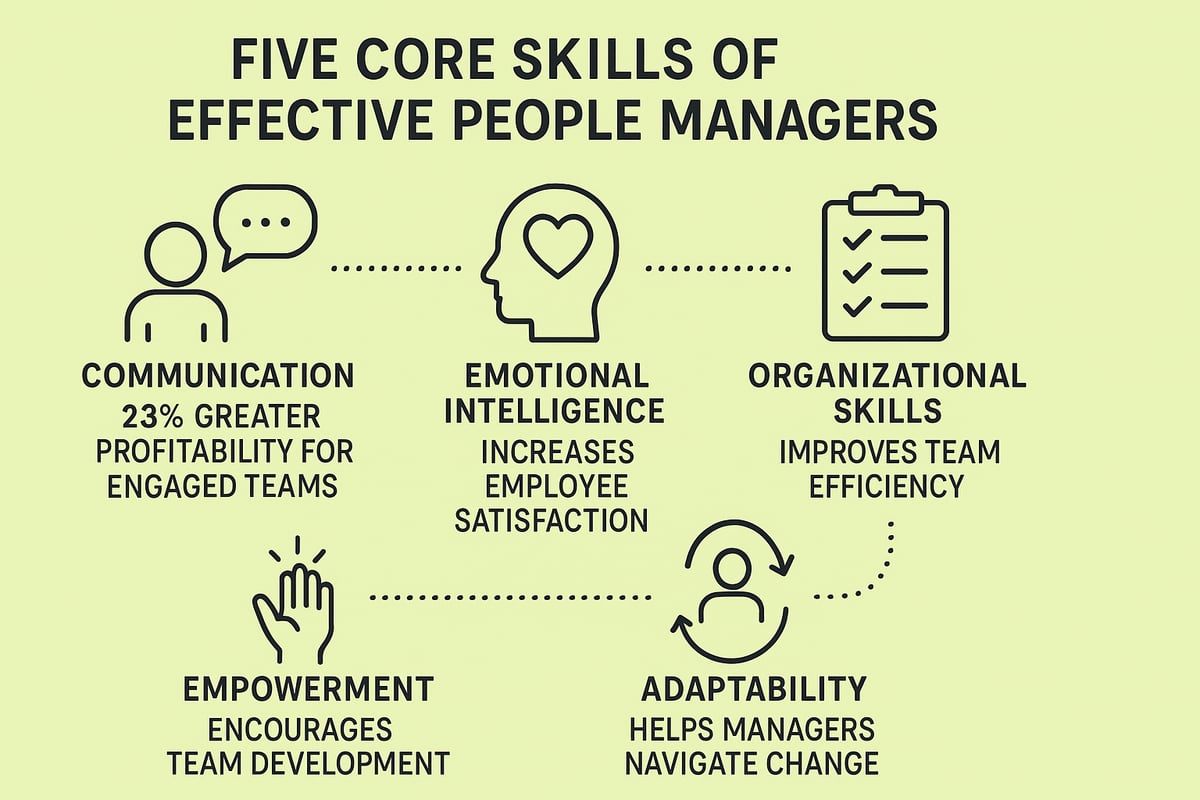
Effective people management demands a blend of core skills and personal qualities. These attributes help leaders build trust, drive engagement, and enable teams to thrive in the modern workplace. Let's explore the essential traits that set successful people managers apart in 2026.
The Core Skills and Traits of Effective People Managers

Communication and Transparency

Clear, consistent communication is the foundation of people management. Managers must ensure information flows both ways, fostering an environment where employees feel heard and informed.

Building trust through transparency is vital. When managers are open about company goals, challenges, and decisions, employees are more likely to stay engaged and motivated.

Consider this: Sales teams that prioritize strong communication skills regularly outperform their peers. According to Gallup, companies with highly engaged employees report 23% greater profitability, highlighting the tangible business impact of effective people management communication.

Key elements of communication in people management include:

  • Regular team check-ins and updates
  • Open-door policies for feedback and concerns
  • Transparent sharing of team and company performance

By making communication a priority, people managers create a culture of trust and accountability.

Emotional Intelligence and Empathy

Emotional intelligence is a cornerstone of people management. Effective managers recognize and respond to the emotional needs of their teams, creating an environment where everyone feels valued.

Empathy plays a crucial role in resolving conflicts and building team cohesion. Managers who demonstrate understanding and care can ease tensions and reduce misunderstandings.

Empathetic leadership in people management is proven to lower turnover and burnout. Teams led by emotionally intelligent managers show higher loyalty and resilience during times of change.

Organizational Skills and Accountability

Strong organizational skills are essential for people management success. Managers must set clear goals, define metrics, and align team objectives with the broader company mission.

Accountability is equally important. By modeling ethical behavior and taking responsibility for outcomes, managers set a standard for the entire team.

Many organizations utilize Payroll and Human Capital Management solutions to streamline these processes, ensuring that performance and ethical standards are consistently upheld within people management frameworks.

When managers balance organization with accountability, teams understand expectations and are motivated to achieve shared goals.

Empowerment and Delegation

Empowerment is at the heart of modern people management. Effective managers encourage autonomy, giving employees ownership of their work and the freedom to innovate.

Avoiding micromanagement is key. When managers trust their teams and delegate responsibilities, creativity and initiative naturally flourish.

Research shows that companies with empowered teams innovate faster and adapt more quickly to market changes. By prioritizing empowerment, people management leaders unlock the full potential of their workforce.

Adaptability and Growth Mindset

Adaptability is now a non-negotiable skill in people management. Leaders must embrace change and foster a culture of continuous learning.

A growth mindset encourages teams to experiment, learn from failure, and adopt new technologies or processes. Managers who lead by example inspire their teams to remain agile and forward-thinking.

Adaptability ensures people management strategies remain effective, even as business landscapes evolve.

Proven People Management Strategies for Success in 2026

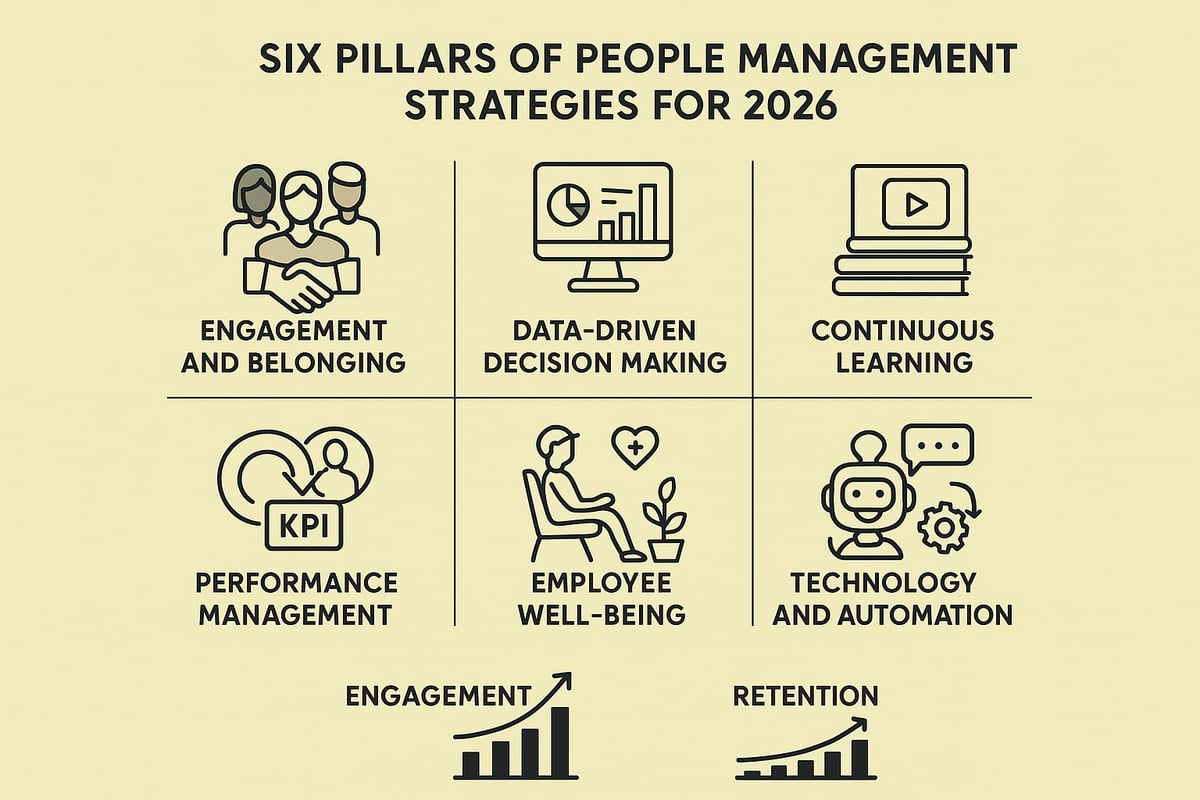
Effective people management is the backbone of high-performing organizations in 2026. Today’s leaders must embrace a blend of proven best practices, modern technology, and a people-first mindset to cultivate thriving teams. Below are actionable strategies to elevate your people management approach and drive measurable results.
Proven People Management Strategies for Success in 2026

Building a Culture of Engagement and Belonging

A strong culture of engagement and belonging is foundational to successful people management. When employees feel valued and included, they are more likely to contribute, innovate, and remain loyal to the organization.

Fostering engagement starts with promoting inclusion, psychological safety, and diversity. Leaders should create spaces where every voice is heard, and team members feel safe to share ideas or concerns. For remote and hybrid teams, this means regular virtual check-ins, open forums, and digital team-building activities.

Consider these strategies:

  • Host monthly virtual town halls for transparent updates.
  • Schedule regular one-on-one conversations to stay connected.
  • Celebrate milestones and recognize achievements in public channels.

Companies with inclusive cultures consistently outperform their competitors in both retention and innovation. According to Gallup, organizations that prioritize engagement see a 23 percent boost in profitability. Integrating these practices into your people management strategy builds a resilient and motivated workforce.

Implementing Data-Driven Decision Making

Modern people management relies on robust data to inform decisions and anticipate challenges. HR analytics allow leaders to assess engagement, monitor performance, and identify retention risks before they escalate.

Utilize pulse surveys and feedback tools to gather real-time insights. These tools help you spot trends, such as declining morale or rising turnover intent, and enable proactive interventions.

Example in practice:

  • Use predictive analytics to identify employees at risk of leaving.
  • Track engagement metrics across departments for targeted improvements.
  • Analyze feedback to refine onboarding and development programs.

A data-driven approach empowers managers to make informed decisions, ensuring people management is both strategic and responsive to evolving needs.

Continuous Learning and Development

Continuous learning is essential for people management excellence in 2026. Personalized development opportunities boost engagement, foster innovation, and prepare teams for future challenges.

Offer tailored learning paths, mentorship programs, and cross-functional projects. Support internal mobility and succession planning to help employees grow within your organization. Companies investing in robust learning and development programs report higher retention rates and a stronger talent pipeline.

Partnering with Learning and Development Consultants can help design impactful upskilling strategies aligned with business goals.

Actionable steps:

  • Launch digital learning platforms for on-demand courses.
  • Encourage peer-to-peer knowledge sharing sessions.
  • Map out career progression plans in collaboration with employees.

Embedding learning into your people management framework ensures your team remains agile and future-ready.

Performance Management and Feedback Loops

Performance management in 2026 requires clarity, agility, and ongoing dialogue. Setting clear KPIs and holding regular reviews keeps teams aligned and accountable.

Move beyond annual appraisals by introducing real-time feedback and coaching. Create a feedback culture where both leaders and employees are comfortable giving and receiving constructive input.

Best practices include:

  • Weekly check-ins to discuss progress and obstacles.
  • Transparent sharing of performance data and goals.
  • Recognizing achievements promptly to reinforce positive behaviors.

Continuous feedback strengthens trust and drives individual and team growth, making it a key pillar of effective people management.

Prioritizing Employee Well-Being

Employee well-being is no longer optional—it is integral to people management success. Addressing mental, physical, and financial health leads to higher productivity and reduced turnover.

Flexible work arrangements, wellness programs, and access to support resources are vital. Managers should regularly check in on employee well-being and adjust workloads to prevent burnout.

Key initiatives:

  • Offer flexible hours and remote work options.
  • Provide access to mental health resources and financial counseling.
  • Organize wellness challenges and group activities.

Data shows that organizations prioritizing well-being experience higher engagement and retention, highlighting its crucial role in people management.

Leveraging Technology and Automation

Technology and automation have transformed people management in 2026. AI-powered tools streamline onboarding, monitor engagement, and automate repetitive HR tasks.

Adopting these technologies frees up managers to focus on strategic initiatives and personal connections. For example, automated surveys gather instant feedback, and AI platforms track performance trends effortlessly.

To maximize impact:

  • Implement digital onboarding platforms for new hires.
  • Use AI chatbots for routine HR queries.
  • Automate administrative processes to reduce manual workload.

Integrating technology into your people management strategy enhances efficiency and supports a more agile, data-driven workplace.

Common People Management Pitfalls and How to Avoid Them

Even the most experienced leaders can stumble when it comes to people management. Recognizing frequent pitfalls and proactively addressing them is critical for building resilient, high-performing teams. Below, we outline the most common traps and offer actionable solutions for each.
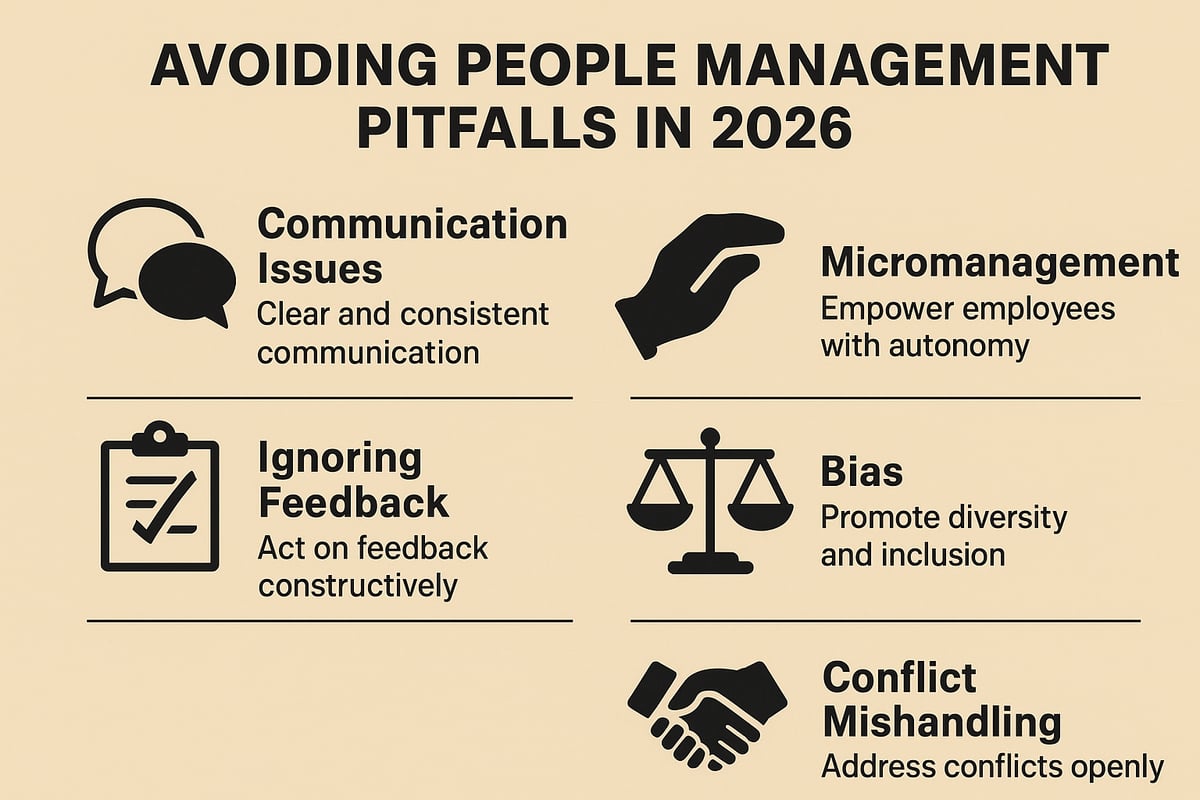
Common People Management Pitfalls and How to Avoid Them

Poor Communication and Lack of Clarity

Clear, consistent communication is the backbone of effective people management. When information is vague or infrequent, misunderstandings grow, morale suffers, and productivity drops. Employees may feel excluded or unsure of their roles, leading to disengagement.

To avoid this pitfall, prioritize regular updates and open-door policies. Transparent leadership helps everyone understand expectations and goals. Use multiple communication channels to ensure your message is understood, and always invite questions or feedback for clarity.

Micromanagement and Lack of Trust

Micromanagement is a common barrier to successful people management. It stifles creativity, reduces motivation, and can drive top talent away. When leaders fail to trust their teams, employees feel undervalued and hesitant to take initiative.

Empower your team by delegating tasks and encouraging autonomy. Set clear outcomes, then allow individuals to determine the best path forward. Foster a culture where mistakes are seen as learning opportunities, not failures, to build trust and innovation.

Ignoring Employee Feedback and Engagement

Overlooking employee feedback or engagement data is a costly mistake in people management. Teams that feel unheard are more likely to disengage, resulting in higher turnover and missed opportunities for innovation. Recent data shows engagement is at a decade low, highlighting the urgency for improvement. According to U.S. Employee Engagement Hits Decade Low, leaders must act now to reverse this trend.

Establish both formal and informal feedback channels. Actively listen to suggestions and communicate how feedback is being addressed. Regular engagement surveys and one-on-one check-ins can reveal important insights, helping you adapt strategies for a more motivated workforce.

Playing Favorites and Unconscious Bias

Favoritism and unconscious bias undermine fairness and team cohesion in people management. When some employees are favored over others, resentment builds and collaboration falters. These issues are especially prevalent in hybrid or remote settings, where visibility can influence perceptions.

Promote equity by using objective criteria for performance reviews and promotions. Offer equal opportunities for growth and recognition, regardless of location or background. Invest in bias training and encourage diverse perspectives to create a more inclusive environment.

Mishandling Conflict and Change

Unresolved conflicts and poorly managed change can derail even the strongest teams. Avoiding tough conversations or neglecting to address resistance can lead to lasting damage in people management. Employees may withdraw, and organizational change initiatives can stall.

Equip managers with conflict resolution skills and clear protocols for addressing disputes. Communicate changes early and involve employees in the process. Providing training and support ensures your team feels confident navigating transitions, reducing friction and maintaining momentum.

Summary Table: Common Pitfalls and Solutions

Pitfall Solution
Poor Communication Regular updates, open-door policies
Micromanagement Delegate, empower, trust
Ignoring Feedback Act on feedback, use surveys
Bias and Favoritism Objective reviews, bias training
Mishandling Conflict/Change Training, clear protocols, early comms

The Future of People Management: Trends and Predictions for 2026

As organizations look toward 2026, the landscape of people management is rapidly transforming. Leaders face a new era shaped by technology, shifting workplace expectations, and a renewed focus on employee well-being. Understanding these trends is essential for anyone aiming to master people management and build resilient, future-ready teams.

The Rise of Hybrid and Distributed Teams

Hybrid and distributed teams are redefining people management. By 2026, most organizations will operate across multiple time zones and cultures, with flexible arrangements as the norm. This shift demands a new toolkit for managers.

To maintain connection, leaders must leverage collaboration platforms, asynchronous communication tools, and virtual team-building activities. Building trust and inclusion is critical, especially when team members rarely meet in person. Managers should schedule regular check-ins, encourage open dialogue, and use technology to bridge gaps.

Successful people management will prioritize adaptability. Companies excelling in hybrid environments often invest in training for remote leadership and cultural awareness. In this evolving context, the ability to orchestrate distributed talent becomes a key differentiator.

AI and Automation in People Management

The integration of AI and automation is revolutionizing people management processes. AI-driven talent acquisition tools help identify top candidates quickly, while automated onboarding systems streamline new hire experiences. Smart analytics platforms can spot engagement risks and performance trends in real time.

However, technology's rise brings ethical considerations. Maintaining the human touch is essential as automation expands. People managers must balance efficiency with empathy, ensuring that automated decisions are transparent and fair.

Forward-thinking organizations are upskilling managers to interpret AI insights and drive data-informed decisions. By using automation to eliminate repetitive tasks, leaders can focus more on coaching and supporting employees. As AI continues to evolve, people management will become more strategic, agile, and personalized.

Personalization and Employee Experience

Personalization is becoming the cornerstone of effective people management. In 2026, employees expect tailored experiences, from benefits to learning pathways. Leading companies use data to customize wellness programs, career development, and even recognition schemes.

Personalized benefits packages respond to diverse needs, supporting work-life balance and individual growth. Learning platforms now offer adaptive content, allowing employees to upskill at their own pace. This approach boosts engagement, loyalty, and performance.

Managers play a crucial role in advocating for employee experience. By partnering with HR and leveraging feedback tools, they can ensure that initiatives align with team preferences. As highlighted in HR Trends Shaping 2026, integrating well-being and personalization into organizational infrastructure is becoming a competitive advantage.

Emphasis on Mental Health and Well-Being

Mental health and well-being are at the forefront of people management priorities. Burnout, stress, and disengagement pose significant retention risks, making holistic support essential. Companies are embedding well-being into performance management and daily routines.

Flexible work options, mental health days, and access to counseling services are increasingly common. Leaders must foster psychological safety, encouraging employees to speak openly about challenges. Training managers to recognize signs of burnout and provide timely support is vital.

Recent data shows that organizations with robust well-being programs see higher productivity and lower turnover. People management strategies now emphasize proactive well-being checks and destigmatizing mental health discussions. This focus ensures teams remain resilient and engaged in a fast-paced world.

Diversity, Equity, and Inclusion (DEI) as a Business Imperative

DEI is no longer just a value statement; it is a strategic pillar of people management. In 2026, diverse teams drive innovation, enhance company reputation, and deliver stronger financial outcomes. Embedding DEI in every stage of the employee lifecycle is essential.

Practical steps include unbiased recruitment, transparent promotion criteria, and ongoing DEI training. Remote and hybrid settings require special attention to ensure equitable access to opportunities. Managers must actively address unconscious bias and champion inclusive practices.

A culture of belonging fosters collaboration and creativity. Companies investing in DEI initiatives outperform peers and attract top talent. Sustainable people management demands continuous measurement and accountability for DEI progress.

Preparing for Future Skills and Roles

Preparing for future skills and roles is a defining challenge in people management. Rapid technological change and evolving business needs require ongoing upskilling and agile talent strategies. Managers must identify emerging skills and create pathways for internal mobility.

Succession planning is critical for future-proofing teams. Tools like Succession Planning Tools for Managers help organizations map talent pipelines and address skill gaps before they impact performance. Investing in continuous learning and mentorship programs ensures readiness for new roles.

A proactive approach to skill development supports retention and adaptability. By aligning individual aspirations with organizational goals, people management becomes a catalyst for growth. Future-ready teams are built through deliberate planning, not chance.

Resources and Tools for Developing People Management Excellence

Investing in the right resources is essential for building people management excellence. Leaders and HR professionals can elevate their impact by leveraging a blend of learning opportunities, technology solutions, and peer support.

Online Learning & Certifications

Continuous learning is at the heart of effective people management. Top online platforms like Coursera, LinkedIn Learning, and edX offer certifications in leadership, emotional intelligence, and strategic HR.

Books such as "Drive" by Daniel Pink and "Leaders Eat Last" by Simon Sinek provide actionable insights. For formal recognition, consider SHRM-CP, HRCI, or CIPD credentials.

HR Tech Platforms

Technology enables organizations to streamline people management. Leading HR tech platforms include:

Platform Focus Area Key Feature
Workday Analytics, L&D Custom dashboards
BambooHR Engagement, Onboarding Automated surveys
Culture Amp Feedback, Analytics Pulse surveys

For organizations seeking to prioritize employee well-being, partnering with an Employee Benefits Consulting Company can help design tailored benefits strategies that align with people management goals.

Peer Networks & Mentorship

Peer networks and mentorship programs provide ongoing support for people management professionals. Join groups such as HR Open Source, local SHRM chapters, or industry-specific forums.

Mentorship offers real-world guidance, helping managers develop critical soft skills and adapt to evolving workplace demands.

Case Studies & Research

Learning from successful organizations is invaluable. Review case studies from companies like Airbnb and Google to see how innovative people management drives engagement and retention.

Staying informed through research reports from Gallup, McKinsey, and Deloitte enables benchmarking and strategy refinement. Explore current leadership pivots and stress management strategies in Leadership Pivots for 2026 for expert perspectives.

Self-Development Plans

Crafting a personalized self-development plan is vital. Begin by assessing current strengths and areas for growth in people management. Set clear goals, seek feedback, and track progress regularly.

Leverage microlearning and short courses to address skill gaps. Regular reflection ensures continuous improvement and adaptability.

Professional Associations & Conferences

Joining professional associations like SHRM or CIPD keeps people management professionals current with trends and best practices. Participate in conferences and webinars to network, gain fresh insights, and discover new tools.

These events often feature workshops on hot topics such as hybrid work, diversity, and HR analytics.

Tool Selection Tips

Selecting the right tools for people management requires careful evaluation. Prioritize platforms that offer robust analytics, user-friendly interfaces, and integration capabilities.

Pilot new tools with a small team before scaling. Regularly review effectiveness to ensure alignment with organizational objectives and evolving workforce needs.

As you look ahead to 2026 and consider how to elevate your people management approach, remember that sustainable success comes from combining proven strategies with the right support and technology. Whether you're navigating hybrid teams, aiming to boost employee well-being, or ready to leverage AI for greater efficiency, you don’t have to tackle these challenges alone. If you’d like tailored guidance on transforming your organization’s performance and empowering your teams, I invite you to Book a Consultation. Let’s work together to build a workplace where both your people and your bottom line thrive.

People Management Guide: Strategies for Success in 2026

In 2026, organizations that excel at people management will outpace their competition. The ability to inspire, support, and develop people is now the true driver of success, surpassing even the importance of innovative products or efficient processes.

As work evolves, leaders face new challenges like remote collaboration, AI integration, and the urgent need to prioritize employee well-being. This guide will help you navigate the complex world of people management, offering practical strategies, essential skills, and forward-looking insights.

Ready to transform your approach? Apply these expert-backed methods to boost team performance and build a thriving workplace culture.

Understanding People Management in 2026

People management in 2026 goes far beyond routine supervision or administrative tasks. It encompasses every stage of the employee experience, from recruitment and onboarding to development, engagement, and long-term retention. Effective people management guides how organizations attract, nurture, and empower talent.

The field is rapidly evolving. Modern people management now emphasizes holistic well-being, data-driven insights, and the flexibility of hybrid or remote work. Leaders must consider not only productivity but also mental, physical, and emotional health as core priorities. This shift is reshaping workplace expectations and outcomes.

Unlike traditional HR, which focused primarily on compliance and policies, people management is about empowerment and team orchestration. It encourages continuous learning, skill development, and a collaborative approach where employees are seen as active contributors to success.

Technology plays a transformative role. AI, automation, and advanced analytics streamline people management processes, making it easier to monitor engagement, predict attrition, and personalize development plans. These tools help leaders make informed decisions and allocate resources strategically.

Soft skills are now essential for people management. Communication, empathy, adaptability, and problem-solving are valued just as highly as technical abilities. Managers, HR professionals, and employees themselves all share responsibility for building a positive workplace culture.

A strong example is Airbnb, which prioritizes employee experience through open communication, flexible work policies, and ongoing development opportunities. This approach has boosted retention and performance, setting a benchmark for others. Notably, only 21% of global employees reported being engaged at work in 2024, according to the State of the Global Workplace 2025 Report. This statistic highlights the urgent need for innovative people management strategies.

Traditional HR People Management 2026
Policy and compliance focus Empowerment and engagement
Reactive problem solving Proactive, data-driven approach
Siloed roles Collaborative, cross-functional
Annual reviews Continuous feedback and learning
Transactional relationships Employee experience-centric

As organizations adapt to these trends, people management will continue to be the foundation of organizational success in 2026. Leaders who invest in these evolving practices position their teams for growth, resilience, and lasting achievement.

Understanding People Management in 2026

The Core Skills and Traits of Effective People Managers

Effective people management demands a blend of core skills and personal qualities. These attributes help leaders build trust, drive engagement, and enable teams to thrive in the modern workplace. Let's explore the essential traits that set successful people managers apart in 2026.

The Core Skills and Traits of Effective People Managers

Communication and Transparency

Clear, consistent communication is the foundation of people management. Managers must ensure information flows both ways, fostering an environment where employees feel heard and informed.

Building trust through transparency is vital. When managers are open about company goals, challenges, and decisions, employees are more likely to stay engaged and motivated.

Consider this: Sales teams that prioritize strong communication skills regularly outperform their peers. According to Gallup, companies with highly engaged employees report 23% greater profitability, highlighting the tangible business impact of effective people management communication.

Key elements of communication in people management include:

  • Regular team check-ins and updates
  • Open-door policies for feedback and concerns
  • Transparent sharing of team and company performance

By making communication a priority, people managers create a culture of trust and accountability.

Emotional Intelligence and Empathy

Emotional intelligence is a cornerstone of people management. Effective managers recognize and respond to the emotional needs of their teams, creating an environment where everyone feels valued.

Empathy plays a crucial role in resolving conflicts and building team cohesion. Managers who demonstrate understanding and care can ease tensions and reduce misunderstandings.

Empathetic leadership in people management is proven to lower turnover and burnout. Teams led by emotionally intelligent managers show higher loyalty and resilience during times of change.

Organizational Skills and Accountability

Strong organizational skills are essential for people management success. Managers must set clear goals, define metrics, and align team objectives with the broader company mission.

Accountability is equally important. By modeling ethical behavior and taking responsibility for outcomes, managers set a standard for the entire team.

Many organizations utilize Payroll and Human Capital Management solutions to streamline these processes, ensuring that performance and ethical standards are consistently upheld within people management frameworks.

When managers balance organization with accountability, teams understand expectations and are motivated to achieve shared goals.

Empowerment and Delegation

Empowerment is at the heart of modern people management. Effective managers encourage autonomy, giving employees ownership of their work and the freedom to innovate.

Avoiding micromanagement is key. When managers trust their teams and delegate responsibilities, creativity and initiative naturally flourish.

Research shows that companies with empowered teams innovate faster and adapt more quickly to market changes. By prioritizing empowerment, people management leaders unlock the full potential of their workforce.

Adaptability and Growth Mindset

Adaptability is now a non-negotiable skill in people management. Leaders must embrace change and foster a culture of continuous learning.

A growth mindset encourages teams to experiment, learn from failure, and adopt new technologies or processes. Managers who lead by example inspire their teams to remain agile and forward-thinking.

Adaptability ensures people management strategies remain effective, even as business landscapes evolve.

Proven People Management Strategies for Success in 2026

Effective people management is the backbone of high-performing organizations in 2026. Today’s leaders must embrace a blend of proven best practices, modern technology, and a people-first mindset to cultivate thriving teams. Below are actionable strategies to elevate your people management approach and drive measurable results.

Proven People Management Strategies for Success in 2026

Building a Culture of Engagement and Belonging

A strong culture of engagement and belonging is foundational to successful people management. When employees feel valued and included, they are more likely to contribute, innovate, and remain loyal to the organization.

Fostering engagement starts with promoting inclusion, psychological safety, and diversity. Leaders should create spaces where every voice is heard, and team members feel safe to share ideas or concerns. For remote and hybrid teams, this means regular virtual check-ins, open forums, and digital team-building activities.

Consider these strategies:

  • Host monthly virtual town halls for transparent updates.
  • Schedule regular one-on-one conversations to stay connected.
  • Celebrate milestones and recognize achievements in public channels.

Companies with inclusive cultures consistently outperform their competitors in both retention and innovation. According to Gallup, organizations that prioritize engagement see a 23 percent boost in profitability. Integrating these practices into your people management strategy builds a resilient and motivated workforce.

Implementing Data-Driven Decision Making

Modern people management relies on robust data to inform decisions and anticipate challenges. HR analytics allow leaders to assess engagement, monitor performance, and identify retention risks before they escalate.

Utilize pulse surveys and feedback tools to gather real-time insights. These tools help you spot trends, such as declining morale or rising turnover intent, and enable proactive interventions.

Example in practice:

  • Use predictive analytics to identify employees at risk of leaving.
  • Track engagement metrics across departments for targeted improvements.
  • Analyze feedback to refine onboarding and development programs.

A data-driven approach empowers managers to make informed decisions, ensuring people management is both strategic and responsive to evolving needs.

Continuous Learning and Development

Continuous learning is essential for people management excellence in 2026. Personalized development opportunities boost engagement, foster innovation, and prepare teams for future challenges.

Offer tailored learning paths, mentorship programs, and cross-functional projects. Support internal mobility and succession planning to help employees grow within your organization. Companies investing in robust learning and development programs report higher retention rates and a stronger talent pipeline.

Partnering with Learning and Development Consultants can help design impactful upskilling strategies aligned with business goals.

Actionable steps:

  • Launch digital learning platforms for on-demand courses.
  • Encourage peer-to-peer knowledge sharing sessions.
  • Map out career progression plans in collaboration with employees.

Embedding learning into your people management framework ensures your team remains agile and future-ready.

Performance Management and Feedback Loops

Performance management in 2026 requires clarity, agility, and ongoing dialogue. Setting clear KPIs and holding regular reviews keeps teams aligned and accountable.

Move beyond annual appraisals by introducing real-time feedback and coaching. Create a feedback culture where both leaders and employees are comfortable giving and receiving constructive input.

Best practices include:

  • Weekly check-ins to discuss progress and obstacles.
  • Transparent sharing of performance data and goals.
  • Recognizing achievements promptly to reinforce positive behaviors.

Continuous feedback strengthens trust and drives individual and team growth, making it a key pillar of effective people management.

Prioritizing Employee Well-Being

Employee well-being is no longer optional—it is integral to people management success. Addressing mental, physical, and financial health leads to higher productivity and reduced turnover.

Flexible work arrangements, wellness programs, and access to support resources are vital. Managers should regularly check in on employee well-being and adjust workloads to prevent burnout.

Key initiatives:

  • Offer flexible hours and remote work options.
  • Provide access to mental health resources and financial counseling.
  • Organize wellness challenges and group activities.

Data shows that organizations prioritizing well-being experience higher engagement and retention, highlighting its crucial role in people management.

Leveraging Technology and Automation

Technology and automation have transformed people management in 2026. AI-powered tools streamline onboarding, monitor engagement, and automate repetitive HR tasks.

Adopting these technologies frees up managers to focus on strategic initiatives and personal connections. For example, automated surveys gather instant feedback, and AI platforms track performance trends effortlessly.

To maximize impact:

  • Implement digital onboarding platforms for new hires.
  • Use AI chatbots for routine HR queries.
  • Automate administrative processes to reduce manual workload.

Integrating technology into your people management strategy enhances efficiency and supports a more agile, data-driven workplace.

Common People Management Pitfalls and How to Avoid Them

Even the most experienced leaders can stumble when it comes to people management. Recognizing frequent pitfalls and proactively addressing them is critical for building resilient, high-performing teams. Below, we outline the most common traps and offer actionable solutions for each.

Common People Management Pitfalls and How to Avoid Them

Poor Communication and Lack of Clarity

Clear, consistent communication is the backbone of effective people management. When information is vague or infrequent, misunderstandings grow, morale suffers, and productivity drops. Employees may feel excluded or unsure of their roles, leading to disengagement.

To avoid this pitfall, prioritize regular updates and open-door policies. Transparent leadership helps everyone understand expectations and goals. Use multiple communication channels to ensure your message is understood, and always invite questions or feedback for clarity.

Micromanagement and Lack of Trust

Micromanagement is a common barrier to successful people management. It stifles creativity, reduces motivation, and can drive top talent away. When leaders fail to trust their teams, employees feel undervalued and hesitant to take initiative.

Empower your team by delegating tasks and encouraging autonomy. Set clear outcomes, then allow individuals to determine the best path forward. Foster a culture where mistakes are seen as learning opportunities, not failures, to build trust and innovation.

Ignoring Employee Feedback and Engagement

Overlooking employee feedback or engagement data is a costly mistake in people management. Teams that feel unheard are more likely to disengage, resulting in higher turnover and missed opportunities for innovation. Recent data shows engagement is at a decade low, highlighting the urgency for improvement. According to U.S. Employee Engagement Hits Decade Low, leaders must act now to reverse this trend.

Establish both formal and informal feedback channels. Actively listen to suggestions and communicate how feedback is being addressed. Regular engagement surveys and one-on-one check-ins can reveal important insights, helping you adapt strategies for a more motivated workforce.

Playing Favorites and Unconscious Bias

Favoritism and unconscious bias undermine fairness and team cohesion in people management. When some employees are favored over others, resentment builds and collaboration falters. These issues are especially prevalent in hybrid or remote settings, where visibility can influence perceptions.

Promote equity by using objective criteria for performance reviews and promotions. Offer equal opportunities for growth and recognition, regardless of location or background. Invest in bias training and encourage diverse perspectives to create a more inclusive environment.

Mishandling Conflict and Change

Unresolved conflicts and poorly managed change can derail even the strongest teams. Avoiding tough conversations or neglecting to address resistance can lead to lasting damage in people management. Employees may withdraw, and organizational change initiatives can stall.

Equip managers with conflict resolution skills and clear protocols for addressing disputes. Communicate changes early and involve employees in the process. Providing training and support ensures your team feels confident navigating transitions, reducing friction and maintaining momentum.

Summary Table: Common Pitfalls and Solutions

Pitfall Solution
Poor Communication Regular updates, open-door policies
Micromanagement Delegate, empower, trust
Ignoring Feedback Act on feedback, use surveys
Bias and Favoritism Objective reviews, bias training
Mishandling Conflict/Change Training, clear protocols, early comms

The Future of People Management: Trends and Predictions for 2026

As organizations look toward 2026, the landscape of people management is rapidly transforming. Leaders face a new era shaped by technology, shifting workplace expectations, and a renewed focus on employee well-being. Understanding these trends is essential for anyone aiming to master people management and build resilient, future-ready teams.

The Rise of Hybrid and Distributed Teams

Hybrid and distributed teams are redefining people management. By 2026, most organizations will operate across multiple time zones and cultures, with flexible arrangements as the norm. This shift demands a new toolkit for managers.

To maintain connection, leaders must leverage collaboration platforms, asynchronous communication tools, and virtual team-building activities. Building trust and inclusion is critical, especially when team members rarely meet in person. Managers should schedule regular check-ins, encourage open dialogue, and use technology to bridge gaps.

Successful people management will prioritize adaptability. Companies excelling in hybrid environments often invest in training for remote leadership and cultural awareness. In this evolving context, the ability to orchestrate distributed talent becomes a key differentiator.

AI and Automation in People Management

The integration of AI and automation is revolutionizing people management processes. AI-driven talent acquisition tools help identify top candidates quickly, while automated onboarding systems streamline new hire experiences. Smart analytics platforms can spot engagement risks and performance trends in real time.

However, technology's rise brings ethical considerations. Maintaining the human touch is essential as automation expands. People managers must balance efficiency with empathy, ensuring that automated decisions are transparent and fair.

Forward-thinking organizations are upskilling managers to interpret AI insights and drive data-informed decisions. By using automation to eliminate repetitive tasks, leaders can focus more on coaching and supporting employees. As AI continues to evolve, people management will become more strategic, agile, and personalized.

Personalization and Employee Experience

Personalization is becoming the cornerstone of effective people management. In 2026, employees expect tailored experiences, from benefits to learning pathways. Leading companies use data to customize wellness programs, career development, and even recognition schemes.

Personalized benefits packages respond to diverse needs, supporting work-life balance and individual growth. Learning platforms now offer adaptive content, allowing employees to upskill at their own pace. This approach boosts engagement, loyalty, and performance.

Managers play a crucial role in advocating for employee experience. By partnering with HR and leveraging feedback tools, they can ensure that initiatives align with team preferences. As highlighted in HR Trends Shaping 2026, integrating well-being and personalization into organizational infrastructure is becoming a competitive advantage.

Emphasis on Mental Health and Well-Being

Mental health and well-being are at the forefront of people management priorities. Burnout, stress, and disengagement pose significant retention risks, making holistic support essential. Companies are embedding well-being into performance management and daily routines.

Flexible work options, mental health days, and access to counseling services are increasingly common. Leaders must foster psychological safety, encouraging employees to speak openly about challenges. Training managers to recognize signs of burnout and provide timely support is vital.

Recent data shows that organizations with robust well-being programs see higher productivity and lower turnover. People management strategies now emphasize proactive well-being checks and destigmatizing mental health discussions. This focus ensures teams remain resilient and engaged in a fast-paced world.

Diversity, Equity, and Inclusion (DEI) as a Business Imperative

DEI is no longer just a value statement; it is a strategic pillar of people management. In 2026, diverse teams drive innovation, enhance company reputation, and deliver stronger financial outcomes. Embedding DEI in every stage of the employee lifecycle is essential.

Practical steps include unbiased recruitment, transparent promotion criteria, and ongoing DEI training. Remote and hybrid settings require special attention to ensure equitable access to opportunities. Managers must actively address unconscious bias and champion inclusive practices.

A culture of belonging fosters collaboration and creativity. Companies investing in DEI initiatives outperform peers and attract top talent. Sustainable people management demands continuous measurement and accountability for DEI progress.

Preparing for Future Skills and Roles

Preparing for future skills and roles is a defining challenge in people management. Rapid technological change and evolving business needs require ongoing upskilling and agile talent strategies. Managers must identify emerging skills and create pathways for internal mobility.

Succession planning is critical for future-proofing teams. Tools like Succession Planning Tools for Managers help organizations map talent pipelines and address skill gaps before they impact performance. Investing in continuous learning and mentorship programs ensures readiness for new roles.

A proactive approach to skill development supports retention and adaptability. By aligning individual aspirations with organizational goals, people management becomes a catalyst for growth. Future-ready teams are built through deliberate planning, not chance.

Resources and Tools for Developing People Management Excellence

Investing in the right resources is essential for building people management excellence. Leaders and HR professionals can elevate their impact by leveraging a blend of learning opportunities, technology solutions, and peer support.

Online Learning & Certifications

Continuous learning is at the heart of effective people management. Top online platforms like Coursera, LinkedIn Learning, and edX offer certifications in leadership, emotional intelligence, and strategic HR.

Books such as "Drive" by Daniel Pink and "Leaders Eat Last" by Simon Sinek provide actionable insights. For formal recognition, consider SHRM-CP, HRCI, or CIPD credentials.

HR Tech Platforms

Technology enables organizations to streamline people management. Leading HR tech platforms include:

Platform Focus Area Key Feature
Workday Analytics, L&D Custom dashboards
BambooHR Engagement, Onboarding Automated surveys
Culture Amp Feedback, Analytics Pulse surveys

For organizations seeking to prioritize employee well-being, partnering with an Employee Benefits Consulting Company can help design tailored benefits strategies that align with people management goals.

Peer Networks & Mentorship

Peer networks and mentorship programs provide ongoing support for people management professionals. Join groups such as HR Open Source, local SHRM chapters, or industry-specific forums.

Mentorship offers real-world guidance, helping managers develop critical soft skills and adapt to evolving workplace demands.

Case Studies & Research

Learning from successful organizations is invaluable. Review case studies from companies like Airbnb and Google to see how innovative people management drives engagement and retention.

Staying informed through research reports from Gallup, McKinsey, and Deloitte enables benchmarking and strategy refinement. Explore current leadership pivots and stress management strategies in Leadership Pivots for 2026 for expert perspectives.

Self-Development Plans

Crafting a personalized self-development plan is vital. Begin by assessing current strengths and areas for growth in people management. Set clear goals, seek feedback, and track progress regularly.

Leverage microlearning and short courses to address skill gaps. Regular reflection ensures continuous improvement and adaptability.

Professional Associations & Conferences

Joining professional associations like SHRM or CIPD keeps people management professionals current with trends and best practices. Participate in conferences and webinars to network, gain fresh insights, and discover new tools.

These events often feature workshops on hot topics such as hybrid work, diversity, and HR analytics.

Tool Selection Tips

Selecting the right tools for people management requires careful evaluation. Prioritize platforms that offer robust analytics, user-friendly interfaces, and integration capabilities.

Pilot new tools with a small team before scaling. Regularly review effectiveness to ensure alignment with organizational objectives and evolving workforce needs.

As you look ahead to 2026 and consider how to elevate your people management approach, remember that sustainable success comes from combining proven strategies with the right support and technology. Whether you're navigating hybrid teams, aiming to boost employee well-being, or ready to leverage AI for greater efficiency, you don’t have to tackle these challenges alone. If you’d like tailored guidance on transforming your organization’s performance and empowering your teams, I invite you to Book a Consultation. Let’s work together to build a workplace where both your people and your bottom line thrive.

Website developed in accordance with Web Content Accessibility Guidelines 2.2.
If you encounter any issues while using this site, please contact us: 215.526.5126