

Portfolio Companies: Definition, Management & Growth

Share on Facebook
Share on X
Share on LinkedIn

Investment firms, private equity groups, and venture capital organizations build their success on the performance of their portfolio companies. These businesses represent more than just financial assets; they embody strategic partnerships where capital meets operational expertise to drive transformational growth. Understanding the dynamics of portfolio companies is essential for investors, consultants, and business leaders navigating today's complex financial landscape. As organizations seek to maximize returns while managing risk, the relationship between investment firms and their portfolio holdings has evolved into a sophisticated ecosystem of strategic value creation.

Understanding Portfolio Companies in Modern Investment

Portfolio companies are businesses that have received investment from private equity firms, venture capital funds, or other institutional investors who now hold ownership stakes. Unlike publicly traded companies where shares are freely exchanged on stock markets, portfolio companies typically operate within structured investment frameworks that involve active management and strategic guidance from their investors.

The relationship between an investment firm and its portfolio companies extends far beyond capital provision. Modern investors bring operational expertise, industry connections, technology infrastructure, and strategic planning capabilities to enhance business performance. This collaborative model has become particularly relevant in 2026, where digital transformation and operational efficiency are critical success factors.

Types of Portfolio Company Arrangements

Investment structures vary significantly based on firm strategy and industry focus:

  • Majority-stake acquisitions where investors control decision-making
  • Minority investments providing growth capital while founders retain control
  • Consortium investments involving multiple investment partners
  • Strategic corporate investments where operating companies invest in complementary businesses

Each arrangement creates different dynamics for value creation and operational involvement. Understanding these distinctions helps business leaders determine which investment partners align with their growth objectives.
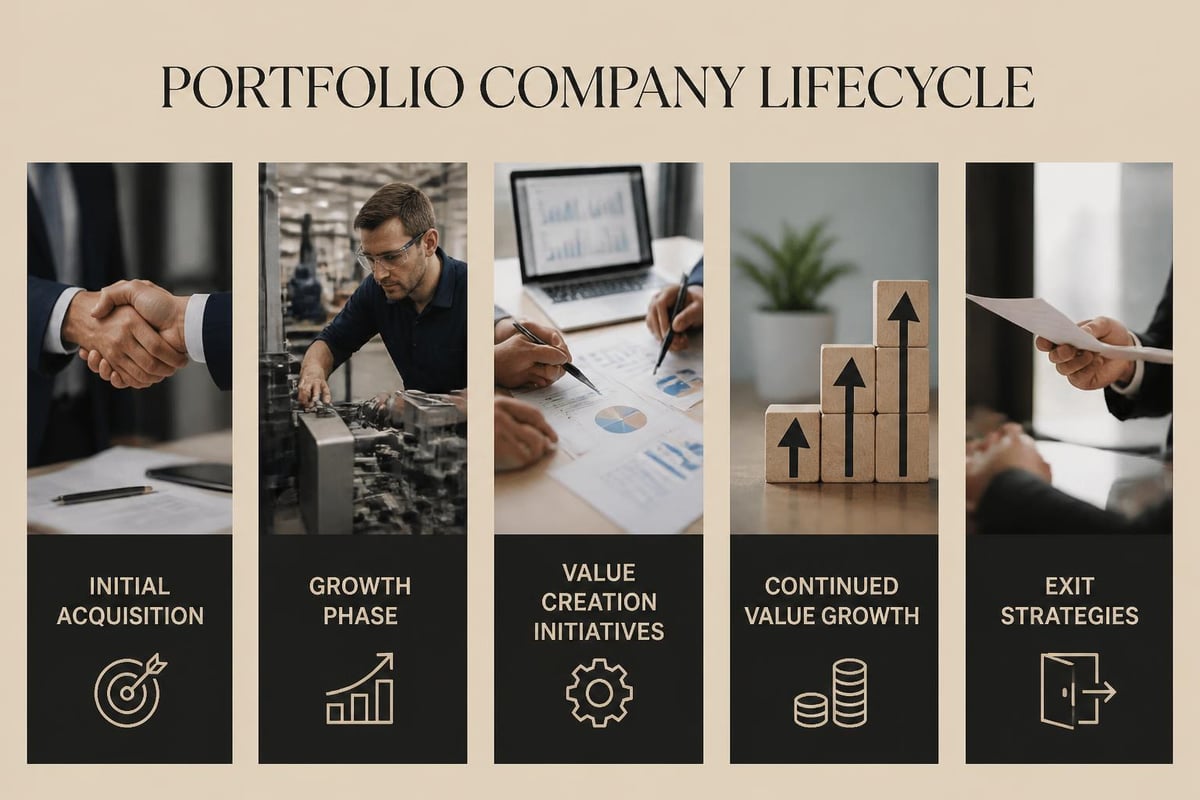
Investment lifecycle stages

Strategic Value Creation Across the Portfolio

Investment firms generate returns by improving the operational and financial performance of their portfolio companies. This value creation process involves systematic approaches to identifying improvement opportunities, implementing best practices, and scaling successful initiatives across multiple holdings.

The lifecycle of a portfolio company typically spans three to seven years, during which investors work intensively to optimize business operations. Performance-based consulting plays a crucial role in this transformation, helping organizations implement automation, streamline processes, and enhance employee productivity.

Operational Excellence Initiatives

Portfolio companies benefit from shared resources and expertise that individual businesses might struggle to access independently. Investment firms often establish centralized service centers providing:

  1. Technology infrastructure including automation platforms and integration tools
  2. Financial management systems for improved reporting and analysis
  3. Human capital development programs and talent acquisition support
  4. Revenue optimization strategies and sales process improvements
  5. Risk management frameworks and compliance support

These capabilities mirror the services that business automation solutions provide to organizations seeking operational efficiency. When properly implemented, automation can eliminate thousands of manual process hours annually, freeing employees to focus on strategic initiatives.

Value Creation Area Typical Impact Timeline to Results
Process Automation 30-50% efficiency gain 3-6 months
Revenue Cycle Management 15-25% improvement 6-12 months
Cost Optimization 10-20% reduction 3-9 months
Employee Retention 20-35% improvement 12-18 months

Portfolio Management Best Practices for 2026

Managing multiple portfolio companies requires sophisticated frameworks that balance standardization with flexibility. Venture capital portfolio management has evolved to emphasize real-time visibility, data-driven decision-making, and proactive risk mitigation.

Investment firms increasingly leverage technology platforms to monitor portfolio performance, identify emerging trends, and allocate resources effectively. This approach enables faster response to market changes while maintaining consistent oversight across diverse business units.

Performance Monitoring and Metrics

Successful portfolio management relies on comprehensive performance tracking systems:

  • Financial metrics including revenue growth, EBITDA margins, and cash flow generation
  • Operational indicators such as customer acquisition costs, retention rates, and productivity measures
  • Strategic milestones tracking product development, market expansion, and partnership achievements
  • Employee engagement scores and talent development progress

These metrics provide early warning signals for underperformance while highlighting opportunities for cross-portfolio collaboration. Managing project portfolios effectively requires balancing short-term execution with long-term strategic positioning.

Performance dashboard

Technology and Automation in Portfolio Operations

Digital transformation has become a central theme in portfolio company value creation. Investment firms recognize that technology infrastructure provides competitive advantages that translate directly to improved financial performance and market positioning.

Automation and integration solutions address common challenges across portfolio companies, including fragmented systems, manual data entry, redundant processes, and limited analytical capabilities. By standardizing technology platforms, investment firms enable portfolio companies to scale more efficiently while reducing operational costs.

Implementing AI and Automation Solutions

Artificial intelligence applications within portfolio companies span multiple functional areas:

  1. Revenue cycle management automating billing, collections, and reconciliation processes
  2. Customer service utilizing chatbots and intelligent routing systems
  3. Financial planning leveraging predictive analytics for forecasting and budgeting
  4. Supply chain optimization improving inventory management and logistics coordination
  5. Human resources streamlining recruitment, onboarding, and performance management

The impact of these technologies extends beyond cost savings. Utility optimization strategies demonstrate how systematic approaches to resource management can generate substantial financial benefits while improving operational reliability.

Human Capital Management Across Portfolios

Employee performance and engagement directly influence portfolio company success. Investment firms increasingly recognize that workforce development represents a critical value creation lever, particularly in service-oriented businesses where human capital drives customer satisfaction and revenue generation.

Modern human capital management strategies emphasize comprehensive employee wellness, financial health, and professional development. Understanding the role of portfolio companies within larger investment strategies reveals how employee-focused initiatives contribute to sustainable competitive advantages.

Employee Benefits and Retention Strategies

Portfolio companies benefit from shared insights into effective compensation structures and benefit programs:

  • Competitive base salaries aligned with market benchmarks
  • Performance-based incentives linking individual contributions to company success
  • Health and wellness programs supporting physical and mental wellbeing
  • Financial wellness initiatives including retirement planning and emergency savings support
  • Professional development opportunities for skill enhancement and career advancement

Programs like earned wage access address immediate financial needs while demonstrating employer commitment to employee financial health. These benefits improve retention rates, reducing recruitment costs and preserving institutional knowledge.

Employee Benefit Category Adoption Rate 2026 Impact on Retention
Health Insurance 98% Baseline expectation
Earned Wage Access 47% 12-18% improvement
Mental Health Support 73% 15-22% improvement
Financial Wellness Programs 41% 10-16% improvement

Workforce development

Financial Performance Optimization

Revenue enhancement and cost management represent dual pathways to improved portfolio company performance. Investment firms bring expertise in identifying revenue opportunities, optimizing pricing strategies, and expanding into adjacent markets while simultaneously reducing unnecessary expenses and improving operational efficiency.

The consulting approach to financial optimization emphasizes measurable results and sustainable improvements. Rather than one-time cost cuts that compromise long-term capabilities, sophisticated investors implement structural changes that permanently enhance profitability margins.

Revenue Cycle Excellence

Healthcare-related portfolio companies particularly benefit from specialized revenue cycle management expertise. Proper billing processes, claim submission protocols, and collection strategies can dramatically impact cash flow and working capital requirements.

Organizations implementing comprehensive revenue cycle improvements typically experience:

  1. Reduced days sales outstanding by 15-30%
  2. Improved claim acceptance rates by 20-40%
  3. Decreased bad debt write-offs by 25-35%
  4. Enhanced cash flow predictability supporting better financial planning

Similar principles apply to non-healthcare businesses through optimized shipping efficiency and strategic merchant services selection, demonstrating that operational excellence drives financial performance across industries.

Strategic Planning and Growth Initiatives

Portfolio companies operate within broader strategic frameworks established by their investment partners. These frameworks balance aggressive growth targets with risk management, ensuring sustainable expansion that builds long-term enterprise value.

Effective strategic planning involves market analysis, competitive positioning, capability assessment, and resource allocation. Portfolio company management requires aligning individual business strategies with overall portfolio objectives while respecting each company's unique market dynamics.

Market Expansion Strategies

Growth initiatives for portfolio companies include:

  • Geographic expansion into new regions or international markets
  • Product line extensions leveraging existing customer relationships
  • Acquisition of complementary businesses accelerating market penetration
  • Strategic partnerships accessing new distribution channels or capabilities
  • Digital transformation enabling new service delivery models

Each strategy carries distinct risk profiles and resource requirements. Successful portfolio management involves prioritizing initiatives based on potential returns, execution complexity, and alignment with broader portfolio objectives.

Risk Management and Compliance Frameworks

Portfolio companies face increasing regulatory complexity across multiple jurisdictions and industries. Investment firms provide valuable guidance on compliance requirements, risk mitigation strategies, and governance frameworks that protect enterprise value while supporting growth objectives.

Comprehensive risk management addresses financial risks, operational vulnerabilities, regulatory compliance, cybersecurity threats, and reputational concerns. Standardized approaches across portfolio companies create efficiency while ensuring adequate protection.

Governance and Oversight Structures

Effective governance balances accountability with operational flexibility:

Governance Element Purpose Typical Structure
Board Composition Strategic oversight Investor reps + management + independents
Reporting Cadence Performance monitoring Monthly financials + quarterly strategic reviews
Approval Authorities Risk control Tiered based on transaction size/impact
Audit Requirements Financial integrity Annual external + periodic internal audits

These structures ensure portfolio companies maintain appropriate controls while preserving management's ability to execute strategic initiatives efficiently. The balance between oversight and autonomy significantly influences operational performance.

Exit Strategies and Value Realization

Investment firms ultimately generate returns through portfolio company exits, whether via public offerings, strategic acquisitions, or secondary sales to other investors. Exit planning begins early in the investment lifecycle, shaping operational priorities and strategic positioning.

Successful exits require businesses to demonstrate consistent financial performance, strong market positions, scalable operations, and capable management teams. The groundwork for attractive exits is laid through years of operational improvements and strategic execution.

Preparing for Successful Exits

Portfolio companies enhance exit valuations through:

  1. Financial performance showing consistent revenue growth and margin expansion
  2. Market positioning demonstrating competitive advantages and defensible market share
  3. Operational excellence proving scalable processes and efficient resource utilization
  4. Management depth ensuring business continuity beyond founder leadership
  5. Growth potential articulating credible expansion opportunities for acquirers

These elements combine to create compelling investment narratives that attract potential buyers and support premium valuations. The transformation journey from acquisition to exit represents the essence of portfolio company value creation.


Portfolio companies represent sophisticated partnerships between capital providers and operating businesses, creating value through operational excellence, strategic positioning, and financial optimization. Success requires balancing standardized best practices with customized approaches that respect each business's unique characteristics and market dynamics. If your organization seeks to optimize operations, implement automation solutions, or enhance employee wellness programs, Nero and Associates, Inc. delivers performance-based consulting that helps businesses save costs, save time, and improve overall organizational health. Our expertise in AI automation, human capital management, and revenue cycle optimization can help your business achieve measurable results and sustainable competitive advantages.

Portfolio Companies: Definition, Management & Growth

Investment firms, private equity groups, and venture capital organizations build their success on the performance of their portfolio companies. These businesses represent more than just financial assets; they embody strategic partnerships where capital meets operational expertise to drive transformational growth. Understanding the dynamics of portfolio companies is essential for investors, consultants, and business leaders navigating today's complex financial landscape. As organizations seek to maximize returns while managing risk, the relationship between investment firms and their portfolio holdings has evolved into a sophisticated ecosystem of strategic value creation.

Understanding Portfolio Companies in Modern Investment

Portfolio companies are businesses that have received investment from private equity firms, venture capital funds, or other institutional investors who now hold ownership stakes. Unlike publicly traded companies where shares are freely exchanged on stock markets, portfolio companies typically operate within structured investment frameworks that involve active management and strategic guidance from their investors.

The relationship between an investment firm and its portfolio companies extends far beyond capital provision. Modern investors bring operational expertise, industry connections, technology infrastructure, and strategic planning capabilities to enhance business performance. This collaborative model has become particularly relevant in 2026, where digital transformation and operational efficiency are critical success factors.

Types of Portfolio Company Arrangements

Investment structures vary significantly based on firm strategy and industry focus:

  • Majority-stake acquisitions where investors control decision-making
  • Minority investments providing growth capital while founders retain control
  • Consortium investments involving multiple investment partners
  • Strategic corporate investments where operating companies invest in complementary businesses

Each arrangement creates different dynamics for value creation and operational involvement. Understanding these distinctions helps business leaders determine which investment partners align with their growth objectives.

Investment lifecycle stages

Strategic Value Creation Across the Portfolio

Investment firms generate returns by improving the operational and financial performance of their portfolio companies. This value creation process involves systematic approaches to identifying improvement opportunities, implementing best practices, and scaling successful initiatives across multiple holdings.

The lifecycle of a portfolio company typically spans three to seven years, during which investors work intensively to optimize business operations. Performance-based consulting plays a crucial role in this transformation, helping organizations implement automation, streamline processes, and enhance employee productivity.

Operational Excellence Initiatives

Portfolio companies benefit from shared resources and expertise that individual businesses might struggle to access independently. Investment firms often establish centralized service centers providing:

  1. Technology infrastructure including automation platforms and integration tools
  2. Financial management systems for improved reporting and analysis
  3. Human capital development programs and talent acquisition support
  4. Revenue optimization strategies and sales process improvements
  5. Risk management frameworks and compliance support

These capabilities mirror the services that business automation solutions provide to organizations seeking operational efficiency. When properly implemented, automation can eliminate thousands of manual process hours annually, freeing employees to focus on strategic initiatives.

Value Creation Area Typical Impact Timeline to Results
Process Automation 30-50% efficiency gain 3-6 months
Revenue Cycle Management 15-25% improvement 6-12 months
Cost Optimization 10-20% reduction 3-9 months
Employee Retention 20-35% improvement 12-18 months

Portfolio Management Best Practices for 2026

Managing multiple portfolio companies requires sophisticated frameworks that balance standardization with flexibility. Venture capital portfolio management has evolved to emphasize real-time visibility, data-driven decision-making, and proactive risk mitigation.

Investment firms increasingly leverage technology platforms to monitor portfolio performance, identify emerging trends, and allocate resources effectively. This approach enables faster response to market changes while maintaining consistent oversight across diverse business units.

Performance Monitoring and Metrics

Successful portfolio management relies on comprehensive performance tracking systems:

  • Financial metrics including revenue growth, EBITDA margins, and cash flow generation
  • Operational indicators such as customer acquisition costs, retention rates, and productivity measures
  • Strategic milestones tracking product development, market expansion, and partnership achievements
  • Employee engagement scores and talent development progress

These metrics provide early warning signals for underperformance while highlighting opportunities for cross-portfolio collaboration. Managing project portfolios effectively requires balancing short-term execution with long-term strategic positioning.

Performance dashboard

Technology and Automation in Portfolio Operations

Digital transformation has become a central theme in portfolio company value creation. Investment firms recognize that technology infrastructure provides competitive advantages that translate directly to improved financial performance and market positioning.

Automation and integration solutions address common challenges across portfolio companies, including fragmented systems, manual data entry, redundant processes, and limited analytical capabilities. By standardizing technology platforms, investment firms enable portfolio companies to scale more efficiently while reducing operational costs.

Implementing AI and Automation Solutions

Artificial intelligence applications within portfolio companies span multiple functional areas:

  1. Revenue cycle management automating billing, collections, and reconciliation processes
  2. Customer service utilizing chatbots and intelligent routing systems
  3. Financial planning leveraging predictive analytics for forecasting and budgeting
  4. Supply chain optimization improving inventory management and logistics coordination
  5. Human resources streamlining recruitment, onboarding, and performance management

The impact of these technologies extends beyond cost savings. Utility optimization strategies demonstrate how systematic approaches to resource management can generate substantial financial benefits while improving operational reliability.

Human Capital Management Across Portfolios

Employee performance and engagement directly influence portfolio company success. Investment firms increasingly recognize that workforce development represents a critical value creation lever, particularly in service-oriented businesses where human capital drives customer satisfaction and revenue generation.

Modern human capital management strategies emphasize comprehensive employee wellness, financial health, and professional development. Understanding the role of portfolio companies within larger investment strategies reveals how employee-focused initiatives contribute to sustainable competitive advantages.

Employee Benefits and Retention Strategies

Portfolio companies benefit from shared insights into effective compensation structures and benefit programs:

  • Competitive base salaries aligned with market benchmarks
  • Performance-based incentives linking individual contributions to company success
  • Health and wellness programs supporting physical and mental wellbeing
  • Financial wellness initiatives including retirement planning and emergency savings support
  • Professional development opportunities for skill enhancement and career advancement

Programs like earned wage access address immediate financial needs while demonstrating employer commitment to employee financial health. These benefits improve retention rates, reducing recruitment costs and preserving institutional knowledge.

Employee Benefit Category Adoption Rate 2026 Impact on Retention
Health Insurance 98% Baseline expectation
Earned Wage Access 47% 12-18% improvement
Mental Health Support 73% 15-22% improvement
Financial Wellness Programs 41% 10-16% improvement

Workforce development

Financial Performance Optimization

Revenue enhancement and cost management represent dual pathways to improved portfolio company performance. Investment firms bring expertise in identifying revenue opportunities, optimizing pricing strategies, and expanding into adjacent markets while simultaneously reducing unnecessary expenses and improving operational efficiency.

The consulting approach to financial optimization emphasizes measurable results and sustainable improvements. Rather than one-time cost cuts that compromise long-term capabilities, sophisticated investors implement structural changes that permanently enhance profitability margins.

Revenue Cycle Excellence

Healthcare-related portfolio companies particularly benefit from specialized revenue cycle management expertise. Proper billing processes, claim submission protocols, and collection strategies can dramatically impact cash flow and working capital requirements.

Organizations implementing comprehensive revenue cycle improvements typically experience:

  1. Reduced days sales outstanding by 15-30%
  2. Improved claim acceptance rates by 20-40%
  3. Decreased bad debt write-offs by 25-35%
  4. Enhanced cash flow predictability supporting better financial planning

Similar principles apply to non-healthcare businesses through optimized shipping efficiency and strategic merchant services selection, demonstrating that operational excellence drives financial performance across industries.

Strategic Planning and Growth Initiatives

Portfolio companies operate within broader strategic frameworks established by their investment partners. These frameworks balance aggressive growth targets with risk management, ensuring sustainable expansion that builds long-term enterprise value.

Effective strategic planning involves market analysis, competitive positioning, capability assessment, and resource allocation. Portfolio company management requires aligning individual business strategies with overall portfolio objectives while respecting each company's unique market dynamics.

Market Expansion Strategies

Growth initiatives for portfolio companies include:

  • Geographic expansion into new regions or international markets
  • Product line extensions leveraging existing customer relationships
  • Acquisition of complementary businesses accelerating market penetration
  • Strategic partnerships accessing new distribution channels or capabilities
  • Digital transformation enabling new service delivery models

Each strategy carries distinct risk profiles and resource requirements. Successful portfolio management involves prioritizing initiatives based on potential returns, execution complexity, and alignment with broader portfolio objectives.

Risk Management and Compliance Frameworks

Portfolio companies face increasing regulatory complexity across multiple jurisdictions and industries. Investment firms provide valuable guidance on compliance requirements, risk mitigation strategies, and governance frameworks that protect enterprise value while supporting growth objectives.

Comprehensive risk management addresses financial risks, operational vulnerabilities, regulatory compliance, cybersecurity threats, and reputational concerns. Standardized approaches across portfolio companies create efficiency while ensuring adequate protection.

Governance and Oversight Structures

Effective governance balances accountability with operational flexibility:

Governance Element Purpose Typical Structure
Board Composition Strategic oversight Investor reps + management + independents
Reporting Cadence Performance monitoring Monthly financials + quarterly strategic reviews
Approval Authorities Risk control Tiered based on transaction size/impact
Audit Requirements Financial integrity Annual external + periodic internal audits

These structures ensure portfolio companies maintain appropriate controls while preserving management's ability to execute strategic initiatives efficiently. The balance between oversight and autonomy significantly influences operational performance.

Exit Strategies and Value Realization

Investment firms ultimately generate returns through portfolio company exits, whether via public offerings, strategic acquisitions, or secondary sales to other investors. Exit planning begins early in the investment lifecycle, shaping operational priorities and strategic positioning.

Successful exits require businesses to demonstrate consistent financial performance, strong market positions, scalable operations, and capable management teams. The groundwork for attractive exits is laid through years of operational improvements and strategic execution.

Preparing for Successful Exits

Portfolio companies enhance exit valuations through:

  1. Financial performance showing consistent revenue growth and margin expansion
  2. Market positioning demonstrating competitive advantages and defensible market share
  3. Operational excellence proving scalable processes and efficient resource utilization
  4. Management depth ensuring business continuity beyond founder leadership
  5. Growth potential articulating credible expansion opportunities for acquirers

These elements combine to create compelling investment narratives that attract potential buyers and support premium valuations. The transformation journey from acquisition to exit represents the essence of portfolio company value creation.


Portfolio companies represent sophisticated partnerships between capital providers and operating businesses, creating value through operational excellence, strategic positioning, and financial optimization. Success requires balancing standardized best practices with customized approaches that respect each business's unique characteristics and market dynamics. If your organization seeks to optimize operations, implement automation solutions, or enhance employee wellness programs, Nero and Associates, Inc. delivers performance-based consulting that helps businesses save costs, save time, and improve overall organizational health. Our expertise in AI automation, human capital management, and revenue cycle optimization can help your business achieve measurable results and sustainable competitive advantages.

Website developed in accordance with Web Content Accessibility Guidelines 2.2.
If you encounter any issues while using this site, please contact us: 215.526.5126