
Service and Solution Guide: Your Essential 2026 Handbook

Share on Facebook
Share on X
Share on LinkedIn

In today’s business world, the pace of change is accelerating as organizations race toward 2026. Every year brings new technologies, regulations, and customer demands that reshape how companies operate.

Selecting the right service and solution partners has become more complex than ever. With so many options and risks, leaders need reliable guidance to make informed decisions that drive operational success.

This handbook is designed to be your trusted companion. It demystifies the service and solution landscape, provides actionable strategies, and explores key topics including evaluating solutions, implementation, technology trends, and future-proofing your organization.

Understanding the 2026 Service and Solution Landscape

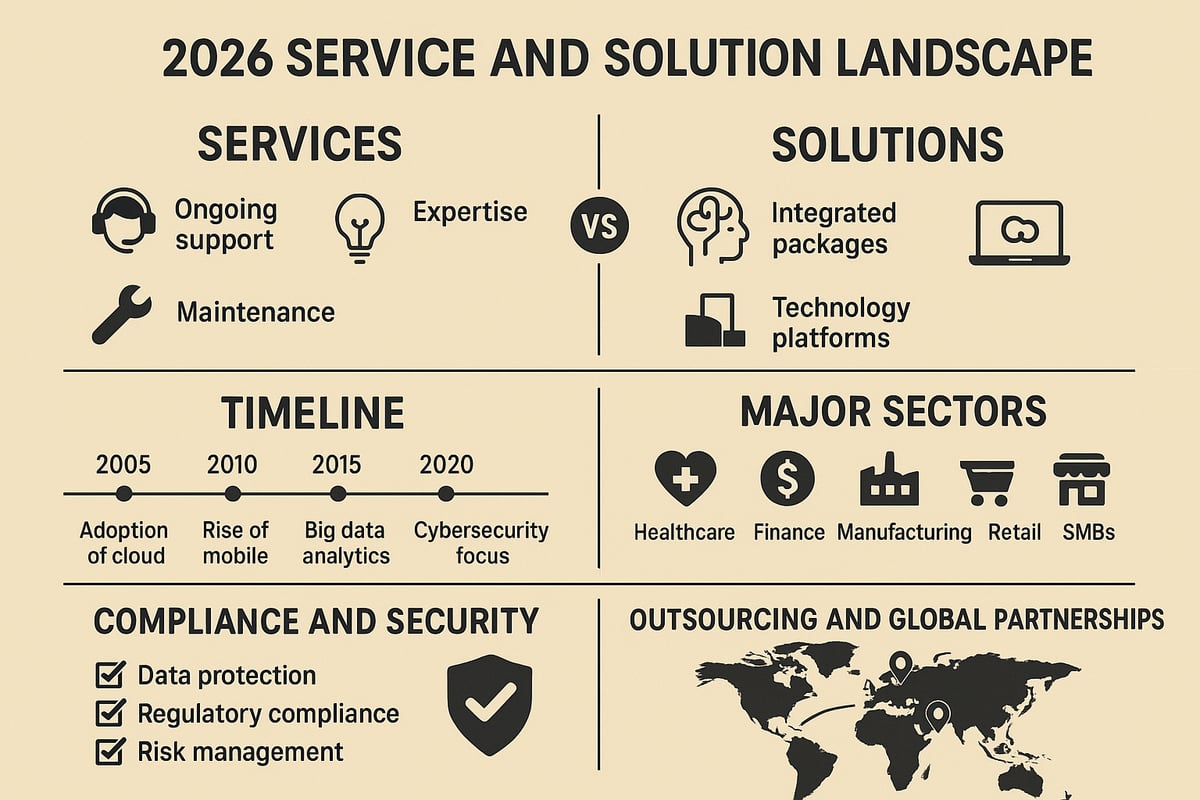
The landscape for service and solution offerings is evolving rapidly as organizations prepare for 2026. Businesses are navigating a marketplace where innovation, integration, and agility are no longer optional but essential. Understanding how these forces shape the modern service and solution environment is key to making informed decisions that drive operational success.
Understanding the 2026 Service and Solution Landscape

Defining Services vs. Solutions in Modern Business Contexts

In today’s business environment, the distinction between service and solution has become more nuanced than ever. Traditionally, a service refers to ongoing support, maintenance, or expertise provided to organizations. A solution, on the other hand, is a packaged offering that combines services, technology, and processes to address specific business challenges.

The trend is moving toward integrated service and solution models, where businesses expect comprehensive packages rather than isolated offerings. Customer expectations now focus on holistic value, seeking both strategic guidance and operational execution in a single engagement.

Consider healthcare and fintech, where hybrid service and solution models are common. For example, a healthcare provider may receive both patient management software (solution) and ongoing compliance consulting (service) from the same partner. This approach ensures seamless support and measurable results.

Key Drivers Shaping the 2026 Landscape

Several powerful forces are reshaping the service and solution market as we approach 2026. Digital transformation and automation are at the forefront, enabling organizations to streamline operations and reduce manual workloads. The customer experience is now a key differentiator, prompting businesses to invest in solutions that personalize and enhance every interaction.

Data-driven decision-making, bolstered by AI integration, is another major driver. Over 70% of organizations now cite digital transformation as their top priority, according to Gartner’s 2023 report. This shift underscores the demand for providers who can deliver both innovative technology and tailored service and solution packages.

The result is a more competitive, dynamic environment where agility, scalability, and measurable impact are paramount.

Major Industry Sectors and Their Evolving Needs

Each sector brings unique challenges to the service and solution landscape. Healthcare, for instance, requires compliance-driven solutions that address privacy and regulatory concerns. Finance seeks robust security and real-time analytics, while manufacturing prioritizes automation and supply chain optimization.

Retailers demand omnichannel support and inventory intelligence, and SMBs look for cost-effective, scalable options. Comparing needs across sectors:

Sector Primary Needs Example Solution
Healthcare Compliance, data privacy Revenue cycle management
Finance Security, analytics Fraud detection platforms
Manufacturing Automation, efficiency IoT-enabled process control
Retail Omnichannel, inventory management Predictive analytics tools
SMBs Scalability, affordability Cloud-based service bundles

To see how healthcare organizations are elevating care with financial and operational excellence, review this Elevating Care Through Financial and Operational Excellence case.

Regulatory, Security, and Ethical Considerations

The service and solution landscape is increasingly influenced by evolving compliance standards such as GDPR and HIPAA. Organizations must stay vigilant about cybersecurity and data privacy, as breaches can have far-reaching consequences.

Ethical sourcing and sustainability are now core selection criteria. Businesses are expected to vet partners for responsible practices, ensuring that solutions align with both regulatory requirements and ethical standards.

Security is a top concern, with investments in advanced protection measures rising annually. The focus on compliance and ethics is shaping the future of every service and solution decision.

The Globalization of Services and Solutions

Globalization has expanded the reach of service and solution providers through outsourcing, offshoring, and nearshoring trends. Organizations benefit from access to specialized talent and cost efficiencies, but also face new risks such as geopolitical instability and complex supply chains.

Global partnerships can enhance capabilities, yet they require careful evaluation of data security, cultural alignment, and legal frameworks. The global BPO market is projected to reach $405 billion by 2026, highlighting the scale and impact of international service and solution strategies.

Successful navigation of these complexities is central to future-ready operations.

Evaluating and Selecting the Right Services and Solutions

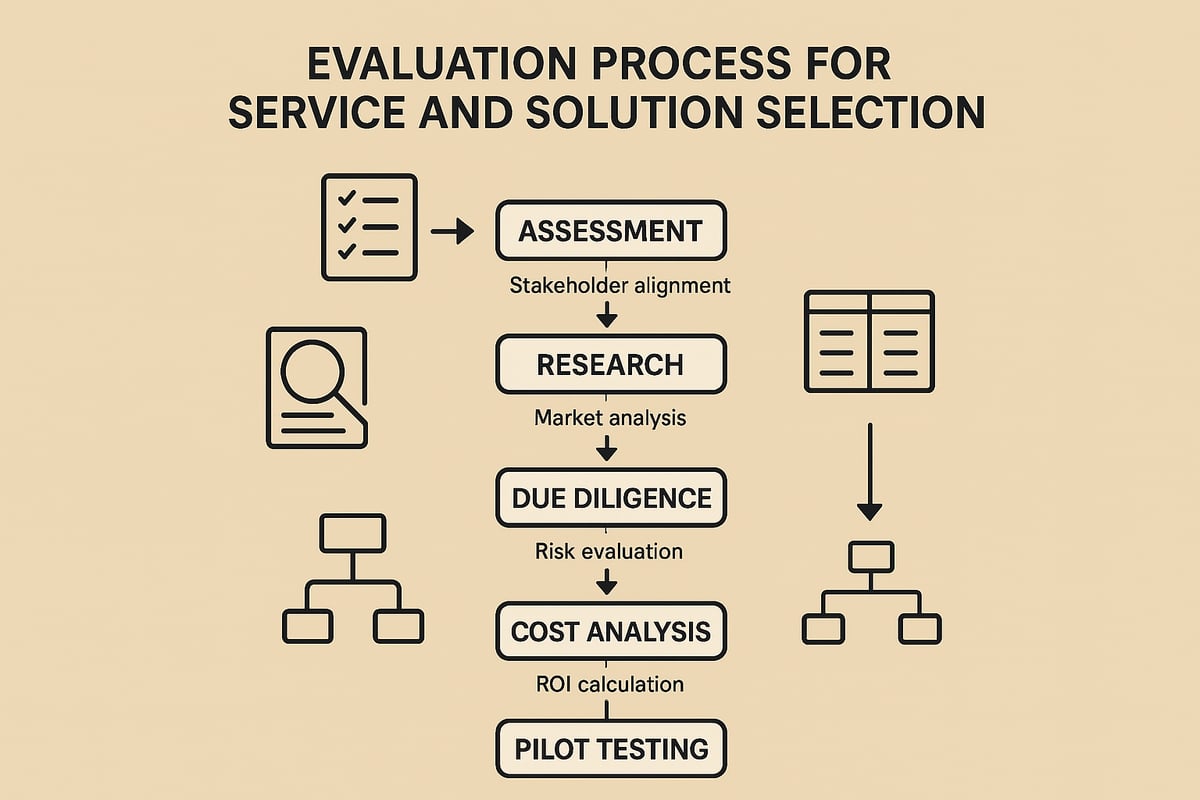
Choosing the right service and solution for your organization is a critical decision that impacts future growth, efficiency, and resilience. The landscape in 2026 is more complex than ever, with stakeholders demanding transparency, security, and measurable returns. To navigate this process effectively, follow a structured approach that ensures every service and solution aligns with your business goals.
Evaluating and Selecting the Right Services and Solutions

Step 1: Needs Assessment and Stakeholder Alignment

Begin by clarifying what your organization truly needs from a service and solution. Identify pain points by gathering input from all departments, not just IT or finance.

Engage stakeholders early. Use stakeholder mapping to ensure every voice is heard and expectations are aligned. This collaborative approach reduces the risk of missed requirements and increases adoption rates.

  • Map key stakeholders across business units
  • Document specific needs, challenges, and desired outcomes
  • Align objectives to ensure the service and solution will deliver value

A thorough needs assessment is the foundation for selecting a service and solution that drives operational success.

Step 2: Researching Providers and Shortlisting Options

Next, research potential providers with a focus on reputation, expertise, scalability, and innovation. Use industry review sites, peer recommendations, and comparison platforms to create a shortlist.

Key criteria to evaluate:

  • Provider track record and case studies
  • Ability to scale and adapt to your future needs
  • Alignment with your industry’s regulatory and operational standards

For in-depth strategies on evaluating and selecting the right business solutions, see Maximizing B2B Growth: Identifying Hidden Opportunities.

An objective comparison process ensures your service and solution choices are well-informed and future-ready.

Step 3: Due Diligence—Security, Compliance, and Performance

Due diligence is essential when selecting a service and solution provider. Build a checklist to vet security practices, compliance with regulations, and performance reliability.

Checklist for due diligence:

  • Review provider certifications (e.g., ISO, SOC 2)
  • Assess data security protocols and incident response plans
  • Verify compliance with industry-specific regulations

Neglecting this step can lead to costly errors. For example, organizations that overlooked compliance requirements faced delayed launches and financial penalties. Protect your investment by thoroughly evaluating each service and solution.

Step 4: Total Cost of Ownership and ROI Analysis

A comprehensive cost analysis goes beyond the initial price tag. Calculate both direct and indirect costs, such as training, integration, and ongoing support.

Methods for ROI projection:

Cost Category Direct Costs Indirect Costs
Licensing
Implementation
Training
Maintenance
Downtime

According to Forrester, 60% of organizations underestimate hidden costs when adopting a new service and solution. By projecting ROI and long-term value, you reduce the risk of budget overruns and ensure sustained benefits.

Step 5: References, Demos, and Pilot Programs

Before committing fully, request provider references and review real-world case studies relevant to your industry. Demos and pilot programs allow you to test the service and solution in your environment with minimal risk.

  • Ask for references from similar organizations
  • Evaluate the outcomes of pilot projects
  • Use measurable KPIs to assess success

Pilot-first approaches often yield higher success rates than immediate full rollouts. This step confirms that the service and solution will perform as promised and meet your unique requirements.

Implementation Strategies: From Planning to Go-Live

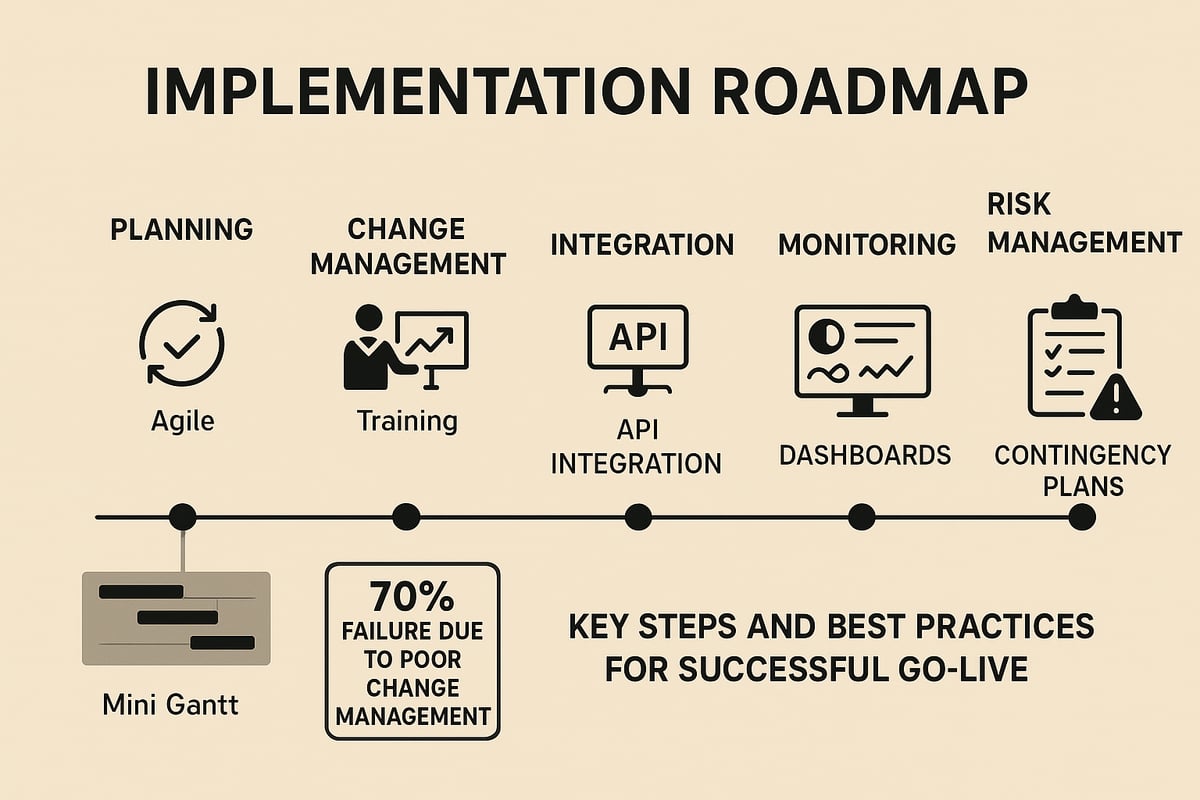
Launching a new service and solution requires meticulous planning, seamless execution, and adaptability. The pathway from initial concept to full-scale operation is filled with milestones, challenges, and opportunities for optimization. By approaching each phase with a structured strategy, organizations can maximize the value and minimize the risks of their service and solution investments.
Implementation Strategies: From Planning to Go-Live

Building an Implementation Roadmap

A robust roadmap is the backbone of any successful service and solution rollout. Start by mapping out project phases, clear timelines, and key milestones. Assign dedicated resources and define roles to ensure accountability.

Use project management methodologies like Agile for iterative delivery or Waterfall for linear progress. Tools such as Gantt charts help visualize dependencies and keep everyone aligned. For example:

Phase Start End Owner
Planning Jan Feb Project Lead
Development Mar May IT Manager
Testing Jun Jul QA Team
Go-Live Aug Aug Operations

A detailed roadmap ensures every aspect of your service and solution implementation stays on track.

Change Management and Employee Adoption

People are central to the success of any service and solution deployment. Communicate early and often to set expectations and address concerns. Invest in comprehensive training programs tailored to various user groups.

To overcome resistance to change, offer incentives and ongoing support. According to Prosci, 70% of failed implementations cite poor change management as the primary reason. Foster a culture of openness where feedback is encouraged.

Key strategies include:

  • Regular team briefings
  • Interactive training sessions
  • Recognition for early adopters

These practices drive engagement and smooth the transition to the new service and solution.

Integration with Existing Systems

Seamless integration is vital for a new service and solution to deliver its promised value. Begin by assessing compatibility with legacy platforms and identifying potential bottlenecks. Use API-based integration to connect modern solutions with existing infrastructure, reducing disruption.

Pilot testing is essential to uncover issues before full deployment. For organizations prioritizing advanced integrations, AI and Automation Integration Solutions can provide tailored support to align new and existing technologies.

A careful integration strategy allows your service and solution to operate efficiently within your current environment.

Monitoring, Feedback, and Continuous Improvement

Continuous monitoring is key to optimizing your service and solution post-launch. Set up real-time dashboards to track performance indicators and user adoption rates. Establish feedback loops through NPS surveys and user interviews to surface areas for improvement.

Iterative reviews help identify small issues before they escalate. Use data-driven insights to refine processes and enhance the user experience. For example, after launch, track user satisfaction scores monthly and adjust training or support based on findings.

This approach ensures your service and solution evolves to meet changing needs.

Risk Management and Contingency Planning

Even the best-planned service and solution projects face unexpected challenges. Identify potential risks early, such as technical setbacks or resource shortages. Develop mitigation strategies and assign responsibilities for rapid response.

Key elements of a contingency plan:

  • Clear escalation paths
  • Backup systems and data recovery protocols
  • Regular scenario testing

A notable example is a company that recovered swiftly from a critical system failure due to having a robust contingency plan in place. Preparing for the unexpected secures the long-term success of your service and solution rollout.

Technology Trends Transforming Services and Solutions

In an era where change is constant, technology is the backbone of every service and solution. As we approach 2026, organizations must track the trends shaping their future. These trends are redefining how businesses deliver value, enhance security, and drive growth.
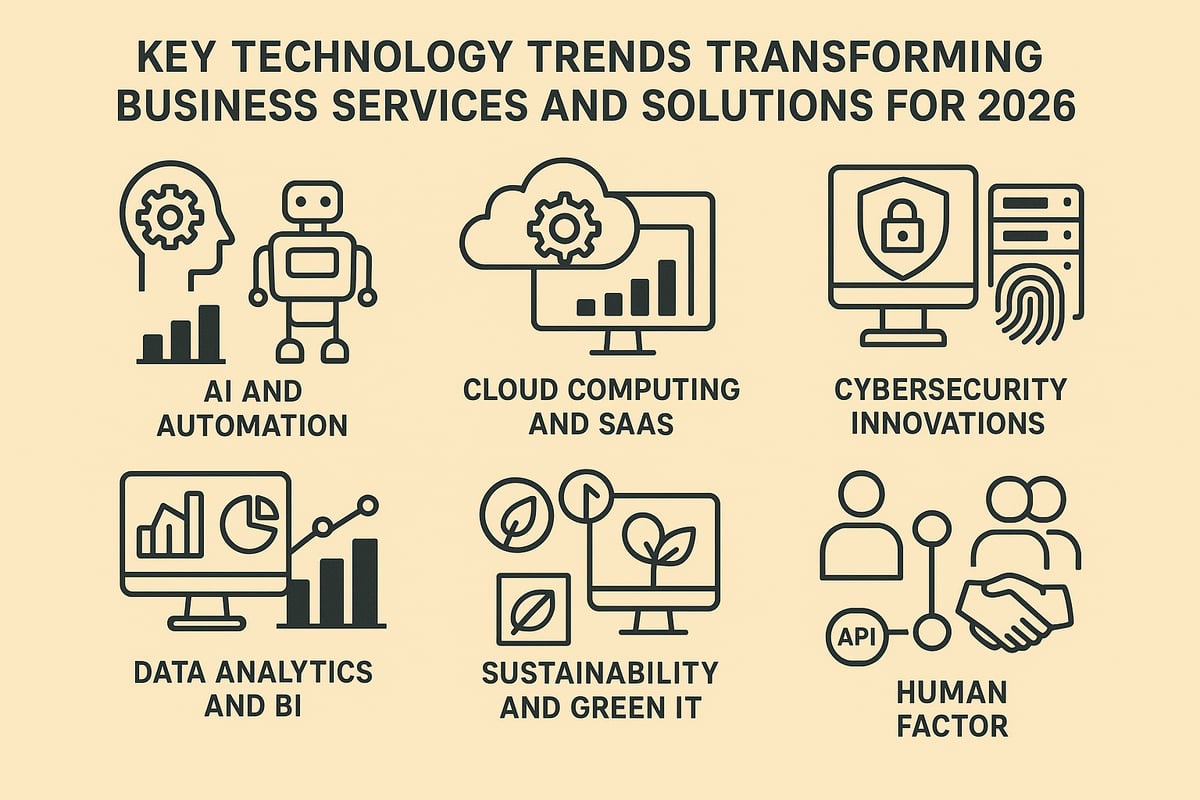
Technology Trends Transforming Services and Solutions

Artificial Intelligence and Automation

Artificial intelligence is now at the core of many service and solution strategies. From predictive analytics to chatbots and robotic process automation, AI is transforming operations across sectors. Organizations leverage intelligent workflows to streamline tasks, reduce errors, and enable faster decision-making.

AI-driven service and solution platforms are not just about efficiency. They empower companies to personalize customer experiences and unlock new revenue streams. For example, predictive analytics in finance can detect fraud in real time, while healthcare uses AI for diagnostics and patient engagement.

The impact is significant: 85% of enterprises will deploy AI-powered solutions by 2026 (IDC, 2024). As automation matures, the line between service and solution continues to blur, creating integrated offerings that deliver holistic value.

Cloud Computing and SaaS Evolution

Cloud computing remains a critical driver for every modern service and solution. The shift to cloud infrastructure gives organizations scalability, remote access, and cost flexibility. Businesses are increasingly adopting multi-cloud and hybrid cloud models to balance performance, security, and compliance needs.

Software as a Service (SaaS) adoption is soaring, especially among SMBs. Today, SaaS penetration in SMBs has crossed 70%, enabling even smaller firms to access advanced service and solution capabilities. The cloud also accelerates digital transformation, making innovation more accessible than ever.

IT spending reflects this momentum. According to Global IT spending set to exceed $6 trillion in 2026, organizations are investing heavily in cloud and SaaS, underlining the central role of technology in shaping the service and solution landscape.

Cybersecurity Innovations

Security is now inseparable from any effective service and solution. Next-generation protocols, such as zero trust architectures, are becoming standard as organizations defend against evolving threats. The rise of managed security services and Managed Detection and Response (MDR) providers is helping businesses stay ahead of sophisticated cyberattacks.

Spending on cybersecurity continues to surge. As highlighted by Global cybersecurity spending to hit $213 billion in 2025, companies are prioritizing robust protection for data, systems, and customer trust. Every service and solution must now demonstrate resilience against breaches and compliance risks.

Cybersecurity is not just a technical issue but a business imperative. Providers who integrate advanced security measures into their service and solution offerings will lead in 2026 and beyond.

Data Analytics and Business Intelligence

Data is the foundation of the modern service and solution approach. Real-time analytics allow organizations to anticipate trends and take proactive action. Business intelligence (BI) tools have democratized data access, enabling employees at all levels to make informed decisions.

Retailers, for example, use predictive analytics to optimize inventory and reduce waste. Manufacturing firms rely on BI dashboards to monitor supply chains and improve efficiency. The service and solution landscape now demands platforms that turn data into actionable insights quickly and accurately.

Key benefits include:

  • Faster, data-driven decisions
  • Improved customer satisfaction
  • Enhanced operational efficiency

As analytics become more advanced, expect the service and solution market to prioritize platforms that offer integrated, user-friendly BI features.

Sustainability and Green IT

Sustainability is no longer optional for any service and solution provider. Businesses face growing regulatory pressure for carbon reporting and reduction. Eco-friendly service models and energy-efficient solutions are becoming standard evaluation criteria during vendor selection.

According to Deloitte, 40% of organizations consider sustainability when choosing a service and solution partner. Green IT initiatives, such as optimizing data centers and using renewable energy, are now central to operational strategies.

Sustainable service and solution practices not only support compliance but also enhance brand reputation and customer loyalty. Forward-thinking firms are embedding environmental responsibility into every layer of their technology stack.

The Human Factor: Augmenting, Not Replacing, Talent

Despite rapid automation, people remain at the heart of every advanced service and solution. Upskilling and reskilling are essential as employees adapt to new technologies. Organizations benefit most when human expertise and digital tools work hand in hand.

Hybrid teams, especially in finance and healthcare, blend automation with professional judgment. This approach ensures that service and solution outcomes are both efficient and empathetic.

Investing in talent development allows companies to stay agile. As digital transformation accelerates, the most successful service and solution strategies will elevate both technology and people, preparing organizations for the future.

Future-Proofing Your Organization: Building Resilience and Agility

Building resilience and agility has become a critical priority for every organization navigating the fast-changing service and solution landscape. The ability to adapt quickly and future-proof your operations will separate thriving businesses from those left behind. Let us break down the key strategies to help your organization stay ahead.

Anticipating Market Shifts and Disruptions

To future-proof your organization, you must anticipate changes in the business landscape. Environmental scanning and trend analysis enable leaders to spot emerging risks and opportunities early. Techniques like scenario planning help organizations prepare for economic, regulatory, and technological shifts.

The 2020 pandemic illustrated how quickly disruptions can force businesses to pivot. Organizations that had robust service and solution frameworks adapted faster, minimizing losses and seizing new opportunities.

Regularly reviewing market intelligence, competitor moves, and regulatory updates ensures your strategy stays relevant. Make anticipation a core competency, not an afterthought.

Investing in Scalable and Modular Solutions

Implementing scalable and modular architectures is essential for building long-term resilience. Modular service and solution components allow organizations to adapt, expand, or upgrade without overhauling entire systems. This flexibility reduces both costs and downtime.

A recent McKinsey study found modular solutions can lower upgrade expenses by 30 percent on average. When evaluating investments, compare the total cost and adaptability of modular versus monolithic systems.

Approach Flexibility Cost Efficiency Upgrade Speed
Modular High High Fast
Monolithic Low Moderate Slow

Prioritize solutions that scale with your business needs and support future growth.

Cultivating a Culture of Innovation

A resilient organization fosters a culture where experimentation and cross-functional collaboration are encouraged. Innovation should not be limited to technology teams; every department must contribute fresh ideas to the service and solution strategy.

Rewarding risk-taking and learning from failure can drive continuous improvement. Many enterprises establish internal innovation labs to test concepts before wider rollout, creating a safe space for creativity.

Encourage team members to share insights and participate in pilot projects. This approach accelerates adoption of new solutions and embeds agility into your corporate DNA.

Building Strong Vendor and Partner Ecosystems

Strategic partnerships are fundamental to staying competitive. Building a robust vendor and partner ecosystem provides access to best-in-class service and solution offerings. By leveraging co-innovation, organizations can address complex challenges with speed and efficiency.

Managing a multi-vendor environment ensures you are not locked into a single provider. For example, a partner-led digital transformation can introduce new capabilities while mitigating risks.

Consider regular reviews and open communication channels with partners. This strengthens collaboration and enables joint responses to market shifts.

Measuring Success and Continuous Evolution

Establishing clear metrics is vital for tracking operational efficiency, customer satisfaction, and employee engagement. Use dashboards and review cycles to monitor performance and identify improvement areas in your service and solution deployment.

Annual business reviews and technology audits provide structured opportunities to evaluate progress. Metrics such as Net Promoter Score (NPS), system uptime, and process turnaround times highlight strengths and gaps.

Metric Why It Matters
Operational Efficiency Identifies bottlenecks
Customer Satisfaction Drives loyalty
Employee Engagement Supports adoption

Continuous evolution becomes possible when feedback informs strategic adjustments.

Preparing for the Unknown: Flexibility as a Core Competency

True agility means being able to respond rapidly to emerging opportunities and threats. Embedding this flexibility into your organization’s culture and systems is non-negotiable for long-term success.

Rapid response frameworks and scenario-based drills ensure your teams are ready for the unexpected. According to PwC, 55 percent of leaders cite agility as the top factor for future competitiveness.

Consider integrating Payroll and Human Capital Management Services to ensure your workforce remains adaptable, engaged, and aligned with new service and solution strategies.

By focusing on flexibility, your organization is better positioned to thrive amid uncertainty and constant change.

As you navigate the evolving landscape of business services and solutions for 2026, it's clear that choosing the right partner is more important than ever. We've explored strategies for evaluating providers, integrating new technologies, and future proofing your operations—all with a focus on efficiency, wellness, and measurable impact. If you're ready to translate these insights into actionable results for your organization, let's take the next step together. You can discuss your unique challenges and goals directly with an expert by Book a Consultation.

Service and Solution Guide: Your Essential 2026 Handbook

In today’s business world, the pace of change is accelerating as organizations race toward 2026. Every year brings new technologies, regulations, and customer demands that reshape how companies operate.

Selecting the right service and solution partners has become more complex than ever. With so many options and risks, leaders need reliable guidance to make informed decisions that drive operational success.

This handbook is designed to be your trusted companion. It demystifies the service and solution landscape, provides actionable strategies, and explores key topics including evaluating solutions, implementation, technology trends, and future-proofing your organization.

Understanding the 2026 Service and Solution Landscape

The landscape for service and solution offerings is evolving rapidly as organizations prepare for 2026. Businesses are navigating a marketplace where innovation, integration, and agility are no longer optional but essential. Understanding how these forces shape the modern service and solution environment is key to making informed decisions that drive operational success.

Understanding the 2026 Service and Solution Landscape

Defining Services vs. Solutions in Modern Business Contexts

In today’s business environment, the distinction between service and solution has become more nuanced than ever. Traditionally, a service refers to ongoing support, maintenance, or expertise provided to organizations. A solution, on the other hand, is a packaged offering that combines services, technology, and processes to address specific business challenges.

The trend is moving toward integrated service and solution models, where businesses expect comprehensive packages rather than isolated offerings. Customer expectations now focus on holistic value, seeking both strategic guidance and operational execution in a single engagement.

Consider healthcare and fintech, where hybrid service and solution models are common. For example, a healthcare provider may receive both patient management software (solution) and ongoing compliance consulting (service) from the same partner. This approach ensures seamless support and measurable results.

Key Drivers Shaping the 2026 Landscape

Several powerful forces are reshaping the service and solution market as we approach 2026. Digital transformation and automation are at the forefront, enabling organizations to streamline operations and reduce manual workloads. The customer experience is now a key differentiator, prompting businesses to invest in solutions that personalize and enhance every interaction.

Data-driven decision-making, bolstered by AI integration, is another major driver. Over 70% of organizations now cite digital transformation as their top priority, according to Gartner’s 2023 report. This shift underscores the demand for providers who can deliver both innovative technology and tailored service and solution packages.

The result is a more competitive, dynamic environment where agility, scalability, and measurable impact are paramount.

Major Industry Sectors and Their Evolving Needs

Each sector brings unique challenges to the service and solution landscape. Healthcare, for instance, requires compliance-driven solutions that address privacy and regulatory concerns. Finance seeks robust security and real-time analytics, while manufacturing prioritizes automation and supply chain optimization.

Retailers demand omnichannel support and inventory intelligence, and SMBs look for cost-effective, scalable options. Comparing needs across sectors:

Sector Primary Needs Example Solution
Healthcare Compliance, data privacy Revenue cycle management
Finance Security, analytics Fraud detection platforms
Manufacturing Automation, efficiency IoT-enabled process control
Retail Omnichannel, inventory management Predictive analytics tools
SMBs Scalability, affordability Cloud-based service bundles

To see how healthcare organizations are elevating care with financial and operational excellence, review this Elevating Care Through Financial and Operational Excellence case.

Regulatory, Security, and Ethical Considerations

The service and solution landscape is increasingly influenced by evolving compliance standards such as GDPR and HIPAA. Organizations must stay vigilant about cybersecurity and data privacy, as breaches can have far-reaching consequences.

Ethical sourcing and sustainability are now core selection criteria. Businesses are expected to vet partners for responsible practices, ensuring that solutions align with both regulatory requirements and ethical standards.

Security is a top concern, with investments in advanced protection measures rising annually. The focus on compliance and ethics is shaping the future of every service and solution decision.

The Globalization of Services and Solutions

Globalization has expanded the reach of service and solution providers through outsourcing, offshoring, and nearshoring trends. Organizations benefit from access to specialized talent and cost efficiencies, but also face new risks such as geopolitical instability and complex supply chains.

Global partnerships can enhance capabilities, yet they require careful evaluation of data security, cultural alignment, and legal frameworks. The global BPO market is projected to reach $405 billion by 2026, highlighting the scale and impact of international service and solution strategies.

Successful navigation of these complexities is central to future-ready operations.

Evaluating and Selecting the Right Services and Solutions

Choosing the right service and solution for your organization is a critical decision that impacts future growth, efficiency, and resilience. The landscape in 2026 is more complex than ever, with stakeholders demanding transparency, security, and measurable returns. To navigate this process effectively, follow a structured approach that ensures every service and solution aligns with your business goals.

Evaluating and Selecting the Right Services and Solutions

Step 1: Needs Assessment and Stakeholder Alignment

Begin by clarifying what your organization truly needs from a service and solution. Identify pain points by gathering input from all departments, not just IT or finance.

Engage stakeholders early. Use stakeholder mapping to ensure every voice is heard and expectations are aligned. This collaborative approach reduces the risk of missed requirements and increases adoption rates.

  • Map key stakeholders across business units
  • Document specific needs, challenges, and desired outcomes
  • Align objectives to ensure the service and solution will deliver value

A thorough needs assessment is the foundation for selecting a service and solution that drives operational success.

Step 2: Researching Providers and Shortlisting Options

Next, research potential providers with a focus on reputation, expertise, scalability, and innovation. Use industry review sites, peer recommendations, and comparison platforms to create a shortlist.

Key criteria to evaluate:

  • Provider track record and case studies
  • Ability to scale and adapt to your future needs
  • Alignment with your industry’s regulatory and operational standards

For in-depth strategies on evaluating and selecting the right business solutions, see Maximizing B2B Growth: Identifying Hidden Opportunities.

An objective comparison process ensures your service and solution choices are well-informed and future-ready.

Step 3: Due Diligence—Security, Compliance, and Performance

Due diligence is essential when selecting a service and solution provider. Build a checklist to vet security practices, compliance with regulations, and performance reliability.

Checklist for due diligence:

  • Review provider certifications (e.g., ISO, SOC 2)
  • Assess data security protocols and incident response plans
  • Verify compliance with industry-specific regulations

Neglecting this step can lead to costly errors. For example, organizations that overlooked compliance requirements faced delayed launches and financial penalties. Protect your investment by thoroughly evaluating each service and solution.

Step 4: Total Cost of Ownership and ROI Analysis

A comprehensive cost analysis goes beyond the initial price tag. Calculate both direct and indirect costs, such as training, integration, and ongoing support.

Methods for ROI projection:

Cost Category Direct Costs Indirect Costs
Licensing
Implementation
Training
Maintenance
Downtime

According to Forrester, 60% of organizations underestimate hidden costs when adopting a new service and solution. By projecting ROI and long-term value, you reduce the risk of budget overruns and ensure sustained benefits.

Step 5: References, Demos, and Pilot Programs

Before committing fully, request provider references and review real-world case studies relevant to your industry. Demos and pilot programs allow you to test the service and solution in your environment with minimal risk.

  • Ask for references from similar organizations
  • Evaluate the outcomes of pilot projects
  • Use measurable KPIs to assess success

Pilot-first approaches often yield higher success rates than immediate full rollouts. This step confirms that the service and solution will perform as promised and meet your unique requirements.

Implementation Strategies: From Planning to Go-Live

Launching a new service and solution requires meticulous planning, seamless execution, and adaptability. The pathway from initial concept to full-scale operation is filled with milestones, challenges, and opportunities for optimization. By approaching each phase with a structured strategy, organizations can maximize the value and minimize the risks of their service and solution investments.

Implementation Strategies: From Planning to Go-Live

Building an Implementation Roadmap

A robust roadmap is the backbone of any successful service and solution rollout. Start by mapping out project phases, clear timelines, and key milestones. Assign dedicated resources and define roles to ensure accountability.

Use project management methodologies like Agile for iterative delivery or Waterfall for linear progress. Tools such as Gantt charts help visualize dependencies and keep everyone aligned. For example:

Phase Start End Owner
Planning Jan Feb Project Lead
Development Mar May IT Manager
Testing Jun Jul QA Team
Go-Live Aug Aug Operations

A detailed roadmap ensures every aspect of your service and solution implementation stays on track.

Change Management and Employee Adoption

People are central to the success of any service and solution deployment. Communicate early and often to set expectations and address concerns. Invest in comprehensive training programs tailored to various user groups.

To overcome resistance to change, offer incentives and ongoing support. According to Prosci, 70% of failed implementations cite poor change management as the primary reason. Foster a culture of openness where feedback is encouraged.

Key strategies include:

  • Regular team briefings
  • Interactive training sessions
  • Recognition for early adopters

These practices drive engagement and smooth the transition to the new service and solution.

Integration with Existing Systems

Seamless integration is vital for a new service and solution to deliver its promised value. Begin by assessing compatibility with legacy platforms and identifying potential bottlenecks. Use API-based integration to connect modern solutions with existing infrastructure, reducing disruption.

Pilot testing is essential to uncover issues before full deployment. For organizations prioritizing advanced integrations, AI and Automation Integration Solutions can provide tailored support to align new and existing technologies.

A careful integration strategy allows your service and solution to operate efficiently within your current environment.

Monitoring, Feedback, and Continuous Improvement

Continuous monitoring is key to optimizing your service and solution post-launch. Set up real-time dashboards to track performance indicators and user adoption rates. Establish feedback loops through NPS surveys and user interviews to surface areas for improvement.

Iterative reviews help identify small issues before they escalate. Use data-driven insights to refine processes and enhance the user experience. For example, after launch, track user satisfaction scores monthly and adjust training or support based on findings.

This approach ensures your service and solution evolves to meet changing needs.

Risk Management and Contingency Planning

Even the best-planned service and solution projects face unexpected challenges. Identify potential risks early, such as technical setbacks or resource shortages. Develop mitigation strategies and assign responsibilities for rapid response.

Key elements of a contingency plan:

  • Clear escalation paths
  • Backup systems and data recovery protocols
  • Regular scenario testing

A notable example is a company that recovered swiftly from a critical system failure due to having a robust contingency plan in place. Preparing for the unexpected secures the long-term success of your service and solution rollout.

Technology Trends Transforming Services and Solutions

In an era where change is constant, technology is the backbone of every service and solution. As we approach 2026, organizations must track the trends shaping their future. These trends are redefining how businesses deliver value, enhance security, and drive growth.

Technology Trends Transforming Services and Solutions

Artificial Intelligence and Automation

Artificial intelligence is now at the core of many service and solution strategies. From predictive analytics to chatbots and robotic process automation, AI is transforming operations across sectors. Organizations leverage intelligent workflows to streamline tasks, reduce errors, and enable faster decision-making.

AI-driven service and solution platforms are not just about efficiency. They empower companies to personalize customer experiences and unlock new revenue streams. For example, predictive analytics in finance can detect fraud in real time, while healthcare uses AI for diagnostics and patient engagement.

The impact is significant: 85% of enterprises will deploy AI-powered solutions by 2026 (IDC, 2024). As automation matures, the line between service and solution continues to blur, creating integrated offerings that deliver holistic value.

Cloud Computing and SaaS Evolution

Cloud computing remains a critical driver for every modern service and solution. The shift to cloud infrastructure gives organizations scalability, remote access, and cost flexibility. Businesses are increasingly adopting multi-cloud and hybrid cloud models to balance performance, security, and compliance needs.

Software as a Service (SaaS) adoption is soaring, especially among SMBs. Today, SaaS penetration in SMBs has crossed 70%, enabling even smaller firms to access advanced service and solution capabilities. The cloud also accelerates digital transformation, making innovation more accessible than ever.

IT spending reflects this momentum. According to Global IT spending set to exceed $6 trillion in 2026, organizations are investing heavily in cloud and SaaS, underlining the central role of technology in shaping the service and solution landscape.

Cybersecurity Innovations

Security is now inseparable from any effective service and solution. Next-generation protocols, such as zero trust architectures, are becoming standard as organizations defend against evolving threats. The rise of managed security services and Managed Detection and Response (MDR) providers is helping businesses stay ahead of sophisticated cyberattacks.

Spending on cybersecurity continues to surge. As highlighted by Global cybersecurity spending to hit $213 billion in 2025, companies are prioritizing robust protection for data, systems, and customer trust. Every service and solution must now demonstrate resilience against breaches and compliance risks.

Cybersecurity is not just a technical issue but a business imperative. Providers who integrate advanced security measures into their service and solution offerings will lead in 2026 and beyond.

Data Analytics and Business Intelligence

Data is the foundation of the modern service and solution approach. Real-time analytics allow organizations to anticipate trends and take proactive action. Business intelligence (BI) tools have democratized data access, enabling employees at all levels to make informed decisions.

Retailers, for example, use predictive analytics to optimize inventory and reduce waste. Manufacturing firms rely on BI dashboards to monitor supply chains and improve efficiency. The service and solution landscape now demands platforms that turn data into actionable insights quickly and accurately.

Key benefits include:

  • Faster, data-driven decisions
  • Improved customer satisfaction
  • Enhanced operational efficiency

As analytics become more advanced, expect the service and solution market to prioritize platforms that offer integrated, user-friendly BI features.

Sustainability and Green IT

Sustainability is no longer optional for any service and solution provider. Businesses face growing regulatory pressure for carbon reporting and reduction. Eco-friendly service models and energy-efficient solutions are becoming standard evaluation criteria during vendor selection.

According to Deloitte, 40% of organizations consider sustainability when choosing a service and solution partner. Green IT initiatives, such as optimizing data centers and using renewable energy, are now central to operational strategies.

Sustainable service and solution practices not only support compliance but also enhance brand reputation and customer loyalty. Forward-thinking firms are embedding environmental responsibility into every layer of their technology stack.

The Human Factor: Augmenting, Not Replacing, Talent

Despite rapid automation, people remain at the heart of every advanced service and solution. Upskilling and reskilling are essential as employees adapt to new technologies. Organizations benefit most when human expertise and digital tools work hand in hand.

Hybrid teams, especially in finance and healthcare, blend automation with professional judgment. This approach ensures that service and solution outcomes are both efficient and empathetic.

Investing in talent development allows companies to stay agile. As digital transformation accelerates, the most successful service and solution strategies will elevate both technology and people, preparing organizations for the future.

Future-Proofing Your Organization: Building Resilience and Agility

Building resilience and agility has become a critical priority for every organization navigating the fast-changing service and solution landscape. The ability to adapt quickly and future-proof your operations will separate thriving businesses from those left behind. Let us break down the key strategies to help your organization stay ahead.

Anticipating Market Shifts and Disruptions

To future-proof your organization, you must anticipate changes in the business landscape. Environmental scanning and trend analysis enable leaders to spot emerging risks and opportunities early. Techniques like scenario planning help organizations prepare for economic, regulatory, and technological shifts.

The 2020 pandemic illustrated how quickly disruptions can force businesses to pivot. Organizations that had robust service and solution frameworks adapted faster, minimizing losses and seizing new opportunities.

Regularly reviewing market intelligence, competitor moves, and regulatory updates ensures your strategy stays relevant. Make anticipation a core competency, not an afterthought.

Investing in Scalable and Modular Solutions

Implementing scalable and modular architectures is essential for building long-term resilience. Modular service and solution components allow organizations to adapt, expand, or upgrade without overhauling entire systems. This flexibility reduces both costs and downtime.

A recent McKinsey study found modular solutions can lower upgrade expenses by 30 percent on average. When evaluating investments, compare the total cost and adaptability of modular versus monolithic systems.

Approach Flexibility Cost Efficiency Upgrade Speed
Modular High High Fast
Monolithic Low Moderate Slow

Prioritize solutions that scale with your business needs and support future growth.

Cultivating a Culture of Innovation

A resilient organization fosters a culture where experimentation and cross-functional collaboration are encouraged. Innovation should not be limited to technology teams; every department must contribute fresh ideas to the service and solution strategy.

Rewarding risk-taking and learning from failure can drive continuous improvement. Many enterprises establish internal innovation labs to test concepts before wider rollout, creating a safe space for creativity.

Encourage team members to share insights and participate in pilot projects. This approach accelerates adoption of new solutions and embeds agility into your corporate DNA.

Building Strong Vendor and Partner Ecosystems

Strategic partnerships are fundamental to staying competitive. Building a robust vendor and partner ecosystem provides access to best-in-class service and solution offerings. By leveraging co-innovation, organizations can address complex challenges with speed and efficiency.

Managing a multi-vendor environment ensures you are not locked into a single provider. For example, a partner-led digital transformation can introduce new capabilities while mitigating risks.

Consider regular reviews and open communication channels with partners. This strengthens collaboration and enables joint responses to market shifts.

Measuring Success and Continuous Evolution

Establishing clear metrics is vital for tracking operational efficiency, customer satisfaction, and employee engagement. Use dashboards and review cycles to monitor performance and identify improvement areas in your service and solution deployment.

Annual business reviews and technology audits provide structured opportunities to evaluate progress. Metrics such as Net Promoter Score (NPS), system uptime, and process turnaround times highlight strengths and gaps.

Metric Why It Matters
Operational Efficiency Identifies bottlenecks
Customer Satisfaction Drives loyalty
Employee Engagement Supports adoption

Continuous evolution becomes possible when feedback informs strategic adjustments.

Preparing for the Unknown: Flexibility as a Core Competency

True agility means being able to respond rapidly to emerging opportunities and threats. Embedding this flexibility into your organization’s culture and systems is non-negotiable for long-term success.

Rapid response frameworks and scenario-based drills ensure your teams are ready for the unexpected. According to PwC, 55 percent of leaders cite agility as the top factor for future competitiveness.

Consider integrating Payroll and Human Capital Management Services to ensure your workforce remains adaptable, engaged, and aligned with new service and solution strategies.

By focusing on flexibility, your organization is better positioned to thrive amid uncertainty and constant change.

As you navigate the evolving landscape of business services and solutions for 2026, it's clear that choosing the right partner is more important than ever. We've explored strategies for evaluating providers, integrating new technologies, and future proofing your operations—all with a focus on efficiency, wellness, and measurable impact. If you're ready to translate these insights into actionable results for your organization, let's take the next step together. You can discuss your unique challenges and goals directly with an expert by Book a Consultation.

Website developed in accordance with Web Content Accessibility Guidelines 2.2.
If you encounter any issues while using this site, please contact us: 215.526.5126