

Talent Attraction: Building Your Competitive Advantage

Share on Facebook
Share on X
Share on LinkedIn

The competition for exceptional professionals has never been more intense. Organizations across every sector face mounting pressure to identify, attract, and secure top talent in an environment where skilled candidates have more choices than ever before. For professional services firms, where intellectual capital directly drives client outcomes and revenue growth, developing robust talent attraction strategies isn't optional-it's fundamental to survival and success. The companies that thrive in 2026 are those that understand talent attraction as a comprehensive business strategy, not merely a recruitment function.

Understanding Talent Attraction in Professional Services

Talent attraction encompasses the full spectrum of activities, strategies, and initiatives organizations deploy to make themselves appealing destinations for high-caliber professionals. Unlike traditional recruitment, which often begins when a position opens, effective talent attraction operates continuously, building relationships and brand equity long before specific hiring needs emerge.

In professional services consulting, this distinction carries particular weight. The sector depends on specialized expertise, client relationship skills, and problem-solving capabilities that can't be quickly replicated or easily replaced. When organizations lose key talent or struggle to fill critical roles, the impact reverberates through client satisfaction, project delivery, and ultimately, revenue performance.

The Business Case for Strategic Talent Attraction

Organizations with deliberate talent attraction programs experience measurable advantages:

  • Reduced time-to-hire by 30-50% compared to reactive recruitment approaches
  • Lower cost-per-hire through stronger candidate pipelines and reduced agency dependencies
  • Higher quality candidates who align with organizational values and culture
  • Improved retention rates as attracted candidates understand company culture before joining
  • Enhanced employer brand that creates competitive differentiation in the marketplace

The financial implications extend beyond recruitment metrics. When professional services firms attract the right talent efficiently, they reduce project risk, enhance client satisfaction, and create capacity for growth without the friction of constant hiring struggles.
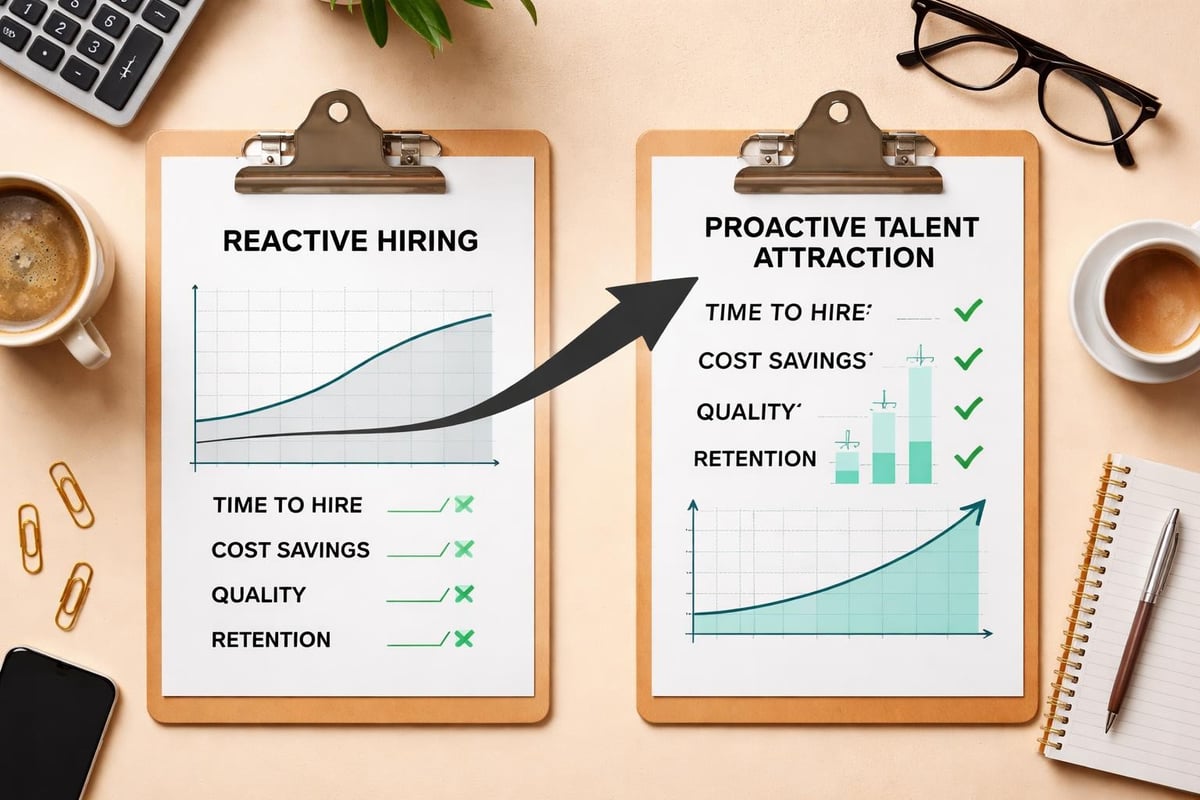
Talent attraction ROI metrics

Building Your Employer Value Proposition

Your employer value proposition (EVP) represents the unique combination of benefits, culture, career opportunities, and purpose that your organization offers in exchange for talent, skills, and commitment. For consultancies focused on performance outcomes, the EVP must authentically reflect what makes the work meaningful and differentiated.

Core Components of a Compelling EVP

The most effective employer value propositions address five fundamental areas that professionals prioritize when evaluating career opportunities:

  1. Professional development and growth trajectories that demonstrate clear paths for advancement
  2. Work-life integration policies that respect personal boundaries and mental wellness
  3. Compensation and benefits structures that reward performance and innovation
  4. Mission alignment that connects daily work to meaningful outcomes
  5. Collaborative culture that values diverse perspectives and inclusive practices

Organizations must move beyond generic statements about being "industry leaders" or offering "competitive compensation." Specificity matters. How exactly do you develop talent? What specific wellness initiatives support employee health? What performance metrics determine advancement and recognition?

At Nero and Associates, the focus on helping organizations save costs, save time, and save lives through technology and human capital management creates a distinctive EVP centered on meaningful impact rather than billable hours alone.

Translating EVP Into Daily Experience

The gap between promised EVP and lived experience destroys talent attraction efforts faster than any competitor. Prospective candidates speak with current employees, read company reviews, and assess cultural signals throughout the interview process. Authenticity isn't a marketing consideration-it's an operational imperative.

Consider implementing regular culture audits that measure alignment between stated values and daily practices. Survey employees about their experience against your EVP promises. Use this feedback to identify gaps and make concrete improvements before they become reputation liabilities.

EVP Element Promise Verification Method
Career Development Structured advancement paths Promotion rates, training investment per employee
Work-Life Integration Flexible arrangements Utilization rates, turnover analysis
Mission Impact Meaningful client outcomes Client testimonials, project success metrics
Inclusive Culture Diverse representation Demographic data, belonging survey scores

Leveraging Technology for Talent Attraction

The integration of artificial intelligence and automation into talent attraction processes represents one of the most significant shifts in professional services recruiting. Organizations that embrace AI-powered recruiting processes gain substantial advantages in efficiency, candidate experience, and matching accuracy.

Automation Opportunities in Talent Attraction

Modern talent attraction technology enables professional services firms to eliminate thousands of hours of manual screening, scheduling, and administrative work-the same operational efficiency philosophy that drives client consulting engagements.

Key automation applications include:

  • Resume screening algorithms that identify candidates with specific technical competencies and experience patterns
  • Chatbot systems that engage candidates 24/7, answering questions and scheduling interviews
  • Predictive analytics that forecast candidate success based on historical performance data
  • Automated nurture campaigns that maintain relationships with passive candidates over time
  • Integration platforms that synchronize applicant tracking systems with HR management tools

The technology investment pays dividends not just in recruitment team productivity but in candidate experience. Top professionals expect responsive, seamless interactions throughout the hiring process. Delays, communication gaps, and administrative friction signal operational dysfunction that candidates extrapolate to the broader work environment.

Balancing Technology With Human Connection

While automation handles transactional elements efficiently, the relationship-building aspects of talent attraction still require authentic human engagement. The most successful approaches use technology to eliminate friction and create space for meaningful conversations about career aspirations, cultural fit, and mutual expectations.

Video interviewing platforms, for example, expand geographic reach and scheduling flexibility while preserving the interpersonal assessment that remains central to professional services hiring. Collaborative hiring tools enable team-based evaluation without endless email chains and calendar conflicts.
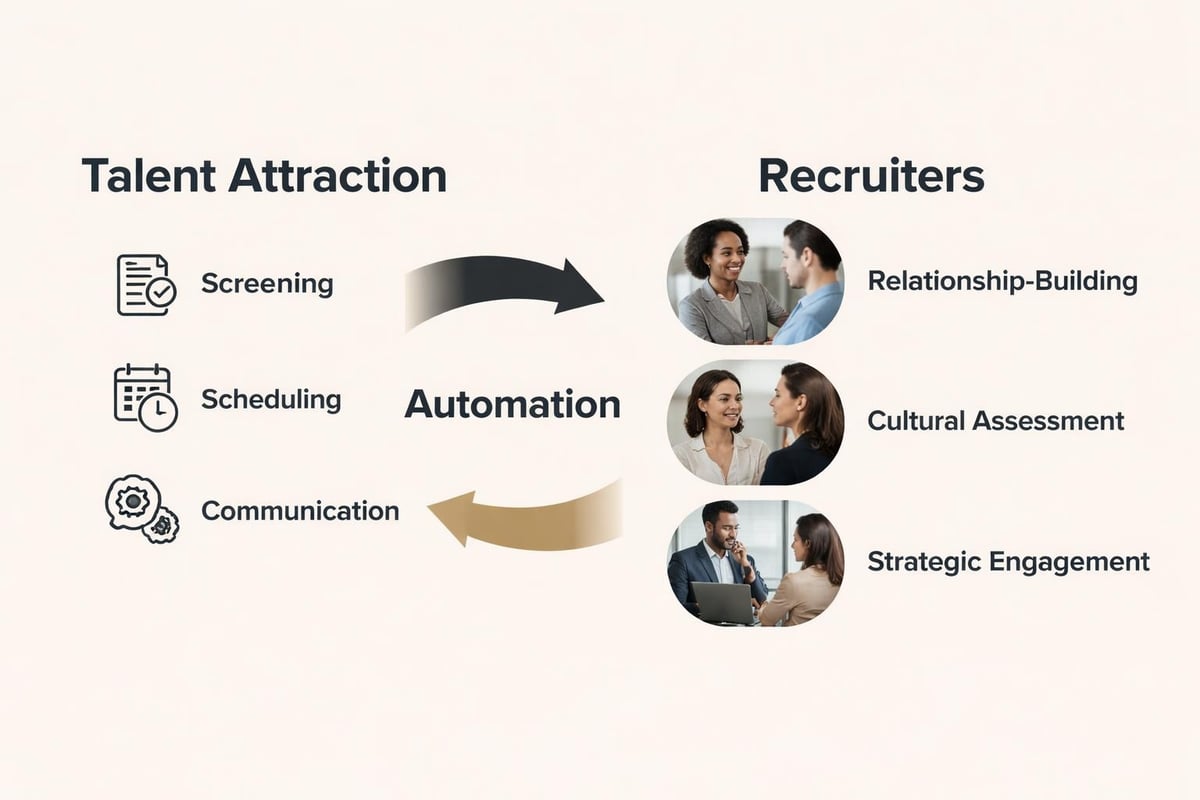
Technology-enabled recruiting workflow

Creating Magnetic Employer Branding

Your employer brand exists whether you actively manage it or not. Current employees, former employees, clients, and candidates all form impressions that shape your reputation as an employer. Strategic employer branding takes control of this narrative, deliberately communicating what makes your organization distinctive and desirable.

Content Strategies That Attract Talent

The professionals you want to attract are researching your organization long before they apply. They visit your website, read your content, follow your social media, and search for employee reviews. Each touchpoint either reinforces or undermines your talent attraction efforts.

  1. Employee spotlight content that showcases real people doing meaningful work
  2. Thought leadership articles that demonstrate expertise and intellectual culture
  3. Behind-the-scenes glimpses of team collaboration and problem-solving approaches
  4. Career development stories that illustrate actual advancement trajectories
  5. Values-in-action examples that prove cultural commitments through specific initiatives

Professional services firms often excel at client-facing content but underinvest in employer brand content. This creates a missed opportunity, as the same professionals who might become clients could also become exceptional employees. Integrated content strategies serve both audiences simultaneously.

Showcasing Impact and Innovation

For consultancies focused on performance outcomes, employer branding should emphasize the tangible impact employees create for clients and communities. Candidates attracted to meaningful work respond to specific examples of problems solved, efficiency gained, and lives improved.

The Nero and Associates focus on helping healthcare organizations achieve financial and operational excellence creates natural storytelling opportunities. How did automation initiatives reduce manual processing hours? What revenue cycle improvements enabled better patient care? Which employee wellness programs demonstrably improved team health outcomes?

Quantified impact stories accomplish dual purposes: they demonstrate consulting effectiveness to prospective clients while illustrating the meaningful work environment to prospective employees.

Strategic Sourcing and Relationship Building

Passive candidates-professionals who aren't actively job searching but would consider compelling opportunities-represent the highest quality talent pool in professional services. Strategic sourcing techniques focus on identifying, engaging, and nurturing relationships with these individuals long before specific hiring needs emerge.

Building Talent Communities

Rather than starting candidate searches from scratch each time a position opens, forward-thinking organizations cultivate ongoing talent communities organized around specific competencies, industries, or functional areas.

These communities might include:

  • Former applicants who were strong candidates but not selected due to timing or specific role requirements
  • Industry professionals who engage with your content and thought leadership
  • Employee referrals who haven't yet applied but expressed interest in future opportunities
  • Conference attendees, webinar participants, and professional network connections
  • Alumni from target universities with relevant degree programs

Regular, value-added communication keeps your organization visible without becoming intrusive. Share industry insights, invite community members to virtual events, offer professional development resources, and celebrate organizational achievements that align with their interests.

Social Media for Professional Relationship Building

LinkedIn remains the dominant platform for professional services talent attraction, but strategy matters far more than presence. Effective use of social media advertising requires understanding what content resonates with your target talent segments and delivering it consistently.

Platform Primary Use Case Content Strategy Engagement Approach
LinkedIn Professional networking Thought leadership, company updates, employee stories Direct outreach, group participation
Twitter/X Industry conversation Quick insights, article sharing, event promotion Hashtag engagement, thread participation
YouTube In-depth storytelling Career videos, day-in-life content, training previews Comments, community posts
Instagram Culture showcase Behind-scenes content, team celebrations, office life Stories, reels, authentic moments

The consultants and specialists you want to attract are evaluating your digital presence as evidence of organizational sophistication. Inconsistent posting, outdated information, or purely promotional content signals lack of strategic thinking that undermines talent attraction regardless of other strengths.

Employee Referral Programs That Actually Work

Employee referrals consistently deliver higher quality hires with better retention rates and faster integration into organizational culture. Yet many referral programs generate disappointing results because they're poorly designed or inadequately promoted. Powerful talent attraction strategies leverage employees as active partners in the recruiting process.

Designing Effective Referral Incentives

Financial bonuses represent the most common referral incentive, but they're not always the most motivating. Consider what actually drives your employees to recommend your organization to their professional networks.

High-performing referral programs include:

  • Tiered bonuses that increase for hard-to-fill specialized roles
  • Non-monetary recognition that celebrates referrers publicly and meaningfully
  • Simplified referral processes that require minimal time or administrative burden
  • Regular communication about open positions and ideal candidate profiles
  • Progress updates so referrers know their recommendations are valued and reviewed
  • Team-based incentives that reward departments for collective referral success

The key insight is that employees refer contacts when they're genuinely proud of their organization and confident their network connections will thrive there. Referral program success depends more on employee satisfaction and cultural strength than incentive structure.

Making Referrals Effortless

Friction kills participation. If employees need to navigate complex systems, complete lengthy forms, or follow unclear processes, referral intentions rarely convert to actual submissions.

Mobile-optimized referral platforms that integrate with existing communication tools enable employees to submit referrals in under two minutes. Text-based referral options meet employees where they already communicate. Social sharing features let employees broadcast opportunities to their networks with single clicks.
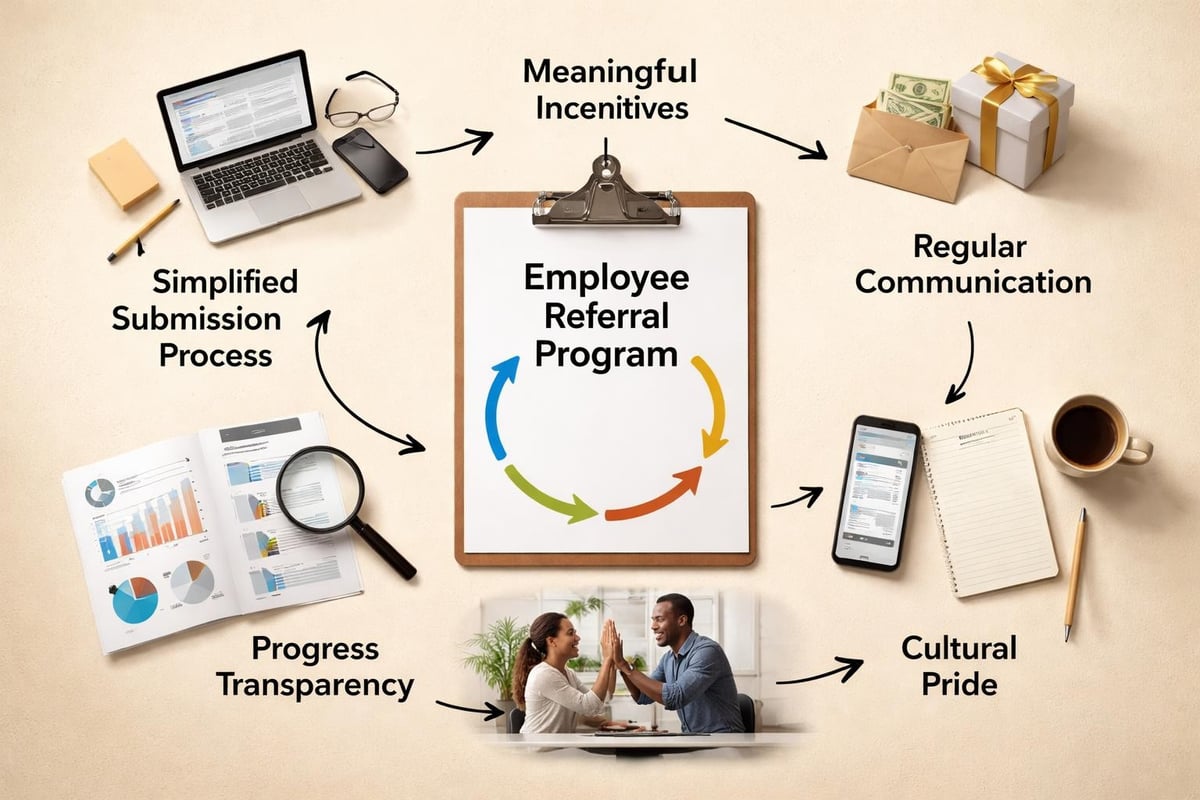
Employee referral program elements

Prioritizing Wellness and Work-Life Integration

The professionals driving innovation in artificial intelligence, human capital management, and revenue cycle management-the specialties central to performance-based consulting-have options. They're selecting employers based increasingly on mental health support, work-life integration policies, and holistic wellness commitments rather than compensation alone.

Organizations that prioritize mental health and well-being in their talent attraction messaging and actual practice gain significant competitive advantages with top performers who understand the unsustainability of burnout-driven cultures.

Wellness as Competitive Differentiation

The consulting industry's historical relationship with work-life balance creates opportunity for firms willing to chart different courses. When you genuinely empower employees to be proactive with their mental, physical, and financial health-as Nero and Associates does in client engagements-you create attraction magnetism with candidates fatigued by unhealthy workplace dynamics.

Specific wellness initiatives that resonate in talent attraction include:

  • Mental health days and counseling benefits without stigma or barriers
  • Flexible scheduling that accommodates personal commitments and energy patterns
  • Financial wellness programs that reduce money stress and build long-term security
  • Physical health incentives including gym memberships, standing desks, and wellness challenges
  • Sabbatical opportunities for long-tenured employees to recharge and pursue personal growth

Transparency about these programs matters. Don't just list benefits-share utilization data, employee testimonials, and specific examples of how policies enabled meaningful wellness outcomes.

Remote and Hybrid Work Considerations

The 2026 talent landscape includes professionals who've experienced various work arrangements and developed clear preferences. Some thrive in office environments. Others perform best remotely. Many prefer hybrid flexibility.

Rather than forcing universal policies, leading professional services firms are creating role-specific arrangements based on work requirements, client needs, and individual preferences. This nuanced approach attracts broader talent pools while maintaining operational effectiveness.

For enterprise clients and healthcare organizations that value turning scale into competitive advantage, demonstrating sophisticated approaches to distributed team management builds credibility while expanding talent attraction beyond geographic constraints.

Measuring Talent Attraction Effectiveness

What gets measured improves. Professional services firms accustomed to tracking billable hours, project profitability, and client satisfaction must apply the same rigor to talent attraction metrics if they expect sustainable improvement.

Key Performance Indicators for Talent Attraction

Different metrics matter for different organizational contexts, but comprehensive talent attraction measurement typically includes indicators across these categories:

  1. Pipeline health metrics including talent community size, engagement rates, and quality scores
  2. Efficiency indicators such as time-to-hire, cost-per-hire, and source effectiveness
  3. Quality measures including new hire performance ratings, cultural fit assessments, and hiring manager satisfaction
  4. Retention correlation tracking whether attraction sources predict longer tenure
  5. Employer brand strength measured through awareness surveys, application rates, and offer acceptance rates

Monthly dashboard reviews enable talent leaders to identify trends, test improvements, and demonstrate return on investment for attraction initiatives. When implementing talent attraction strategies becomes data-driven, organizations move from intuition to optimization.

Competitive Intelligence and Market Benchmarking

Understanding how your talent attraction performance compares to competitors and industry benchmarks provides essential context for improvement priorities. Are your time-to-hire metrics industry-standard or problematic? Do your offer acceptance rates suggest competitive positioning strength or weakness?

Industry associations, compensation surveys, and specialized consulting firms provide benchmarking data across professional services sectors. Some organizations also conduct periodic competitive audits, evaluating competitor employer brands, job postings, benefits packages, and employee reviews to identify gaps and opportunities.

Metric Category Calculation Method Target Benchmark Review Frequency
Application Rate Applications ÷ Job Views 8-12% Monthly
Source Quality Source Hires ÷ Total Source Candidates Varies by source Quarterly
Offer Accept Rate Accepted Offers ÷ Total Offers 85%+ Monthly
Time to Fill Days from Requisition to Acceptance 30-45 days Monthly
First-Year Retention Retained Hires ÷ Total Hires 90%+ Annually

Integration With Broader Human Capital Strategy

Talent attraction doesn't exist in isolation. It connects intimately with onboarding, development, performance management, succession planning, and retention strategies. Organizations that treat these functions as integrated components of comprehensive human capital management achieve significantly better outcomes than those managing them as separate initiatives.

When consulting firms help clients optimize their operations and increase revenue through human capital solutions, they must demonstrate these same capabilities internally. The team members implementing sophisticated client solutions deserve equally sophisticated people strategies supporting their own careers.

Alignment Between Attraction and Development

Nothing undermines talent attraction faster than discovering career development promises were exaggerated. The growth opportunities highlighted in recruitment conversations must materialize in actual employee experiences, or reputation damage compounds through every disappointed hire who shares their story.

Creating genuine alignment requires:

  • Documentation of standard career paths with clear advancement criteria
  • Investment in learning and development infrastructure including mentoring, training, and certification support
  • Regular career conversations between managers and team members
  • Transparency about promotion timelines, requirements, and decision processes
  • Examples of employees who successfully advanced through described pathways

When development programs deliver on attraction promises, employees become authentic ambassadors who strengthen your employer brand through their networks. When gaps exist, even generous referral bonuses can't overcome the credibility deficit.

Retention as Talent Attraction Strategy

Every employee who leaves creates both a replacement hiring need and potential reputation impact. High turnover signals cultural or leadership problems that deter prospective candidates regardless of marketing messages. Conversely, stable teams with long-tenured professionals attract similar candidates seeking sustainable career homes.

Organizations serious about talent attraction invest equally in retention initiatives that keep top performers engaged, developed, and committed. These initiatives might include stay interviews that proactively address concerns, recognition programs that celebrate contributions, and succession planning that demonstrates long-term career possibilities.

The consultants helping clients eliminate thousands of hours of manual processes and improve operational efficiency should expect their employers to apply these same principles internally, creating work environments where talent chooses to stay and grow rather than exploring external opportunities.


Strategic talent attraction separates professional services firms that consistently secure top talent from those perpetually struggling to fill critical roles. By building authentic employer value propositions, leveraging technology thoughtfully, creating magnetic employer brands, and measuring effectiveness rigorously, organizations position themselves as employers of choice in increasingly competitive markets. Nero and Associates, Inc. applies the same performance-based approach to internal talent strategies that we bring to client engagements-helping organizations save costs, save time, and build sustainable competitive advantages through exceptional people and optimized processes. If you're ready to transform your talent attraction capabilities and build a team that drives measurable business outcomes, let's start a conversation about what's possible.

Talent Attraction: Building Your Competitive Advantage

The competition for exceptional professionals has never been more intense. Organizations across every sector face mounting pressure to identify, attract, and secure top talent in an environment where skilled candidates have more choices than ever before. For professional services firms, where intellectual capital directly drives client outcomes and revenue growth, developing robust talent attraction strategies isn't optional-it's fundamental to survival and success. The companies that thrive in 2026 are those that understand talent attraction as a comprehensive business strategy, not merely a recruitment function.

Understanding Talent Attraction in Professional Services

Talent attraction encompasses the full spectrum of activities, strategies, and initiatives organizations deploy to make themselves appealing destinations for high-caliber professionals. Unlike traditional recruitment, which often begins when a position opens, effective talent attraction operates continuously, building relationships and brand equity long before specific hiring needs emerge.

In professional services consulting, this distinction carries particular weight. The sector depends on specialized expertise, client relationship skills, and problem-solving capabilities that can't be quickly replicated or easily replaced. When organizations lose key talent or struggle to fill critical roles, the impact reverberates through client satisfaction, project delivery, and ultimately, revenue performance.

The Business Case for Strategic Talent Attraction

Organizations with deliberate talent attraction programs experience measurable advantages:

  • Reduced time-to-hire by 30-50% compared to reactive recruitment approaches
  • Lower cost-per-hire through stronger candidate pipelines and reduced agency dependencies
  • Higher quality candidates who align with organizational values and culture
  • Improved retention rates as attracted candidates understand company culture before joining
  • Enhanced employer brand that creates competitive differentiation in the marketplace

The financial implications extend beyond recruitment metrics. When professional services firms attract the right talent efficiently, they reduce project risk, enhance client satisfaction, and create capacity for growth without the friction of constant hiring struggles.

Talent attraction ROI metrics

Building Your Employer Value Proposition

Your employer value proposition (EVP) represents the unique combination of benefits, culture, career opportunities, and purpose that your organization offers in exchange for talent, skills, and commitment. For consultancies focused on performance outcomes, the EVP must authentically reflect what makes the work meaningful and differentiated.

Core Components of a Compelling EVP

The most effective employer value propositions address five fundamental areas that professionals prioritize when evaluating career opportunities:

  1. Professional development and growth trajectories that demonstrate clear paths for advancement
  2. Work-life integration policies that respect personal boundaries and mental wellness
  3. Compensation and benefits structures that reward performance and innovation
  4. Mission alignment that connects daily work to meaningful outcomes
  5. Collaborative culture that values diverse perspectives and inclusive practices

Organizations must move beyond generic statements about being "industry leaders" or offering "competitive compensation." Specificity matters. How exactly do you develop talent? What specific wellness initiatives support employee health? What performance metrics determine advancement and recognition?

At Nero and Associates, the focus on helping organizations save costs, save time, and save lives through technology and human capital management creates a distinctive EVP centered on meaningful impact rather than billable hours alone.

Translating EVP Into Daily Experience

The gap between promised EVP and lived experience destroys talent attraction efforts faster than any competitor. Prospective candidates speak with current employees, read company reviews, and assess cultural signals throughout the interview process. Authenticity isn't a marketing consideration-it's an operational imperative.

Consider implementing regular culture audits that measure alignment between stated values and daily practices. Survey employees about their experience against your EVP promises. Use this feedback to identify gaps and make concrete improvements before they become reputation liabilities.

EVP Element Promise Verification Method
Career Development Structured advancement paths Promotion rates, training investment per employee
Work-Life Integration Flexible arrangements Utilization rates, turnover analysis
Mission Impact Meaningful client outcomes Client testimonials, project success metrics
Inclusive Culture Diverse representation Demographic data, belonging survey scores

Leveraging Technology for Talent Attraction

The integration of artificial intelligence and automation into talent attraction processes represents one of the most significant shifts in professional services recruiting. Organizations that embrace AI-powered recruiting processes gain substantial advantages in efficiency, candidate experience, and matching accuracy.

Automation Opportunities in Talent Attraction

Modern talent attraction technology enables professional services firms to eliminate thousands of hours of manual screening, scheduling, and administrative work-the same operational efficiency philosophy that drives client consulting engagements.

Key automation applications include:

  • Resume screening algorithms that identify candidates with specific technical competencies and experience patterns
  • Chatbot systems that engage candidates 24/7, answering questions and scheduling interviews
  • Predictive analytics that forecast candidate success based on historical performance data
  • Automated nurture campaigns that maintain relationships with passive candidates over time
  • Integration platforms that synchronize applicant tracking systems with HR management tools

The technology investment pays dividends not just in recruitment team productivity but in candidate experience. Top professionals expect responsive, seamless interactions throughout the hiring process. Delays, communication gaps, and administrative friction signal operational dysfunction that candidates extrapolate to the broader work environment.

Balancing Technology With Human Connection

While automation handles transactional elements efficiently, the relationship-building aspects of talent attraction still require authentic human engagement. The most successful approaches use technology to eliminate friction and create space for meaningful conversations about career aspirations, cultural fit, and mutual expectations.

Video interviewing platforms, for example, expand geographic reach and scheduling flexibility while preserving the interpersonal assessment that remains central to professional services hiring. Collaborative hiring tools enable team-based evaluation without endless email chains and calendar conflicts.

Technology-enabled recruiting workflow

Creating Magnetic Employer Branding

Your employer brand exists whether you actively manage it or not. Current employees, former employees, clients, and candidates all form impressions that shape your reputation as an employer. Strategic employer branding takes control of this narrative, deliberately communicating what makes your organization distinctive and desirable.

Content Strategies That Attract Talent

The professionals you want to attract are researching your organization long before they apply. They visit your website, read your content, follow your social media, and search for employee reviews. Each touchpoint either reinforces or undermines your talent attraction efforts.

  1. Employee spotlight content that showcases real people doing meaningful work
  2. Thought leadership articles that demonstrate expertise and intellectual culture
  3. Behind-the-scenes glimpses of team collaboration and problem-solving approaches
  4. Career development stories that illustrate actual advancement trajectories
  5. Values-in-action examples that prove cultural commitments through specific initiatives

Professional services firms often excel at client-facing content but underinvest in employer brand content. This creates a missed opportunity, as the same professionals who might become clients could also become exceptional employees. Integrated content strategies serve both audiences simultaneously.

Showcasing Impact and Innovation

For consultancies focused on performance outcomes, employer branding should emphasize the tangible impact employees create for clients and communities. Candidates attracted to meaningful work respond to specific examples of problems solved, efficiency gained, and lives improved.

The Nero and Associates focus on helping healthcare organizations achieve financial and operational excellence creates natural storytelling opportunities. How did automation initiatives reduce manual processing hours? What revenue cycle improvements enabled better patient care? Which employee wellness programs demonstrably improved team health outcomes?

Quantified impact stories accomplish dual purposes: they demonstrate consulting effectiveness to prospective clients while illustrating the meaningful work environment to prospective employees.

Strategic Sourcing and Relationship Building

Passive candidates-professionals who aren't actively job searching but would consider compelling opportunities-represent the highest quality talent pool in professional services. Strategic sourcing techniques focus on identifying, engaging, and nurturing relationships with these individuals long before specific hiring needs emerge.

Building Talent Communities

Rather than starting candidate searches from scratch each time a position opens, forward-thinking organizations cultivate ongoing talent communities organized around specific competencies, industries, or functional areas.

These communities might include:

  • Former applicants who were strong candidates but not selected due to timing or specific role requirements
  • Industry professionals who engage with your content and thought leadership
  • Employee referrals who haven't yet applied but expressed interest in future opportunities
  • Conference attendees, webinar participants, and professional network connections
  • Alumni from target universities with relevant degree programs

Regular, value-added communication keeps your organization visible without becoming intrusive. Share industry insights, invite community members to virtual events, offer professional development resources, and celebrate organizational achievements that align with their interests.

Social Media for Professional Relationship Building

LinkedIn remains the dominant platform for professional services talent attraction, but strategy matters far more than presence. Effective use of social media advertising requires understanding what content resonates with your target talent segments and delivering it consistently.

Platform Primary Use Case Content Strategy Engagement Approach
LinkedIn Professional networking Thought leadership, company updates, employee stories Direct outreach, group participation
Twitter/X Industry conversation Quick insights, article sharing, event promotion Hashtag engagement, thread participation
YouTube In-depth storytelling Career videos, day-in-life content, training previews Comments, community posts
Instagram Culture showcase Behind-scenes content, team celebrations, office life Stories, reels, authentic moments

The consultants and specialists you want to attract are evaluating your digital presence as evidence of organizational sophistication. Inconsistent posting, outdated information, or purely promotional content signals lack of strategic thinking that undermines talent attraction regardless of other strengths.

Employee Referral Programs That Actually Work

Employee referrals consistently deliver higher quality hires with better retention rates and faster integration into organizational culture. Yet many referral programs generate disappointing results because they're poorly designed or inadequately promoted. Powerful talent attraction strategies leverage employees as active partners in the recruiting process.

Designing Effective Referral Incentives

Financial bonuses represent the most common referral incentive, but they're not always the most motivating. Consider what actually drives your employees to recommend your organization to their professional networks.

High-performing referral programs include:

  • Tiered bonuses that increase for hard-to-fill specialized roles
  • Non-monetary recognition that celebrates referrers publicly and meaningfully
  • Simplified referral processes that require minimal time or administrative burden
  • Regular communication about open positions and ideal candidate profiles
  • Progress updates so referrers know their recommendations are valued and reviewed
  • Team-based incentives that reward departments for collective referral success

The key insight is that employees refer contacts when they're genuinely proud of their organization and confident their network connections will thrive there. Referral program success depends more on employee satisfaction and cultural strength than incentive structure.

Making Referrals Effortless

Friction kills participation. If employees need to navigate complex systems, complete lengthy forms, or follow unclear processes, referral intentions rarely convert to actual submissions.

Mobile-optimized referral platforms that integrate with existing communication tools enable employees to submit referrals in under two minutes. Text-based referral options meet employees where they already communicate. Social sharing features let employees broadcast opportunities to their networks with single clicks.

Employee referral program elements

Prioritizing Wellness and Work-Life Integration

The professionals driving innovation in artificial intelligence, human capital management, and revenue cycle management-the specialties central to performance-based consulting-have options. They're selecting employers based increasingly on mental health support, work-life integration policies, and holistic wellness commitments rather than compensation alone.

Organizations that prioritize mental health and well-being in their talent attraction messaging and actual practice gain significant competitive advantages with top performers who understand the unsustainability of burnout-driven cultures.

Wellness as Competitive Differentiation

The consulting industry's historical relationship with work-life balance creates opportunity for firms willing to chart different courses. When you genuinely empower employees to be proactive with their mental, physical, and financial health-as Nero and Associates does in client engagements-you create attraction magnetism with candidates fatigued by unhealthy workplace dynamics.

Specific wellness initiatives that resonate in talent attraction include:

  • Mental health days and counseling benefits without stigma or barriers
  • Flexible scheduling that accommodates personal commitments and energy patterns
  • Financial wellness programs that reduce money stress and build long-term security
  • Physical health incentives including gym memberships, standing desks, and wellness challenges
  • Sabbatical opportunities for long-tenured employees to recharge and pursue personal growth

Transparency about these programs matters. Don't just list benefits-share utilization data, employee testimonials, and specific examples of how policies enabled meaningful wellness outcomes.

Remote and Hybrid Work Considerations

The 2026 talent landscape includes professionals who've experienced various work arrangements and developed clear preferences. Some thrive in office environments. Others perform best remotely. Many prefer hybrid flexibility.

Rather than forcing universal policies, leading professional services firms are creating role-specific arrangements based on work requirements, client needs, and individual preferences. This nuanced approach attracts broader talent pools while maintaining operational effectiveness.

For enterprise clients and healthcare organizations that value turning scale into competitive advantage, demonstrating sophisticated approaches to distributed team management builds credibility while expanding talent attraction beyond geographic constraints.

Measuring Talent Attraction Effectiveness

What gets measured improves. Professional services firms accustomed to tracking billable hours, project profitability, and client satisfaction must apply the same rigor to talent attraction metrics if they expect sustainable improvement.

Key Performance Indicators for Talent Attraction

Different metrics matter for different organizational contexts, but comprehensive talent attraction measurement typically includes indicators across these categories:

  1. Pipeline health metrics including talent community size, engagement rates, and quality scores
  2. Efficiency indicators such as time-to-hire, cost-per-hire, and source effectiveness
  3. Quality measures including new hire performance ratings, cultural fit assessments, and hiring manager satisfaction
  4. Retention correlation tracking whether attraction sources predict longer tenure
  5. Employer brand strength measured through awareness surveys, application rates, and offer acceptance rates

Monthly dashboard reviews enable talent leaders to identify trends, test improvements, and demonstrate return on investment for attraction initiatives. When implementing talent attraction strategies becomes data-driven, organizations move from intuition to optimization.

Competitive Intelligence and Market Benchmarking

Understanding how your talent attraction performance compares to competitors and industry benchmarks provides essential context for improvement priorities. Are your time-to-hire metrics industry-standard or problematic? Do your offer acceptance rates suggest competitive positioning strength or weakness?

Industry associations, compensation surveys, and specialized consulting firms provide benchmarking data across professional services sectors. Some organizations also conduct periodic competitive audits, evaluating competitor employer brands, job postings, benefits packages, and employee reviews to identify gaps and opportunities.

Metric Category Calculation Method Target Benchmark Review Frequency
Application Rate Applications ÷ Job Views 8-12% Monthly
Source Quality Source Hires ÷ Total Source Candidates Varies by source Quarterly
Offer Accept Rate Accepted Offers ÷ Total Offers 85%+ Monthly
Time to Fill Days from Requisition to Acceptance 30-45 days Monthly
First-Year Retention Retained Hires ÷ Total Hires 90%+ Annually

Integration With Broader Human Capital Strategy

Talent attraction doesn't exist in isolation. It connects intimately with onboarding, development, performance management, succession planning, and retention strategies. Organizations that treat these functions as integrated components of comprehensive human capital management achieve significantly better outcomes than those managing them as separate initiatives.

When consulting firms help clients optimize their operations and increase revenue through human capital solutions, they must demonstrate these same capabilities internally. The team members implementing sophisticated client solutions deserve equally sophisticated people strategies supporting their own careers.

Alignment Between Attraction and Development

Nothing undermines talent attraction faster than discovering career development promises were exaggerated. The growth opportunities highlighted in recruitment conversations must materialize in actual employee experiences, or reputation damage compounds through every disappointed hire who shares their story.

Creating genuine alignment requires:

  • Documentation of standard career paths with clear advancement criteria
  • Investment in learning and development infrastructure including mentoring, training, and certification support
  • Regular career conversations between managers and team members
  • Transparency about promotion timelines, requirements, and decision processes
  • Examples of employees who successfully advanced through described pathways

When development programs deliver on attraction promises, employees become authentic ambassadors who strengthen your employer brand through their networks. When gaps exist, even generous referral bonuses can't overcome the credibility deficit.

Retention as Talent Attraction Strategy

Every employee who leaves creates both a replacement hiring need and potential reputation impact. High turnover signals cultural or leadership problems that deter prospective candidates regardless of marketing messages. Conversely, stable teams with long-tenured professionals attract similar candidates seeking sustainable career homes.

Organizations serious about talent attraction invest equally in retention initiatives that keep top performers engaged, developed, and committed. These initiatives might include stay interviews that proactively address concerns, recognition programs that celebrate contributions, and succession planning that demonstrates long-term career possibilities.

The consultants helping clients eliminate thousands of hours of manual processes and improve operational efficiency should expect their employers to apply these same principles internally, creating work environments where talent chooses to stay and grow rather than exploring external opportunities.


Strategic talent attraction separates professional services firms that consistently secure top talent from those perpetually struggling to fill critical roles. By building authentic employer value propositions, leveraging technology thoughtfully, creating magnetic employer brands, and measuring effectiveness rigorously, organizations position themselves as employers of choice in increasingly competitive markets. Nero and Associates, Inc. applies the same performance-based approach to internal talent strategies that we bring to client engagements-helping organizations save costs, save time, and build sustainable competitive advantages through exceptional people and optimized processes. If you're ready to transform your talent attraction capabilities and build a team that drives measurable business outcomes, let's start a conversation about what's possible.

Website developed in accordance with Web Content Accessibility Guidelines 2.2.
If you encounter any issues while using this site, please contact us: 215.526.5126