

In today's unpredictable market, organizations are navigating challenges that test their resilience and adaptability. Economic shifts, changing consumer habits, and rising stakeholder expectations have made survival more complex than ever.
This guide is designed for the turnaround specialist seeking proven strategies to restore business health and drive transformation in 2026. Whether you are new to the field or a seasoned expert, you will find actionable steps and practical insights to navigate organizational distress.
Inside, you'll discover how the role of the turnaround specialist is evolving, learn diagnostic frameworks, explore powerful intervention tactics, and gain leadership tools to sustain momentum. Prepare to master the art of business turnaround and secure long-term success.
The Evolving Role of Turnaround Specialists in 2026
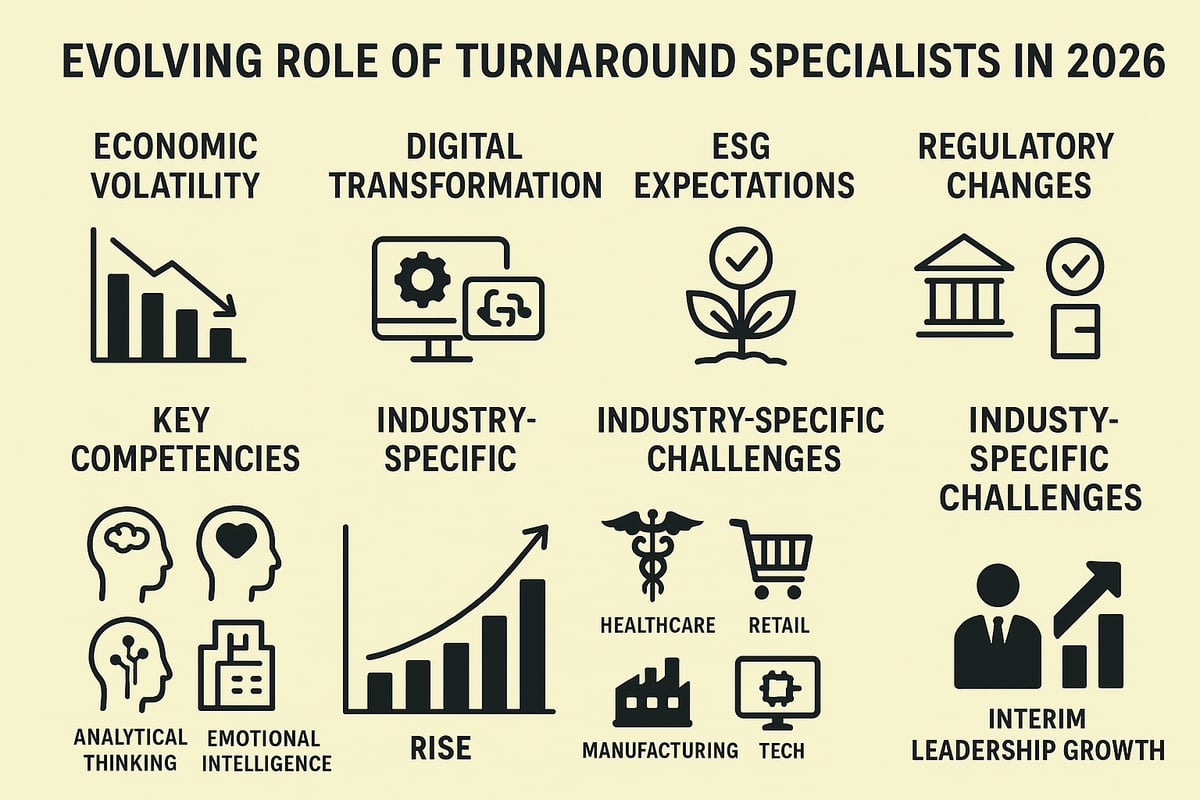
In 2026, the turnaround specialist is more critical than ever as organizations grapple with rapid change and heightened complexity. External shocks, regulatory shifts, and digital disruption have expanded the responsibilities and skill set required for successful interventions. This section explores how the turnaround specialist adapts to new realities, develops advanced competencies, navigates legal frameworks, addresses sector-specific issues, and embraces interim leadership roles.
Navigating New Economic Realities
The business landscape is marked by ongoing global economic volatility, with inflation and shifting interest rates putting pressure on distressed organizations. Consumer behaviors continue to evolve in the aftermath of the pandemic, while supply chain disruptions remain a persistent challenge. Environmental, Social, and Governance (ESG) criteria are now central to turnaround mandates, requiring the turnaround specialist to integrate sustainability into every engagement.
Recent data from 2023 to 2025 indicates a 30% rise in distressed assets across multiple sectors. For a deeper dive into these trends and the most pressing challenges facing turnaround professionals, see The Turnaround Tightrope: Insights From The 2025 Annual Turnaround Survey.
Skills and Competencies for Modern Turnaround Specialists
The modern turnaround specialist must be a master of both numbers and people. Analytical thinking and financial acumen are essential for assessing risks and opportunities. Change management expertise enables the specialist to lead organizations through turbulent periods.
Equally important are emotional intelligence and the ability to communicate with stakeholders under stress. With digital transformation accelerating, familiarity with AI tools and data analytics is now expected. Many successful turnarounds are led by multidisciplinary teams, combining finance, operations, and technology experts to drive results.
Regulatory and Legal Considerations
The regulatory landscape for turnaround specialists is evolving quickly. Major economies have updated bankruptcy laws and restructuring frameworks, demanding that professionals stay informed and compliant. Effective risk mitigation now includes not only financial but also legal and reputational aspects.
For example, recent reforms to U.S. Chapter 11 have streamlined processes, reducing turnaround timelines and creating new opportunities for distressed businesses. The turnaround specialist must collaborate with legal advisors to navigate these complexities and ensure all actions meet the latest compliance standards.
Industry-Specific Challenges
Every sector presents unique obstacles for the turnaround specialist. In healthcare, regulatory pressures and rising costs have led to a 15% increase in turnaround engagements in 2025. Retail faces digital disruption and changing consumer habits, while manufacturing contends with supply chain realignment and automation demands. The technology sector grapples with rapid innovation cycles and talent shortages.
A tailored approach is essential, as sector-specific dynamics can make or break a turnaround effort. The specialist must quickly identify these nuances and customize strategies accordingly.
The Growing Importance of Interim Leadership
Interim leadership is now a prominent feature in successful turnarounds. Organizations increasingly seek interim CEOs and CFOs with a proven turnaround specialist background to provide stability and expert guidance in crisis situations.
The benefits include immediate impact, fresh perspective, and unbiased decision-making. However, challenges such as cultural integration and maintaining momentum post-transition remain. Still, the strategic use of interim executives ensures organizations can navigate uncertainty with confidence and agility.
Step 1: Diagnosing Organizational Distress
Diagnosing organizational distress is the foundation of every successful turnaround specialist’s playbook. In 2026, organizations must respond quickly and accurately to early warning signals to prevent deeper decline. A structured, data-driven approach to diagnosis is essential for identifying root causes and formulating effective interventions.
Early Warning Signs and Red Flags
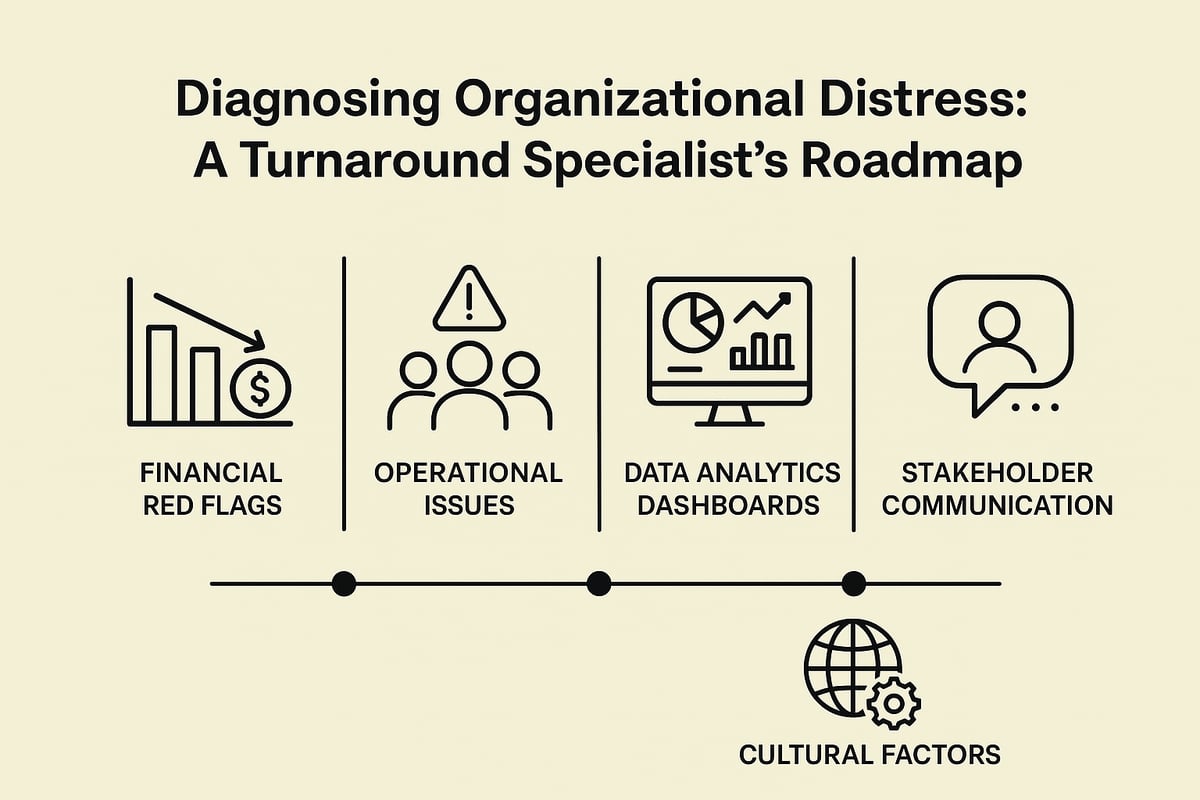
A turnaround specialist must be vigilant for early signs of trouble. Financial indicators such as declining cash flow, rising debt, and recurring missed targets signal distress. Operational red flags include high employee turnover, process bottlenecks, and customer attrition.
According to the 2025 Turnaround & Transformation Survey, over 60 percent of failed turnarounds missed these early warning signals. By staying alert, a turnaround specialist can intervene before problems become unmanageable.
- Declining liquidity
- Missed revenue targets
- Employee disengagement
Spotting these issues early gives turnaround specialists a critical advantage.
Comprehensive Assessment Frameworks
Once warning signs appear, a turnaround specialist applies structured frameworks for a holistic diagnosis. SWOT analysis helps identify strengths, weaknesses, opportunities, and threats. PESTLE analysis explores external influences: political, economic, social, technological, legal, and environmental factors.
A thorough financial statement analysis reveals liquidity risks. Stakeholder mapping identifies key influencers and detractors, ensuring that no critical voice is overlooked. By using these frameworks, a turnaround specialist can uncover both obvious and hidden drivers of distress.
Sample Table: Diagnostic Tools
| Framework | Focus Area |
|---|---|
| SWOT | Internal & external factors |
| PESTLE | Macro-environmental risks |
| Financial | Liquidity & solvency |
| Mapping | Stakeholder interests |
Data-Driven Decision Making
Modern turnaround specialist roles demand data literacy. Leveraging business intelligence platforms enables real-time tracking of financial and operational metrics. Predictive analytics tools forecast distress scenarios, helping leaders prioritize interventions.
Dashboards allow turnaround specialists to visualize trends, compare performance against benchmarks, and identify anomalies quickly. With data-driven insights, a turnaround specialist can make informed decisions and reduce the risks of subjective judgment.
- Use predictive models to anticipate cash flow issues
- Monitor KPIs on digital dashboards
- Validate assumptions with historical data
Stakeholder Engagement in Diagnosis
Successful turnaround specialist strategies require transparent communication with all stakeholders. Employees, creditors, and investors must be kept informed and engaged throughout the diagnosis phase. Open forums, surveys, and interviews are valuable for gathering candid feedback.
Building trust is crucial. When stakeholders feel heard, they are more likely to support turnaround initiatives. A turnaround specialist who prioritizes engagement often uncovers deeper issues and builds momentum for change.
Common Diagnostic Pitfalls
Even experienced turnaround specialists can fall into diagnostic traps. Confirmation bias leads to focusing only on data that supports initial assumptions. Overreliance on surface-level metrics may obscure underlying problems.
Ignoring cultural and human capital factors is another common mistake. By maintaining objectivity, using comprehensive tools, and considering organizational culture, a turnaround specialist increases the likelihood of a successful diagnosis and sets the stage for effective recovery.
Step 2: Developing a Strategic Turnaround Plan
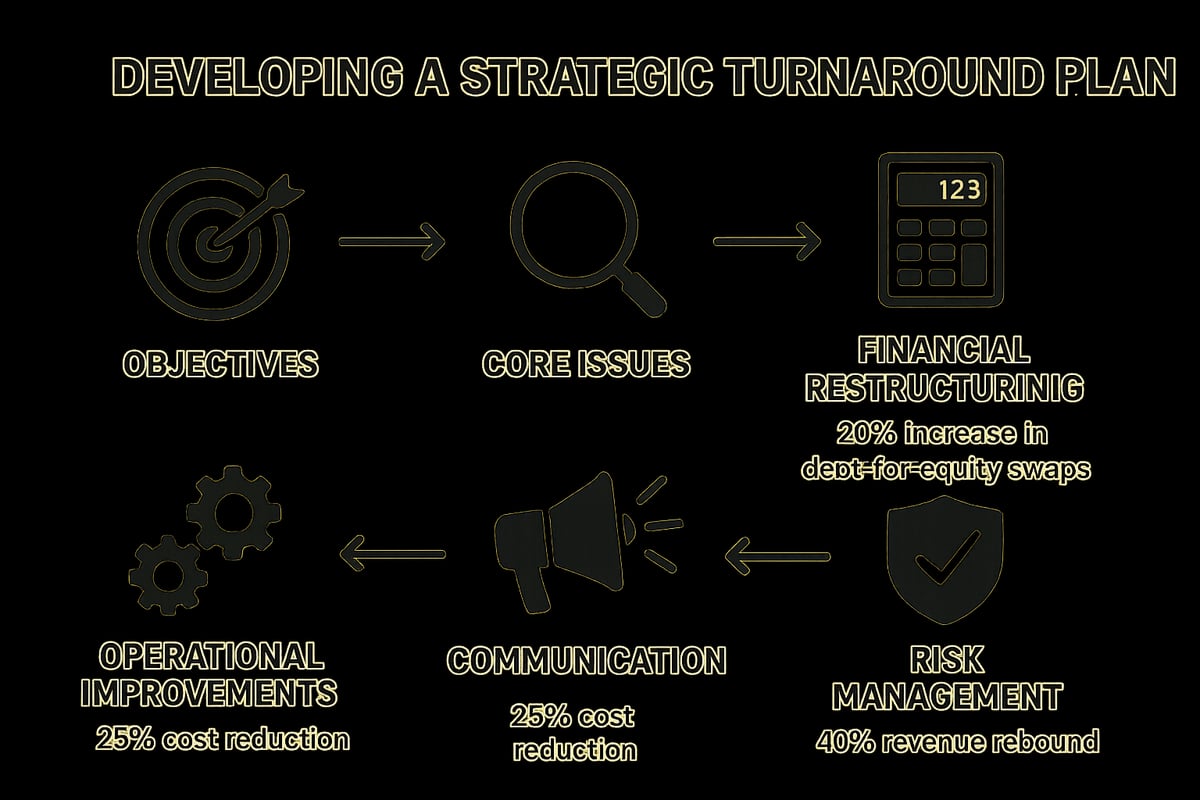
A clear, actionable roadmap is essential for any turnaround specialist aiming to restore stability and drive growth. In this step, you will learn how to set objectives, prioritize issues, restructure finances, improve operations, communicate effectively, and manage risks to deliver a robust turnaround plan.
Setting Realistic Objectives and KPIs
The foundation of a successful turnaround is setting achievable goals that address both immediate threats and long-term ambitions. A turnaround specialist must define clear short-term stabilization targets, such as restoring liquidity or improving cash flow, alongside longer-term growth objectives like market expansion or product innovation.
Key performance indicators (KPIs) should align with stakeholder expectations and provide measurable benchmarks. For example, KPIs might include reducing debt ratio by a specific percentage or increasing customer retention rates. By establishing realistic milestones, a turnaround specialist can monitor progress and demonstrate results to stakeholders.
Prioritizing Core Issues
Not all problems are created equal. A turnaround specialist must quickly identify the most critical value drivers that impact the organization's survival. This involves distinguishing between essential and non-essential operations, focusing resources on areas with the greatest potential for impact.
For instance, when a company prioritized its core product lines during a 2024–2025 turnaround, it achieved a 40% revenue rebound. Using tools like Pareto analysis or value stream mapping can help a turnaround specialist determine which issues deserve immediate attention, ensuring that efforts are both targeted and effective.
Financial Restructuring Strategies
Financial restructuring is often at the heart of a turnaround plan. The turnaround specialist must assess the company's capital structure, negotiate with creditors, and explore options such as debt renegotiation, equity injections, or asset divestitures.
Recent data shows that 2025 saw a 20% increase in successful debt-for-equity swaps, highlighting the growing importance of creative financial solutions. The turnaround specialist should tailor strategies to the organization's unique circumstances, always considering the impact on liquidity and long-term viability.
Operational Improvements
Streamlining processes, reducing overhead, and leveraging automation are crucial for restoring profitability. A turnaround specialist can identify inefficiencies and deploy solutions that enhance productivity. For example, a manufacturing firm reduced costs by 25% through process reengineering.
To maximize results, consider adopting proven frameworks and digital tools. For practical insights on operational efficiency and actionable strategies, explore Achieving Growth and Efficiency. By addressing operational bottlenecks, the turnaround specialist sets the stage for sustainable recovery.
Communication Plan for Stakeholders
Transparent, consistent communication is vital during a turnaround. A turnaround specialist should craft clear messages tailored to internal and external audiences, outlining the vision, objectives, and progress updates.
Regular communication helps manage expectations and maintain employee morale, especially during periods of uncertainty. By fostering trust and openness, the turnaround specialist can build alignment, reduce resistance, and keep stakeholders engaged throughout the transformation journey.
Risk Management and Contingency Planning
Turnarounds rarely go exactly as planned. A turnaround specialist must anticipate potential obstacles by conducting scenario analysis and stress testing. This involves identifying possible risks, assessing their likelihood and impact, and preparing contingency plans.
Building flexibility into the turnaround roadmap allows the organization to adapt quickly if circumstances change. Effective risk management ensures that setbacks do not derail progress, enabling the turnaround specialist to maintain momentum and drive lasting results.
Step 3: Implementing Effective Interventions
Implementing effective interventions is where a turnaround specialist brings strategy to life. This phase is about decisive action, rapid stabilization, and setting the stage for sustained growth. By focusing on targeted interventions, a turnaround specialist can restore stakeholder confidence, optimize resources, and create a foundation for long-term success.
Quick Wins and Stabilization Measures
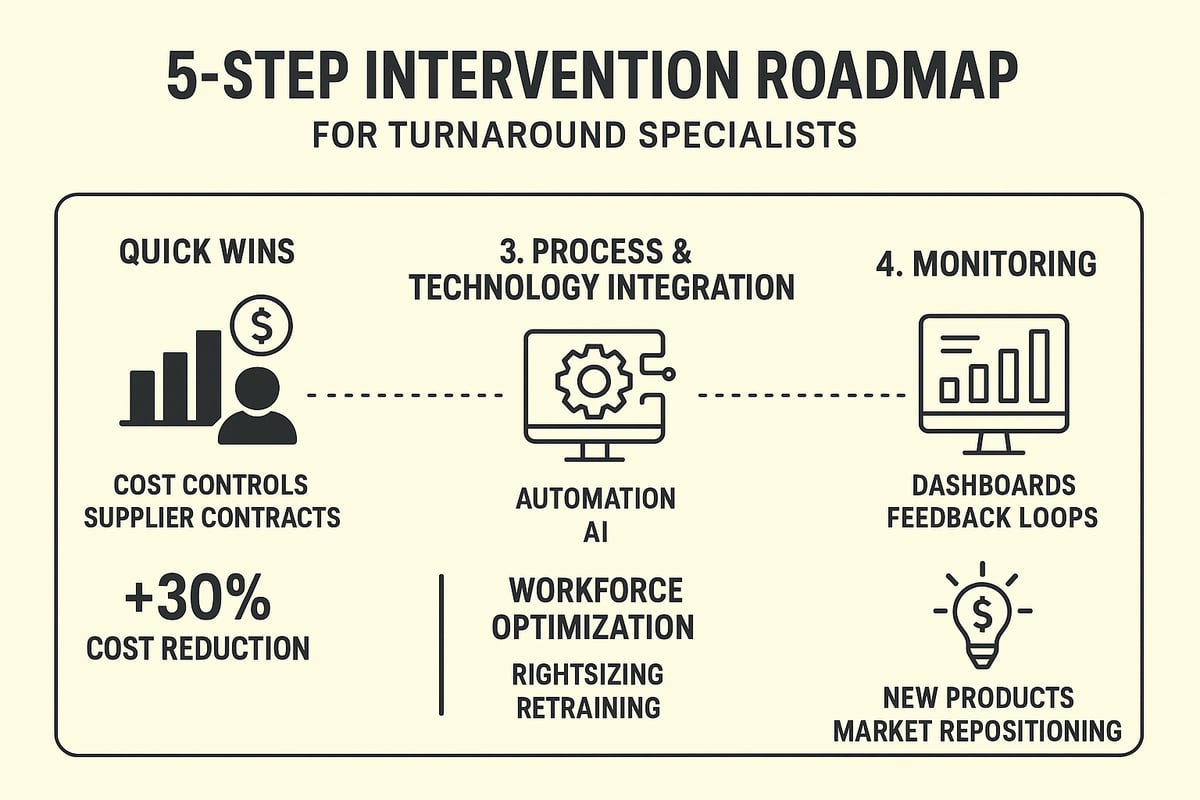
For any turnaround specialist, the initial focus must be on achieving quick wins that halt decline and restore organizational stability. Immediate actions often include enforcing strict cost controls, renegotiating supplier contracts, and optimizing working capital.
These measures reassure stakeholders that leadership is proactive and committed to recovery. Rapid interventions might involve freezing discretionary spending, consolidating vendors, or negotiating payment extensions. By prioritizing these steps, a turnaround specialist can buy valuable time and create momentum for broader transformation.
Workforce Optimization
Workforce optimization is a sensitive yet crucial intervention for any turnaround specialist. Rightsizing ensures the organization is lean enough to survive, while retraining and redeploying talent unlocks potential for growth.
Balancing reductions with employee engagement is key. Offering upskilling programs, transparent communication, and redeployment opportunities preserves morale and retains critical skills. A turnaround specialist must work closely with HR to evaluate performance, identify future leaders, and align the workforce with new business priorities.
Process and Technology Integration
Modern turnaround specialist interventions increasingly rely on technology to drive efficiency and precision. By introducing digital tools and automation, organizations can streamline manual processes, cut costs, and improve accuracy.
For example, implementing AI-driven inventory systems or automating routine financial tasks delivers measurable results. As highlighted in Benefits of Business Automation, automation accelerates business recovery and frees up resources for strategic priorities. A turnaround specialist must assess current workflows, identify automation opportunities, and oversee seamless technology adoption to maximize impact.
Revenue Generation and Market Repositioning
A turnaround specialist knows that cost-cutting alone is not enough. Generating new revenue streams and repositioning in the market are essential for sustainable recovery. This could involve launching new products, exploring untapped customer segments, or adjusting pricing strategies.
Case studies show that pivoting to digital offerings or entering adjacent markets can result in substantial revenue gains. A turnaround specialist should collaborate with marketing and product teams to identify growth opportunities, validate demand, and execute rapid go-to-market plans.
Monitoring Progress and Adjusting Tactics
Continuous monitoring is vital for any turnaround specialist to ensure interventions produce the intended results. Establishing real-time dashboards, regular review meetings, and performance tracking enables agile adjustments.
Feedback loops with frontline teams and stakeholders help identify obstacles early and refine tactics. The goal is to create a culture of accountability and responsiveness. By tracking KPIs and acting on data, a turnaround specialist can maintain momentum and steer the organization toward lasting success.
Step 4: Leading Change and Sustaining Momentum
Driving a successful transformation requires more than operational fixes. A turnaround specialist must focus on building momentum, leading change, and embedding resilience for the long term. This section explores essential leadership strategies to ensure lasting impact.
Building a High-Performance Turnaround Team
A turnaround specialist needs a diverse, skilled team to manage complex challenges. Select leaders who bring financial, operational, and change management expertise. Complementary skills, such as digital transformation knowledge and emotional intelligence, are essential for high performance.
- Financial strategists
- Operations experts
- Change management professionals
Collaboration is key. Foster accountability and encourage open dialogue. For insights on evolving talent strategies and digital trends, explore the Professional Services Industry Outlook 2026, which highlights the value of multidisciplinary teams in modern turnarounds.
Change Management Best Practices
The turnaround specialist must drive change across every level. Resistance is natural, but clear communication and early involvement can build trust. Use data and storytelling to share the vision and outline the benefits of transformation.
- Involve employees early in the process
- Set clear expectations and timelines
- Celebrate small wins to sustain motivation
Leverage proven frameworks, such as Kotter’s 8-Step Process, to guide the organization through each phase of change. Consistency and visibility from leadership are vital for success.
Leadership Communication and Transparency
Transparent communication distinguishes effective leaders. The turnaround specialist should maintain regular, honest dialogues with all stakeholders. Share progress updates, acknowledge setbacks, and invite feedback.
In 2025, organizations with transparent leadership saw a 35% higher success rate in turnarounds. Open communication reduces uncertainty and builds credibility, ensuring everyone remains aligned and engaged throughout the journey.
Embedding a Culture of Continuous Improvement
To secure long-term gains, a turnaround specialist must embed a mindset of ongoing improvement. Encourage teams to identify inefficiencies, suggest innovations, and adapt to new challenges.
- Implement feedback loops
- Reward innovative ideas
- Provide training and learning opportunities
Continuous learning strengthens resilience and keeps the workforce agile. Reviewing industry outlooks and best practices helps teams anticipate trends and stay ahead of disruptions.
Preventing Relapse and Ensuring Sustainability
Even after a successful turnaround, vigilance is essential. The turnaround specialist should implement early warning systems, schedule regular business health checks, and ensure risk management plans are active.
Monitoring financial health is crucial. Solutions like Efficient Revenue Cycle Management support ongoing performance by streamlining processes and maintaining cash flow. Post-turnaround monitoring reduced relapse rates by 20% between 2024 and 2025, proving the value of sustained attention and proactive action.
Future Trends and Success Factors for Turnaround Specialists
As the business environment evolves, the turnaround specialist role is transforming rapidly. Navigating future challenges demands adaptability, continuous learning, and a proactive approach to new trends. Staying ahead means understanding the forces reshaping the field and mastering the tools that drive success.
Embracing Digital Transformation
Digital transformation is at the heart of effective turnaround strategies. Advanced analytics, automation, and AI are enabling organizations to identify risks and opportunities with unprecedented speed. According to a 2025 industry study, companies leveraging AI in their turnarounds achieved recovery twice as fast as those relying on traditional methods.
Turnaround specialists must master data-driven tools to remain competitive. Real-time dashboards, predictive analytics, and process automation are now essential for rapid decision-making. For those seeking to maximize impact, resources like Identifying Hidden B2B Opportunities offer actionable insights on uncovering new growth avenues.
ESG and Stakeholder Capitalism
Sustainability and social responsibility have become non-negotiable for the modern turnaround specialist. Integrating ESG factors into turnaround plans is now a key differentiator. Research predicts that, in 2026, ESG-focused turnarounds will outperform peers by 15 percent.
Stakeholders, from investors to customers, increasingly demand transparency, ethical practices, and measurable impact. Specialists who embed ESG principles into recovery strategies not only boost performance but also enhance reputation and stakeholder trust.
Globalization and Cross-Border Challenges
The global nature of business introduces complex regulatory, cultural, and operational challenges. Turnaround specialists must navigate diverse legal frameworks and cross-border restructuring requirements. Success stories, such as multinational firms overcoming regulatory hurdles, highlight the importance of cultural awareness and legal expertise.
For comprehensive updates on recent restructuring activities and legal shifts, refer to the Turnaround & Restructuring Newsletter March/April 2025, which provides valuable context for specialists operating internationally.
The Rise of Remote and Hybrid Workforces
The shift toward remote and hybrid work models is reshaping organizational dynamics. Turnaround specialists must adapt their strategies for decentralized teams, emphasizing digital collaboration and effective change management.
Leveraging virtual tools, cloud platforms, and communication apps is now critical for maintaining engagement and productivity. Specialists skilled at fostering connection and alignment across distributed teams will drive more successful outcomes in the new work landscape.
Continuous Learning and Professional Development
With industry trends evolving quickly, ongoing education is vital for every turnaround specialist. Certifications, workshops, and peer networks keep professionals current with best practices and regulatory changes.
Investing in continuous learning ensures readiness for emerging challenges and builds a strong foundation for long-term success. By staying connected to industry resources and embracing new knowledge, specialists sustain their expertise in a rapidly changing environment.