
Did you know that companies making value creation their top priority outperform their competitors by as much as double in revenue growth? In 2026’s ever-changing business world, value creation is more than just a trend—it is the foundation of sustainable success. This guide will demystify what value creation means, explain why it is essential for every modern organization, and show you how to approach it systematically for a lasting competitive edge. You will discover proven frameworks, actionable strategies, and examples from leading businesses to help you transform your own organization. Ready to unlock the secrets of value creation for business success? Let’s dive in.
Understanding Value Creation: Definitions and Core Concepts
In today’s business environment, value creation is the foundation of sustainable growth and competitive advantage. At its core, value creation means transforming resources—such as people, technology, and capital—into increased worth for stakeholders. This process is not just about making profits, but about enhancing the benefits delivered to customers, employees, investors, and society at large.
Value creation is often misunderstood, so it’s important to clarify how it differs from related concepts. While value creation focuses on generating new worth, value capture is about securing a share of that worth, and value delivery ensures stakeholders actually receive the promised benefits.
| Concept | Focus | Example |
|---|---|---|
| Value Creation | Generating new worth for stakeholders | Developing a new product |
| Value Capture | Securing a share of created value | Pricing strategy, royalties |
| Value Delivery | Ensuring stakeholders receive the value | Customer service, logistics |
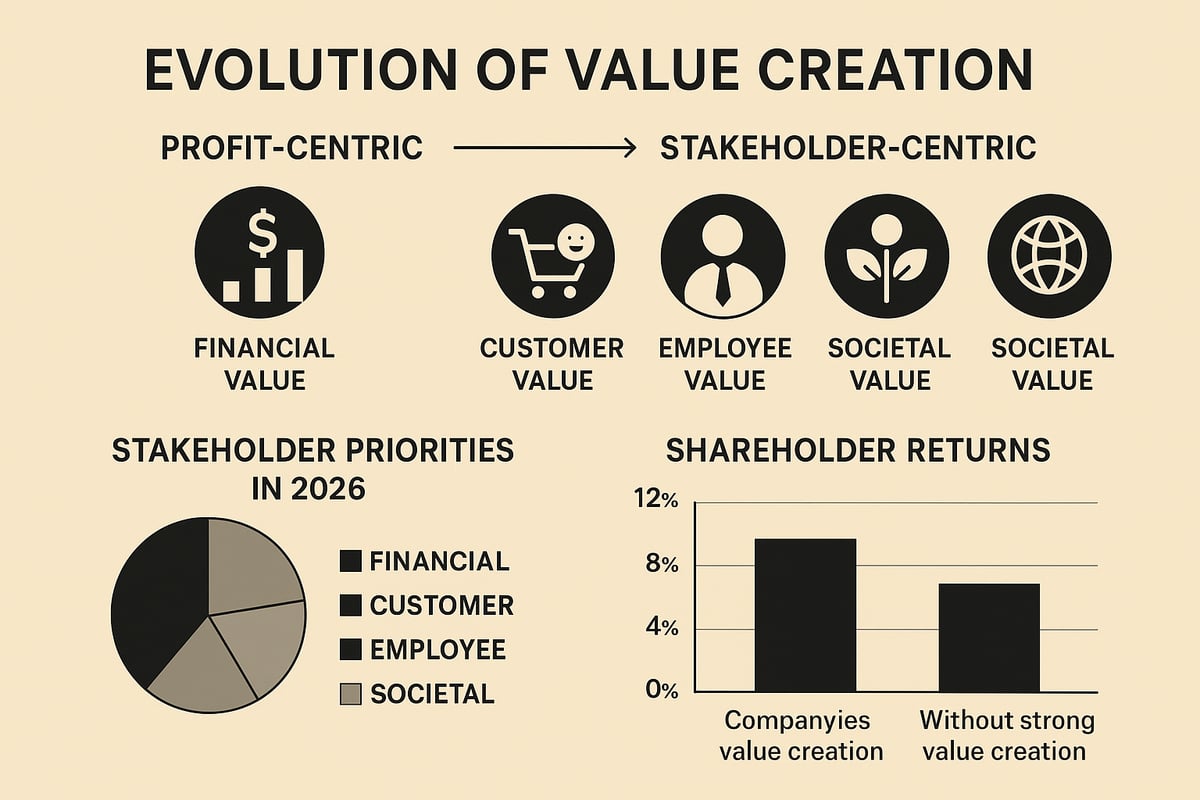
In 2026, value creation stands at the center of business strategy. Organizations that embed value creation into their purpose and operations outperform those that treat it as an afterthought. According to Bain, companies with robust value creation strategies deliver 30% higher shareholder returns. In fact, 70% of executives now cite value creation as their top strategic priority, highlighting its essential role in future-proofing organizations.
The concept of value creation has evolved significantly. Where businesses once focused solely on profit, modern leaders now adopt a stakeholder-centric approach that balances financial goals with broader impacts. Innovation, digital transformation, and sustainability have become critical drivers. For example, integrating business model innovation and sustainability is now seen as a major opportunity for long-term value, as detailed in the Business Model Innovation Framework.
Leading companies illustrate what effective value creation looks like in practice:
- Apple builds an ecosystem that seamlessly connects products and services, increasing customer loyalty.
- Amazon’s obsession with customer experience drives constant innovation and operational excellence.
- Tesla redefines industries by merging cutting-edge technology with a mission-driven approach to sustainability.
These examples prove that value creation is not a one-time event but a continuous, holistic process. Businesses that prioritize ongoing value creation build resilience, foster trust, and achieve lasting success in a rapidly evolving landscape.
The Value Creation Frameworks and Models for 2026
In 2026, choosing the right value creation framework is essential for organizations determined to outpace competitors and achieve lasting results. Value creation frameworks provide structured approaches to transform ideas, resources, and operations into meaningful outcomes for all stakeholders.
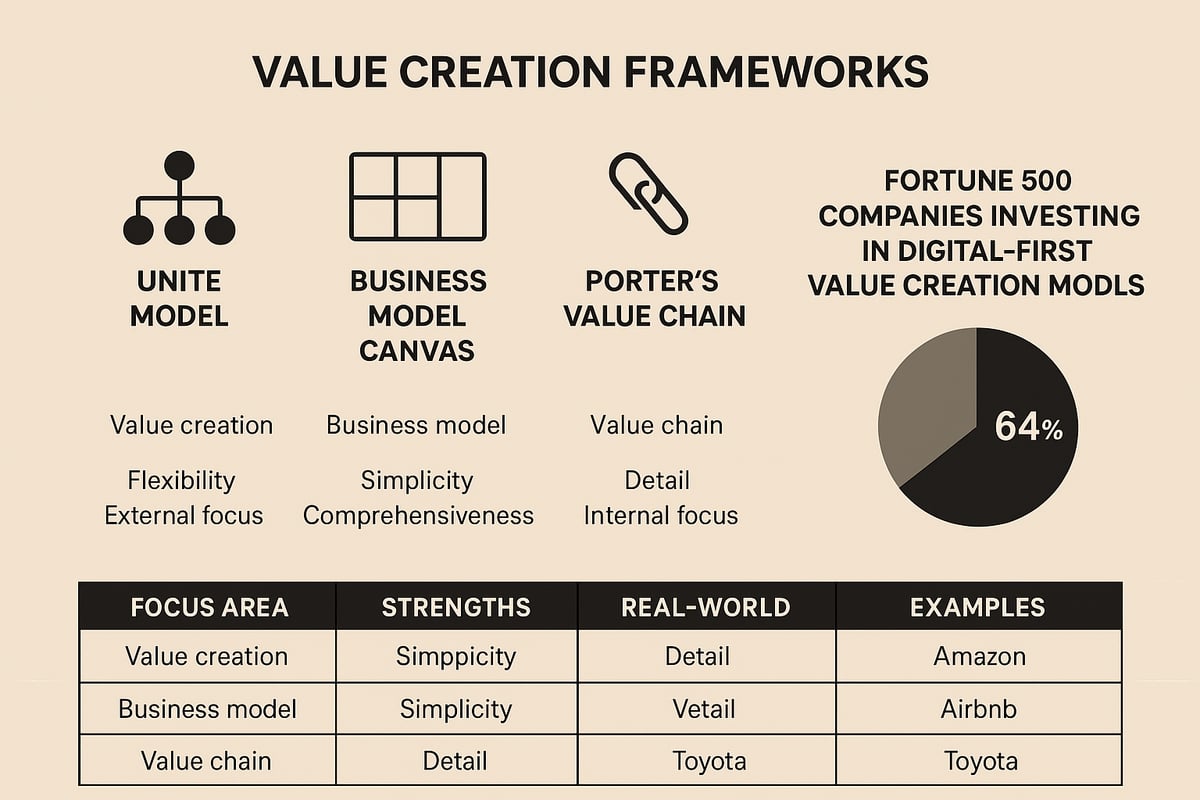
Today’s leading frameworks include the UNITE Value Creation Model, Business Model Canvas, and Porter’s Value Chain. Each offers a unique lens on value creation, from strategy design to operational execution. Selecting the right model depends on industry, company maturity, and strategic goals.
Digital transformation and AI are rapidly reshaping how businesses apply these frameworks. According to Bain, 60% of Fortune 500 companies are investing in digital-first value creation models. These trends demand adaptable frameworks that support agility and innovation. For an in-depth look at contemporary approaches, see this paper on Digital Transformation Strategies.
To illustrate the differences, consider the following comparison:
| Framework | Focus Area | Strengths | Example Use Case |
|---|---|---|---|
| UNITE Value Creation Model | Holistic, stakeholder | Integrates innovation, sustainability, engagement | SaaS platform |
| Business Model Canvas | Strategic blueprint | Visual, cross-functional, reveals value gaps | Airbnb |
| Porter’s Value Chain | Operational excellence | Process optimization, cost savings, efficiency | Toyota |
Netflix famously used digital business model innovation to disrupt the entertainment industry. Their agile approach to value creation set new standards for customer experience and operational scalability.
Value creation is not one-size-fits-all. The right framework accelerates innovation and competitive differentiation, especially as digital transformation continues to change the business landscape.
The UNITE Value Creation Model Explained
The UNITE Value Creation Model stands out as a flexible, holistic approach tailored for 2026’s dynamic business environment. Its core pillars include Value Proposition, Customer Segments, Channels, Revenue Streams, and Key Activities. This model is designed to guide organizations in aligning innovation, sustainability, and stakeholder engagement with their value creation efforts.
One of the UNITE model’s greatest strengths is its adaptability. Companies can customize each pillar to suit changing market conditions, emerging technologies, and evolving stakeholder needs. For example, a SaaS company might use the UNITE Value Creation Model to identify new revenue streams through digital products and expanded customer segments.
The integration of innovation and sustainability is central to this model. As digital transformation accelerates, organizations must ensure their value creation strategies remain relevant and resilient. The UNITE model encourages continuous assessment and adjustment, making it ideal for businesses seeking long-term competitive advantage.
By focusing on stakeholder engagement, the UNITE Value Creation Model helps organizations move beyond profit-centric thinking. It empowers leaders to create balanced value for customers, employees, and society, setting the stage for enduring success.
Applying Porter’s Value Chain for Operational Excellence
Porter’s Value Chain remains a foundational tool for operationalizing value creation in 2026. This framework breaks down business activities into primary and support categories, helping leaders pinpoint where value is added and where inefficiencies may exist.
Primary activities include inbound logistics, operations, outbound logistics, marketing and sales, and service. Support activities cover procurement, technology, human resources, and firm infrastructure. By mapping these elements, organizations can identify opportunities to enhance value creation, reduce costs, and improve processes.
Toyota is a classic example of value chain excellence. Their focus on lean manufacturing and continuous improvement has set industry benchmarks for operational efficiency. By optimizing each link in the value chain, Toyota consistently delivers superior value to customers and stakeholders.
Value creation through the value chain is an ongoing process. Regular analysis uncovers untapped opportunities, aligns resources, and supports strategic decision-making. As digital tools and automation become more prevalent, value chain optimization will remain a critical driver of business success.
Key Drivers of Value Creation in 2026
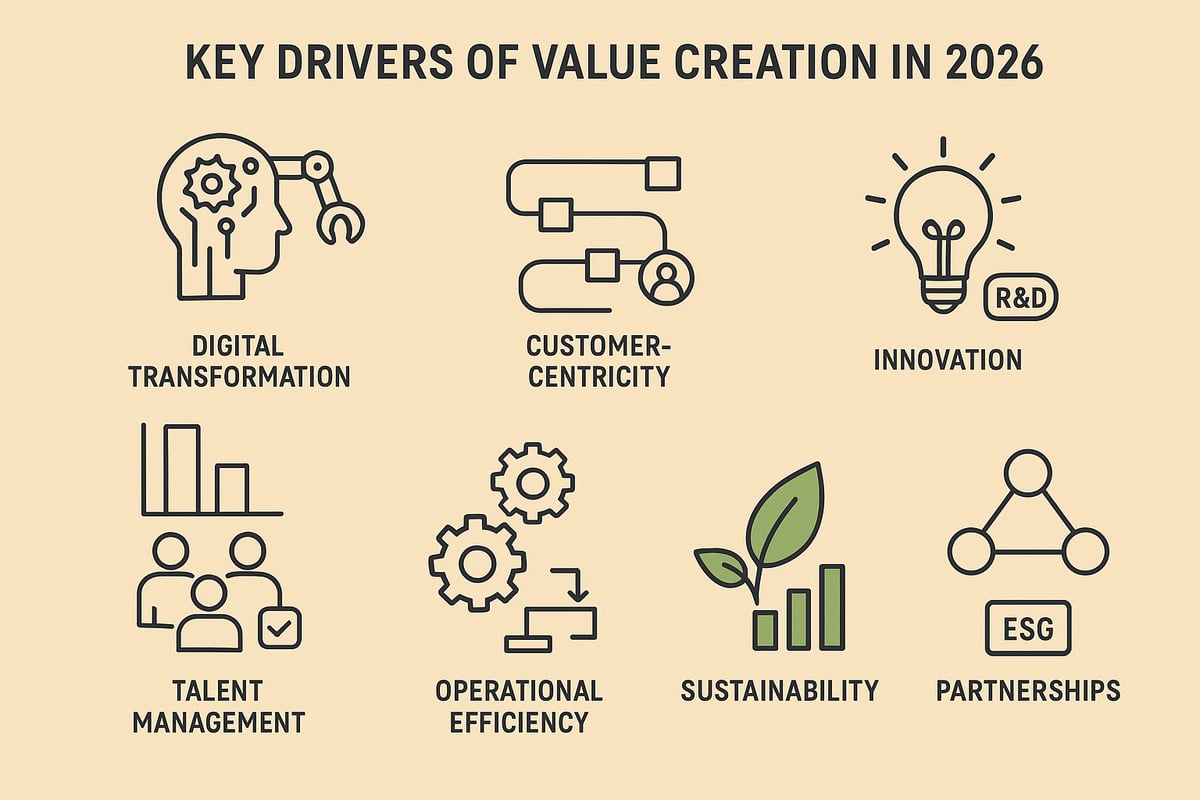
In 2026, value creation stands as the cornerstone of business strategy. Organizations that consistently innovate, optimize, and adapt are best positioned to thrive in an ever-changing market. Let’s explore the essential drivers powering value creation and how leading companies leverage them for sustainable growth.
Digital Transformation and AI
Digital transformation is reshaping value creation on a global scale. The integration of automation, advanced analytics, and artificial intelligence enables companies to streamline operations and deliver superior experiences. In fact, 40% of business leaders now cite AI as their primary value creation enabler.
Organizations investing in digital tools can unlock new efficiencies, reduce costs, and innovate faster. For example, Microsoft’s cloud transformation has positioned the company as a leader in digital services. To accelerate your own journey, consider leveraging AI and Automation Integration Solutions for scalable, data-driven outcomes.
Customer-Centricity and Innovation
A relentless focus on customer needs is a hallmark of effective value creation. Companies that prioritize hyper-personalization, customer journey mapping, and feedback loops are able to build loyalty and outpace competitors.
Innovation goes hand in hand with customer-centricity. Continuous improvement, open innovation, and robust R&D investments help businesses stay ahead of shifting expectations. Amazon’s obsession with customer experience and Tesla’s innovation-driven approach are clear illustrations of how these drivers fuel sustainable value creation.
Talent Management and Employee Well-Being
Engaged, empowered employees are essential for value creation. Modern organizations invest in upskilling, health, and wellness programs to attract and retain top talent.
Companies that prioritize employee well-being report up to 21% higher productivity, according to Gallup. By fostering a culture of empowerment and continuous learning, businesses unlock the creativity and resilience needed for ongoing value creation in a competitive landscape.
Operational Efficiency and Sustainability
Operational efficiency is a foundational driver of value creation. Process optimization, lean management, and cost control allow organizations to reinvest in growth and innovation.
At the same time, sustainability has become a non-negotiable aspect of value creation. Integrating ESG principles, adopting a circular economy mindset, and ensuring responsible sourcing are now standard for forward-thinking companies. Patagonia’s sustainability-driven brand value is a prime example of operational excellence paired with environmental stewardship.
Partnerships, Ecosystems, and Synergy
No company creates value in isolation. Strategic partnerships and ecosystem participation are increasingly vital for value creation in 2026. By building alliances and expanding value networks, organizations access new markets, technologies, and expertise.
The synergy between these drivers—digital transformation, customer-centricity, innovation, talent, efficiency, and sustainability—multiplies the impact of value creation. Companies that orchestrate these elements holistically are best positioned for enduring success.
Real-World Examples and Key Data
The impact of these drivers is evident in leading organizations. Microsoft’s transformation to cloud-based services, Patagonia’s commitment to sustainability, and Amazon’s customer-centric model all showcase the power of integrated value creation strategies.
Recent data reinforces this approach: 40% of leaders identify AI as their top value creation lever, while businesses investing in employee well-being achieve up to 21% higher productivity. The synergy of these drivers is essential for organizations aiming to create lasting value in 2026 and beyond.
Step-by-Step Guide to Building a Value Creation Strategy
Building a robust value creation strategy is essential for organizations aiming to thrive in 2026’s dynamic business environment. This step-by-step guide demystifies the process, providing a clear roadmap to unlock sustainable growth, resilience, and stakeholder satisfaction through systematic value creation.
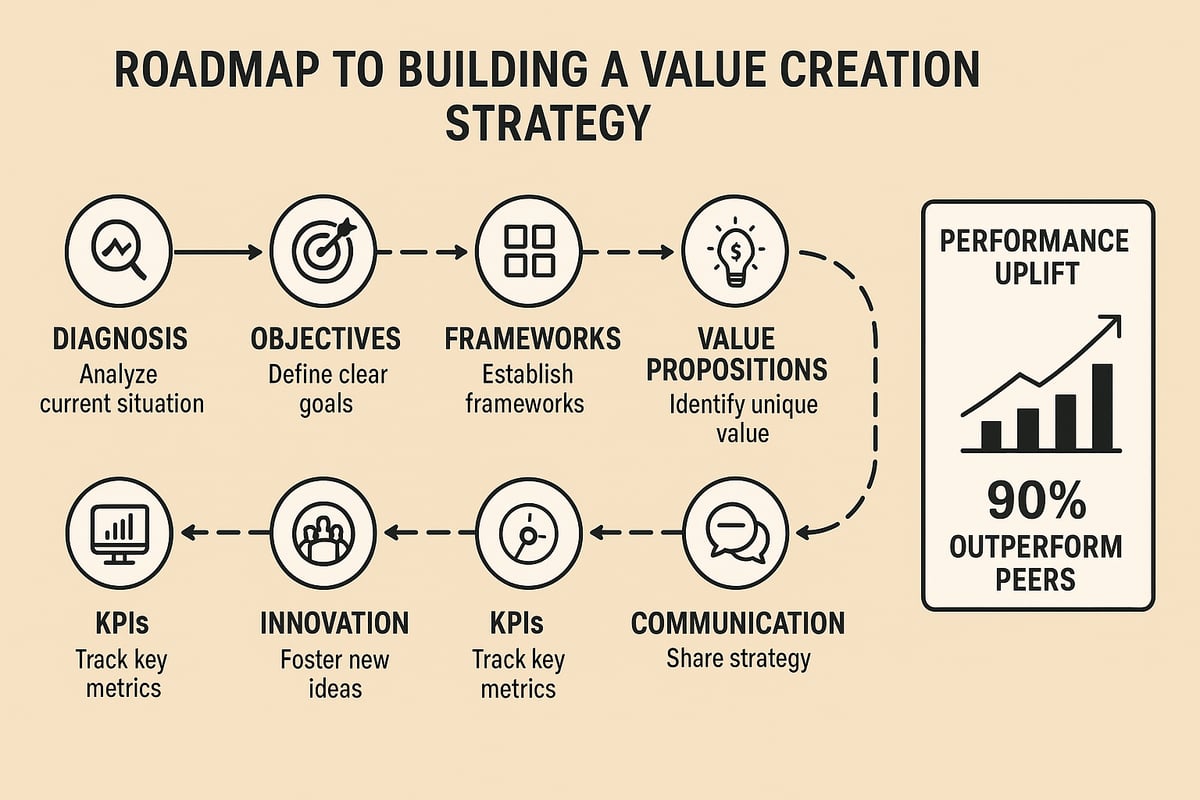
Step 1: Diagnose Current Capabilities
Start your value creation journey by conducting a thorough internal audit. Map out existing processes, identify strengths, and pinpoint gaps across departments.
Engage key stakeholders to understand their needs and expectations. This diagnosis sets the foundation for targeted improvements that drive value creation at every level.
Step 2: Define Clear Objectives
Set specific, measurable objectives aligned with your business purpose and stakeholder interests. These objectives should address not just financial outcomes, but also customer, employee, and societal value.
A well-defined vision ensures your value creation strategy is focused and actionable, guiding decision-making and resource allocation.
Step 3: Select and Customize the Right Framework
Choose a value creation framework that matches your industry and maturity level. Options like the UNITE Model, Business Model Canvas, or Porter’s Value Chain offer different strengths.
Customize the framework to fit your organizational context. This step helps clarify priorities and uncovers new opportunities for value creation.
Step 4: Design Value Propositions for Stakeholders
Craft tailored value propositions for each key stakeholder group, including customers, employees, investors, and society.
Consider what matters most to each group. A compelling value creation approach recognizes the diverse drivers of loyalty, engagement, and investment.
Step 5: Implement Enablers—Digital Tools, Process Improvements, Talent, and Partnerships
Activate your value creation strategy by deploying digital solutions, streamlining workflows, and investing in talent development. Forge partnerships to access new markets or expertise.
For deeper insights into operational excellence, explore Achieving Growth and Operational Efficiency. Leveraging these enablers accelerates value creation and boosts organizational agility.
Step 6: Establish KPIs and Feedback Mechanisms
Define clear KPIs to track progress toward your value creation goals. Use both quantitative metrics (such as ROI, NPS, productivity) and qualitative indicators (like employee engagement or brand perception).
Regular feedback loops allow you to adjust strategies based on real-world results, ensuring value creation remains on track.
Step 7: Foster a Culture of Innovation and Continuous Improvement
Encourage experimentation, cross-functional collaboration, and open communication. A culture that supports learning and adaptation is fundamental to sustaining value creation in a rapidly changing market.
Recognize and reward innovative thinking to embed value creation into your organizational DNA.
Step 8: Communicate Value Creation Efforts Transparently
Share your progress and successes with all stakeholders. Transparent communication builds trust, reinforces commitment, and attracts investment.
Use storytelling, regular updates, and clear reporting to highlight the impact of your value creation initiatives.
| Step      | Key Action                           | Outcome                     |
|-----------|--------------------------------------|-----------------------------|
| Diagnose  | Internal audit, stakeholder mapping  | Baseline, gap analysis      |
| Define    | Set objectives                       | Clear direction             |
| Framework | Select/customize model               | Strategic alignment         |
| Design    | Value propositions                   | Stakeholder engagement      |
| Implement | Digital/process/talent/partnerships  | Operational excellence      |
| KPIs      | Metrics and feedback                 | Continuous improvement      |
| Innovate  | Culture of learning                  | Sustained value creation    |
| Communicate| Transparency, reporting             | Stakeholder trust           |
Example: Mid-Size Manufacturer Transformation
Consider a mid-size manufacturer struggling with legacy processes and siloed teams. By following these steps, the company launched a value creation initiative focused on digitalization and employee upskilling.
They mapped current capabilities, set clear objectives around customer satisfaction and operational efficiency, and adopted the Business Model Canvas. Investments in automation and training empowered teams, while regular KPI reviews and transparent communication built momentum.
Within a year, the manufacturer saw measurable improvements in productivity and employee engagement, demonstrating the tangible impact of a structured value creation strategy.
Common Challenges and Solutions in Value Creation
Organizations often face resistance to change, siloed departments, or limited investment in technology and talent. Measuring non-financial value can also be difficult.
Overcome these challenges by aligning leaders, driving change management, integrating systems, and establishing clear metrics. Involve employees early and communicate openly to build buy-in for value creation efforts.
Measuring and Communicating Value Creation
Use a balanced approach to measurement, combining financial indicators with qualitative metrics like brand perception and employee satisfaction.
Adopt tools such as the Balanced Scorecard or ESG frameworks to track and report progress. Transparent communication of value creation outcomes not only builds trust but also attracts new opportunities.
Conclusion: Iterative, Data-Driven Strategy Wins
A value creation strategy is not a static plan, but a living process. Organizations that embrace data-driven, iterative approaches consistently outperform their peers.
By following these steps and adapting to market changes, you can build a resilient, future-ready business that delivers value for all stakeholders.
Real-World Examples and Case Studies of Value Creation Success
What separates industry leaders from the rest? Real-world case studies reveal how value creation, when tailored and executed with discipline, drives transformative outcomes. Let’s examine how four companies redefined their industries through innovative value creation strategies.
Amazon: Customer Obsession and Operational Mastery
Amazon’s relentless focus on customer-centric value creation has transformed the retail landscape. By streamlining logistics, introducing Prime membership, and deploying data-driven personalization, Amazon delivers exceptional value at every touchpoint. In 2023, this approach fueled a 38% year-over-year revenue increase. Amazon’s operational efficiency and commitment to continuous improvement set a global benchmark for scalable value creation.
Unilever: Embedding Sustainability into Business Strategy
Unilever’s value creation journey demonstrates the power of integrating sustainability with core business strategy. The company prioritizes environmental and social impact through initiatives like reducing plastic waste and promoting fair trade. As a result, Unilever’s sustainable brands grew 69% faster than others in its portfolio. Their holistic approach proves that value creation extends beyond profit, aligning brand purpose with societal expectations.
Microsoft: Cloud Transformation and Digital Innovation
Microsoft’s shift from legacy software to cloud-based solutions redefined its value creation model. Investing heavily in Azure and embracing AI positioned Microsoft as a leader in digital transformation. This pivot unlocked new revenue streams and enhanced customer value. In fact, AI’s Role in Value Creation is now a major driver for companies like Microsoft, with 40% of business leaders citing AI as their top enabler.
Patagonia: Championing Environmental and Social Value
Patagonia stands out by embedding environmental activism and social responsibility into its business DNA. The company’s commitment to sustainable sourcing, transparency, and conservation has built unparalleled brand loyalty. Patagonia’s approach illustrates that value creation can drive both financial returns and positive societal change.
| Company | Unique Value Creation Differentiator |
|---|---|
| Amazon | Customer obsession and operational scale |
| Unilever | Sustainability as core strategy |
| Microsoft | Digital innovation and AI integration |
| Patagonia | Societal and environmental leadership |
These cases confirm that value creation is most effective when deeply aligned with an organization’s strengths and market realities. By learning from these leaders, businesses can craft strategies for enduring value creation.
Future Trends in Value Creation: What to Expect in 2026 and Beyond
The landscape of value creation is evolving at an unprecedented pace. As we move into 2026, organizations must navigate a dynamic environment shaped by new technologies, shifting stakeholder expectations, and the growing demand for holistic business impact.
AI, Automation, and the Digital Frontier
Artificial intelligence and automation are redefining what is possible in value creation. Companies are leveraging advanced analytics, machine learning, and intelligent automation to unlock new efficiencies, personalize customer experiences, and drive innovation at scale. By 2026, 40% of business leaders cite AI as the top enabler of value creation, making digital transformation a non-negotiable for future-ready organizations.
Stakeholder Capitalism and Integrated ESG
The shift from shareholder to stakeholder capitalism is accelerating. Businesses are now expected to deliver value creation not just for investors, but for employees, communities, and the planet. Integrated ESG (Environmental, Social, Governance) reporting is becoming standard practice, with transparent metrics guiding sustainable growth. For example, recent innovations in value creation in road infrastructure highlight how organizations are embedding societal value into core operations, setting new benchmarks for impact.
Employee Well-Being and Holistic Value Propositions
A renewed focus on employee well-being is emerging as a key pillar of value creation. Organizations investing in health, empowerment, and skill development are seeing measurable gains in productivity and retention. Solutions like payroll and human capital management services are enabling businesses to craft holistic value propositions that attract and nurture top talent. In 2026, the link between human capital and value creation is stronger than ever.
Expanding Value Networks and Platform Models
Platform-based business models and value networks are expanding across industries. By leveraging ecosystems of partners, digital platforms, and “as-a-service” offerings, companies are unlocking new revenue streams and enhancing agility. The rise of manufacturing and healthcare “as-a-service” models illustrates how value creation is becoming more collaborative and adaptive, preparing organizations to thrive in uncertain markets.
Agility, Resilience, and Strategic Adaptation
To stay ahead, organizations must foster agility and resilience in their value creation strategies. This means continuously monitoring trends, adapting business models, and investing in future-ready capabilities. By 2026, 75% of businesses will make value creation a central part of their corporate strategy, underscoring the urgency of proactive adaptation in a rapidly changing world.
As you reflect on the insights from this guide—from building resilient value strategies to empowering your team’s well-being and embracing digital transformation—remember that real change starts with a single step. If you’re ready to move from ideas to impact and want tailored solutions for streamlining operations, boosting profitability, and supporting your employees’ success, let’s explore how we can help. Together, we can unlock measurable value and set your business on a path to sustainable growth.
Book a Consultation
and take the first step toward achieving your goals for 2026 and beyond.