
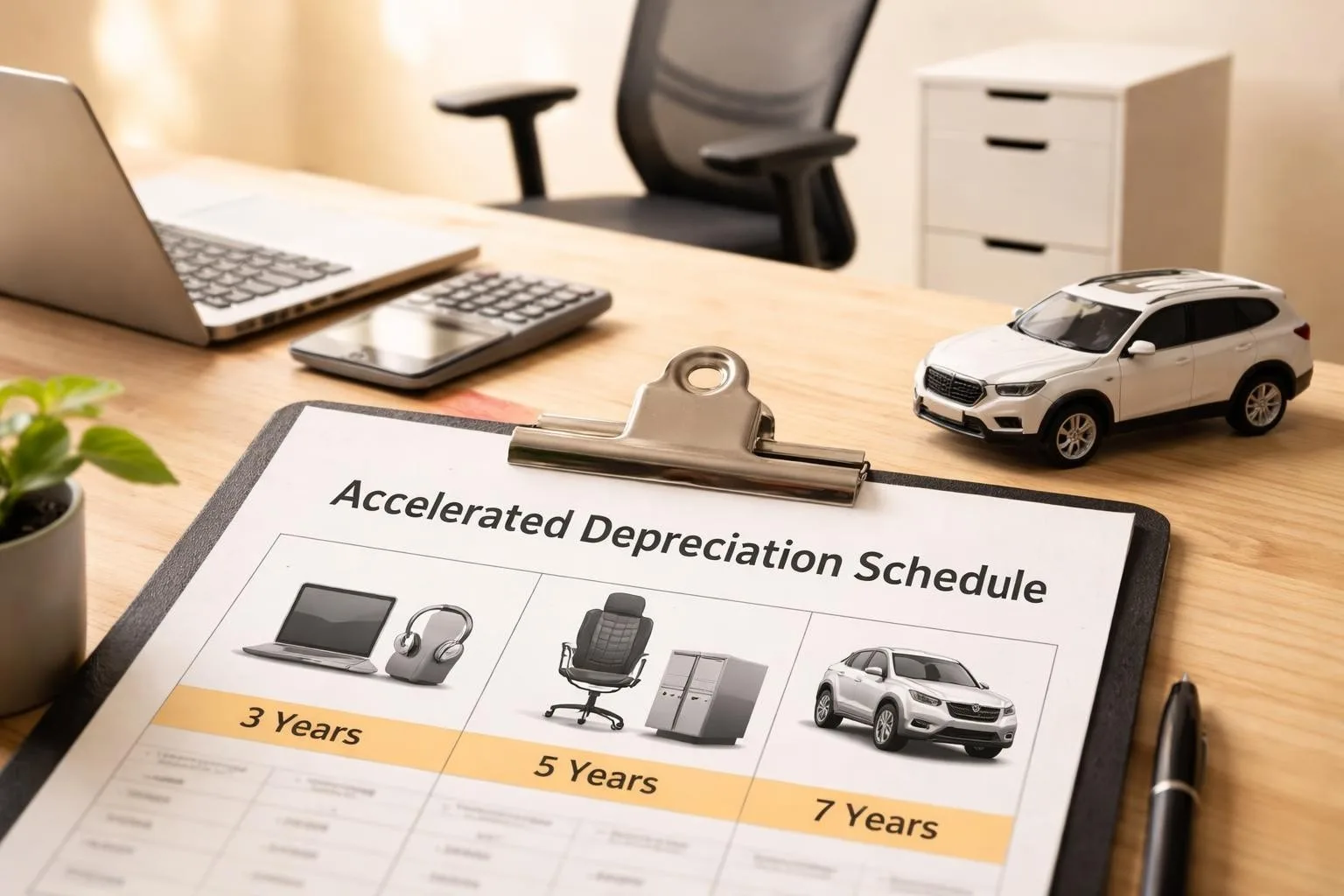
Understanding how to properly classify business assets for depreciation purposes can significantly impact your organization's tax position and cash flow. One of the most important classifications for businesses to understand is 5-year property, a category that encompasses many common business assets and offers substantial tax advantages through accelerated depreciation. For organizations seeking to optimize their financial operations, mastering this classification can unlock immediate savings while maintaining compliance with IRS regulations.
What Qualifies as 5-Year Property Under IRS Guidelines
The Internal Revenue Service establishes specific criteria for asset classifications that determine depreciation schedules. 5-year property is legally defined under 26 USC § 168(e)(3) and includes assets that have a class life of more than four years but less than ten years.
Common Assets Classified as 5-Year Property
Businesses across industries typically own numerous assets that fall into this category. Understanding which items qualify helps organizations maximize their depreciation deductions and improve financial planning.
Technology and Office Equipment
- Computers and peripheral equipment
- Office machinery including copiers and printers
- Technology infrastructure and servers
- Telecommunication equipment
Transportation Assets
- Automobiles and light trucks
- Cargo vans and delivery vehicles
- Fleet vehicles used for business purposes
Other Business Property
- Office furniture and fixtures
- Appliances used in commercial settings
- Carpeting installed in business facilities
- Certain research and development equipment
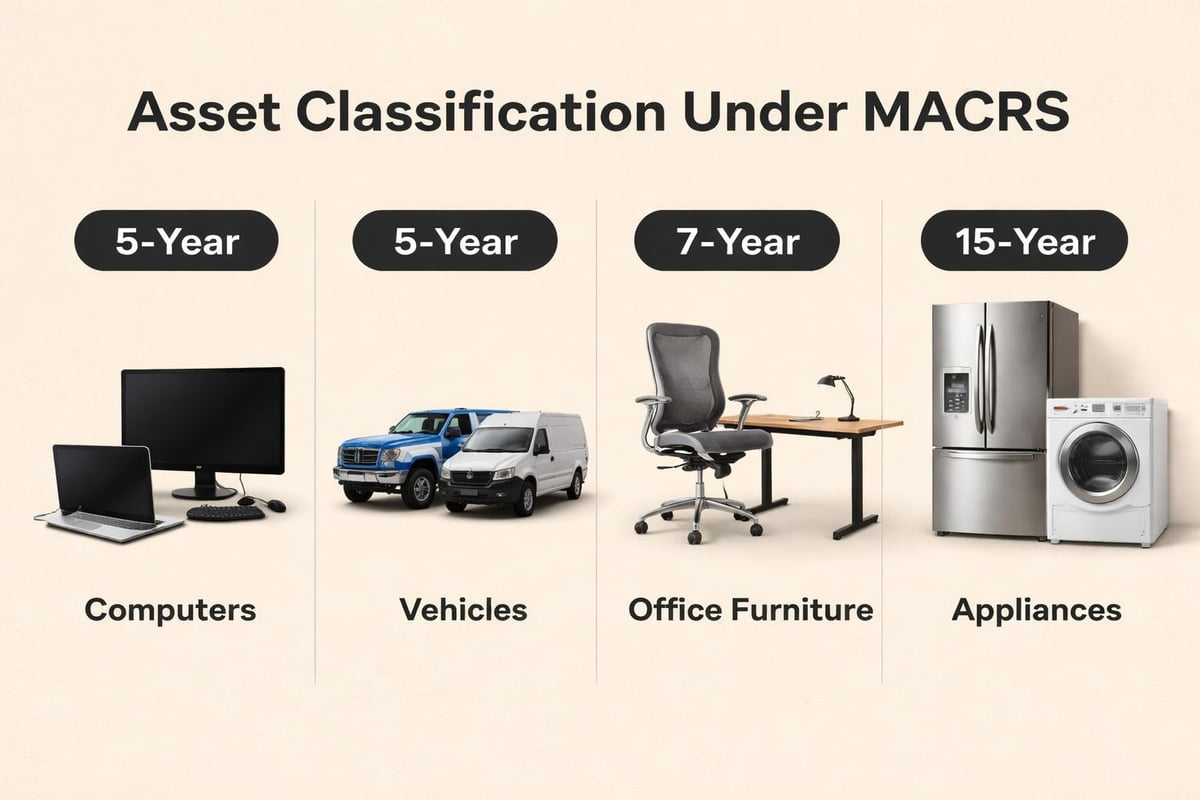
The distinction between equipment categories matters significantly for tax planning. While some business owners wonder whether equipment falls under 5-year or 7-year depreciation, the classification depends on the specific nature and use of the asset. Technology equipment generally qualifies as 5-year property, while most other machinery and equipment falls into the 7-year category.
The Modified Accelerated Cost Recovery System (MACRS)
Under the Modified Accelerated Cost Recovery System, 5-year property follows specific depreciation schedules that allow businesses to recover costs faster than straight-line depreciation. This acceleration provides meaningful cash flow benefits during the early years of asset ownership.
Depreciation Methods Available
| Method | Year 1 Recovery | Advantages | Best For |
|---|---|---|---|
| 200% Declining Balance | 20% | Maximum acceleration | Most 5-year property |
| 150% Declining Balance | 15% | Moderate acceleration | Alternative minimum tax situations |
| Straight-Line | 10% | Consistent deductions | Specific planning scenarios |
The half-year convention applies to most 5-year property acquisitions, meaning assets placed in service during any month of the year are treated as though they were placed in service at the midpoint of that year. This convention affects the depreciation calculation for both the first and final years of the recovery period.
Organizations implementing asset classification strategies benefit from understanding these nuances, as proper categorization ensures maximum tax efficiency while maintaining regulatory compliance.
Strategic Tax Benefits of 5-Year Property Classification
The accelerated depreciation schedule for 5-year property creates multiple strategic advantages for businesses focused on financial optimization. These benefits extend beyond simple tax savings to impact overall business planning and investment decisions.
Immediate Financial Impact
Enhanced Cash Flow
By recovering asset costs more quickly, businesses retain more capital during critical early years. This improved cash flow supports operational needs, expansion initiatives, and strategic investments without requiring additional financing.
Reduced Tax Liability
Higher depreciation deductions in early years directly reduce taxable income. For organizations with significant equipment purchases, these deductions can substantially lower annual tax obligations.
Section 179 and Bonus Depreciation Opportunities
When combined with Section 179 expensing and bonus depreciation provisions, 5-year property can potentially be fully deducted in the year of acquisition. These provisions allow businesses to:
- Expense up to current limits under Section 179
- Apply bonus depreciation to remaining basis
- Use regular MACRS depreciation for any residual amounts
The layered approach to depreciation creates powerful tax planning opportunities. Understanding depreciation classifications across different property types helps businesses structure acquisitions for optimal tax treatment.
Rental Property and Real Estate Applications
While 5-year property is commonly associated with equipment and vehicles, real estate investors also encounter this classification when dealing with personal property components within rental properties. This intersection creates unique planning opportunities.
Personal Property in Rental Contexts
When landlords renovate or improve rental properties, certain components qualify as 5-year property rather than following the longer recovery periods associated with real property. Examples of 5-year property in rental renovations include:
- Appliances such as refrigerators, stoves, and dishwashers
- Carpeting and removable floor coverings
- Portable furniture and equipment
- Window treatments and blinds
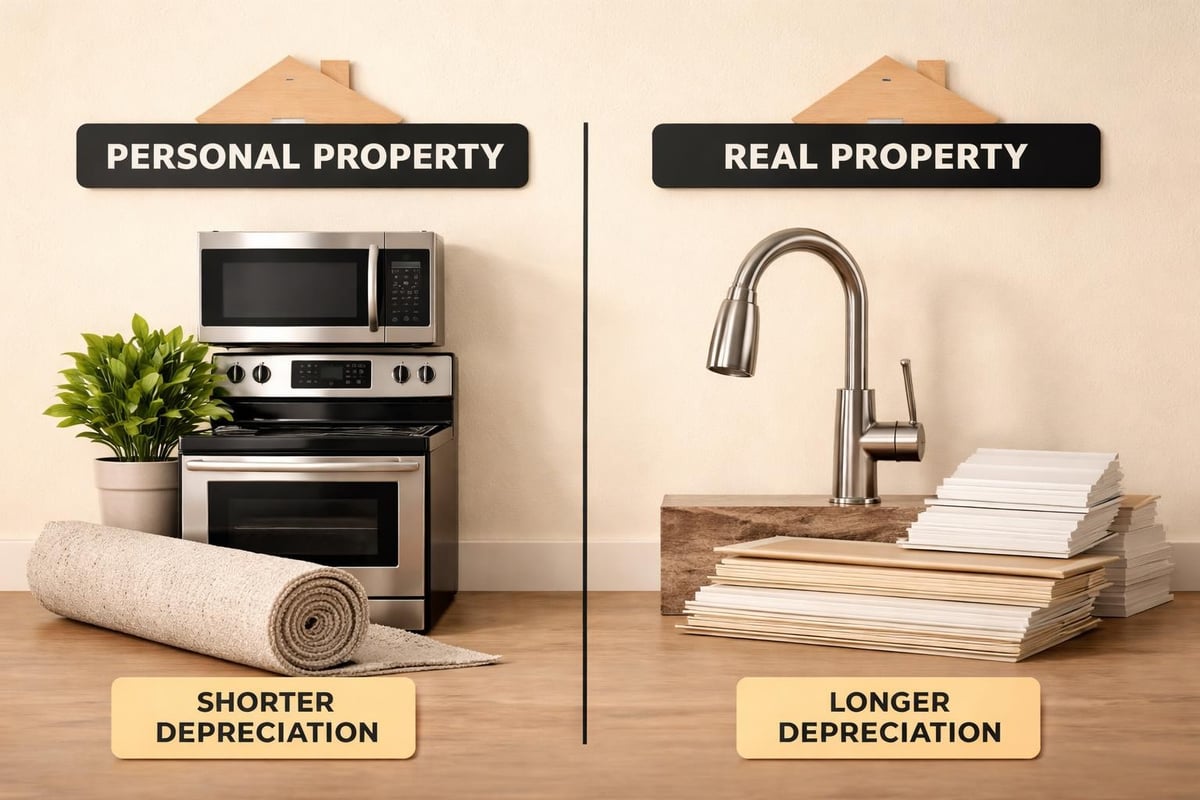
This distinction becomes particularly valuable when organizations conduct cost segregation studies. By identifying personal property components that qualify as 5-year property, businesses can accelerate depreciation that would otherwise occur over 27.5 years for residential rental property or 39 years for commercial real property.
Healthcare organizations managing facility improvements can particularly benefit from understanding these classifications. Healthcare providers focused on financial and operational excellence often invest significantly in facility upgrades, and proper classification ensures maximum tax efficiency.
Industry-Specific Considerations and Applications
Different industries encounter unique situations when applying 5-year property classifications. Understanding industry-specific nuances helps organizations avoid misclassification while capturing all available tax benefits.
Technology and Professional Services Firms
Organizations in the technology and professional services sectors typically maintain substantial inventories of computer equipment, servers, and telecommunications infrastructure. These assets form the backbone of operational capabilities and represent significant capital investments.
Regular Replacement Cycles
Technology firms often replace equipment on 3-5 year cycles to maintain competitive capabilities. The 5-year property classification aligns perfectly with these replacement patterns, allowing full depreciation before equipment becomes obsolete.
Software and Hardware Integration
While software licensing follows different rules, hardware components clearly qualify as 5-year property. Organizations implementing integrated technology solutions must properly segregate hardware costs to claim appropriate depreciation benefits.
Healthcare and Service Organizations
Medical practices, hospitals, and healthcare service providers invest heavily in equipment that falls under various depreciation categories. Diagnostic equipment, treatment devices, and administrative technology each require careful classification.
Certain specialized equipment, such as generators providing backup power for critical healthcare facilities, requires specific analysis. The depreciation life of generators depends on their classification as either land improvement property or equipment, with different recovery periods applying to each category.
| Industry | Common 5-Year Property | Planning Considerations |
|---|---|---|
| Professional Services | Computers, office furniture, vehicles | Regular technology refresh cycles |
| Healthcare | Medical office equipment, administrative systems | Integration with longer-lived medical devices |
| Consulting | Technology infrastructure, client-facing equipment | Mobile and remote work assets |
| Real Estate | Appliances, carpeting, removable fixtures | Cost segregation opportunities |
Depreciation Planning for Organizational Efficiency
Effective depreciation planning extends beyond simple tax compliance to become a strategic tool for financial optimization. Organizations that systematically approach 5-year property management create sustainable competitive advantages.
Documentation and Tracking Requirements
Asset Acquisition Records
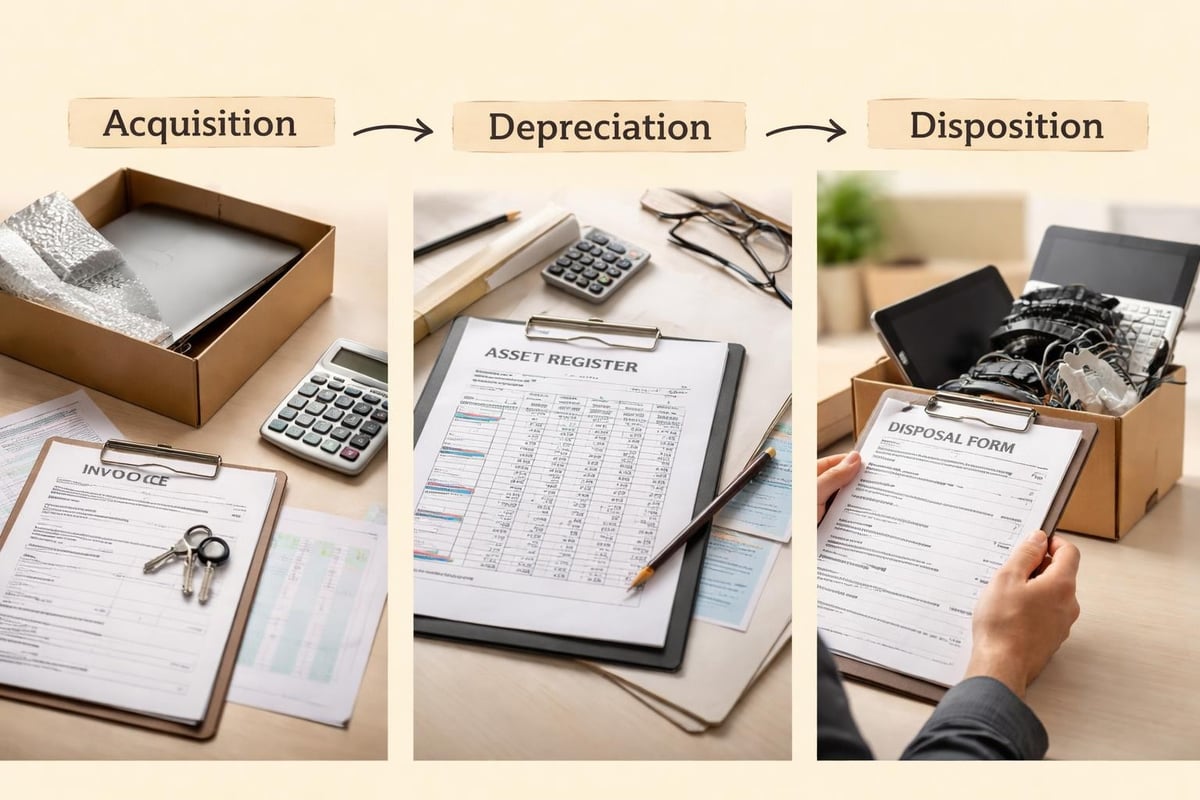
Maintaining detailed records of asset purchases, including invoices, purchase dates, and placed-in-service dates, ensures accurate depreciation calculations. This documentation proves essential during audits and supports compliance efforts.
Disposition Tracking
When 5-year property is sold, traded, or retired before full depreciation, businesses must account for the disposition properly. Tracking these events prevents errors and identifies opportunities for tax loss harvesting.
Integration with Financial Systems
Modern organizations benefit from integrating depreciation tracking with broader financial management systems. This integration enables:
- Automated depreciation calculations
- Real-time reporting of book versus tax depreciation
- Forecasting future tax impacts of current acquisitions
- Scenario planning for major equipment purchases
Organizations seeking to eliminate thousands of hours of manual processes find that automating depreciation management delivers immediate time savings while improving accuracy.
Real Estate Investor Strategies
Real estate investors employ sophisticated strategies to maximize the benefits of 5-year property classifications within their portfolios. Understanding asset recovery periods for real estate investments creates opportunities for significant tax savings.
Cost Segregation Studies
Professional cost segregation studies identify personal property components within real estate holdings that qualify for accelerated depreciation. These studies typically uncover substantial amounts of 5-year property embedded in real estate acquisitions.
Components Commonly Reclassified
- Specialty lighting and electrical systems
- Decorative fixtures and finishes
- Commercial kitchen equipment
- Security and surveillance systems
The process involves engineering-based analysis that allocates purchase price among various asset categories. For substantial real estate holdings, the tax savings from proper classification can reach hundreds of thousands of dollars.
Rental Property Improvements
When making improvements to rental properties, investors must distinguish between repairs, which are immediately deductible, and improvements subject to depreciation. Among improvements, identifying components that qualify as 5-year property rather than following the building's longer recovery period creates immediate tax advantages.
Depreciation life considerations for rental property improvements require careful analysis to ensure proper classification and maximum benefit realization.
Compliance and Record-Keeping Best Practices
Maintaining compliance with IRS regulations while maximizing tax benefits requires systematic approaches to documentation and record-keeping. Organizations that establish robust processes avoid costly errors and audit complications.
Essential Documentation Elements
Purchase Documentation
- Detailed invoices showing itemized costs
- Contracts and purchase agreements
- Delivery and installation records
- Placed-in-service dates with supporting evidence
Ongoing Records
- Depreciation schedules and calculations
- Software or spreadsheet tracking systems
- Annual reconciliations of book and tax depreciation
- Disposition documentation for retired assets
The IRS Publication 527 provides comprehensive guidance on residential rental property depreciation, including specific examples of 5-year property classifications that support proper compliance.
Common Classification Errors to Avoid
Businesses frequently make mistakes when classifying assets for depreciation purposes. Awareness of these common errors helps organizations maintain accuracy:
- Misclassifying 7-year property as 5-year property
- Failing to segregate personal property from real property in building purchases
- Incorrectly applying conventions (half-year versus mid-quarter)
- Neglecting to document placed-in-service dates accurately
- Mixing personal and business use without proper allocation
Professional guidance helps navigate these complexities, particularly for organizations making substantial capital investments or managing diverse asset portfolios.
Financial Planning and Future Considerations
Strategic financial planning incorporates depreciation strategies into broader organizational objectives. Understanding how 5-year property fits within comprehensive financial management creates long-term value.
Capital Investment Timing
Organizations can optimize tax outcomes by timing major equipment purchases strategically. Acquiring 5-year property late in the tax year still provides half-year depreciation, while purchases early in the fourth quarter might trigger mid-quarter convention requirements affecting the entire year's acquisitions.
Coordination with Business Cycles
Aligning equipment purchases with revenue projections ensures depreciation deductions provide maximum value. High-revenue years benefit more from accelerated depreciation, while lower-revenue periods might favor different timing strategies.
Succession Planning Implications
For organizations developing succession planning tools, understanding the tax basis of 5-year property becomes critical. Fully depreciated assets retain fair market value while having zero tax basis, creating potential tax implications during ownership transitions.
Business owners planning exits must consider:
- Tax impact of selling fully depreciated assets
- Recapture requirements under Section 1245
- Strategies for minimizing tax burden during transitions
- Documentation requirements for transferring asset records
Technology and Automation for Depreciation Management
Modern technology solutions transform depreciation management from manual, error-prone processes into automated, accurate systems. Organizations implementing these solutions gain efficiency while reducing compliance risk.
Automated Tracking Systems
Software platforms designed for fixed asset management automate depreciation calculations, maintain comprehensive audit trails, and generate required tax reporting. These systems handle:
- Multiple depreciation methods simultaneously (book, tax, AMT)
- Convention calculations (half-year, mid-quarter, mid-month)
- Section 179 and bonus depreciation elections
- Disposition tracking and gain/loss calculations
Integration capabilities connect depreciation systems with accounting platforms, creating seamless data flow and eliminating manual data entry. This integration proves particularly valuable for organizations with substantial equipment holdings or multiple locations.
Artificial Intelligence Applications
Advanced AI-powered solutions can analyze invoices, automatically classify assets into appropriate categories including 5-year property, and flag potential misclassifications for review. These capabilities reduce administrative burden while improving accuracy.
Organizations focused on leveraging technology to improve operational efficiency find that automated depreciation management delivers measurable returns through time savings, error reduction, and optimization of tax benefits.
Proper classification and management of 5-year property creates substantial tax advantages while supporting broader financial objectives. By understanding IRS requirements, implementing robust tracking systems, and integrating depreciation planning with strategic initiatives, organizations maximize the value of their capital investments. Nero and Associates, Inc. helps businesses optimize their financial operations through performance-based consulting that addresses tax efficiency, process automation, and strategic financial management, enabling organizations to save costs while focusing on core mission objectives.