

Nonprofit Payroll: Essential Compliance and Best Practices

Share on Facebook
Share on X
Share on LinkedIn

Managing payroll for nonprofit organizations requires specialized knowledge that balances mission-driven objectives with regulatory compliance. Unlike for-profit entities, nonprofits face unique challenges including tax-exempt status considerations, limited resources, and heightened scrutiny from regulatory bodies. Understanding the fundamentals of nonprofit payroll is essential for organizational sustainability, employee satisfaction, and maintaining the trust of donors and stakeholders who expect responsible stewardship of contributed funds.

Understanding Nonprofit Payroll Fundamentals

Nonprofit payroll encompasses all processes related to compensating employees, from calculating wages and withholding taxes to filing required reports with federal and state agencies. While the basic mechanics mirror for-profit payroll, nonprofits must navigate additional complexities tied to their tax-exempt status and reporting requirements.

Tax-exempt organizations under 501(c)(3) status are not automatically exempt from all payroll taxes. Nonprofits must withhold federal income tax, Social Security, and Medicare taxes from employee wages just like any other employer. However, certain exemptions may apply depending on the organization's specific designation and state regulations.

The foundation of compliant nonprofit payroll rests on three critical pillars:

  • Accurate worker classification (employee vs. independent contractor)
  • Proper tax registrations and withholdings
  • Timely filing of required forms and payments

Worker Classification Requirements

Proper worker classification represents one of the most significant compliance challenges in nonprofit payroll. Misclassifying employees as independent contractors can result in substantial penalties, back taxes, and legal complications. The IRS applies a common-law test examining behavioral control, financial control, and the relationship type between the organization and worker.

Employees receive regular wages, have taxes withheld, and work under the organization's direction and control. Independent contractors operate their own businesses, control how work is performed, and receive 1099-NEC forms rather than W-2s.
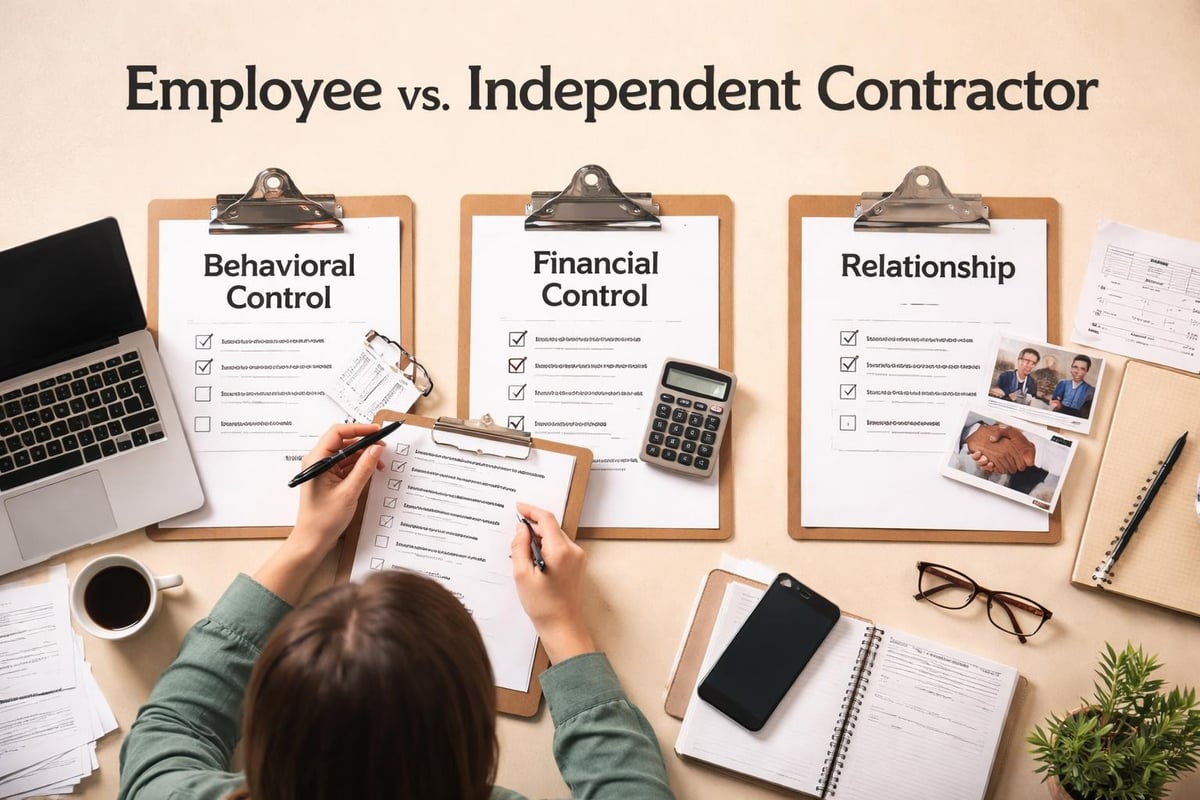
Worker classification decision framework

Organizations should document the factors supporting each classification decision. When uncertainty exists, understanding nonprofit payroll requirements helps organizations make informed decisions that protect both the worker and the organization.

Federal Tax Obligations for Nonprofit Employers

Nonprofit organizations must register for an Employer Identification Number (EIN) before processing their first payroll. This nine-digit number serves as the organization's tax identification and is required for filing all payroll-related forms.

Required Federal Registrations and Filings

Form Purpose Frequency Due Date
Form 941 Quarterly federal tax return Quarterly Last day of month following quarter end
Form W-2 Annual wage statement Annually January 31
Form W-3 Transmittal of wage statements Annually January 31
Form 940 Federal unemployment tax Annually January 31

Federal Insurance Contributions Act (FICA) taxes include both Social Security (6.2% on wages up to $168,600 in 2026) and Medicare (1.45% on all wages) portions. Employers match the employee contributions, making the total FICA tax 15.3% of wages.

Federal Unemployment Tax Act (FUTA) requires most employers to pay 6.0% on the first $7,000 of each employee's wages. However, employers typically receive a credit of up to 5.4% for state unemployment taxes paid, reducing the effective FUTA rate to 0.6%.

Some religious and charitable organizations may qualify for FICA exemptions under specific circumstances, though these exemptions are narrowly defined and require formal application through IRS Form 8274.

State and Local Payroll Requirements

Beyond federal obligations, nonprofit payroll must comply with varying state and local requirements. Each state maintains unique rules regarding income tax withholding, unemployment insurance, workers' compensation, and wage payment regulations.

State Income Tax Considerations

States without income tax (Alaska, Florida, Nevada, South Dakota, Tennessee, Texas, Washington, and Wyoming) simplify payroll processing. However, nonprofits operating in multiple states must register in each jurisdiction where they have employees.

State unemployment insurance (SUI) rates vary significantly by state and organization. New employers typically receive a standard rate, while established organizations receive experience-rated assessments based on their unemployment claim history. Proper payroll compliance requires timely quarterly reporting and payment of SUI taxes.

Workers' compensation insurance protects employees injured on the job and is mandatory in most states. Requirements, rates, and exemptions vary by jurisdiction, making this a critical area for compliance attention.
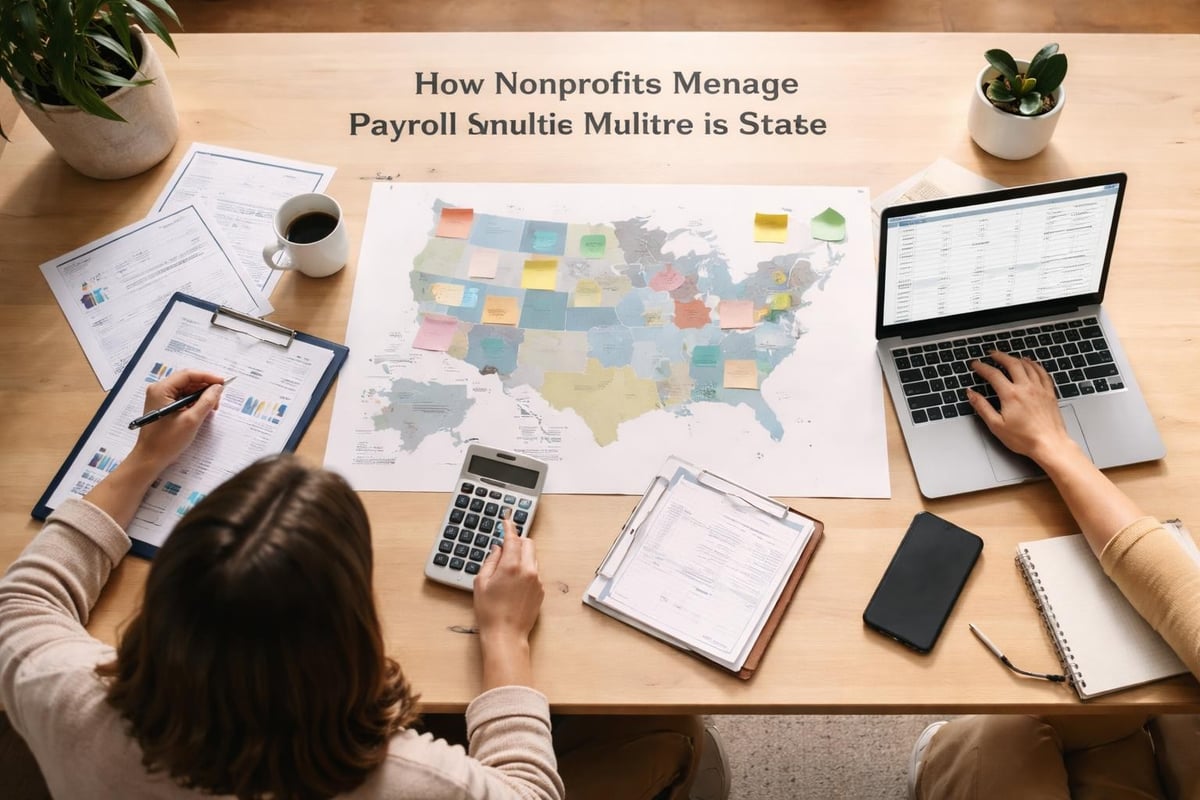
Multi-state payroll compliance

Setting Up Efficient Nonprofit Payroll Systems

Establishing robust payroll systems from the beginning prevents costly errors and inefficiencies. Modern organizations benefit from technology solutions that automate calculations, ensure compliance, and reduce administrative burden.

Essential Setup Steps

  1. Obtain necessary registrations: Secure your EIN, state tax identification numbers, and unemployment insurance account numbers before processing the first payroll
  2. Choose a pay frequency: Select weekly, bi-weekly, semi-monthly, or monthly schedules that align with your organization's cash flow and state requirements
  3. Implement time tracking: Establish systems for recording employee hours, paid time off, and other payroll-related data
  4. Select payroll processing method: Determine whether to handle payroll internally, outsource to a service provider, or leverage integrated technology solutions

Organizations looking to streamline operations often benefit from Human Capital Management solutions that integrate payroll with benefits administration, time tracking, and employee self-service portals.

Document Retention Requirements

Maintaining accurate records is both a compliance necessity and best practice. The IRS requires retention of payroll records for at least four years, though some state regulations mandate longer periods.

Critical documents to maintain include:

  • Employee W-4 forms and state withholding certificates
  • Time cards or other records of hours worked
  • Wage payment records including gross pay, deductions, and net pay
  • Payroll tax deposits and filing confirmations
  • Year-end forms (W-2, 1099-NEC)

Digital storage systems provide secure, organized access to these records while reducing physical storage needs and facilitating quick retrieval during audits or employee inquiries.

Compensation Structure and Reasonable Salaries

Nonprofit compensation requires careful attention to ensure fairness, competitiveness, and compliance with IRS regulations regarding reasonable compensation. The IRS scrutinizes executive compensation particularly closely to prevent private inurement, where insiders benefit inappropriately from the organization's tax-exempt status.

Reasonable compensation means payment that would ordinarily be paid for similar services by similar organizations under similar circumstances. Organizations should document the process used to determine compensation levels, including:

  • Comparable salary surveys for the nonprofit sector
  • Geographic market considerations
  • Required qualifications and experience
  • Scope of responsibilities and organizational size

Bonus and Incentive Considerations

While nonprofits can offer bonuses and incentive compensation, these must be carefully structured to comply with excess benefit transaction rules. Best practices for nonprofit payroll recommend tying bonuses to objective performance metrics rather than percentage-of-revenue formulas that might create conflicts with the organization's exempt purpose.

Performance-based incentives should be:

  • Approved by an independent board or compensation committee
  • Documented with clear criteria and approval processes
  • Reasonable in relation to total compensation
  • Aligned with advancing the organization's mission
Compensation Type IRS Reporting Tax Treatment Documentation Required
Base Salary Form W-2 Fully taxable Compensation approval minutes
Performance Bonus Form W-2 Fully taxable Board approval, metrics documentation
Expense Reimbursement Generally not reported Non-taxable if accountable plan Receipts, business purpose
Housing Allowance (clergy) Form W-2 (excluded from income) Special rules apply Board designation in advance

Technology Solutions for Nonprofit Payroll

Modern payroll processing increasingly relies on integrated technology platforms that reduce manual effort, minimize errors, and provide real-time insights. Cloud-based systems offer particular advantages for nonprofits with limited administrative staff or multiple locations.

Benefits of Payroll Automation

Automation transforms time-consuming manual processes into streamlined workflows. Automated systems calculate taxes, generate reports, and file forms electronically, freeing staff to focus on mission-critical activities rather than administrative tasks.

Key features to evaluate when selecting payroll technology include:

  • Tax compliance automation: Automatic calculation and filing of federal, state, and local taxes
  • Direct deposit capabilities: Electronic payment processing that reduces check processing costs
  • Employee self-service: Portals where employees access pay stubs, tax forms, and update personal information
  • Benefits integration: Seamless connection between payroll and health insurance, retirement plans, and other benefits
  • Grant and program tracking: Ability to allocate payroll costs across multiple funding sources for reporting

Organizations committed to operational efficiency often discover that automation and integration solutions eliminate thousands of hours previously spent on manual payroll processing.
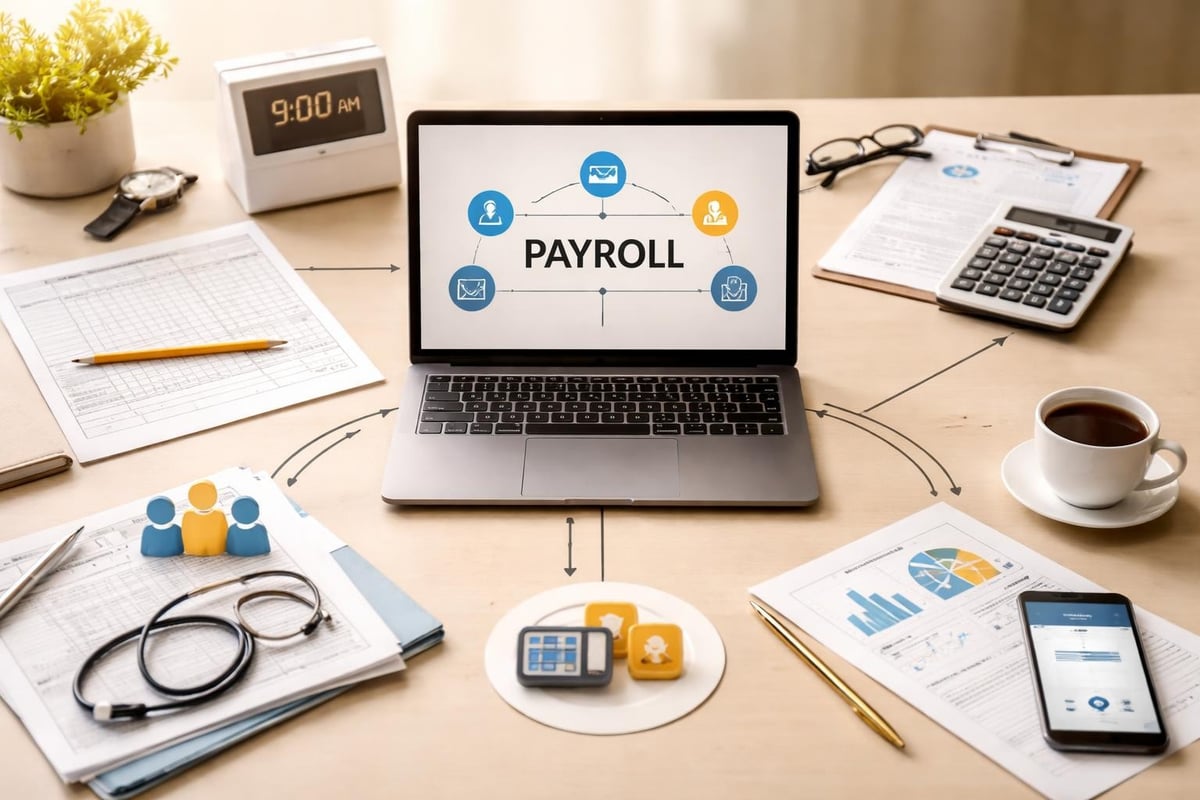
Integrated payroll technology

Common Nonprofit Payroll Mistakes and How to Avoid Them

Even well-intentioned organizations make payroll errors that can result in penalties, employee dissatisfaction, and reputational damage. Understanding common pitfalls enables proactive prevention.

Frequent Compliance Errors

Late tax deposits represent one of the most common and costly mistakes. Federal tax deposits follow either a monthly or semi-weekly schedule depending on the organization's tax liability. Missing these deadlines triggers penalties that compound over time. Setting up automated reminders or using payroll services that handle deposits eliminates this risk.

Incorrect worker classification continues to plague many nonprofits. The perceived cost savings from classifying workers as contractors rather than employees disappears quickly when the IRS or state agencies assess back taxes, penalties, and interest. Understanding how to properly classify workers protects organizations from these consequences.

Inadequate recordkeeping creates problems during audits, employee disputes, or grant reviews. Funders often require detailed payroll allocation reports demonstrating how grant funds were spent on personnel costs. Without proper records, organizations may be unable to substantiate expenses and could face funding recapture.

Prevention Strategies

Implementing strong internal controls prevents errors before they occur:

  1. Separate duties: Different individuals should handle payroll processing, approval, and bank reconciliation
  2. Regular reconciliation: Compare payroll reports to general ledger entries monthly to catch discrepancies early
  3. Update procedures annually: Review processes each year to incorporate regulatory changes
  4. Conduct periodic audits: Internal or external reviews identify weaknesses before they become compliance issues
  5. Invest in training: Ensure payroll staff understand current requirements and best practices

Organizations serving small to mid-sized markets particularly benefit from documented procedures that ensure consistency even when staff transitions occur.

Nonprofit Payroll Tax Exemptions and Special Considerations

While nonprofits enjoy certain tax advantages, understanding exactly which exemptions apply prevents costly assumptions. Nonprofit payroll tax obligations differ based on the organization's specific designation and activities.

FICA Tax Exemptions

Churches and qualified church-controlled organizations may elect exemption from employer FICA taxes by filing Form 8274. This exemption applies only to employees performing services in connection with the organization's exempt purposes. The decision to claim this exemption is irrevocable and requires careful consideration, as employees of exempt organizations must pay the full 15.3% self-employment tax on their wages.

FUTA Tax Exemptions

Section 501(c)(3) organizations are generally exempt from FUTA taxes. However, this exemption applies only to services performed in the employ of qualified organizations. Educational institutions, governmental entities, and religious organizations have specific exemption provisions that vary based on the nature of employment.

State-Level Variations

State unemployment insurance exemptions vary significantly. Some states grant automatic exemptions to 501(c)(3) organizations, while others require organizations to choose between paying regular SUI taxes or becoming reimbursing employers. Reimbursing employers do not pay quarterly SUI taxes but must reimburse the state dollar-for-dollar for unemployment benefits paid to former employees.

Year-End Payroll Processing for Nonprofits

The final payroll of the calendar year requires special attention to ensure accurate reporting and timely filing of year-end forms. Planning ahead prevents the rush and stress that often accompany year-end deadlines.

December Preparation Checklist

  • Verify employee information (names, addresses, Social Security numbers) is current and accurate
  • Review year-to-date totals for wages, taxes withheld, and other compensation
  • Process any final bonuses, reimbursements, or corrections before December 31
  • Confirm all payroll tax deposits are current
  • Prepare for W-2 form generation and distribution

Forms W-2 must be provided to employees by January 31, 2026, and copies filed with the Social Security Administration by the same deadline. Organizations filing 250 or more W-2 forms must file electronically. Form W-3, the transmittal form accompanying paper W-2s, summarizes total wages and taxes for all employees.

Independent Contractor Reporting

Forms 1099-NEC report payments of $600 or more to independent contractors for services. These forms are also due to recipients and the IRS by January 31. Comprehensive nonprofit payroll guides emphasize the importance of collecting Form W-9 from all contractors before making payments to ensure accurate reporting information.

Integrating Payroll with Overall Financial Management

Nonprofit payroll does not exist in isolation but represents a critical component of overall financial stewardship. Integration between payroll, accounting, and budgeting systems provides the visibility necessary for informed decision-making.

Grant and Program Allocation

Many nonprofits operate multiple programs funded by different grants, each with specific allowable costs and reporting requirements. Payroll systems must track employee time and allocate costs accurately across these funding sources. Time tracking by program or grant enables precise reporting and demonstrates compliance with funder requirements.

Accurate allocation supports:

  • Grant compliance reporting
  • Indirect cost rate calculations
  • Program profitability analysis
  • Strategic planning and resource allocation decisions

Budget Management and Forecasting

Personnel costs typically represent 50-70% of nonprofit operating budgets. Effective payroll management requires forecasting that accounts for salary increases, benefit cost changes, and staffing adjustments. Monthly comparison of actual payroll expenses to budget highlights variances that may require corrective action.

Organizations focused on raising their bottom line recognize that payroll efficiency directly impacts financial sustainability and mission capacity.

Building a Culture of Compliance and Transparency

Beyond technical compliance, nonprofit payroll practices should reflect the organization's values of transparency, fairness, and responsible stewardship. Building this culture requires leadership commitment and consistent communication.

Board Oversight Responsibilities

The board of directors bears ultimate responsibility for ensuring proper payroll practices. This includes:

  • Approving compensation policies and salary ranges
  • Reviewing and approving executive compensation
  • Ensuring adequate internal controls exist
  • Understanding the organization's payroll tax obligations
  • Confirming timely filing and payment of all required forms and taxes

Regular financial reports should include payroll metrics that enable board members to fulfill these oversight duties effectively.

Employee Communication

Clear communication about payroll policies, pay schedules, benefits, and deductions builds trust and reduces inquiries. Employee handbooks should clearly explain:

  • Pay periods and payment methods
  • Overtime policies and calculation methods
  • Available benefits and eligibility requirements
  • Time-off accrual and usage policies
  • Payroll deduction options

Transparent processes demonstrate respect for employees and align with the mission-driven values most nonprofits espouse.


Effective nonprofit payroll management combines technical compliance with strategic thinking about compensation, efficiency, and employee satisfaction. Organizations that invest in proper systems, training, and oversight position themselves for sustainable growth and mission impact. Nero and Associates, Inc. helps nonprofits streamline payroll processes through integrated Human Capital Management solutions that eliminate manual tasks, ensure compliance, and free staff to focus on mission-critical work. Our performance-based approach delivers measurable results in cost savings and operational efficiency.

Nonprofit Payroll: Essential Compliance and Best Practices

Managing payroll for nonprofit organizations requires specialized knowledge that balances mission-driven objectives with regulatory compliance. Unlike for-profit entities, nonprofits face unique challenges including tax-exempt status considerations, limited resources, and heightened scrutiny from regulatory bodies. Understanding the fundamentals of nonprofit payroll is essential for organizational sustainability, employee satisfaction, and maintaining the trust of donors and stakeholders who expect responsible stewardship of contributed funds.

Understanding Nonprofit Payroll Fundamentals

Nonprofit payroll encompasses all processes related to compensating employees, from calculating wages and withholding taxes to filing required reports with federal and state agencies. While the basic mechanics mirror for-profit payroll, nonprofits must navigate additional complexities tied to their tax-exempt status and reporting requirements.

Tax-exempt organizations under 501(c)(3) status are not automatically exempt from all payroll taxes. Nonprofits must withhold federal income tax, Social Security, and Medicare taxes from employee wages just like any other employer. However, certain exemptions may apply depending on the organization's specific designation and state regulations.

The foundation of compliant nonprofit payroll rests on three critical pillars:

  • Accurate worker classification (employee vs. independent contractor)
  • Proper tax registrations and withholdings
  • Timely filing of required forms and payments

Worker Classification Requirements

Proper worker classification represents one of the most significant compliance challenges in nonprofit payroll. Misclassifying employees as independent contractors can result in substantial penalties, back taxes, and legal complications. The IRS applies a common-law test examining behavioral control, financial control, and the relationship type between the organization and worker.

Employees receive regular wages, have taxes withheld, and work under the organization's direction and control. Independent contractors operate their own businesses, control how work is performed, and receive 1099-NEC forms rather than W-2s.

Worker classification decision framework

Organizations should document the factors supporting each classification decision. When uncertainty exists, understanding nonprofit payroll requirements helps organizations make informed decisions that protect both the worker and the organization.

Federal Tax Obligations for Nonprofit Employers

Nonprofit organizations must register for an Employer Identification Number (EIN) before processing their first payroll. This nine-digit number serves as the organization's tax identification and is required for filing all payroll-related forms.

Required Federal Registrations and Filings

Form Purpose Frequency Due Date
Form 941 Quarterly federal tax return Quarterly Last day of month following quarter end
Form W-2 Annual wage statement Annually January 31
Form W-3 Transmittal of wage statements Annually January 31
Form 940 Federal unemployment tax Annually January 31

Federal Insurance Contributions Act (FICA) taxes include both Social Security (6.2% on wages up to $168,600 in 2026) and Medicare (1.45% on all wages) portions. Employers match the employee contributions, making the total FICA tax 15.3% of wages.

Federal Unemployment Tax Act (FUTA) requires most employers to pay 6.0% on the first $7,000 of each employee's wages. However, employers typically receive a credit of up to 5.4% for state unemployment taxes paid, reducing the effective FUTA rate to 0.6%.

Some religious and charitable organizations may qualify for FICA exemptions under specific circumstances, though these exemptions are narrowly defined and require formal application through IRS Form 8274.

State and Local Payroll Requirements

Beyond federal obligations, nonprofit payroll must comply with varying state and local requirements. Each state maintains unique rules regarding income tax withholding, unemployment insurance, workers' compensation, and wage payment regulations.

State Income Tax Considerations

States without income tax (Alaska, Florida, Nevada, South Dakota, Tennessee, Texas, Washington, and Wyoming) simplify payroll processing. However, nonprofits operating in multiple states must register in each jurisdiction where they have employees.

State unemployment insurance (SUI) rates vary significantly by state and organization. New employers typically receive a standard rate, while established organizations receive experience-rated assessments based on their unemployment claim history. Proper payroll compliance requires timely quarterly reporting and payment of SUI taxes.

Workers' compensation insurance protects employees injured on the job and is mandatory in most states. Requirements, rates, and exemptions vary by jurisdiction, making this a critical area for compliance attention.

Multi-state payroll compliance

Setting Up Efficient Nonprofit Payroll Systems

Establishing robust payroll systems from the beginning prevents costly errors and inefficiencies. Modern organizations benefit from technology solutions that automate calculations, ensure compliance, and reduce administrative burden.

Essential Setup Steps

  1. Obtain necessary registrations: Secure your EIN, state tax identification numbers, and unemployment insurance account numbers before processing the first payroll
  2. Choose a pay frequency: Select weekly, bi-weekly, semi-monthly, or monthly schedules that align with your organization's cash flow and state requirements
  3. Implement time tracking: Establish systems for recording employee hours, paid time off, and other payroll-related data
  4. Select payroll processing method: Determine whether to handle payroll internally, outsource to a service provider, or leverage integrated technology solutions

Organizations looking to streamline operations often benefit from Human Capital Management solutions that integrate payroll with benefits administration, time tracking, and employee self-service portals.

Document Retention Requirements

Maintaining accurate records is both a compliance necessity and best practice. The IRS requires retention of payroll records for at least four years, though some state regulations mandate longer periods.

Critical documents to maintain include:

  • Employee W-4 forms and state withholding certificates
  • Time cards or other records of hours worked
  • Wage payment records including gross pay, deductions, and net pay
  • Payroll tax deposits and filing confirmations
  • Year-end forms (W-2, 1099-NEC)

Digital storage systems provide secure, organized access to these records while reducing physical storage needs and facilitating quick retrieval during audits or employee inquiries.

Compensation Structure and Reasonable Salaries

Nonprofit compensation requires careful attention to ensure fairness, competitiveness, and compliance with IRS regulations regarding reasonable compensation. The IRS scrutinizes executive compensation particularly closely to prevent private inurement, where insiders benefit inappropriately from the organization's tax-exempt status.

Reasonable compensation means payment that would ordinarily be paid for similar services by similar organizations under similar circumstances. Organizations should document the process used to determine compensation levels, including:

  • Comparable salary surveys for the nonprofit sector
  • Geographic market considerations
  • Required qualifications and experience
  • Scope of responsibilities and organizational size

Bonus and Incentive Considerations

While nonprofits can offer bonuses and incentive compensation, these must be carefully structured to comply with excess benefit transaction rules. Best practices for nonprofit payroll recommend tying bonuses to objective performance metrics rather than percentage-of-revenue formulas that might create conflicts with the organization's exempt purpose.

Performance-based incentives should be:

  • Approved by an independent board or compensation committee
  • Documented with clear criteria and approval processes
  • Reasonable in relation to total compensation
  • Aligned with advancing the organization's mission
Compensation Type IRS Reporting Tax Treatment Documentation Required
Base Salary Form W-2 Fully taxable Compensation approval minutes
Performance Bonus Form W-2 Fully taxable Board approval, metrics documentation
Expense Reimbursement Generally not reported Non-taxable if accountable plan Receipts, business purpose
Housing Allowance (clergy) Form W-2 (excluded from income) Special rules apply Board designation in advance

Technology Solutions for Nonprofit Payroll

Modern payroll processing increasingly relies on integrated technology platforms that reduce manual effort, minimize errors, and provide real-time insights. Cloud-based systems offer particular advantages for nonprofits with limited administrative staff or multiple locations.

Benefits of Payroll Automation

Automation transforms time-consuming manual processes into streamlined workflows. Automated systems calculate taxes, generate reports, and file forms electronically, freeing staff to focus on mission-critical activities rather than administrative tasks.

Key features to evaluate when selecting payroll technology include:

  • Tax compliance automation: Automatic calculation and filing of federal, state, and local taxes
  • Direct deposit capabilities: Electronic payment processing that reduces check processing costs
  • Employee self-service: Portals where employees access pay stubs, tax forms, and update personal information
  • Benefits integration: Seamless connection between payroll and health insurance, retirement plans, and other benefits
  • Grant and program tracking: Ability to allocate payroll costs across multiple funding sources for reporting

Organizations committed to operational efficiency often discover that automation and integration solutions eliminate thousands of hours previously spent on manual payroll processing.

Integrated payroll technology

Common Nonprofit Payroll Mistakes and How to Avoid Them

Even well-intentioned organizations make payroll errors that can result in penalties, employee dissatisfaction, and reputational damage. Understanding common pitfalls enables proactive prevention.

Frequent Compliance Errors

Late tax deposits represent one of the most common and costly mistakes. Federal tax deposits follow either a monthly or semi-weekly schedule depending on the organization's tax liability. Missing these deadlines triggers penalties that compound over time. Setting up automated reminders or using payroll services that handle deposits eliminates this risk.

Incorrect worker classification continues to plague many nonprofits. The perceived cost savings from classifying workers as contractors rather than employees disappears quickly when the IRS or state agencies assess back taxes, penalties, and interest. Understanding how to properly classify workers protects organizations from these consequences.

Inadequate recordkeeping creates problems during audits, employee disputes, or grant reviews. Funders often require detailed payroll allocation reports demonstrating how grant funds were spent on personnel costs. Without proper records, organizations may be unable to substantiate expenses and could face funding recapture.

Prevention Strategies

Implementing strong internal controls prevents errors before they occur:

  1. Separate duties: Different individuals should handle payroll processing, approval, and bank reconciliation
  2. Regular reconciliation: Compare payroll reports to general ledger entries monthly to catch discrepancies early
  3. Update procedures annually: Review processes each year to incorporate regulatory changes
  4. Conduct periodic audits: Internal or external reviews identify weaknesses before they become compliance issues
  5. Invest in training: Ensure payroll staff understand current requirements and best practices

Organizations serving small to mid-sized markets particularly benefit from documented procedures that ensure consistency even when staff transitions occur.

Nonprofit Payroll Tax Exemptions and Special Considerations

While nonprofits enjoy certain tax advantages, understanding exactly which exemptions apply prevents costly assumptions. Nonprofit payroll tax obligations differ based on the organization's specific designation and activities.

FICA Tax Exemptions

Churches and qualified church-controlled organizations may elect exemption from employer FICA taxes by filing Form 8274. This exemption applies only to employees performing services in connection with the organization's exempt purposes. The decision to claim this exemption is irrevocable and requires careful consideration, as employees of exempt organizations must pay the full 15.3% self-employment tax on their wages.

FUTA Tax Exemptions

Section 501(c)(3) organizations are generally exempt from FUTA taxes. However, this exemption applies only to services performed in the employ of qualified organizations. Educational institutions, governmental entities, and religious organizations have specific exemption provisions that vary based on the nature of employment.

State-Level Variations

State unemployment insurance exemptions vary significantly. Some states grant automatic exemptions to 501(c)(3) organizations, while others require organizations to choose between paying regular SUI taxes or becoming reimbursing employers. Reimbursing employers do not pay quarterly SUI taxes but must reimburse the state dollar-for-dollar for unemployment benefits paid to former employees.

Year-End Payroll Processing for Nonprofits

The final payroll of the calendar year requires special attention to ensure accurate reporting and timely filing of year-end forms. Planning ahead prevents the rush and stress that often accompany year-end deadlines.

December Preparation Checklist

  • Verify employee information (names, addresses, Social Security numbers) is current and accurate
  • Review year-to-date totals for wages, taxes withheld, and other compensation
  • Process any final bonuses, reimbursements, or corrections before December 31
  • Confirm all payroll tax deposits are current
  • Prepare for W-2 form generation and distribution

Forms W-2 must be provided to employees by January 31, 2026, and copies filed with the Social Security Administration by the same deadline. Organizations filing 250 or more W-2 forms must file electronically. Form W-3, the transmittal form accompanying paper W-2s, summarizes total wages and taxes for all employees.

Independent Contractor Reporting

Forms 1099-NEC report payments of $600 or more to independent contractors for services. These forms are also due to recipients and the IRS by January 31. Comprehensive nonprofit payroll guides emphasize the importance of collecting Form W-9 from all contractors before making payments to ensure accurate reporting information.

Integrating Payroll with Overall Financial Management

Nonprofit payroll does not exist in isolation but represents a critical component of overall financial stewardship. Integration between payroll, accounting, and budgeting systems provides the visibility necessary for informed decision-making.

Grant and Program Allocation

Many nonprofits operate multiple programs funded by different grants, each with specific allowable costs and reporting requirements. Payroll systems must track employee time and allocate costs accurately across these funding sources. Time tracking by program or grant enables precise reporting and demonstrates compliance with funder requirements.

Accurate allocation supports:

  • Grant compliance reporting
  • Indirect cost rate calculations
  • Program profitability analysis
  • Strategic planning and resource allocation decisions

Budget Management and Forecasting

Personnel costs typically represent 50-70% of nonprofit operating budgets. Effective payroll management requires forecasting that accounts for salary increases, benefit cost changes, and staffing adjustments. Monthly comparison of actual payroll expenses to budget highlights variances that may require corrective action.

Organizations focused on raising their bottom line recognize that payroll efficiency directly impacts financial sustainability and mission capacity.

Building a Culture of Compliance and Transparency

Beyond technical compliance, nonprofit payroll practices should reflect the organization's values of transparency, fairness, and responsible stewardship. Building this culture requires leadership commitment and consistent communication.

Board Oversight Responsibilities

The board of directors bears ultimate responsibility for ensuring proper payroll practices. This includes:

  • Approving compensation policies and salary ranges
  • Reviewing and approving executive compensation
  • Ensuring adequate internal controls exist
  • Understanding the organization's payroll tax obligations
  • Confirming timely filing and payment of all required forms and taxes

Regular financial reports should include payroll metrics that enable board members to fulfill these oversight duties effectively.

Employee Communication

Clear communication about payroll policies, pay schedules, benefits, and deductions builds trust and reduces inquiries. Employee handbooks should clearly explain:

  • Pay periods and payment methods
  • Overtime policies and calculation methods
  • Available benefits and eligibility requirements
  • Time-off accrual and usage policies
  • Payroll deduction options

Transparent processes demonstrate respect for employees and align with the mission-driven values most nonprofits espouse.


Effective nonprofit payroll management combines technical compliance with strategic thinking about compensation, efficiency, and employee satisfaction. Organizations that invest in proper systems, training, and oversight position themselves for sustainable growth and mission impact. Nero and Associates, Inc. helps nonprofits streamline payroll processes through integrated Human Capital Management solutions that eliminate manual tasks, ensure compliance, and free staff to focus on mission-critical work. Our performance-based approach delivers measurable results in cost savings and operational efficiency.

Website developed in accordance with Web Content Accessibility Guidelines 2.2.
If you encounter any issues while using this site, please contact us: 215.526.5126