
Guide to Consulting Human Capital: Strategies for 2026

Share on Facebook
Share on X
Share on LinkedIn

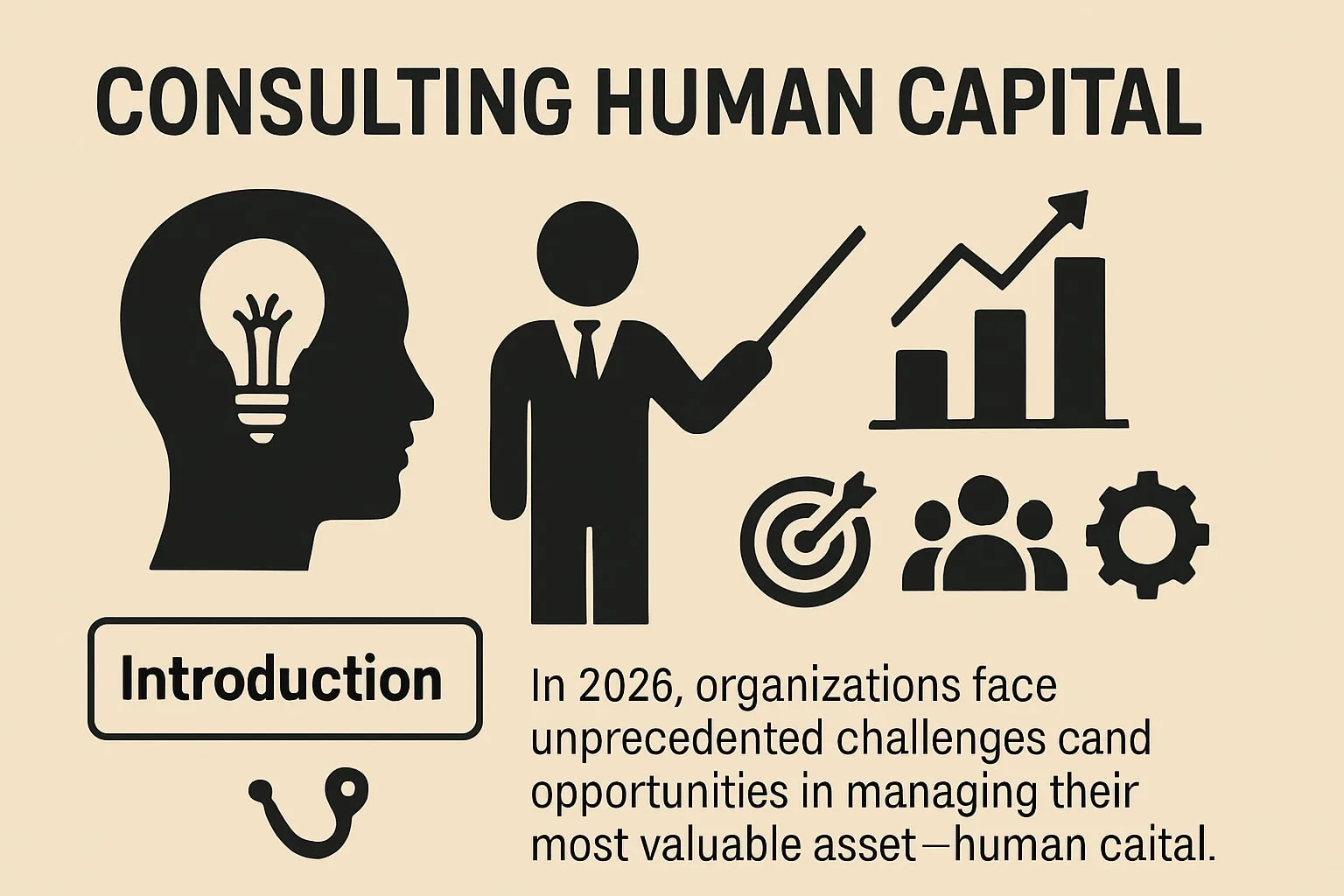
In 2026, organizations are navigating a rapidly changing landscape where people are their most critical resource. As labor costs can account for up to 70% of total expenses, maximizing workforce performance has never been more vital.

This guide to consulting human capital equips leaders, HR professionals, and consultants with forward-thinking frameworks and proven strategies for future success. Are you struggling with talent shortages, retention, or adapting to new workplace realities? You are not alone.

Discover innovative approaches, technology integration, and real-world case studies that deliver measurable results. Learn how consulting human capital can transform your organization’s workforce management and unlock untapped value.

Ready to take action? Explore definitions, current trends, consulting frameworks, step-by-step optimization strategies, technology’s impact, industry case studies, and a forward-looking outlook—all designed to help you thrive in 2026.

Understanding Human Capital Consulting in 2026

Consulting human capital is rapidly evolving in response to shifting workforce expectations and business demands. Organizations now view employees not just as a cost, but as their most strategic asset. Understanding this shift is crucial for leaders seeking to maximize workforce value and stay competitive.
Understanding Human Capital Consulting in 2026

Defining Human Capital Consulting

Human capital refers to the collective knowledge, skills, experience, and potential employees bring to an organization. Consulting human capital involves aligning workforce strategy with business objectives to drive performance and growth. Consultants help shift the perspective from seeing labor purely as a cost to recognizing it as an investment, especially since labor can represent up to 70% of business expenses. Maximizing the return on this investment is essential. For example, consultants may reorganize teams, streamline workflows, or improve processes to boost productivity and reduce turnover. By focusing on consulting human capital, organizations can unlock greater value from their teams.

Key Trends Shaping Human Capital Consulting

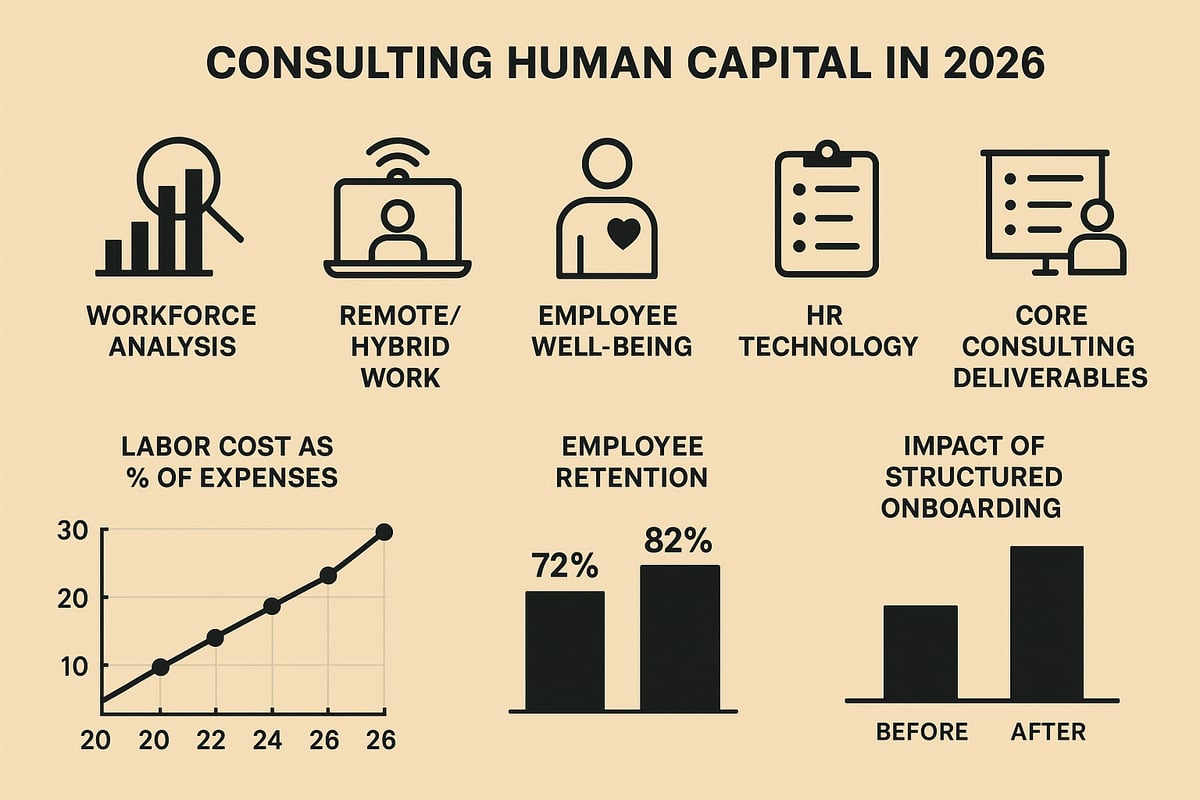
Several trends are redefining consulting human capital in 2026. The rise of remote and hybrid workforces continues to influence recruitment and management. Employee well-being, diversity, and inclusion are now central to HR strategies. Data-driven decision-making and advanced analytics are transforming how companies approach talent management. Compliance and risk management are also gaining importance. According to LinkedIn, 76% of hiring managers cite talent sourcing as a major challenge. For a deeper look at emerging trends, industry leaders highlight new priorities in Human Capital Trends by DCH 2026. Staying ahead of these trends is vital for effective consulting human capital.

The Business Case for Human Capital Consulting

Labor remains the largest operational cost for most organizations, making consulting human capital a smart investment. Optimizing workforce management drives efficiency, agility, and scalability. Structured recruitment, onboarding, and retention processes lead to significant financial gains. For example, companies with robust onboarding programs achieve 69% higher three-year retention rates. By investing in consulting human capital, organizations improve productivity, reduce turnover, and support sustainable growth. The evidence is clear: organizations that prioritize human capital consulting consistently outperform those that do not.

Core Consulting Services and Deliverables

Consulting human capital covers a broad range of services designed to address organizational needs:

  • Recruitment and talent sourcing strategies
  • Compensation and classification studies
  • Performance evaluation frameworks
  • HR audits, compliance assessments, and policy reviews
  • Leadership development and executive coaching

For instance, implementing transparent compensation systems aligned with the market can significantly improve retention rates. These core deliverables ensure organizations remain competitive, compliant, and positioned for long-term success through consulting human capital.

Step-by-Step Consulting Strategies for Human Capital Optimization

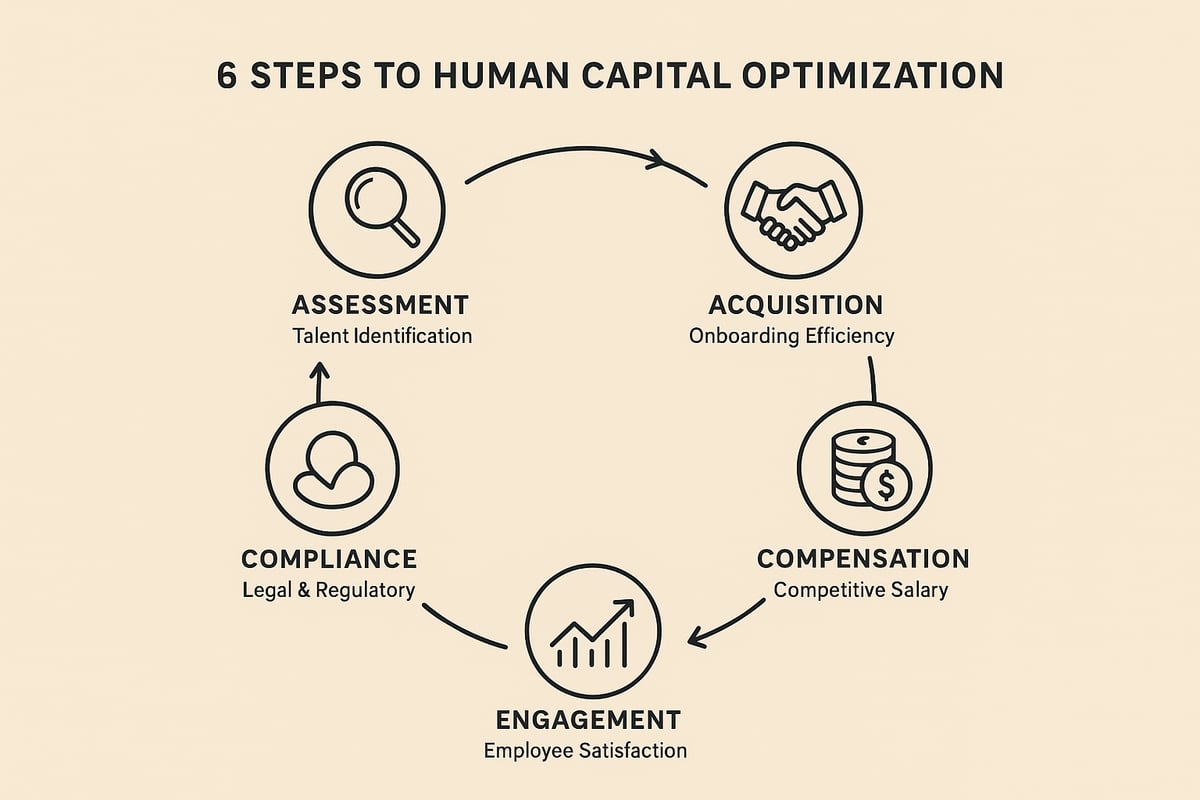
Optimizing your workforce requires a clear, actionable roadmap. Below, discover six essential steps for consulting human capital that drive measurable results for organizations in 2026.
Step-by-Step Consulting Strategies for Human Capital Optimization

Step 1: Workforce Assessment and Analysis

The first step in consulting human capital is a thorough workforce assessment. Begin by conducting comprehensive HR audits to review policies, procedures, and compliance posture. Analyze your organizational structure and current staffing levels.

  • Evaluate workforce competencies against strategic objectives
  • Benchmark roles and skills with industry standards
  • Identify current and future skills gaps

A detailed assessment uncovers opportunities for improvement. For example, a staffing analysis may reveal misaligned roles or underutilized talent. This data-driven approach ensures your consulting human capital strategy starts with a solid foundation.

Step 2: Strategic Talent Acquisition and Onboarding

Effective consulting human capital strategies require a targeted approach to talent acquisition. Develop recruitment plans based on the best sourcing platforms for your industry, such as LinkedIn or Indeed.

  • Streamline the application and selection process for speed and fairness
  • Implement structured onboarding programs to boost retention
  • Leverage technology like applicant tracking systems for candidate experience

Organizations with efficient onboarding processes see reduced turnover and faster productivity. By consulting human capital experts, you can ensure every new hire is set up for long-term success.

Step 3: Compensation, Classification, and Retention Planning

A core pillar of consulting human capital is building fair and competitive compensation systems. Conduct thorough classification and compensation studies to ensure pay aligns with the market.

  • Design transparent pay structures and clear career pathways
  • Use employee feedback to inform retention strategies
  • Address pay equity and maintain compliance with labor laws

For instance, transparent pay practices in locations such as Sandpoint, Idaho have improved both recruitment and retention. Consulting human capital in this area delivers real financial impact.

Step 4: Performance Management and Employee Development

Performance management is essential for consulting human capital. Establish clear, measurable systems for evaluating employee success and aligning goals.

  • Integrate technology for real-time feedback and performance tracking
  • Offer leadership development, executive coaching, and training
  • Foster a culture of continuous learning and growth

Implementing robust performance review systems supports compliance and employee advancement. Consulting human capital professionals can help create programs that benefit both individuals and the organization.

Step 5: Employee Engagement, Well-Being, and Communication

Consulting human capital is not only about processes, but also about people. Boost engagement by implementing regular employee surveys and feedback loops.

  • Promote open, transparent communication at all levels
  • Launch wellness programs addressing mental, physical, and financial needs
  • Develop initiatives to increase engagement and reduce turnover

Structured orientation and engagement programs have been shown to increase retention rates by up to 69 percent. A focus on well-being is a cornerstone of successful consulting human capital strategies.

Step 6: Compliance, Risk Management, and HR Technology Integration

The final step in consulting human capital is ensuring compliance and leveraging technology. Review and update all HR policies to align with regulations and best practices.

  • Conduct risk assessments to identify vulnerabilities
  • Integrate HR technology platforms for automation and analytics
  • Use data-driven insights to inform strategic decisions

Partnering with solutions like Payroll and Human Capital Management helps organizations automate processes, maximize productivity, and maintain compliance. Consulting human capital in this way prepares your workforce for future challenges.

The Role of Technology and Data in Human Capital Consulting

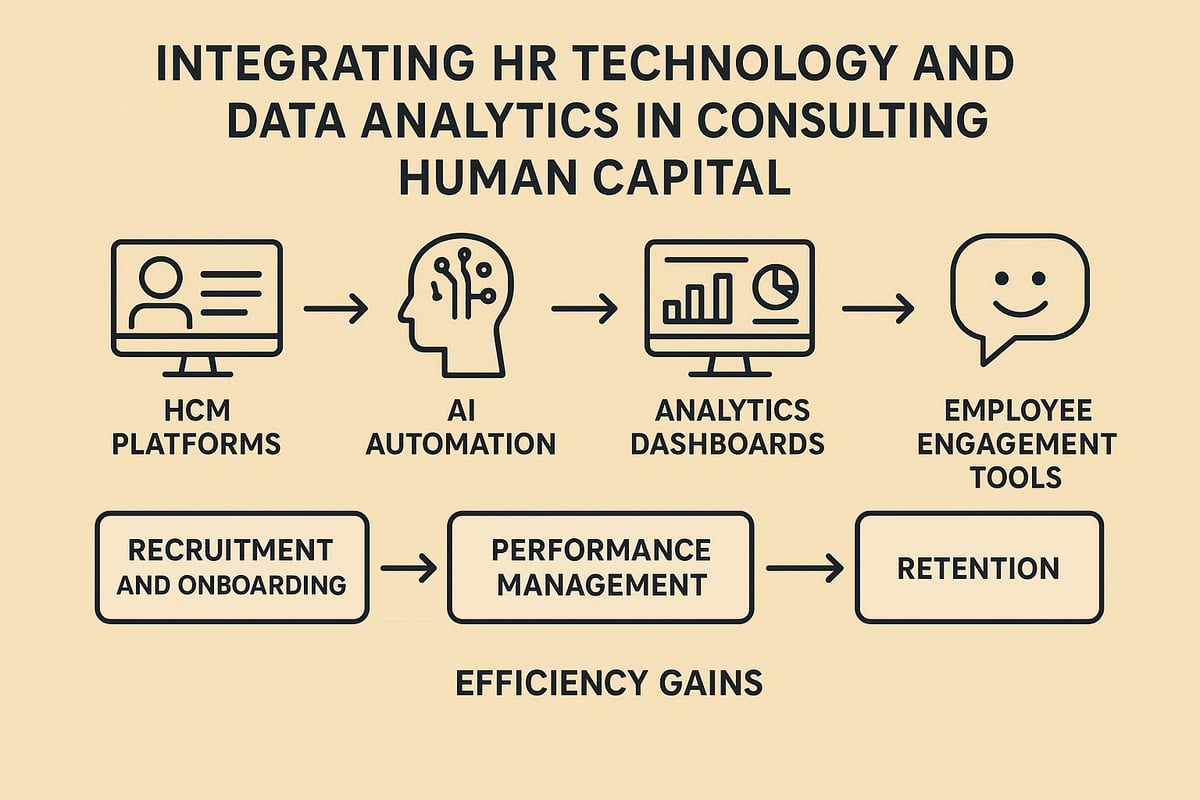
Technology and data have transformed the landscape of consulting human capital. Organizations in 2026 rely on digital tools and analytics to gain a competitive edge, streamline HR operations, and boost workforce productivity. By leveraging modern platforms, companies can turn workforce data into actionable insights that drive measurable business outcomes.
The Role of Technology and Data in Human Capital Consulting

Leveraging HR Technology for Efficiency

Modern HR technology is central to consulting human capital. Human Capital Management (HCM) platforms, applicant tracking systems, and payroll automation enable organizations to automate routine tasks and reduce errors. These solutions streamline workflows, freeing HR teams to focus on strategic activities.

For example, AI-powered recruitment tools can efficiently source and screen candidates, speeding up the hiring process. By automating repetitive functions, companies can manage distributed teams more effectively and ensure compliance. Embracing these technologies is no longer optional for organizations seeking to maximize the value of consulting human capital.

Data-Driven Decision Making and Analytics

In consulting human capital, data-driven insights are critical for informed decision making. Real-time HR analytics allow leaders to monitor workforce trends, predict talent gaps, and assess turnover risks. Predictive analytics helps organizations plan for future needs and align workforce strategy with business goals.

Dashboards provide easy access to compliance, performance, and engagement metrics. Leveraging advanced analytics, organizations can identify areas for improvement and measure the impact of HR initiatives. For further details on how analytics enhances HR strategies, see Benefits Data Analytics Services. Harnessing data is essential for optimizing consulting human capital outcomes.

Automation and Artificial Intelligence in Human Capital

Automation and AI are revolutionizing consulting human capital by reducing manual workloads. Automated onboarding, scheduling, and payroll systems improve accuracy and save time. AI-powered tools assess employee performance and skills, enabling targeted development plans.

Integration of various HR systems ensures unified reporting and seamless data sharing. AI chatbots offer immediate support for employee inquiries, enhancing satisfaction and engagement. By embedding automation into HR processes, organizations can increase productivity and improve the overall quality of consulting human capital services.

Enhancing Employee Experience with Technology

Technology plays a key role in elevating the employee experience when consulting human capital. Digital communication platforms support transparent feedback and recognition, while mobile self-service portals give employees on-demand access to HR services.

E-learning systems provide personalized training and development, fostering continuous growth. Companies that use engagement platforms report higher satisfaction and lower turnover. By focusing on employee-centric technology, consulting human capital professionals can drive engagement and retention.

Future Trends: The Evolving HR Tech Landscape

Looking ahead, the HR tech landscape in consulting human capital will evolve rapidly. AI and machine learning will enable more precise workforce forecasting and talent management. Remote workforce tools will become standard as hybrid work models persist.

Cybersecurity and data privacy will take center stage as organizations handle sensitive employee information. Cloud-based HCM platforms will offer scalability and robust security. Staying ahead of these trends is vital for any firm committed to leading in consulting human capital.

Industry-Specific Applications and Case Studies

Organizations across every sector are leveraging consulting human capital solutions to address unique challenges and drive measurable results. By tailoring strategies to the needs of each industry, consultants unlock new levels of efficiency, compliance, and workforce engagement.

Government and Public Sector Human Capital Consulting

Consulting human capital in the government and public sector requires a focus on compliance, transparency, and public accountability. Agencies often face complex regulatory requirements and must ensure fair, equitable staffing practices.

Consultants help by:

  • Conducting classification and compensation studies
  • Optimizing resource allocation and staffing models
  • Ensuring policy compliance and process transparency

For example, state and local governments that engage in consulting human capital initiatives can improve service delivery and fiscal responsibility by aligning workforce structures with community needs. These efforts often result in more efficient operations and better outcomes for citizens.

Education Sector: PreK-12 and Higher Education

In the education sector, consulting human capital is essential for addressing workforce shortages and evolving skill requirements. Schools and universities must adapt to changing student needs and educational standards.

Key consulting strategies include:

  • Workforce capacity development
  • Academic transformation initiatives
  • Aligning staff roles with institutional missions

By partnering with Learning and Development Consultants, educational institutions can implement targeted training, upskilling, and leadership programs. This approach drives enhanced student outcomes and operational efficiency while ensuring that staff remain engaged and prepared for future challenges.

Healthcare and Revenue Cycle Management

Healthcare organizations operate in a highly regulated environment, making consulting human capital especially valuable. These organizations must manage multidisciplinary teams and meet strict compliance standards.

Consultants support healthcare clients by:

  • Integrating human capital management (HCM) with revenue cycle processes
  • Streamlining workflows and optimizing staffing
  • Ensuring compliance with healthcare regulations

A hospital, for instance, can reduce billing delays and improve patient care by leveraging consulting human capital expertise. By aligning staffing levels with patient needs, organizations see measurable improvements in both care quality and financial performance.

Enterprise and Critical Infrastructure Organizations

Large enterprises and critical infrastructure organizations face unique pressures, from digital transformation to business continuity. Consulting human capital ensures these organizations can adapt rapidly and maintain operational resilience.

Consulting services typically focus on:

  • Change management and technology adoption
  • Business continuity and risk management alignment
  • Empowering employees through AI and automation

By implementing consulting human capital strategies, enterprises can streamline manual processes, increase agility, and enhance workforce engagement. This results in improved productivity and the ability to respond quickly to market changes.

Success Stories: Real-World Impact of Human Capital Consulting

The impact of consulting human capital is best illustrated through real-world success stories. Consider the Florida Lottery’s comprehensive classification and compensation review, which led to better workforce sustainability. The City of Sandpoint, Idaho, improved recruitment and retention through transparent pay systems, while Bloomfield Township Public Library strengthened HR systems during a critical transition.

Key outcomes include:

  • Reduced turnover rates
  • Enhanced compliance
  • Improved organizational performance

These results align with 13 HR Trends That Will Shape 2026, highlighting the growing importance of employee well-being and strategic workforce planning.

Organization Challenge Consulting Outcome
Florida Lottery Classification review Sustainable workforce
City of Sandpoint, Idaho Pay transparency Higher retention, recruitment
Bloomfield Township Public Library HR system transition Stronger HR processes
York County, SC Compensation planning Workforce sustainability

Nero & Associates, Inc.: Performance-Driven Human Capital Consulting

Nero & Associates, Inc. sets a new standard in consulting human capital by offering tailored, performance-driven solutions for diverse industries. Their consultants specialize in integrating AI and automation, strengthening employee engagement programs, and navigating complex compliance landscapes.
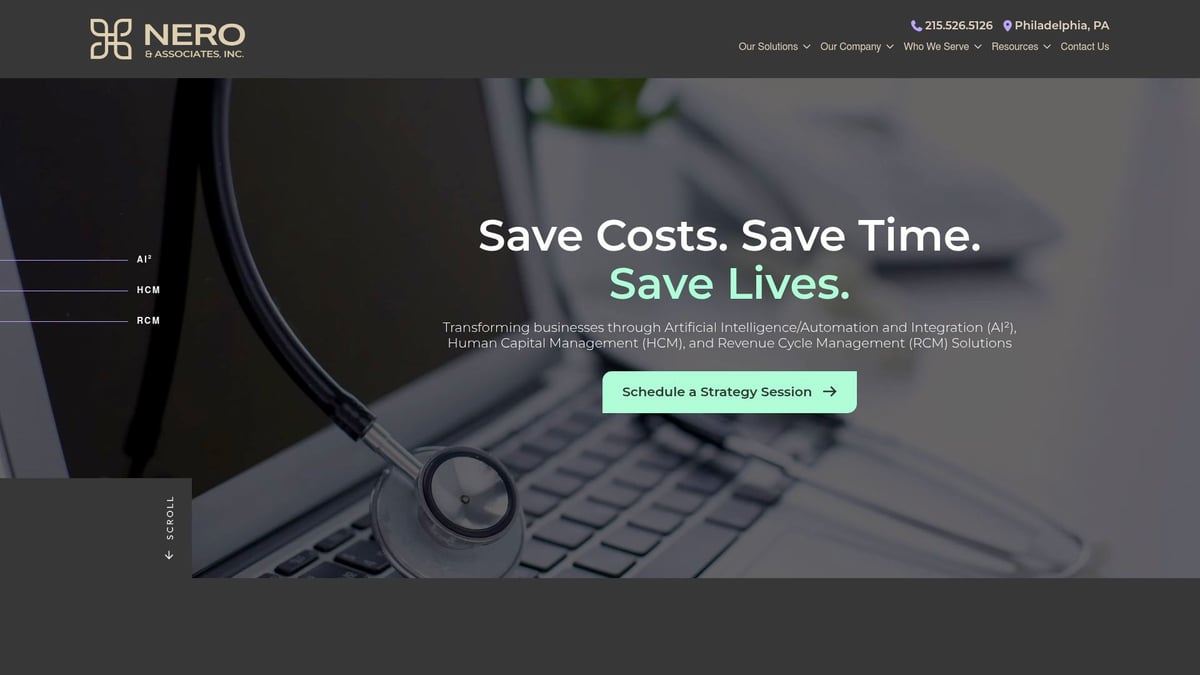
Guide to Consulting Human Capital: Strategies for 2026 - Nero & Associates, Inc.: Performance-Driven Human Capital Consulting

A unique aspect of consulting human capital with Nero & Associates, Inc. is their compensation model: no up-front fees, with payment tied directly to measurable results. This ensures clients see real value from their investment.

With proven success across healthcare, hospitality, SMBs, and non-profits, Nero & Associates, Inc. delivers increased efficiency, cost savings, and empowered workforces. Their approach to consulting human capital is both strategic and results-focused, making them a trusted partner for organizations preparing for the future.

Preparing for the Future: Human Capital Consulting Strategies Beyond 2026

The future of consulting human capital is shaped by rapid workforce transformation and evolving business landscapes. Organizations must anticipate shifts in demographics, technology, and expectations to remain agile and competitive. Forward-thinking leaders who invest in innovative strategies will be best positioned for sustainable success.

Anticipating Workforce and Workplace Evolution

Organizations engaged in consulting human capital must proactively track changes in workforce demographics and expectations. As Millennials and Gen Z become the majority, priorities shift toward flexibility, purpose, and continuous learning.

Remote and hybrid work models are here to stay, requiring adaptable talent strategies and robust digital infrastructure. To stay ahead, organizations should invest in upskilling and reskilling programs, anticipating tech-driven roles and emerging skills. According to Professional Services in 2026: Top Trends, integrating AI and data-driven tools will be crucial for navigating future workforce demands.

Building a Culture of Agility and Innovation

A culture of agility and innovation is essential for consulting human capital in a rapidly evolving landscape. Organizations should foster environments that welcome change and support experimentation. Cross-functional collaboration, knowledge sharing, and flexible career pathways empower teams to respond quickly to market shifts.

Agile HR frameworks, such as iterative performance reviews and adaptive talent management, help businesses pivot as needed. Leaders who champion innovation and continuous improvement create resilient organizations ready for any challenge. Consulting human capital with an agile mindset ensures lasting adaptability.

Integrating Diversity, Equity, and Inclusion (DEI) in Strategy

Making DEI a strategic priority is central to consulting human capital for the future. Organizations should set clear, measurable DEI goals and leverage analytics to track progress. Inclusive leadership training and bias mitigation are vital for building equitable workplaces.

Companies with robust DEI programs report higher engagement, innovation, and retention. Consulting human capital experts encourage regular review of hiring, promotion, and compensation practices to eliminate disparities. Embedding DEI into core strategy fosters a culture of belonging and drives sustainable business results.

Measuring Success: Key Metrics and KPIs for 2026

Data-driven measurement is a cornerstone of consulting human capital. Leaders must track critical metrics to assess the impact of their strategies. Common KPIs include retention rates, engagement scores, time-to-hire, and productivity gains.

KPI Description Target Example
Retention Rate Percentage of employees retained >90% annually
Time-to-Hire Days to fill open positions <30 days
Engagement Score Employee satisfaction index >80%
Productivity Gain Output per employee +10% YoY

Advanced analytics and benchmarking help organizations make informed decisions and continuously improve outcomes. For deeper insight into quantitative approaches, explore Possibility Theory in Human Capital Management. Consulting human capital using these metrics ensures alignment with business objectives and ongoing success.

As you look ahead to 2026, it’s clear that optimizing your organization’s human capital isn’t just about staying competitive—it’s about building a resilient, empowered workforce that drives real results. If you’re ready to take the next step and turn these strategies into action, let’s connect. We’ll work together to identify opportunities, streamline processes, and create a healthier, more productive environment for your team. Your journey to greater efficiency and employee well-being starts here—Book a Consultation and discover how tailored solutions can move your organization forward.

Guide to Consulting Human Capital: Strategies for 2026

In 2026, organizations are navigating a rapidly changing landscape where people are their most critical resource. As labor costs can account for up to 70% of total expenses, maximizing workforce performance has never been more vital.

This guide to consulting human capital equips leaders, HR professionals, and consultants with forward-thinking frameworks and proven strategies for future success. Are you struggling with talent shortages, retention, or adapting to new workplace realities? You are not alone.

Discover innovative approaches, technology integration, and real-world case studies that deliver measurable results. Learn how consulting human capital can transform your organization’s workforce management and unlock untapped value.

Ready to take action? Explore definitions, current trends, consulting frameworks, step-by-step optimization strategies, technology’s impact, industry case studies, and a forward-looking outlook—all designed to help you thrive in 2026.

Understanding Human Capital Consulting in 2026

Consulting human capital is rapidly evolving in response to shifting workforce expectations and business demands. Organizations now view employees not just as a cost, but as their most strategic asset. Understanding this shift is crucial for leaders seeking to maximize workforce value and stay competitive.

Understanding Human Capital Consulting in 2026

Defining Human Capital Consulting

Human capital refers to the collective knowledge, skills, experience, and potential employees bring to an organization. Consulting human capital involves aligning workforce strategy with business objectives to drive performance and growth. Consultants help shift the perspective from seeing labor purely as a cost to recognizing it as an investment, especially since labor can represent up to 70% of business expenses. Maximizing the return on this investment is essential. For example, consultants may reorganize teams, streamline workflows, or improve processes to boost productivity and reduce turnover. By focusing on consulting human capital, organizations can unlock greater value from their teams.

Key Trends Shaping Human Capital Consulting

Several trends are redefining consulting human capital in 2026. The rise of remote and hybrid workforces continues to influence recruitment and management. Employee well-being, diversity, and inclusion are now central to HR strategies. Data-driven decision-making and advanced analytics are transforming how companies approach talent management. Compliance and risk management are also gaining importance. According to LinkedIn, 76% of hiring managers cite talent sourcing as a major challenge. For a deeper look at emerging trends, industry leaders highlight new priorities in Human Capital Trends by DCH 2026. Staying ahead of these trends is vital for effective consulting human capital.

The Business Case for Human Capital Consulting

Labor remains the largest operational cost for most organizations, making consulting human capital a smart investment. Optimizing workforce management drives efficiency, agility, and scalability. Structured recruitment, onboarding, and retention processes lead to significant financial gains. For example, companies with robust onboarding programs achieve 69% higher three-year retention rates. By investing in consulting human capital, organizations improve productivity, reduce turnover, and support sustainable growth. The evidence is clear: organizations that prioritize human capital consulting consistently outperform those that do not.

Core Consulting Services and Deliverables

Consulting human capital covers a broad range of services designed to address organizational needs:

  • Recruitment and talent sourcing strategies
  • Compensation and classification studies
  • Performance evaluation frameworks
  • HR audits, compliance assessments, and policy reviews
  • Leadership development and executive coaching

For instance, implementing transparent compensation systems aligned with the market can significantly improve retention rates. These core deliverables ensure organizations remain competitive, compliant, and positioned for long-term success through consulting human capital.

Step-by-Step Consulting Strategies for Human Capital Optimization

Optimizing your workforce requires a clear, actionable roadmap. Below, discover six essential steps for consulting human capital that drive measurable results for organizations in 2026.

Step-by-Step Consulting Strategies for Human Capital Optimization

Step 1: Workforce Assessment and Analysis

The first step in consulting human capital is a thorough workforce assessment. Begin by conducting comprehensive HR audits to review policies, procedures, and compliance posture. Analyze your organizational structure and current staffing levels.

  • Evaluate workforce competencies against strategic objectives
  • Benchmark roles and skills with industry standards
  • Identify current and future skills gaps

A detailed assessment uncovers opportunities for improvement. For example, a staffing analysis may reveal misaligned roles or underutilized talent. This data-driven approach ensures your consulting human capital strategy starts with a solid foundation.

Step 2: Strategic Talent Acquisition and Onboarding

Effective consulting human capital strategies require a targeted approach to talent acquisition. Develop recruitment plans based on the best sourcing platforms for your industry, such as LinkedIn or Indeed.

  • Streamline the application and selection process for speed and fairness
  • Implement structured onboarding programs to boost retention
  • Leverage technology like applicant tracking systems for candidate experience

Organizations with efficient onboarding processes see reduced turnover and faster productivity. By consulting human capital experts, you can ensure every new hire is set up for long-term success.

Step 3: Compensation, Classification, and Retention Planning

A core pillar of consulting human capital is building fair and competitive compensation systems. Conduct thorough classification and compensation studies to ensure pay aligns with the market.

  • Design transparent pay structures and clear career pathways
  • Use employee feedback to inform retention strategies
  • Address pay equity and maintain compliance with labor laws

For instance, transparent pay practices in locations such as Sandpoint, Idaho have improved both recruitment and retention. Consulting human capital in this area delivers real financial impact.

Step 4: Performance Management and Employee Development

Performance management is essential for consulting human capital. Establish clear, measurable systems for evaluating employee success and aligning goals.

  • Integrate technology for real-time feedback and performance tracking
  • Offer leadership development, executive coaching, and training
  • Foster a culture of continuous learning and growth

Implementing robust performance review systems supports compliance and employee advancement. Consulting human capital professionals can help create programs that benefit both individuals and the organization.

Step 5: Employee Engagement, Well-Being, and Communication

Consulting human capital is not only about processes, but also about people. Boost engagement by implementing regular employee surveys and feedback loops.

  • Promote open, transparent communication at all levels
  • Launch wellness programs addressing mental, physical, and financial needs
  • Develop initiatives to increase engagement and reduce turnover

Structured orientation and engagement programs have been shown to increase retention rates by up to 69 percent. A focus on well-being is a cornerstone of successful consulting human capital strategies.

Step 6: Compliance, Risk Management, and HR Technology Integration

The final step in consulting human capital is ensuring compliance and leveraging technology. Review and update all HR policies to align with regulations and best practices.

  • Conduct risk assessments to identify vulnerabilities
  • Integrate HR technology platforms for automation and analytics
  • Use data-driven insights to inform strategic decisions

Partnering with solutions like Payroll and Human Capital Management helps organizations automate processes, maximize productivity, and maintain compliance. Consulting human capital in this way prepares your workforce for future challenges.

The Role of Technology and Data in Human Capital Consulting

Technology and data have transformed the landscape of consulting human capital. Organizations in 2026 rely on digital tools and analytics to gain a competitive edge, streamline HR operations, and boost workforce productivity. By leveraging modern platforms, companies can turn workforce data into actionable insights that drive measurable business outcomes.

The Role of Technology and Data in Human Capital Consulting

Leveraging HR Technology for Efficiency

Modern HR technology is central to consulting human capital. Human Capital Management (HCM) platforms, applicant tracking systems, and payroll automation enable organizations to automate routine tasks and reduce errors. These solutions streamline workflows, freeing HR teams to focus on strategic activities.

For example, AI-powered recruitment tools can efficiently source and screen candidates, speeding up the hiring process. By automating repetitive functions, companies can manage distributed teams more effectively and ensure compliance. Embracing these technologies is no longer optional for organizations seeking to maximize the value of consulting human capital.

Data-Driven Decision Making and Analytics

In consulting human capital, data-driven insights are critical for informed decision making. Real-time HR analytics allow leaders to monitor workforce trends, predict talent gaps, and assess turnover risks. Predictive analytics helps organizations plan for future needs and align workforce strategy with business goals.

Dashboards provide easy access to compliance, performance, and engagement metrics. Leveraging advanced analytics, organizations can identify areas for improvement and measure the impact of HR initiatives. For further details on how analytics enhances HR strategies, see Benefits Data Analytics Services. Harnessing data is essential for optimizing consulting human capital outcomes.

Automation and Artificial Intelligence in Human Capital

Automation and AI are revolutionizing consulting human capital by reducing manual workloads. Automated onboarding, scheduling, and payroll systems improve accuracy and save time. AI-powered tools assess employee performance and skills, enabling targeted development plans.

Integration of various HR systems ensures unified reporting and seamless data sharing. AI chatbots offer immediate support for employee inquiries, enhancing satisfaction and engagement. By embedding automation into HR processes, organizations can increase productivity and improve the overall quality of consulting human capital services.

Enhancing Employee Experience with Technology

Technology plays a key role in elevating the employee experience when consulting human capital. Digital communication platforms support transparent feedback and recognition, while mobile self-service portals give employees on-demand access to HR services.

E-learning systems provide personalized training and development, fostering continuous growth. Companies that use engagement platforms report higher satisfaction and lower turnover. By focusing on employee-centric technology, consulting human capital professionals can drive engagement and retention.

Future Trends: The Evolving HR Tech Landscape

Looking ahead, the HR tech landscape in consulting human capital will evolve rapidly. AI and machine learning will enable more precise workforce forecasting and talent management. Remote workforce tools will become standard as hybrid work models persist.

Cybersecurity and data privacy will take center stage as organizations handle sensitive employee information. Cloud-based HCM platforms will offer scalability and robust security. Staying ahead of these trends is vital for any firm committed to leading in consulting human capital.

Industry-Specific Applications and Case Studies

Organizations across every sector are leveraging consulting human capital solutions to address unique challenges and drive measurable results. By tailoring strategies to the needs of each industry, consultants unlock new levels of efficiency, compliance, and workforce engagement.

Government and Public Sector Human Capital Consulting

Consulting human capital in the government and public sector requires a focus on compliance, transparency, and public accountability. Agencies often face complex regulatory requirements and must ensure fair, equitable staffing practices.

Consultants help by:

  • Conducting classification and compensation studies
  • Optimizing resource allocation and staffing models
  • Ensuring policy compliance and process transparency

For example, state and local governments that engage in consulting human capital initiatives can improve service delivery and fiscal responsibility by aligning workforce structures with community needs. These efforts often result in more efficient operations and better outcomes for citizens.

Education Sector: PreK-12 and Higher Education

In the education sector, consulting human capital is essential for addressing workforce shortages and evolving skill requirements. Schools and universities must adapt to changing student needs and educational standards.

Key consulting strategies include:

  • Workforce capacity development
  • Academic transformation initiatives
  • Aligning staff roles with institutional missions

By partnering with Learning and Development Consultants, educational institutions can implement targeted training, upskilling, and leadership programs. This approach drives enhanced student outcomes and operational efficiency while ensuring that staff remain engaged and prepared for future challenges.

Healthcare and Revenue Cycle Management

Healthcare organizations operate in a highly regulated environment, making consulting human capital especially valuable. These organizations must manage multidisciplinary teams and meet strict compliance standards.

Consultants support healthcare clients by:

  • Integrating human capital management (HCM) with revenue cycle processes
  • Streamlining workflows and optimizing staffing
  • Ensuring compliance with healthcare regulations

A hospital, for instance, can reduce billing delays and improve patient care by leveraging consulting human capital expertise. By aligning staffing levels with patient needs, organizations see measurable improvements in both care quality and financial performance.

Enterprise and Critical Infrastructure Organizations

Large enterprises and critical infrastructure organizations face unique pressures, from digital transformation to business continuity. Consulting human capital ensures these organizations can adapt rapidly and maintain operational resilience.

Consulting services typically focus on:

  • Change management and technology adoption
  • Business continuity and risk management alignment
  • Empowering employees through AI and automation

By implementing consulting human capital strategies, enterprises can streamline manual processes, increase agility, and enhance workforce engagement. This results in improved productivity and the ability to respond quickly to market changes.

Success Stories: Real-World Impact of Human Capital Consulting

The impact of consulting human capital is best illustrated through real-world success stories. Consider the Florida Lottery’s comprehensive classification and compensation review, which led to better workforce sustainability. The City of Sandpoint, Idaho, improved recruitment and retention through transparent pay systems, while Bloomfield Township Public Library strengthened HR systems during a critical transition.

Key outcomes include:

  • Reduced turnover rates
  • Enhanced compliance
  • Improved organizational performance

These results align with 13 HR Trends That Will Shape 2026, highlighting the growing importance of employee well-being and strategic workforce planning.

Organization Challenge Consulting Outcome
Florida Lottery Classification review Sustainable workforce
City of Sandpoint, Idaho Pay transparency Higher retention, recruitment
Bloomfield Township Public Library HR system transition Stronger HR processes
York County, SC Compensation planning Workforce sustainability

Nero & Associates, Inc.: Performance-Driven Human Capital Consulting

Nero & Associates, Inc. sets a new standard in consulting human capital by offering tailored, performance-driven solutions for diverse industries. Their consultants specialize in integrating AI and automation, strengthening employee engagement programs, and navigating complex compliance landscapes.

Guide to Consulting Human Capital: Strategies for 2026 - Nero & Associates, Inc.: Performance-Driven Human Capital Consulting

A unique aspect of consulting human capital with Nero & Associates, Inc. is their compensation model: no up-front fees, with payment tied directly to measurable results. This ensures clients see real value from their investment.

With proven success across healthcare, hospitality, SMBs, and non-profits, Nero & Associates, Inc. delivers increased efficiency, cost savings, and empowered workforces. Their approach to consulting human capital is both strategic and results-focused, making them a trusted partner for organizations preparing for the future.

Preparing for the Future: Human Capital Consulting Strategies Beyond 2026

The future of consulting human capital is shaped by rapid workforce transformation and evolving business landscapes. Organizations must anticipate shifts in demographics, technology, and expectations to remain agile and competitive. Forward-thinking leaders who invest in innovative strategies will be best positioned for sustainable success.

Anticipating Workforce and Workplace Evolution

Organizations engaged in consulting human capital must proactively track changes in workforce demographics and expectations. As Millennials and Gen Z become the majority, priorities shift toward flexibility, purpose, and continuous learning.

Remote and hybrid work models are here to stay, requiring adaptable talent strategies and robust digital infrastructure. To stay ahead, organizations should invest in upskilling and reskilling programs, anticipating tech-driven roles and emerging skills. According to Professional Services in 2026: Top Trends, integrating AI and data-driven tools will be crucial for navigating future workforce demands.

Building a Culture of Agility and Innovation

A culture of agility and innovation is essential for consulting human capital in a rapidly evolving landscape. Organizations should foster environments that welcome change and support experimentation. Cross-functional collaboration, knowledge sharing, and flexible career pathways empower teams to respond quickly to market shifts.

Agile HR frameworks, such as iterative performance reviews and adaptive talent management, help businesses pivot as needed. Leaders who champion innovation and continuous improvement create resilient organizations ready for any challenge. Consulting human capital with an agile mindset ensures lasting adaptability.

Integrating Diversity, Equity, and Inclusion (DEI) in Strategy

Making DEI a strategic priority is central to consulting human capital for the future. Organizations should set clear, measurable DEI goals and leverage analytics to track progress. Inclusive leadership training and bias mitigation are vital for building equitable workplaces.

Companies with robust DEI programs report higher engagement, innovation, and retention. Consulting human capital experts encourage regular review of hiring, promotion, and compensation practices to eliminate disparities. Embedding DEI into core strategy fosters a culture of belonging and drives sustainable business results.

Measuring Success: Key Metrics and KPIs for 2026

Data-driven measurement is a cornerstone of consulting human capital. Leaders must track critical metrics to assess the impact of their strategies. Common KPIs include retention rates, engagement scores, time-to-hire, and productivity gains.

KPI Description Target Example
Retention Rate Percentage of employees retained >90% annually
Time-to-Hire Days to fill open positions <30 days
Engagement Score Employee satisfaction index >80%
Productivity Gain Output per employee +10% YoY

Advanced analytics and benchmarking help organizations make informed decisions and continuously improve outcomes. For deeper insight into quantitative approaches, explore Possibility Theory in Human Capital Management. Consulting human capital using these metrics ensures alignment with business objectives and ongoing success.

As you look ahead to 2026, it’s clear that optimizing your organization’s human capital isn’t just about staying competitive—it’s about building a resilient, empowered workforce that drives real results. If you’re ready to take the next step and turn these strategies into action, let’s connect. We’ll work together to identify opportunities, streamline processes, and create a healthier, more productive environment for your team. Your journey to greater efficiency and employee well-being starts here—Book a Consultation and discover how tailored solutions can move your organization forward.

Website developed in accordance with Web Content Accessibility Guidelines 2.2.
If you encounter any issues while using this site, please contact us: 215.526.5126