
Is your organization prepared to thrive in 2026’s rapidly evolving workplace? The employee lifecycle is more than a buzzword—it is the heartbeat of how future-ready companies attract, engage, and retain their workforce.
In this article, you will discover a practical breakdown of the eight essential phases every HR leader and business must master. From employer brand awareness to separation and offboarding, each phase shapes employee experience, drives retention, and fuels organizational success.
You will learn why mastering these stages is critical for building a resilient, high-performing team. Ready to elevate your strategy? Dive in for actionable insights that will future-proof your approach.
The Strategic Importance of the Employee Lifecycle in 2026
The Evolving HR Landscape
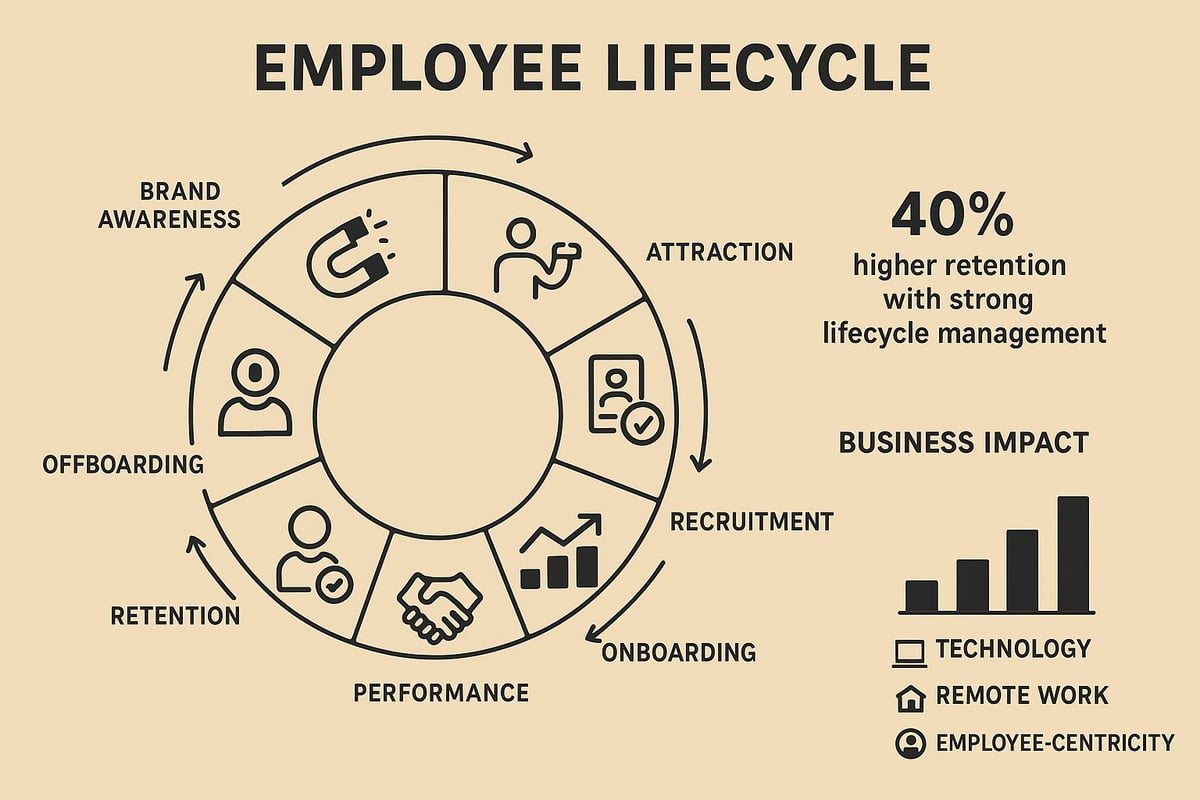
The employee lifecycle is being redefined by rapid technological advancements, the normalization of remote work, and shifting workforce expectations. Organizations are moving toward employee-centric models, replacing outdated, transactional approaches with holistic lifecycle management.
Research shows that companies with robust employee lifecycle strategies can achieve up to 40% higher retention rates compared to those with fragmented processes. This shift is not just about adopting new tools, but about rethinking how each stage, from brand awareness to offboarding, is interwoven to create a seamless experience.
HR leaders must adapt to these changes, ensuring the employee lifecycle remains a strategic priority as we approach 2026.
Business Impact of Lifecycle Mastery
Mastering the employee lifecycle directly influences productivity, workforce engagement, and the strength of your employer brand. Organizations that optimize each phase see measurable improvements, such as reduced turnover, faster recruitment, and higher levels of employee satisfaction.
For example, effective lifecycle management is linked to lower recruitment costs and improved time-to-fill metrics. When employees experience consistency and support at every stage, they are more likely to remain engaged and contribute positively to organizational goals.
A well-executed employee lifecycle builds trust, fosters loyalty, and positions the business as an employer of choice.
Key Trends Influencing Each Phase
Several trends are shaping the employee lifecycle in 2026. AI-driven recruitment streamlines candidate sourcing, while hybrid onboarding ensures new hires integrate smoothly, regardless of location. The rise of continuous learning and microlearning supports ongoing development, and personalized retention strategies address diverse employee needs.
Leading organizations are adopting these innovations to remain competitive. For instance, data-driven talent attraction campaigns increase applicant quality, and digital onboarding platforms improve retention rates.
Staying ahead of these trends ensures your employee lifecycle remains agile and future-ready.
Challenges and Opportunities for HR Leaders
Despite these advances, HR leaders face persistent challenges in managing the employee lifecycle. Siloed processes, lack of data integration, and inconsistent employee experiences can undermine even the best intentions. Overcoming these obstacles requires a strategic approach and the right technology.
Partnering with experts in HCM Consulting Services can help organizations implement integrated solutions, streamline processes, and align lifecycle management with business objectives.
By addressing these challenges head-on, HR teams can unlock new opportunities for employee engagement and long-term success.
8 Key Phases of the Employee Lifecycle to Master in 2026
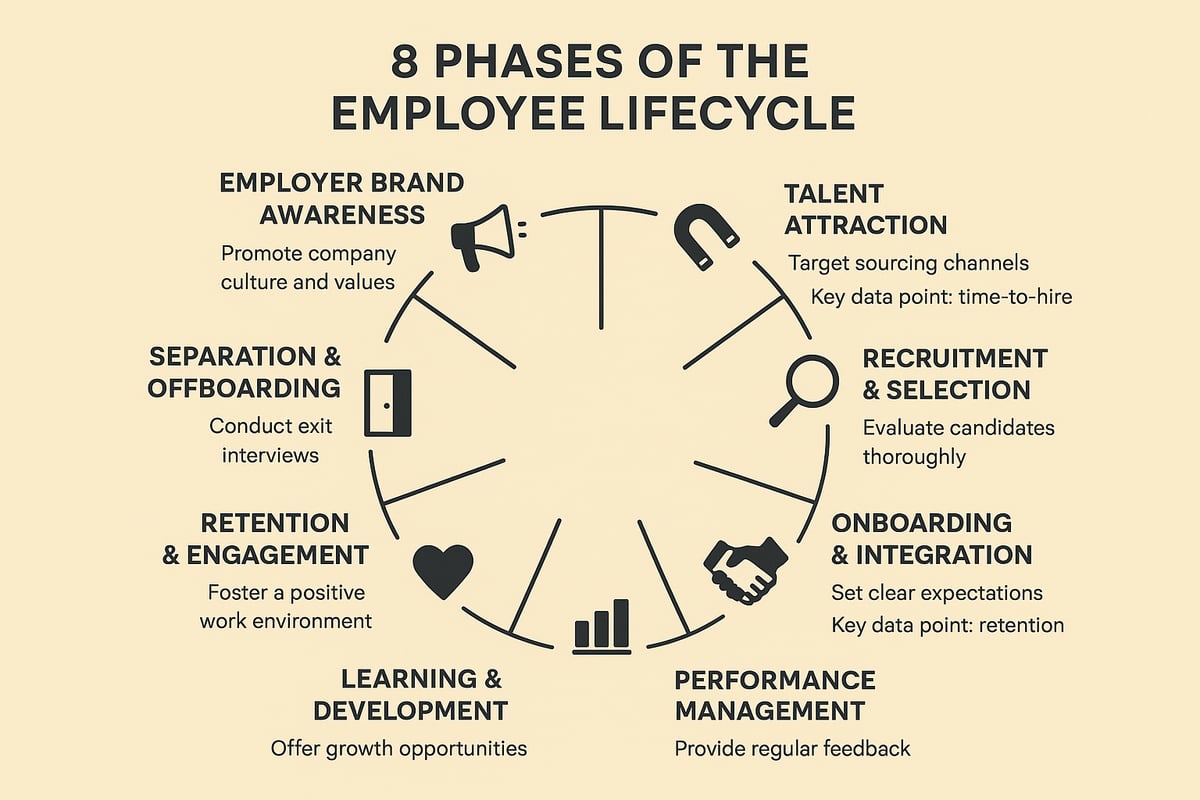
The employee lifecycle is the foundation of every thriving organization. In 2026, mastering each phase is the difference between leading the market or losing top talent to competitors. Let’s break down the eight essential phases, each shaping the employee experience, retention, and overall performance.
1. Employer Brand Awareness
Employer brand awareness is the starting point of the employee lifecycle. It’s how potential candidates first perceive your organization, shaping their decision to engage with your opportunities. In 2026, a strong employer brand is crucial for attracting and retaining high-caliber talent.
Candidates now research organizations more thoroughly than ever. In fact, 75% of job seekers check employer reputation before submitting an application. This means your presence on social media, company review platforms, and through employee advocacy directly influences your talent pool.
Award-winning companies such as Salesforce and HubSpot have invested in their employer brand, resulting in a surge of qualified applicants and higher retention rates. Their strategy includes employee testimonials, transparent communication, and showcasing company culture.
To enhance this phase of the employee lifecycle, conduct regular audits. Assess your brand sentiment, digital reach, and engagement across platforms. Use tools to monitor online reviews and encourage employees to share authentic stories about their experience.
Key metrics to track include:
- Brand sentiment scores
- Social media reach and engagement
- Volume and quality of reviews
A robust employer brand sets the tone for the rest of the employee lifecycle, making it a strategic priority for every HR leader.
2. Talent Attraction
Talent attraction is the art and science of drawing in the right candidates to fuel your business growth. This phase of the employee lifecycle goes beyond posting job ads, requiring targeted strategies to reach passive and active job seekers.
Modern organizations leverage recruitment marketing, refined employee value propositions, and diversity initiatives to stand out. AI-powered sourcing tools are now common, enabling teams to identify passive candidates who align with company values and skills needs.
Companies that run data-driven attraction campaigns report up to 30% more qualified applicants. These organizations tailor their messaging for inclusivity and highlight benefits like flexible work arrangements, which have become non-negotiable for top talent.
Best practices for optimizing talent attraction in the employee lifecycle include:
- Defining and communicating a compelling employee value proposition
- Diversifying recruitment channels to reach underrepresented groups
- Using analytics to refine sourcing strategies
Measure success with these metrics:
- Application rates for open roles
- Diversity of applicant pool
- Quality of candidates progressing through the funnel
With a strategic approach, talent attraction becomes a competitive advantage in the employee lifecycle, ensuring a steady pipeline of high-potential hires.
3. Recruitment & Selection
Recruitment and selection is a pivotal phase of the employee lifecycle, encompassing sourcing, screening, interviewing, and final hiring decisions. A seamless process enhances candidate experience, which in turn boosts your employer brand and offer acceptance rates.
Today, candidate experience is non-negotiable. Prompt communication, transparent processes, and timely feedback are expected. Research shows that positive recruitment experiences can increase offer acceptance by 15%.
Technological advancements like applicant tracking systems, AI assessments, and structured interviews have transformed this phase. Leading organizations have reduced their time-to-hire by 40% through automated screening and candidate matching.
However, there are pitfalls to avoid in the employee lifecycle: unconscious bias, lengthy selection procedures, and impersonal interactions can deter top talent. To mitigate these risks, standardize your processes and train managers on inclusive interviewing.
Key metrics for recruitment and selection:
- Time-to-hire
- Candidate satisfaction scores
- Offer acceptance rate
A data-driven, candidate-centric recruitment process strengthens every stage of the employee lifecycle and positions your organization as an employer of choice.
4. Onboarding & Integration
Onboarding and integration are more than administrative checklists in the employee lifecycle. This phase is about immersing new hires in your culture, building relationships, and accelerating productivity.
With hybrid and remote work models in 2026, onboarding must be flexible and inclusive. Effective onboarding increases new hire retention by 82%, according to industry data. Companies like Microsoft and Atlassian use buddy systems, mentorship programs, and digital onboarding platforms to create a sense of belonging from day one.
To personalize onboarding across roles and locations, provide a mix of self-paced learning and live virtual sessions. Assign mentors to guide new hires, facilitate introductions to key teams, and set clear expectations for the first 90 days.
Measure onboarding success with:
- Speed to productivity
- Early engagement survey scores
- Retention rates after the first year
Early feedback is vital in the employee lifecycle. Collect insights from new hires regularly and adjust your onboarding process to address gaps and reinforce strengths.
5. Performance Management
Performance management in the employee lifecycle has evolved from annual reviews to continuous feedback and real-time recognition. This modern approach aligns employee goals with business objectives and fosters a culture of accountability.
Organizations that implement continuous feedback systems report 24% higher employee performance. Industry leaders use performance analytics to identify strengths and gaps, while personalized development plans ensure every employee has a growth path.
Challenges in this phase of the employee lifecycle include manager readiness, bias in evaluations, and tracking remote performance. Overcome these obstacles by training managers, using standardized rating systems, and leveraging technology for transparency.
Strategies for effective performance management:
- Set clear, measurable goals
- Provide regular, actionable feedback
- Recognize achievements promptly
Track these metrics to gauge success:
- Performance improvement rates
- Frequency of feedback sessions
- Employee engagement scores
When performance management is integrated across the employee lifecycle, it drives productivity and empowers employees to reach their full potential.
6. Learning & Development
Learning and development is the growth engine of the employee lifecycle, ensuring your workforce evolves with the business landscape. Upskilling, reskilling, and continuous learning are non-negotiable in 2026.
Personalized learning paths, microlearning platforms, and AI-driven skill gap analysis are leading trends. Organizations investing in L&D report 30% higher employee engagement. Forward-thinking companies offer tuition reimbursement, industry certifications, and peer-to-peer learning opportunities.
Budget constraints and measuring ROI are ongoing challenges in this phase of the employee lifecycle. To maximize impact, foster a culture of continuous learning, ensure equitable access, and align L&D with strategic business needs.
Key metrics include:
- Training completion rates
- Skill acquisition and certifications
- Internal mobility statistics
For more insights on building robust learning strategies, consult Learning and Development Consultants, who specialize in upskilling and workforce transformation.
A strong L&D program not only supports the employee lifecycle but also future-proofs your organization.
7. Retention & Engagement
Retention and engagement are the heart of a sustainable employee lifecycle. Proactive strategies—recognition, wellness programs, and career growth—are essential for keeping top talent motivated and loyal.
Flexible work arrangements, meaningful rewards, and transparent communication are proven approaches. Companies focused on retention can save up to 2x the recruitment cost per employee. Pulse surveys, stay interviews, and wellness initiatives are popular tools to monitor and boost engagement.
Leadership plays a critical role in this phase of the employee lifecycle. Managers who provide regular feedback and support are key drivers of retention.
Practical tips for early disengagement detection:
- Monitor changes in engagement and productivity
- Use real-time feedback platforms
- Encourage open dialogue about concerns
Track these metrics:
- Turnover rate
- Engagement survey scores
- Average employee tenure
A robust retention strategy strengthens every phase of the employee lifecycle and supports long-term organizational success.
8. Separation & Offboarding
Separation and offboarding mark the final stage of the employee lifecycle. A respectful, structured process ensures departing employees leave as brand ambassadors, not detractors.
Exit interviews, knowledge transfer, and alumni networks are critical elements. Positive offboarding experiences can improve employer brand perception and increase the likelihood of boomerang hires by 20%.
Leading organizations use exit data to refine their employee lifecycle strategies. They address compliance, protect sensitive data, and offer emotional support during transitions.
Best practices for this phase:
- Conduct thorough exit interviews
- Facilitate smooth knowledge handover
- Maintain connections through alumni groups
Monitor these key metrics:
- Exit feedback scores
- Rehire rates (boomerang hires)
- Knowledge retention after departures
A well-managed offboarding process closes the employee lifecycle on a positive note and sets the stage for future talent engagement.
Integrating Technology and Analytics Across the Employee Lifecycle
Modern organizations are rapidly transforming how they manage the employee lifecycle. Technology and analytics are now central pillars, enabling HR teams to optimize every stage, from recruitment to offboarding.
The Role of HR Technology in Lifecycle Management
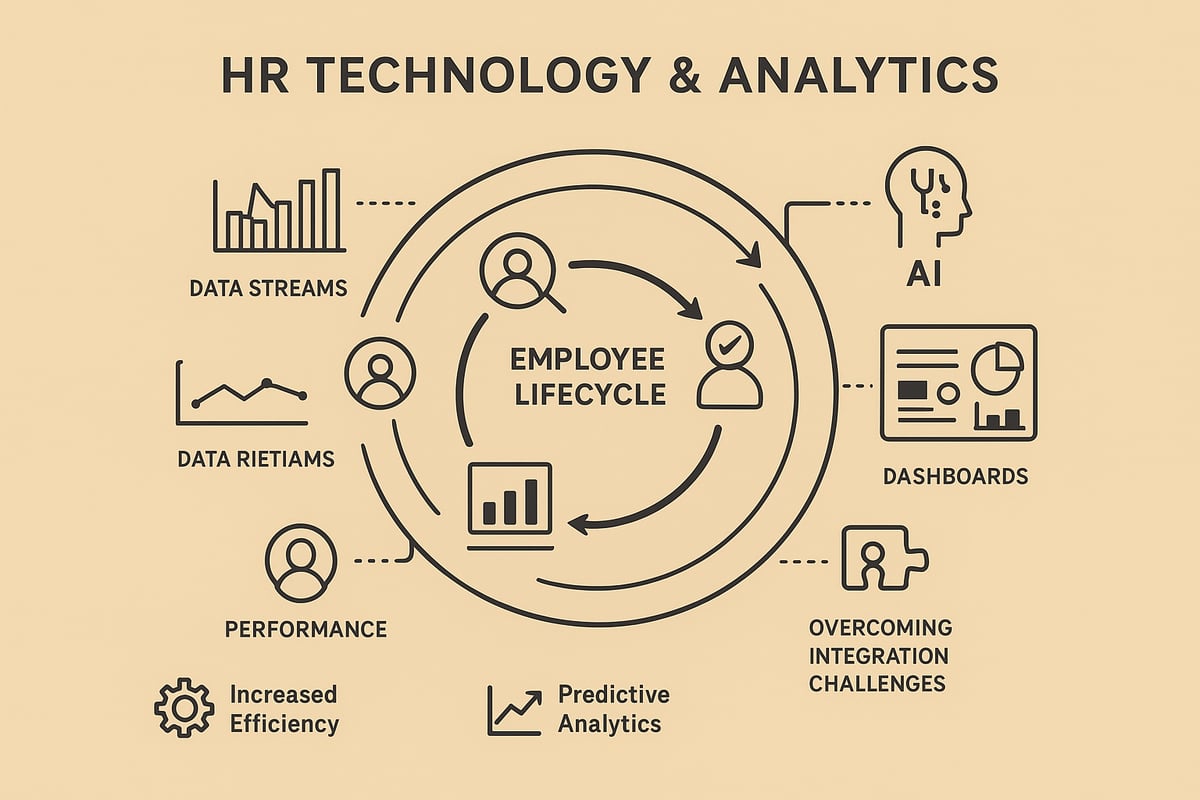
HR technology is reshaping the employee lifecycle by streamlining processes and breaking down silos. Platforms like HRIS, AI tools, and automation software now enable seamless data flow across all phases. This centralized approach not only increases efficiency but also enhances consistency in employee experience.
For example, organizations using integrated HR technology report up to 35% higher process efficiency compared to those with fragmented systems. Automation reduces manual workloads, allowing HR to focus on strategic initiatives rather than repetitive tasks. Solutions such as Payroll and Human Capital Management provide unified platforms that support onboarding, payroll, benefits, and compliance. This ensures every touchpoint in the employee lifecycle is connected and optimized.
Data-Driven Decision Making
Analytics have become essential for effective employee lifecycle management. Real-time dashboards and predictive models help HR leaders make informed decisions about hiring, engagement, and development. By leveraging these insights, organizations can proactively identify trends, gaps, and opportunities.
Key performance indicators, such as turnover rates and development progress, are now visible at a glance. Tools highlighted in Predictive People Analytics & Data-Driven Decision Making enable teams to forecast attrition and personalize learning paths. This approach not only improves outcomes but also aligns talent strategies with business objectives, ensuring every phase of the employee lifecycle is data-driven.
Overcoming Implementation Challenges
Despite the benefits, integrating technology across the employee lifecycle presents challenges. Data silos, change resistance, and user adoption can hinder progress. Without a clear strategy, organizations risk inconsistent experiences and missed opportunities.
To address these issues, leaders should prioritize cross-functional collaboration and transparent communication. Investing in comprehensive training and phased rollouts helps increase user confidence. Regular feedback loops and lifecycle audits also allow teams to adjust quickly. Overcoming these barriers unlocks the full potential of technology, making the employee lifecycle more agile and resilient.
Future Outlook: The Next Evolution of the Employee Lifecycle
Looking ahead to 2026, the employee lifecycle will become even more dynamic. Emerging trends include AI-powered employee journeys, predictive retention strategies, and hyper-personalization of development plans. These innovations will empower HR teams to anticipate needs and deliver tailored support at every stage.
To stay competitive, organizations must remain agile and proactive in adapting their lifecycle management strategies. Embracing new technologies and fostering a culture of continuous improvement will ensure that the employee lifecycle remains a driver of growth, engagement, and organizational success.
Best Practices for Mastering the Employee Lifecycle
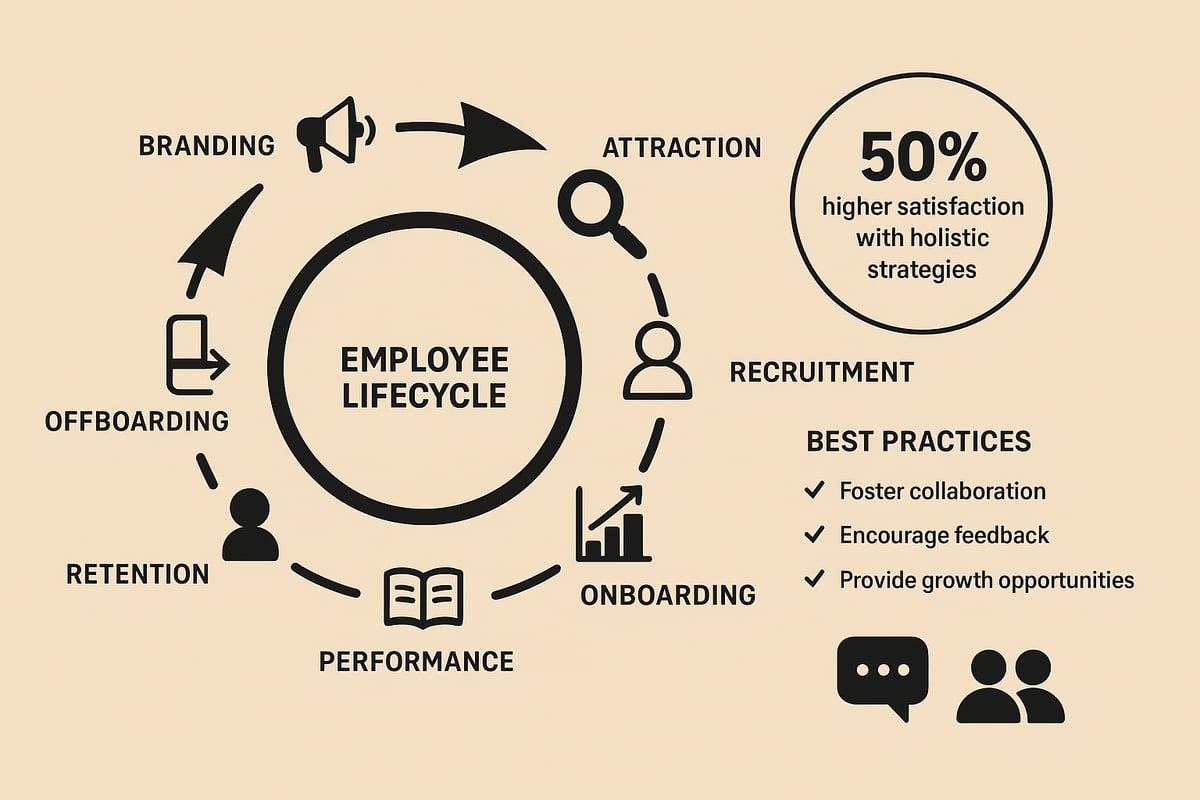
Building a future-ready organization in 2026 demands a holistic approach to the employee lifecycle. Creating consistency and alignment across every phase is essential for delivering an exceptional employee experience.
Building a Holistic Employee Experience
A seamless employee lifecycle starts with integrating HR, IT, and business teams. Consistency in policies, communication, and support ensures employees feel valued from attraction to offboarding.
Benefits programs are a key pillar, influencing both engagement and retention. Partnering with an Employee Benefits Consulting Company can help tailor offerings to evolving workforce needs, reinforcing every stage of the employee lifecycle.
Organizations with holistic lifecycle strategies report up to 50% higher employee satisfaction. Focus on aligning values, promoting transparency, and creating touchpoints that matter across all phases.
Continuous Feedback and Iteration
Regular feedback is the backbone of a thriving employee lifecycle. Implementing pulse surveys, stay interviews, and lifecycle audits helps organizations capture real-time insights and adapt practices quickly.
Short feedback loops allow teams to address challenges before they escalate. Use data from each stage to refine your approach, ensuring the employee lifecycle remains responsive to changing needs.
Encourage open communication, making it easy for employees to share input. This iterative process builds trust and drives continuous improvement across the organization.
Leadership and Culture Alignment
Leadership sets the tone for the entire employee lifecycle. When leaders model the desired culture, employees are more likely to engage, grow, and stay.
Aligning leadership behaviors with lifecycle goals fosters accountability and supports positive change. Invest in leadership development, focusing on empathy, communication, and adaptability.
A strong culture underpins every phase of the employee lifecycle, from recruitment through offboarding. Make culture visible in daily interactions and decision-making to attract and retain top talent.
Measuring Success and ROI
Effective measurement is vital for mastering the employee lifecycle. Track key metrics like engagement scores, turnover rates, and internal mobility to assess progress.
Leverage analytics and technology to identify risks and opportunities. For example, applying frameworks like the one in Mitigating Attrition: Data-Driven Approach Using Machine Learning enables organizations to proactively address retention challenges.
Tie lifecycle outcomes to business objectives, ensuring every investment delivers measurable value. Use dashboards and regular reviews to keep strategies on track and agile for the future.
Checklist: Mastering the Employee Lifecycle in 2026
| Step | Description |
|---|---|
| Consistent Communication | Align messaging at all phases |
| Cross-Functional Collaboration | Integrate HR, IT, and business |
| Continuous Feedback | Implement pulse surveys & audits |
| Leadership Engagement | Train and empower leaders |
| Data-Driven Measurement | Track and analyze key metrics |