

As the world of work transforms at an unprecedented pace, organizations must rethink how they approach hcm consulting to remain competitive. This guide offers expert strategies that help businesses prepare for the challenges and opportunities the future holds.
Whether you are an HR leader, consultant, or business executive, you will find actionable insights and proven methodologies tailored for next-generation hcm consulting. Discover what the 2026 HCM landscape looks like, learn to address key challenges, master step-by-step consulting frameworks, leverage technology innovations, optimize talent, and measure results.
Now is the time to act. Use this roadmap to build a future-ready workforce and unlock sustained success.
Understanding the 2026 HCM Landscape
Navigating the future of human capital management requires a clear understanding of the evolving environment. By 2026, organizations will face new trends, compliance demands, shifting workforce demographics, economic pressures, and an increased need for expert hcm consulting. This landscape sets the stage for strategic HR transformation and long-term success.
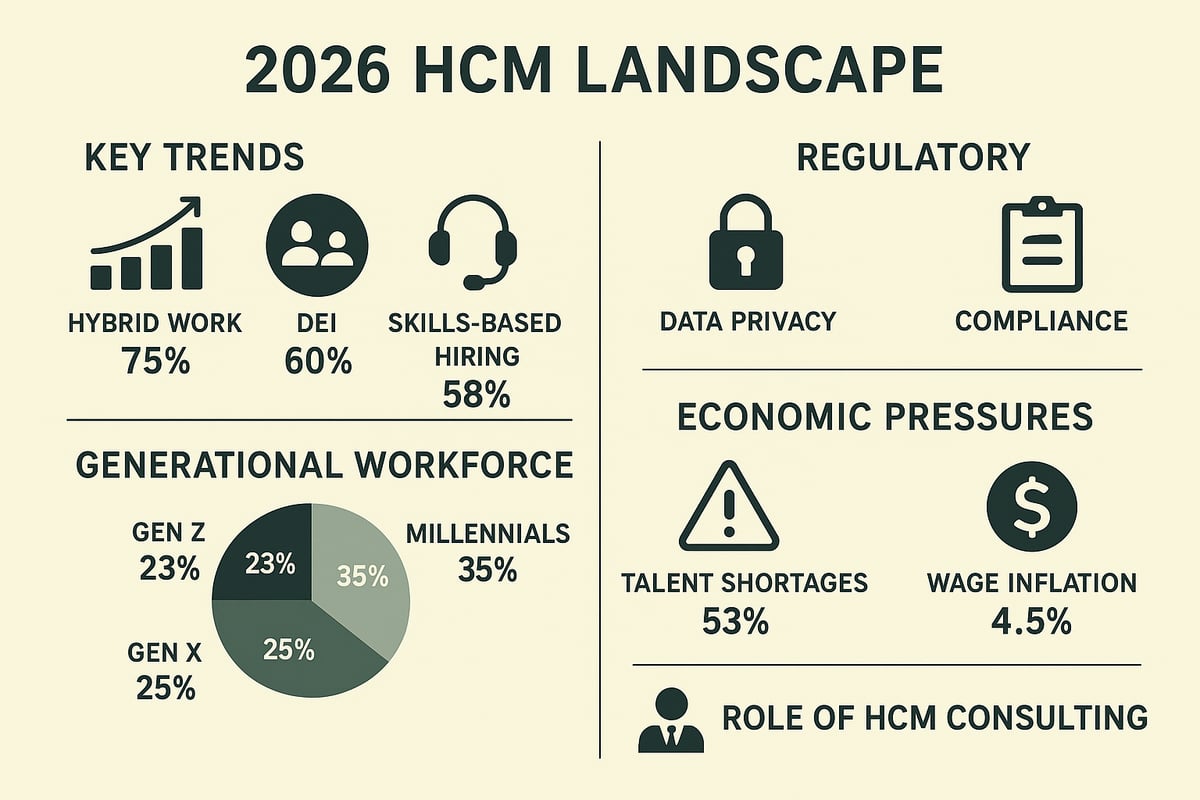
Key Trends Shaping HCM in 2026
The hcm consulting field is being transformed by major trends that will define organizational success in 2026. The rise of hybrid and remote work models is changing how teams operate. Organizations are prioritizing employee well-being and holistic health, while diversity, equity, and inclusion (DEI) remain at the forefront. Skills-based hiring and internal mobility are redefining career paths. Data-driven decision-making is now a standard. According to Deloitte’s 2026 Global Human Capital Trends Report, 72% of organizations plan to boost investment in HCM technology by 2026. Adapting to these shifts is essential for staying competitive.
Regulatory and Compliance Changes
In 2026, hcm consulting will need to address evolving labor laws and global compliance standards. Data privacy regulations, including expansions of GDPR and CCPA, are impacting how organizations handle employee information. Compliance automation tools are becoming standard to manage these complex requirements. Recent years have seen companies fined millions for non-compliance, highlighting the risks of neglecting these changes. Proactive compliance management is emerging as a key differentiator in hcm consulting, enabling organizations to avoid penalties and build trust with stakeholders.
Workforce Demographics and Generational Shifts
The modern workforce is more diverse than ever, spanning Gen Z to Baby Boomers. By 2026, Gen Z will make up 35% of the workforce, bringing new expectations for flexibility, purpose, and engagement. These generational shifts impact benefits, communication styles, and engagement strategies. Effective hcm consulting recognizes that a tailored approach is essential to meet the varied needs of different age groups. Organizations that adapt their strategies to demographic trends will attract and retain top talent in a competitive market.
Economic and Market Pressures
Talent shortages and a widening global skills gap are top concerns for organizations entering 2026. Wage inflation and the need for accurate compensation benchmarking are driving changes in workforce planning. Economic uncertainty adds pressure to optimize resources and remain agile. According to Deloitte, 83% of CEOs view talent shortages as a significant business risk. Agile hcm consulting is vital for risk mitigation, helping organizations respond quickly to market shifts and maintain operational resilience.
The Role of HCM Consulting in Navigating Change
As organizations navigate these complex challenges, hcm consulting serves as a strategic partner to HR leaders. External consultants bring valuable expertise to transformation initiatives, bridging the gap between knowledge and execution. Industry surveys show that organizations with hcm consulting support experience a 25% faster adoption of new practices. The value lies in translating strategy into action, ensuring that change efforts deliver measurable and lasting results.
Step-by-Step HCM Consulting Framework for 2026
A robust hcm consulting framework is essential for organizations aiming to thrive in the evolving workforce landscape. This step-by-step approach ensures that every critical aspect of human capital management is addressed, from initial assessment to sustainable improvement.
Step 1: Discovery and Organizational Assessment
The first stage in hcm consulting is a thorough discovery process. Consultants conduct HR audits and interview stakeholders to map existing processes, systems, and pain points.
Employee feedback tools, such as pulse surveys and sentiment analysis platforms, provide valuable insights into engagement and satisfaction. By gathering this data, consultants identify gaps in current practices and establish a clear baseline for improvement.
Accurate assessment sets the foundation for every successful hcm consulting project. It ensures that recommendations are tailored to the organization's unique context.
Step 2: Strategic Planning and Goal Setting
In hcm consulting, strategic planning aligns human capital initiatives with overarching business objectives. Consultants work with leaders to prioritize projects based on their potential impact and feasibility.
Setting measurable KPIs is critical. For example, linking talent development programs directly to revenue growth targets creates clear accountability.
With well-defined goals, organizations can track progress and demonstrate ROI throughout the hcm consulting engagement. This structured approach drives alignment and sustained results.
Step 3: Solution Design and Technology Selection
Solution design is a pivotal part of hcm consulting. Consultants evaluate HR platforms, such as HRIS, payroll, and talent management systems, to match the organization's needs.
Integrating AI, automation, and analytics is essential for future-ready operations. Choosing solutions that work seamlessly together reduces manual errors and improves efficiency. For a deeper look at integrated payroll and HCM solutions, see Payroll and Human Capital Management.
Since 60% of firms identify integration as a top challenge, hcm consulting experts must balance innovation with practical implementation.
Step 4: Change Management and Implementation
Effective change management is at the heart of hcm consulting. Consultants build coalitions of change champions, develop communication plans, and train leaders and employees on new processes.
Addressing resistance is crucial. Gamification and interactive training modules can boost engagement during transitions.
By embedding change management into every project, hcm consulting ensures new practices are adopted successfully and deliver lasting value to the organization.
Step 5: Measurement, Optimization, and Continuous Improvement
Measurement is a core element of hcm consulting. Real-time dashboards and reporting tools help organizations monitor progress on KPIs.
Regular reviews and benchmarking against industry data enable continuous refinement of strategies. For instance, quarterly talent analytics reviews can lead to a 15% increase in retention rates.
This commitment to ongoing improvement allows organizations to maintain a competitive advantage through their hcm consulting partnerships.
Common Pitfalls and How to Avoid Them
Even the best hcm consulting projects can falter if common pitfalls are not addressed. Underestimating organizational culture, overcomplicating technology, and neglecting user feedback can derail progress.
For example, failed rollouts often stem from insufficient executive sponsorship. Proactive risk assessments and ongoing stakeholder engagement are essential safeguards.
By anticipating these challenges, hcm consulting professionals help organizations avoid costly missteps and ensure project success.
How Nero & Associates, Inc. Empowers HCM Success
Nero & Associates, Inc. stands out in hcm consulting by offering performance-based solutions tailored to each organization's needs. Their services include HR process automation, employee engagement programs, and compliance strategies.
With deep expertise in AI integration and strategic planning, Nero & Associates delivers measurable improvements in hiring, retention, and regulatory compliance. Clients only pay when proven results are achieved.
Organizations working with Nero & Associates have eliminated thousands of hours of manual HR tasks and enhanced employee well-being through their comprehensive hcm consulting approach.
Leveraging Technology and AI in HCM Consulting
In 2026, technology stands at the center of effective hcm consulting. As organizations adapt to new realities, leveraging AI, automation, and workforce analytics becomes essential for driving efficiency and competitive advantage. This section explores the transformative impact of these technologies and best practices for successful hcm consulting.
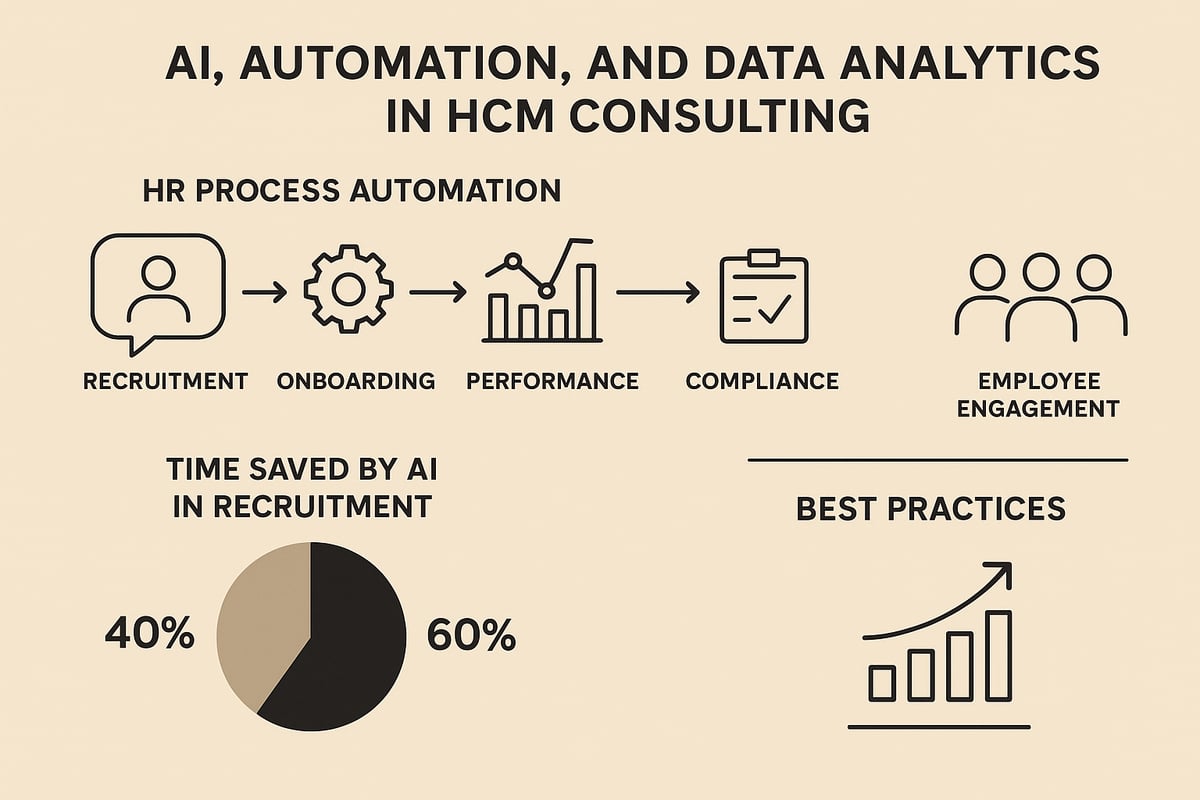
The Impact of AI and Automation on HCM
AI and automation are revolutionizing hcm consulting by streamlining repetitive HR tasks and boosting productivity. Automated solutions handle payroll, onboarding, and benefits administration, freeing HR teams to focus on strategic initiatives. Tools powered by AI enhance talent acquisition, from sourcing to screening, and deliver predictive analytics for smarter decisions.
For example, organizations leveraging AI have reduced time-to-hire by 40 percent, significantly accelerating talent acquisition. In hcm consulting, these advances mean consultants can deliver more value, faster, and with greater accuracy for their clients.
Selecting and Integrating HCM Technologies
Choosing the right platforms is a fundamental part of hcm consulting. Consultants must evaluate solutions for scalability, interoperability, and alignment with business goals. The integration of payroll, time tracking, benefits, and learning management systems is critical to avoid costly disruptions.
| Criteria | Importance | Example |
|---|---|---|
| Scalability | Supports growth | Cloud-based HRIS |
| Interoperability | Seamless data flow | Payroll-LMS integration |
| User Experience | Drives adoption | Intuitive dashboards |
| Security | Protects sensitive information | Encrypted data storage |
Integration failures can cost companies hundreds of thousands of dollars, so hcm consulting experts guide organizations through careful selection and implementation.
Data-Driven Insights and Workforce Analytics
Data analytics is transforming hcm consulting into a discipline grounded in evidence-based decision-making. Consultants use people analytics to identify trends in engagement, turnover, and performance, providing actionable insights for workforce planning.
Real-time dashboards enable HR leaders to monitor key metrics and respond proactively. Firms embracing analytics in hcm consulting have achieved up to double the improvement in employee retention, showcasing the power of data as the new HR currency.
Ensuring Data Privacy and Cybersecurity
Protecting employee data is a top concern in hcm consulting. With the rise of global privacy regulations, organizations must ensure compliance and safeguard sensitive information. Best practices include:
- Conducting regular audits
- Training employees on data security
- Implementing robust cybersecurity protocols
Sixty-two percent of HR leaders now cite data privacy as a primary challenge. Proactive hcm consulting addresses these risks by embedding security into every technology solution.
Future Innovations: What’s Next for HCM Tech?
The future of hcm consulting is shaped by emerging technologies. Generative AI and conversational bots are redefining HR interactions. Blockchain offers secure credential verification, while VR enables immersive onboarding experiences.
According to ADP’s Top 6 HR Trends to Follow in 2026, staying ahead of these innovations is crucial for organizations and consultants alike. By anticipating trends and embracing new solutions, hcm consulting professionals help clients maintain a competitive edge and drive lasting transformation.
Talent Optimization: Attracting, Retaining, and Developing Top Talent
Attracting, retaining, and developing top talent is the cornerstone of organizational success in 2026. Effective hcm consulting is essential for building a future-ready workforce that thrives in a fast-changing environment.
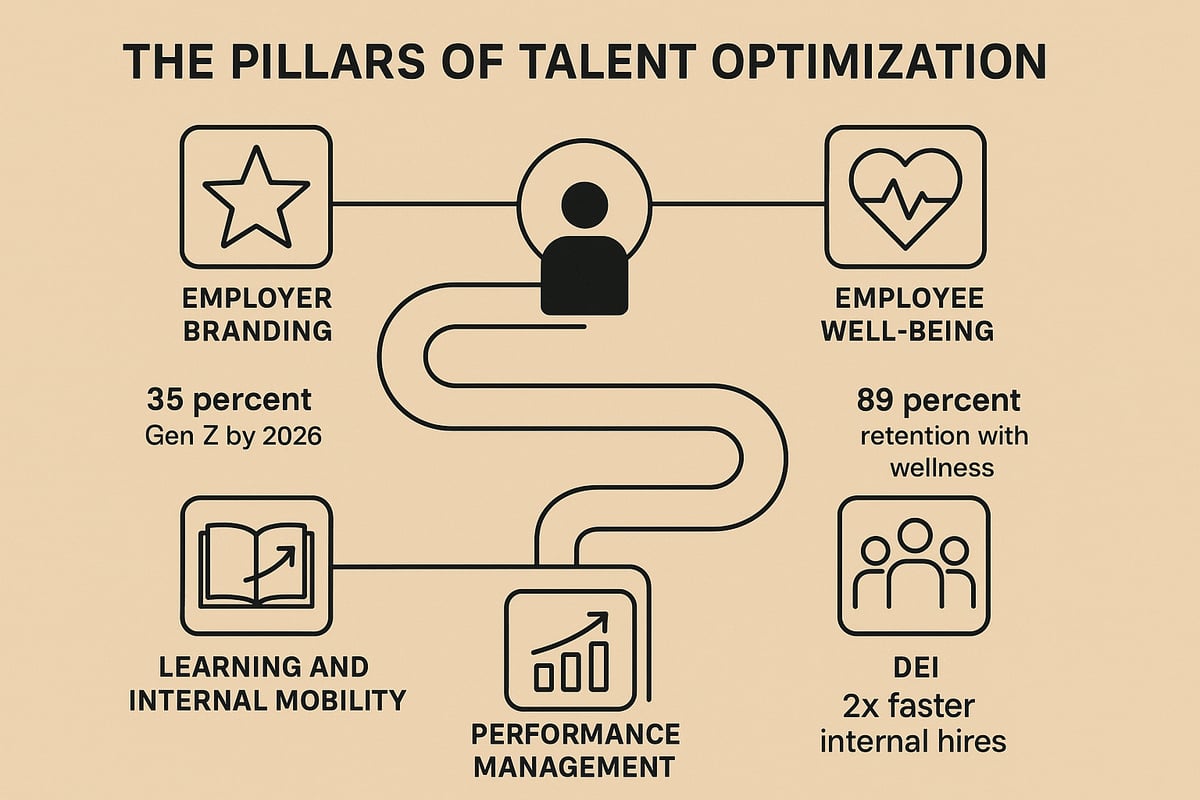
Building a Magnetic Employer Brand
A standout employer brand acts as a beacon for high-caliber candidates. Hcm consulting empowers organizations to define and communicate their unique employee value proposition (EVP) across multiple channels.
Social media, digital platforms, and authentic storytelling are essential tools for showcasing company culture and growth opportunities. Top employer brands receive 50 percent more qualified applicants, making brand strategy a critical differentiator.
Consultants guide organizations in aligning their reputation with workforce expectations. This strategic focus ensures the employer brand resonates with both current and prospective talent, driving long-term engagement.
Advanced Talent Acquisition Strategies
Evolving talent acquisition methods are reshaping the recruitment landscape. Hcm consulting leverages skills-based hiring, talent marketplaces, and AI-powered tools to attract and assess candidates more effectively.
Inclusive recruitment practices are also central, helping organizations build diverse and innovative teams. Companies using AI report a 30 percent reduction in bias and greater access to high-quality talent.
By partnering with experts in consulting human capital strategies, organizations benefit from proven methodologies that align hiring with business goals and future workforce needs.
Employee Engagement and Well-Being Programs
Prioritizing employee well-being is no longer optional. Hcm consulting delivers actionable frameworks for holistic health initiatives, flexible work arrangements, and recognition systems.
Organizations that invest in well-being see 89 percent higher retention rates. Consultants often recommend data-driven benefit strategies and personalized wellness plans to boost engagement.
For tailored solutions, explore employee benefit plan design to ensure programs are both competitive and cost-effective, supporting the organization's long-term objectives.
Learning, Development, and Internal Mobility
Continuous learning and internal mobility are vital for future-ready organizations. Hcm consulting designs personalized learning paths, reskilling programs, and clear career development frameworks.
Promoting internal mobility helps fill roles twice as fast and reduces turnover. Consultants also support succession planning, ensuring critical roles are prepared for future transitions.
This holistic approach fosters a culture of growth, adaptability, and sustained performance, making the workforce more resilient to change.
Performance Management and Feedback Systems
Modern organizations are shifting from annual reviews to continuous feedback models. Hcm consulting introduces agile performance management systems that leverage technology for real-time tracking.
Linking performance metrics to rewards and advancement opportunities motivates employees and aligns their efforts with organizational goals. Real-time feedback has been shown to increase productivity by 12 percent.
Effective systems ensure transparency and foster a culture of high performance, supporting long-term business success.
DEI Strategies for 2026 and Beyond
Diversity, equity, and inclusion are business imperatives. Hcm consulting helps set measurable DEI goals, develop inclusive leadership, and establish diverse talent pipelines.
Bias mitigation training and targeted recruitment ensure all employees have equal opportunities to grow and contribute. Diverse teams consistently outperform, delivering up to 35 percent higher profitability.
Consultants play a key role in embedding DEI into every stage of the talent lifecycle, driving both social responsibility and bottom-line results.
Measuring HCM Consulting Impact and ROI
Measuring the true impact of hcm consulting is vital for demonstrating value and guiding continuous improvement. By using clear metrics and data-driven approaches, organizations can translate consulting investments into tangible business outcomes. This section explores how to establish effective KPIs, quantify financial results, maintain stakeholder alignment, and leverage benchmarking for ongoing success.
Establishing Key Performance Indicators (KPIs)
Defining the right KPIs is the cornerstone of hcm consulting measurement. Start by identifying metrics that align with organizational goals, such as turnover rates, engagement scores, time-to-hire, and training ROI. These indicators offer a direct line of sight into the effectiveness of new strategies.
KPIs should be specific, measurable, and tied to business outcomes. For example, tracking cost-per-hire helps optimize recruitment spend, while engagement scores reflect the impact of culture initiatives. The key is to select indicators that matter most to leadership and clearly link them to consulting objectives.
Quantifying Financial and Operational Outcomes
To justify hcm consulting investments, organizations must quantify both financial and operational outcomes. Calculate cost savings generated from automation, process improvements, and reduced manual work. Measure the effect on revenue growth, productivity, and compliance rates.
For instance, companies often report a 20 percent reduction in HR operating costs after successful consulting engagements. By presenting these results in financial terms, consultants build trust and demonstrate clear ROI. Consistent tracking ensures that benefits are sustained over time and aligned with key business drivers.
Continuous Feedback and Stakeholder Reporting
Ongoing feedback and transparent reporting are essential to hcm consulting success. Regular check-ins, stakeholder surveys, and progress updates keep everyone aligned and informed. Gathering feedback allows consultants and HR leaders to refine strategies and address emerging challenges.
Monthly reporting increases stakeholder satisfaction by 30 percent, as teams see visible progress and shared wins. Open communication also fosters accountability and quick course correction when needed. This approach ensures that consulting efforts remain relevant and impactful throughout the project lifecycle.
Benchmarking and Industry Comparisons
Benchmarking places hcm consulting outcomes in context by comparing results against industry standards and peer organizations. Utilizing workforce data analytics tools, such as those described in Benefits Data Analytics Insights, helps identify performance gaps and opportunities for improvement.
Top-quartile hcm performers enjoy 25 percent higher profit margins and greater workforce stability. By leveraging benchmarks, organizations set realistic targets and continuously raise the bar. This data-driven approach is crucial for maintaining a competitive edge and sustaining long-term value.
As you look ahead to 2026, navigating the complexities of human capital management can feel overwhelming. With shifting workforce trends, new technology, and rising employee expectations, it’s crucial to have a clear, actionable strategy that truly moves the needle. At Nero and Associates, Inc., I’m here to help you cut through the noise and design solutions that elevate your people, processes, and outcomes. If you’re ready to unlock measurable improvements in efficiency, employee well-being, and financial health, let’s take the next step together—Book a Consultation.