

Supplemental Benefits: Boosting Employee Wellness in 2026

Share on Facebook
Share on X
Share on LinkedIn

Organizations today face mounting pressure to deliver comprehensive employee benefits while managing escalating healthcare costs. Traditional insurance packages often leave significant gaps in coverage, forcing employees to shoulder unexpected medical expenses that impact their financial wellness and overall productivity. This challenge has driven forward-thinking companies to explore supplemental benefits as a strategic solution that enhances employee satisfaction, reduces absenteeism, and strengthens organizational performance. Understanding how these additional offerings work and their measurable impact on both workforce wellbeing and business outcomes has become essential for competitive advantage in 2026.

Understanding the Foundation of Supplemental Benefits

Supplemental benefits represent additional insurance products and services that work alongside primary health coverage to address gaps in traditional benefit plans. These offerings provide financial protection for expenses that standard medical insurance doesn't fully cover, including deductibles, copayments, dental procedures, vision care, and critical illness treatments.

The landscape of supplemental coverage has evolved significantly over recent years. According to research on Medicare beneficiaries, individuals increasingly rely on multiple sources of supplemental insurance to manage healthcare costs effectively. This trend extends beyond Medicare populations into employer-sponsored benefit programs, where companies recognize the strategic value of comprehensive coverage options.

Types of Supplemental Coverage

Modern supplemental benefits encompass a diverse range of products designed to address specific employee needs:

  • Critical illness insurance providing lump-sum payments upon diagnosis of serious conditions
  • Accident insurance covering medical expenses and lost income following unexpected injuries
  • Hospital indemnity plans offering daily cash benefits during inpatient stays
  • Dental and vision insurance addressing routine and specialized care
  • Disability insurance replacing income during extended medical absences
  • Life insurance protecting families against financial hardship

Supplemental benefits categories

Each category serves distinct purposes, yet together they create a safety net that protects employees from financial devastation while simultaneously reducing stress and improving focus at work.

The Business Case for Offering Supplemental Benefits

Organizations that implement robust supplemental benefits programs realize measurable returns through multiple channels. These advantages extend beyond employee satisfaction to impact fundamental business metrics including retention, productivity, and operational efficiency.

Financial Impact on Organizations

Strategic implementation of supplemental benefits delivers quantifiable cost savings:

  1. Reduced absenteeism as employees access preventive care and early intervention
  2. Lower turnover costs through improved employee loyalty and satisfaction
  3. Enhanced productivity when workers aren't distracted by financial health concerns
  4. Decreased workers' compensation claims through proactive health management
  5. Competitive recruiting advantage attracting top talent in tight labor markets

Companies leveraging these programs report significant improvements in workforce stability. When employees feel protected against catastrophic health events, they demonstrate higher engagement levels and commitment to organizational goals.

Metric Without Supplemental Benefits With Supplemental Benefits Improvement
Annual Turnover Rate 18-22% 12-15% 30-40% reduction
Sick Days Per Employee 8-10 days 5-6 days 35-45% reduction
Healthcare Cost Growth 8-10% annually 5-7% annually 25-40% slower growth
Employee Satisfaction 65-70% 82-88% 20-25% increase

Addressing Employee Financial Wellness

Financial stress represents one of the most significant drains on employee productivity. The American Council of Life Insurers emphasizes how supplemental benefits provide crucial financial protection against uncovered medical expenses, helping families maintain economic stability during health crises.

When employees carry supplemental coverage, they experience reduced anxiety about potential medical bills. This psychological relief translates directly into improved workplace performance, better decision-making, and stronger collaboration with colleagues.

Implementing Supplemental Benefits in Modern Organizations

Successful deployment of supplemental benefits requires strategic planning, clear communication, and ongoing evaluation. Organizations must align these offerings with broader workforce wellness initiatives and business objectives to maximize their impact.

Assessment and Selection Process

Before introducing supplemental benefits, companies should conduct thorough needs assessments:

  • Analyze current benefit utilization patterns to identify coverage gaps
  • Survey employees about their healthcare concerns and financial worries
  • Review demographic data to understand varying needs across age groups and life stages
  • Benchmark against industry competitors to ensure competitive positioning
  • Calculate total cost of ownership including administrative overhead and technology requirements

This data-driven approach ensures that supplemental offerings align with actual employee needs rather than assumptions about what might be valuable.

Benefits implementation workflow

Communication and Enrollment Strategies

Even the most comprehensive supplemental benefits package delivers limited value if employees don't understand or utilize the offerings. Effective communication strategies include:

Multi-channel education campaigns leveraging email, video content, in-person sessions, and digital platforms to reach diverse workforce segments. Different employees prefer different learning modalities, and successful programs accommodate these preferences.

Simplified enrollment processes that reduce administrative friction and make selecting appropriate coverage straightforward. Complex enrollment procedures create barriers that discourage participation, undermining program effectiveness.

Ongoing engagement initiatives throughout the year, not just during open enrollment periods. Regular touchpoints keep benefits top-of-mind and encourage employees to reassess their coverage as life circumstances change.

Organizations implementing automated enrollment systems and decision-support tools report significantly higher participation rates compared to those relying on manual processes.

Medicare Advantage and Supplemental Benefits Evolution

The Medicare Advantage landscape provides valuable insights into how supplemental benefits create meaningful health outcomes. Studies demonstrate that supplemental benefits such as food delivery, transportation services, and home modifications correlate with improved healthcare quality, particularly for chronic disease management.

Expanding Beyond Traditional Coverage

Recent policy changes have broadened the definition of allowable supplemental benefits within Medicare Advantage plans. Legislative updates now permit coverage for services addressing social determinants of health, including:

  • Nutritional support and meal delivery programs
  • Transportation to medical appointments
  • Home safety modifications preventing falls and injuries
  • Pest control and home weatherization
  • Adult day care services

These expanded offerings recognize that health outcomes depend on factors extending beyond traditional medical care. Employers can apply similar thinking to their supplemental benefits strategies, addressing holistic employee wellness rather than narrowly focusing on medical interventions.

Technology Integration and Automated Benefits Administration

Modern supplemental benefits programs leverage technology to streamline administration, reduce costs, and improve user experience. Automation and integration capabilities transform how organizations manage these offerings while delivering superior value to employees.

Digital Platform Advantages

Advanced benefits administration platforms provide:

  1. Unified enrollment interfaces consolidating all benefit selections in single sessions
  2. Real-time eligibility verification preventing coverage gaps and enrollment errors
  3. Automated premium calculations ensuring accurate payroll deductions
  4. Mobile accessibility enabling employees to review and manage benefits anywhere
  5. Predictive analytics identifying at-risk populations and recommending appropriate coverage

Integration between benefits platforms and existing Human Capital Management systems eliminates duplicate data entry and reduces administrative burden on HR teams by thousands of hours annually.

Administrative Task Manual Process Time Automated Process Time Time Savings
Annual Enrollment 120-150 hours 15-20 hours 85-90% reduction
Life Event Changes 2-3 hours per event 10-15 minutes per event 85-90% reduction
Premium Reconciliation 30-40 hours monthly 2-3 hours monthly 90-95% reduction
Compliance Reporting 25-35 hours quarterly 3-5 hours quarterly 85-90% reduction

These efficiency gains free HR professionals to focus on strategic initiatives rather than administrative tasks, directly supporting organizational performance improvements.

Data-Driven Optimization

Technology platforms generate valuable insights about benefit utilization patterns, enabling continuous program refinement. Organizations can identify which supplemental offerings deliver greatest value, which employee segments underutilize available coverage, and where communication efforts should intensify.
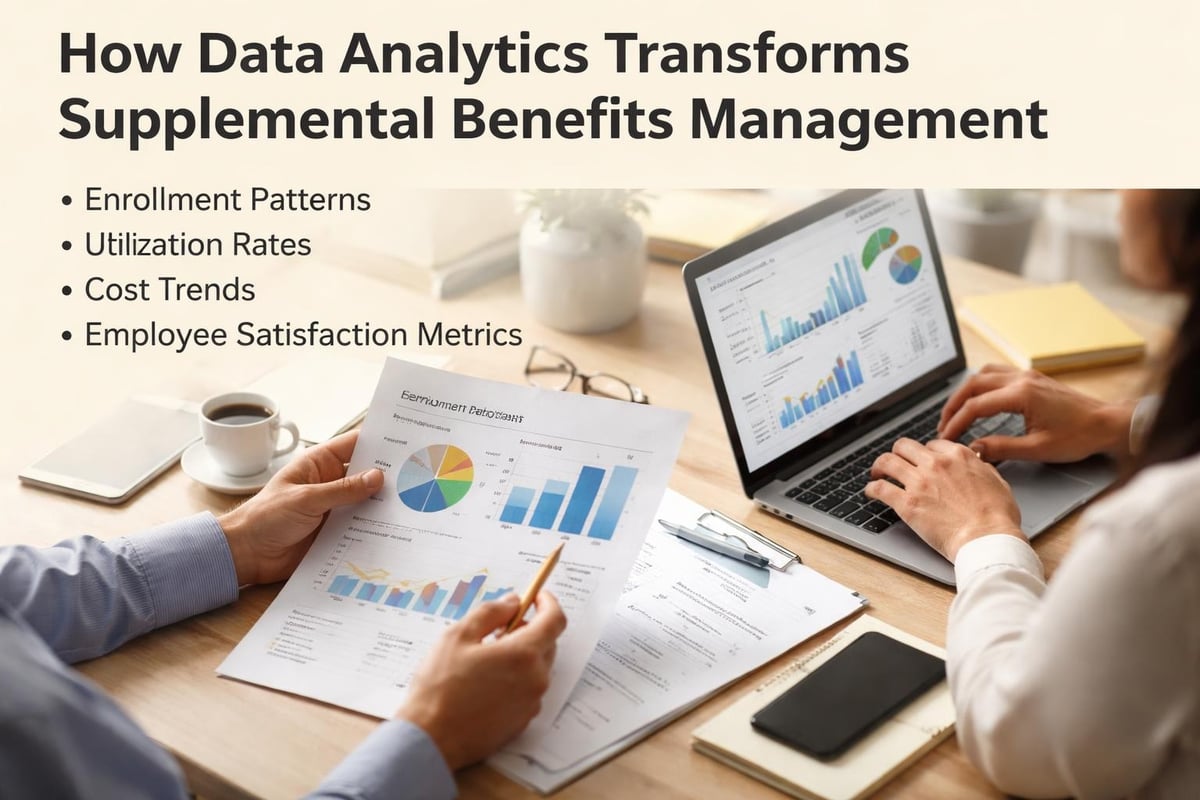
Benefits analytics dashboard

Predictive modeling helps anticipate future benefits needs based on workforce demographic shifts, enabling proactive adjustments to supplemental offerings before coverage gaps emerge.

Regulatory Compliance and Supplemental Benefits

Organizations offering supplemental benefits must navigate complex regulatory requirements at federal and state levels. Understanding these compliance obligations prevents costly penalties while protecting employee interests.

Federal Regulations and Guidelines

Federal regulations govern how supplemental benefits products can be marketed, sold, and administered, with particular emphasis on consumer disclosures and transparency requirements. Recent regulatory updates have preserved access to these products while strengthening protections against misleading marketing practices.

The Centers for Medicare & Medicaid Services provides detailed guidance distinguishing between mandatory supplemental benefits and optional supplemental benefits within Medicare managed care contexts. While these regulations apply specifically to Medicare Advantage plans, they establish important precedents for employer-sponsored supplemental coverage.

State-Level Variations

Supplemental benefits regulations vary significantly across states, creating complexity for organizations with multi-state operations. Key considerations include:

  • Licensing requirements for benefit administrators and brokers
  • Mandated coverage provisions requiring specific supplemental offerings
  • Premium rate approval processes in regulated insurance markets
  • Consumer protection standards governing marketing and sales practices
  • Tax treatment of employer contributions toward supplemental premiums

Organizations must maintain current knowledge of applicable regulations in each jurisdiction where they operate, often requiring specialized legal and compliance expertise.

Measuring Return on Investment

Quantifying the financial impact of supplemental benefits programs enables data-driven decision-making about program design, investment levels, and strategic priorities. Sophisticated measurement frameworks track both direct costs and indirect benefits.

Key Performance Indicators

Comprehensive ROI analysis examines multiple dimensions:

Direct cost metrics including premium expenses, administrative fees, technology investments, and communication costs provide baseline spending data. These figures establish the investment side of the ROI equation.

Hard benefit metrics capture measurable financial returns such as reduced turnover costs, decreased absenteeism expenses, lower disability claim frequencies, and workers' compensation savings. These quantifiable benefits often justify supplemental benefits programs on purely financial grounds.

Soft benefit metrics assess improvements in employee satisfaction, engagement scores, productivity indicators, and organizational culture measures. While more challenging to monetize, these factors significantly influence long-term organizational success.

ROI Component Measurement Approach Typical Impact Range
Turnover Reduction Cost per hire × reduction in departures $250,000 – $850,000 annually
Absenteeism Decrease Average daily wage × reduced sick days $175,000 – $425,000 annually
Productivity Gains Output improvement × workforce size $500,000 – $2,000,000 annually
Healthcare Cost Management Reduced trend × total medical spend $300,000 – $900,000 annually

These figures represent typical ranges for mid-sized organizations employing 500-1,000 workers, with actual results varying based on industry, geography, and program design.

Emerging Trends Shaping Supplemental Benefits

The supplemental benefits landscape continues evolving as organizations respond to changing workforce expectations, technological capabilities, and healthcare delivery models. Forward-thinking companies position themselves to capitalize on these emerging trends.

Personalization and Choice Architecture

Modern employees expect personalized experiences in all aspects of their lives, and benefits programs are no exception. Advanced platforms enable customized benefit recommendations based on individual circumstances, family composition, health status, and financial situations.

Voluntary benefits marketplaces allow employees to select from curated supplemental offerings matched to their specific needs. This self-service approach empowers informed decision-making while reducing employer administrative burden.

Decision-support tools leveraging artificial intelligence guide employees through complex choices, explaining tradeoffs and recommending optimal coverage combinations. These technologies make sophisticated benefits expertise accessible to all workers regardless of their insurance knowledge.

Mental Health and Wellbeing Integration

Recognition of mental health's impact on overall wellness has driven expansion of supplemental benefits addressing psychological and emotional needs:

  • Employee assistance programs offering confidential counseling
  • Stress management and resilience training resources
  • Mental health crisis intervention services
  • Substance abuse treatment support
  • Work-life balance coaching and resources

Research examining lived experiences with supplemental benefits highlights how holistic coverage addressing both physical and mental health needs delivers superior outcomes compared to narrowly focused medical insurance.

Financial Wellness Integration

Progressive organizations recognize that financial stress undermines health and productivity regardless of medical coverage adequacy. Supplemental benefits increasingly incorporate financial wellness components:

  1. Student loan repayment assistance reducing debt burdens for younger workers
  2. Emergency savings programs building financial resilience against unexpected expenses
  3. Financial planning services helping employees make informed decisions
  4. Retirement planning support ensuring long-term financial security
  5. Debt management counseling addressing credit and spending challenges

These offerings acknowledge the interconnected nature of financial, mental, and physical health, creating comprehensive wellness ecosystems that support employees across all dimensions of wellbeing.

Implementation Best Practices

Organizations achieving optimal results from supplemental benefits programs share common characteristics and approaches. These best practices provide actionable guidance for companies developing or refining their strategies.

Leadership Commitment and Stakeholder Alignment

Successful programs require visible executive sponsorship demonstrating organizational commitment to employee wellness. When leadership actively champions supplemental benefits and personally participates in programs, employees recognize genuine investment in their wellbeing rather than superficial gestures.

Cross-functional collaboration ensures that benefits initiatives align with broader business strategies. HR, finance, operations, and IT teams must coordinate efforts to create seamless experiences while managing costs effectively.

Employee involvement in program design generates offerings that truly meet workforce needs. Advisory councils, focus groups, and feedback mechanisms provide valuable insights that improve program relevance and utilization.

Continuous Improvement Processes

Static benefits programs quickly become outdated as workforce demographics shift and healthcare landscapes evolve. Leading organizations implement systematic review cycles:

  • Quarterly utilization analysis identifying trends and emerging needs
  • Annual program assessments evaluating ROI and strategic alignment
  • Ongoing employee feedback collection through surveys and listening sessions
  • Competitive benchmarking ensuring market-competitive offerings
  • Vendor performance reviews holding suppliers accountable for service quality

This commitment to continuous enhancement ensures that supplemental benefits programs remain relevant, valuable, and cost-effective over time.

Communication Excellence

The most comprehensive supplemental benefits deliver minimal value if employees don't understand or utilize them. Communication excellence requires sustained effort across multiple channels and touchpoints.

Segmented messaging tailors communications to specific employee populations based on demographics, life stages, and coverage needs. New parents receive different information than employees nearing retirement, maximizing message relevance and engagement.

Multi-format content accommodates diverse learning preferences through videos, infographics, written materials, webinars, and in-person sessions. Repetition across formats reinforces key messages and ensures broader reach.

Year-round engagement maintains awareness beyond annual enrollment periods through regular educational content, success stories, and reminders about available resources. This sustained visibility drives higher utilization and appreciation.


Supplemental benefits represent strategic investments that simultaneously enhance employee wellness and strengthen organizational performance through reduced costs, improved productivity, and competitive talent advantages. As businesses navigate increasingly complex healthcare landscapes in 2026, these offerings provide essential protection that traditional insurance alone cannot deliver. Nero and Associates, Inc. helps organizations implement comprehensive benefits strategies that leverage automation and integration to maximize efficiency while empowering employees to be proactive with their physical, mental, and financial health. Our performance-based approach ensures measurable improvements in operations, revenue, and employee wellness outcomes.

Supplemental Benefits: Boosting Employee Wellness in 2026

Organizations today face mounting pressure to deliver comprehensive employee benefits while managing escalating healthcare costs. Traditional insurance packages often leave significant gaps in coverage, forcing employees to shoulder unexpected medical expenses that impact their financial wellness and overall productivity. This challenge has driven forward-thinking companies to explore supplemental benefits as a strategic solution that enhances employee satisfaction, reduces absenteeism, and strengthens organizational performance. Understanding how these additional offerings work and their measurable impact on both workforce wellbeing and business outcomes has become essential for competitive advantage in 2026.

Understanding the Foundation of Supplemental Benefits

Supplemental benefits represent additional insurance products and services that work alongside primary health coverage to address gaps in traditional benefit plans. These offerings provide financial protection for expenses that standard medical insurance doesn't fully cover, including deductibles, copayments, dental procedures, vision care, and critical illness treatments.

The landscape of supplemental coverage has evolved significantly over recent years. According to research on Medicare beneficiaries, individuals increasingly rely on multiple sources of supplemental insurance to manage healthcare costs effectively. This trend extends beyond Medicare populations into employer-sponsored benefit programs, where companies recognize the strategic value of comprehensive coverage options.

Types of Supplemental Coverage

Modern supplemental benefits encompass a diverse range of products designed to address specific employee needs:

  • Critical illness insurance providing lump-sum payments upon diagnosis of serious conditions
  • Accident insurance covering medical expenses and lost income following unexpected injuries
  • Hospital indemnity plans offering daily cash benefits during inpatient stays
  • Dental and vision insurance addressing routine and specialized care
  • Disability insurance replacing income during extended medical absences
  • Life insurance protecting families against financial hardship

Supplemental benefits categories

Each category serves distinct purposes, yet together they create a safety net that protects employees from financial devastation while simultaneously reducing stress and improving focus at work.

The Business Case for Offering Supplemental Benefits

Organizations that implement robust supplemental benefits programs realize measurable returns through multiple channels. These advantages extend beyond employee satisfaction to impact fundamental business metrics including retention, productivity, and operational efficiency.

Financial Impact on Organizations

Strategic implementation of supplemental benefits delivers quantifiable cost savings:

  1. Reduced absenteeism as employees access preventive care and early intervention
  2. Lower turnover costs through improved employee loyalty and satisfaction
  3. Enhanced productivity when workers aren't distracted by financial health concerns
  4. Decreased workers' compensation claims through proactive health management
  5. Competitive recruiting advantage attracting top talent in tight labor markets

Companies leveraging these programs report significant improvements in workforce stability. When employees feel protected against catastrophic health events, they demonstrate higher engagement levels and commitment to organizational goals.

Metric Without Supplemental Benefits With Supplemental Benefits Improvement
Annual Turnover Rate 18-22% 12-15% 30-40% reduction
Sick Days Per Employee 8-10 days 5-6 days 35-45% reduction
Healthcare Cost Growth 8-10% annually 5-7% annually 25-40% slower growth
Employee Satisfaction 65-70% 82-88% 20-25% increase

Addressing Employee Financial Wellness

Financial stress represents one of the most significant drains on employee productivity. The American Council of Life Insurers emphasizes how supplemental benefits provide crucial financial protection against uncovered medical expenses, helping families maintain economic stability during health crises.

When employees carry supplemental coverage, they experience reduced anxiety about potential medical bills. This psychological relief translates directly into improved workplace performance, better decision-making, and stronger collaboration with colleagues.

Implementing Supplemental Benefits in Modern Organizations

Successful deployment of supplemental benefits requires strategic planning, clear communication, and ongoing evaluation. Organizations must align these offerings with broader workforce wellness initiatives and business objectives to maximize their impact.

Assessment and Selection Process

Before introducing supplemental benefits, companies should conduct thorough needs assessments:

  • Analyze current benefit utilization patterns to identify coverage gaps
  • Survey employees about their healthcare concerns and financial worries
  • Review demographic data to understand varying needs across age groups and life stages
  • Benchmark against industry competitors to ensure competitive positioning
  • Calculate total cost of ownership including administrative overhead and technology requirements

This data-driven approach ensures that supplemental offerings align with actual employee needs rather than assumptions about what might be valuable.

Benefits implementation workflow

Communication and Enrollment Strategies

Even the most comprehensive supplemental benefits package delivers limited value if employees don't understand or utilize the offerings. Effective communication strategies include:

Multi-channel education campaigns leveraging email, video content, in-person sessions, and digital platforms to reach diverse workforce segments. Different employees prefer different learning modalities, and successful programs accommodate these preferences.

Simplified enrollment processes that reduce administrative friction and make selecting appropriate coverage straightforward. Complex enrollment procedures create barriers that discourage participation, undermining program effectiveness.

Ongoing engagement initiatives throughout the year, not just during open enrollment periods. Regular touchpoints keep benefits top-of-mind and encourage employees to reassess their coverage as life circumstances change.

Organizations implementing automated enrollment systems and decision-support tools report significantly higher participation rates compared to those relying on manual processes.

Medicare Advantage and Supplemental Benefits Evolution

The Medicare Advantage landscape provides valuable insights into how supplemental benefits create meaningful health outcomes. Studies demonstrate that supplemental benefits such as food delivery, transportation services, and home modifications correlate with improved healthcare quality, particularly for chronic disease management.

Expanding Beyond Traditional Coverage

Recent policy changes have broadened the definition of allowable supplemental benefits within Medicare Advantage plans. Legislative updates now permit coverage for services addressing social determinants of health, including:

  • Nutritional support and meal delivery programs
  • Transportation to medical appointments
  • Home safety modifications preventing falls and injuries
  • Pest control and home weatherization
  • Adult day care services

These expanded offerings recognize that health outcomes depend on factors extending beyond traditional medical care. Employers can apply similar thinking to their supplemental benefits strategies, addressing holistic employee wellness rather than narrowly focusing on medical interventions.

Technology Integration and Automated Benefits Administration

Modern supplemental benefits programs leverage technology to streamline administration, reduce costs, and improve user experience. Automation and integration capabilities transform how organizations manage these offerings while delivering superior value to employees.

Digital Platform Advantages

Advanced benefits administration platforms provide:

  1. Unified enrollment interfaces consolidating all benefit selections in single sessions
  2. Real-time eligibility verification preventing coverage gaps and enrollment errors
  3. Automated premium calculations ensuring accurate payroll deductions
  4. Mobile accessibility enabling employees to review and manage benefits anywhere
  5. Predictive analytics identifying at-risk populations and recommending appropriate coverage

Integration between benefits platforms and existing Human Capital Management systems eliminates duplicate data entry and reduces administrative burden on HR teams by thousands of hours annually.

Administrative Task Manual Process Time Automated Process Time Time Savings
Annual Enrollment 120-150 hours 15-20 hours 85-90% reduction
Life Event Changes 2-3 hours per event 10-15 minutes per event 85-90% reduction
Premium Reconciliation 30-40 hours monthly 2-3 hours monthly 90-95% reduction
Compliance Reporting 25-35 hours quarterly 3-5 hours quarterly 85-90% reduction

These efficiency gains free HR professionals to focus on strategic initiatives rather than administrative tasks, directly supporting organizational performance improvements.

Data-Driven Optimization

Technology platforms generate valuable insights about benefit utilization patterns, enabling continuous program refinement. Organizations can identify which supplemental offerings deliver greatest value, which employee segments underutilize available coverage, and where communication efforts should intensify.

Benefits analytics dashboard

Predictive modeling helps anticipate future benefits needs based on workforce demographic shifts, enabling proactive adjustments to supplemental offerings before coverage gaps emerge.

Regulatory Compliance and Supplemental Benefits

Organizations offering supplemental benefits must navigate complex regulatory requirements at federal and state levels. Understanding these compliance obligations prevents costly penalties while protecting employee interests.

Federal Regulations and Guidelines

Federal regulations govern how supplemental benefits products can be marketed, sold, and administered, with particular emphasis on consumer disclosures and transparency requirements. Recent regulatory updates have preserved access to these products while strengthening protections against misleading marketing practices.

The Centers for Medicare & Medicaid Services provides detailed guidance distinguishing between mandatory supplemental benefits and optional supplemental benefits within Medicare managed care contexts. While these regulations apply specifically to Medicare Advantage plans, they establish important precedents for employer-sponsored supplemental coverage.

State-Level Variations

Supplemental benefits regulations vary significantly across states, creating complexity for organizations with multi-state operations. Key considerations include:

  • Licensing requirements for benefit administrators and brokers
  • Mandated coverage provisions requiring specific supplemental offerings
  • Premium rate approval processes in regulated insurance markets
  • Consumer protection standards governing marketing and sales practices
  • Tax treatment of employer contributions toward supplemental premiums

Organizations must maintain current knowledge of applicable regulations in each jurisdiction where they operate, often requiring specialized legal and compliance expertise.

Measuring Return on Investment

Quantifying the financial impact of supplemental benefits programs enables data-driven decision-making about program design, investment levels, and strategic priorities. Sophisticated measurement frameworks track both direct costs and indirect benefits.

Key Performance Indicators

Comprehensive ROI analysis examines multiple dimensions:

Direct cost metrics including premium expenses, administrative fees, technology investments, and communication costs provide baseline spending data. These figures establish the investment side of the ROI equation.

Hard benefit metrics capture measurable financial returns such as reduced turnover costs, decreased absenteeism expenses, lower disability claim frequencies, and workers' compensation savings. These quantifiable benefits often justify supplemental benefits programs on purely financial grounds.

Soft benefit metrics assess improvements in employee satisfaction, engagement scores, productivity indicators, and organizational culture measures. While more challenging to monetize, these factors significantly influence long-term organizational success.

ROI Component Measurement Approach Typical Impact Range
Turnover Reduction Cost per hire × reduction in departures $250,000 – $850,000 annually
Absenteeism Decrease Average daily wage × reduced sick days $175,000 – $425,000 annually
Productivity Gains Output improvement × workforce size $500,000 – $2,000,000 annually
Healthcare Cost Management Reduced trend × total medical spend $300,000 – $900,000 annually

These figures represent typical ranges for mid-sized organizations employing 500-1,000 workers, with actual results varying based on industry, geography, and program design.

Emerging Trends Shaping Supplemental Benefits

The supplemental benefits landscape continues evolving as organizations respond to changing workforce expectations, technological capabilities, and healthcare delivery models. Forward-thinking companies position themselves to capitalize on these emerging trends.

Personalization and Choice Architecture

Modern employees expect personalized experiences in all aspects of their lives, and benefits programs are no exception. Advanced platforms enable customized benefit recommendations based on individual circumstances, family composition, health status, and financial situations.

Voluntary benefits marketplaces allow employees to select from curated supplemental offerings matched to their specific needs. This self-service approach empowers informed decision-making while reducing employer administrative burden.

Decision-support tools leveraging artificial intelligence guide employees through complex choices, explaining tradeoffs and recommending optimal coverage combinations. These technologies make sophisticated benefits expertise accessible to all workers regardless of their insurance knowledge.

Mental Health and Wellbeing Integration

Recognition of mental health's impact on overall wellness has driven expansion of supplemental benefits addressing psychological and emotional needs:

  • Employee assistance programs offering confidential counseling
  • Stress management and resilience training resources
  • Mental health crisis intervention services
  • Substance abuse treatment support
  • Work-life balance coaching and resources

Research examining lived experiences with supplemental benefits highlights how holistic coverage addressing both physical and mental health needs delivers superior outcomes compared to narrowly focused medical insurance.

Financial Wellness Integration

Progressive organizations recognize that financial stress undermines health and productivity regardless of medical coverage adequacy. Supplemental benefits increasingly incorporate financial wellness components:

  1. Student loan repayment assistance reducing debt burdens for younger workers
  2. Emergency savings programs building financial resilience against unexpected expenses
  3. Financial planning services helping employees make informed decisions
  4. Retirement planning support ensuring long-term financial security
  5. Debt management counseling addressing credit and spending challenges

These offerings acknowledge the interconnected nature of financial, mental, and physical health, creating comprehensive wellness ecosystems that support employees across all dimensions of wellbeing.

Implementation Best Practices

Organizations achieving optimal results from supplemental benefits programs share common characteristics and approaches. These best practices provide actionable guidance for companies developing or refining their strategies.

Leadership Commitment and Stakeholder Alignment

Successful programs require visible executive sponsorship demonstrating organizational commitment to employee wellness. When leadership actively champions supplemental benefits and personally participates in programs, employees recognize genuine investment in their wellbeing rather than superficial gestures.

Cross-functional collaboration ensures that benefits initiatives align with broader business strategies. HR, finance, operations, and IT teams must coordinate efforts to create seamless experiences while managing costs effectively.

Employee involvement in program design generates offerings that truly meet workforce needs. Advisory councils, focus groups, and feedback mechanisms provide valuable insights that improve program relevance and utilization.

Continuous Improvement Processes

Static benefits programs quickly become outdated as workforce demographics shift and healthcare landscapes evolve. Leading organizations implement systematic review cycles:

  • Quarterly utilization analysis identifying trends and emerging needs
  • Annual program assessments evaluating ROI and strategic alignment
  • Ongoing employee feedback collection through surveys and listening sessions
  • Competitive benchmarking ensuring market-competitive offerings
  • Vendor performance reviews holding suppliers accountable for service quality

This commitment to continuous enhancement ensures that supplemental benefits programs remain relevant, valuable, and cost-effective over time.

Communication Excellence

The most comprehensive supplemental benefits deliver minimal value if employees don't understand or utilize them. Communication excellence requires sustained effort across multiple channels and touchpoints.

Segmented messaging tailors communications to specific employee populations based on demographics, life stages, and coverage needs. New parents receive different information than employees nearing retirement, maximizing message relevance and engagement.

Multi-format content accommodates diverse learning preferences through videos, infographics, written materials, webinars, and in-person sessions. Repetition across formats reinforces key messages and ensures broader reach.

Year-round engagement maintains awareness beyond annual enrollment periods through regular educational content, success stories, and reminders about available resources. This sustained visibility drives higher utilization and appreciation.


Supplemental benefits represent strategic investments that simultaneously enhance employee wellness and strengthen organizational performance through reduced costs, improved productivity, and competitive talent advantages. As businesses navigate increasingly complex healthcare landscapes in 2026, these offerings provide essential protection that traditional insurance alone cannot deliver. Nero and Associates, Inc. helps organizations implement comprehensive benefits strategies that leverage automation and integration to maximize efficiency while empowering employees to be proactive with their physical, mental, and financial health. Our performance-based approach ensures measurable improvements in operations, revenue, and employee wellness outcomes.

Website developed in accordance with Web Content Accessibility Guidelines 2.2.
If you encounter any issues while using this site, please contact us: 215.526.5126