

Organizations face countless decisions that impact their operational efficiency, employee wellbeing, and financial performance. Whether evaluating healthcare benefits, technology platforms, or consulting services, the ability to conduct thorough plan comparison separates successful implementations from costly mistakes. A structured approach to comparing options ensures alignment with business objectives while maximizing return on investment. This analytical process becomes particularly critical when decisions affect multiple stakeholders across departments and directly influence bottom-line performance.
Understanding the Strategic Value of Plan Comparison
Effective plan comparison serves as a foundational business practice that extends far beyond simple cost analysis. Organizations that implement rigorous comparison methodologies consistently outperform competitors who rely on intuition or incomplete information. The process requires examining multiple dimensions including pricing structures, feature sets, implementation requirements, scalability potential, and long-term value creation.
Core Components of Comprehensive Plan Evaluation
When conducting a thorough plan comparison, organizations must assess several critical factors simultaneously. Financial implications extend beyond initial costs to include total cost of ownership, hidden fees, maintenance expenses, and potential revenue impact. Operational alignment examines how well each option integrates with existing workflows, technology infrastructure, and team capabilities.
Consider these essential evaluation criteria:
- Total cost of ownership across implementation, training, maintenance, and ongoing support
- Scalability potential to accommodate organizational growth and changing needs
- Integration capabilities with current systems and future technology roadmap
- Vendor stability and track record of successful implementations
- Compliance requirements and regulatory alignment
- User adoption potential based on interface complexity and training demands
The comparison of health plans provides a practical example of how side-by-side evaluation frameworks help decision-makers identify optimal solutions. This same structured approach applies whether comparing healthcare benefits, automation platforms, or consulting services.
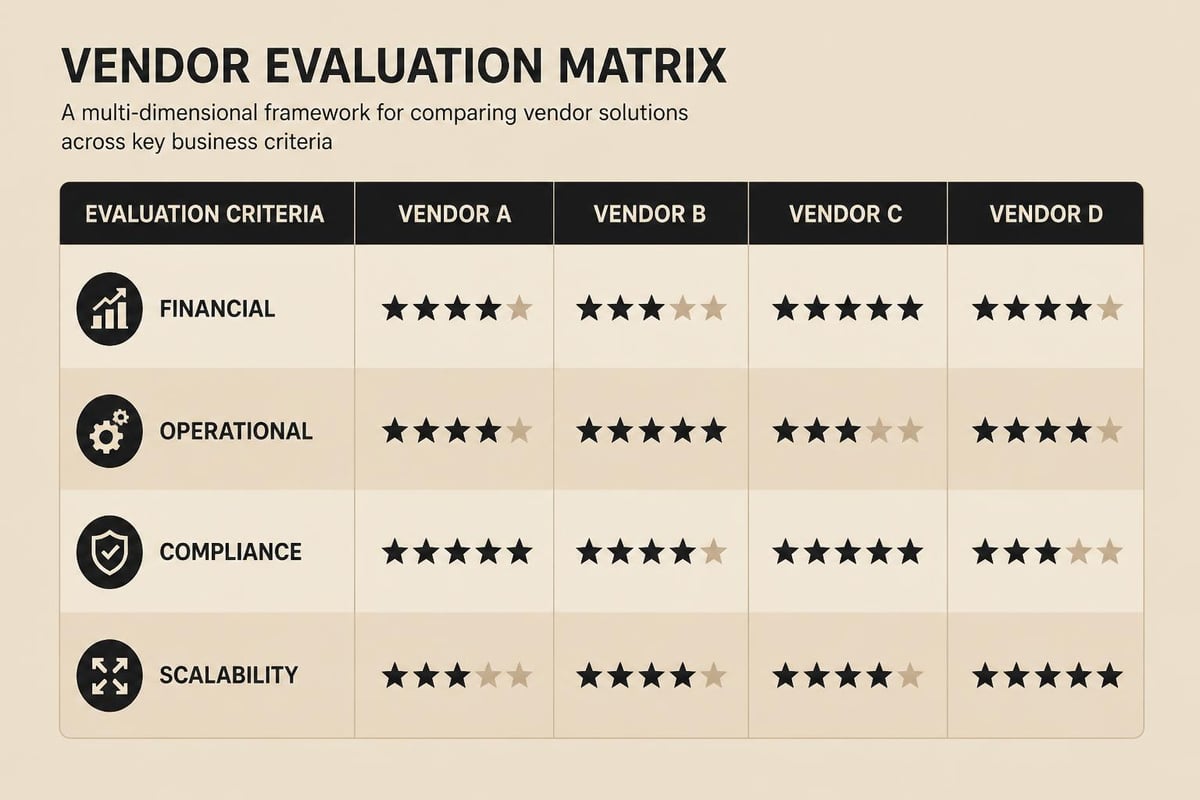
Building an Effective Plan Comparison Framework
A systematic framework transforms plan comparison from an overwhelming task into a manageable process that delivers actionable insights. Organizations should develop standardized evaluation templates that ensure consistency across different types of decisions while remaining flexible enough to accommodate unique requirements.
Establishing Decision Criteria and Weighting
Not all evaluation criteria carry equal importance for every organization. Strategic priorities determine which factors deserve greater emphasis during the plan comparison process. A company focused on rapid growth might prioritize scalability over cost savings, while an organization managing tight margins might weight financial considerations more heavily.
| Evaluation Category | Example Criteria | Typical Weight Range |
|---|---|---|
| Financial Impact | ROI, TCO, Cost Savings | 25-35% |
| Operational Fit | Integration, Workflow Alignment | 20-30% |
| Scalability | Growth Capacity, Flexibility | 15-25% |
| Vendor Reliability | Track Record, Support Quality | 15-20% |
| Compliance | Regulatory Alignment, Security | 10-15% |
Organizations should customize these weightings based on their specific circumstances and strategic objectives. The process of defining criteria and assigning weights forces leadership teams to clarify priorities and build consensus around decision-making standards.
Data Collection and Normalization Strategies
Accurate plan comparison depends on gathering comparable data across all options under consideration. Vendors often present information in different formats, making direct comparison challenging. Standardized request templates ensure each vendor provides equivalent information addressing the same evaluation criteria.
Professional consultancies understand the importance of normalizing data for meaningful analysis. When evaluating technology solutions, for example, one vendor might quote monthly per-user pricing while another offers annual enterprise licensing. Converting all pricing to a common metric enables accurate cost comparison across the evaluation period.
The plan comparison tools used in healthcare marketplaces demonstrate how standardized data presentation facilitates informed decision-making. Organizations can apply similar normalization techniques when comparing consulting services, software platforms, or benefits packages.
Healthcare Benefits and Plan Comparison Excellence
Healthcare benefits represent one of the most consequential areas where plan comparison directly impacts both organizational finances and employee wellbeing. With healthcare costs continuing to rise, organizations must balance comprehensive coverage against budget constraints while ensuring employee satisfaction and retention.
Evaluating Healthcare Plan Options Systematically
Organizations typically face numerous healthcare plan alternatives with varying coverage levels, provider networks, cost-sharing arrangements, and premium structures. A thorough plan comparison examines how each option serves diverse employee populations with different healthcare needs and financial situations.
Key healthcare plan comparison factors include:
- Premium costs split between employer and employee contributions
- Deductible structures and out-of-pocket maximums
- Provider network breadth and accessibility
- Prescription drug coverage tiers and formularies
- Preventive care benefits and wellness program integration
- Mental health services coverage and accessibility
Understanding how federal employees compare healthcare plans provides valuable insights into structured evaluation processes. These methodologies translate effectively to private sector organizations seeking to optimize their benefits strategies.

Organizations should also consider how healthcare plans align with broader employee wellness initiatives. Plans that incentivize preventive care, provide mental health resources, and support chronic disease management contribute to both employee wellbeing and long-term cost containment. This holistic approach to plan comparison recognizes that the cheapest option rarely delivers the best value when factoring in productivity, retention, and employee satisfaction.
Leveraging Technology for Benefits Plan Comparison
Modern benefits administration platforms streamline the plan comparison process through decision support tools, cost calculators, and personalized recommendations. These technologies help both employers and employees understand complex tradeoffs and make informed selections aligned with individual needs and organizational objectives.
The requirement for health plans to provide transparent pricing information enhances the quality of plan comparison by giving organizations access to detailed cost data. This transparency enables more accurate total cost modeling and helps identify potential savings opportunities.
Technology and Automation Platform Plan Comparison
Organizations increasingly rely on technology solutions to streamline operations, eliminate manual processes, and improve efficiency. The explosion of software-as-a-service platforms and automation tools creates both opportunity and complexity when conducting plan comparison across available options.
Assessing Integration and Implementation Requirements
Technology platform plan comparison must address integration complexity with existing systems. A solution that offers impressive features but requires extensive customization or creates data silos often delivers less value than a more integrated alternative. Implementation timelines, resource requirements, and disruption potential factor heavily into total value calculations.
When organizations evaluate automation platforms, they should examine:
- API availability and documentation quality
- Pre-built connectors for existing software ecosystem
- Data migration tools and support
- Testing and staging environment capabilities
- Rollback procedures and contingency planning
- Ongoing maintenance and update processes
Organizations pursuing efficiency improvements through automation must ensure their plan comparison process accounts for both immediate implementation costs and long-term operational benefits. The most effective approach involves modeling multiple scenarios across different time horizons to understand value realization timelines.
Vendor Capabilities and Long-Term Partnership Potential
Technology decisions create dependencies that often last years or decades. Effective plan comparison evaluates not just current capabilities but vendor trajectory, financial stability, and commitment to ongoing innovation. Organizations should investigate vendor roadmaps, customer retention rates, and support quality when making selection decisions.
| Vendor Assessment Factor | What to Evaluate | Information Sources |
|---|---|---|
| Financial Stability | Revenue growth, funding, profitability | Financial statements, industry reports |
| Product Evolution | Release frequency, innovation track record | Product roadmaps, version history |
| Customer Satisfaction | Retention rates, support quality | References, review platforms |
| Market Position | Competitive standing, market share | Analyst reports, industry rankings |
| Partnership Approach | Collaboration style, customization flexibility | Discovery conversations, pilot projects |
This comprehensive vendor evaluation ensures the plan comparison process identifies partners capable of supporting long-term organizational success rather than simply meeting immediate requirements.
Consulting Services and Professional Partnership Evaluation
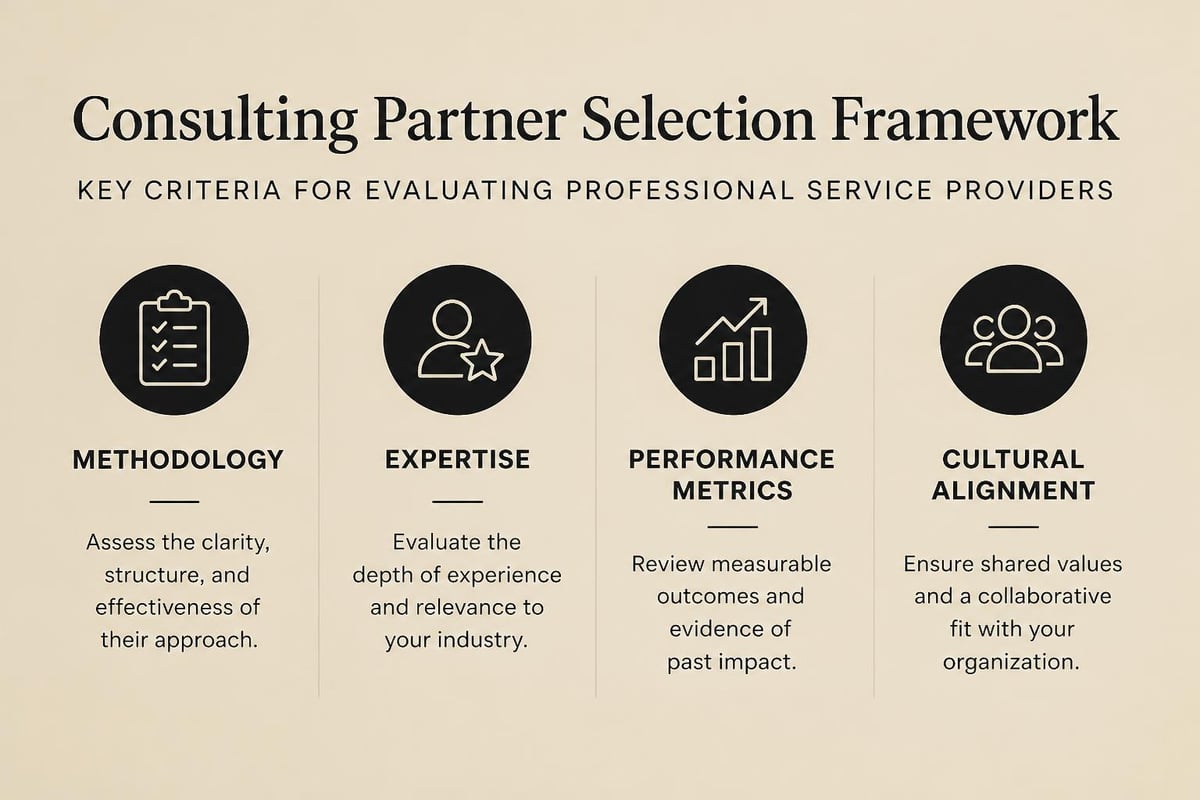
Organizations seeking to optimize operations, implement new systems, or solve complex business challenges often engage consulting partners. The plan comparison process for professional services differs significantly from technology or benefits evaluation, requiring assessment of expertise, methodology, and cultural fit alongside pricing and deliverables.
Defining Success Metrics and Deliverables
Clear success criteria transform consulting plan comparison from subjective assessment to objective evaluation. Organizations should establish measurable outcomes, specific deliverables, and timeline expectations before engaging in consultant selection. This clarity enables accurate comparison across competing proposals and ensures alignment between consultant capabilities and organizational needs.
Performance-based consulting models tie compensation directly to results, creating natural alignment between consultant and client objectives. When conducting plan comparison for consulting services, organizations should evaluate payment structures, success metrics, and risk-sharing arrangements that demonstrate consultant confidence in their ability to deliver value.
Methodology and Approach Assessment
Consulting firms employ diverse methodologies reflecting different philosophies about problem-solving and implementation. Some prioritize rapid deployment with iterative refinement, while others emphasize comprehensive planning before execution. Effective plan comparison examines whether consultant methodology aligns with organizational culture, risk tolerance, and project requirements.
Organizations should request detailed descriptions of:
- Discovery and assessment processes
- Stakeholder engagement approaches
- Change management strategies
- Knowledge transfer and capability building
- Measurement and optimization frameworks
- Post-implementation support models
The expertise of consulting teams often matters more than firm size or brand recognition when evaluating professional services. Plan comparison should prioritize practitioners who will actually deliver the work rather than focusing exclusively on firm-level credentials.
Avoiding Common Plan Comparison Pitfalls
Even organizations with strong analytical capabilities make predictable mistakes during plan comparison processes. Recognizing these common pitfalls helps teams avoid costly errors and improve decision quality.
Overemphasis on Price at the Expense of Value
Price-focused plan comparison often leads to suboptimal decisions that appear financially attractive initially but deliver poor long-term value. The lowest-cost option frequently requires additional investments in customization, training, or supplementary solutions that negate initial savings. Organizations should evaluate total value creation rather than focusing narrowly on acquisition costs.
This principle applies across all plan comparison scenarios. A healthcare benefits package with low premiums but high deductibles might shift costs to employees, reducing satisfaction and potentially increasing absenteeism. An inexpensive automation platform that lacks critical integration capabilities might require manual workarounds that eliminate expected efficiency gains.
Insufficient Stakeholder Engagement
Decisions made without input from affected stakeholders often face implementation resistance that undermines success. Effective plan comparison incorporates perspectives from finance, operations, IT, human resources, and end users who will interact with the selected solution. This inclusive approach identifies potential issues early while building buy-in for the eventual decision.
Consider creating evaluation teams with representation from:
- Executive leadership providing strategic direction and budget authority
- Department managers offering operational insights and practical considerations
- End users sharing frontline perspectives on usability and workflow impact
- IT professionals assessing technical requirements and integration complexity
- Finance teams analyzing costs, ROI, and budget implications
Neglecting Implementation and Change Management
The best plan delivers minimal value if implementation fails or adoption remains low. Plan comparison should explicitly evaluate implementation support, training resources, and change management assistance offered by each vendor or partner. Organizations with limited internal change management capacity should weight these factors heavily when comparing options.
Professional consulting firms that specialize in human capital management understand that successful implementations require addressing both technical and human factors. The plan comparison process should examine how each option supports the people-side of change alongside functional capabilities.
Data-Driven Decision Making in Plan Comparison
Modern organizations have access to unprecedented amounts of data that can inform plan comparison decisions. Leveraging this information effectively requires the right tools, analytical capabilities, and decision frameworks that convert raw data into actionable insights.
Quantitative Analysis and Financial Modeling
Sophisticated financial modeling enables organizations to project the long-term impact of different options across multiple scenarios. Sensitivity analysis examines how outcomes change when key assumptions vary, helping decision-makers understand risk exposure and identify robust solutions that perform well across diverse circumstances.
Organizations should build models that incorporate:
- Initial implementation costs and ongoing operational expenses
- Expected efficiency gains and productivity improvements
- Revenue impact from enhanced capabilities or market opportunities
- Risk mitigation value and compliance cost avoidance
- Employee satisfaction and retention effects
These comprehensive models transform plan comparison from static snapshots into dynamic projections that reveal value creation over time.
Qualitative Factors and Balanced Scorecards
Not every important factor translates neatly into quantitative metrics. Cultural fit, innovation potential, and strategic alignment require qualitative assessment alongside numerical analysis. Balanced scorecard approaches combine quantitative and qualitative factors into unified evaluation frameworks that support holistic decision-making.
When conducting plan comparison for complex decisions, organizations should document both measurable criteria and subjective assessments. This transparency ensures decision-makers understand the full rationale behind recommendations rather than relying exclusively on numerical scores that might obscure important considerations.
Continuous Improvement Through Plan Comparison Retrospectives
Organizations that treat plan comparison as a one-time activity miss opportunities to refine their decision-making processes. Post-implementation reviews that examine whether selected plans delivered expected value create feedback loops that improve future comparison efforts.
Measuring Outcomes Against Projections
Systematic outcome measurement transforms plan comparison from theoretical exercise into empirical practice. Organizations should establish baseline metrics before implementation, define success criteria during the selection process, and measure actual results at predetermined intervals. This discipline reveals whether selection criteria accurately predicted performance and identifies areas for process improvement.
Key questions for retrospective analysis:
- Did the selected plan deliver projected financial benefits?
- Were implementation timelines and resource requirements accurate?
- How did actual user adoption compare to expectations?
- What unexpected challenges or opportunities emerged?
- Would the same decision make sense with current knowledge?
- How should the plan comparison process evolve for future decisions?
Building Organizational Knowledge and Capabilities
Each plan comparison cycle creates learning opportunities that strengthen organizational decision-making capabilities. Documenting evaluation frameworks, decision criteria, and outcome assessments builds institutional knowledge that accelerates future comparison processes while improving decision quality.
Organizations might consider creating internal resources such as:
- Templates for standardized vendor evaluation
- Databases of previous decisions and outcomes
- Repositories of best practices and lessons learned
- Training programs for team members involved in selection processes
- Governance frameworks ensuring consistent approach across departments
This investment in process infrastructure pays dividends through faster, more confident decision-making and reduced risk of costly mistakes.
Effective plan comparison requires systematic frameworks, stakeholder engagement, and balanced analysis of quantitative and qualitative factors to drive superior organizational decisions. Organizations that master this discipline consistently outperform competitors by selecting solutions that align with strategic objectives while delivering measurable value. Nero and Associates, Inc. helps organizations implement rigorous evaluation processes across healthcare benefits, technology platforms, and operational improvements, ensuring every decision advances efficiency, revenue growth, and employee wellbeing through data-driven analysis and performance-based consulting partnerships.