
Organizations continuously search for strategies to enhance employee benefits while controlling costs. A cafeteria plan offers a powerful solution that delivers both objectives simultaneously. This employer-sponsored benefit program enables workers to choose from various pre-tax benefit options, creating a win-win scenario where companies reduce payroll tax obligations and employees maximize take-home pay. Understanding the mechanics, compliance requirements, and strategic implementation of these plans can transform how organizations approach employee wellness and financial health.
Understanding the Fundamentals of Cafeteria Plans
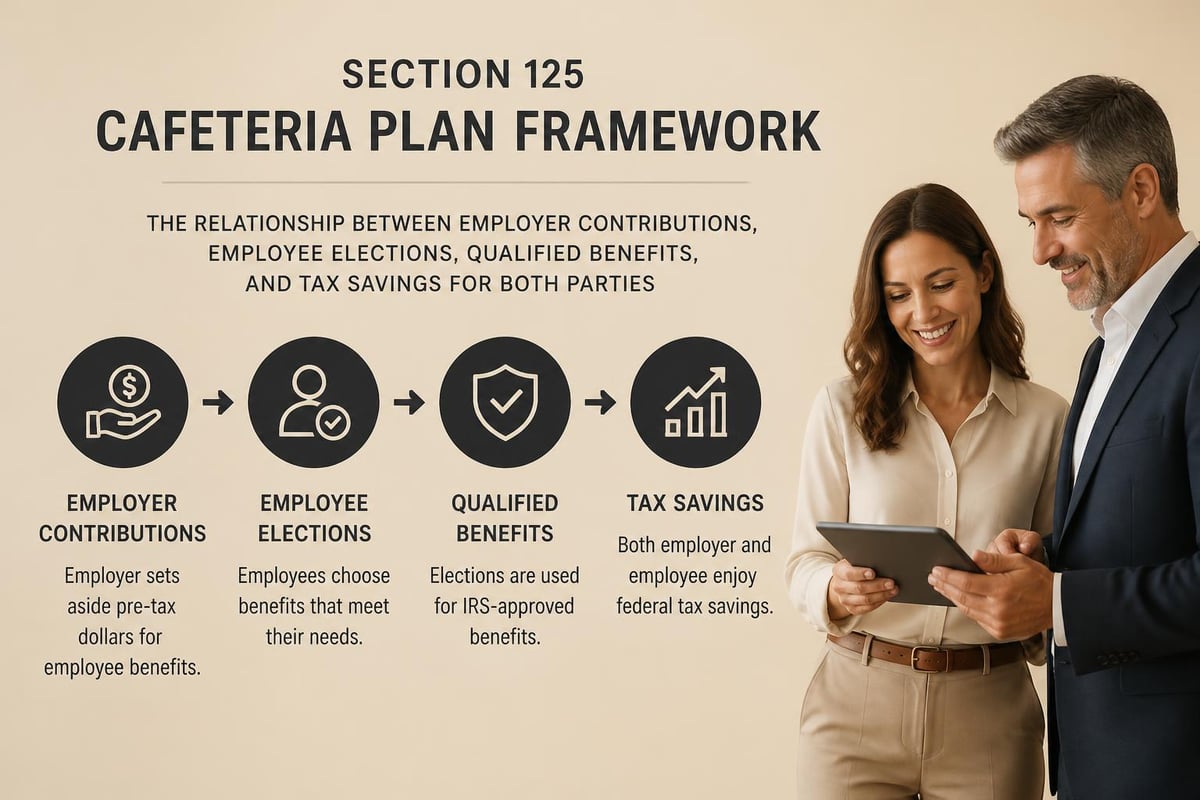
A cafeteria plan operates under Section 125 of the Internal Revenue Code, allowing employees to pay for certain benefits with pre-tax dollars. The name derives from the choice-based nature of the program, similar to selecting items from a cafeteria menu. Employees allocate a portion of their gross income toward qualified benefits before taxes are calculated, reducing their taxable income and the employer's payroll tax burden.
Legal Framework and Compliance
The statutory foundation for these programs is established in 26 U.S. Code § 125, which outlines specific requirements for plan administration and eligible benefits. Employers must maintain strict adherence to regulatory standards, including written plan documents, non-discrimination testing, and proper election procedures. Plans must be established before the start of the plan year and allow participants to make elections during specific enrollment periods.
Key compliance requirements include:
- Written plan document specifying all benefits and procedures
- Annual non-discrimination testing to prevent favoring highly compensated employees
- Specific election change rules tied to qualifying life events
- Proper documentation and reporting to the IRS
- Regular plan amendments to reflect legislative changes
Organizations must recognize that cafeteria plan administration requires ongoing attention to federal regulations and tax law updates. The complexity increases with plan size and benefit diversity, making expert consultation valuable for maintaining compliance.
Types of Benefits Available Through Cafeteria Plans
Premium-Only Plans (POP)
The simplest cafeteria plan structure focuses exclusively on health insurance premiums. Employees pay their portion of medical, dental, and vision insurance premiums with pre-tax dollars. This streamlined approach requires minimal administrative burden while delivering immediate tax savings for both employers and workers.
Premium-only plans serve as an excellent entry point for small to mid-sized businesses exploring pre-tax benefit options. Implementation involves updating payroll systems to deduct insurance contributions before calculating taxable wages, a straightforward process that generates measurable financial benefits.
Flexible Spending Accounts
Flexible Spending Accounts (FSAs) represent a popular cafeteria plan component that addresses healthcare and dependent care expenses. Healthcare FSAs allow employees to set aside pre-tax funds for medical expenses not covered by insurance, including deductibles, copayments, and qualified over-the-counter items. For 2026, the maximum contribution limit for healthcare FSAs has increased to reflect inflation adjustments.
Dependent Care FSAs enable working parents to pay for childcare expenses with pre-tax dollars, supporting work-life balance while reducing tax obligations. The strategic use of FSAs requires careful planning, as most accounts operate on a "use-it-or-lose-it" basis, though some plans offer grace periods or limited carryover options.
| FSA Type | 2026 Contribution Limit | Primary Use | Carryover Option |
|---|---|---|---|
| Healthcare FSA | $3,200 | Medical expenses | Up to $640 |
| Dependent Care FSA | $5,000 | Childcare costs | No |
| Limited Purpose FSA | $3,200 | Dental/vision only | Up to $640 |
Health Savings Accounts and Cafeteria Plans
Health Savings Accounts (HSAs) function differently from FSAs but can be integrated into cafeteria plan offerings. Employees with high-deductible health plans (HDHPs) may contribute pre-tax dollars to HSAs through payroll deductions facilitated by the cafeteria plan. Unlike FSAs, HSA funds roll over year-to-year and follow the employee even after leaving the company, making them an attractive long-term savings vehicle.
The combination of HDHPs with HSAs appeals to health-conscious employees who want to build medical savings while maintaining lower premium costs. For 2026, HSA contribution limits for individuals and families have adjusted to account for healthcare cost inflation.
Tax Advantages for Employers and Employees
Employee Tax Savings
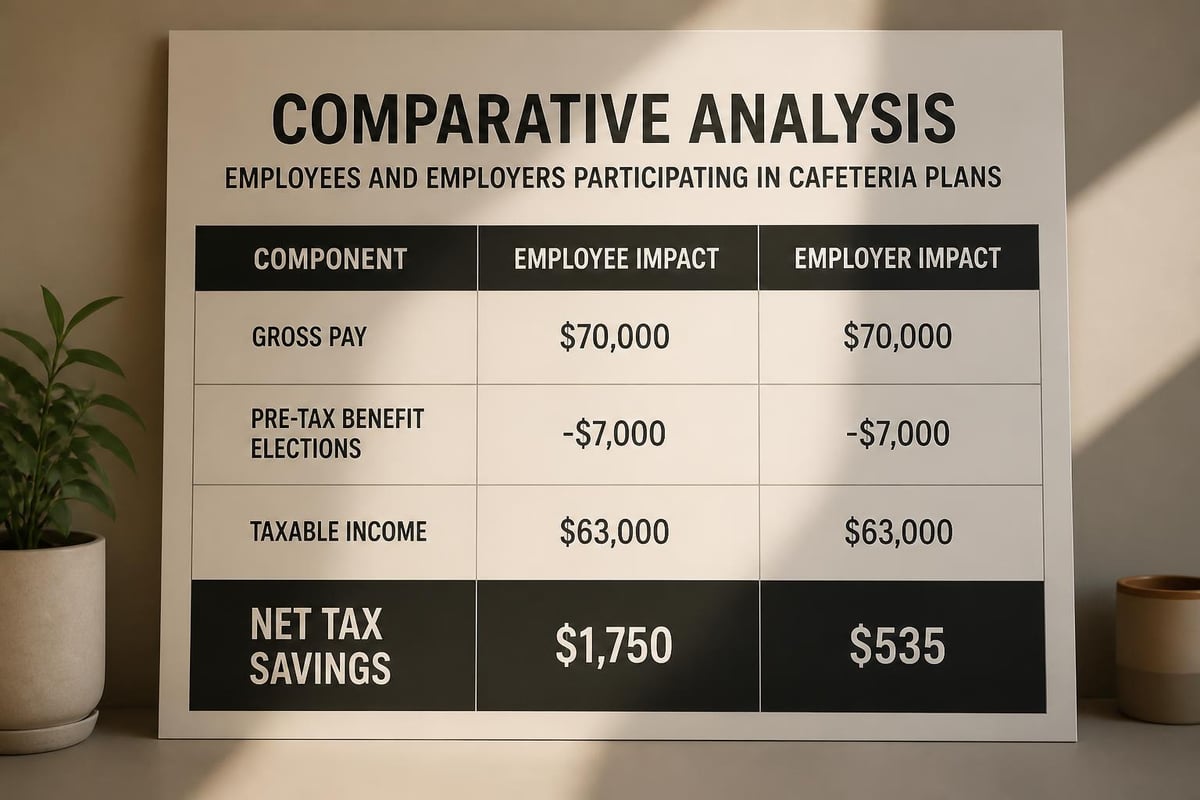
The primary benefit for employees participating in a cafeteria plan centers on reduced taxable income. By paying for benefits with pre-tax dollars, workers lower their federal income tax, Social Security tax, and Medicare tax obligations. The tax advantages of cafeteria plans compound over time, creating significant annual savings that effectively increase take-home pay without requiring salary increases.
Consider an employee earning $60,000 annually who contributes $3,000 to a healthcare FSA and $5,000 to a dependent care FSA. This $8,000 in pre-tax contributions reduces their taxable income to $52,000, generating approximately $2,000 in combined federal and FICA tax savings depending on their tax bracket.
Employer Payroll Tax Reduction
Employers benefit equally from cafeteria plan implementation through reduced payroll tax obligations. When employees redirect compensation toward qualified benefits, the employer's share of Social Security and Medicare taxes decreases proportionally. For organizations with substantial workforces, these savings accumulate to meaningful amounts that can be reinvested in business operations or additional employee programs.
Employer benefits include:
- Reduced FICA tax obligations (7.65% on redirected compensation)
- Lower federal and state unemployment tax calculations
- Decreased workers' compensation insurance premiums in some states
- Enhanced recruitment and retention capabilities
- Improved employee satisfaction and engagement
Organizations implementing comprehensive benefit strategies often find that cafeteria plans serve as foundational elements supporting broader wellness initiatives. When employees feel empowered to manage their healthcare and dependent care expenses efficiently, overall employee health and financial wellness improves measurably.
Implementation Strategy and Best Practices
Planning and Design Phase
Successful cafeteria plan implementation begins with comprehensive needs assessment and strategic planning. Organizations must evaluate their current benefit offerings, employee demographics, and financial objectives to design a plan that aligns with organizational culture and workforce needs. This preliminary phase involves consulting with benefits advisors, tax professionals, and legal counsel to ensure regulatory compliance from the outset.
The written plan document serves as the legal foundation for the cafeteria plan, requiring precise language that addresses eligibility, enrollment procedures, benefit options, election change rules, and claims processes. Many organizations partner with third-party administrators to manage documentation, compliance testing, and day-to-day administration.
Communication and Employee Education
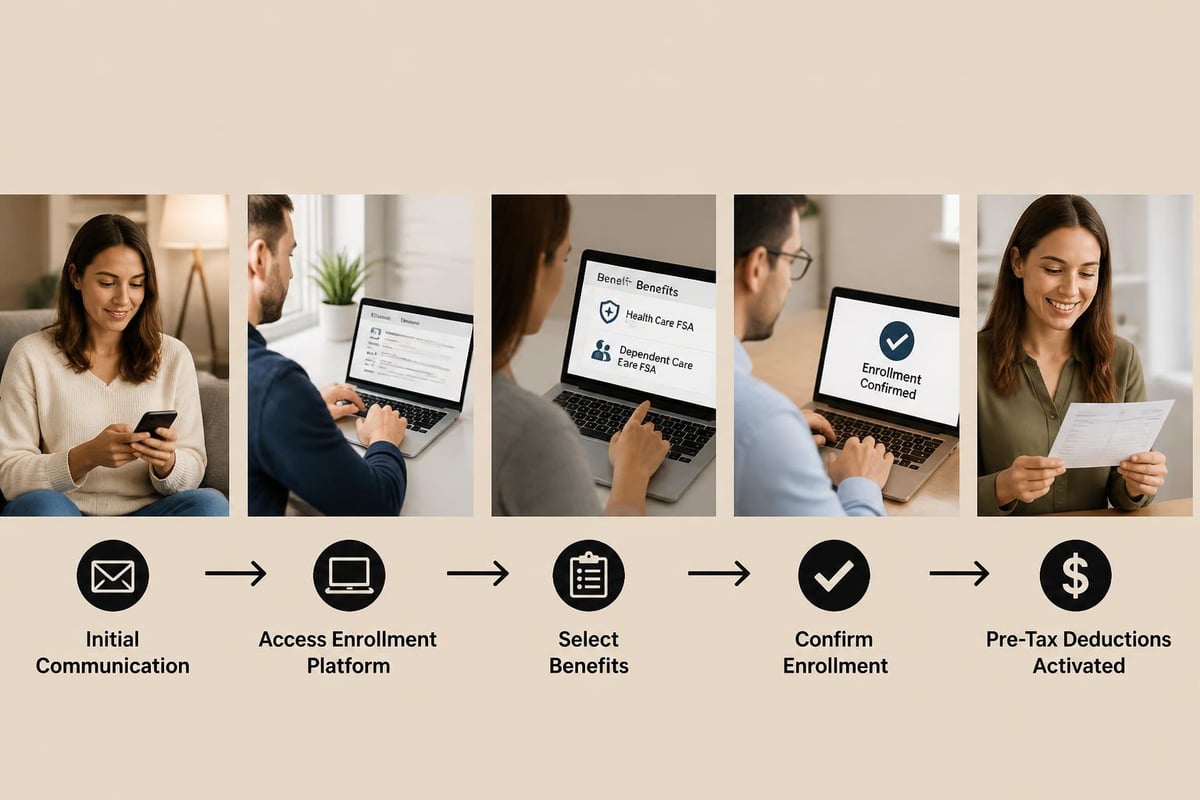
Even the most well-designed cafeteria plan fails to deliver value if employees don't understand how to participate effectively. Comprehensive communication strategies should include multiple touchpoints: enrollment meetings, written materials, online resources, and one-on-one consultations. Employees need clear explanations of benefit options, tax implications, enrollment deadlines, and proper usage of accounts.
Educational initiatives should emphasize practical examples demonstrating how participation affects paychecks and annual tax obligations. Visual aids, calculators, and comparison tools help employees make informed decisions aligned with their personal circumstances. Organizations that invest in robust education programs see significantly higher participation rates and greater employee satisfaction with benefits offerings.
Technology Integration and Administration
Modern cafeteria plan administration relies heavily on technology platforms that streamline enrollment, track elections, process claims, and maintain compliance documentation. Integration with existing payroll and HRIS systems ensures accurate deductions and reporting while minimizing manual data entry and associated errors. Automation solutions reduce administrative burden on HR teams, allowing them to focus on strategic initiatives rather than transactional processing.
Cloud-based benefits administration platforms offer employees self-service portals for managing elections, submitting claims, and accessing account information. Mobile accessibility has become essential as workforces increasingly expect to manage benefits on smartphones and tablets. The right technology infrastructure transforms cafeteria plan administration from a compliance burden into a strategic advantage.
Common Challenges and Solutions
Non-Discrimination Testing
Cafeteria plans must satisfy non-discrimination requirements to prevent benefits from disproportionately favoring highly compensated employees and key employees. Annual testing compares participation rates and benefit utilization across different employee groups, requiring corrective action if tests fail. Organizations with diverse workforces typically navigate testing successfully, while those with top-heavy compensation structures may face challenges.
Proactive plan design can minimize testing failures by encouraging broad participation across all employee levels. Employer contributions to FSAs or HSAs for lower-paid employees can help balance participation rates. When tests fail, employers must either return excess contributions to highly compensated employees or make additional contributions to non-highly compensated employees to achieve balance.
| Testing Type | Purpose | Failure Consequence |
|---|---|---|
| Eligibility Test | Ensures plan doesn't favor highly compensated | Plan disqualification risk |
| Benefits Test | Compares benefit value across groups | Taxable income to highly compensated |
| Key Employee Concentration | Limits benefits to key employees | Taxable income adjustment |
Managing Use-It-Or-Lose-It Rules
The forfeiture provision in healthcare FSAs creates anxiety for employees concerned about losing unused funds. Understanding these tax implications helps employers design plans with employee-friendly features while maintaining compliance. Organizations can adopt grace periods extending the use deadline 2.5 months beyond the plan year or implement carryover provisions allowing up to $640 to roll forward.
Effective communication about spending deadlines, combined with regular account balance updates, encourages timely fund utilization. Some employers provide mid-year reminders and end-of-year prompts highlighting remaining balances and eligible expenses. These proactive approaches reduce forfeitures and improve employee perception of FSA value.
Qualifying Event Management
Cafeteria plan elections generally remain fixed for the entire plan year unless employees experience qualifying life events such as marriage, birth, divorce, or significant changes in employment status. Managing these mid-year election changes requires careful documentation and verification to maintain compliance. Automated systems can flag qualifying events and guide employees through proper election change procedures.
Clear policies outlining acceptable qualifying events, documentation requirements, and change deadlines prevent confusion and ensure consistent administration. Training HR staff on qualifying event rules protects the organization from compliance violations while serving employee needs during significant life transitions.
Strategic Value for Different Organization Types
Small and Mid-Sized Businesses
For small and mid-sized businesses, cafeteria plans provide cost-effective mechanisms to compete with larger employers in attracting and retaining talent. Limited budgets often prevent SMBs from offering extensive benefit packages, but cafeteria plans maximize the value of existing benefits through tax savings. The relatively modest implementation costs generate returns through payroll tax savings and improved employee satisfaction.
Premium-only plans represent particularly attractive options for smaller organizations seeking immediate tax benefits without extensive administrative complexity. As companies grow, they can expand plan offerings to include FSAs, HSAs, and additional benefit options, scaling the program alongside organizational development.
Enterprise Organizations
Large enterprises leverage cafeteria plans as components of comprehensive total rewards strategies. The scale of these organizations amplifies tax savings while providing resources to implement sophisticated plan designs with diverse benefit options. Enterprise-level benefits administration often includes advanced technology platforms, dedicated benefits teams, and customized communication strategies tailored to geographically dispersed workforces.
Multi-location enterprises must navigate varying state regulations while maintaining consistent plan administration across jurisdictions. Centralized governance combined with localized support ensures employees receive uniform benefits while addressing regional differences in healthcare costs and dependent care expenses.
Healthcare and Hospitality Sectors
Organizations in the hospitality industry face unique workforce challenges including high turnover, diverse employee demographics, and variable work schedules. Cafeteria plans address these challenges by providing flexible benefits that accommodate part-time workers, seasonal employees, and diverse age groups. The tax savings appeal to hourly workers who particularly value increased take-home pay.
Healthcare organizations possess inherent understanding of medical benefits, making them natural adopters of comprehensive cafeteria plans including healthcare FSAs, dependent care FSAs, and HSAs. These employers often integrate wellness programs with cafeteria plan benefits, creating holistic approaches to employee health and financial wellness.
Future Trends and Considerations
Legislative Changes and Adaptations
Cafeteria plan regulations evolve continuously as Congress addresses healthcare costs, tax policy, and employee benefits. Recent updates to Section 125 requirements reflect changing workplace dynamics including remote work arrangements, telehealth coverage, and expanded definition of qualified medical expenses. Organizations must monitor regulatory developments and update plan documents accordingly to maintain compliance.
The trend toward greater flexibility in benefit offerings continues, with lawmakers exploring expanded qualifying events, longer grace periods, and increased contribution limits. Forward-thinking employers stay informed about proposed legislation to anticipate changes and communicate proactively with employees about benefit program enhancements.
Integration with Wellness Programs
Modern cafeteria plans increasingly integrate with broader wellness initiatives that address mental health, financial wellness, and preventive care. Employers recognize that pre-tax benefit accounts complement wellness programs by removing financial barriers to healthcare utilization. When employees can pay for counseling, fitness programs, and preventive services with FSA funds, participation in wellness initiatives increases measurably.
The connection between financial wellness and overall employee health has gained recognition as organizations seek holistic approaches to workforce wellbeing. Cafeteria plans that include financial education components help employees make informed decisions about benefit elections, healthcare spending, and long-term savings strategies. This comprehensive approach aligns with organizational objectives around employee health and financial wellness.
Technology Advancement and User Experience
The future of cafeteria plan administration lies in enhanced technology platforms that simplify enrollment, automate compliance, and personalize benefit recommendations. Artificial intelligence applications can analyze employee demographics, historical elections, and claims patterns to suggest optimal benefit combinations for individual workers. Mobile-first interfaces accommodate changing workplace dynamics and employee expectations for digital convenience.
Blockchain technology promises enhanced security for sensitive benefits data while enabling portable benefit records that follow employees across employers. These technological advancements reduce administrative burden while improving accuracy and employee satisfaction with benefits programs.
Cafeteria plans deliver measurable value to organizations seeking cost-effective benefit strategies that empower employees and reduce tax obligations. The combination of employer payroll tax savings, employee take-home pay increases, and enhanced benefit flexibility creates compelling business cases for implementation across organizations of all sizes. Nero and Associates, Inc. specializes in helping organizations optimize their human capital management strategies, including comprehensive benefits program design and implementation that saves costs, saves time, and improves employee financial wellness. Contact our team to explore how strategic cafeteria plan implementation can transform your benefits offerings while strengthening your bottom line.