

Modern organizations face mounting pressure to streamline human resources operations while maintaining compliance, reducing costs, and empowering employees. Human Resource Information Systems have emerged as essential technology platforms that consolidate HR data, automate routine tasks, and provide strategic insights for workforce management. For professional services firms and consultancies managing diverse client needs, understanding how to leverage these platforms effectively creates competitive advantages and operational efficiencies that directly impact profitability.
Understanding HRIS Systems and Their Core Functions
HRIS systems serve as centralized databases that manage all aspects of human capital within organizations. These platforms integrate employee information, payroll processing, benefits administration, time and attendance tracking, performance management, and compliance reporting into unified ecosystems. The evolution from paper-based personnel files to sophisticated digital platforms has fundamentally transformed how organizations approach workforce management.
Key functions of modern HRIS platforms include:
- Employee data management and record-keeping
- Automated payroll processing and tax calculations
- Benefits enrollment and administration
- Time and attendance tracking
- Performance review management
- Compliance monitoring and reporting
- Talent acquisition and onboarding
- Training and development tracking
The shift toward cloud-based solutions has accelerated adoption across organizations of all sizes. According to essential HRIS implementation best practices, cloud-based platforms offer enhanced data security, remote accessibility, and reduced IT infrastructure costs compared to legacy on-premise systems. This transition enables consultancies to recommend scalable solutions that grow alongside client organizations without requiring substantial capital investments in hardware or server maintenance.

The Strategic Value Beyond Administration
While administrative efficiency represents an obvious benefit, HRIS systems deliver strategic value that extends far beyond reducing paperwork. These platforms transform HR departments from reactive administrative functions into proactive strategic partners. Real-time analytics enable data-driven decision-making about workforce planning, compensation strategies, and talent development initiatives.
Organizations implementing comprehensive HRIS solutions typically experience measurable improvements in multiple areas. Processing times for routine HR transactions decrease by 40-60%, allowing HR professionals to focus on strategic initiatives rather than manual data entry. Employee self-service portals reduce the volume of routine inquiries to HR departments, freeing resources for higher-value activities.
| Business Impact | Traditional HR | HRIS-Enabled HR |
|---|---|---|
| Onboarding Time | 4-6 weeks | 1-2 weeks |
| Payroll Processing | 3-5 days | 1-2 hours |
| Benefits Enrollment | 2-3 weeks | 3-5 days |
| Compliance Reporting | 40+ hours/quarter | 4-6 hours/quarter |
Implementation Strategies for Professional Services Organizations
Successful HRIS implementation requires careful planning, stakeholder alignment, and systematic change management. Professional services firms face unique challenges when implementing these systems, including managing consultant assignments across multiple client sites, tracking billable hours accurately, and maintaining detailed skill inventories for resource allocation.
The implementation process typically follows a structured approach beginning with needs assessment and vendor selection. Organizations must evaluate their current processes, identify pain points, and define clear objectives for the new system. This foundational work ensures that technology selection aligns with actual business requirements rather than being driven by vendor capabilities or feature lists.
Collaboration Between IT and HR Teams
Effective HRIS administration demands close collaboration between IT and HR departments, creating shared ownership of system success. Technical teams understand infrastructure, integration requirements, and data security protocols, while HR professionals possess deep knowledge of business processes, compliance requirements, and user needs. Neither group can successfully implement or manage these systems in isolation.
Three primary ownership models emerge in practice:
- HR-led ownership with IT support works well for organizations with strong HR technical capabilities
- IT-led ownership with HR guidance suits organizations prioritizing system integration and data governance
- Shared ownership through cross-functional teams balances technical and functional expertise
The chosen model should reflect organizational structure, available resources, and strategic priorities. Regardless of ownership structure, establishing clear communication channels and decision-making protocols prevents the territorial disputes that often derail implementation projects.
Addressing Compliance Challenges and Blind Spots
Compliance management represents one of the most critical yet challenging aspects of HRIS systems. Regulations governing employment, benefits, privacy, and workplace safety evolve continuously, creating moving targets for system configuration. HRIS platforms may inadvertently create compliance blind spots when their static configurations fail to adapt to changing regulatory requirements.
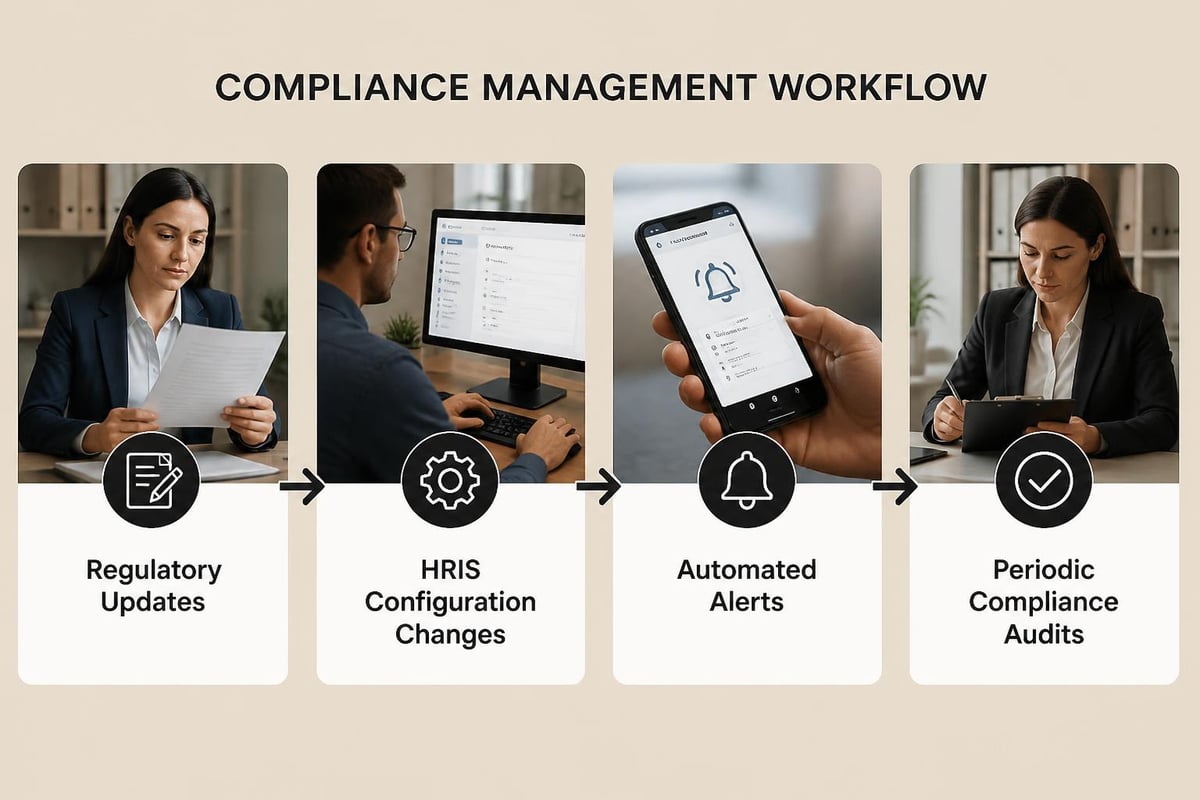
Organizations must implement proactive compliance monitoring rather than relying solely on system defaults. This includes establishing regular review cycles for system configurations, subscribing to regulatory update services, and building compliance checkpoints into HR workflows. The automation capabilities that make HRIS systems valuable can create false confidence if organizations assume compliance is permanently configured rather than continuously managed.
Essential compliance strategies include:
- Quarterly reviews of system configurations against current regulations
- Automated alerts for approaching compliance deadlines
- Integration with legal and compliance management systems
- Regular audits of data retention and privacy controls
- Documentation of policy changes and system updates
For consultancies like Nero and Associates, helping clients navigate these compliance complexities demonstrates the value of performance-based consulting approaches. Rather than simply implementing technology, strategic partners ensure systems deliver sustained compliance outcomes that protect organizations from costly violations and reputational damage.
Integration Architecture and Data Uniformity
Modern organizations rarely operate single-vendor technology stacks. HRIS systems must integrate with payroll providers, benefits carriers, time tracking applications, applicant tracking systems, learning management platforms, and financial systems. Successful integration of HR systems requires careful attention to data uniformity, integration architecture, and ongoing maintenance protocols.
Three fundamental truths govern successful integration projects:
Creating Unified HR Platforms
Rather than attempting to connect every system point-to-point, leading organizations build HR platforms with centralized data models. This architecture establishes the HRIS as the authoritative source for employee data, with other systems consuming that information through standardized interfaces. The platform approach reduces integration complexity, improves data consistency, and simplifies future system additions or replacements.
Ensuring Data Uniformity Across Systems
Data formatting inconsistencies create integration failures more frequently than technical connectivity issues. Employee identifiers, date formats, organizational hierarchies, and classification schemes must align across systems. Establishing data governance standards before implementation prevents the downstream problems that emerge when systems interpret information differently.
Managing Manual Interventions Strategically
Complete automation remains elusive in most integration scenarios. Organizations should identify which manual interventions add value versus those that simply compensate for poor integration design. Routine data transfers should be automated, while manual reviews should focus on exception handling and quality assurance rather than routine processing.
| Integration Approach | Maintenance Burden | Data Consistency | Scalability |
|---|---|---|---|
| Point-to-Point | High | Low | Poor |
| Hub-and-Spoke | Medium | Medium | Good |
| Platform Architecture | Low | High | Excellent |
Organizations seeking operational efficiency improvements should prioritize integration architecture during system selection rather than treating it as a post-implementation concern.
Leveraging HRIS Systems for Knowledge Management
Beyond transactional HR processes, HRIS systems increasingly serve as knowledge management platforms that capture organizational competencies, skills inventories, and learning pathways. Research on HRIS in knowledge management demonstrates how these systems support talent development, succession planning, and strategic workforce planning when properly configured.
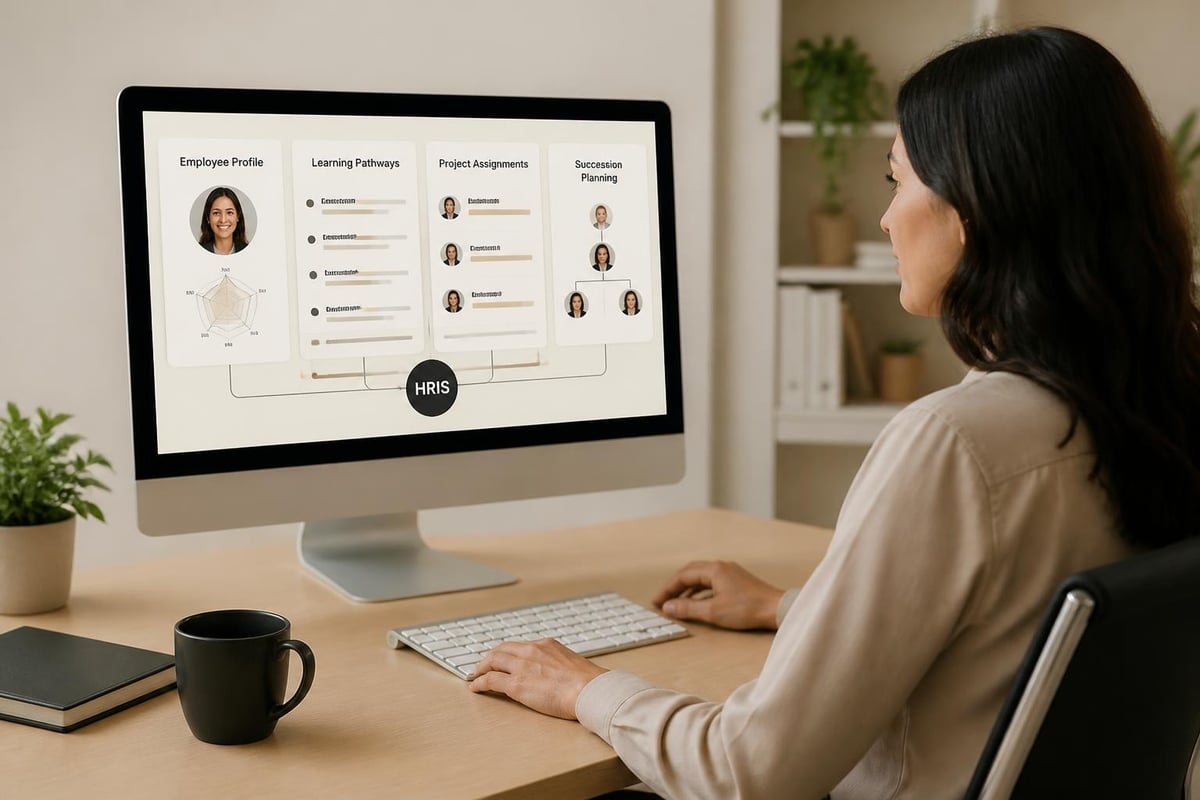
Professional services organizations particularly benefit from these capabilities. Detailed skills inventories enable precise resource allocation for client projects, ensuring teams possess required competencies before engagement begins. Learning management integration tracks professional development, certification maintenance, and knowledge sharing across consultant populations.
The knowledge management dimension transforms HRIS systems from administrative tools into strategic assets. Organizations can identify skill gaps, plan targeted development initiatives, and build talent pipelines aligned with strategic objectives. This capability becomes particularly valuable as workforce demographics shift and knowledge transfer from experienced professionals to emerging talent becomes organizationally critical.
Automation and Process Optimization Opportunities
HRIS systems unlock substantial automation opportunities that eliminate manual processes, reduce errors, and accelerate HR transactions. The benefits of business automation extend throughout HR operations when organizations systematically identify and automate repetitive workflows.
High-impact automation opportunities include:
- Onboarding workflows that trigger background checks, equipment provisioning, and training assignments based on hire date
- Time-off management that automatically calculates accruals, checks policy compliance, and routes approval requests
- Performance review cycles that schedule reviews, distribute evaluation forms, and compile feedback automatically
- Benefits enrollment that validates eligibility, calculates costs, and synchronizes elections with carriers
- Offboarding processes that revoke system access, schedule exit interviews, and process final payments
Each automated workflow eliminates hours of manual effort while improving consistency and reducing compliance risks. The cumulative impact of comprehensive automation often exceeds 5,000 hours annually in mid-sized organizations, representing substantial cost savings and enabling HR teams to focus on strategic initiatives.
Change Management and User Adoption
Technology implementation succeeds or fails based on user adoption rather than technical functionality. Organizations must invest in change management strategies that prepare employees for new processes, address resistance proactively, and build sustained engagement with HRIS platforms.
Effective change management begins during vendor selection, involving end users in evaluation processes to build ownership and gather authentic requirements. Training programs should extend beyond initial system rollout, providing ongoing education as features expand and processes evolve. Creating internal champions within business units accelerates adoption by providing peer support and demonstrating practical applications.
Communication strategies should emphasize benefits to individual employees rather than organizational advantages. Self-service capabilities that enable employees to update personal information, access pay stubs, enroll in benefits, or request time off create immediate value that drives engagement. When employees experience tangible benefits from system adoption, resistance diminishes and utilization increases.
Future Trends Shaping HRIS Evolution
The HRIS landscape continues evolving rapidly, with artificial intelligence, machine learning, and advanced analytics reshaping platform capabilities. Predictive analytics identify flight risks, forecast staffing needs, and recommend compensation adjustments based on market trends and retention data. Natural language processing enables conversational interfaces where employees ask HR questions and receive instant answers without human intervention.
Mobile-first design philosophies recognize that workforce interactions increasingly occur through smartphones rather than desktop computers. Modern platforms prioritize mobile experiences, enabling managers to approve requests, employees to access information, and HR teams to respond to issues regardless of location. This accessibility proves particularly valuable for distributed workforces and field-based employees.
Integration capabilities continue expanding beyond traditional HR systems to encompass collaboration platforms, project management tools, and business intelligence systems. This connectivity creates comprehensive views of workforce productivity, engagement, and performance that inform strategic decision-making at executive levels.
The co-evolution of technology and HR processes suggests that future HRIS systems will become increasingly embedded in broader business operations rather than functioning as standalone HR tools. This integration reflects growing recognition that human capital represents strategic competitive advantage rather than administrative overhead.
Selecting the Right HRIS for Your Organization
Vendor selection requires systematic evaluation of organizational needs, technical requirements, and strategic objectives. Organizations should develop detailed requirements documents that specify must-have capabilities, desired features, and integration needs before engaging vendors. This discipline prevents being swayed by impressive demonstrations of features that don't address actual business problems.
The evaluation process should include:
- Requirements alignment assessment comparing vendor capabilities to documented needs
- User experience evaluation involving actual end users in hands-on demonstrations
- Technical architecture review validating integration capabilities and data security protocols
- Implementation methodology assessment understanding the vendor's approach to deployment and change management
- Total cost analysis calculating licensing, implementation, training, and ongoing support expenses
- Reference checks speaking with organizations in similar industries about actual experiences
Organizations should resist the temptation to select systems based solely on feature counts or brand recognition. The best HRIS for any organization aligns with specific requirements, fits within technical infrastructure, and can be successfully adopted by the intended user population. A simpler system with high adoption often delivers better results than a feature-rich platform that users find too complex to navigate effectively.
Measuring HRIS Return on Investment
Demonstrating HRIS value requires establishing clear metrics and measurement frameworks before implementation. Organizations should identify baseline performance for key processes, then track improvements following system deployment. Quantifiable metrics provide evidence of value and justify continued investment in platform optimization and expansion.
Critical performance indicators include:
- Time required to complete routine HR transactions
- Error rates in payroll processing and benefits administration
- Employee satisfaction with HR services and self-service capabilities
- Compliance audit results and violation frequencies
- HR staff capacity allocation between administrative and strategic work
- Recruitment cycle times and quality of hire metrics
Financial metrics translate operational improvements into business language that resonates with executive leadership. Calculating the cost savings from reduced processing time, fewer compliance violations, and decreased reliance on external service providers demonstrates concrete financial impact. Pairing hard cost savings with soft benefits like improved employee experience and enhanced strategic capabilities creates comprehensive value narratives.
HRIS systems represent transformational technology investments that streamline operations, enhance compliance, and enable strategic workforce management when implemented thoughtfully. Organizations that approach these platforms as integrated business solutions rather than administrative tools realize substantially greater value from their investments. Nero and Associates, Inc. helps organizations leverage human capital management technology to eliminate manual processes, reduce costs, and empower employees through performance-based consulting that delivers measurable operational improvements and sustained business results.