

The healthcare industry faces unprecedented challenges in 2026, from rising operational costs and regulatory complexity to workforce burnout and technological disruption. Organizations need strategic guidance to navigate these pressures while maintaining quality patient care and financial sustainability. Healthcare consulting has emerged as a critical resource for hospitals, clinics, and medical practices seeking to optimize operations, increase revenue, and implement transformative technologies that deliver measurable results.
The Evolving Landscape of Healthcare Consulting
Healthcare consulting encompasses a broad spectrum of specialized services designed to address the unique operational, financial, and technological challenges facing medical organizations. The industry has shifted dramatically from traditional advisory models toward performance-based partnerships that prioritize tangible outcomes over theoretical recommendations.
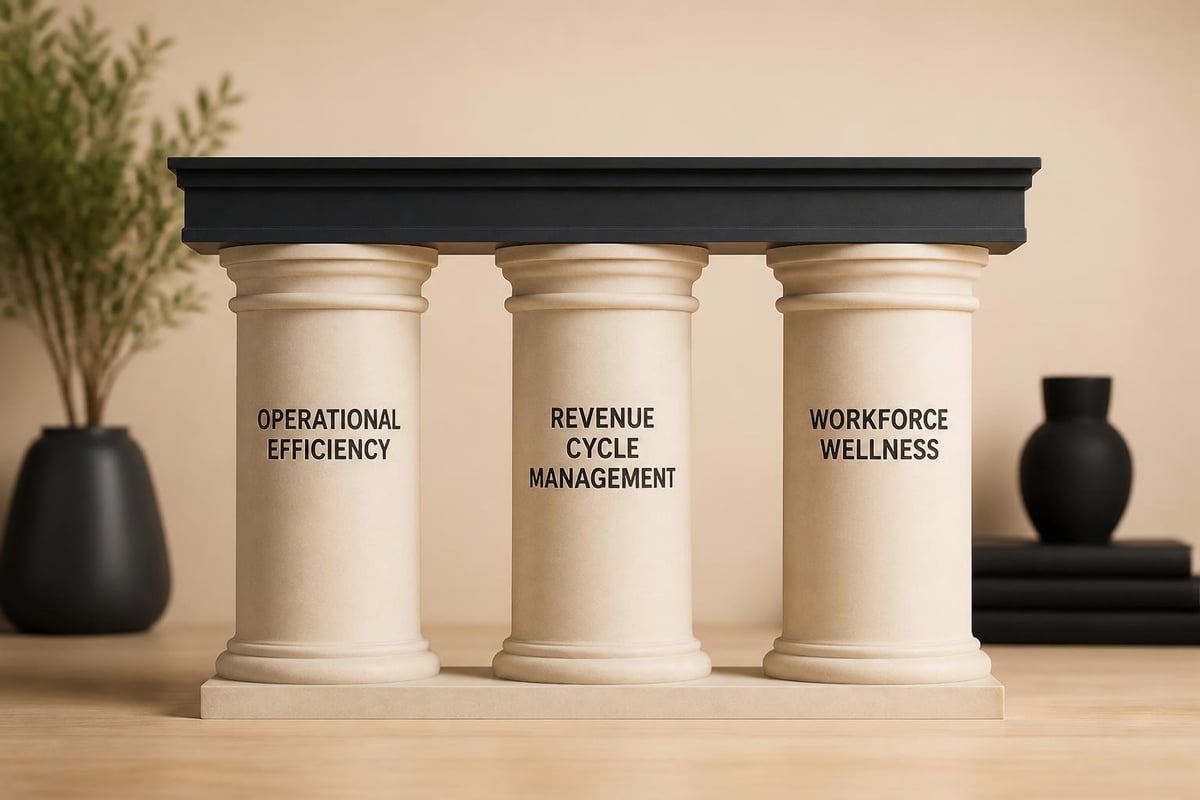
Modern healthcare consulting focuses on three core pillars: operational efficiency, revenue optimization, and workforce empowerment. Consultants now leverage advanced analytics, artificial intelligence, and process automation to deliver solutions that generate immediate value while building sustainable long-term capabilities within client organizations.
Industry Growth Drivers
The healthcare consulting market continues to expand as organizations confront mounting pressures. Cost pressures, AI advancements, and mergers and acquisitions are driving significant growth in the consulting sector, with providers seeking external expertise to navigate complex transformations.
Several factors fuel this expansion:
- Regulatory complexity: Frequent policy changes require specialized compliance expertise
- Technology adoption: Digital transformation demands technical and strategic guidance
- Financial pressure: Shrinking margins necessitate revenue cycle optimization
- Workforce challenges: Staff shortages and burnout require innovative retention solutions
- Value-based care: Payment model shifts demand new operational frameworks
The global tech consulting market is projected to surpass $400 billion in 2026, with healthcare representing a substantial portion of this growth as medical organizations accelerate digital initiatives.
Revenue Cycle Management Excellence
Revenue cycle management stands as one of the most impactful areas where healthcare consulting delivers measurable value. Medical organizations lose billions annually through billing errors, underpayments, denials, and inefficient collection processes. Strategic consulting interventions can recover significant revenue while streamlining operations.
Effective revenue cycle management consulting addresses the entire patient financial journey, from initial registration through final payment collection. This comprehensive approach identifies bottlenecks, eliminates redundancies, and implements technology solutions that reduce manual workload while improving accuracy.
Common Revenue Cycle Challenges
| Challenge | Impact | Solution Approach |
|---|---|---|
| Claim denials | 5-10% of submitted claims rejected | Predictive analytics and pre-submission validation |
| Underpayments | 3-8% revenue loss from contract variances | Automated contract modeling and payment auditing |
| Manual processes | 40+ hours weekly on administrative tasks | Workflow automation and integration platforms |
| Data fragmentation | Delayed insights and decision-making | Centralized analytics and reporting systems |
Healthcare consulting professionals implement technologies that automatically identify underpayments by comparing contractual terms against actual reimbursements. Organizations implementing these solutions typically recover underpayments representing 2-5% of annual revenue, providing immediate financial impact.
Technology-Enabled Revenue Optimization
Modern revenue cycle consulting relies heavily on artificial intelligence and machine learning to predict denials before submission, optimize coding accuracy, and accelerate payment cycles. These technologies analyze historical patterns to identify risk factors and recommend corrective actions before claims leave the organization.
Consultants also address common medical billing mistakes that hurt revenue cycles, including coding errors, incomplete documentation, and missed charge capture opportunities. Systematic process redesign combined with staff training ensures sustainable improvements that persist long after consulting engagements conclude.
Operational Efficiency Through Automation
Healthcare organizations waste thousands of hours monthly on repetitive manual tasks that automation could eliminate. Healthcare consulting engagements increasingly focus on identifying these inefficiencies and implementing intelligent automation solutions that free staff to focus on higher-value activities.
Process automation extends beyond simple task replacement. Strategic consultants evaluate entire workflows to identify optimization opportunities, eliminate redundancies, and redesign processes for maximum efficiency. This holistic approach ensures automation investments deliver compound benefits across interconnected systems.

Key Automation Opportunities
Healthcare consulting identifies specific areas where automation delivers exceptional returns:
- Patient intake and registration: Digital forms and automated insurance verification reduce administrative time by 60-70%
- Appointment scheduling: AI-powered scheduling optimizes provider calendars while reducing no-shows through automated reminders
- Claims processing: Intelligent submission systems validate claims pre-submission, reducing denial rates by 40-50%
- Payment posting: Automated reconciliation eliminates manual posting work and accelerates cash application
- Prior authorization: Automated systems submit and track authorizations, reducing delays and administrative burden
Organizations implementing comprehensive automation strategies through consulting partnerships typically eliminate 30-50% of manual administrative work within the first year. These efficiency gains translate directly to cost savings while improving staff satisfaction by removing tedious, repetitive tasks.
Integration Challenges and Solutions
Many healthcare organizations operate fragmented technology ecosystems with limited interoperability between systems. Consulting professionals address these data and integration challenges by designing middleware solutions and API-based connections that enable seamless information flow.
Proper integration ensures automation solutions access accurate, real-time data across all relevant systems. This connectivity prevents the creation of new data silos while maximizing the value of existing technology investments. Healthcare data warehouse solutions centralize information from disparate sources, providing unified analytics platforms that support decision-making.
Strategic Technology Consulting
The healthcare sector continues rapid technology adoption, creating opportunities and challenges for organizations managing digital transformation. Healthcare consulting provides strategic guidance that ensures technology investments align with business objectives while delivering measurable returns.
IT services consulting in healthcare for 2026 emphasizes outcome-based services rather than technology implementation alone. Consultants focus on business results, linking technology deployments to specific performance metrics such as cost reduction, revenue growth, or patient satisfaction improvements.
Emerging Technology Integration
Forward-thinking healthcare consulting addresses emerging technologies that promise transformative capabilities:
- Artificial Intelligence: Predictive analytics for patient outcomes, operational forecasting, and clinical decision support
- Machine Learning: Pattern recognition for fraud detection, utilization management, and personalized treatment protocols
- Robotic Process Automation: Task automation for billing, scheduling, and administrative workflows
- Cloud Computing: Scalable infrastructure supporting telehealth, data analytics, and collaboration platforms
- Internet of Things: Remote patient monitoring, asset tracking, and environmental management systems
Consultants evaluate these technologies against organizational capabilities, identifying realistic implementation paths that match technical maturity and resource availability. This pragmatic approach prevents costly failed deployments while building foundations for progressive capability expansion.
Data-Driven Transformation
Healthcare consulting evolution toward data-driven transformation reflects the industry's recognition that sustainable performance improvements require analytical insights rather than intuition alone. Consulting engagements increasingly incorporate advanced analytics capabilities that enable organizations to measure performance, identify improvement opportunities, and track intervention effectiveness.
Organizations partnering with consultants on benefits data analytics initiatives gain visibility into previously opaque operational areas. These insights drive targeted improvements with quantifiable impact, creating organizational cultures that prioritize continuous improvement based on objective evidence.
Human Capital Management in Healthcare
Healthcare organizations face severe workforce challenges, including staffing shortages, high turnover, and employee burnout. Healthcare consulting addresses these human capital issues through comprehensive strategies that improve recruitment, retention, and employee wellness while controlling labor costs.
Strategic human capital management consulting recognizes that workforce challenges require multifaceted solutions addressing compensation, benefits, workplace culture, professional development, and work-life balance. Consultants design integrated programs that position organizations as employers of choice within competitive labor markets.
Employee Wellness and Financial Health
Progressive healthcare consulting extends beyond traditional HR functions to address employee wellness holistically. Organizations implementing comprehensive wellness programs experience reduced absenteeism, lower healthcare costs, and improved productivity alongside enhanced employee satisfaction and retention.
Financial wellness represents a particularly impactful intervention area. Healthcare workers frequently experience financial stress that impacts job performance and overall wellbeing. Consulting solutions incorporate:
- Earned wage access: Allowing employees to access earned wages before traditional pay cycles, reducing financial emergencies
- Debt resolution programs: Providing pathways to manage personal debt without bankruptcy
- Tax credit optimization: Ensuring employees capture all available credits and deductions
- Benefits education: Maximizing value from existing compensation packages through improved understanding
Organizations offering these benefits through strategic consulting partnerships report 20-30% improvements in employee retention metrics. Earned wage access programs particularly resonate with healthcare workers facing irregular schedules and variable income patterns.
Payroll and Benefits Optimization
Healthcare consulting also addresses operational aspects of human capital management, including payroll processing efficiency and benefits administration. Automating payroll for mid-sized organizations eliminates manual processing time while improving accuracy and compliance.
Benefits administration automation similarly reduces administrative burden while improving employee experience through self-service capabilities and real-time information access. These efficiency improvements free HR professionals to focus on strategic initiatives rather than transactional processing.
Performance Measurement and Accountability
Modern healthcare consulting emphasizes measurable outcomes and accountability for results. Performance-based engagement models align consultant incentives with client success, ensuring recommendations focus on practical implementation rather than theoretical frameworks.
| Performance Metric | Baseline Challenge | Target Improvement | Measurement Method |
|---|---|---|---|
| Revenue cycle days | 45-60 days average | Reduce to 30-35 days | A/R aging reports |
| Administrative labor | 40% of total staff time | Reduce to 25% | Time tracking analysis |
| Claim denial rate | 8-12% of submissions | Reduce to 3-5% | Claims processing data |
| Employee turnover | 25-30% annually | Reduce to 15-20% | HR retention metrics |
| Patient satisfaction | 3.5-4.0 average rating | Increase to 4.5+ | Survey responses |
Consultants establish baseline metrics before interventions, track progress throughout implementations, and verify sustained improvements post-engagement. This rigorous approach ensures organizations receive tangible value rather than reports that gather dust on shelves.

Avoiding Common Consulting Pitfalls
Healthcare organizations sometimes struggle to extract full value from consulting engagements due to preventable mistakes. Common pitfalls include misalignment with client needs, unrealistic timelines, insufficient change management, and lack of internal accountability for implementation.
Successful healthcare consulting relationships establish clear expectations, define specific deliverables, assign internal champions responsible for implementation, and maintain consistent communication throughout engagements. Organizations should partner with professional consulting firms that demonstrate industry expertise, provide transparent pricing, and commit to measurable outcomes.
Strategic Considerations for 2026 and Beyond
Healthcare consulting continues evolving in response to industry changes, technological advances, and shifting regulatory environments. Organizations planning consulting engagements should consider several strategic factors that will shape the healthcare landscape through 2026 and beyond.
Regulatory Navigation and Compliance
Healthcare regulation grows increasingly complex as federal and state governments introduce new requirements for data privacy, billing practices, and quality reporting. Consulting partners provide expertise navigating these requirements while minimizing compliance costs and administrative burden.
Organizations involved in mergers and acquisitions face particularly complex regulatory challenges. Healthcare M&A trends and strategic considerations highlight the importance of expert guidance through due diligence, integration planning, and post-merger optimization processes.
Scalability and Growth Planning
Effective healthcare consulting balances immediate performance improvements with long-term scalability. Solutions should accommodate organizational growth without requiring complete redesign as patient volumes, service lines, or geographic footprints expand.
Consultants design flexible architectures and processes that scale efficiently, incorporating modularity that allows incremental capability expansion aligned with business development. This forward-thinking approach prevents organizations from outgrowing systems and processes prematurely, protecting consulting investment value over extended timeframes.
Vendor Partnership Strategies
Healthcare organizations typically work with numerous technology and service vendors, creating coordination challenges and integration complexities. Strategic consulting helps evaluate vendor partners objectively, negotiate favorable terms, and manage relationships for optimal performance.
Consultants provide independent perspectives unclouded by vendor relationships, ensuring recommendations prioritize client interests rather than commission structures. This objectivity proves particularly valuable when selecting major technology platforms or outsourcing critical business functions.
Building Internal Capabilities
While external healthcare consulting provides valuable expertise and resources, sustainable success requires building internal capabilities that persist beyond consulting engagements. The most effective consulting relationships emphasize knowledge transfer and capability development alongside immediate problem-solving.
Organizations should seek consulting partners committed to training internal teams, documenting processes comprehensively, and establishing governance structures that support continuous improvement. This approach transforms consulting from dependency relationships into catalyst events that permanently elevate organizational performance.
Change Management Excellence
Healthcare consulting implementations frequently fail not from technical deficiencies but from inadequate change management. Staff resistance, unclear communication, insufficient training, and lack of leadership support undermine even the best-designed solutions.
Professional consultants incorporate structured change management methodologies addressing stakeholder engagement, communication planning, training development, and leadership alignment. These frameworks ensure organizational readiness for changes while building buy-in that sustains improvements over time.
Continuous Improvement Culture
The ultimate goal of healthcare consulting extends beyond specific project deliverables to establishing cultures of continuous improvement. Organizations that embrace data-driven decision-making, systematic problem-solving, and ongoing optimization achieve compounding benefits that far exceed initial consulting investments.
Consultants facilitate this cultural transformation by establishing measurement systems, training improvement teams, and creating accountability structures that reward innovation and efficiency. These foundations enable organizations to identify and implement improvements independently, reducing future consulting dependency while accelerating performance gains.
Healthcare consulting delivers transformative value when organizations partner with experienced professionals who understand industry challenges and provide practical, technology-enabled solutions. The most successful engagements combine strategic vision with tactical execution, balancing immediate performance improvements against long-term capability development. Nero and Associates, Inc. specializes in performance-based healthcare consulting that optimizes revenue cycles, automates inefficient processes, and improves employee wellness through proven methodologies and cutting-edge technologies. Our team delivers measurable results that increase profitability, reduce administrative burden, and create sustainable competitive advantages for healthcare organizations committed to operational excellence.