
HCM Solutions: A Strategic Guide for Modern Businesses

Share on Facebook
Share on X
Share on LinkedIn

Human capital management has evolved from basic payroll processing into a comprehensive strategic framework that drives organizational success. Modern HCM solutions represent a fundamental shift in how businesses attract, develop, and retain talent while maximizing operational efficiency. These integrated platforms combine technology, data analytics, and workforce insights to help organizations make informed decisions about their most valuable asset: their people. As businesses face increasing pressure to optimize resources and demonstrate measurable results, implementing robust HCM solutions has become essential for maintaining competitive advantage in 2026.

Understanding the Core Components of HCM Solutions

Modern HCM solutions encompass far more than traditional human resources management systems. These platforms integrate multiple workforce management functions into a unified ecosystem that supports the entire employee lifecycle.

Talent Acquisition and Recruitment

The recruitment module within HCM solutions streamlines candidate sourcing, application tracking, and hiring processes. Advanced systems leverage artificial intelligence to match candidates with job requirements, reducing time-to-hire and improving quality of hire metrics.

Key capabilities include:

  • Automated job posting across multiple channels
  • Applicant tracking with intelligent resume screening
  • Interview scheduling and candidate communication
  • Onboarding workflow automation
  • Compliance documentation and verification

Organizations that implement comprehensive talent acquisition features typically see significant reductions in hiring costs and improvements in new hire retention rates. The integration of predictive analytics in HCM solutions enables HR teams to forecast workforce needs and build talent pipelines proactively.

Payroll and Compensation Management

Payroll processing remains a critical component of any HCM solution, but modern platforms extend well beyond basic payment distribution. These systems handle complex compensation structures, tax compliance, benefits administration, and financial reporting with precision.

Payroll Feature Traditional Systems Modern HCM Solutions
Processing Speed Manual, multi-day Automated, same-day
Tax Compliance Periodic updates Real-time regulatory changes
Global Capabilities Limited regions Multi-country support
Employee Self-Service Minimal Comprehensive portal access
Integration Standalone Fully integrated with HR/Finance

The automation capabilities within payroll modules eliminate thousands of hours of manual data entry and reconciliation, directly supporting business objectives around efficiency and cost reduction.

Employee lifecycle management

Performance Management and Employee Development

Strategic workforce planning requires continuous assessment and development of employee capabilities. HCM solutions provide frameworks for setting goals, tracking progress, and facilitating meaningful performance conversations.

Goal Setting and Continuous Feedback

Traditional annual performance reviews have given way to continuous performance management models supported by technology. Modern HCM solutions enable real-time feedback, frequent check-ins, and transparent goal alignment across organizational levels.

Performance management modules connect individual objectives to departmental and company-wide strategic initiatives. This alignment ensures employees understand how their contributions impact overall business results.

Benefits of continuous performance management include:

  • Increased employee engagement through regular recognition
  • Earlier identification of performance issues
  • Data-driven succession planning
  • Improved manager-employee relationships
  • Objective measurement of contribution and impact

Learning and Development

Investing in employee growth yields measurable returns in productivity, retention, and innovation. HCM solutions incorporate learning management systems that deliver personalized development experiences based on individual roles, career aspirations, and skill gaps.

These platforms track certifications, manage compliance training, and provide analytics on learning effectiveness. Organizations can measure the direct correlation between training investments and business outcomes, ensuring development programs deliver tangible value.

Integration Capabilities and System Architecture

The true power of HCM solutions emerges through their ability to integrate with broader enterprise systems. Seamless data flow between human capital management, financial planning, and operational platforms creates a unified view of organizational performance.

API-Driven Connectivity

Modern HCM solutions leverage application programming interfaces (APIs) to connect with existing business systems. This integration eliminates data silos and reduces manual data transfer between platforms.

For businesses working with enterprise-level complexity, integration capabilities determine whether HCM solutions deliver comprehensive value or create additional administrative burden. The ability to connect identity governance systems, as demonstrated in SAP SuccessFactors implementations, enables automated provisioning and enhanced security protocols.

Data Security and Compliance

HCM solutions manage sensitive employee information, making security architecture paramount. Enterprise-grade platforms implement multiple layers of protection including encryption, role-based access controls, and audit trails.

Compliance requirements vary by industry and geography, but robust HCM solutions automatically update to reflect changing regulations. This includes tax law changes, benefits reporting requirements, labor law modifications, and data privacy regulations like GDPR and CCPA.

Analytics and Workforce Intelligence

Data-driven decision-making separates high-performing organizations from their competitors. HCM solutions transform raw workforce data into actionable insights that inform strategic planning and operational improvements.

Predictive Analytics Applications

Advanced analytics capabilities enable HR leaders to move from reactive problem-solving to proactive workforce planning. Predictive models identify flight risks, forecast turnover costs, and recommend interventions before issues escalate.

Common predictive analytics use cases:

  1. Employee turnover prediction and retention strategy development
  2. Compensation benchmarking and equity analysis
  3. Workforce capacity planning and hiring forecasts
  4. Skills gap identification and training prioritization
  5. Performance trend analysis and succession planning

Organizations implementing these analytical capabilities report significant improvements in retention rates and more effective resource allocation across departments.
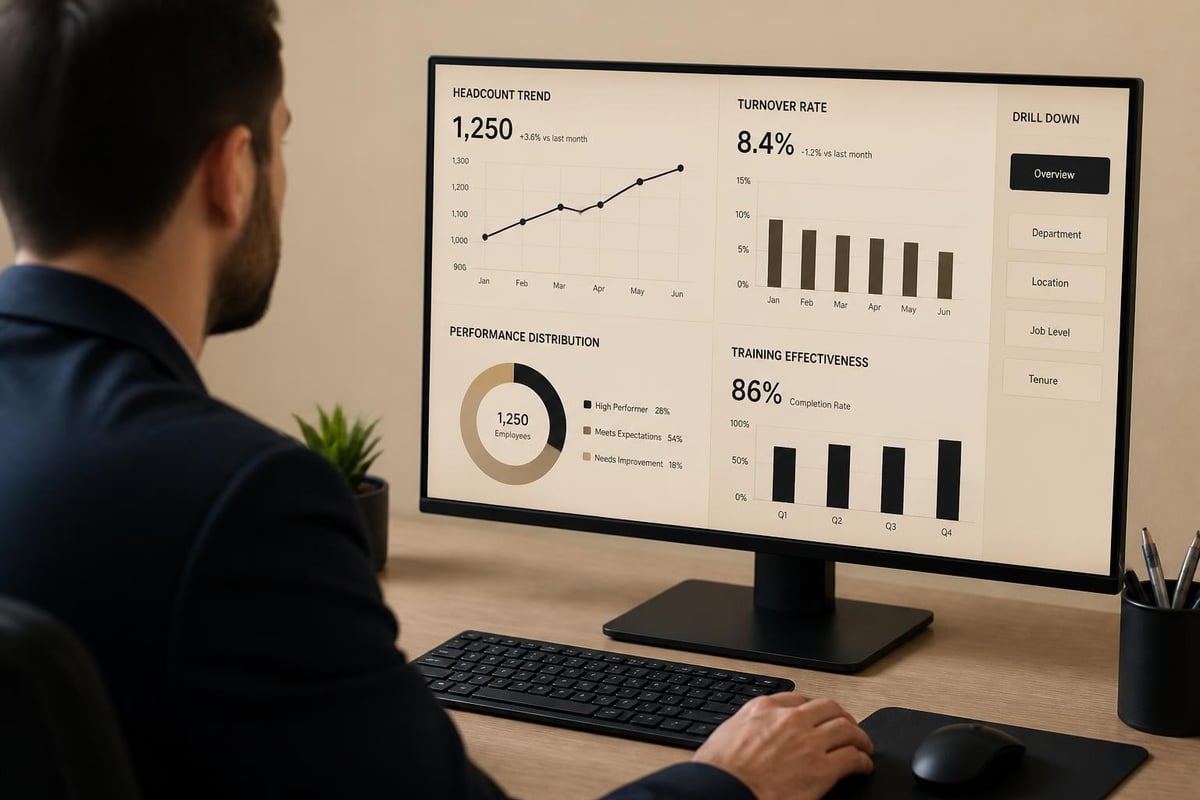
HCM analytics dashboard

Reporting and Visualization

Stakeholders across the organization need different perspectives on workforce data. Executive leadership requires high-level strategic metrics, while department managers need operational details and individual contributors benefit from personal performance insights.

Modern HCM solutions provide customizable dashboards and reporting tools that serve these diverse needs. Real-time data visualization enables quick identification of trends and immediate response to emerging challenges.

Employee Experience and Self-Service Capabilities

Technology should empower employees to manage their own information, access resources, and engage with organizational programs without administrative intermediaries. HCM solutions with robust self-service portals improve employee satisfaction while reducing HR workload.

Mobile Accessibility

Workforce demographics and expectations have shifted dramatically toward mobile-first experiences. Employees expect to access pay information, request time off, update personal details, and complete training modules from their smartphones.

HCM solutions with comprehensive mobile applications support this expectation while maintaining security standards. Mobile accessibility becomes particularly important for organizations with distributed teams or field-based workers.

Benefits Administration

Open enrollment periods historically create administrative chaos for HR departments. Self-service benefits modules within HCM solutions enable employees to review options, compare plans, and make elections independently.

Benefits Feature Employee Impact HR Impact
Plan Comparison Tools Informed decision-making Reduced inquiry volume
Life Event Changes Immediate updates Automated workflow processing
Dependent Management Self-service additions/removals Compliance documentation
FSA/HSA Integration Streamlined contributions Accurate payroll deductions

These capabilities directly support employee wellbeing initiatives by making health and financial benefits more accessible and understandable. For organizations focused on employee health and wellness, intuitive benefits administration becomes a strategic differentiator.

Vendor Selection and Implementation Strategies

Choosing the right HCM solution requires careful evaluation of organizational needs, budget constraints, and growth projections. The HCM Digital World Class Matrix™ provides valuable insights into leading providers and their respective strengths.

Evaluation Criteria

Organizations should assess potential HCM solutions across multiple dimensions:

  • Functional breadth and depth relative to specific requirements
  • Scalability to support organizational growth
  • Integration capabilities with existing technology stack
  • User experience and adoption likelihood
  • Vendor stability and market position
  • Total cost of ownership including implementation and ongoing maintenance
  • Customer success approach and support model

The implementation process significantly impacts long-term success with any HCM solution. Organizations should plan for adequate change management, user training, and process redesign rather than simply replicating existing workflows in new technology.

Change Management Considerations

Technology alone does not transform workforce management practices. Successful HCM solution implementations require comprehensive change management strategies that address cultural resistance, skill development, and process optimization.

Leadership commitment establishes the foundation for successful adoption. When executives actively champion the new system and model desired behaviors, adoption rates improve dramatically across all organizational levels.

Communication strategies should explain not just how the new system works, but why it matters to individual employees. Connecting HCM solution capabilities to tangible benefits like easier time-off requests or clearer career development paths increases engagement and reduces resistance.

Industry-Specific Applications

While core HCM functionality remains consistent across sectors, different industries face unique workforce management challenges that specialized solutions address.

Professional Services Optimization

Professional services organizations face distinct challenges around project staffing, billable hour tracking, and resource optimization. HCM solutions designed for this sector integrate time capture with project management and financial systems.

For mid-market professional services firms, the right HCM solution balances comprehensive functionality with implementation speed and cost effectiveness. These organizations need systems that support rapid growth without requiring extensive IT resources.

Private Equity Portfolio Management

Private equity firms managing multiple portfolio companies face the challenge of standardizing HR practices while respecting individual company cultures. Centralized HCM solutions enable consistent reporting and benchmarking across the portfolio while allowing operational flexibility.

Private equity-backed organizations benefit from HCM solutions that facilitate rapid post-acquisition integration and provide visibility into workforce costs and productivity metrics that drive valuation.
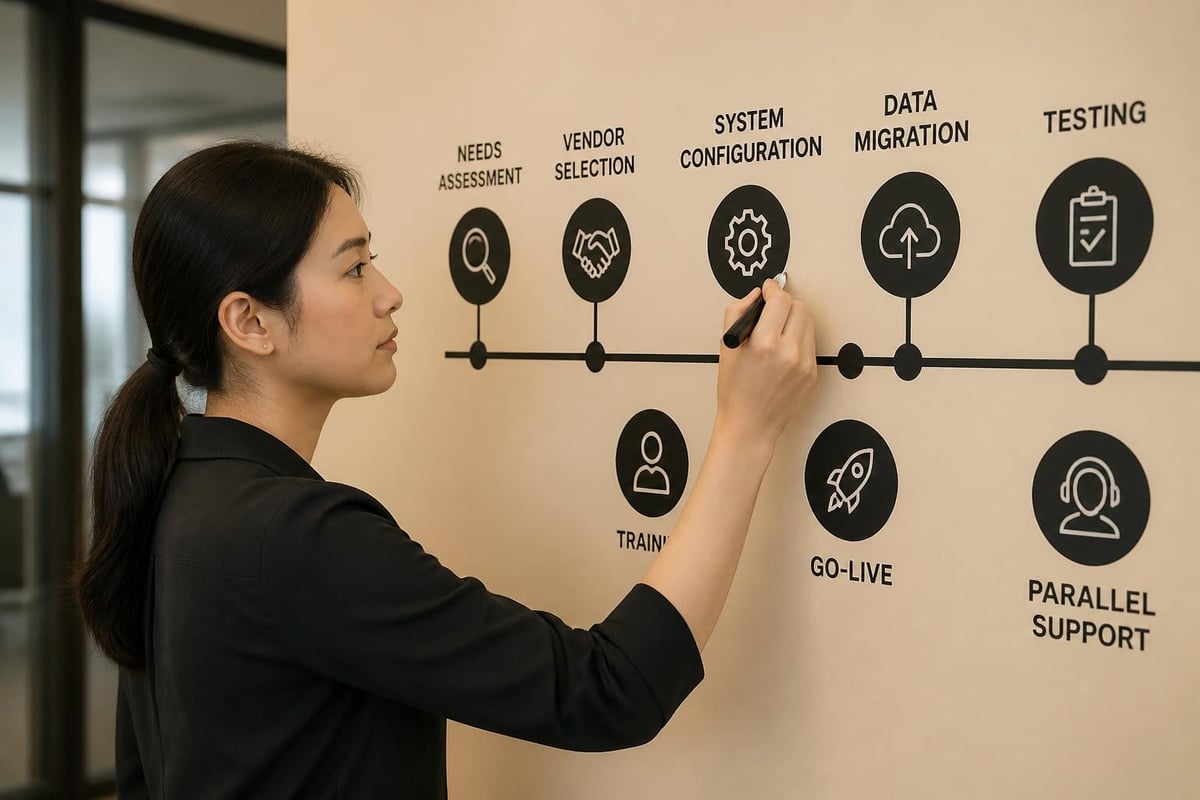
HCM implementation roadmap

Future Trends Shaping HCM Solutions

The HCM solutions marketplace continues evolving rapidly as technology advances and workforce expectations shift. Understanding emerging trends helps organizations make forward-looking investment decisions.

Artificial Intelligence Integration

AI capabilities are moving from experimental features to core functionality within HCM solutions. Machine learning algorithms optimize scheduling, predict performance outcomes, personalize learning recommendations, and automate routine inquiries through chatbots.

Natural language processing enables more intuitive system interactions, allowing employees to ask questions conversationally rather than navigating complex menu structures. This reduces training requirements and accelerates adoption across all user groups.

Skills-Based Talent Management

Traditional job-based organizational structures are giving way to skills-based models that emphasize capabilities over titles. Modern HCM solutions incorporate skills taxonomies that map individual competencies to organizational needs.

This shift enables more flexible workforce deployment, clearer development pathways, and better succession planning. Organizations can identify internal candidates for new roles based on transferable skills rather than previous job titles alone.

Employee Wellbeing Focus

Recognition of the connection between employee wellbeing and organizational performance has elevated wellness features within HCM solutions. Platforms now integrate mental health resources, financial wellness tools, and lifestyle management programs alongside traditional benefits administration.

These comprehensive approaches to employee wellbeing align with broader organizational objectives around retention, productivity, and culture development. Companies that prioritize holistic employee support through their HCM solutions report measurable improvements in engagement and performance metrics.

Measuring ROI and Business Impact

Justifying HCM solution investments requires demonstrating tangible returns across multiple dimensions. Financial metrics provide one perspective, but comprehensive evaluation includes operational efficiency gains and strategic capability enhancements.

Quantifiable Metrics

Key performance indicators for HCM solutions include:

  1. Reduction in time-to-hire for critical positions
  2. Decreased employee turnover rates and associated costs
  3. Hours saved through process automation
  4. Improved compliance and reduced regulatory penalties
  5. Enhanced productivity measurements across departments
  6. Training completion rates and skill development progression
  7. Employee engagement scores and satisfaction trends

Organizations should establish baseline measurements before implementation and track progress consistently. This data-driven approach validates investment decisions and identifies opportunities for optimization.

Strategic Value Creation

Beyond immediate financial returns, effective HCM solutions create strategic advantages that compound over time. Better talent decisions improve innovation capacity, stronger retention preserves institutional knowledge, and enhanced employee development builds competitive differentiation.

For consultancies and professional services firms, where human capital represents the primary asset, these strategic benefits directly impact market position and growth trajectory. The ability to attract top talent, develop capabilities efficiently, and retain high performers determines long-term success more than any other factor.


Modern HCM solutions represent strategic investments that transform workforce management from administrative necessity into competitive advantage. By integrating talent acquisition, performance management, payroll, analytics, and employee development into unified platforms, organizations gain the visibility and capabilities needed to optimize their most valuable resource.

Nero and Associates, Inc. specializes in helping organizations implement HCM solutions that eliminate manual processes, reduce operational costs, and empower employees across their professional journey. Our performance-based approach ensures technology investments deliver measurable improvements in efficiency, revenue, and employee wellbeing. Contact our team to explore how the right HCM solution can transform your workforce management strategy and accelerate business results.

HCM Solutions: A Strategic Guide for Modern Businesses

Human capital management has evolved from basic payroll processing into a comprehensive strategic framework that drives organizational success. Modern HCM solutions represent a fundamental shift in how businesses attract, develop, and retain talent while maximizing operational efficiency. These integrated platforms combine technology, data analytics, and workforce insights to help organizations make informed decisions about their most valuable asset: their people. As businesses face increasing pressure to optimize resources and demonstrate measurable results, implementing robust HCM solutions has become essential for maintaining competitive advantage in 2026.

Understanding the Core Components of HCM Solutions

Modern HCM solutions encompass far more than traditional human resources management systems. These platforms integrate multiple workforce management functions into a unified ecosystem that supports the entire employee lifecycle.

Talent Acquisition and Recruitment

The recruitment module within HCM solutions streamlines candidate sourcing, application tracking, and hiring processes. Advanced systems leverage artificial intelligence to match candidates with job requirements, reducing time-to-hire and improving quality of hire metrics.

Key capabilities include:

  • Automated job posting across multiple channels
  • Applicant tracking with intelligent resume screening
  • Interview scheduling and candidate communication
  • Onboarding workflow automation
  • Compliance documentation and verification

Organizations that implement comprehensive talent acquisition features typically see significant reductions in hiring costs and improvements in new hire retention rates. The integration of predictive analytics in HCM solutions enables HR teams to forecast workforce needs and build talent pipelines proactively.

Payroll and Compensation Management

Payroll processing remains a critical component of any HCM solution, but modern platforms extend well beyond basic payment distribution. These systems handle complex compensation structures, tax compliance, benefits administration, and financial reporting with precision.

Payroll Feature Traditional Systems Modern HCM Solutions
Processing Speed Manual, multi-day Automated, same-day
Tax Compliance Periodic updates Real-time regulatory changes
Global Capabilities Limited regions Multi-country support
Employee Self-Service Minimal Comprehensive portal access
Integration Standalone Fully integrated with HR/Finance

The automation capabilities within payroll modules eliminate thousands of hours of manual data entry and reconciliation, directly supporting business objectives around efficiency and cost reduction.

Employee lifecycle management

Performance Management and Employee Development

Strategic workforce planning requires continuous assessment and development of employee capabilities. HCM solutions provide frameworks for setting goals, tracking progress, and facilitating meaningful performance conversations.

Goal Setting and Continuous Feedback

Traditional annual performance reviews have given way to continuous performance management models supported by technology. Modern HCM solutions enable real-time feedback, frequent check-ins, and transparent goal alignment across organizational levels.

Performance management modules connect individual objectives to departmental and company-wide strategic initiatives. This alignment ensures employees understand how their contributions impact overall business results.

Benefits of continuous performance management include:

  • Increased employee engagement through regular recognition
  • Earlier identification of performance issues
  • Data-driven succession planning
  • Improved manager-employee relationships
  • Objective measurement of contribution and impact

Learning and Development

Investing in employee growth yields measurable returns in productivity, retention, and innovation. HCM solutions incorporate learning management systems that deliver personalized development experiences based on individual roles, career aspirations, and skill gaps.

These platforms track certifications, manage compliance training, and provide analytics on learning effectiveness. Organizations can measure the direct correlation between training investments and business outcomes, ensuring development programs deliver tangible value.

Integration Capabilities and System Architecture

The true power of HCM solutions emerges through their ability to integrate with broader enterprise systems. Seamless data flow between human capital management, financial planning, and operational platforms creates a unified view of organizational performance.

API-Driven Connectivity

Modern HCM solutions leverage application programming interfaces (APIs) to connect with existing business systems. This integration eliminates data silos and reduces manual data transfer between platforms.

For businesses working with enterprise-level complexity, integration capabilities determine whether HCM solutions deliver comprehensive value or create additional administrative burden. The ability to connect identity governance systems, as demonstrated in SAP SuccessFactors implementations, enables automated provisioning and enhanced security protocols.

Data Security and Compliance

HCM solutions manage sensitive employee information, making security architecture paramount. Enterprise-grade platforms implement multiple layers of protection including encryption, role-based access controls, and audit trails.

Compliance requirements vary by industry and geography, but robust HCM solutions automatically update to reflect changing regulations. This includes tax law changes, benefits reporting requirements, labor law modifications, and data privacy regulations like GDPR and CCPA.

Analytics and Workforce Intelligence

Data-driven decision-making separates high-performing organizations from their competitors. HCM solutions transform raw workforce data into actionable insights that inform strategic planning and operational improvements.

Predictive Analytics Applications

Advanced analytics capabilities enable HR leaders to move from reactive problem-solving to proactive workforce planning. Predictive models identify flight risks, forecast turnover costs, and recommend interventions before issues escalate.

Common predictive analytics use cases:

  1. Employee turnover prediction and retention strategy development
  2. Compensation benchmarking and equity analysis
  3. Workforce capacity planning and hiring forecasts
  4. Skills gap identification and training prioritization
  5. Performance trend analysis and succession planning

Organizations implementing these analytical capabilities report significant improvements in retention rates and more effective resource allocation across departments.

HCM analytics dashboard

Reporting and Visualization

Stakeholders across the organization need different perspectives on workforce data. Executive leadership requires high-level strategic metrics, while department managers need operational details and individual contributors benefit from personal performance insights.

Modern HCM solutions provide customizable dashboards and reporting tools that serve these diverse needs. Real-time data visualization enables quick identification of trends and immediate response to emerging challenges.

Employee Experience and Self-Service Capabilities

Technology should empower employees to manage their own information, access resources, and engage with organizational programs without administrative intermediaries. HCM solutions with robust self-service portals improve employee satisfaction while reducing HR workload.

Mobile Accessibility

Workforce demographics and expectations have shifted dramatically toward mobile-first experiences. Employees expect to access pay information, request time off, update personal details, and complete training modules from their smartphones.

HCM solutions with comprehensive mobile applications support this expectation while maintaining security standards. Mobile accessibility becomes particularly important for organizations with distributed teams or field-based workers.

Benefits Administration

Open enrollment periods historically create administrative chaos for HR departments. Self-service benefits modules within HCM solutions enable employees to review options, compare plans, and make elections independently.

Benefits Feature Employee Impact HR Impact
Plan Comparison Tools Informed decision-making Reduced inquiry volume
Life Event Changes Immediate updates Automated workflow processing
Dependent Management Self-service additions/removals Compliance documentation
FSA/HSA Integration Streamlined contributions Accurate payroll deductions

These capabilities directly support employee wellbeing initiatives by making health and financial benefits more accessible and understandable. For organizations focused on employee health and wellness, intuitive benefits administration becomes a strategic differentiator.

Vendor Selection and Implementation Strategies

Choosing the right HCM solution requires careful evaluation of organizational needs, budget constraints, and growth projections. The HCM Digital World Class Matrix™ provides valuable insights into leading providers and their respective strengths.

Evaluation Criteria

Organizations should assess potential HCM solutions across multiple dimensions:

  • Functional breadth and depth relative to specific requirements
  • Scalability to support organizational growth
  • Integration capabilities with existing technology stack
  • User experience and adoption likelihood
  • Vendor stability and market position
  • Total cost of ownership including implementation and ongoing maintenance
  • Customer success approach and support model

The implementation process significantly impacts long-term success with any HCM solution. Organizations should plan for adequate change management, user training, and process redesign rather than simply replicating existing workflows in new technology.

Change Management Considerations

Technology alone does not transform workforce management practices. Successful HCM solution implementations require comprehensive change management strategies that address cultural resistance, skill development, and process optimization.

Leadership commitment establishes the foundation for successful adoption. When executives actively champion the new system and model desired behaviors, adoption rates improve dramatically across all organizational levels.

Communication strategies should explain not just how the new system works, but why it matters to individual employees. Connecting HCM solution capabilities to tangible benefits like easier time-off requests or clearer career development paths increases engagement and reduces resistance.

Industry-Specific Applications

While core HCM functionality remains consistent across sectors, different industries face unique workforce management challenges that specialized solutions address.

Professional Services Optimization

Professional services organizations face distinct challenges around project staffing, billable hour tracking, and resource optimization. HCM solutions designed for this sector integrate time capture with project management and financial systems.

For mid-market professional services firms, the right HCM solution balances comprehensive functionality with implementation speed and cost effectiveness. These organizations need systems that support rapid growth without requiring extensive IT resources.

Private Equity Portfolio Management

Private equity firms managing multiple portfolio companies face the challenge of standardizing HR practices while respecting individual company cultures. Centralized HCM solutions enable consistent reporting and benchmarking across the portfolio while allowing operational flexibility.

Private equity-backed organizations benefit from HCM solutions that facilitate rapid post-acquisition integration and provide visibility into workforce costs and productivity metrics that drive valuation.

HCM implementation roadmap

Future Trends Shaping HCM Solutions

The HCM solutions marketplace continues evolving rapidly as technology advances and workforce expectations shift. Understanding emerging trends helps organizations make forward-looking investment decisions.

Artificial Intelligence Integration

AI capabilities are moving from experimental features to core functionality within HCM solutions. Machine learning algorithms optimize scheduling, predict performance outcomes, personalize learning recommendations, and automate routine inquiries through chatbots.

Natural language processing enables more intuitive system interactions, allowing employees to ask questions conversationally rather than navigating complex menu structures. This reduces training requirements and accelerates adoption across all user groups.

Skills-Based Talent Management

Traditional job-based organizational structures are giving way to skills-based models that emphasize capabilities over titles. Modern HCM solutions incorporate skills taxonomies that map individual competencies to organizational needs.

This shift enables more flexible workforce deployment, clearer development pathways, and better succession planning. Organizations can identify internal candidates for new roles based on transferable skills rather than previous job titles alone.

Employee Wellbeing Focus

Recognition of the connection between employee wellbeing and organizational performance has elevated wellness features within HCM solutions. Platforms now integrate mental health resources, financial wellness tools, and lifestyle management programs alongside traditional benefits administration.

These comprehensive approaches to employee wellbeing align with broader organizational objectives around retention, productivity, and culture development. Companies that prioritize holistic employee support through their HCM solutions report measurable improvements in engagement and performance metrics.

Measuring ROI and Business Impact

Justifying HCM solution investments requires demonstrating tangible returns across multiple dimensions. Financial metrics provide one perspective, but comprehensive evaluation includes operational efficiency gains and strategic capability enhancements.

Quantifiable Metrics

Key performance indicators for HCM solutions include:

  1. Reduction in time-to-hire for critical positions
  2. Decreased employee turnover rates and associated costs
  3. Hours saved through process automation
  4. Improved compliance and reduced regulatory penalties
  5. Enhanced productivity measurements across departments
  6. Training completion rates and skill development progression
  7. Employee engagement scores and satisfaction trends

Organizations should establish baseline measurements before implementation and track progress consistently. This data-driven approach validates investment decisions and identifies opportunities for optimization.

Strategic Value Creation

Beyond immediate financial returns, effective HCM solutions create strategic advantages that compound over time. Better talent decisions improve innovation capacity, stronger retention preserves institutional knowledge, and enhanced employee development builds competitive differentiation.

For consultancies and professional services firms, where human capital represents the primary asset, these strategic benefits directly impact market position and growth trajectory. The ability to attract top talent, develop capabilities efficiently, and retain high performers determines long-term success more than any other factor.


Modern HCM solutions represent strategic investments that transform workforce management from administrative necessity into competitive advantage. By integrating talent acquisition, performance management, payroll, analytics, and employee development into unified platforms, organizations gain the visibility and capabilities needed to optimize their most valuable resource.

Nero and Associates, Inc. specializes in helping organizations implement HCM solutions that eliminate manual processes, reduce operational costs, and empower employees across their professional journey. Our performance-based approach ensures technology investments deliver measurable improvements in efficiency, revenue, and employee wellbeing. Contact our team to explore how the right HCM solution can transform your workforce management strategy and accelerate business results.

Website developed in accordance with Web Content Accessibility Guidelines 2.2.
If you encounter any issues while using this site, please contact us: 215.526.5126