

Health Systems: Building Efficient Healthcare Operations

Share on Facebook
Share on X
Share on LinkedIn

Modern healthcare delivery depends on sophisticated organizational structures that coordinate care, manage resources, and ensure financial sustainability. Health systems represent the backbone of contemporary medical services, encompassing hospitals, clinics, administrative functions, and support services that work together to provide comprehensive patient care. As healthcare costs continue to rise and patient expectations evolve, organizations must optimize their operational frameworks to remain competitive while delivering exceptional outcomes. Understanding how health systems function and identifying opportunities for improvement has become essential for healthcare leaders seeking to balance quality care with financial performance.

The Foundation of Modern Healthcare Delivery

Health systems consist of interconnected components that must work harmoniously to achieve organizational objectives. These structures include clinical operations, administrative functions, revenue cycle management, human resources, and technology infrastructure. Each element plays a critical role in supporting patient care while maintaining financial viability.

The complexity of these organizations requires sophisticated coordination mechanisms. Clinical departments must communicate effectively with administrative teams, billing specialists need accurate documentation from providers, and human resources must ensure adequate staffing levels across all service lines. When these systems operate efficiently, organizations experience improved patient satisfaction, reduced operational costs, and stronger financial performance.

Structural Components and Their Interdependencies

Healthcare organizations typically organize their operations across multiple divisions, each with distinct responsibilities yet shared objectives. The American Hospital Association provides resources on health systems that illustrate how different organizational models achieve varying levels of integration and coordination.

Key organizational divisions include:

  • Clinical operations and patient care delivery
  • Revenue cycle management and billing operations
  • Human capital management and workforce development
  • Information technology and systems integration
  • Quality assurance and compliance monitoring

These divisions generate vast amounts of data daily, creating opportunities for organizations that can effectively analyze and act on information. Forward-thinking organizations leverage automation and artificial intelligence to streamline workflows, reduce manual processes, and enable staff to focus on high-value activities rather than repetitive administrative tasks.

Health system operational divisions

Technology Integration and Digital Transformation

Digital transformation has fundamentally altered how health systems operate and deliver care. Electronic health records, telehealth platforms, automated billing systems, and predictive analytics tools have become standard components of modern healthcare infrastructure. Organizations that successfully implement these technologies gain significant competitive advantages through improved efficiency and enhanced patient experiences.

The Centers for Medicare & Medicaid Services discusses health systems and providers’ roles in adopting health technology, emphasizing the importance of interoperability and data exchange. Systems that cannot share information seamlessly face operational bottlenecks, duplicative processes, and increased error rates.

Technology Category Primary Benefits Implementation Challenges
Electronic Health Records Centralized patient data, improved coordination High initial costs, training requirements
Revenue Cycle Automation Faster reimbursement, reduced denials Integration complexity, workflow redesign
Predictive Analytics Proactive decision-making, resource optimization Data quality issues, analytical expertise needs
Telehealth Platforms Expanded access, operational flexibility Regulatory compliance, technology adoption

Successful technology adoption requires more than purchasing software or hardware. Organizations must redesign workflows, train staff thoroughly, and continuously monitor performance to realize expected benefits. Healthcare providers can recover underpayments more effectively when they implement automated systems that identify billing discrepancies and streamline claims management.

Automation as a Strategic Imperative

Manual processes create significant inefficiencies within health systems, consuming staff time that could be devoted to patient care or strategic initiatives. Automation technologies eliminate repetitive tasks, reduce error rates, and accelerate processing times across multiple operational areas.

Consider revenue cycle operations, where automated systems can verify insurance eligibility, submit claims electronically, identify coding errors before submission, and flag accounts requiring follow-up. These capabilities dramatically reduce the time required to collect payment while improving cash flow and reducing bad debt.

Similarly, human capital management benefits enormously from automation. Scheduling systems can optimize shift assignments based on predicted patient volumes, credential verification platforms can streamline provider onboarding, and payroll automation ensures accurate, timely compensation. Organizations exploring business automation benefits discover that these technologies deliver returns far exceeding their implementation costs.

Revenue Cycle Optimization and Financial Performance

Financial sustainability represents a critical challenge for health systems operating in an environment of shrinking reimbursement rates, increasing regulatory requirements, and rising operational costs. Revenue cycle management encompasses all administrative and clinical functions contributing to patient service revenue capture, from initial appointment scheduling through final payment collection.

Effective revenue cycle operations require precision at every step. Patient registration must capture accurate demographic and insurance information, clinical documentation must support appropriate coding, claims must be submitted promptly with correct information, and payment posting must occur efficiently. Breakdowns at any point create delays, denials, and revenue leakage.

Critical revenue cycle performance indicators include:

  1. Days in accounts receivable
  2. Clean claim submission rate
  3. Denial rate and denial overturn rate
  4. Net collection rate
  5. Cost to collect per dollar received

Organizations achieving excellence in these metrics typically employ sophisticated technology platforms integrated with clinical systems, comprehensive staff training programs, and robust quality assurance processes. They also recognize that revenue cycle performance depends heavily on front-line clinical staff who document services accurately and completely.

Addressing Common Revenue Cycle Challenges

Health systems face numerous obstacles in optimizing revenue cycle operations. Payer complexity continues to increase as insurance products proliferate and coverage rules become more intricate. Regulatory requirements demand constant attention and adaptation. Staff turnover disrupts operational continuity and institutional knowledge.

Research examining question-answering systems for health professionals demonstrates how artificial intelligence can support clinical and administrative decision-making, helping staff navigate complex rules and requirements more effectively. These tools reduce the cognitive burden on employees while improving accuracy and compliance.
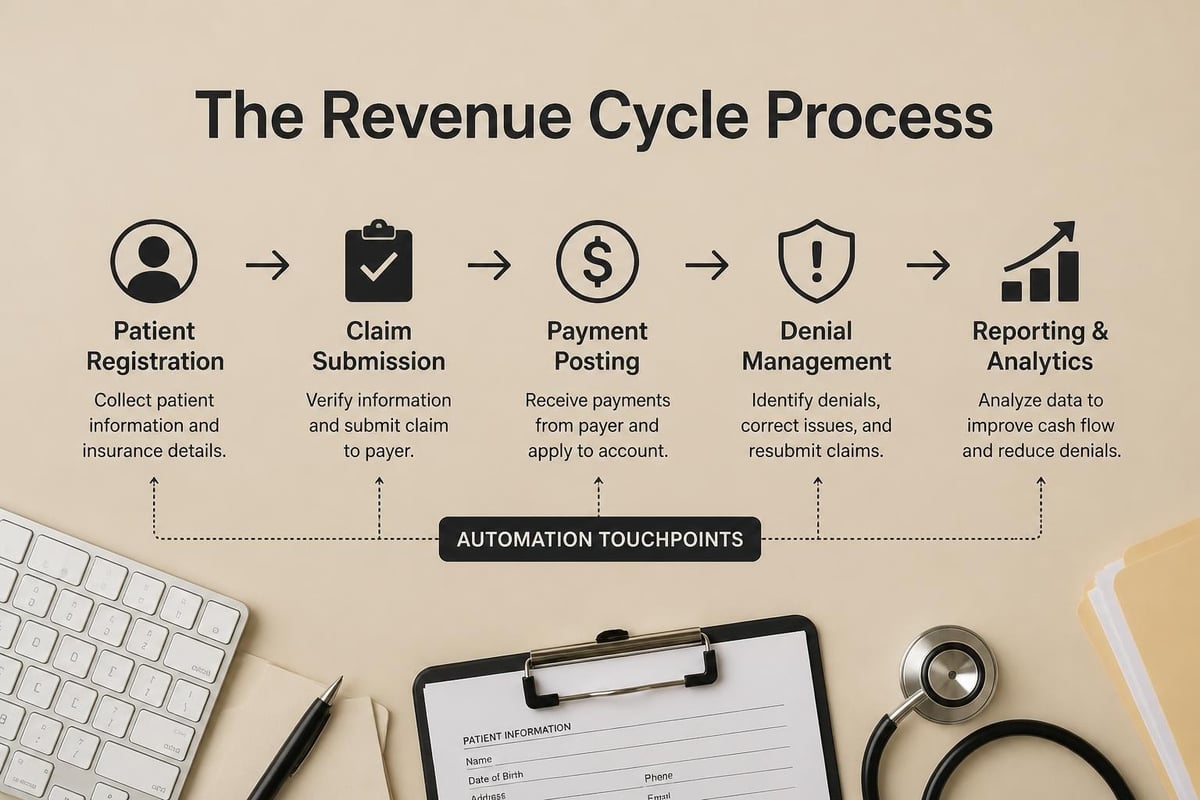
Revenue cycle workflow optimization

Denial management exemplifies an area where automation delivers substantial value. Automated systems can categorize denials by reason code, prioritize accounts based on recovery potential, generate appeals with supporting documentation, and track resolution timelines. This approach enables revenue cycle teams to address denials systematically rather than reactively, improving recovery rates and accelerating cash flow.

Workforce Development and Human Capital Management

Health systems depend entirely on their workforce to deliver services and achieve organizational objectives. Human capital management encompasses recruitment, onboarding, training, performance management, compensation, benefits administration, and retention strategies. Excellence in these areas directly correlates with clinical quality, patient satisfaction, and financial performance.

The healthcare workforce faces unprecedented challenges in 2026. Burnout rates remain elevated following years of pandemic stress, competition for qualified professionals intensifies across all disciplines, and changing workforce expectations require organizations to offer greater flexibility and support. Human capital management companies provide solutions that help organizations address these challenges through streamlined processes and enhanced employee experiences.

Supporting Employee Wellness and Engagement

Forward-thinking health systems recognize that employee wellness directly impacts organizational performance. Staff experiencing physical, mental, or financial stress cannot perform optimally, leading to decreased productivity, increased errors, and higher turnover rates. Comprehensive wellness programs address multiple dimensions of employee wellbeing.

Effective wellness initiatives include:

  • Mental health support services and counseling resources
  • Financial wellness education and planning assistance
  • Physical health programs and preventive care access
  • Flexible scheduling options and work-life balance support
  • Professional development opportunities and career advancement paths

Organizations investing in employee wellness typically experience reduced turnover, improved patient satisfaction scores, and stronger financial performance. The return on investment becomes apparent through decreased recruitment costs, reduced training expenses, and enhanced operational efficiency as experienced staff remain with the organization.

Wellness Program Component Employee Benefit Organizational Benefit
Mental health resources Reduced stress, improved coping Lower absenteeism, better performance
Financial planning support Improved financial security Decreased financial stress, enhanced focus
Flexible scheduling Better work-life balance Improved retention, higher satisfaction
Career development Enhanced skills, advancement opportunities Stronger talent pipeline, reduced external recruitment

Data-Driven Decision Making and Performance Analytics

Health systems generate massive volumes of data through clinical operations, financial transactions, workforce activities, and patient interactions. Organizations that effectively harness this information gain significant competitive advantages through improved decision-making, proactive problem identification, and strategic resource allocation.

Performance analytics enable leaders to move beyond reactive management toward predictive and prescriptive approaches. Rather than responding to problems after they emerge, data-driven organizations identify emerging trends, anticipate challenges, and implement preventive measures. This approach applies across all operational areas, from clinical quality improvement to workforce scheduling to revenue cycle optimization.

Health Systems Evidence provides research evidence about governance, financial arrangements, and implementation strategies that support informed decision-making across diverse organizational contexts. Healthcare leaders can leverage this repository to identify best practices, evaluate intervention effectiveness, and design evidence-based improvement initiatives.

Implementing Effective Analytics Frameworks

Successful analytics programs require more than technology investments. Organizations must establish clear performance metrics aligned with strategic objectives, ensure data quality across source systems, develop analytical capabilities within their workforce, and create processes for translating insights into action.

Healthcare analytics framework

Dashboards and visualization tools make complex information accessible to leaders at all organizational levels. Department managers can monitor key performance indicators in real-time, identify deviations from expected performance, and implement corrective actions promptly. Executive teams can track progress toward strategic goals, allocate resources based on performance data, and communicate results to governing boards and external stakeholders.

The Authority Signals Framework introduced in recent academic research offers valuable insights for evaluating information credibility in AI-generated responses, which becomes increasingly relevant as health systems incorporate artificial intelligence into decision-support processes. Organizations must ensure that automated recommendations reflect accurate, reliable information to maintain clinical quality and operational effectiveness.

Strategic Planning and Operational Excellence

Health systems must balance immediate operational demands with long-term strategic positioning. This tension requires sophisticated planning processes that account for market dynamics, competitive pressures, regulatory changes, and technological evolution. Organizations achieving sustained success typically employ structured approaches to strategic planning and operational improvement.

Operational excellence initiatives focus on eliminating waste, standardizing processes, reducing variation, and continuously improving performance. These efforts apply lean management principles, Six Sigma methodologies, and other quality improvement frameworks to healthcare operations. Achieving growth and efficiency in operations requires systematic approaches that engage staff at all levels and create cultures of continuous improvement.

Key operational excellence principles include:

  1. Value stream mapping to identify improvement opportunities
  2. Standardized work processes to reduce variation
  3. Root cause analysis to address underlying problems
  4. Continuous measurement and feedback mechanisms
  5. Employee engagement and empowerment initiatives

Organizations implementing these principles experience substantial benefits, including reduced costs, improved quality, enhanced patient satisfaction, and stronger employee engagement. The cumulative effect of numerous small improvements generates significant competitive advantages over time.

Integration and Coordination Across Care Settings

Modern health systems increasingly operate across multiple care settings, including acute care hospitals, ambulatory clinics, post-acute facilities, and home-based services. Effective coordination across these settings ensures continuity of care, reduces duplicative services, and improves patient outcomes while managing costs.

Care transitions represent particularly vulnerable points where communication breakdowns frequently occur. Patients moving from hospital to home, from hospital to skilled nursing facility, or between different providers face risks of medication errors, missed follow-up appointments, and inadequate support services. Health systems implementing robust care coordination processes reduce these risks substantially.

World Health Systems Facts provides comparative data on global healthcare structures, offering perspectives on how different organizational models achieve integration and coordination. These international comparisons reveal diverse approaches to common challenges and highlight innovative solutions worth considering.

Technology platforms supporting care coordination enable real-time information sharing, automated appointment scheduling, medication reconciliation, and patient education delivery. These systems ensure that all providers involved in a patient's care access current, accurate information regardless of physical location or organizational affiliation.

Financial Sustainability and Cost Management

Health systems face constant pressure to reduce costs while maintaining or improving quality. This challenge requires sophisticated approaches to resource utilization, supply chain management, labor cost optimization, and revenue enhancement. Organizations achieving financial sustainability typically employ comprehensive strategies addressing multiple cost drivers simultaneously.

Labor represents the largest expense category for most health systems, consuming sixty to seventy percent of operating budgets. Effective workforce management balances adequate staffing levels with cost control objectives. Predictive scheduling tools, float pool optimization, and productivity monitoring systems help organizations achieve this balance while ensuring patient safety and care quality.

Supply chain expenses constitute another significant cost category. Standardization initiatives, group purchasing participation, and inventory optimization reduce supply costs without compromising clinical quality. Time savings generated through automated supply chain processes enable staff to focus on strategic sourcing activities rather than routine ordering and reconciliation tasks.

Cost Management Strategy Implementation Approach Expected Impact
Labor productivity improvement Workload measurement, productivity standards 5-10% efficiency gain
Supply chain optimization Standardization, contract compliance 10-15% cost reduction
Revenue cycle enhancement Automation, denial prevention 2-5% revenue increase
Technology consolidation Platform integration, vendor reduction 15-20% IT cost savings

Organizations must also address revenue enhancement opportunities to achieve financial sustainability. Payer contract optimization ensures appropriate reimbursement rates, charge capture improvement prevents revenue leakage, and denial management recovers payment for services already provided. These revenue-focused initiatives complement cost reduction efforts to strengthen overall financial performance.


Health systems must navigate complex operational challenges while delivering high-quality care and maintaining financial sustainability. Success requires integrated technology platforms, optimized workflows, engaged workforces, and data-driven decision-making capabilities. Nero and Associates, Inc. helps healthcare organizations achieve these objectives through artificial intelligence, automation solutions, human capital management expertise, and revenue cycle optimization. Our performance-based approach delivers measurable results that improve efficiency, increase revenue, and enhance employee wellness across your organization.

Health Systems: Building Efficient Healthcare Operations

Modern healthcare delivery depends on sophisticated organizational structures that coordinate care, manage resources, and ensure financial sustainability. Health systems represent the backbone of contemporary medical services, encompassing hospitals, clinics, administrative functions, and support services that work together to provide comprehensive patient care. As healthcare costs continue to rise and patient expectations evolve, organizations must optimize their operational frameworks to remain competitive while delivering exceptional outcomes. Understanding how health systems function and identifying opportunities for improvement has become essential for healthcare leaders seeking to balance quality care with financial performance.

The Foundation of Modern Healthcare Delivery

Health systems consist of interconnected components that must work harmoniously to achieve organizational objectives. These structures include clinical operations, administrative functions, revenue cycle management, human resources, and technology infrastructure. Each element plays a critical role in supporting patient care while maintaining financial viability.

The complexity of these organizations requires sophisticated coordination mechanisms. Clinical departments must communicate effectively with administrative teams, billing specialists need accurate documentation from providers, and human resources must ensure adequate staffing levels across all service lines. When these systems operate efficiently, organizations experience improved patient satisfaction, reduced operational costs, and stronger financial performance.

Structural Components and Their Interdependencies

Healthcare organizations typically organize their operations across multiple divisions, each with distinct responsibilities yet shared objectives. The American Hospital Association provides resources on health systems that illustrate how different organizational models achieve varying levels of integration and coordination.

Key organizational divisions include:

  • Clinical operations and patient care delivery
  • Revenue cycle management and billing operations
  • Human capital management and workforce development
  • Information technology and systems integration
  • Quality assurance and compliance monitoring

These divisions generate vast amounts of data daily, creating opportunities for organizations that can effectively analyze and act on information. Forward-thinking organizations leverage automation and artificial intelligence to streamline workflows, reduce manual processes, and enable staff to focus on high-value activities rather than repetitive administrative tasks.

Health system operational divisions

Technology Integration and Digital Transformation

Digital transformation has fundamentally altered how health systems operate and deliver care. Electronic health records, telehealth platforms, automated billing systems, and predictive analytics tools have become standard components of modern healthcare infrastructure. Organizations that successfully implement these technologies gain significant competitive advantages through improved efficiency and enhanced patient experiences.

The Centers for Medicare & Medicaid Services discusses health systems and providers’ roles in adopting health technology, emphasizing the importance of interoperability and data exchange. Systems that cannot share information seamlessly face operational bottlenecks, duplicative processes, and increased error rates.

Technology Category Primary Benefits Implementation Challenges
Electronic Health Records Centralized patient data, improved coordination High initial costs, training requirements
Revenue Cycle Automation Faster reimbursement, reduced denials Integration complexity, workflow redesign
Predictive Analytics Proactive decision-making, resource optimization Data quality issues, analytical expertise needs
Telehealth Platforms Expanded access, operational flexibility Regulatory compliance, technology adoption

Successful technology adoption requires more than purchasing software or hardware. Organizations must redesign workflows, train staff thoroughly, and continuously monitor performance to realize expected benefits. Healthcare providers can recover underpayments more effectively when they implement automated systems that identify billing discrepancies and streamline claims management.

Automation as a Strategic Imperative

Manual processes create significant inefficiencies within health systems, consuming staff time that could be devoted to patient care or strategic initiatives. Automation technologies eliminate repetitive tasks, reduce error rates, and accelerate processing times across multiple operational areas.

Consider revenue cycle operations, where automated systems can verify insurance eligibility, submit claims electronically, identify coding errors before submission, and flag accounts requiring follow-up. These capabilities dramatically reduce the time required to collect payment while improving cash flow and reducing bad debt.

Similarly, human capital management benefits enormously from automation. Scheduling systems can optimize shift assignments based on predicted patient volumes, credential verification platforms can streamline provider onboarding, and payroll automation ensures accurate, timely compensation. Organizations exploring business automation benefits discover that these technologies deliver returns far exceeding their implementation costs.

Revenue Cycle Optimization and Financial Performance

Financial sustainability represents a critical challenge for health systems operating in an environment of shrinking reimbursement rates, increasing regulatory requirements, and rising operational costs. Revenue cycle management encompasses all administrative and clinical functions contributing to patient service revenue capture, from initial appointment scheduling through final payment collection.

Effective revenue cycle operations require precision at every step. Patient registration must capture accurate demographic and insurance information, clinical documentation must support appropriate coding, claims must be submitted promptly with correct information, and payment posting must occur efficiently. Breakdowns at any point create delays, denials, and revenue leakage.

Critical revenue cycle performance indicators include:

  1. Days in accounts receivable
  2. Clean claim submission rate
  3. Denial rate and denial overturn rate
  4. Net collection rate
  5. Cost to collect per dollar received

Organizations achieving excellence in these metrics typically employ sophisticated technology platforms integrated with clinical systems, comprehensive staff training programs, and robust quality assurance processes. They also recognize that revenue cycle performance depends heavily on front-line clinical staff who document services accurately and completely.

Addressing Common Revenue Cycle Challenges

Health systems face numerous obstacles in optimizing revenue cycle operations. Payer complexity continues to increase as insurance products proliferate and coverage rules become more intricate. Regulatory requirements demand constant attention and adaptation. Staff turnover disrupts operational continuity and institutional knowledge.

Research examining question-answering systems for health professionals demonstrates how artificial intelligence can support clinical and administrative decision-making, helping staff navigate complex rules and requirements more effectively. These tools reduce the cognitive burden on employees while improving accuracy and compliance.

Revenue cycle workflow optimization

Denial management exemplifies an area where automation delivers substantial value. Automated systems can categorize denials by reason code, prioritize accounts based on recovery potential, generate appeals with supporting documentation, and track resolution timelines. This approach enables revenue cycle teams to address denials systematically rather than reactively, improving recovery rates and accelerating cash flow.

Workforce Development and Human Capital Management

Health systems depend entirely on their workforce to deliver services and achieve organizational objectives. Human capital management encompasses recruitment, onboarding, training, performance management, compensation, benefits administration, and retention strategies. Excellence in these areas directly correlates with clinical quality, patient satisfaction, and financial performance.

The healthcare workforce faces unprecedented challenges in 2026. Burnout rates remain elevated following years of pandemic stress, competition for qualified professionals intensifies across all disciplines, and changing workforce expectations require organizations to offer greater flexibility and support. Human capital management companies provide solutions that help organizations address these challenges through streamlined processes and enhanced employee experiences.

Supporting Employee Wellness and Engagement

Forward-thinking health systems recognize that employee wellness directly impacts organizational performance. Staff experiencing physical, mental, or financial stress cannot perform optimally, leading to decreased productivity, increased errors, and higher turnover rates. Comprehensive wellness programs address multiple dimensions of employee wellbeing.

Effective wellness initiatives include:

  • Mental health support services and counseling resources
  • Financial wellness education and planning assistance
  • Physical health programs and preventive care access
  • Flexible scheduling options and work-life balance support
  • Professional development opportunities and career advancement paths

Organizations investing in employee wellness typically experience reduced turnover, improved patient satisfaction scores, and stronger financial performance. The return on investment becomes apparent through decreased recruitment costs, reduced training expenses, and enhanced operational efficiency as experienced staff remain with the organization.

Wellness Program Component Employee Benefit Organizational Benefit
Mental health resources Reduced stress, improved coping Lower absenteeism, better performance
Financial planning support Improved financial security Decreased financial stress, enhanced focus
Flexible scheduling Better work-life balance Improved retention, higher satisfaction
Career development Enhanced skills, advancement opportunities Stronger talent pipeline, reduced external recruitment

Data-Driven Decision Making and Performance Analytics

Health systems generate massive volumes of data through clinical operations, financial transactions, workforce activities, and patient interactions. Organizations that effectively harness this information gain significant competitive advantages through improved decision-making, proactive problem identification, and strategic resource allocation.

Performance analytics enable leaders to move beyond reactive management toward predictive and prescriptive approaches. Rather than responding to problems after they emerge, data-driven organizations identify emerging trends, anticipate challenges, and implement preventive measures. This approach applies across all operational areas, from clinical quality improvement to workforce scheduling to revenue cycle optimization.

Health Systems Evidence provides research evidence about governance, financial arrangements, and implementation strategies that support informed decision-making across diverse organizational contexts. Healthcare leaders can leverage this repository to identify best practices, evaluate intervention effectiveness, and design evidence-based improvement initiatives.

Implementing Effective Analytics Frameworks

Successful analytics programs require more than technology investments. Organizations must establish clear performance metrics aligned with strategic objectives, ensure data quality across source systems, develop analytical capabilities within their workforce, and create processes for translating insights into action.

Healthcare analytics framework

Dashboards and visualization tools make complex information accessible to leaders at all organizational levels. Department managers can monitor key performance indicators in real-time, identify deviations from expected performance, and implement corrective actions promptly. Executive teams can track progress toward strategic goals, allocate resources based on performance data, and communicate results to governing boards and external stakeholders.

The Authority Signals Framework introduced in recent academic research offers valuable insights for evaluating information credibility in AI-generated responses, which becomes increasingly relevant as health systems incorporate artificial intelligence into decision-support processes. Organizations must ensure that automated recommendations reflect accurate, reliable information to maintain clinical quality and operational effectiveness.

Strategic Planning and Operational Excellence

Health systems must balance immediate operational demands with long-term strategic positioning. This tension requires sophisticated planning processes that account for market dynamics, competitive pressures, regulatory changes, and technological evolution. Organizations achieving sustained success typically employ structured approaches to strategic planning and operational improvement.

Operational excellence initiatives focus on eliminating waste, standardizing processes, reducing variation, and continuously improving performance. These efforts apply lean management principles, Six Sigma methodologies, and other quality improvement frameworks to healthcare operations. Achieving growth and efficiency in operations requires systematic approaches that engage staff at all levels and create cultures of continuous improvement.

Key operational excellence principles include:

  1. Value stream mapping to identify improvement opportunities
  2. Standardized work processes to reduce variation
  3. Root cause analysis to address underlying problems
  4. Continuous measurement and feedback mechanisms
  5. Employee engagement and empowerment initiatives

Organizations implementing these principles experience substantial benefits, including reduced costs, improved quality, enhanced patient satisfaction, and stronger employee engagement. The cumulative effect of numerous small improvements generates significant competitive advantages over time.

Integration and Coordination Across Care Settings

Modern health systems increasingly operate across multiple care settings, including acute care hospitals, ambulatory clinics, post-acute facilities, and home-based services. Effective coordination across these settings ensures continuity of care, reduces duplicative services, and improves patient outcomes while managing costs.

Care transitions represent particularly vulnerable points where communication breakdowns frequently occur. Patients moving from hospital to home, from hospital to skilled nursing facility, or between different providers face risks of medication errors, missed follow-up appointments, and inadequate support services. Health systems implementing robust care coordination processes reduce these risks substantially.

World Health Systems Facts provides comparative data on global healthcare structures, offering perspectives on how different organizational models achieve integration and coordination. These international comparisons reveal diverse approaches to common challenges and highlight innovative solutions worth considering.

Technology platforms supporting care coordination enable real-time information sharing, automated appointment scheduling, medication reconciliation, and patient education delivery. These systems ensure that all providers involved in a patient's care access current, accurate information regardless of physical location or organizational affiliation.

Financial Sustainability and Cost Management

Health systems face constant pressure to reduce costs while maintaining or improving quality. This challenge requires sophisticated approaches to resource utilization, supply chain management, labor cost optimization, and revenue enhancement. Organizations achieving financial sustainability typically employ comprehensive strategies addressing multiple cost drivers simultaneously.

Labor represents the largest expense category for most health systems, consuming sixty to seventy percent of operating budgets. Effective workforce management balances adequate staffing levels with cost control objectives. Predictive scheduling tools, float pool optimization, and productivity monitoring systems help organizations achieve this balance while ensuring patient safety and care quality.

Supply chain expenses constitute another significant cost category. Standardization initiatives, group purchasing participation, and inventory optimization reduce supply costs without compromising clinical quality. Time savings generated through automated supply chain processes enable staff to focus on strategic sourcing activities rather than routine ordering and reconciliation tasks.

Cost Management Strategy Implementation Approach Expected Impact
Labor productivity improvement Workload measurement, productivity standards 5-10% efficiency gain
Supply chain optimization Standardization, contract compliance 10-15% cost reduction
Revenue cycle enhancement Automation, denial prevention 2-5% revenue increase
Technology consolidation Platform integration, vendor reduction 15-20% IT cost savings

Organizations must also address revenue enhancement opportunities to achieve financial sustainability. Payer contract optimization ensures appropriate reimbursement rates, charge capture improvement prevents revenue leakage, and denial management recovers payment for services already provided. These revenue-focused initiatives complement cost reduction efforts to strengthen overall financial performance.


Health systems must navigate complex operational challenges while delivering high-quality care and maintaining financial sustainability. Success requires integrated technology platforms, optimized workflows, engaged workforces, and data-driven decision-making capabilities. Nero and Associates, Inc. helps healthcare organizations achieve these objectives through artificial intelligence, automation solutions, human capital management expertise, and revenue cycle optimization. Our performance-based approach delivers measurable results that improve efficiency, increase revenue, and enhance employee wellness across your organization.

Website developed in accordance with Web Content Accessibility Guidelines 2.2.
If you encounter any issues while using this site, please contact us: 215.526.5126