

Open Enrollment: A Strategic Guide for Employers

Share on Facebook
Share on X
Share on LinkedIn

Every year, organizations face a compressed window of opportunity to engage employees in selecting their benefits packages. This annual period, known as open enrollment, represents far more than an administrative checkbox. It serves as a strategic touchpoint for talent retention, cost management, and employee wellness. For businesses seeking to optimize operational efficiency while improving workforce satisfaction, understanding the mechanics and implications of this benefits selection window becomes essential. Organizations that approach this period strategically can transform a compliance requirement into a competitive advantage.

Understanding the Open Enrollment Framework

Open enrollment designates the specific timeframe when employees can enroll in employer-sponsored benefits, modify existing coverage, or decline participation for the upcoming plan year. This period typically occurs annually, though the exact dates vary by organization and plan type. Federal programs follow standardized schedules, while private employers maintain flexibility in setting their enrollment windows.

The significance of this period extends beyond simple plan selection. Employees make decisions that affect their financial security, healthcare access, and family protection for an entire year. Once the window closes, participants generally cannot make changes unless they experience a qualifying life event such as marriage, birth, or loss of other coverage.

Regulatory Landscape and Compliance Requirements

Federal regulations establish minimum standards for how organizations conduct their enrollment periods. The Affordable Care Act (ACA) mandates specific notice requirements, waiting period limitations, and coverage standards that employers must follow. According to the 2026 Marketplace Open Enrollment fact sheet, federal exchanges operate on standardized timelines, providing a framework that influences private employer practices.

Key compliance considerations include:

  • Providing adequate notice periods before enrollment begins
  • Distributing Summary of Benefits and Coverage (SBC) documents
  • Maintaining records of employee elections
  • Ensuring non-discrimination in benefit offerings
  • Meeting COBRA continuation requirements

Organizations must also navigate state-specific regulations that may impose additional requirements. Some states mandate specific coverage types, while others establish minimum employer contribution levels. The complexity of these overlapping requirements makes systematic tracking essential.
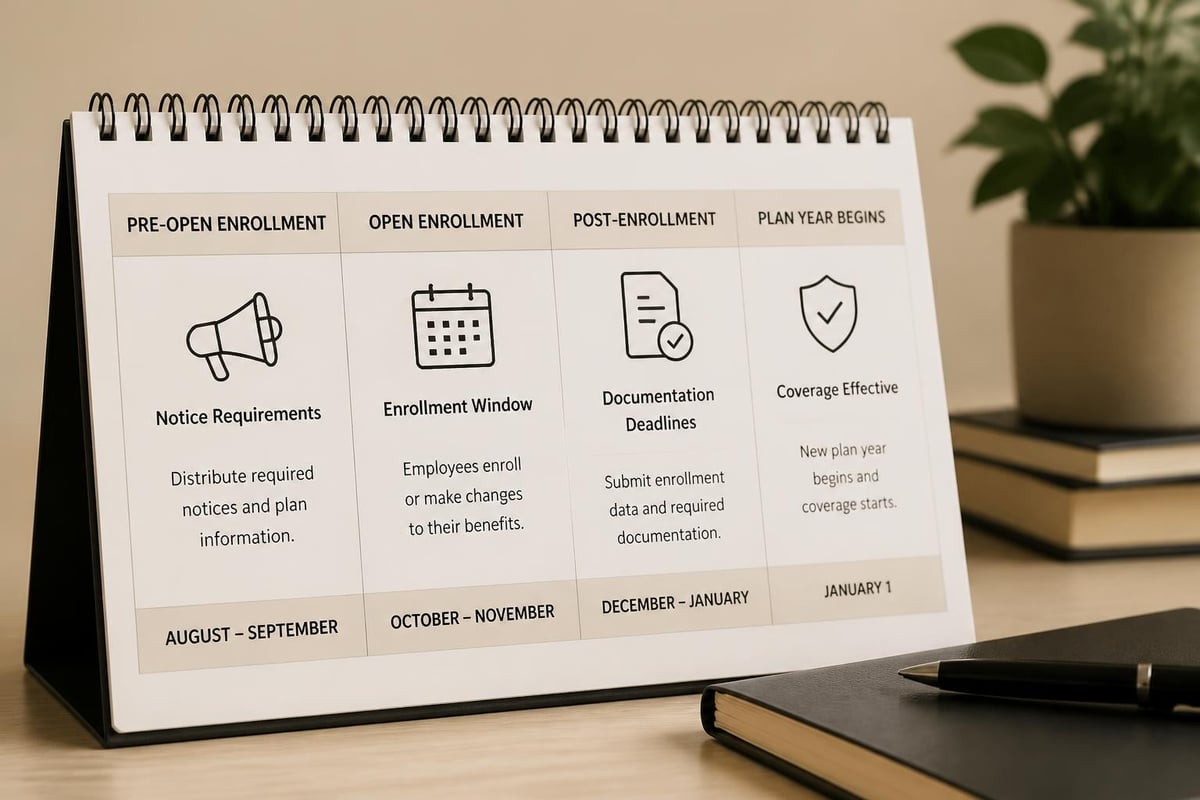
Employee benefits compliance timeline

Strategic Planning for Maximum Impact

Successful enrollment periods begin months before employees receive their first communication. Strategic planning transforms what could be a chaotic scramble into a coordinated campaign that educates, engages, and empowers the workforce.

Leading organizations establish planning committees that include representatives from human resources, finance, communications, and departmental leadership. This cross-functional approach ensures benefits align with organizational objectives while addressing employee needs. The planning process should begin at least 90 days before the enrollment window opens.

Data-Driven Decision Making

Organizations generate valuable insights by analyzing previous enrollment data. Participation rates, plan selections, and demographic patterns reveal employee preferences and pain points. This intelligence informs benefit design decisions and communication strategies.

Analysis Area Key Metrics Strategic Application
Participation Rates Overall enrollment, plan-specific uptake Identify underutilized benefits, adjust offerings
Cost Analysis Premium contributions, out-of-pocket trends Refine cost-sharing models
Employee Demographics Age distribution, family status Tailor benefit mix to workforce composition
Engagement Metrics Portal logins, decision support tool usage Improve communication channels

Recent research from the SHRM Employee Benefits Survey demonstrates that organizations using data analytics to shape their benefits strategy report higher employee satisfaction and better cost containment. These insights allow employers to anticipate needs and proactively address concerns before the enrollment window opens.

Communication Excellence During Open Enrollment

The quality of communication directly influences employee engagement and decision quality during open enrollment. Many employees lack financial literacy regarding healthcare and retirement concepts, making clear, accessible information critical. Organizations must deliver complex information through multiple channels to reach diverse learning styles and preferences.

Effective communication strategies blend traditional and digital approaches. Email campaigns, printed materials, town hall meetings, and one-on-one consultations each serve distinct purposes. Digital platforms offer convenience and self-service options, while personal interactions address individual questions and concerns.

Multi-Channel Communication Framework

  1. Pre-enrollment awareness (60 days before): Announce upcoming changes, highlight important dates, preview new options
  2. Launch communications (enrollment opens): Provide detailed plan information, comparison tools, decision support resources
  3. Mid-period reminders (enrollment midpoint): Send personalized nudges to non-participants, address common questions
  4. Final push (one week remaining): Urgent deadline reminders, express enrollment assistance
  5. Post-enrollment confirmation (window closes): Provide selection summaries, next steps, effective dates

Organizations serving healthcare sectors face unique communication challenges. The healthcare-focused solutions provided by specialized consultancies can help navigate industry-specific requirements while maintaining compliance with HIPAA and other regulations.

Benefits communication channels

Technology Integration and Process Automation

Modern enrollment management relies heavily on technology platforms that streamline administration while improving the employee experience. Benefits administration systems, decision support tools, and integration with payroll systems eliminate manual processes that consume HR resources and introduce errors.

The automation of enrollment processes delivers measurable value. Organizations can eliminate thousands of hours previously spent on manual data entry, paper processing, and error correction. These time savings translate directly to cost reduction while freeing HR teams to focus on strategic activities.

Technology capabilities that enhance enrollment include:

  • Real-time eligibility verification
  • Automated dependent verification
  • Plan comparison calculators
  • Contribution modeling tools
  • Mobile-responsive enrollment portals
  • Electronic signature capture
  • Direct integration with carrier systems

Integration between benefits platforms and broader Human Capital Management systems creates a seamless experience. Employees access their complete compensation and benefits information through a single portal, while administrators maintain consistent data across all systems. These payroll and HCM solutions reduce administrative burden while improving accuracy.

Financial Wellness and Employee Decision Support

The intersection of benefits selection and financial wellness represents a critical area for employer focus. Many employees struggle to evaluate the financial implications of their choices, leading to suboptimal decisions that affect their long-term security.

Sophisticated employers now offer decision support tools that help employees model different scenarios. These tools consider current health status, anticipated medical needs, family composition, and financial circumstances to recommend appropriate coverage levels. By personalizing guidance, organizations help employees make informed choices aligned with their individual situations.

Health Savings Accounts and Tax-Advantaged Options

The expansion of Health Savings Accounts (HSAs) and updated guidance from the IRS on these accounts create new opportunities for employee savings. Organizations that educate employees about these vehicles and their tax advantages see higher participation in high-deductible health plans paired with HSAs.

Similarly, updated FSA contribution limits for 2026 provide additional tax-advantaged savings opportunities. Employees who understand these programs can reduce their taxable income while setting aside funds for medical expenses.

Account Type 2026 Contribution Limit Tax Advantage Use Case
Health Savings Account $4,300 individual / $8,550 family Triple tax advantage Long-term medical savings
Healthcare FSA $3,300 Pre-tax contributions Predictable annual expenses
Dependent Care FSA $5,000 Pre-tax contributions Childcare, elder care
Commuter Benefits $325 monthly Pre-tax contributions Transportation costs

Addressing Special Populations and Circumstances

Different employee segments require tailored approaches during open enrollment. New hires, retirees, seasonal workers, and those experiencing life changes each face unique considerations that standard communications may not address.

New employees often encounter benefits decisions during their first weeks on the job, when they're already managing significant change. Providing dedicated support for these individuals ensures they understand their options and make appropriate selections. Some organizations assign benefits mentors or schedule individual consultations for all new hires.

Medicare Coordination and Retiree Benefits

Organizations with retiree populations must coordinate employer benefits with Medicare. The Medicare Open Enrollment Period runs from October 15 through December 7 annually, creating a distinct timeline from most employer programs. Effective coordination prevents coverage gaps and ensures retirees understand how their employer benefits interact with federal programs.

Consultants specializing in benefits administration can help organizations navigate these complex scenarios. The expertise available through professional services consulting ensures compliance while optimizing the employee experience across diverse populations.

Measuring Success and Continuous Improvement

Evaluating the effectiveness of open enrollment efforts requires establishing clear metrics before the period begins. Organizations should track both process efficiency and outcome quality to understand what worked and identify improvement opportunities.

Process metrics include:

  • Percentage of eligible employees completing enrollment
  • Average time to complete enrollment
  • Support ticket volume and resolution time
  • System uptime and technical issues
  • Communication open and click rates

Outcome metrics include:

  • Employee satisfaction scores
  • Benefit utilization rates
  • Cost per employee covered
  • Voluntary benefit participation
  • Financial wellness program engagement

Post-enrollment surveys provide qualitative feedback that quantitative metrics cannot capture. Understanding employee perception of the process, clarity of communications, and adequacy of support informs next year's strategy. Organizations committed to continuous improvement establish feedback loops that drive year-over-year enhancement.
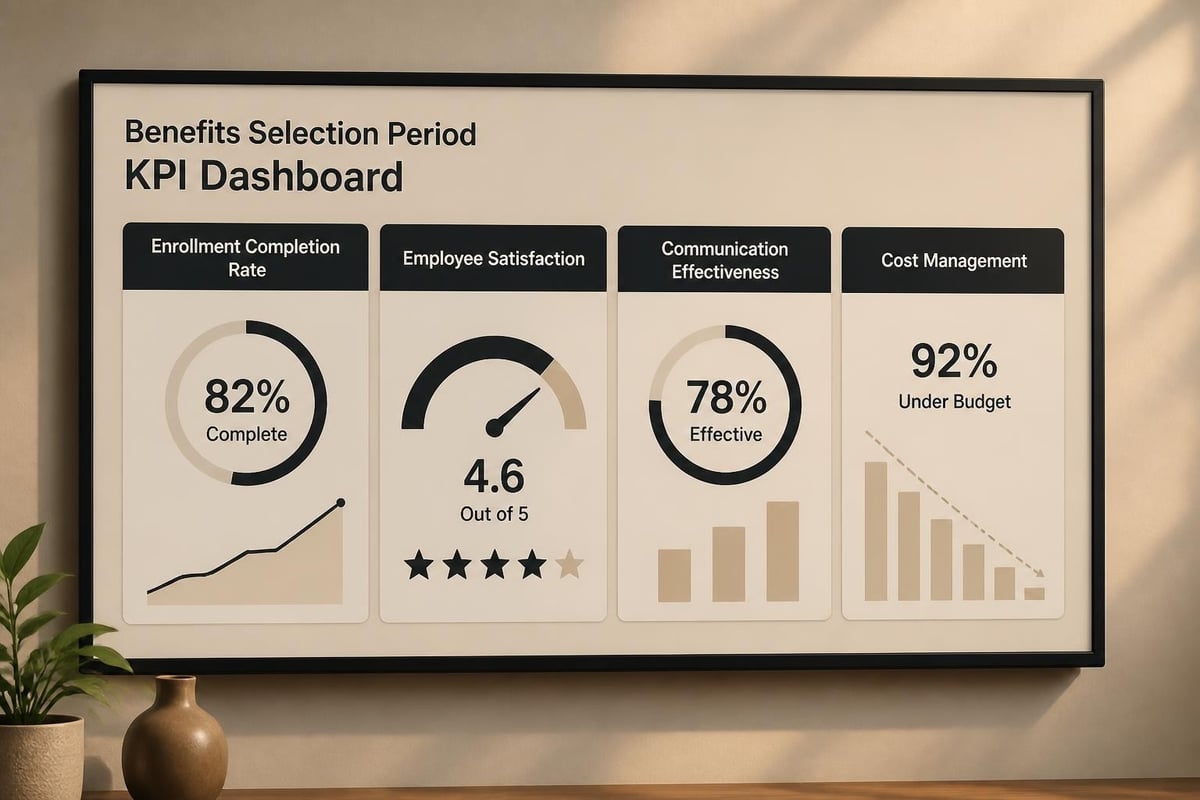
Open enrollment performance metrics

Vendor Management and Broker Relationships

Most organizations rely on insurance carriers, third-party administrators, and benefits brokers to deliver their programs. Managing these relationships effectively ensures smooth enrollment execution and rapid issue resolution. The resources available to agents and brokers supporting marketplace enrollment illustrate the ecosystem of support available to organizations.

Establishing clear service level agreements with vendors sets expectations for performance during the critical enrollment window. Response times, escalation procedures, and communication protocols should be documented well before enrollment begins. Regular check-ins during the planning phase identify potential issues before they affect employees.

Strong broker partnerships provide value beyond basic plan placement. Experienced brokers offer benchmarking data, market intelligence, and strategic guidance on benefit design. They can also provide employee communication support and decision tools that enhance the enrollment experience. Organizations should evaluate broker performance annually to ensure continued alignment and value delivery.

Cost Management Strategies

Benefits represent a significant expense for most organizations, making cost management a critical objective during plan design and enrollment. However, cost containment must balance with employee needs and competitive positioning in the talent market. The SHRM toolkit on healthcare cost management provides comprehensive strategies for achieving this balance.

Effective cost management begins with plan design choices that incentivize appropriate utilization while maintaining access to necessary care. High-deductible health plans, tiered provider networks, and wellness incentives can reduce costs when implemented thoughtfully. Transparency in cost-sharing helps employees understand their financial responsibility and make informed decisions.

Wellness Program Integration

Integrating wellness programs with open enrollment creates opportunities to address health risks proactively while managing costs. Organizations that offer premium reductions or HSA contributions for completing health assessments and preventive care see improved health outcomes and reduced claims costs over time.

These programs work best when they address comprehensive wellness dimensions including physical health, mental health, and financial wellness. Solutions that empower employees to be proactive with their health deliver the greatest return on investment while improving quality of life.

Emerging Trends Shaping Future Enrollment

The benefits landscape continues evolving, with several trends likely to influence how organizations approach future enrollment periods. Understanding these developments allows forward-thinking organizations to stay ahead of employee expectations and regulatory changes.

Personalization and artificial intelligence: Advanced platforms now use AI to provide highly personalized benefit recommendations based on individual circumstances, usage patterns, and life stage. This technology improves decision quality while reducing the complexity employees face.

Year-round engagement: Progressive organizations move beyond the annual enrollment window to provide ongoing benefits education and engagement. This approach reduces the pressure of the traditional enrollment period while improving overall benefits literacy.

Voluntary benefit expansion: Employees increasingly value diverse voluntary benefits including pet insurance, identity theft protection, and legal services. These low-cost additions enhance the total rewards package without significantly impacting employer expenses.

Mental health and wellbeing focus: Recognition of mental health's importance has accelerated dramatically, with organizations expanding Employee Assistance Programs, adding mental health-specific coverage, and integrating stress management resources into their benefits packages.

The detailed enrollment data available through public use files demonstrates the scale of benefits programs nationally and provides insights into participation patterns that inform private sector strategy.


Successful open enrollment requires strategic planning, clear communication, robust technology, and genuine commitment to employee wellbeing. Organizations that invest in optimizing this annual process create value that extends throughout the year through improved employee engagement, better health outcomes, and controlled costs. Nero and Associates, Inc. helps organizations transform their benefits administration through automation, strategic consulting, and human capital management solutions that eliminate manual processes while empowering employees to make informed decisions about their health and financial wellness. Our performance-based approach ensures your organization maximizes efficiency during open enrollment and beyond.

Open Enrollment: A Strategic Guide for Employers

Every year, organizations face a compressed window of opportunity to engage employees in selecting their benefits packages. This annual period, known as open enrollment, represents far more than an administrative checkbox. It serves as a strategic touchpoint for talent retention, cost management, and employee wellness. For businesses seeking to optimize operational efficiency while improving workforce satisfaction, understanding the mechanics and implications of this benefits selection window becomes essential. Organizations that approach this period strategically can transform a compliance requirement into a competitive advantage.

Understanding the Open Enrollment Framework

Open enrollment designates the specific timeframe when employees can enroll in employer-sponsored benefits, modify existing coverage, or decline participation for the upcoming plan year. This period typically occurs annually, though the exact dates vary by organization and plan type. Federal programs follow standardized schedules, while private employers maintain flexibility in setting their enrollment windows.

The significance of this period extends beyond simple plan selection. Employees make decisions that affect their financial security, healthcare access, and family protection for an entire year. Once the window closes, participants generally cannot make changes unless they experience a qualifying life event such as marriage, birth, or loss of other coverage.

Regulatory Landscape and Compliance Requirements

Federal regulations establish minimum standards for how organizations conduct their enrollment periods. The Affordable Care Act (ACA) mandates specific notice requirements, waiting period limitations, and coverage standards that employers must follow. According to the 2026 Marketplace Open Enrollment fact sheet, federal exchanges operate on standardized timelines, providing a framework that influences private employer practices.

Key compliance considerations include:

  • Providing adequate notice periods before enrollment begins
  • Distributing Summary of Benefits and Coverage (SBC) documents
  • Maintaining records of employee elections
  • Ensuring non-discrimination in benefit offerings
  • Meeting COBRA continuation requirements

Organizations must also navigate state-specific regulations that may impose additional requirements. Some states mandate specific coverage types, while others establish minimum employer contribution levels. The complexity of these overlapping requirements makes systematic tracking essential.

Employee benefits compliance timeline

Strategic Planning for Maximum Impact

Successful enrollment periods begin months before employees receive their first communication. Strategic planning transforms what could be a chaotic scramble into a coordinated campaign that educates, engages, and empowers the workforce.

Leading organizations establish planning committees that include representatives from human resources, finance, communications, and departmental leadership. This cross-functional approach ensures benefits align with organizational objectives while addressing employee needs. The planning process should begin at least 90 days before the enrollment window opens.

Data-Driven Decision Making

Organizations generate valuable insights by analyzing previous enrollment data. Participation rates, plan selections, and demographic patterns reveal employee preferences and pain points. This intelligence informs benefit design decisions and communication strategies.

Analysis Area Key Metrics Strategic Application
Participation Rates Overall enrollment, plan-specific uptake Identify underutilized benefits, adjust offerings
Cost Analysis Premium contributions, out-of-pocket trends Refine cost-sharing models
Employee Demographics Age distribution, family status Tailor benefit mix to workforce composition
Engagement Metrics Portal logins, decision support tool usage Improve communication channels

Recent research from the SHRM Employee Benefits Survey demonstrates that organizations using data analytics to shape their benefits strategy report higher employee satisfaction and better cost containment. These insights allow employers to anticipate needs and proactively address concerns before the enrollment window opens.

Communication Excellence During Open Enrollment

The quality of communication directly influences employee engagement and decision quality during open enrollment. Many employees lack financial literacy regarding healthcare and retirement concepts, making clear, accessible information critical. Organizations must deliver complex information through multiple channels to reach diverse learning styles and preferences.

Effective communication strategies blend traditional and digital approaches. Email campaigns, printed materials, town hall meetings, and one-on-one consultations each serve distinct purposes. Digital platforms offer convenience and self-service options, while personal interactions address individual questions and concerns.

Multi-Channel Communication Framework

  1. Pre-enrollment awareness (60 days before): Announce upcoming changes, highlight important dates, preview new options
  2. Launch communications (enrollment opens): Provide detailed plan information, comparison tools, decision support resources
  3. Mid-period reminders (enrollment midpoint): Send personalized nudges to non-participants, address common questions
  4. Final push (one week remaining): Urgent deadline reminders, express enrollment assistance
  5. Post-enrollment confirmation (window closes): Provide selection summaries, next steps, effective dates

Organizations serving healthcare sectors face unique communication challenges. The healthcare-focused solutions provided by specialized consultancies can help navigate industry-specific requirements while maintaining compliance with HIPAA and other regulations.

Benefits communication channels

Technology Integration and Process Automation

Modern enrollment management relies heavily on technology platforms that streamline administration while improving the employee experience. Benefits administration systems, decision support tools, and integration with payroll systems eliminate manual processes that consume HR resources and introduce errors.

The automation of enrollment processes delivers measurable value. Organizations can eliminate thousands of hours previously spent on manual data entry, paper processing, and error correction. These time savings translate directly to cost reduction while freeing HR teams to focus on strategic activities.

Technology capabilities that enhance enrollment include:

  • Real-time eligibility verification
  • Automated dependent verification
  • Plan comparison calculators
  • Contribution modeling tools
  • Mobile-responsive enrollment portals
  • Electronic signature capture
  • Direct integration with carrier systems

Integration between benefits platforms and broader Human Capital Management systems creates a seamless experience. Employees access their complete compensation and benefits information through a single portal, while administrators maintain consistent data across all systems. These payroll and HCM solutions reduce administrative burden while improving accuracy.

Financial Wellness and Employee Decision Support

The intersection of benefits selection and financial wellness represents a critical area for employer focus. Many employees struggle to evaluate the financial implications of their choices, leading to suboptimal decisions that affect their long-term security.

Sophisticated employers now offer decision support tools that help employees model different scenarios. These tools consider current health status, anticipated medical needs, family composition, and financial circumstances to recommend appropriate coverage levels. By personalizing guidance, organizations help employees make informed choices aligned with their individual situations.

Health Savings Accounts and Tax-Advantaged Options

The expansion of Health Savings Accounts (HSAs) and updated guidance from the IRS on these accounts create new opportunities for employee savings. Organizations that educate employees about these vehicles and their tax advantages see higher participation in high-deductible health plans paired with HSAs.

Similarly, updated FSA contribution limits for 2026 provide additional tax-advantaged savings opportunities. Employees who understand these programs can reduce their taxable income while setting aside funds for medical expenses.

Account Type 2026 Contribution Limit Tax Advantage Use Case
Health Savings Account $4,300 individual / $8,550 family Triple tax advantage Long-term medical savings
Healthcare FSA $3,300 Pre-tax contributions Predictable annual expenses
Dependent Care FSA $5,000 Pre-tax contributions Childcare, elder care
Commuter Benefits $325 monthly Pre-tax contributions Transportation costs

Addressing Special Populations and Circumstances

Different employee segments require tailored approaches during open enrollment. New hires, retirees, seasonal workers, and those experiencing life changes each face unique considerations that standard communications may not address.

New employees often encounter benefits decisions during their first weeks on the job, when they're already managing significant change. Providing dedicated support for these individuals ensures they understand their options and make appropriate selections. Some organizations assign benefits mentors or schedule individual consultations for all new hires.

Medicare Coordination and Retiree Benefits

Organizations with retiree populations must coordinate employer benefits with Medicare. The Medicare Open Enrollment Period runs from October 15 through December 7 annually, creating a distinct timeline from most employer programs. Effective coordination prevents coverage gaps and ensures retirees understand how their employer benefits interact with federal programs.

Consultants specializing in benefits administration can help organizations navigate these complex scenarios. The expertise available through professional services consulting ensures compliance while optimizing the employee experience across diverse populations.

Measuring Success and Continuous Improvement

Evaluating the effectiveness of open enrollment efforts requires establishing clear metrics before the period begins. Organizations should track both process efficiency and outcome quality to understand what worked and identify improvement opportunities.

Process metrics include:

  • Percentage of eligible employees completing enrollment
  • Average time to complete enrollment
  • Support ticket volume and resolution time
  • System uptime and technical issues
  • Communication open and click rates

Outcome metrics include:

  • Employee satisfaction scores
  • Benefit utilization rates
  • Cost per employee covered
  • Voluntary benefit participation
  • Financial wellness program engagement

Post-enrollment surveys provide qualitative feedback that quantitative metrics cannot capture. Understanding employee perception of the process, clarity of communications, and adequacy of support informs next year's strategy. Organizations committed to continuous improvement establish feedback loops that drive year-over-year enhancement.

Open enrollment performance metrics

Vendor Management and Broker Relationships

Most organizations rely on insurance carriers, third-party administrators, and benefits brokers to deliver their programs. Managing these relationships effectively ensures smooth enrollment execution and rapid issue resolution. The resources available to agents and brokers supporting marketplace enrollment illustrate the ecosystem of support available to organizations.

Establishing clear service level agreements with vendors sets expectations for performance during the critical enrollment window. Response times, escalation procedures, and communication protocols should be documented well before enrollment begins. Regular check-ins during the planning phase identify potential issues before they affect employees.

Strong broker partnerships provide value beyond basic plan placement. Experienced brokers offer benchmarking data, market intelligence, and strategic guidance on benefit design. They can also provide employee communication support and decision tools that enhance the enrollment experience. Organizations should evaluate broker performance annually to ensure continued alignment and value delivery.

Cost Management Strategies

Benefits represent a significant expense for most organizations, making cost management a critical objective during plan design and enrollment. However, cost containment must balance with employee needs and competitive positioning in the talent market. The SHRM toolkit on healthcare cost management provides comprehensive strategies for achieving this balance.

Effective cost management begins with plan design choices that incentivize appropriate utilization while maintaining access to necessary care. High-deductible health plans, tiered provider networks, and wellness incentives can reduce costs when implemented thoughtfully. Transparency in cost-sharing helps employees understand their financial responsibility and make informed decisions.

Wellness Program Integration

Integrating wellness programs with open enrollment creates opportunities to address health risks proactively while managing costs. Organizations that offer premium reductions or HSA contributions for completing health assessments and preventive care see improved health outcomes and reduced claims costs over time.

These programs work best when they address comprehensive wellness dimensions including physical health, mental health, and financial wellness. Solutions that empower employees to be proactive with their health deliver the greatest return on investment while improving quality of life.

Emerging Trends Shaping Future Enrollment

The benefits landscape continues evolving, with several trends likely to influence how organizations approach future enrollment periods. Understanding these developments allows forward-thinking organizations to stay ahead of employee expectations and regulatory changes.

Personalization and artificial intelligence: Advanced platforms now use AI to provide highly personalized benefit recommendations based on individual circumstances, usage patterns, and life stage. This technology improves decision quality while reducing the complexity employees face.

Year-round engagement: Progressive organizations move beyond the annual enrollment window to provide ongoing benefits education and engagement. This approach reduces the pressure of the traditional enrollment period while improving overall benefits literacy.

Voluntary benefit expansion: Employees increasingly value diverse voluntary benefits including pet insurance, identity theft protection, and legal services. These low-cost additions enhance the total rewards package without significantly impacting employer expenses.

Mental health and wellbeing focus: Recognition of mental health's importance has accelerated dramatically, with organizations expanding Employee Assistance Programs, adding mental health-specific coverage, and integrating stress management resources into their benefits packages.

The detailed enrollment data available through public use files demonstrates the scale of benefits programs nationally and provides insights into participation patterns that inform private sector strategy.


Successful open enrollment requires strategic planning, clear communication, robust technology, and genuine commitment to employee wellbeing. Organizations that invest in optimizing this annual process create value that extends throughout the year through improved employee engagement, better health outcomes, and controlled costs. Nero and Associates, Inc. helps organizations transform their benefits administration through automation, strategic consulting, and human capital management solutions that eliminate manual processes while empowering employees to make informed decisions about their health and financial wellness. Our performance-based approach ensures your organization maximizes efficiency during open enrollment and beyond.

Website developed in accordance with Web Content Accessibility Guidelines 2.2.
If you encounter any issues while using this site, please contact us: 215.526.5126