
The Essential Guide to Company Management in 2026

Share on Facebook
Share on X
Share on LinkedIn

The landscape of company management is evolving faster than ever in 2026, presenting both unprecedented challenges and opportunities for today’s leaders. As expectations rise and business models shift, mastering effective company management is now critical to long-term success.

This essential guide is designed to equip business leaders and managers with actionable strategies to lead, adapt, and thrive. Inside, you’ll find insights on emerging trends, modern organizational structures, vital leadership skills, technology integration, people management, and future-proofing approaches.

Explore each section to discover practical steps you can implement now to stay ahead in the dynamic world of company management.

The Evolution of Company Management: Trends Shaping 2026

The landscape of company management is undergoing a profound transformation as we approach 2026. Accelerated by the global pandemic and the ongoing digital revolution, organizations are rethinking traditional leadership models and operational strategies. This shift is not just about survival, but about thriving in an era defined by agility, innovation, and resilience.

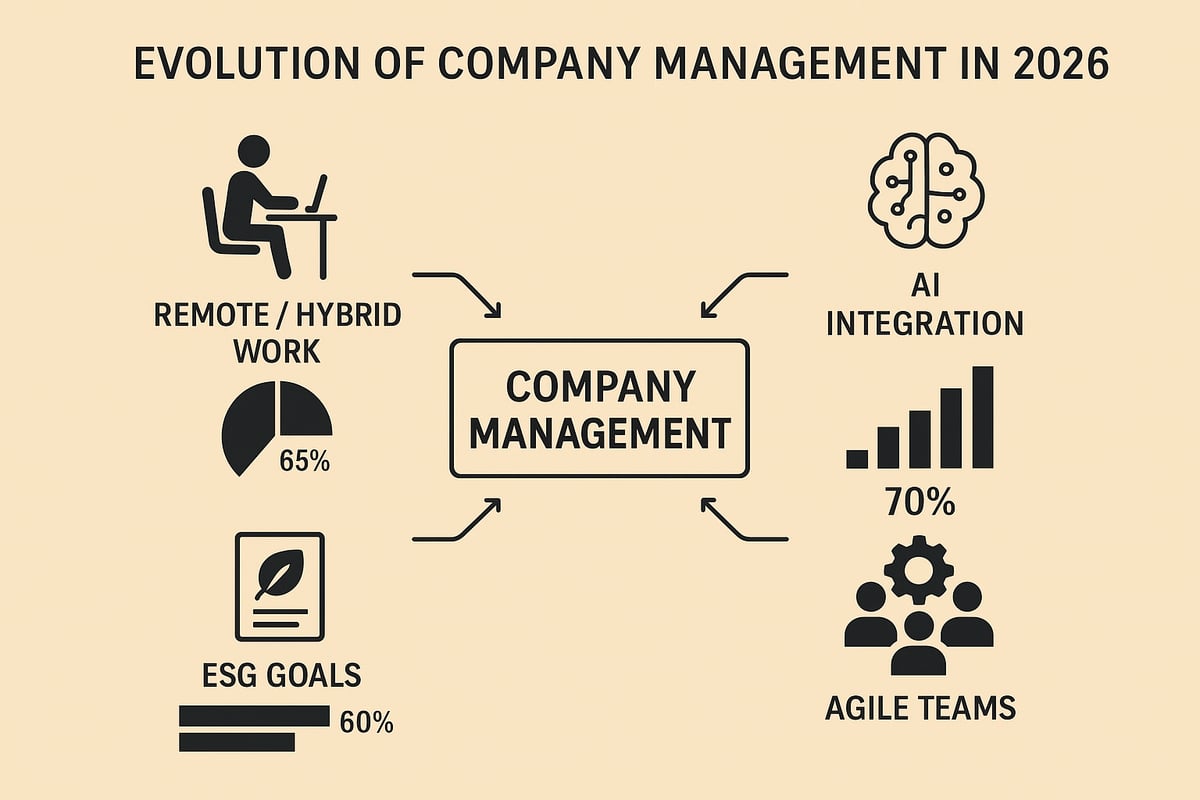
Paradigm shifts are evident across industries as remote and hybrid work become the norm. According to recent studies, nearly 65% of organizations have adopted hybrid work policies, reflecting a permanent evolution in workplace expectations. Flexible models empower both employees and leaders, challenging company management to create environments that promote productivity and well-being.

Technology is at the forefront of this evolution. Artificial intelligence, automation, and advanced analytics are now essential tools for effective company management. Over 70% of mid-to-large enterprises report implementing AI-driven platforms to streamline operations, enhance decision-making, and enable predictive planning. Platforms for collaboration and workflow optimization are standard, making technology integration a top priority.

Statistic 2026 Projection
Hybrid Work Adoption 65%
AI Tool Adoption in Management 70%
Companies Reporting on ESG Metrics 60%

Purpose-driven leadership is another defining trend. Modern company management increasingly prioritizes environmental, social, and governance (ESG) goals. Over 60% of companies now publish annual reports on ESG performance, demonstrating a commitment to societal impact and ethical practices. Leaders are expected to balance profitability with social responsibility, setting new standards for organizational success.

Agility and resilience are indispensable in today’s company management. Businesses that can pivot quickly in response to market changes outperform their competitors. For example, several tech firms have restructured to form cross-functional teams, reducing hierarchy and accelerating innovation. Multinational companies like Unilever have adopted matrix structures, enabling faster decision-making and resource allocation.

However, these advancements come with challenges. Managing change at scale requires upskilling leaders, fostering a culture of continuous learning, and navigating evolving regulatory environments. Resistance to new technologies and processes can impede progress. To address these issues, many organizations invest in leadership development, digital training, and robust change management frameworks.

Real-world success stories underscore the importance of adaptive company management. A leading financial services provider transitioned to a digital-first model, leveraging AI and automation to improve customer service and optimize resource allocation. Meanwhile, global retailers have implemented flexible scheduling and wellness programs, resulting in higher employee engagement and retention.

The future of company management will be shaped by those who embrace innovation and adaptability. As outlined in the 2026 Business Leaders Outlook: Expectations & Trends, executives are focused on integrating AI, strengthening workforce planning, and embedding ESG principles into core strategies.

In summary, the evolution of company management in 2026 is defined by digital transformation, flexible work models, purpose-driven leadership, and an unwavering commitment to agility. To excel, leaders must proactively address challenges, leverage technology, and cultivate cultures that can thrive in the face of constant change.
The Evolution of Company Management: Trends Shaping 2026

Organizational Structures: Building the Right Framework for Success

In the dynamic world of company management, organizational structure is the backbone that shapes how teams operate, communicate, and innovate. The right framework can unlock agility and growth, while the wrong one may stifle progress.

Choosing the optimal structure is no longer a one-size-fits-all decision. As businesses adapt to rapid technological change and evolving workforce expectations, traditional models are being transformed. Leaders must now rethink how their companies are organized to stay competitive.

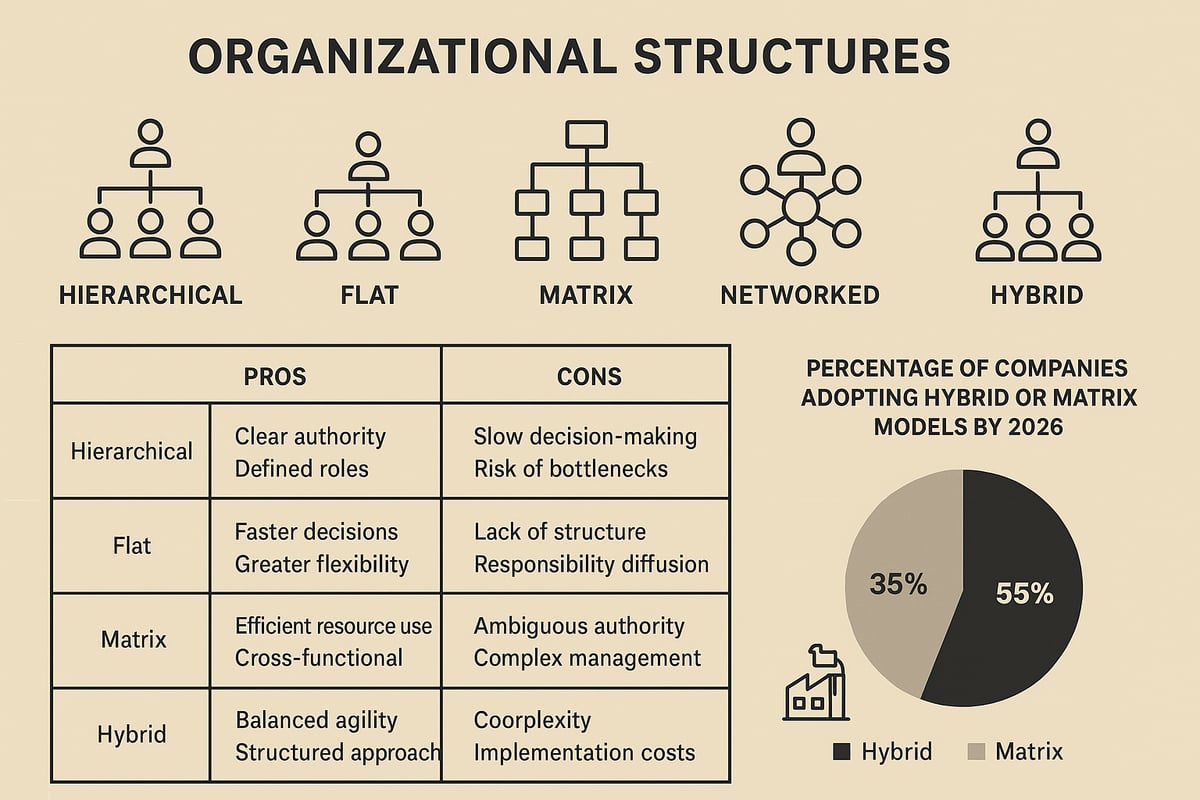
Let's compare the most common organizational structures shaping company management today:

Structure Description Pros Cons
Hierarchical Tiered levels of authority Clear roles, accountability Slow decision-making, rigid
Flat Few or no middle layers Fast communication, empowered teams Role confusion, scaling challenges
Matrix Employees report to multiple managers Flexible, cross-functional collaboration Complex reporting, conflict potential
Networked Loosely connected teams, often remote Adaptable, fosters innovation Coordination issues, less oversight
Hybrid Mix of two or more structures Customizable, balances strengths Can become complicated to manage

Modern company management increasingly favors hybrid and matrix models. According to recent industry data, by 2026, over 60% of mid-to-large organizations are expected to adopt some form of hybrid or matrix structure to better support innovation and scalability.

Centralized and decentralized management approaches also play a critical role. Centralized models work well for smaller businesses seeking control and consistency. In contrast, larger enterprises often benefit from decentralized structures, enabling faster local decision-making and greater responsiveness to market shifts.

Consider how a leading tech firm recently transitioned from a strict hierarchical model to a flatter, more networked approach. This shift empowered cross-functional teams, reduced bureaucracy, and accelerated product development. Meanwhile, a multinational corporation implemented a matrix structure, allowing them to leverage specialized expertise across regions and product lines, while maintaining global standards.

However, restructuring for effective company management is not without challenges. Common pitfalls include the rise of communication silos, duplication of roles, and increased complexity. Aligning structure with company size, industry, and growth stage is critical. For example, startups may thrive with flat or networked models, while established enterprises often require a blend of matrix and divisional elements.

To future-proof your organization, leaders should regularly assess their structure as part of a broader management strategy. Consulting with experts, such as those at the Management Consulting Group Insights, can provide valuable perspectives on evolving your framework to meet changing business needs.

Here are some actionable tips for refining organizational structures in company management:

  • Conduct regular audits of reporting lines and team functions.
  • Encourage open communication across departments.
  • Invest in leadership development to navigate structural changes.
  • Leverage technology to support collaboration and transparency.

Ultimately, the most successful companies are those that treat structure as a living element within company management, adapting it to support innovation, agility, and sustainable growth.
Organizational Structures: Building the Right Framework for Success

Leadership Skills and Competencies for the Modern Manager

Navigating the demands of company management in 2026 requires more than traditional leadership instincts. The landscape is shifting fast, and modern managers must be equipped with a dynamic set of skills to keep pace. As the business world becomes more complex, leaders are expected to balance digital transformation, people-centric values, and global agility.
Leadership Skills and Competencies for the Modern Manager

Essential Skills for Modern Leaders

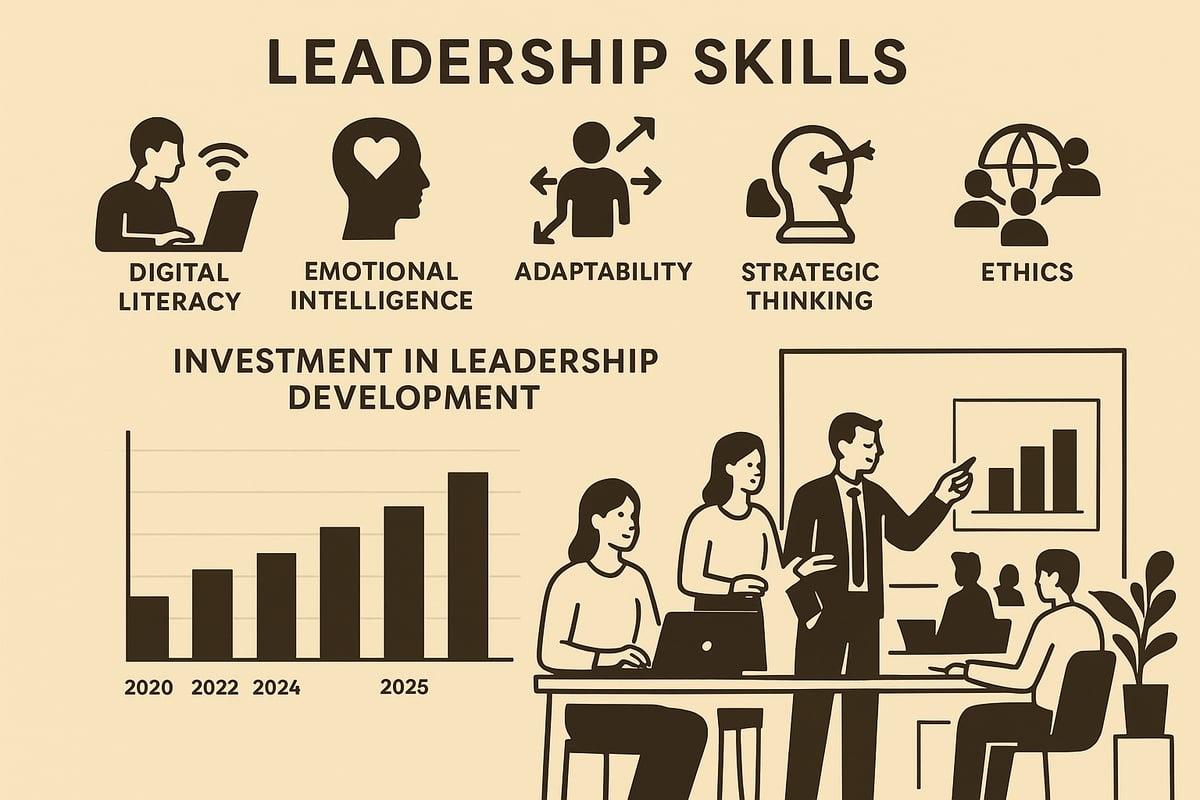
The core of company management today lies in mastering a blend of technical and interpersonal abilities. Digital literacy is now non-negotiable, as leaders must navigate AI-driven tools and data analytics daily. Emotional intelligence (EQ) has emerged as a defining trait, enabling managers to connect, empathize, and motivate teams in both virtual and physical environments.

Adaptability is another vital skill, reflecting the need to pivot quickly amid change. Strategic thinking empowers managers to set clear visions and guide teams through uncertainty. Negotiation and ethical decision-making are also critical, ensuring leaders uphold corporate responsibility while fostering trust.

A recent survey found that over 72% of organizations prioritize leadership development focused on digital and interpersonal skills. For a deeper dive into the evolving skill set, review the 10 Critical Skills Every Leader Must Master In 2026.

Cross-cultural competence is now essential, as company management increasingly involves global teams. Effective leaders must understand diverse perspectives, adapt communication styles, and promote inclusion.

Below is a summary of core competencies:

Skill Description Why It Matters for Company Management
Digital Literacy Navigating digital tools and data platforms Drives informed, tech-enabled decisions
Emotional Intelligence Understanding and managing emotions Builds trust and team cohesion
Adaptability Responding quickly to change Ensures resilience in dynamic markets
Strategic Thinking Setting and executing long-term vision Aligns teams with organizational goals
Negotiation & Ethics Resolving conflicts, upholding integrity Sustains company reputation and fairness
Cross-Cultural Competence Leading diverse, global teams Fosters innovation and inclusion

Continuous Learning, Upskilling, and Actionable Tips

The best company management teams never stop learning. Continuous upskilling is critical, as new technologies and business models emerge rapidly. Modern managers invest in formal training, mentorship, and peer learning to stay ahead.

Authority in leadership is shifting from top-down directives to empowering teams. Great leaders mobilize talent by inspiring ownership and fostering open communication. They set clear expectations while encouraging autonomy, which drives engagement and results.

To future-proof your company management capabilities, consider these actionable steps:

  • Prioritize learning: Schedule regular training on digital tools and leadership best practices.
  • Mentor and coach: Foster a culture of feedback and knowledge sharing.
  • Promote diversity: Encourage cross-functional and cross-cultural collaboration.
  • Measure progress: Use 360-degree feedback and performance data to identify growth areas.
  • Lead by example: Demonstrate resilience, integrity, and adaptability every day.

Investing in these competencies ensures your management team not only adapts to the new era but thrives within it. In summary, company management excellence in 2026 hinges on leaders who blend technical savvy with empathy, ethical judgment, and a global mindset.

Integrating Technology and Data-Driven Decision Making

Technology is reshaping company management at an unprecedented pace. Artificial intelligence, automation, and advanced analytics are no longer optional—they are fundamental drivers of growth and efficiency.

To stay competitive, organizations are embedding digital tools across all aspects of company management. These tools streamline operations, enhance collaboration, and equip leaders with real-time insights. As a result, decision-making is more informed and agile than ever.
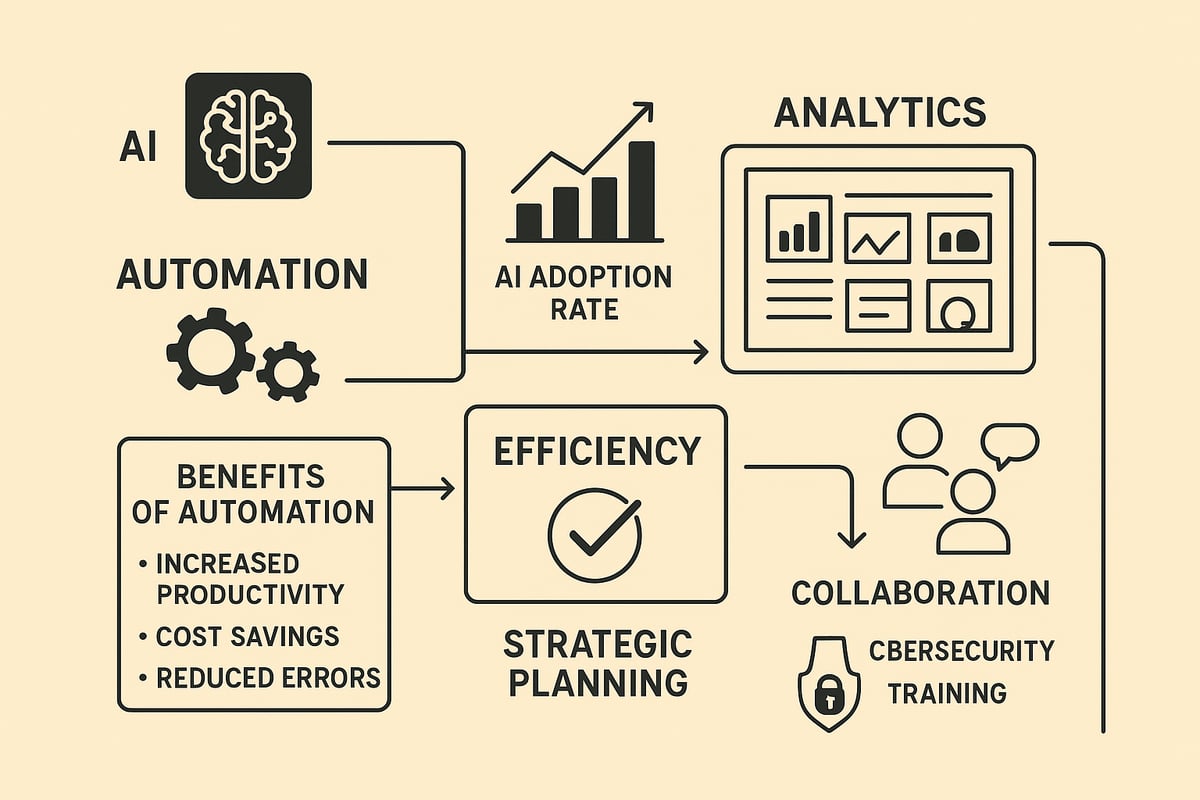
Integrating Technology and Data-Driven Decision Making

The Impact of Technology on Company Management

Recent years have seen a surge in the adoption of digital solutions within company management. According to industry data, over 70% of mid-to-large organizations now utilize AI-driven platforms for core business functions.

Here is a quick snapshot of technology adoption rates:

Technology Adoption Rate (2026)
AI & Automation 73%
Data Analytics 68%
Collaboration Tools 85%
Cloud Solutions 81%

These advancements enable leaders to forecast trends, allocate resources efficiently, and respond swiftly to market changes. For example, predictive analytics can identify new opportunities or risks, allowing company management to pivot strategies proactively.

Overcoming Adoption Challenges

Despite the benefits, integrating technology into company management presents several challenges:

  • Resistance to change among staff
  • Need for continuous training and upskilling
  • Data privacy and cybersecurity concerns
  • Ensuring legacy systems work with new tools

Addressing these hurdles requires clear communication, targeted training programs, and robust security protocols. It is crucial that company management fosters a culture of digital openness and learning.

Best Practices for Data-Driven Decision Making

To maximize the value of technology, organizations should:

  • Align technology investments with business objectives
  • Foster digital literacy at every level
  • Implement secure, scalable systems
  • Use analytics to support transparent, evidence-based decisions
  • Regularly review and update digital processes

Leaders who prioritize these best practices position their company management for long-term success.

Real-World Examples and Solutions

Forward-thinking companies are already reaping the rewards of integrated technology. For instance, a global retailer used AI-driven analytics to optimize supply chain management, reducing costs and improving delivery times.

For organizations looking to accelerate their technology journey, exploring AI and Automation Integration solutions can provide tailored strategies to embed automation and data analytics into company management processes.

Ultimately, the key to effective company management in 2026 is a balanced approach. By leveraging digital tools and data-driven insights, leaders can drive innovation and sustain growth—while remaining agile in a rapidly evolving landscape.

People Management: Empowering Teams in a Hybrid World

The landscape of company management is being reshaped by the rise of hybrid and remote work environments. Today, business leaders must navigate a blend of in-office and distributed teams, which demands new approaches to supporting and empowering employees. As organizations adapt, effective people management becomes a critical driver of productivity and retention.

The New Hybrid Work Reality

Hybrid work is now a core element of company management. Recent studies show that over 70% of organizations have adopted flexible work policies, with employees reporting higher satisfaction and better work-life balance. However, leaders face unique challenges in maintaining team cohesion and visibility.

To thrive, managers must embrace flexibility and trust. Regular check-ins, clear expectations, and transparent goal-setting are essential. Companies leading the way in hybrid adoption provide robust onboarding, ongoing support, and invest in digital infrastructure to keep teams connected.

Engagement and Well-being Strategies

Sustaining engagement in a hybrid setting requires a deliberate focus on employee well-being. Leading organizations offer wellness programs, mental health resources, and flexible schedules to address diverse needs. Data indicates that companies prioritizing employee wellness see up to a 25% increase in retention.

Company management should foster a culture where feedback is encouraged and achievements are recognized. Managers can use pulse surveys, virtual team-building, and recognition platforms to keep morale high. For a deeper look at effective HR solutions, explore Human Capital Management Solutions, which offer tools for streamlining people management.

Communication and Collaboration Tools

Seamless communication is the backbone of successful company management, especially in distributed teams. Adoption of collaboration platforms like Slack, Microsoft Teams, and Zoom has surged, enabling real-time connection and knowledge sharing.

Best practices include establishing communication norms, leveraging asynchronous channels, and ensuring information is accessible to all. Managers should model open dialogue and encourage cross-team collaboration to break down silos.

Performance Management in Distributed Teams

Performance management in a hybrid world requires a shift from activity-based to results-oriented metrics. Regular feedback cycles, clear KPIs, and agile goal-setting help teams stay aligned and motivated. Many organizations are replacing annual reviews with continuous feedback and development conversations.

Incorporating emotional intelligence into leadership is crucial for building trust and driving high performance. Research on the importance of emotional intelligence in leadership for building an effective team underscores its value in fostering resilient, adaptable teams.

Fostering Inclusion and Empowerment

Diversity, equity, and inclusion are central pillars of modern company management. Companies with inclusive cultures outperform peers in innovation and employee engagement. Leaders should champion diverse hiring, provide equitable growth opportunities, and create safe spaces for all voices.

Actionable steps include mentorship programs, transparent promotion paths, and ongoing training. Empowered employees are more likely to take initiative and contribute to organizational success, making people management a strategic advantage.

Future-Proofing Your Company: Strategies for Sustainable Growth

In today’s unpredictable market, future-proofing is no longer optional for effective company management. Leaders face constant disruption, evolving regulations, and increasing stakeholder expectations. To stay ahead, organizations must build resilience, foster innovation, and adapt rapidly to change.

The foundation of sustainable company management rests on three pillars: agility, innovation, and resilience. Agility allows businesses to pivot quickly in response to new trends. Innovation drives growth by encouraging creative solutions and new business models. Resilience ensures continuity—even in the face of economic, social, or technological shocks.

Integrating ESG (Environmental, Social, Governance) factors into company management is now a business imperative. According to a 2024 survey, over 75% of global companies report on ESG metrics, reflecting growing demand from investors and customers for ethical operations. Companies that embed ESG frameworks see improved risk management, enhanced brand reputation, and better long-term financial performance.

Pillar Why It Matters Example Initiative
Agility Rapid market adaptation Cross-functional task forces
Innovation Drives competitive advantage Internal incubators, R&D investments
Resilience Ensures business continuity Crisis response protocols, risk audits
ESG Integration Builds trust and compliance Sustainability reporting, diversity goals

To support these pillars, scenario planning and risk management are essential. Scenario planning enables company management to anticipate a range of possible futures and develop contingency strategies. Risk management frameworks identify vulnerabilities and implement safeguards to minimize disruptions.

Here’s a simplified scenario planning framework:

1. Identify key uncertainties (market, tech, regulation)
2. Develop 3-4 plausible scenarios
3. Assess impact on business functions
4. Create action plans for each scenario
5. Monitor signals and adapt strategies

Companies like Unilever and Salesforce have successfully navigated market shocks by embedding scenario planning and risk assessments into their company management processes. These organizations regularly review their strategic assumptions, test responses, and refine playbooks for rapid deployment.

Staying ahead also means staying informed. Keeping pace with Emerging Project & Change Management trends in 2026 is critical for leaders aiming to future-proof their organizations. Trends such as AI-driven project management, real-time data analytics, and adaptive change models are reshaping how companies respond to disruption and drive continuous improvement.

Actionable strategies for future-proof company management:

  • Embed ESG metrics into regular performance reviews.
  • Foster a culture of continuous learning and experimentation.
  • Invest in digital tools that support scenario analysis and rapid decision-making.
  • Establish feedback loops to capture lessons learned and apply them organization-wide.
  • Align business objectives with societal and environmental impact for long-term value creation.

By adopting these strategies, company management can transform uncertainty into opportunity. The key is to remain proactive, resilient, and aligned with both market realities and stakeholder values. Sustainable growth is not a destination, but an ongoing journey of adaptation and improvement.

As we’ve explored, mastering company management in 2026 means staying agile, leveraging technology, and prioritizing your team’s well-being. Whether you’re rethinking your organizational structure, embracing AI-driven tools, or building a culture of continuous growth, having a clear strategy is key. If you’re ready to take the next step and tailor these insights to your unique business challenges, I invite you to Book a Consultation. Let’s work together to unlock new efficiencies, boost your bottom line, and empower your people for the future.

The Essential Guide to Company Management in 2026

The landscape of company management is evolving faster than ever in 2026, presenting both unprecedented challenges and opportunities for today’s leaders. As expectations rise and business models shift, mastering effective company management is now critical to long-term success.

This essential guide is designed to equip business leaders and managers with actionable strategies to lead, adapt, and thrive. Inside, you’ll find insights on emerging trends, modern organizational structures, vital leadership skills, technology integration, people management, and future-proofing approaches.

Explore each section to discover practical steps you can implement now to stay ahead in the dynamic world of company management.

The Evolution of Company Management: Trends Shaping 2026

The landscape of company management is undergoing a profound transformation as we approach 2026. Accelerated by the global pandemic and the ongoing digital revolution, organizations are rethinking traditional leadership models and operational strategies. This shift is not just about survival, but about thriving in an era defined by agility, innovation, and resilience.

Paradigm shifts are evident across industries as remote and hybrid work become the norm. According to recent studies, nearly 65% of organizations have adopted hybrid work policies, reflecting a permanent evolution in workplace expectations. Flexible models empower both employees and leaders, challenging company management to create environments that promote productivity and well-being.

Technology is at the forefront of this evolution. Artificial intelligence, automation, and advanced analytics are now essential tools for effective company management. Over 70% of mid-to-large enterprises report implementing AI-driven platforms to streamline operations, enhance decision-making, and enable predictive planning. Platforms for collaboration and workflow optimization are standard, making technology integration a top priority.

Statistic 2026 Projection
Hybrid Work Adoption 65%
AI Tool Adoption in Management 70%
Companies Reporting on ESG Metrics 60%

Purpose-driven leadership is another defining trend. Modern company management increasingly prioritizes environmental, social, and governance (ESG) goals. Over 60% of companies now publish annual reports on ESG performance, demonstrating a commitment to societal impact and ethical practices. Leaders are expected to balance profitability with social responsibility, setting new standards for organizational success.

Agility and resilience are indispensable in today’s company management. Businesses that can pivot quickly in response to market changes outperform their competitors. For example, several tech firms have restructured to form cross-functional teams, reducing hierarchy and accelerating innovation. Multinational companies like Unilever have adopted matrix structures, enabling faster decision-making and resource allocation.

However, these advancements come with challenges. Managing change at scale requires upskilling leaders, fostering a culture of continuous learning, and navigating evolving regulatory environments. Resistance to new technologies and processes can impede progress. To address these issues, many organizations invest in leadership development, digital training, and robust change management frameworks.

Real-world success stories underscore the importance of adaptive company management. A leading financial services provider transitioned to a digital-first model, leveraging AI and automation to improve customer service and optimize resource allocation. Meanwhile, global retailers have implemented flexible scheduling and wellness programs, resulting in higher employee engagement and retention.

The future of company management will be shaped by those who embrace innovation and adaptability. As outlined in the 2026 Business Leaders Outlook: Expectations & Trends, executives are focused on integrating AI, strengthening workforce planning, and embedding ESG principles into core strategies.

In summary, the evolution of company management in 2026 is defined by digital transformation, flexible work models, purpose-driven leadership, and an unwavering commitment to agility. To excel, leaders must proactively address challenges, leverage technology, and cultivate cultures that can thrive in the face of constant change.

The Evolution of Company Management: Trends Shaping 2026

Organizational Structures: Building the Right Framework for Success

In the dynamic world of company management, organizational structure is the backbone that shapes how teams operate, communicate, and innovate. The right framework can unlock agility and growth, while the wrong one may stifle progress.

Choosing the optimal structure is no longer a one-size-fits-all decision. As businesses adapt to rapid technological change and evolving workforce expectations, traditional models are being transformed. Leaders must now rethink how their companies are organized to stay competitive.

Let's compare the most common organizational structures shaping company management today:

Structure Description Pros Cons
Hierarchical Tiered levels of authority Clear roles, accountability Slow decision-making, rigid
Flat Few or no middle layers Fast communication, empowered teams Role confusion, scaling challenges
Matrix Employees report to multiple managers Flexible, cross-functional collaboration Complex reporting, conflict potential
Networked Loosely connected teams, often remote Adaptable, fosters innovation Coordination issues, less oversight
Hybrid Mix of two or more structures Customizable, balances strengths Can become complicated to manage

Modern company management increasingly favors hybrid and matrix models. According to recent industry data, by 2026, over 60% of mid-to-large organizations are expected to adopt some form of hybrid or matrix structure to better support innovation and scalability.

Centralized and decentralized management approaches also play a critical role. Centralized models work well for smaller businesses seeking control and consistency. In contrast, larger enterprises often benefit from decentralized structures, enabling faster local decision-making and greater responsiveness to market shifts.

Consider how a leading tech firm recently transitioned from a strict hierarchical model to a flatter, more networked approach. This shift empowered cross-functional teams, reduced bureaucracy, and accelerated product development. Meanwhile, a multinational corporation implemented a matrix structure, allowing them to leverage specialized expertise across regions and product lines, while maintaining global standards.

However, restructuring for effective company management is not without challenges. Common pitfalls include the rise of communication silos, duplication of roles, and increased complexity. Aligning structure with company size, industry, and growth stage is critical. For example, startups may thrive with flat or networked models, while established enterprises often require a blend of matrix and divisional elements.

To future-proof your organization, leaders should regularly assess their structure as part of a broader management strategy. Consulting with experts, such as those at the Management Consulting Group Insights, can provide valuable perspectives on evolving your framework to meet changing business needs.

Here are some actionable tips for refining organizational structures in company management:

  • Conduct regular audits of reporting lines and team functions.
  • Encourage open communication across departments.
  • Invest in leadership development to navigate structural changes.
  • Leverage technology to support collaboration and transparency.

Ultimately, the most successful companies are those that treat structure as a living element within company management, adapting it to support innovation, agility, and sustainable growth.

Organizational Structures: Building the Right Framework for Success

Leadership Skills and Competencies for the Modern Manager

Navigating the demands of company management in 2026 requires more than traditional leadership instincts. The landscape is shifting fast, and modern managers must be equipped with a dynamic set of skills to keep pace. As the business world becomes more complex, leaders are expected to balance digital transformation, people-centric values, and global agility.

Leadership Skills and Competencies for the Modern Manager

Essential Skills for Modern Leaders

The core of company management today lies in mastering a blend of technical and interpersonal abilities. Digital literacy is now non-negotiable, as leaders must navigate AI-driven tools and data analytics daily. Emotional intelligence (EQ) has emerged as a defining trait, enabling managers to connect, empathize, and motivate teams in both virtual and physical environments.

Adaptability is another vital skill, reflecting the need to pivot quickly amid change. Strategic thinking empowers managers to set clear visions and guide teams through uncertainty. Negotiation and ethical decision-making are also critical, ensuring leaders uphold corporate responsibility while fostering trust.

A recent survey found that over 72% of organizations prioritize leadership development focused on digital and interpersonal skills. For a deeper dive into the evolving skill set, review the 10 Critical Skills Every Leader Must Master In 2026.

Cross-cultural competence is now essential, as company management increasingly involves global teams. Effective leaders must understand diverse perspectives, adapt communication styles, and promote inclusion.

Below is a summary of core competencies:

Skill Description Why It Matters for Company Management
Digital Literacy Navigating digital tools and data platforms Drives informed, tech-enabled decisions
Emotional Intelligence Understanding and managing emotions Builds trust and team cohesion
Adaptability Responding quickly to change Ensures resilience in dynamic markets
Strategic Thinking Setting and executing long-term vision Aligns teams with organizational goals
Negotiation & Ethics Resolving conflicts, upholding integrity Sustains company reputation and fairness
Cross-Cultural Competence Leading diverse, global teams Fosters innovation and inclusion

Continuous Learning, Upskilling, and Actionable Tips

The best company management teams never stop learning. Continuous upskilling is critical, as new technologies and business models emerge rapidly. Modern managers invest in formal training, mentorship, and peer learning to stay ahead.

Authority in leadership is shifting from top-down directives to empowering teams. Great leaders mobilize talent by inspiring ownership and fostering open communication. They set clear expectations while encouraging autonomy, which drives engagement and results.

To future-proof your company management capabilities, consider these actionable steps:

  • Prioritize learning: Schedule regular training on digital tools and leadership best practices.
  • Mentor and coach: Foster a culture of feedback and knowledge sharing.
  • Promote diversity: Encourage cross-functional and cross-cultural collaboration.
  • Measure progress: Use 360-degree feedback and performance data to identify growth areas.
  • Lead by example: Demonstrate resilience, integrity, and adaptability every day.

Investing in these competencies ensures your management team not only adapts to the new era but thrives within it. In summary, company management excellence in 2026 hinges on leaders who blend technical savvy with empathy, ethical judgment, and a global mindset.

Integrating Technology and Data-Driven Decision Making

Technology is reshaping company management at an unprecedented pace. Artificial intelligence, automation, and advanced analytics are no longer optional—they are fundamental drivers of growth and efficiency.

To stay competitive, organizations are embedding digital tools across all aspects of company management. These tools streamline operations, enhance collaboration, and equip leaders with real-time insights. As a result, decision-making is more informed and agile than ever.

Integrating Technology and Data-Driven Decision Making

The Impact of Technology on Company Management

Recent years have seen a surge in the adoption of digital solutions within company management. According to industry data, over 70% of mid-to-large organizations now utilize AI-driven platforms for core business functions.

Here is a quick snapshot of technology adoption rates:

Technology Adoption Rate (2026)
AI & Automation 73%
Data Analytics 68%
Collaboration Tools 85%
Cloud Solutions 81%

These advancements enable leaders to forecast trends, allocate resources efficiently, and respond swiftly to market changes. For example, predictive analytics can identify new opportunities or risks, allowing company management to pivot strategies proactively.

Overcoming Adoption Challenges

Despite the benefits, integrating technology into company management presents several challenges:

  • Resistance to change among staff
  • Need for continuous training and upskilling
  • Data privacy and cybersecurity concerns
  • Ensuring legacy systems work with new tools

Addressing these hurdles requires clear communication, targeted training programs, and robust security protocols. It is crucial that company management fosters a culture of digital openness and learning.

Best Practices for Data-Driven Decision Making

To maximize the value of technology, organizations should:

  • Align technology investments with business objectives
  • Foster digital literacy at every level
  • Implement secure, scalable systems
  • Use analytics to support transparent, evidence-based decisions
  • Regularly review and update digital processes

Leaders who prioritize these best practices position their company management for long-term success.

Real-World Examples and Solutions

Forward-thinking companies are already reaping the rewards of integrated technology. For instance, a global retailer used AI-driven analytics to optimize supply chain management, reducing costs and improving delivery times.

For organizations looking to accelerate their technology journey, exploring AI and Automation Integration solutions can provide tailored strategies to embed automation and data analytics into company management processes.

Ultimately, the key to effective company management in 2026 is a balanced approach. By leveraging digital tools and data-driven insights, leaders can drive innovation and sustain growth—while remaining agile in a rapidly evolving landscape.

People Management: Empowering Teams in a Hybrid World

The landscape of company management is being reshaped by the rise of hybrid and remote work environments. Today, business leaders must navigate a blend of in-office and distributed teams, which demands new approaches to supporting and empowering employees. As organizations adapt, effective people management becomes a critical driver of productivity and retention.

The New Hybrid Work Reality

Hybrid work is now a core element of company management. Recent studies show that over 70% of organizations have adopted flexible work policies, with employees reporting higher satisfaction and better work-life balance. However, leaders face unique challenges in maintaining team cohesion and visibility.

To thrive, managers must embrace flexibility and trust. Regular check-ins, clear expectations, and transparent goal-setting are essential. Companies leading the way in hybrid adoption provide robust onboarding, ongoing support, and invest in digital infrastructure to keep teams connected.

Engagement and Well-being Strategies

Sustaining engagement in a hybrid setting requires a deliberate focus on employee well-being. Leading organizations offer wellness programs, mental health resources, and flexible schedules to address diverse needs. Data indicates that companies prioritizing employee wellness see up to a 25% increase in retention.

Company management should foster a culture where feedback is encouraged and achievements are recognized. Managers can use pulse surveys, virtual team-building, and recognition platforms to keep morale high. For a deeper look at effective HR solutions, explore Human Capital Management Solutions, which offer tools for streamlining people management.

Communication and Collaboration Tools

Seamless communication is the backbone of successful company management, especially in distributed teams. Adoption of collaboration platforms like Slack, Microsoft Teams, and Zoom has surged, enabling real-time connection and knowledge sharing.

Best practices include establishing communication norms, leveraging asynchronous channels, and ensuring information is accessible to all. Managers should model open dialogue and encourage cross-team collaboration to break down silos.

Performance Management in Distributed Teams

Performance management in a hybrid world requires a shift from activity-based to results-oriented metrics. Regular feedback cycles, clear KPIs, and agile goal-setting help teams stay aligned and motivated. Many organizations are replacing annual reviews with continuous feedback and development conversations.

Incorporating emotional intelligence into leadership is crucial for building trust and driving high performance. Research on the importance of emotional intelligence in leadership for building an effective team underscores its value in fostering resilient, adaptable teams.

Fostering Inclusion and Empowerment

Diversity, equity, and inclusion are central pillars of modern company management. Companies with inclusive cultures outperform peers in innovation and employee engagement. Leaders should champion diverse hiring, provide equitable growth opportunities, and create safe spaces for all voices.

Actionable steps include mentorship programs, transparent promotion paths, and ongoing training. Empowered employees are more likely to take initiative and contribute to organizational success, making people management a strategic advantage.

Future-Proofing Your Company: Strategies for Sustainable Growth

In today’s unpredictable market, future-proofing is no longer optional for effective company management. Leaders face constant disruption, evolving regulations, and increasing stakeholder expectations. To stay ahead, organizations must build resilience, foster innovation, and adapt rapidly to change.

The foundation of sustainable company management rests on three pillars: agility, innovation, and resilience. Agility allows businesses to pivot quickly in response to new trends. Innovation drives growth by encouraging creative solutions and new business models. Resilience ensures continuity—even in the face of economic, social, or technological shocks.

Integrating ESG (Environmental, Social, Governance) factors into company management is now a business imperative. According to a 2024 survey, over 75% of global companies report on ESG metrics, reflecting growing demand from investors and customers for ethical operations. Companies that embed ESG frameworks see improved risk management, enhanced brand reputation, and better long-term financial performance.

Pillar Why It Matters Example Initiative
Agility Rapid market adaptation Cross-functional task forces
Innovation Drives competitive advantage Internal incubators, R&D investments
Resilience Ensures business continuity Crisis response protocols, risk audits
ESG Integration Builds trust and compliance Sustainability reporting, diversity goals

To support these pillars, scenario planning and risk management are essential. Scenario planning enables company management to anticipate a range of possible futures and develop contingency strategies. Risk management frameworks identify vulnerabilities and implement safeguards to minimize disruptions.

Here’s a simplified scenario planning framework:

1. Identify key uncertainties (market, tech, regulation)
2. Develop 3-4 plausible scenarios
3. Assess impact on business functions
4. Create action plans for each scenario
5. Monitor signals and adapt strategies

Companies like Unilever and Salesforce have successfully navigated market shocks by embedding scenario planning and risk assessments into their company management processes. These organizations regularly review their strategic assumptions, test responses, and refine playbooks for rapid deployment.

Staying ahead also means staying informed. Keeping pace with Emerging Project & Change Management trends in 2026 is critical for leaders aiming to future-proof their organizations. Trends such as AI-driven project management, real-time data analytics, and adaptive change models are reshaping how companies respond to disruption and drive continuous improvement.

Actionable strategies for future-proof company management:

  • Embed ESG metrics into regular performance reviews.
  • Foster a culture of continuous learning and experimentation.
  • Invest in digital tools that support scenario analysis and rapid decision-making.
  • Establish feedback loops to capture lessons learned and apply them organization-wide.
  • Align business objectives with societal and environmental impact for long-term value creation.

By adopting these strategies, company management can transform uncertainty into opportunity. The key is to remain proactive, resilient, and aligned with both market realities and stakeholder values. Sustainable growth is not a destination, but an ongoing journey of adaptation and improvement.

As we’ve explored, mastering company management in 2026 means staying agile, leveraging technology, and prioritizing your team’s well-being. Whether you’re rethinking your organizational structure, embracing AI-driven tools, or building a culture of continuous growth, having a clear strategy is key. If you’re ready to take the next step and tailor these insights to your unique business challenges, I invite you to Book a Consultation. Let’s work together to unlock new efficiencies, boost your bottom line, and empower your people for the future.

Website developed in accordance with Web Content Accessibility Guidelines 2.2.
If you encounter any issues while using this site, please contact us: 215.526.5126