

Cost Segregation: A Strategic Tax Approach for 2026

Share on Facebook
Share on X
Share on LinkedIn

Strategic tax planning has become essential for organizations seeking to maximize cash flow and improve operational efficiency. Among the most powerful yet underutilized tax strategies available to commercial property owners is cost segregation, a methodology that accelerates depreciation deductions and unlocks substantial tax benefits. This approach transforms how businesses account for property assets, delivering immediate financial advantages that directly impact the bottom line.

Understanding the Fundamentals of Cost Segregation

Cost segregation is an engineering-based tax strategy that identifies and reclassifies building components into shorter depreciation schedules. Rather than depreciating an entire commercial property over the standard 39-year period for nonresidential real estate, this approach separates components that qualify for 5-year, 7-year, or 15-year depreciation schedules.

The process involves a detailed analysis of construction costs, architectural plans, and property components. A qualified professional conducts a comprehensive examination to identify assets that fall outside the traditional building structure category. These might include specialized electrical systems, carpeting, decorative lighting, or land improvements.

The Technical Framework Behind Asset Reclassification

According to the IRS Cost Segregation Audit Techniques Guide, property owners must follow specific methodologies to ensure compliance. The guide establishes clear parameters for what constitutes personal property versus real property, providing the foundation for legitimate reclassification.

The technical process typically involves three primary steps:

  1. Property investigation and data collection involving construction documents, blueprints, and cost records
  2. Engineering analysis and site inspection to identify qualifying assets and their current condition
  3. Cost allocation and documentation creating a defensible report that substantiates the reclassification

Organizations that implement cost segregation gain immediate advantages. The accelerated depreciation generates larger deductions in earlier years, reducing current tax liability and improving cash flow. This financial flexibility enables businesses to reinvest capital into growth initiatives, technology improvements, or employee development programs.

Cost segregation asset categories

Financial Impact and Return on Investment

The financial benefits of cost segregation extend far beyond simple tax savings. When executed properly, this strategy generates measurable returns that transform organizational capabilities and competitive positioning.

Immediate Cash Flow Benefits

  • Reduced current-year tax obligations through accelerated deductions
  • Increased working capital available for operational needs
  • Enhanced ability to fund strategic initiatives without external financing
  • Improved debt service coverage ratios for lending purposes

A typical cost segregation study on a $5 million commercial property might identify $1.5 to $2 million in assets qualifying for shorter depreciation periods. This reclassification can generate $200,000 to $400,000 in first-year tax savings, depending on the taxpayer's effective rate and the property's specific characteristics.

Calculating the Break-Even Analysis

The investment in a professional cost segregation study ranges from $8,000 to $25,000 depending on property complexity and value. Most organizations achieve a return on investment ratio of 10:1 or higher within the first year alone.

Property Value Study Cost Range Typical First-Year Savings ROI Ratio
$1-2 million $8,000-12,000 $40,000-80,000 5:1 to 7:1
$3-5 million $12,000-18,000 $120,000-200,000 8:1 to 12:1
$6-10 million $18,000-25,000 $240,000-400,000 12:1 to 18:1

This powerful financial leverage aligns perfectly with performance-based approaches to business optimization. Similar to how automation and integration solutions eliminate manual processes, cost segregation eliminates unnecessary tax burdens that constrain organizational growth.

Eligibility Criteria and Qualifying Properties

Not every property or taxpayer qualifies for cost segregation benefits. Understanding eligibility requirements ensures organizations make informed decisions about pursuing this strategy.

Property Types That Benefit Most

Commercial and investment properties offer the greatest opportunities for cost segregation. The strategy applies effectively to:

  • Office buildings and medical facilities with specialized systems and tenant improvements
  • Manufacturing facilities containing extensive equipment and process-specific installations
  • Retail locations featuring unique lighting, flooring, and customer-facing improvements
  • Hospitality properties including hotels and restaurants with significant personal property
  • Healthcare facilities with advanced medical systems and specialized infrastructure

Healthcare organizations pursuing financial and operational excellence find particular value in cost segregation for medical office buildings and hospital facilities.

Residential rental properties with four or more units also qualify, though the baseline depreciation period differs at 27.5 years versus 39 years for commercial properties. The shorter standard depreciation reduces the relative advantage but doesn't eliminate the benefits entirely.

Ownership and Timing Considerations

Property owners must hold assets used in a trade or business or held for investment purposes. Both purchased and constructed properties qualify, though the analysis approach differs. For purchased properties, the allocation of the purchase price drives the study. For constructed properties, actual construction costs provide the foundation.

Timing flexibility represents a significant advantage. Property owners can conduct cost segregation studies on:

  1. Newly acquired or constructed properties in the year of acquisition
  2. Properties owned for years through lookback studies capturing missed depreciation
  3. Properties undergoing renovations or improvements

The lookback approach allows organizations to file amended returns or complete Form 3115 for an automatic accounting method change, claiming accumulated depreciation that wasn't taken in prior years without amending returns.
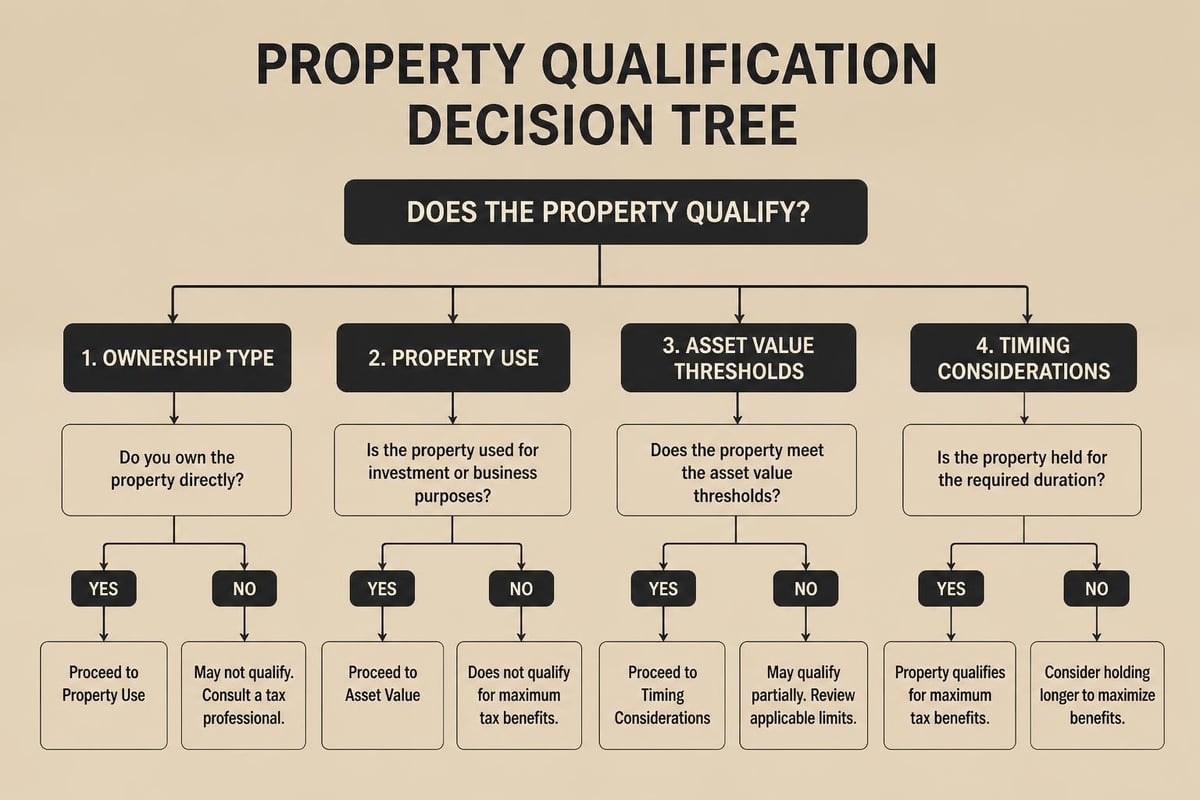
Cost segregation eligibility factors

Quality Standards and Compliance Requirements

Professional execution determines whether a cost segregation study withstands IRS scrutiny. The American Society of Cost Segregation Professionals establishes minimum quality standards that separate credible studies from inadequate analyses.

A defensible study requires documentation meeting specific criteria. The foundation includes detailed engineering analysis, proper cost allocation methodologies, and comprehensive supporting documentation. Studies lacking these elements create audit risk that far exceeds any potential tax savings.

Essential Components of a Compliant Study

Documentation Requirements:

  • Site inspection photographs and detailed property descriptions
  • Construction documents including blueprints, specifications, and cost records
  • Asset-by-asset classification with supporting rationale
  • Cost allocation calculations using accepted engineering principles
  • Narrative report explaining methodology and conclusions

The engineering approach matters significantly. Three primary methodologies exist: detailed engineering, residual, and sampling. The detailed engineering approach, while most expensive, provides the strongest audit defense and typically identifies the maximum reclassification opportunities.

Professional Qualifications and Team Composition

Cost segregation specialists with proper credentials combine tax knowledge with engineering expertise. A qualified team typically includes:

  • Licensed engineers or architects familiar with construction systems
  • Tax professionals understanding depreciation rules and compliance requirements
  • Cost estimators capable of allocating historical or current costs accurately

Organizations should verify the preparer's experience, credentials, and whether they provide audit support. Some providers offer limited or no defense if the IRS questions the study, leaving property owners exposed.

Integration with Business Operations and Strategy

Cost segregation delivers maximum value when integrated into broader operational and financial strategies. The tax savings generated through accelerated depreciation function as recovered capital that organizations can deploy strategically.

Forward-thinking businesses recognize that optimizing tax positions parallels other efficiency initiatives. Just as automation eliminates thousands of hours of manual processes, cost segregation eliminates thousands of dollars in unnecessary tax payments.

Strategic Deployment of Recovered Capital

The enhanced cash flow from cost segregation creates multiple opportunities:

Operational Reinvestment
Organizations can fund technology improvements, facility upgrades, or expansion initiatives using tax savings rather than debt financing. This approach reduces leverage while accelerating growth trajectories.

Human Capital Enhancement
Recovered capital enables investment in employee development, enhanced benefits packages, or improved financial wellness programs. These investments strengthen organizational capabilities while improving retention and engagement.

Performance Measurement Integration
Tracking cost segregation benefits alongside other efficiency metrics creates comprehensive visibility into optimization efforts. Organizations should measure:

  • Net present value of accelerated deductions
  • Cash flow improvement percentages
  • ROI compared to other capital deployment options
  • Time to recover study costs through tax savings
Metric Category Measurement Approach Target Benchmark
Tax savings rate Annual deductions vs. standard depreciation 30-50% increase
Cash flow impact Reduced tax payments as % of study cost 500-1200%
Break-even period Months to recover study investment 3-9 months
NPV of benefits Discounted future savings 8-15x study cost

Recent Developments and 2026 Considerations

The tax landscape continuously evolves, creating new considerations for cost segregation planning. Recent years brought significant changes affecting how organizations approach this strategy.

Bonus depreciation, which allowed 100% first-year deduction for qualified property, began phasing down in 2023. For assets placed in service during 2026, the bonus depreciation rate stands at 40%, declining to 20% in 2027 before sunsetting entirely in 2028 unless Congress extends the provision.

Immediate Expensing Under Section 179

Section 179 expensing provides an alternative immediate deduction mechanism. For 2026, businesses can expense up to $1,160,000 of qualifying property, subject to a phase-out threshold of $2,890,000 in total equipment purchases.

Cost segregation enhances Section 179 planning by identifying more assets qualifying as personal property. The combination creates powerful first-year deduction opportunities, though taxpayers must ensure they don't exceed deduction limitations based on business income.

Legislative Monitoring and Adaptation

Professional consulting firms monitor legislative developments affecting cost segregation benefits. The Tax Cuts and Jobs Act fundamentally altered depreciation planning, and future legislation may bring additional changes.

Staying informed about regulatory updates ensures organizations optimize strategies based on current law while preparing for anticipated changes. Understanding what IRS expects in cost segregation compliance helps maintain audit readiness regardless of legislative shifts.
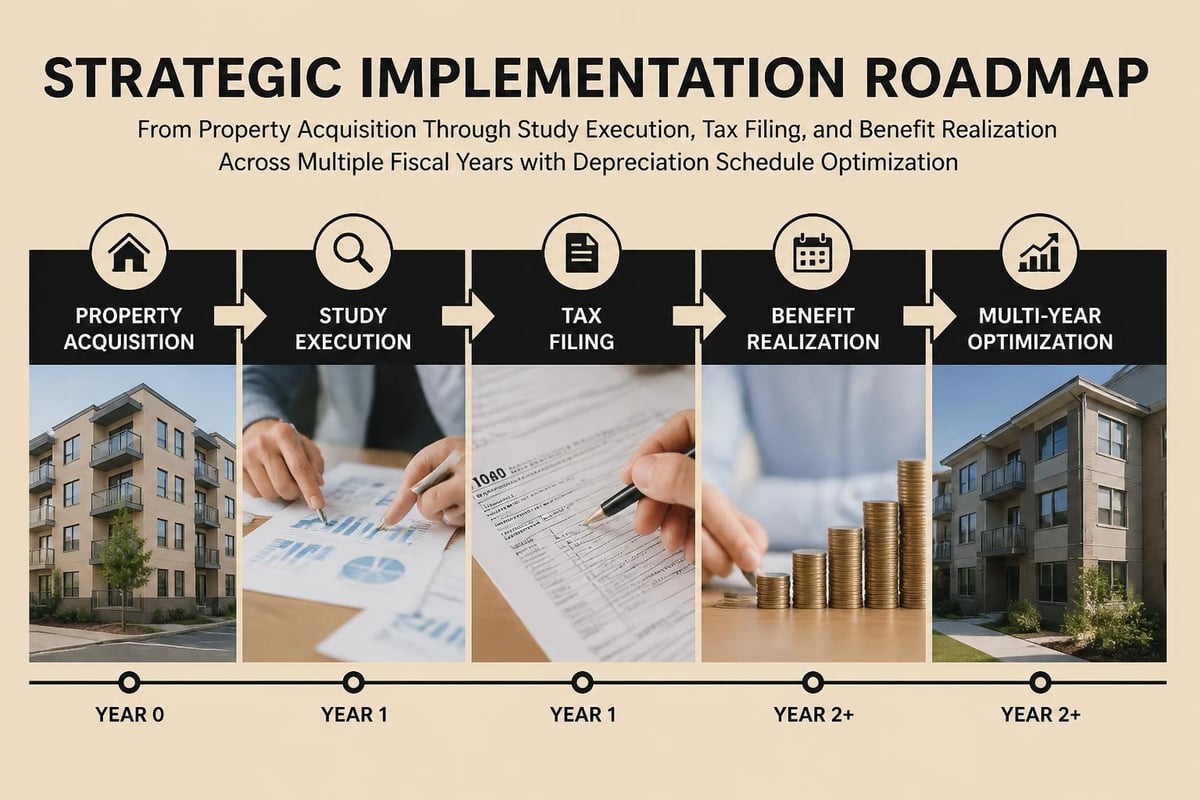
Cost segregation planning timeline

Advanced Applications and Special Situations

Beyond standard applications, cost segregation addresses unique circumstances that generate exceptional value. Understanding these advanced scenarios enables organizations to maximize benefits across diverse situations.

Renovation and Improvement Projects

Property improvements and renovations present powerful opportunities for cost segregation. When organizations invest in building upgrades, the entire improvement cost qualifies for analysis. Often, substantial portions classify as personal property or land improvements eligible for 5, 7, or 15-year depreciation.

Restaurant renovations exemplify this opportunity. Kitchen equipment, specialized ventilation, dining area improvements, and decorative elements frequently qualify for accelerated depreciation. A $500,000 restaurant renovation might yield $300,000 or more in assets eligible for shorter recovery periods.

Lookback Studies for Existing Properties

Organizations owning properties for years without conducting cost segregation studies can recover missed benefits through lookback analyses. The catch-up depreciation appears as an adjustment in the current year, delivering immediate tax benefits without amending prior returns.

This approach works particularly well for:

  1. Properties acquired before owners understood cost segregation benefits
  2. Buildings purchased during periods of limited cash flow when study costs seemed prohibitive
  3. Properties that increased significantly in value, making the analysis more beneficial now

Partial Asset Dispositions and Component Retirement

When replacing building components during renovations, taxpayers can claim a loss deduction for the retired component's remaining basis. Cost segregation studies document component-level detail necessary to support these disposition elections.

For example, replacing an HVAC system allows claiming a loss on the old system's undepreciated basis rather than capitalizing the removal costs. This generates an immediate deduction that offsets the new system's installation costs.

Industry-Specific Considerations and Applications

Different industries experience unique benefits and considerations when implementing cost segregation strategies. Tailoring the approach to industry-specific circumstances maximizes value realization.

Healthcare Facilities and Medical Office Buildings

Healthcare properties contain extensive specialized systems qualifying for accelerated depreciation. Medical gas systems, specialized HVAC with filtration requirements, exam room improvements, and medical equipment installations all potentially qualify for shorter recovery periods.

Healthcare providers focused on revenue cycle optimization should recognize cost segregation as a complementary financial strategy that enhances overall fiscal health.

Manufacturing and Distribution Centers

Manufacturing facilities feature substantial personal property embedded within the building structure. Process-specific electrical systems, specialized foundations for heavy equipment, material handling systems, and environmental control systems often qualify for 5 or 7-year depreciation.

Distribution centers with extensive racking systems, conveyor equipment, and warehouse management technology similarly benefit from detailed component analysis and reclassification.

Hospitality Properties and Multi-Tenant Facilities

Hotels, restaurants, and entertainment venues contain extraordinary amounts of personal property. Furniture, decorative elements, specialized lighting, kitchen equipment, and tenant-specific improvements all potentially qualify for accelerated depreciation.

Organizations in the hospitality sector optimizing employee experiences can redeploy tax savings into enhanced employee programs, creating a virtuous cycle of financial optimization and human capital development.

Risk Management and Audit Defense

Implementing cost segregation requires attention to audit risk and proper documentation. While legitimate studies rarely face successful IRS challenges, preparation and quality matter significantly.

Legal foundations established through case law provide the framework for defensible positions. Understanding precedent helps organizations and their advisors structure studies that align with established principles.

Common Audit Triggers and Avoidance Strategies

Certain characteristics increase audit scrutiny:

  • Studies lacking engineering rigor or proper site inspection
  • Aggressive classifications unsupported by documentation
  • Inconsistent treatment of similar assets across properties
  • Missing or incomplete supporting work papers

Avoiding these issues requires engaging qualified professionals who follow established methodologies and maintain comprehensive documentation.

Documentation Best Practices

Critical Documentation Elements:

  • Contemporaneous site visit notes and photographs
  • Detailed asset listings with specific locations and descriptions
  • Cost allocation worksheets showing calculation methodologies
  • Supporting schedules tying study results to tax return reporting
  • Professional credentials of study team members

Organizations should maintain study files indefinitely, as questions may arise years after the initial filing. Digital documentation systems ensure accessibility and preservation of critical supporting materials.


Cost segregation represents a proven tax optimization strategy that delivers measurable financial benefits through accelerated depreciation and improved cash flow. By strategically reclassifying property components into shorter recovery periods, organizations unlock capital that drives growth, operational efficiency, and strategic initiatives. At Nero and Associates, Inc., we help organizations identify and implement strategies that raise the bottom line while eliminating inefficiencies across operations. Our performance-based approach ensures that every optimization initiative, from tax planning to process automation, delivers tangible results that enhance your competitive position and financial health.

Cost Segregation: A Strategic Tax Approach for 2026

Strategic tax planning has become essential for organizations seeking to maximize cash flow and improve operational efficiency. Among the most powerful yet underutilized tax strategies available to commercial property owners is cost segregation, a methodology that accelerates depreciation deductions and unlocks substantial tax benefits. This approach transforms how businesses account for property assets, delivering immediate financial advantages that directly impact the bottom line.

Understanding the Fundamentals of Cost Segregation

Cost segregation is an engineering-based tax strategy that identifies and reclassifies building components into shorter depreciation schedules. Rather than depreciating an entire commercial property over the standard 39-year period for nonresidential real estate, this approach separates components that qualify for 5-year, 7-year, or 15-year depreciation schedules.

The process involves a detailed analysis of construction costs, architectural plans, and property components. A qualified professional conducts a comprehensive examination to identify assets that fall outside the traditional building structure category. These might include specialized electrical systems, carpeting, decorative lighting, or land improvements.

The Technical Framework Behind Asset Reclassification

According to the IRS Cost Segregation Audit Techniques Guide, property owners must follow specific methodologies to ensure compliance. The guide establishes clear parameters for what constitutes personal property versus real property, providing the foundation for legitimate reclassification.

The technical process typically involves three primary steps:

  1. Property investigation and data collection involving construction documents, blueprints, and cost records
  2. Engineering analysis and site inspection to identify qualifying assets and their current condition
  3. Cost allocation and documentation creating a defensible report that substantiates the reclassification

Organizations that implement cost segregation gain immediate advantages. The accelerated depreciation generates larger deductions in earlier years, reducing current tax liability and improving cash flow. This financial flexibility enables businesses to reinvest capital into growth initiatives, technology improvements, or employee development programs.

Cost segregation asset categories

Financial Impact and Return on Investment

The financial benefits of cost segregation extend far beyond simple tax savings. When executed properly, this strategy generates measurable returns that transform organizational capabilities and competitive positioning.

Immediate Cash Flow Benefits

  • Reduced current-year tax obligations through accelerated deductions
  • Increased working capital available for operational needs
  • Enhanced ability to fund strategic initiatives without external financing
  • Improved debt service coverage ratios for lending purposes

A typical cost segregation study on a $5 million commercial property might identify $1.5 to $2 million in assets qualifying for shorter depreciation periods. This reclassification can generate $200,000 to $400,000 in first-year tax savings, depending on the taxpayer's effective rate and the property's specific characteristics.

Calculating the Break-Even Analysis

The investment in a professional cost segregation study ranges from $8,000 to $25,000 depending on property complexity and value. Most organizations achieve a return on investment ratio of 10:1 or higher within the first year alone.

Property Value Study Cost Range Typical First-Year Savings ROI Ratio
$1-2 million $8,000-12,000 $40,000-80,000 5:1 to 7:1
$3-5 million $12,000-18,000 $120,000-200,000 8:1 to 12:1
$6-10 million $18,000-25,000 $240,000-400,000 12:1 to 18:1

This powerful financial leverage aligns perfectly with performance-based approaches to business optimization. Similar to how automation and integration solutions eliminate manual processes, cost segregation eliminates unnecessary tax burdens that constrain organizational growth.

Eligibility Criteria and Qualifying Properties

Not every property or taxpayer qualifies for cost segregation benefits. Understanding eligibility requirements ensures organizations make informed decisions about pursuing this strategy.

Property Types That Benefit Most

Commercial and investment properties offer the greatest opportunities for cost segregation. The strategy applies effectively to:

  • Office buildings and medical facilities with specialized systems and tenant improvements
  • Manufacturing facilities containing extensive equipment and process-specific installations
  • Retail locations featuring unique lighting, flooring, and customer-facing improvements
  • Hospitality properties including hotels and restaurants with significant personal property
  • Healthcare facilities with advanced medical systems and specialized infrastructure

Healthcare organizations pursuing financial and operational excellence find particular value in cost segregation for medical office buildings and hospital facilities.

Residential rental properties with four or more units also qualify, though the baseline depreciation period differs at 27.5 years versus 39 years for commercial properties. The shorter standard depreciation reduces the relative advantage but doesn't eliminate the benefits entirely.

Ownership and Timing Considerations

Property owners must hold assets used in a trade or business or held for investment purposes. Both purchased and constructed properties qualify, though the analysis approach differs. For purchased properties, the allocation of the purchase price drives the study. For constructed properties, actual construction costs provide the foundation.

Timing flexibility represents a significant advantage. Property owners can conduct cost segregation studies on:

  1. Newly acquired or constructed properties in the year of acquisition
  2. Properties owned for years through lookback studies capturing missed depreciation
  3. Properties undergoing renovations or improvements

The lookback approach allows organizations to file amended returns or complete Form 3115 for an automatic accounting method change, claiming accumulated depreciation that wasn't taken in prior years without amending returns.

Cost segregation eligibility factors

Quality Standards and Compliance Requirements

Professional execution determines whether a cost segregation study withstands IRS scrutiny. The American Society of Cost Segregation Professionals establishes minimum quality standards that separate credible studies from inadequate analyses.

A defensible study requires documentation meeting specific criteria. The foundation includes detailed engineering analysis, proper cost allocation methodologies, and comprehensive supporting documentation. Studies lacking these elements create audit risk that far exceeds any potential tax savings.

Essential Components of a Compliant Study

Documentation Requirements:

  • Site inspection photographs and detailed property descriptions
  • Construction documents including blueprints, specifications, and cost records
  • Asset-by-asset classification with supporting rationale
  • Cost allocation calculations using accepted engineering principles
  • Narrative report explaining methodology and conclusions

The engineering approach matters significantly. Three primary methodologies exist: detailed engineering, residual, and sampling. The detailed engineering approach, while most expensive, provides the strongest audit defense and typically identifies the maximum reclassification opportunities.

Professional Qualifications and Team Composition

Cost segregation specialists with proper credentials combine tax knowledge with engineering expertise. A qualified team typically includes:

  • Licensed engineers or architects familiar with construction systems
  • Tax professionals understanding depreciation rules and compliance requirements
  • Cost estimators capable of allocating historical or current costs accurately

Organizations should verify the preparer's experience, credentials, and whether they provide audit support. Some providers offer limited or no defense if the IRS questions the study, leaving property owners exposed.

Integration with Business Operations and Strategy

Cost segregation delivers maximum value when integrated into broader operational and financial strategies. The tax savings generated through accelerated depreciation function as recovered capital that organizations can deploy strategically.

Forward-thinking businesses recognize that optimizing tax positions parallels other efficiency initiatives. Just as automation eliminates thousands of hours of manual processes, cost segregation eliminates thousands of dollars in unnecessary tax payments.

Strategic Deployment of Recovered Capital

The enhanced cash flow from cost segregation creates multiple opportunities:

Operational Reinvestment
Organizations can fund technology improvements, facility upgrades, or expansion initiatives using tax savings rather than debt financing. This approach reduces leverage while accelerating growth trajectories.

Human Capital Enhancement
Recovered capital enables investment in employee development, enhanced benefits packages, or improved financial wellness programs. These investments strengthen organizational capabilities while improving retention and engagement.

Performance Measurement Integration
Tracking cost segregation benefits alongside other efficiency metrics creates comprehensive visibility into optimization efforts. Organizations should measure:

  • Net present value of accelerated deductions
  • Cash flow improvement percentages
  • ROI compared to other capital deployment options
  • Time to recover study costs through tax savings
Metric Category Measurement Approach Target Benchmark
Tax savings rate Annual deductions vs. standard depreciation 30-50% increase
Cash flow impact Reduced tax payments as % of study cost 500-1200%
Break-even period Months to recover study investment 3-9 months
NPV of benefits Discounted future savings 8-15x study cost

Recent Developments and 2026 Considerations

The tax landscape continuously evolves, creating new considerations for cost segregation planning. Recent years brought significant changes affecting how organizations approach this strategy.

Bonus depreciation, which allowed 100% first-year deduction for qualified property, began phasing down in 2023. For assets placed in service during 2026, the bonus depreciation rate stands at 40%, declining to 20% in 2027 before sunsetting entirely in 2028 unless Congress extends the provision.

Immediate Expensing Under Section 179

Section 179 expensing provides an alternative immediate deduction mechanism. For 2026, businesses can expense up to $1,160,000 of qualifying property, subject to a phase-out threshold of $2,890,000 in total equipment purchases.

Cost segregation enhances Section 179 planning by identifying more assets qualifying as personal property. The combination creates powerful first-year deduction opportunities, though taxpayers must ensure they don't exceed deduction limitations based on business income.

Legislative Monitoring and Adaptation

Professional consulting firms monitor legislative developments affecting cost segregation benefits. The Tax Cuts and Jobs Act fundamentally altered depreciation planning, and future legislation may bring additional changes.

Staying informed about regulatory updates ensures organizations optimize strategies based on current law while preparing for anticipated changes. Understanding what IRS expects in cost segregation compliance helps maintain audit readiness regardless of legislative shifts.

Cost segregation planning timeline

Advanced Applications and Special Situations

Beyond standard applications, cost segregation addresses unique circumstances that generate exceptional value. Understanding these advanced scenarios enables organizations to maximize benefits across diverse situations.

Renovation and Improvement Projects

Property improvements and renovations present powerful opportunities for cost segregation. When organizations invest in building upgrades, the entire improvement cost qualifies for analysis. Often, substantial portions classify as personal property or land improvements eligible for 5, 7, or 15-year depreciation.

Restaurant renovations exemplify this opportunity. Kitchen equipment, specialized ventilation, dining area improvements, and decorative elements frequently qualify for accelerated depreciation. A $500,000 restaurant renovation might yield $300,000 or more in assets eligible for shorter recovery periods.

Lookback Studies for Existing Properties

Organizations owning properties for years without conducting cost segregation studies can recover missed benefits through lookback analyses. The catch-up depreciation appears as an adjustment in the current year, delivering immediate tax benefits without amending prior returns.

This approach works particularly well for:

  1. Properties acquired before owners understood cost segregation benefits
  2. Buildings purchased during periods of limited cash flow when study costs seemed prohibitive
  3. Properties that increased significantly in value, making the analysis more beneficial now

Partial Asset Dispositions and Component Retirement

When replacing building components during renovations, taxpayers can claim a loss deduction for the retired component's remaining basis. Cost segregation studies document component-level detail necessary to support these disposition elections.

For example, replacing an HVAC system allows claiming a loss on the old system's undepreciated basis rather than capitalizing the removal costs. This generates an immediate deduction that offsets the new system's installation costs.

Industry-Specific Considerations and Applications

Different industries experience unique benefits and considerations when implementing cost segregation strategies. Tailoring the approach to industry-specific circumstances maximizes value realization.

Healthcare Facilities and Medical Office Buildings

Healthcare properties contain extensive specialized systems qualifying for accelerated depreciation. Medical gas systems, specialized HVAC with filtration requirements, exam room improvements, and medical equipment installations all potentially qualify for shorter recovery periods.

Healthcare providers focused on revenue cycle optimization should recognize cost segregation as a complementary financial strategy that enhances overall fiscal health.

Manufacturing and Distribution Centers

Manufacturing facilities feature substantial personal property embedded within the building structure. Process-specific electrical systems, specialized foundations for heavy equipment, material handling systems, and environmental control systems often qualify for 5 or 7-year depreciation.

Distribution centers with extensive racking systems, conveyor equipment, and warehouse management technology similarly benefit from detailed component analysis and reclassification.

Hospitality Properties and Multi-Tenant Facilities

Hotels, restaurants, and entertainment venues contain extraordinary amounts of personal property. Furniture, decorative elements, specialized lighting, kitchen equipment, and tenant-specific improvements all potentially qualify for accelerated depreciation.

Organizations in the hospitality sector optimizing employee experiences can redeploy tax savings into enhanced employee programs, creating a virtuous cycle of financial optimization and human capital development.

Risk Management and Audit Defense

Implementing cost segregation requires attention to audit risk and proper documentation. While legitimate studies rarely face successful IRS challenges, preparation and quality matter significantly.

Legal foundations established through case law provide the framework for defensible positions. Understanding precedent helps organizations and their advisors structure studies that align with established principles.

Common Audit Triggers and Avoidance Strategies

Certain characteristics increase audit scrutiny:

  • Studies lacking engineering rigor or proper site inspection
  • Aggressive classifications unsupported by documentation
  • Inconsistent treatment of similar assets across properties
  • Missing or incomplete supporting work papers

Avoiding these issues requires engaging qualified professionals who follow established methodologies and maintain comprehensive documentation.

Documentation Best Practices

Critical Documentation Elements:

  • Contemporaneous site visit notes and photographs
  • Detailed asset listings with specific locations and descriptions
  • Cost allocation worksheets showing calculation methodologies
  • Supporting schedules tying study results to tax return reporting
  • Professional credentials of study team members

Organizations should maintain study files indefinitely, as questions may arise years after the initial filing. Digital documentation systems ensure accessibility and preservation of critical supporting materials.


Cost segregation represents a proven tax optimization strategy that delivers measurable financial benefits through accelerated depreciation and improved cash flow. By strategically reclassifying property components into shorter recovery periods, organizations unlock capital that drives growth, operational efficiency, and strategic initiatives. At Nero and Associates, Inc., we help organizations identify and implement strategies that raise the bottom line while eliminating inefficiencies across operations. Our performance-based approach ensures that every optimization initiative, from tax planning to process automation, delivers tangible results that enhance your competitive position and financial health.

Website developed in accordance with Web Content Accessibility Guidelines 2.2.
If you encounter any issues while using this site, please contact us: 215.526.5126