

Organizations today generate more documents than ever before. From contracts and invoices to employee records and compliance documentation, the volume of information requiring proper management continues to escalate. Without structured systems and proven strategies, companies face operational inefficiencies, security vulnerabilities, and compliance risks that directly impact their bottom line. Implementing effective practices transforms how teams access information, collaborate across departments, and maintain regulatory compliance while reducing the hours spent on manual processes.
Understanding the Strategic Value of Document Management
Document management encompasses the systematic control of creating, storing, organizing, and tracking documents throughout their lifecycle. For professional services firms and consultancies, this discipline directly influences operational efficiency and client satisfaction. When implemented effectively, it eliminates redundant processes, accelerates decision-making, and ensures teams have immediate access to accurate information.
The financial impact extends beyond storage costs. Organizations waste an average of 21.3% of their productivity searching for documents or recreating lost information. This translates to substantial losses in billable hours and delayed project deliverables. By establishing robust document management frameworks, companies reclaim thousands of hours annually while improving accuracy and reducing errors.
The Evolution of Digital Documentation
Traditional paper-based systems have given way to sophisticated digital platforms that integrate with existing business applications. Modern document management solutions now incorporate artificial intelligence, automated workflows, and cloud-based accessibility. These advancements enable real-time collaboration, intelligent search capabilities, and predictive analytics that transform raw data into actionable insights.
The integration of AI technologies particularly benefits professional services firms managing complex client relationships and project documentation. Implementing AI and automation streamlines repetitive tasks such as document classification, metadata tagging, and version control, freeing knowledge workers to focus on high-value strategic initiatives.

Establishing Core Document Management Principles
Successful implementation begins with defining clear objectives aligned to business outcomes. Organizations must identify specific pain points whether that's compliance requirements, collaboration barriers, or retrieval inefficiencies. These goals inform system selection, workflow design, and success metrics.
Access Control and Security Frameworks
Protecting sensitive information requires multilayered security protocols. Role-based access control ensures employees view only documents relevant to their responsibilities. This approach minimizes exposure risks while maintaining operational flexibility.
Key security elements include:
- Encryption standards for data at rest and in transit
- Multi-factor authentication for system access
- Audit trails tracking document access and modifications
- Automatic backup systems preventing data loss
- Retention policies aligned with regulatory requirements
Professional services firms handling client data must implement especially rigorous controls. Healthcare organizations managing patient records or financial consultancies dealing with proprietary business information face severe penalties for breaches. Following document control best practices protects both organizational assets and client relationships.
Standardized Folder Structures and Naming Conventions
Consistency in organization eliminates confusion and accelerates retrieval. Establishing standardized folder hierarchies ensures all team members store documents in predictable locations. Naming conventions should incorporate relevant identifiers such as project codes, dates, and document types.
| Element | Example Format | Purpose |
|---|---|---|
| Project Code | PRJ-2026-1234 | Unique identifier |
| Document Type | Invoice, Contract, Report | Classification |
| Date | YYYY-MM-DD | Chronological ordering |
| Version | v1.0, v2.1 | Revision tracking |
| Client Name | ClientABC | Quick identification |
This structured approach particularly benefits firms managing multiple concurrent client engagements. When consultants transition between projects, standardized organization ensures seamless continuity regardless of team composition changes.
Implementing Version Control and Collaboration Tools
Version control prevents costly errors arising from outdated information. Without proper systems, teams risk working from superseded documents, duplicating efforts, or making decisions based on incorrect data. Modern platforms automatically track revisions, maintain complete audit histories, and enable rollback capabilities.
Collaboration features must balance accessibility with control. Document check-in/check-out functionality prevents simultaneous editing conflicts while allowing multiple stakeholders to review and comment. Integration with communication platforms streamlines approval workflows and reduces email clutter.
Metadata Optimization for Enhanced Searchability
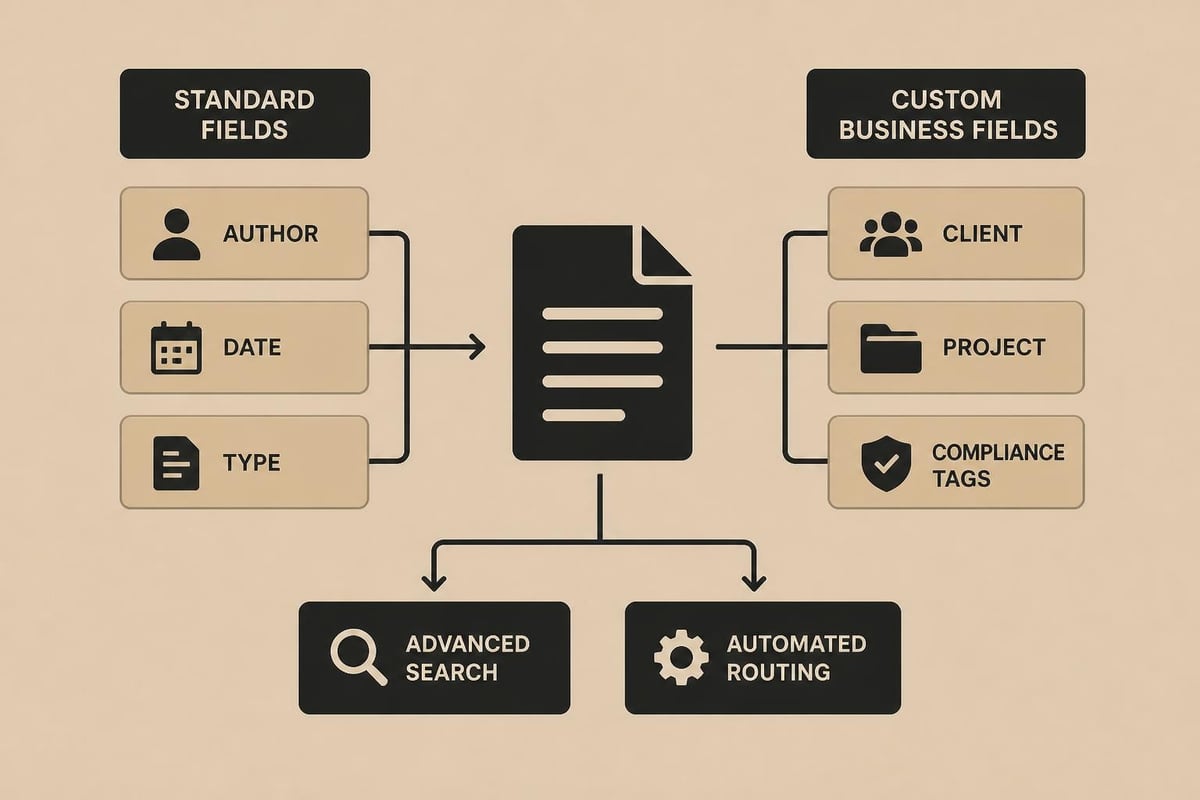
Metadata serves as the foundation for intelligent document discovery. Beyond basic attributes like creation date and author, custom fields capture business-specific information such as client names, matter numbers, or compliance categories. Rich metadata enables advanced filtering and automated workflows that route documents based on content characteristics.
Search functionality should support natural language queries and Boolean operators. Teams must locate documents using various criteria whether searching by keyword, date range, document type, or custom fields. The ability to find information within seconds rather than minutes multiplies throughout an organization, yielding substantial productivity gains.
Organizations exploring operational excellence recognize that search efficiency directly correlates with employee satisfaction and client service quality. When consultants quickly access precedents, research materials, or contract templates, they deliver faster responses and higher-quality deliverables.
Automating Workflows and Business Processes
Automation eliminates manual handoffs and approval bottlenecks that slow business processes. Workflow engines route documents based on predefined rules, triggering notifications and escalations as needed. This reduces processing times from days to hours while ensuring consistent application of business rules.
Common automation opportunities include:
- Invoice processing from receipt through approval and payment
- Contract review cycles with automated routing to legal and stakeholders
- Employee onboarding distributing required documentation and collecting signatures
- Compliance reporting aggregating data from multiple sources
- Document retention applying lifecycle policies automatically
Professional services firms particularly benefit from automated client onboarding. When new engagements begin, systems automatically generate folder structures, apply access permissions, and distribute template documents. This standardization ensures compliance with internal procedures while accelerating project initiation.
Following document management best practices designed for professional services helps organizations identify high-impact automation opportunities that deliver immediate ROI.
Integration with Enterprise Systems
Document management platforms must connect seamlessly with existing business applications. Integration with customer relationship management systems, project management tools, and accounting software creates unified information ecosystems. This connectivity eliminates data silos and reduces duplicate entry.
Human Capital Management Integration
For consultancies managing employee documentation, integration with HRIS systems centralizes personnel files, performance reviews, and benefit enrollment forms. Automated synchronization ensures HR teams maintain current information without manual updates across multiple platforms.
This integration particularly supports compliance requirements for employee record retention. Systems automatically apply retention schedules, trigger review workflows before document expiration, and maintain audit trails demonstrating regulatory adherence.
Financial Systems Connectivity
Connecting document management with accounting platforms streamlines accounts payable and receivable processes. Invoice images link directly to transaction records, supporting audit requirements and dispute resolution. When questions arise about billing or payments, staff immediately access supporting documentation without searching multiple systems.
Understanding how to optimize accounts payable processes with automation reveals opportunities to reduce processing costs while improving vendor relationships through faster payment cycles.
Mobile Access and Remote Collaboration
The shift toward distributed workforces demands mobile-optimized document access. Teams require secure document retrieval from any location and device without compromising security. Cloud-based platforms with responsive interfaces enable consultants to review contracts during client meetings or approve invoices while traveling.
Mobile capabilities should include:
- Document viewing and annotation
- Electronic signature collection
- Secure file sharing with external parties
- Offline access to designated documents
- Push notifications for pending approvals
Security controls must extend to mobile environments through device management policies, remote wipe capabilities, and session timeouts. Organizations can maintain productivity without sacrificing data protection.

Compliance and Regulatory Considerations
Industries face varying documentation requirements based on regulatory frameworks. Healthcare organizations must comply with HIPAA, financial services with SEC regulations, and legal firms with bar association rules. Document management systems must enforce these requirements through automated controls.
| Industry | Key Regulations | Retention Requirements |
|---|---|---|
| Healthcare | HIPAA, HITECH | 6-10 years |
| Financial Services | SEC, FINRA | 3-7 years |
| Legal | State Bar Rules | Varies by jurisdiction |
| General Business | SOX, GDPR | 3-7 years |
Compliance features include automatic retention enforcement, legal hold capabilities, and defensible deletion processes. Audit reports demonstrate adherence during regulatory examinations, reducing exposure to penalties.
For healthcare organizations managing revenue cycle documentation, proper document management supports both compliance and operational efficiency, directly impacting financial performance.
Training and Change Management Strategies
Technology adoption succeeds only when users embrace new systems. Comprehensive training programs must address varying skill levels and learning preferences. Initial training should cover basic functionality, while advanced sessions explore specialized features relevant to specific roles.
Building User Adoption
Change management strategies include:
- Executive sponsorship demonstrating leadership commitment
- Departmental champions providing peer support
- Incremental rollouts allowing gradual adaptation
- Quick reference guides supporting just-in-time learning
- Feedback mechanisms capturing user concerns
Organizations should monitor adoption metrics such as login frequency, document upload rates, and search utilization. Low engagement signals the need for additional training or system adjustments. Regular communication highlighting efficiency gains and success stories reinforces value and encourages continued use.
Measuring Performance and Continuous Improvement
Establishing key performance indicators enables organizations to quantify document management impact. Relevant metrics align with initial objectives whether reducing retrieval time, improving compliance, or decreasing storage costs.
Valuable metrics include:
- Average document retrieval time
- Storage cost per document
- Number of documents processed per employee
- Compliance audit findings
- User satisfaction scores
- Time spent on document-related tasks
Tracking these efficiency metrics provides data-driven insights for optimization. Regular reviews identify bottlenecks, underutilized features, or emerging requirements requiring system enhancements.
Selecting the Right Technology Platform
The market offers numerous solutions ranging from basic file sharing to enterprise content management platforms. Selection criteria should evaluate current needs while accommodating future growth. Organizations must consider scalability, integration capabilities, security features, and total cost of ownership.
Comprehensive reviews of document management software compare features, pricing models, and user experiences across leading platforms. Evaluation should include proof-of-concept testing with representative documents and workflows.
For professional services firms, industry-specific requirements may necessitate specialized solutions. Understanding best practices tailored to professional services ensures selected platforms address unique operational challenges such as matter-centric organization or client collaboration requirements.
Build vs. Buy Considerations
Some organizations consider developing custom solutions to address specific requirements. While this approach offers maximum flexibility, it requires substantial development resources and ongoing maintenance. Commercial platforms provide proven functionality, regular updates, and vendor support typically representing better value for most organizations.
Hybrid approaches combining commercial platforms with custom integrations often balance standardization with specialization. Organizations maintain core functionality while extending capabilities to address unique business processes.
Artificial Intelligence and Future Trends
Emerging technologies continue transforming document management capabilities. Machine learning algorithms now classify documents automatically, extract key data points, and identify anomalies requiring attention. Natural language processing enables semantic search understanding context and intent rather than matching keywords.
The relationship between AI and document management becomes increasingly important as organizations implement retrieval-augmented generation systems. Well-structured document repositories enhance AI model accuracy and response relevance.
Predictive analytics anticipate user needs, suggesting relevant documents based on current activities. Recommendation engines identify related content, supporting comprehensive research and decision-making. These intelligent features amplify knowledge worker productivity while reducing information overload.
Blockchain for Document Verification
Blockchain technology offers tamper-proof verification for critical documents. Distributed ledgers create immutable records proving document authenticity and tracking modifications. While adoption remains limited, industries requiring absolute verification such as legal agreements or supply chain documentation increasingly explore blockchain integration.
Enterprise-Wide Implementation Strategies
Successful deployment requires coordinated planning across departments. Cross-functional teams representing IT, operations, legal, and end-users ensure systems meet diverse requirements. Phased rollouts beginning with pilot departments allow organizations to refine processes before enterprise-wide deployment.
Implementation timelines vary based on organizational size and system complexity:
- Discovery phase (4-6 weeks): Requirements gathering and current state analysis
- Selection phase (6-8 weeks): Platform evaluation and vendor selection
- Configuration phase (8-12 weeks): System setup and integration
- Testing phase (4-6 weeks): User acceptance testing and refinement
- Training phase (4-6 weeks): User education and documentation
- Deployment phase (2-4 weeks): Production rollout and stabilization
Organizations should anticipate this timeline representing minimum durations. Complex environments or extensive customization extend implementation periods. Maintaining realistic schedules prevents rushed deployments that compromise system quality or user adoption.
For enterprise organizations managing document management across multiple locations or business units, governance structures ensure consistent application of policies while accommodating legitimate variations.
Cost-Benefit Analysis and ROI Calculation
Document management investments require financial justification demonstrating return on investment. Cost components include software licensing, implementation services, training, and ongoing maintenance. Benefits encompass labor savings, reduced storage costs, compliance risk mitigation, and improved customer satisfaction.
Quantifiable benefits include:
- Reduced document storage costs (physical space or cloud storage optimization)
- Labor hour savings from faster retrieval and automated workflows
- Decreased compliance penalties through improved controls
- Reduced document recreation costs from better preservation
- Lower printing and shipping expenses through digital distribution
Many organizations achieve ROI within 12-18 months through labor savings alone. When factoring compliance risk reduction and improved decision-making quality, financial justification becomes compelling. Establishing baseline metrics before implementation enables accurate post-deployment measurement validating projected benefits.
Implementing effective document management practices transforms operational efficiency, reduces risk, and empowers teams with immediate access to accurate information. Organizations that systematically address document creation, organization, security, and retention position themselves for sustainable competitive advantage in increasingly digital business environments. Nero and Associates, Inc. helps organizations eliminate thousands of hours of manual processes through strategic automation and integration solutions that optimize document workflows, reduce operational costs, and enhance compliance frameworks across professional services firms.