The Essential Guide to Employee Benefits Consulting 2026

Share on Facebook
Share on X
Share on LinkedIn

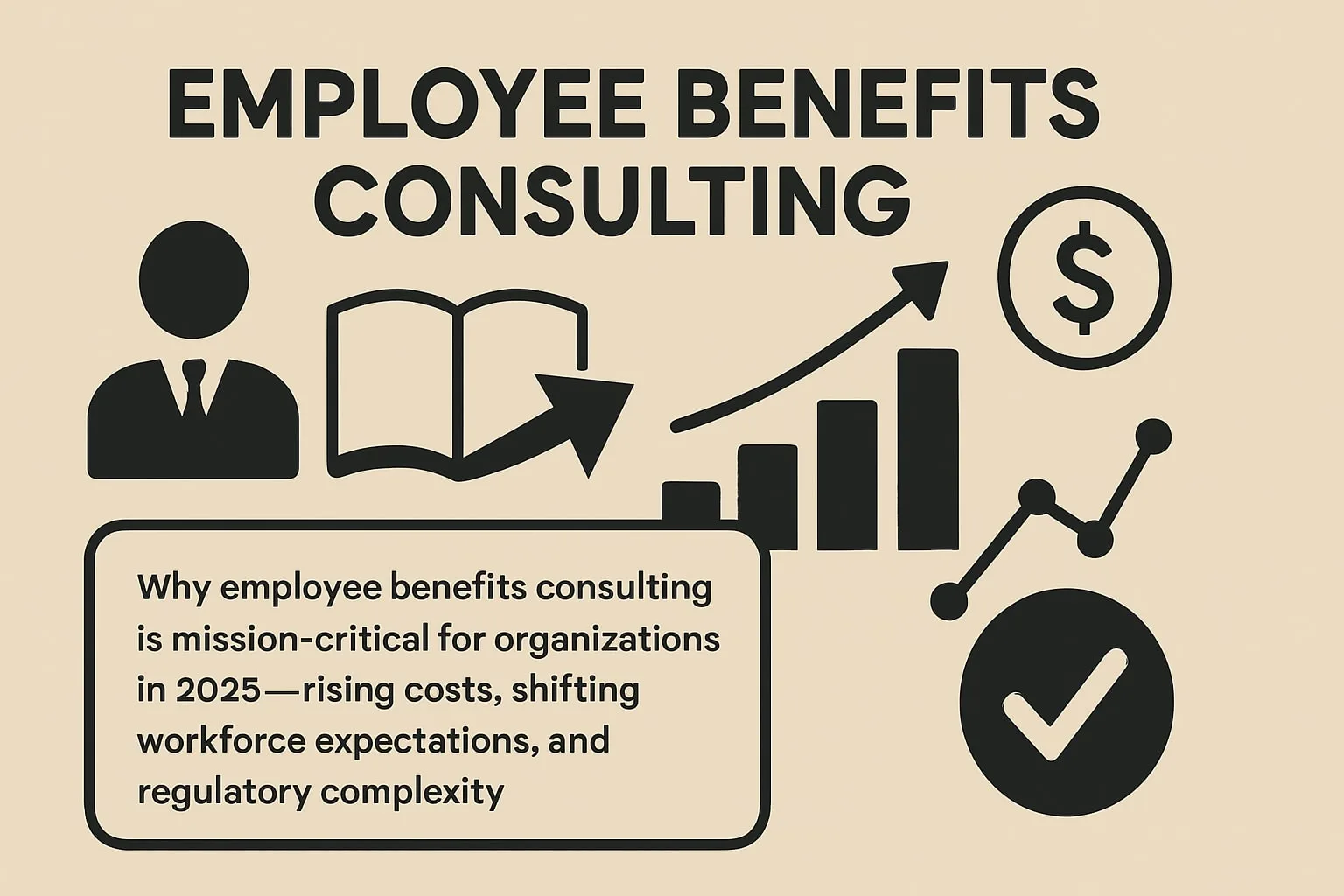
Organizations face unprecedented challenges as costs surge, workforce expectations shift, and regulations grow more complex. In 2026, understanding employee benefits consulting is essential for HR leaders and executives seeking to optimize benefits strategy and control expenses.

This guide breaks down the evolving landscape, revealing how consulting empowers organizations to boost employee well-being and stay competitive. We will cover the latest industry changes, core consulting services, technology innovations, compliance tactics, steps to select the right consultant, and emerging trends.

Now is the time to rethink your approach and leverage expert insights to transform your employee benefits for lasting success.

The Changing Landscape of Employee Benefits in 2026

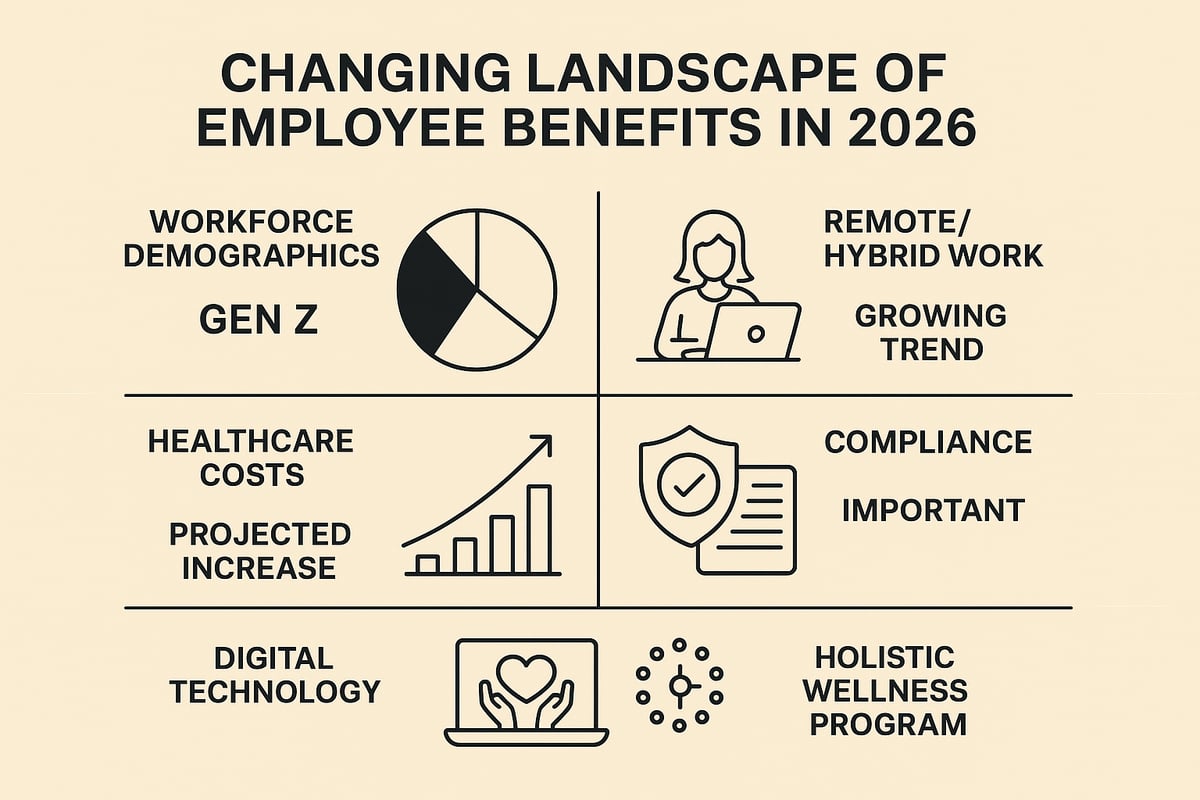
Organizations face a rapidly evolving climate for employee benefits consulting in 2026. Market forces, legislation, and workforce preferences are all transforming how companies approach benefits. To stay ahead, HR leaders must navigate new expectations, compliance demands, and technological advances.
The Changing Landscape of Employee Benefits in 2026

Evolving Workforce Demographics and Expectations

The modern workforce in 2026 is more diverse than ever, blending Gen Z, Millennials, Gen X, and Boomers. This mix shapes employee benefits consulting strategies, with younger employees seeking flexible and personalized options. Demand for inclusive benefits is rising, including mental health, family support, and financial wellness. Recent studies show that 72% of employees now expect mental health support as a standard benefit. The trend toward remote and hybrid workforces also impacts benefits delivery, requiring solutions that can adapt to different locations and lifestyles. Companies must rethink offerings to remain competitive in attracting top talent.

Regulatory and Compliance Shifts

The regulatory environment for employee benefits consulting is growing more complex. In 2026, organizations must address new federal and state mandates, such as changes to ACA, ERISA, and expanded paid leave laws. Increased scrutiny on DEI&B is pushing employers to ensure benefits packages address equity, inclusion, and belonging. For national employers, varying state-level requirements create additional compliance challenges. Consulting experts guide companies through this maze, helping them maintain up-to-date documentation and avoid costly penalties. Staying proactive with compliance is now a mission-critical function for HR teams.

Escalating Healthcare and Benefits Costs

Healthcare inflation continues to be a major driver of change in employee benefits consulting. In 2026, average employer health plan costs are projected to rise by 6.5%. This escalation demands a strategic approach to cost containment while maintaining employee satisfaction. Consultants analyze claims data and recommend plan design changes to balance expenses and value. Many organizations are exploring alternative funding models and pharmacy benefits management to control costs. Without a proactive benefits strategy, employers risk both financial strain and decreased employee engagement.

Technology and Data Analytics in Benefits

Digital transformation is revolutionizing employee benefits consulting. AI, automation, and advanced analytics are now essential tools for optimizing plan design, administration, and engagement. Predictive analytics help identify high-risk claims and enable targeted interventions, improving both outcomes and cost efficiency. Technology also streamlines benefits enrollment and compliance tracking, making administration more efficient. For an in-depth look at these innovations and how they shape the future, see 2026 Employee Benefits Trends. Embracing technology is no longer optional, it is a competitive imperative.

Increased Focus on Holistic Well-being

Holistic well-being has become central to employee benefits consulting. Employers are integrating mental, physical, and financial health programs into their core offerings. Employee Assistance Programs, wellness incentives, and financial coaching are now mainstream, reflecting a broader understanding of employee needs. This approach not only supports overall well-being but also strengthens retention and productivity. As expectations shift, organizations that provide comprehensive support see measurable improvements in engagement and loyalty.

Core Services Offered by Employee Benefits Consultants

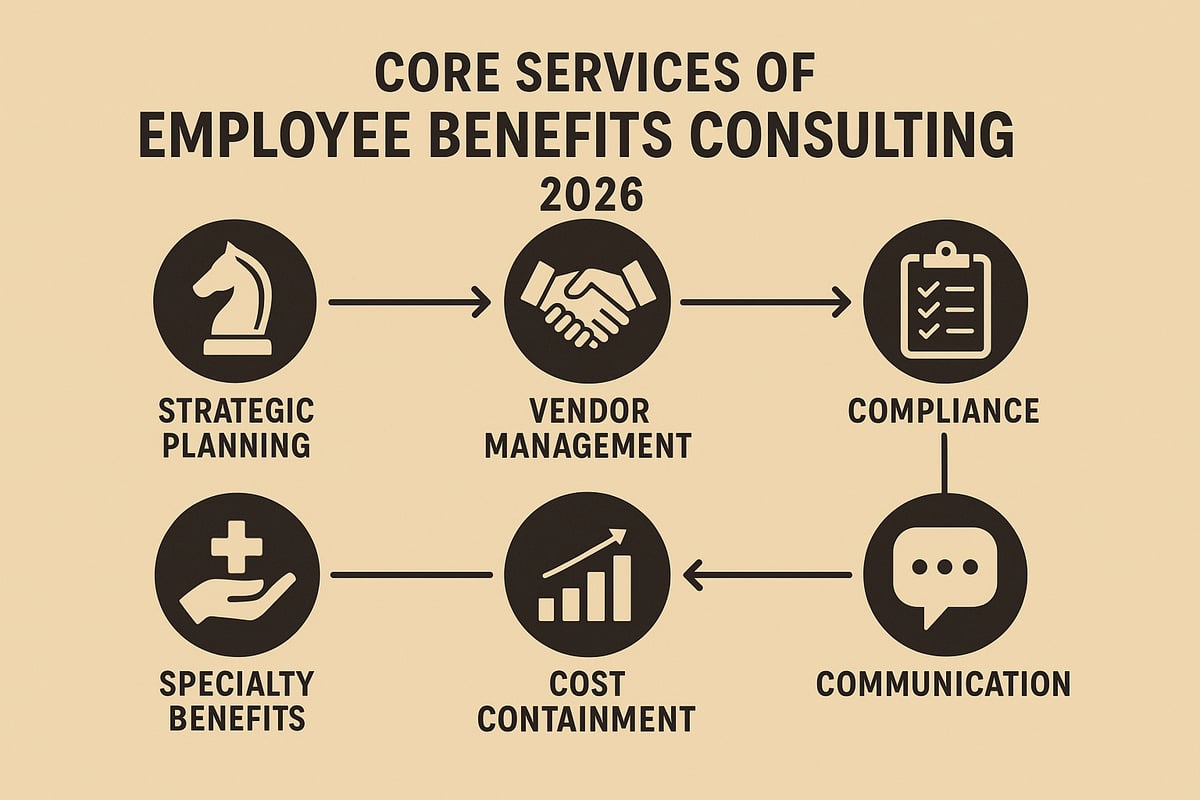
Organizations turn to employee benefits consulting for expert guidance in navigating complex benefits landscapes. Leading Employee Benefits Consulting Company teams deliver tailored solutions that help HR leaders optimize offerings, minimize costs, and maintain compliance. The core services outlined below showcase how consultants drive value across every stage of the benefits lifecycle.
Core Services Offered by Employee Benefits Consultants

Strategic Benefits Planning and Benchmarking

Strategic benefits planning is the foundation of effective employee benefits consulting. Consultants begin with a comprehensive needs assessment, analyzing demographic data and current offerings. They then perform competitive benchmarking, comparing your plans against industry standards and regional trends.

Custom plan design is at the heart of this service. Consultants align benefit strategies with organizational goals, ensuring offerings are competitive and cost-effective. For example, industry-specific benchmarking can reveal gaps in retirement or wellness programs.

By leveraging employee benefits consulting expertise, organizations can proactively adapt their benefits to attract and retain top talent.

Vendor Selection and Management

Vendor selection is a critical aspect of employee benefits consulting. Consultants guide organizations through the RFP process, evaluating insurance carriers, third-party administrators, and technology platforms.

Key steps include:

  • Soliciting and reviewing vendor proposals
  • Negotiating plan terms, premiums, and service agreements
  • Conducting due diligence on vendor performance

After implementation, consultants monitor vendor service levels and address any issues quickly. Regular performance reviews ensure vendors continue to meet organizational needs.

Effective vendor management through employee benefits consulting helps organizations secure better terms and maintain high-quality service.

Compliance and Regulatory Advisory

Compliance is a complex, ever-changing challenge in employee benefits consulting. Consultants keep clients up to date with laws such as ACA, ERISA, HIPAA, and relevant state mandates.

Advisory services include:

  • Supporting audits, filings, and required documentation
  • Providing guidance on regulatory changes
  • Reviewing plan documents for legal accuracy

For multi-state employers, consultants ensure benefits remain compliant across jurisdictions. This proactive approach reduces the risk of penalties and litigation.

Relying on employee benefits consulting for regulatory expertise empowers organizations to maintain compliance with confidence.

Employee Communication and Engagement

Employee benefits consulting extends beyond plan design to foster ongoing engagement and understanding. Consultants develop targeted communication strategies, from open enrollment campaigns to year-round education.

Modern tools include:

  • Mobile apps for on-the-go access
  • Online portals for self-service
  • Interactive webinars and decision support tools

Clear communication improves benefits utilization and employee satisfaction. Consultants also gather feedback to refine messaging and address emerging needs.

With employee benefits consulting, organizations can boost engagement and make benefits more accessible for every employee.

Cost Containment and Claims Analysis

Managing rising costs is a priority in employee benefits consulting. Consultants deploy data-driven strategies to identify savings opportunities and control premiums.

Typical tactics involve:

  • Claims analysis to spot high-cost trends
  • Pharmacy benefits management and negotiation
  • Exploring self-funding, captives, or stop-loss insurance

A table outlining common cost containment solutions:

Strategy Impact
Claims analysis Identifies savings areas
Pharmacy consulting Controls drug spend
Self-funding Customizes risk sharing

Through employee benefits consulting, organizations can achieve measurable cost reductions without sacrificing benefit quality.

Specialty and Voluntary Benefits Consulting

Specialty consulting is a growing focus within employee benefits consulting. Consultants advise on executive benefits, retirement plans, and emerging voluntary offerings like pet insurance or legal protection.

Integration of voluntary benefits expands choice and supports diverse employee needs. Consultants help structure these programs for maximum participation and value.

By leveraging employee benefits consulting for specialty benefits, organizations enhance their overall package and improve retention among key talent groups.

The Role of Technology in Modern Employee Benefits Consulting

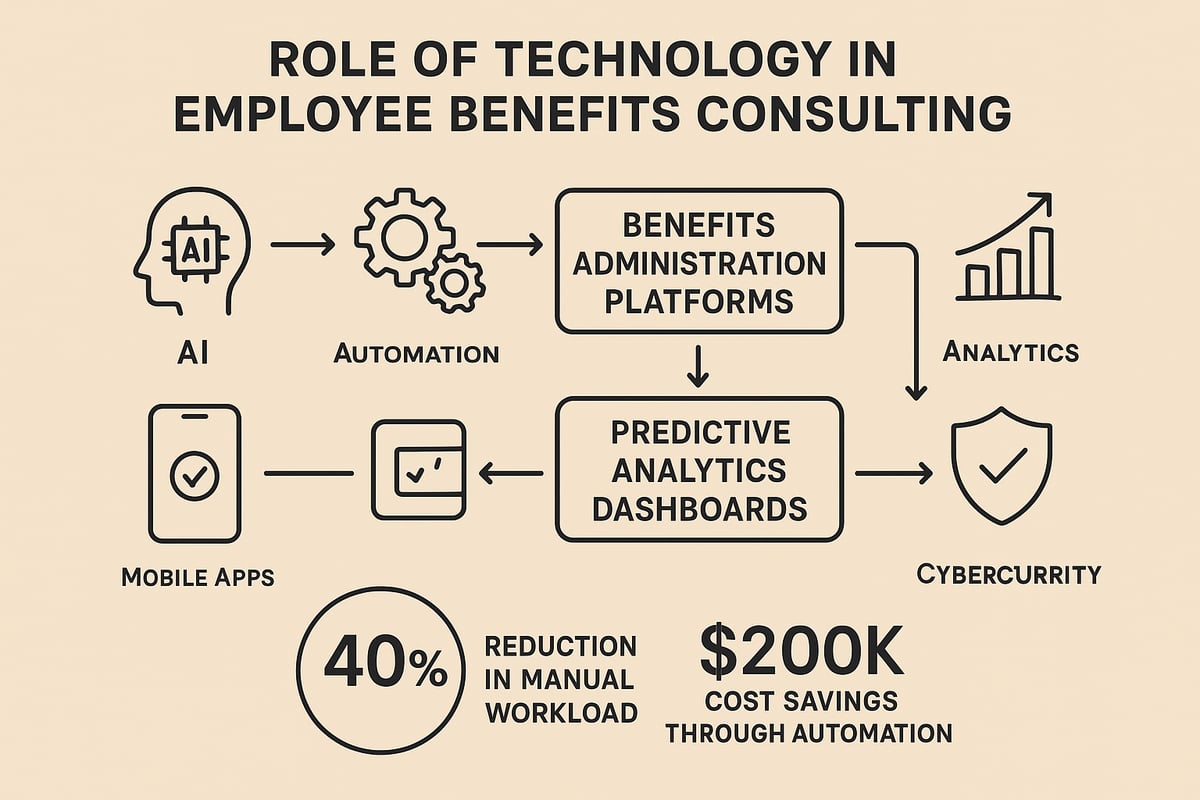
Technology is reshaping employee benefits consulting, enabling organizations to deliver smarter, more efficient, and highly personalized benefits. As digital transformation accelerates, consultants and HR leaders are leveraging advanced platforms, analytics, and automation to optimize every aspect of benefits strategy and administration.
The Role of Technology in Modern Employee Benefits Consulting

Benefits Administration Platforms and HRIS Integration

Modern benefits administration platforms are at the heart of employee benefits consulting. These systems streamline enrollment, eligibility tracking, and compliance management. By integrating with HRIS, payroll, and time tracking solutions, organizations centralize data, improving accuracy and reducing administrative burden.

For HR teams, integration means less manual work and fewer errors. Automated workflows handle tasks like employee onboarding, qualifying life events, and open enrollment periods. This efficiency frees up resources for strategic planning and employee engagement.

Consultants leverage these platforms to provide real-time reporting and ensure compliance with regulations. Automated reminders and document management reduce risk while supporting a seamless employee experience.

AI, Automation, and Predictive Analytics

Artificial intelligence and automation are redefining employee benefits consulting. AI-driven tools analyze plan utilization and claims data, uncovering trends and opportunities for cost containment. Automation speeds up repetitive tasks, such as sending compliance notifications or processing enrollments.

Predictive analytics play a crucial role by identifying at-risk populations and forecasting future costs. Consultants use these insights to recommend targeted wellness programs and proactive interventions, improving outcomes for both employers and employees.

For a deeper dive into how analytics technology is transforming benefits strategy, see Benefits Data Analytics. Leveraging such tools, consultants help organizations make data-driven decisions that maximize value and control spending.

Digital Employee Experience and Engagement Tools

The employee experience is central to modern employee benefits consulting. Digital tools—mobile apps, self-service portals, and chatbots—empower employees to manage their benefits anytime, anywhere.

Personalized dashboards help employees compare plan options, estimate out-of-pocket costs, and access resources for health and wellness. Decision support tools guide users through complex choices, increasing confidence and satisfaction.

Year-round engagement is possible with automated communications and push notifications. These tools drive higher participation rates in wellness programs and help employees make informed decisions, boosting overall well-being.

Data Security, Privacy, and Compliance

With the rise of digital solutions in employee benefits consulting, data security and privacy have become top priorities. Consultants must ensure that all platforms comply with HIPAA, CCPA, GDPR, and other regulatory requirements.

Robust cybersecurity protocols, such as encryption and multi-factor authentication, protect sensitive employee information. Regular audits and third-party risk assessments help identify and mitigate vulnerabilities.

Maintaining compliance is not just about technology but also about ongoing training and policy updates. Consultants partner with organizations to implement best practices, reducing the risk of data breaches and regulatory penalties.

Case Example: Leveraging Technology for Cost Savings

A leading organization partnered with an employee benefits consulting firm to modernize its benefits administration. By automating eligibility tracking, open enrollment, and compliance reporting, the company reduced manual workload by 40 percent.

Integrating predictive analytics allowed them to identify high-cost claims early and implement targeted wellness initiatives. As a result, the organization achieved $200,000 in annual administrative cost savings and improved employee engagement scores.

This case demonstrates how technology-driven employee benefits consulting delivers measurable ROI. Organizations that embrace these innovations gain a competitive edge, controlling costs while elevating the employee experience.

How to Select the Right Employee Benefits Consultant

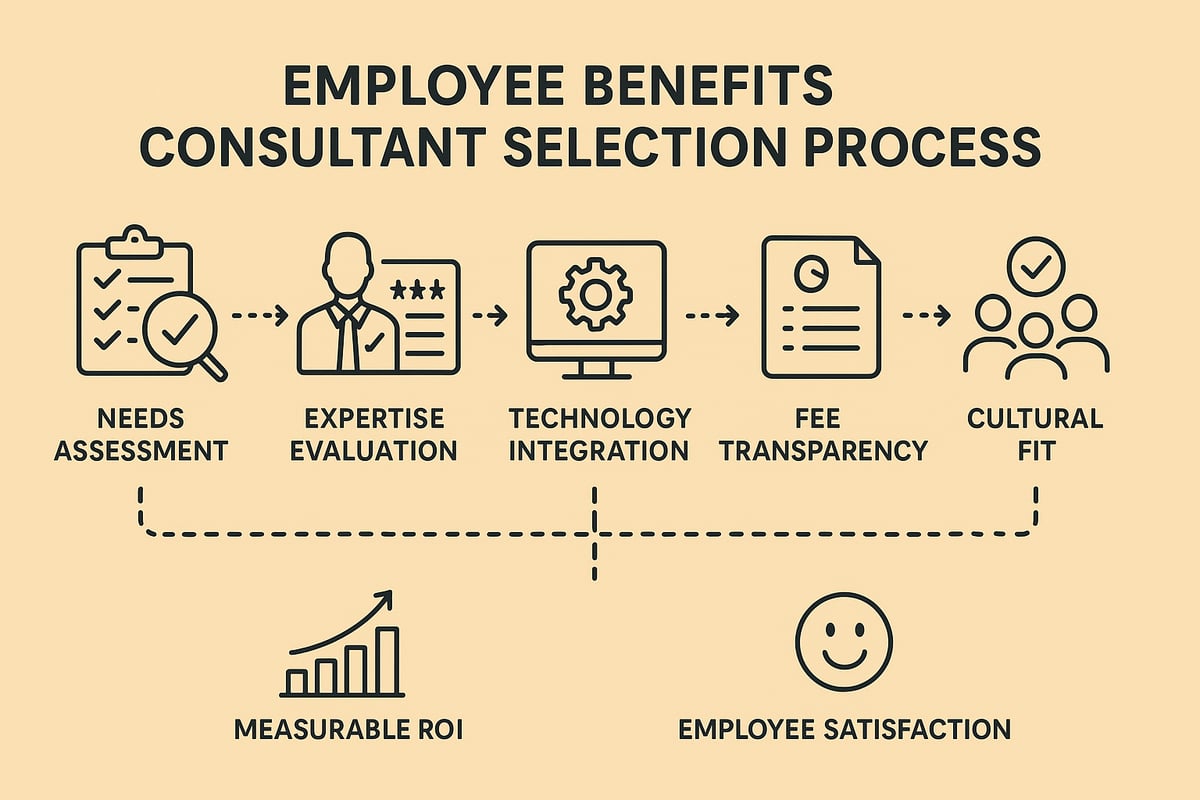
Selecting the right partner for employee benefits consulting is a pivotal decision for any organization. The process demands a strategic approach to ensure your consultant not only addresses existing challenges but also anticipates future needs.

A thoughtful selection process empowers HR leaders and executives to maximize the value of employee benefits consulting while supporting organizational goals and employee well-being.
How to Select the Right Employee Benefits Consultant

Assessing Organizational Needs and Goals

Begin by conducting a comprehensive assessment of your organization's current state and future objectives. Identify key pain points such as rising costs, compliance risks, gaps in technology, or low employee engagement. Define the desired outcomes you expect from employee benefits consulting—whether it's cost containment, improved plan design, or enhanced employee experience.

Create a list of key performance indicators (KPIs) to measure success, such as cost savings, participation rates, and employee satisfaction metrics. Engage stakeholders across departments to ensure all perspectives are considered. For organizations seeking to optimize plan design, resources like Employee Benefit Plan Design provide valuable insights for aligning benefits with business strategy.

A clear understanding of your needs forms the foundation for effective employee benefits consulting and ensures the selection process is purposeful.

Evaluating Consultant Expertise and Services

Assess each consultant's depth of experience in employee benefits consulting. Look for industry specialization—such as healthcare, education, or manufacturing—and review the breadth of services offered. A strong consultant should demonstrate capabilities in strategic planning, compliance, technology, and wellness program integration.

Request case studies and client testimonials to gauge proven results. Evaluate the consultant’s approach to benchmarking and whether they provide customized solutions rather than generic offerings. Ask how they stay current with industry trends and regulatory changes.

A consultant with a robust track record in employee benefits consulting will have the knowledge and resources to address your organization's unique needs.

Technology and Innovation Capabilities

Modern employee benefits consulting extends beyond traditional brokering to include advanced technology solutions. Assess the consultant’s ability to implement and support benefits administration platforms, AI-driven analytics, and integration with HRIS or payroll systems.

Inquire about the use of automation for enrollment, compliance tracking, and data analytics to drive decision-making. Compare how different consultants leverage technology to improve efficiency and deliver a better employee experience. Look for partners who offer innovative tools that align with your organization’s digital transformation goals.

The right consultant will use technology to streamline processes and enhance the overall impact of employee benefits consulting.

Performance-Based and Transparent Fee Models

Understanding how consultants are compensated is crucial in the selection process. Common models include commission-based, fee-for-service, and performance-based arrangements. Request full transparency on fees, including any commissions or bonuses tied to specific vendors.

Aligning compensation with your business objectives ensures that your consultant is motivated to deliver measurable results. Ask for sample contracts or fee schedules to compare options. A consultant who prioritizes transparency helps build trust and supports a long-term partnership.

Choosing a fee structure that reflects your goals reinforces the value of your employee benefits consulting engagement.

References, Case Studies, and Cultural Fit

Before making a final decision, request references and review documented success stories. Speak directly with current clients to understand the consultant’s communication style, responsiveness, and ability to deliver on promises.

Assess whether the consultant’s approach aligns with your organizational culture and values. Consider how they foster collaboration, adapt to change, and support ongoing education for your teams. A strong cultural fit enhances the effectiveness of employee benefits consulting and supports sustainable results.

Ultimately, selecting the right consultant is about partnership—one that drives positive change for your organization and workforce.

Compliance, Risk Management, and Regulatory Trends in 2026

Navigating the complex regulatory landscape is essential for organizations prioritizing employee benefits consulting. In 2026, compliance challenges have become more intricate due to evolving legislation, increased scrutiny, and a greater focus on holistic employee well-being. Companies must stay proactive to avoid penalties, protect employee trust, and ensure their benefits strategies remain competitive.

Navigating Federal and State Mandates

Federal regulations like the Affordable Care Act (ACA), ERISA, and HIPAA continue to form the backbone of benefits compliance. In 2026, new paid family leave laws and expanded mental health parity requirements have raised the bar for employers. State-specific mandates are also increasing, often requiring multi-state organizations to manage a patchwork of rules.

Employee benefits consulting helps organizations interpret these complex requirements and adapt policies accordingly. Consultants track legislative updates, advise on plan design, and support implementation to minimize legal exposure. Staying ahead of changes ensures organizations maintain compliance and foster employee trust.

Audits, Documentation, and Plan Administration

Routine audits from the Department of Labor (DOL) and IRS are a reality for employers. Accurate and up-to-date documentation is critical for passing these reviews. Employee benefits consulting firms guide clients in organizing plan documents, summary plan descriptions (SPDs), and required notices.

Best practices include maintaining a compliance calendar, conducting regular internal reviews, and leveraging digital tools for document management. These steps not only reduce audit risk but also streamline plan administration. Consultants help ensure that every detail is accounted for, from eligibility records to annual filings.

Managing Fiduciary Risk

Plan sponsors carry significant fiduciary responsibilities under ERISA. Missteps can lead to penalties or lawsuits, making risk management a priority. Employee benefits consulting provides the expertise needed to navigate fiduciary obligations, including prudent plan selection, fee benchmarking, and regular plan reviews.

Consultants recommend implementing clear governance procedures, ongoing education for plan committee members, and transparent reporting. Leveraging technology and data analytics, as highlighted by recent industry developments, further supports risk mitigation and compliance oversight. Proactive management protects both the organization and its employees.

DEI&B and Accessibility Compliance

Diversity, Equity, Inclusion, and Belonging (DEI&B) are now central to benefits compliance. Employers must ensure their benefits programs are accessible and equitable for all employees, including those with disabilities and diverse backgrounds. Employee benefits consulting supports organizations in designing benefits that align with DEI&B principles.

This includes evaluating plan offerings for bias, ensuring communications are inclusive, and implementing accommodations where needed. Consultants also help organizations keep pace with new regulations around accessibility and anti-discrimination, reinforcing a culture of belonging and compliance.

Data Privacy and Cybersecurity

Protecting sensitive employee data is a top concern in 2026. With the rise of digital benefits administration, compliance with privacy laws like CCPA and GDPR is essential. Employee benefits consulting incorporates robust data security measures, from encryption to vendor risk assessments.

Modern HR technology trends, such as those outlined in HR Technology Trends for 2026, emphasize the importance of secure platforms and automated compliance. Consultants work with organizations to implement cybersecurity best practices, ensuring that employee information remains confidential and protected from evolving threats.

Future Trends and Innovations in Employee Benefits Consulting

The world of employee benefits consulting is transforming rapidly, with 2026 poised to bring even more acceleration. Organizations must anticipate what lies ahead to maintain a competitive edge, meet evolving employee needs, and navigate increasing complexity. Let us explore the pivotal trends shaping the future of employee benefits consulting.

Personalization and Employee Choice

Personalization is redefining employee benefits consulting. Employees now expect to tailor their benefits packages to fit their unique lifestyles and life stages. Flexible benefits platforms and choose-your-own-plan models are gaining traction among organizations aiming to boost satisfaction and retention.

For example, some companies offer flexible benefits wallets, empowering employees to allocate funds toward the benefits that matter most to them. This shift requires employee benefits consulting to incorporate advanced analytics and survey tools to understand workforce preferences deeply.

By providing more choice, consulting firms help clients attract diverse talent and strengthen employee loyalty. Personalization will remain a cornerstone of employee benefits consulting as workforce demographics and expectations shift.

Expansion of Holistic Well-being Programs

In 2026, holistic well-being is at the center of employee benefits consulting strategies. Modern benefits consulting emphasizes the integration of mental, physical, and financial wellness into core offerings.

Employers are expanding access to financial education, student loan repayment support, and mental health apps. These initiatives address the full spectrum of employee needs, driving engagement and productivity. Consulting partners curate resources such as Employee Assistance Programs (EAPs), wellness incentives, and on-demand coaching to create comprehensive well-being ecosystems.

This trend reflects a growing awareness that employee benefits consulting must support employees as whole individuals, not just as workers.

Value-Based Insurance Design and Direct Contracting

Value-based insurance design is becoming a game changer in employee benefits consulting. Rather than focusing solely on cost reduction, consultants now prioritize value, health outcomes, and employee experience.

Employers are increasingly partnering directly with health systems to negotiate better rates and improve care quality. This direct contracting approach often leads to cost savings and greater transparency. For example, organizations working with consultants to implement value-based plans have reported improved health outcomes and lower claims costs.

By shifting toward value-based strategies, employee benefits consulting is helping businesses align health plan design with organizational goals and employee well-being.

AI, Predictive Analytics, and Automation

Technology is revolutionizing employee benefits consulting, with AI, predictive analytics, and automation taking center stage. These tools enable consultants to forecast claims, identify high-risk populations, and tailor interventions for maximum impact.

AI-driven solutions also streamline administrative tasks, improve decision support, and enhance the employee experience. According to AI’s Role in Employee Benefits, automation and machine learning are powering personalized recommendations and optimizing plan performance.

As technology evolves, employee benefits consulting will rely even more on data-driven insights to deliver measurable results and ROI.

Regulatory Evolution and Globalization

Regulatory changes and globalization are reshaping employee benefits consulting. New federal and state mandates, expanded reporting requirements, and evolving international laws require constant vigilance.

Consulting firms are developing global compliance frameworks to support distributed and multinational workforces. This includes helping clients navigate cross-border regulations and align benefit offerings with local norms. The ability to anticipate and respond to regulatory shifts will define the next generation of employee benefits consulting expertise.

Sustainability, ESG, and Social Impact in Benefits

Sustainability and ESG (environmental, social, and governance) goals are increasingly influencing employee benefits consulting. Organizations seek to embed social impact into their benefits strategies, from employer-sponsored volunteer programs to green commuting incentives.

Consultants play a key role in designing and implementing benefits that align with an organization’s values and ESG commitments. This holistic approach creates positive outcomes for employees and communities, while strengthening employer brand and retention.

The Evolving Role of Consultants

The role of consultants in employee benefits consulting is evolving from transactional brokers to strategic advisors and technology partners. Clients expect more than plan administration—they want data-driven guidance, measurable ROI, and long-term partnership.

Modern consultants leverage advanced technology, deliver actionable insights, and help clients adapt to future challenges. By focusing on innovation and continuous improvement, employee benefits consulting professionals can position themselves as indispensable allies in workforce strategy.

As we’ve explored, navigating employee benefits in 2026 takes more than just keeping up with regulations or chasing cost savings—it’s about empowering your people and transforming how your organization operates. If you’re ready to take the next step and see how AI, automation, and a holistic strategy can elevate your team’s well-being and your bottom line, I’d love to help you explore the possibilities. Let’s connect to discuss your unique challenges and goals—together, we can build a roadmap for real results. Book a Consultation
The Essential Guide to Employee Benefits Consulting 2026

Organizations face unprecedented challenges as costs surge, workforce expectations shift, and regulations grow more complex. In 2026, understanding employee benefits consulting is essential for HR leaders and executives seeking to optimize benefits strategy and control expenses.

This guide breaks down the evolving landscape, revealing how consulting empowers organizations to boost employee well-being and stay competitive. We will cover the latest industry changes, core consulting services, technology innovations, compliance tactics, steps to select the right consultant, and emerging trends.

Now is the time to rethink your approach and leverage expert insights to transform your employee benefits for lasting success.

The Changing Landscape of Employee Benefits in 2026

Organizations face a rapidly evolving climate for employee benefits consulting in 2026. Market forces, legislation, and workforce preferences are all transforming how companies approach benefits. To stay ahead, HR leaders must navigate new expectations, compliance demands, and technological advances.

The Changing Landscape of Employee Benefits in 2026

Evolving Workforce Demographics and Expectations

The modern workforce in 2026 is more diverse than ever, blending Gen Z, Millennials, Gen X, and Boomers. This mix shapes employee benefits consulting strategies, with younger employees seeking flexible and personalized options. Demand for inclusive benefits is rising, including mental health, family support, and financial wellness. Recent studies show that 72% of employees now expect mental health support as a standard benefit. The trend toward remote and hybrid workforces also impacts benefits delivery, requiring solutions that can adapt to different locations and lifestyles. Companies must rethink offerings to remain competitive in attracting top talent.

Regulatory and Compliance Shifts

The regulatory environment for employee benefits consulting is growing more complex. In 2026, organizations must address new federal and state mandates, such as changes to ACA, ERISA, and expanded paid leave laws. Increased scrutiny on DEI&B is pushing employers to ensure benefits packages address equity, inclusion, and belonging. For national employers, varying state-level requirements create additional compliance challenges. Consulting experts guide companies through this maze, helping them maintain up-to-date documentation and avoid costly penalties. Staying proactive with compliance is now a mission-critical function for HR teams.

Escalating Healthcare and Benefits Costs

Healthcare inflation continues to be a major driver of change in employee benefits consulting. In 2026, average employer health plan costs are projected to rise by 6.5%. This escalation demands a strategic approach to cost containment while maintaining employee satisfaction. Consultants analyze claims data and recommend plan design changes to balance expenses and value. Many organizations are exploring alternative funding models and pharmacy benefits management to control costs. Without a proactive benefits strategy, employers risk both financial strain and decreased employee engagement.

Technology and Data Analytics in Benefits

Digital transformation is revolutionizing employee benefits consulting. AI, automation, and advanced analytics are now essential tools for optimizing plan design, administration, and engagement. Predictive analytics help identify high-risk claims and enable targeted interventions, improving both outcomes and cost efficiency. Technology also streamlines benefits enrollment and compliance tracking, making administration more efficient. For an in-depth look at these innovations and how they shape the future, see 2026 Employee Benefits Trends. Embracing technology is no longer optional, it is a competitive imperative.

Increased Focus on Holistic Well-being

Holistic well-being has become central to employee benefits consulting. Employers are integrating mental, physical, and financial health programs into their core offerings. Employee Assistance Programs, wellness incentives, and financial coaching are now mainstream, reflecting a broader understanding of employee needs. This approach not only supports overall well-being but also strengthens retention and productivity. As expectations shift, organizations that provide comprehensive support see measurable improvements in engagement and loyalty.

Core Services Offered by Employee Benefits Consultants

Organizations turn to employee benefits consulting for expert guidance in navigating complex benefits landscapes. Leading Employee Benefits Consulting Company teams deliver tailored solutions that help HR leaders optimize offerings, minimize costs, and maintain compliance. The core services outlined below showcase how consultants drive value across every stage of the benefits lifecycle.

Core Services Offered by Employee Benefits Consultants

Strategic Benefits Planning and Benchmarking

Strategic benefits planning is the foundation of effective employee benefits consulting. Consultants begin with a comprehensive needs assessment, analyzing demographic data and current offerings. They then perform competitive benchmarking, comparing your plans against industry standards and regional trends.

Custom plan design is at the heart of this service. Consultants align benefit strategies with organizational goals, ensuring offerings are competitive and cost-effective. For example, industry-specific benchmarking can reveal gaps in retirement or wellness programs.

By leveraging employee benefits consulting expertise, organizations can proactively adapt their benefits to attract and retain top talent.

Vendor Selection and Management

Vendor selection is a critical aspect of employee benefits consulting. Consultants guide organizations through the RFP process, evaluating insurance carriers, third-party administrators, and technology platforms.

Key steps include:

  • Soliciting and reviewing vendor proposals
  • Negotiating plan terms, premiums, and service agreements
  • Conducting due diligence on vendor performance

After implementation, consultants monitor vendor service levels and address any issues quickly. Regular performance reviews ensure vendors continue to meet organizational needs.

Effective vendor management through employee benefits consulting helps organizations secure better terms and maintain high-quality service.

Compliance and Regulatory Advisory

Compliance is a complex, ever-changing challenge in employee benefits consulting. Consultants keep clients up to date with laws such as ACA, ERISA, HIPAA, and relevant state mandates.

Advisory services include:

  • Supporting audits, filings, and required documentation
  • Providing guidance on regulatory changes
  • Reviewing plan documents for legal accuracy

For multi-state employers, consultants ensure benefits remain compliant across jurisdictions. This proactive approach reduces the risk of penalties and litigation.

Relying on employee benefits consulting for regulatory expertise empowers organizations to maintain compliance with confidence.

Employee Communication and Engagement

Employee benefits consulting extends beyond plan design to foster ongoing engagement and understanding. Consultants develop targeted communication strategies, from open enrollment campaigns to year-round education.

Modern tools include:

  • Mobile apps for on-the-go access
  • Online portals for self-service
  • Interactive webinars and decision support tools

Clear communication improves benefits utilization and employee satisfaction. Consultants also gather feedback to refine messaging and address emerging needs.

With employee benefits consulting, organizations can boost engagement and make benefits more accessible for every employee.

Cost Containment and Claims Analysis

Managing rising costs is a priority in employee benefits consulting. Consultants deploy data-driven strategies to identify savings opportunities and control premiums.

Typical tactics involve:

  • Claims analysis to spot high-cost trends
  • Pharmacy benefits management and negotiation
  • Exploring self-funding, captives, or stop-loss insurance

A table outlining common cost containment solutions:

Strategy Impact
Claims analysis Identifies savings areas
Pharmacy consulting Controls drug spend
Self-funding Customizes risk sharing

Through employee benefits consulting, organizations can achieve measurable cost reductions without sacrificing benefit quality.

Specialty and Voluntary Benefits Consulting

Specialty consulting is a growing focus within employee benefits consulting. Consultants advise on executive benefits, retirement plans, and emerging voluntary offerings like pet insurance or legal protection.

Integration of voluntary benefits expands choice and supports diverse employee needs. Consultants help structure these programs for maximum participation and value.

By leveraging employee benefits consulting for specialty benefits, organizations enhance their overall package and improve retention among key talent groups.

The Role of Technology in Modern Employee Benefits Consulting

Technology is reshaping employee benefits consulting, enabling organizations to deliver smarter, more efficient, and highly personalized benefits. As digital transformation accelerates, consultants and HR leaders are leveraging advanced platforms, analytics, and automation to optimize every aspect of benefits strategy and administration.

The Role of Technology in Modern Employee Benefits Consulting

Benefits Administration Platforms and HRIS Integration

Modern benefits administration platforms are at the heart of employee benefits consulting. These systems streamline enrollment, eligibility tracking, and compliance management. By integrating with HRIS, payroll, and time tracking solutions, organizations centralize data, improving accuracy and reducing administrative burden.

For HR teams, integration means less manual work and fewer errors. Automated workflows handle tasks like employee onboarding, qualifying life events, and open enrollment periods. This efficiency frees up resources for strategic planning and employee engagement.

Consultants leverage these platforms to provide real-time reporting and ensure compliance with regulations. Automated reminders and document management reduce risk while supporting a seamless employee experience.

AI, Automation, and Predictive Analytics

Artificial intelligence and automation are redefining employee benefits consulting. AI-driven tools analyze plan utilization and claims data, uncovering trends and opportunities for cost containment. Automation speeds up repetitive tasks, such as sending compliance notifications or processing enrollments.

Predictive analytics play a crucial role by identifying at-risk populations and forecasting future costs. Consultants use these insights to recommend targeted wellness programs and proactive interventions, improving outcomes for both employers and employees.

For a deeper dive into how analytics technology is transforming benefits strategy, see Benefits Data Analytics. Leveraging such tools, consultants help organizations make data-driven decisions that maximize value and control spending.

Digital Employee Experience and Engagement Tools

The employee experience is central to modern employee benefits consulting. Digital tools—mobile apps, self-service portals, and chatbots—empower employees to manage their benefits anytime, anywhere.

Personalized dashboards help employees compare plan options, estimate out-of-pocket costs, and access resources for health and wellness. Decision support tools guide users through complex choices, increasing confidence and satisfaction.

Year-round engagement is possible with automated communications and push notifications. These tools drive higher participation rates in wellness programs and help employees make informed decisions, boosting overall well-being.

Data Security, Privacy, and Compliance

With the rise of digital solutions in employee benefits consulting, data security and privacy have become top priorities. Consultants must ensure that all platforms comply with HIPAA, CCPA, GDPR, and other regulatory requirements.

Robust cybersecurity protocols, such as encryption and multi-factor authentication, protect sensitive employee information. Regular audits and third-party risk assessments help identify and mitigate vulnerabilities.

Maintaining compliance is not just about technology but also about ongoing training and policy updates. Consultants partner with organizations to implement best practices, reducing the risk of data breaches and regulatory penalties.

Case Example: Leveraging Technology for Cost Savings

A leading organization partnered with an employee benefits consulting firm to modernize its benefits administration. By automating eligibility tracking, open enrollment, and compliance reporting, the company reduced manual workload by 40 percent.

Integrating predictive analytics allowed them to identify high-cost claims early and implement targeted wellness initiatives. As a result, the organization achieved $200,000 in annual administrative cost savings and improved employee engagement scores.

This case demonstrates how technology-driven employee benefits consulting delivers measurable ROI. Organizations that embrace these innovations gain a competitive edge, controlling costs while elevating the employee experience.

How to Select the Right Employee Benefits Consultant

Selecting the right partner for employee benefits consulting is a pivotal decision for any organization. The process demands a strategic approach to ensure your consultant not only addresses existing challenges but also anticipates future needs.

A thoughtful selection process empowers HR leaders and executives to maximize the value of employee benefits consulting while supporting organizational goals and employee well-being.

How to Select the Right Employee Benefits Consultant

Assessing Organizational Needs and Goals

Begin by conducting a comprehensive assessment of your organization's current state and future objectives. Identify key pain points such as rising costs, compliance risks, gaps in technology, or low employee engagement. Define the desired outcomes you expect from employee benefits consulting—whether it's cost containment, improved plan design, or enhanced employee experience.

Create a list of key performance indicators (KPIs) to measure success, such as cost savings, participation rates, and employee satisfaction metrics. Engage stakeholders across departments to ensure all perspectives are considered. For organizations seeking to optimize plan design, resources like Employee Benefit Plan Design provide valuable insights for aligning benefits with business strategy.

A clear understanding of your needs forms the foundation for effective employee benefits consulting and ensures the selection process is purposeful.

Evaluating Consultant Expertise and Services

Assess each consultant's depth of experience in employee benefits consulting. Look for industry specialization—such as healthcare, education, or manufacturing—and review the breadth of services offered. A strong consultant should demonstrate capabilities in strategic planning, compliance, technology, and wellness program integration.

Request case studies and client testimonials to gauge proven results. Evaluate the consultant’s approach to benchmarking and whether they provide customized solutions rather than generic offerings. Ask how they stay current with industry trends and regulatory changes.

A consultant with a robust track record in employee benefits consulting will have the knowledge and resources to address your organization's unique needs.

Technology and Innovation Capabilities

Modern employee benefits consulting extends beyond traditional brokering to include advanced technology solutions. Assess the consultant’s ability to implement and support benefits administration platforms, AI-driven analytics, and integration with HRIS or payroll systems.

Inquire about the use of automation for enrollment, compliance tracking, and data analytics to drive decision-making. Compare how different consultants leverage technology to improve efficiency and deliver a better employee experience. Look for partners who offer innovative tools that align with your organization’s digital transformation goals.

The right consultant will use technology to streamline processes and enhance the overall impact of employee benefits consulting.

Performance-Based and Transparent Fee Models

Understanding how consultants are compensated is crucial in the selection process. Common models include commission-based, fee-for-service, and performance-based arrangements. Request full transparency on fees, including any commissions or bonuses tied to specific vendors.

Aligning compensation with your business objectives ensures that your consultant is motivated to deliver measurable results. Ask for sample contracts or fee schedules to compare options. A consultant who prioritizes transparency helps build trust and supports a long-term partnership.

Choosing a fee structure that reflects your goals reinforces the value of your employee benefits consulting engagement.

References, Case Studies, and Cultural Fit

Before making a final decision, request references and review documented success stories. Speak directly with current clients to understand the consultant’s communication style, responsiveness, and ability to deliver on promises.

Assess whether the consultant’s approach aligns with your organizational culture and values. Consider how they foster collaboration, adapt to change, and support ongoing education for your teams. A strong cultural fit enhances the effectiveness of employee benefits consulting and supports sustainable results.

Ultimately, selecting the right consultant is about partnership—one that drives positive change for your organization and workforce.

Compliance, Risk Management, and Regulatory Trends in 2026

Navigating the complex regulatory landscape is essential for organizations prioritizing employee benefits consulting. In 2026, compliance challenges have become more intricate due to evolving legislation, increased scrutiny, and a greater focus on holistic employee well-being. Companies must stay proactive to avoid penalties, protect employee trust, and ensure their benefits strategies remain competitive.

Navigating Federal and State Mandates

Federal regulations like the Affordable Care Act (ACA), ERISA, and HIPAA continue to form the backbone of benefits compliance. In 2026, new paid family leave laws and expanded mental health parity requirements have raised the bar for employers. State-specific mandates are also increasing, often requiring multi-state organizations to manage a patchwork of rules.

Employee benefits consulting helps organizations interpret these complex requirements and adapt policies accordingly. Consultants track legislative updates, advise on plan design, and support implementation to minimize legal exposure. Staying ahead of changes ensures organizations maintain compliance and foster employee trust.

Audits, Documentation, and Plan Administration

Routine audits from the Department of Labor (DOL) and IRS are a reality for employers. Accurate and up-to-date documentation is critical for passing these reviews. Employee benefits consulting firms guide clients in organizing plan documents, summary plan descriptions (SPDs), and required notices.

Best practices include maintaining a compliance calendar, conducting regular internal reviews, and leveraging digital tools for document management. These steps not only reduce audit risk but also streamline plan administration. Consultants help ensure that every detail is accounted for, from eligibility records to annual filings.

Managing Fiduciary Risk

Plan sponsors carry significant fiduciary responsibilities under ERISA. Missteps can lead to penalties or lawsuits, making risk management a priority. Employee benefits consulting provides the expertise needed to navigate fiduciary obligations, including prudent plan selection, fee benchmarking, and regular plan reviews.

Consultants recommend implementing clear governance procedures, ongoing education for plan committee members, and transparent reporting. Leveraging technology and data analytics, as highlighted by recent industry developments, further supports risk mitigation and compliance oversight. Proactive management protects both the organization and its employees.

DEI&B and Accessibility Compliance

Diversity, Equity, Inclusion, and Belonging (DEI&B) are now central to benefits compliance. Employers must ensure their benefits programs are accessible and equitable for all employees, including those with disabilities and diverse backgrounds. Employee benefits consulting supports organizations in designing benefits that align with DEI&B principles.

This includes evaluating plan offerings for bias, ensuring communications are inclusive, and implementing accommodations where needed. Consultants also help organizations keep pace with new regulations around accessibility and anti-discrimination, reinforcing a culture of belonging and compliance.

Data Privacy and Cybersecurity

Protecting sensitive employee data is a top concern in 2026. With the rise of digital benefits administration, compliance with privacy laws like CCPA and GDPR is essential. Employee benefits consulting incorporates robust data security measures, from encryption to vendor risk assessments.

Modern HR technology trends, such as those outlined in HR Technology Trends for 2026, emphasize the importance of secure platforms and automated compliance. Consultants work with organizations to implement cybersecurity best practices, ensuring that employee information remains confidential and protected from evolving threats.

Future Trends and Innovations in Employee Benefits Consulting

The world of employee benefits consulting is transforming rapidly, with 2026 poised to bring even more acceleration. Organizations must anticipate what lies ahead to maintain a competitive edge, meet evolving employee needs, and navigate increasing complexity. Let us explore the pivotal trends shaping the future of employee benefits consulting.

Personalization and Employee Choice

Personalization is redefining employee benefits consulting. Employees now expect to tailor their benefits packages to fit their unique lifestyles and life stages. Flexible benefits platforms and choose-your-own-plan models are gaining traction among organizations aiming to boost satisfaction and retention.

For example, some companies offer flexible benefits wallets, empowering employees to allocate funds toward the benefits that matter most to them. This shift requires employee benefits consulting to incorporate advanced analytics and survey tools to understand workforce preferences deeply.

By providing more choice, consulting firms help clients attract diverse talent and strengthen employee loyalty. Personalization will remain a cornerstone of employee benefits consulting as workforce demographics and expectations shift.

Expansion of Holistic Well-being Programs

In 2026, holistic well-being is at the center of employee benefits consulting strategies. Modern benefits consulting emphasizes the integration of mental, physical, and financial wellness into core offerings.

Employers are expanding access to financial education, student loan repayment support, and mental health apps. These initiatives address the full spectrum of employee needs, driving engagement and productivity. Consulting partners curate resources such as Employee Assistance Programs (EAPs), wellness incentives, and on-demand coaching to create comprehensive well-being ecosystems.

This trend reflects a growing awareness that employee benefits consulting must support employees as whole individuals, not just as workers.

Value-Based Insurance Design and Direct Contracting

Value-based insurance design is becoming a game changer in employee benefits consulting. Rather than focusing solely on cost reduction, consultants now prioritize value, health outcomes, and employee experience.

Employers are increasingly partnering directly with health systems to negotiate better rates and improve care quality. This direct contracting approach often leads to cost savings and greater transparency. For example, organizations working with consultants to implement value-based plans have reported improved health outcomes and lower claims costs.

By shifting toward value-based strategies, employee benefits consulting is helping businesses align health plan design with organizational goals and employee well-being.

AI, Predictive Analytics, and Automation

Technology is revolutionizing employee benefits consulting, with AI, predictive analytics, and automation taking center stage. These tools enable consultants to forecast claims, identify high-risk populations, and tailor interventions for maximum impact.

AI-driven solutions also streamline administrative tasks, improve decision support, and enhance the employee experience. According to AI’s Role in Employee Benefits, automation and machine learning are powering personalized recommendations and optimizing plan performance.

As technology evolves, employee benefits consulting will rely even more on data-driven insights to deliver measurable results and ROI.

Regulatory Evolution and Globalization

Regulatory changes and globalization are reshaping employee benefits consulting. New federal and state mandates, expanded reporting requirements, and evolving international laws require constant vigilance.

Consulting firms are developing global compliance frameworks to support distributed and multinational workforces. This includes helping clients navigate cross-border regulations and align benefit offerings with local norms. The ability to anticipate and respond to regulatory shifts will define the next generation of employee benefits consulting expertise.

Sustainability, ESG, and Social Impact in Benefits

Sustainability and ESG (environmental, social, and governance) goals are increasingly influencing employee benefits consulting. Organizations seek to embed social impact into their benefits strategies, from employer-sponsored volunteer programs to green commuting incentives.

Consultants play a key role in designing and implementing benefits that align with an organization’s values and ESG commitments. This holistic approach creates positive outcomes for employees and communities, while strengthening employer brand and retention.

The Evolving Role of Consultants

The role of consultants in employee benefits consulting is evolving from transactional brokers to strategic advisors and technology partners. Clients expect more than plan administration—they want data-driven guidance, measurable ROI, and long-term partnership.

Modern consultants leverage advanced technology, deliver actionable insights, and help clients adapt to future challenges. By focusing on innovation and continuous improvement, employee benefits consulting professionals can position themselves as indispensable allies in workforce strategy.

As we’ve explored, navigating employee benefits in 2026 takes more than just keeping up with regulations or chasing cost savings—it’s about empowering your people and transforming how your organization operates. If you’re ready to take the next step and see how AI, automation, and a holistic strategy can elevate your team’s well-being and your bottom line, I’d love to help you explore the possibilities. Let’s connect to discuss your unique challenges and goals—together, we can build a roadmap for real results. Book a Consultation

Website developed in accordance with Web Content Accessibility Guidelines 2.2.
If you encounter any issues while using this site, please contact us: 215.526.5126