
HR Platform Solutions for Modern Business Efficiency

Share on Facebook
Share on X
Share on LinkedIn

Organizations today face mounting pressure to do more with less while keeping employees engaged, compliant with evolving regulations, and positioned for growth. The right hr platform transforms these challenges into opportunities by centralizing workforce management, automating repetitive tasks, and providing data-driven insights that inform strategic decisions. For professional services consulting firms and their clients, selecting and implementing the appropriate human resources technology represents a critical investment in operational efficiency and employee well-being. This comprehensive guide explores what makes an effective hr platform, how to evaluate your options, and best practices for maximizing return on investment.

Understanding the Modern HR Platform Landscape

An hr platform serves as the technological backbone for managing the entire employee lifecycle, from recruitment and onboarding through development, compensation, and eventual offboarding. Unlike legacy systems that operated in silos, contemporary platforms integrate multiple functions into cohesive ecosystems that share data seamlessly across modules.

The evolution of human resources technology has accelerated dramatically over the past decade. Early systems focused primarily on record-keeping and payroll processing. Today's solutions incorporate artificial intelligence, predictive analytics, mobile accessibility, and integration capabilities that connect with accounting software, time tracking systems, benefits providers, and countless other business applications.

Core Functionality Requirements

When evaluating any hr platform, organizations should assess capabilities across several fundamental categories:

  • Payroll and compensation management with tax compliance automation
  • Benefits administration including enrollment, tracking, and carrier integration
  • Time and attendance tracking with scheduling and overtime calculations
  • Performance management featuring goal setting, reviews, and development plans
  • Recruitment and applicant tracking to streamline hiring workflows
  • Learning management for training delivery and compliance tracking
  • Reporting and analytics dashboards for workforce insights

The most effective platforms don't just offer these features in isolation. They create interconnected workflows where data flows naturally between modules, eliminating duplicate entry and reducing errors.

HR platform core modules

Strategic Benefits of Integrated HR Systems

Implementing a comprehensive hr platform delivers measurable advantages that extend far beyond the human resources department. Organizations that leverage these systems effectively see improvements across operational efficiency, compliance management, employee satisfaction, and strategic planning capabilities.

Time Savings Through Automation

Manual HR processes consume enormous amounts of time that could be redirected toward strategic initiatives. Automating routine tasks like benefits enrollment, time-off requests, and performance review scheduling can eliminate thousands of hours annually. For consultancies helping clients optimize operations, demonstrating these time savings through payroll and human capital management solutions becomes a powerful value proposition.

Enhanced Compliance and Risk Management

Regulatory requirements surrounding employee data, wage and hour laws, benefits administration, and workplace safety continue to grow more complex. A robust hr platform maintains audit trails, enforces approval workflows, and updates automatically as regulations change. Following best practices for HR data compliance becomes significantly easier when technology handles the heavy lifting.

Data-Driven Decision Making

Access to real-time workforce analytics transforms HR from an administrative function into a strategic partner. Leaders can identify turnover patterns, assess compensation competitiveness, evaluate training effectiveness, and forecast staffing needs with greater precision. These insights directly support bottom-line improvement initiatives.

Strategic Benefit Operational Impact Measurable Outcome
Process Automation Reduced manual data entry 40-60% time savings
Centralized Data Single source of truth 30-50% fewer errors
Self-Service Portals Employee empowerment 25-35% reduction in HR inquiries
Predictive Analytics Proactive workforce planning 15-20% improvement in retention

Evaluating HR Platform Options for Your Organization

The market offers hundreds of hr platform solutions, ranging from comprehensive enterprise systems to specialized point solutions targeting specific industries or company sizes. Selecting the best HR software requires careful assessment of your organization's unique requirements, growth trajectory, and technical environment.

Size and Scalability Considerations

Small businesses with 10-50 employees have fundamentally different needs than mid-market companies with 500-2,000 employees or enterprises with tens of thousands of workers. The ideal hr platform should match your current size while accommodating anticipated growth without requiring migration to a new system.

For organizations championing mid-market growth and innovation, scalability becomes particularly critical. The platform should add users, locations, and functionality without performance degradation or prohibitive cost increases.

Industry-Specific Requirements

Certain sectors face unique workforce management challenges that generic platforms may not address adequately. Healthcare organizations require specialized scheduling for shift workers, credential tracking for licensed professionals, and integration with clinical systems. Hospitality businesses need robust time tracking for hourly workers, tip reporting, and high-volume recruitment tools.

Understanding these nuances helps consultants guide clients toward solutions that align with operational realities rather than forcing processes to conform to software limitations.

Integration Ecosystem Assessment

No hr platform operates in isolation. Evaluate how potential solutions connect with existing systems including:

  1. Accounting and financial management software
  2. Benefits providers and insurance carriers
  3. Retirement plan administrators
  4. Background check services
  5. Learning management systems
  6. Applicant tracking systems
  7. Employee engagement platforms

Modern platforms typically offer pre-built integrations with major providers plus API access for custom connections. The depth and reliability of these integrations significantly impact long-term satisfaction and total cost of ownership.

Implementation Best Practices for Maximum ROI

Purchasing an hr platform represents just the beginning of the transformation journey. Successful implementations require careful planning, change management, and ongoing optimization to realize the full potential of the investment.

Data Migration and Cleansing

Legacy systems often contain duplicate records, outdated information, and inconsistent formatting. Before migrating to a new hr platform, conduct a thorough data audit. Cleanse employee records, standardize job titles and department names, and verify accuracy of compensation information. This upfront work prevents problems that multiply exponentially once introduced into the new system.

Phased Rollout Strategy

Rather than attempting a "big bang" implementation of all modules simultaneously, consider a phased approach:

  • Phase 1: Core HRIS and employee database
  • Phase 2: Payroll processing and tax management
  • Phase 3: Benefits administration and enrollment
  • Phase 4: Performance management and learning
  • Phase 5: Advanced analytics and workforce planning

This methodology reduces risk, allows teams to build expertise gradually, and demonstrates quick wins that maintain stakeholder enthusiasm.
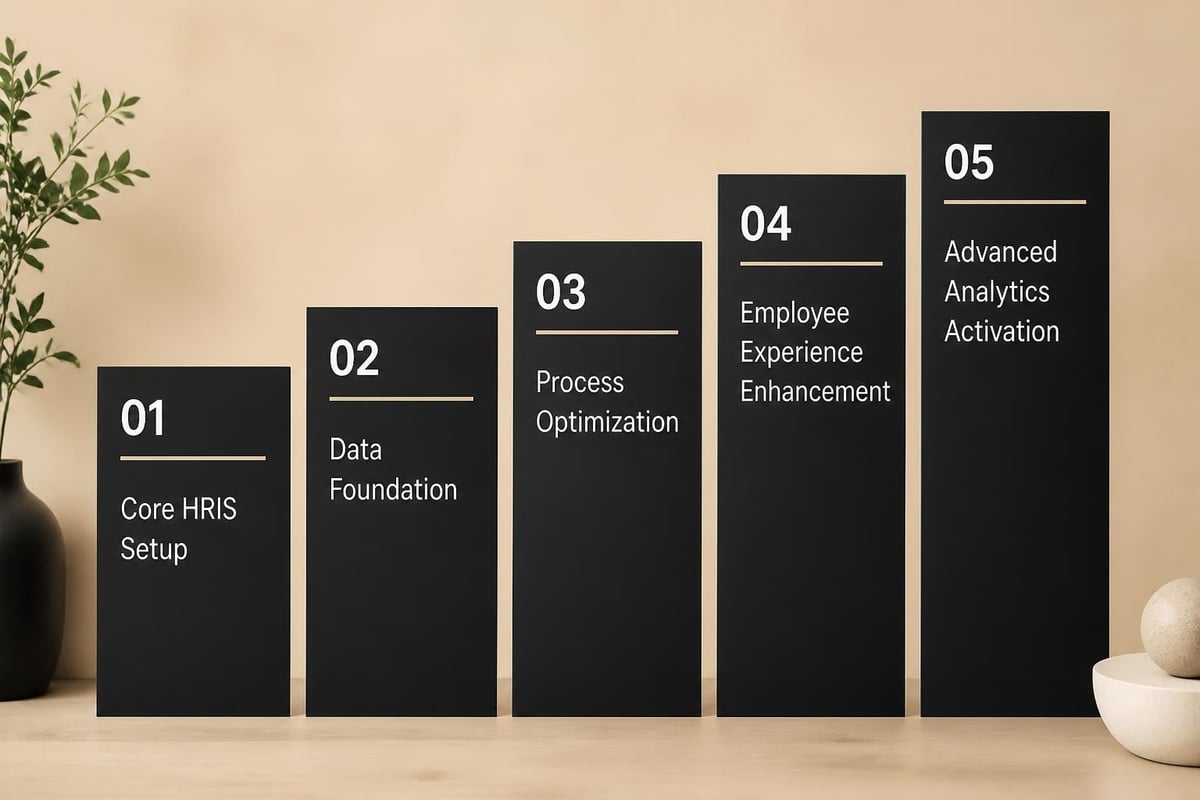
HR platform implementation phases

Training and Adoption Programs

Technology alone doesn't drive transformation. People must embrace new tools and workflows for change to take hold. Develop comprehensive training programs tailored to different user groups including HR administrators, managers, and employees. Create role-specific guides, video tutorials, and regular office hours where users can ask questions and share best practices.

For consultancies supporting client implementations, providing this training infrastructure accelerates time-to-value and strengthens the consulting relationship.

Leveraging AI and Automation in HR Platforms

Artificial intelligence has moved from experimental feature to standard expectation in modern hr platform solutions. Understanding how to use AI responsibly in HR processes helps organizations maximize benefits while maintaining trust and ethical standards.

Intelligent Automation Applications

AI-powered features within HR platforms include:

  • Resume screening and candidate ranking based on job requirements
  • Chatbots handling routine employee inquiries about policies and benefits
  • Predictive models identifying flight-risk employees before they resign
  • Compensation recommendations ensuring internal equity and market competitiveness
  • Learning path suggestions based on career goals and skill gaps

These capabilities free HR professionals to focus on strategic initiatives that require human judgment, empathy, and creativity. Organizations working with AI and automation integration specialists can accelerate deployment of these advanced features while ensuring they align with broader digital transformation goals.

Balancing Automation with Human Touch

While automation drives efficiency, certain HR functions benefit from maintaining human involvement. Sensitive employee relations issues, complex accommodations requests, and executive compensation decisions require discretion and contextual understanding that technology cannot fully replicate. The most effective hr platform implementations strike a balance between automated efficiency and personalized service.

Analytics and Reporting Capabilities

Data visibility transforms HR from reactive problem-solving to proactive strategy development. Comprehensive reporting capabilities within an hr platform should support both operational monitoring and strategic planning.

Essential Metrics and Dashboards

Organizations should track key performance indicators across multiple dimensions:

Metric Category Example KPIs Strategic Value
Talent Acquisition Time-to-fill, cost-per-hire, offer acceptance rate Optimize recruitment efficiency
Workforce Composition Headcount by department, diversity metrics, contractor ratios Support workforce planning
Engagement & Retention Turnover rate, tenure distribution, exit reasons Improve retention strategies
Compensation & Benefits Salary ranges, benefits utilization, total rewards cost Ensure competitive positioning
Learning & Development Training completion, skill gaps, certification status Build organizational capabilities

Following HR dashboard design best practices ensures these metrics remain actionable rather than overwhelming. Effective dashboards focus on trends and exceptions rather than comprehensive data dumps.

Predictive Analytics for Workforce Planning

Advanced hr platform solutions incorporate predictive capabilities that forecast future conditions based on historical patterns. These models help organizations anticipate staffing needs, budget for compensation increases, and identify departments at risk for high turnover. For professional services firms managing client engagements, these insights support resource allocation and capacity planning discussions.
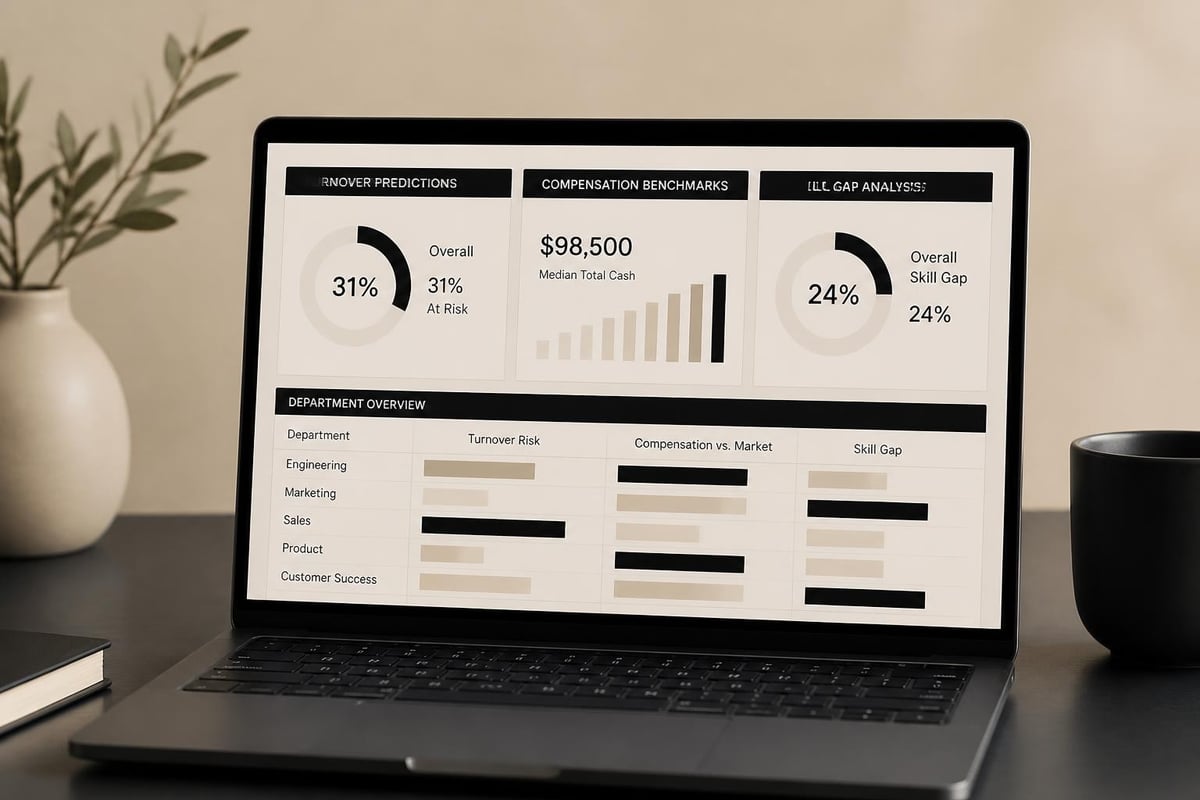
HR analytics dashboard

Mobile Accessibility and Employee Experience

The modern workforce expects anytime, anywhere access to information and services. An hr platform with robust mobile capabilities empowers employees to manage their work lives conveniently while reducing the administrative burden on HR teams.

Essential Mobile Features

Employees should be able to accomplish common tasks through mobile apps including:

  • Viewing pay stubs and tax documents
  • Requesting time off and checking accrual balances
  • Updating personal information and emergency contacts
  • Enrolling in benefits during open enrollment
  • Accessing company policies and employee handbooks
  • Completing performance reviews and goal updates
  • Submitting expense reports and timesheets

Managers need mobile access to approve requests, view team calendars, and access real-time reports. The best mobile experiences don't simply shrink desktop interfaces but redesign workflows specifically for smaller screens and touch interaction.

Security and Compliance Frameworks

Employee data represents one of an organization's most sensitive assets. An hr platform must implement comprehensive security measures protecting against both external threats and internal misuse while meeting regulatory requirements across multiple jurisdictions.

Multi-Layered Security Approach

Robust security architectures incorporate:

  1. Encryption of data both in transit and at rest
  2. Role-based access controls limiting information visibility by job function
  3. Multi-factor authentication preventing unauthorized access
  4. Audit logging tracking all system access and changes
  5. Regular security assessments identifying and addressing vulnerabilities
  6. Disaster recovery procedures ensuring business continuity

Organizations serving healthcare clients must ensure their hr platform supports HIPAA compliance for employee health information. Those with international operations need solutions addressing GDPR and other data privacy regulations.

Implementing HR best practices around data governance strengthens security posture while building employee trust in how personal information is managed.

Total Cost of Ownership Analysis

Evaluating hr platform costs requires looking beyond initial licensing fees to understand the complete financial impact over time. A thorough total cost of ownership analysis includes:

Direct Costs:

  • Software licensing or subscription fees
  • Implementation and configuration services
  • Data migration expenses
  • Integration development
  • Training and change management
  • Ongoing support and maintenance

Indirect Costs:

  • Internal staff time for implementation and administration
  • Productivity loss during transition periods
  • Customization and enhancement requests
  • Upgrade and version migration efforts

Offset Savings:

  • Reduced HR staffing needs through automation
  • Eliminated manual processes and paper-based workflows
  • Decreased compliance penalties and audit findings
  • Improved retention reducing replacement costs
  • Better benefits utilization lowering healthcare expenses

Organizations should project costs and savings over a 3-5 year horizon, accounting for anticipated growth and expanded functionality adoption. This comprehensive view supports more informed vendor selection and realistic budget planning.

Vendor Selection and Partnership Approach

Choosing an hr platform vendor involves evaluating not just the technology but the company behind it. The relationship will span years and potentially decades, making vendor stability, support quality, and product roadmap alignment critically important.

Key Evaluation Criteria

When assessing potential vendors, consider:

  • Financial stability and market position
  • Customer retention rates and satisfaction scores
  • Support responsiveness and availability
  • Product update frequency and feature velocity
  • User community strength and engagement
  • Implementation methodology and success rates
  • Partnership ecosystem breadth and depth

Request customer references from organizations similar to yours in size, industry, and complexity. Ask specific questions about implementation challenges, support experiences, and realized benefits versus initial expectations.

For healthcare providers seeking operational excellence, working with consultancies that understand both revenue cycle management and human capital management creates synergies that standalone technology implementations cannot achieve.

Continuous Optimization and Value Realization

Implementing an hr platform marks a beginning rather than an ending. Organizations that realize maximum value from their investments commit to ongoing optimization, user feedback incorporation, and capability expansion.

Establishing a Center of Excellence

Designate a cross-functional team responsible for maximizing hr platform value including:

  • HR administrators who understand process requirements
  • IT professionals managing integrations and security
  • Business analysts monitoring adoption and identifying opportunities
  • Change management specialists driving user engagement

This team should meet regularly to review utilization metrics, gather stakeholder feedback, prioritize enhancement requests, and plan capability expansion aligned with business objectives.

Leveraging Knowledge Management Best Practices

As organizations build expertise with their hr platform, capturing and sharing this knowledge accelerates problem-solving and onboarding. Implementing HR knowledge management best practices ensures institutional knowledge isn't siloed within individual team members but becomes an organizational asset.

Create searchable knowledge bases documenting configuration decisions, workflow designs, report templates, and troubleshooting guides. Video tutorials, process flowcharts, and decision trees make this information accessible to users with varying learning preferences.

Building Integration Between HR and Business Strategy

The most successful organizations view their hr platform not as an administrative tool but as strategic infrastructure supporting business objectives. This perspective shift requires connecting workforce data and capabilities with broader organizational goals.

When enterprise organizations turn scale into advantage, their hr platform becomes essential for coordinating activities across divisions, geographies, and business units. Standardized processes, centralized visibility, and consistent reporting enable the coordination that large-scale operations demand.

For organizations in sectors like hospitality where optimizing employee experience directly impacts customer satisfaction and business results, the hr platform must support the rapid hiring, scheduling flexibility, and engagement initiatives that characterize successful operations.

Aligning HR Technology with Business Outcomes

Connect hr platform capabilities to specific business results:

  • Recruitment efficiency improvements support revenue growth goals
  • Retention programs reduce costs and preserve institutional knowledge
  • Learning and development initiatives build capabilities for new markets
  • Compensation analytics ensure resources focus on high-impact roles
  • Benefits optimization improves employee financial wellness while controlling costs

This alignment transforms HR technology from cost center to value driver, making continued investment easier to justify and support more readily available when needed.


Selecting and implementing the right hr platform represents a strategic decision with far-reaching implications for operational efficiency, employee satisfaction, and organizational performance. Organizations that approach this initiative thoughtfully, aligning technology capabilities with business objectives while following proven implementation methodologies, position themselves for sustained competitive advantage. Nero and Associates, Inc. partners with organizations to identify and implement human capital management solutions that eliminate manual processes, reduce costs, and empower employees to thrive, delivering measurable results that strengthen your bottom line while improving workforce well-being.

HR Platform Solutions for Modern Business Efficiency

Organizations today face mounting pressure to do more with less while keeping employees engaged, compliant with evolving regulations, and positioned for growth. The right hr platform transforms these challenges into opportunities by centralizing workforce management, automating repetitive tasks, and providing data-driven insights that inform strategic decisions. For professional services consulting firms and their clients, selecting and implementing the appropriate human resources technology represents a critical investment in operational efficiency and employee well-being. This comprehensive guide explores what makes an effective hr platform, how to evaluate your options, and best practices for maximizing return on investment.

Understanding the Modern HR Platform Landscape

An hr platform serves as the technological backbone for managing the entire employee lifecycle, from recruitment and onboarding through development, compensation, and eventual offboarding. Unlike legacy systems that operated in silos, contemporary platforms integrate multiple functions into cohesive ecosystems that share data seamlessly across modules.

The evolution of human resources technology has accelerated dramatically over the past decade. Early systems focused primarily on record-keeping and payroll processing. Today's solutions incorporate artificial intelligence, predictive analytics, mobile accessibility, and integration capabilities that connect with accounting software, time tracking systems, benefits providers, and countless other business applications.

Core Functionality Requirements

When evaluating any hr platform, organizations should assess capabilities across several fundamental categories:

  • Payroll and compensation management with tax compliance automation
  • Benefits administration including enrollment, tracking, and carrier integration
  • Time and attendance tracking with scheduling and overtime calculations
  • Performance management featuring goal setting, reviews, and development plans
  • Recruitment and applicant tracking to streamline hiring workflows
  • Learning management for training delivery and compliance tracking
  • Reporting and analytics dashboards for workforce insights

The most effective platforms don't just offer these features in isolation. They create interconnected workflows where data flows naturally between modules, eliminating duplicate entry and reducing errors.

HR platform core modules

Strategic Benefits of Integrated HR Systems

Implementing a comprehensive hr platform delivers measurable advantages that extend far beyond the human resources department. Organizations that leverage these systems effectively see improvements across operational efficiency, compliance management, employee satisfaction, and strategic planning capabilities.

Time Savings Through Automation

Manual HR processes consume enormous amounts of time that could be redirected toward strategic initiatives. Automating routine tasks like benefits enrollment, time-off requests, and performance review scheduling can eliminate thousands of hours annually. For consultancies helping clients optimize operations, demonstrating these time savings through payroll and human capital management solutions becomes a powerful value proposition.

Enhanced Compliance and Risk Management

Regulatory requirements surrounding employee data, wage and hour laws, benefits administration, and workplace safety continue to grow more complex. A robust hr platform maintains audit trails, enforces approval workflows, and updates automatically as regulations change. Following best practices for HR data compliance becomes significantly easier when technology handles the heavy lifting.

Data-Driven Decision Making

Access to real-time workforce analytics transforms HR from an administrative function into a strategic partner. Leaders can identify turnover patterns, assess compensation competitiveness, evaluate training effectiveness, and forecast staffing needs with greater precision. These insights directly support bottom-line improvement initiatives.

Strategic Benefit Operational Impact Measurable Outcome
Process Automation Reduced manual data entry 40-60% time savings
Centralized Data Single source of truth 30-50% fewer errors
Self-Service Portals Employee empowerment 25-35% reduction in HR inquiries
Predictive Analytics Proactive workforce planning 15-20% improvement in retention

Evaluating HR Platform Options for Your Organization

The market offers hundreds of hr platform solutions, ranging from comprehensive enterprise systems to specialized point solutions targeting specific industries or company sizes. Selecting the best HR software requires careful assessment of your organization's unique requirements, growth trajectory, and technical environment.

Size and Scalability Considerations

Small businesses with 10-50 employees have fundamentally different needs than mid-market companies with 500-2,000 employees or enterprises with tens of thousands of workers. The ideal hr platform should match your current size while accommodating anticipated growth without requiring migration to a new system.

For organizations championing mid-market growth and innovation, scalability becomes particularly critical. The platform should add users, locations, and functionality without performance degradation or prohibitive cost increases.

Industry-Specific Requirements

Certain sectors face unique workforce management challenges that generic platforms may not address adequately. Healthcare organizations require specialized scheduling for shift workers, credential tracking for licensed professionals, and integration with clinical systems. Hospitality businesses need robust time tracking for hourly workers, tip reporting, and high-volume recruitment tools.

Understanding these nuances helps consultants guide clients toward solutions that align with operational realities rather than forcing processes to conform to software limitations.

Integration Ecosystem Assessment

No hr platform operates in isolation. Evaluate how potential solutions connect with existing systems including:

  1. Accounting and financial management software
  2. Benefits providers and insurance carriers
  3. Retirement plan administrators
  4. Background check services
  5. Learning management systems
  6. Applicant tracking systems
  7. Employee engagement platforms

Modern platforms typically offer pre-built integrations with major providers plus API access for custom connections. The depth and reliability of these integrations significantly impact long-term satisfaction and total cost of ownership.

Implementation Best Practices for Maximum ROI

Purchasing an hr platform represents just the beginning of the transformation journey. Successful implementations require careful planning, change management, and ongoing optimization to realize the full potential of the investment.

Data Migration and Cleansing

Legacy systems often contain duplicate records, outdated information, and inconsistent formatting. Before migrating to a new hr platform, conduct a thorough data audit. Cleanse employee records, standardize job titles and department names, and verify accuracy of compensation information. This upfront work prevents problems that multiply exponentially once introduced into the new system.

Phased Rollout Strategy

Rather than attempting a "big bang" implementation of all modules simultaneously, consider a phased approach:

  • Phase 1: Core HRIS and employee database
  • Phase 2: Payroll processing and tax management
  • Phase 3: Benefits administration and enrollment
  • Phase 4: Performance management and learning
  • Phase 5: Advanced analytics and workforce planning

This methodology reduces risk, allows teams to build expertise gradually, and demonstrates quick wins that maintain stakeholder enthusiasm.

HR platform implementation phases

Training and Adoption Programs

Technology alone doesn't drive transformation. People must embrace new tools and workflows for change to take hold. Develop comprehensive training programs tailored to different user groups including HR administrators, managers, and employees. Create role-specific guides, video tutorials, and regular office hours where users can ask questions and share best practices.

For consultancies supporting client implementations, providing this training infrastructure accelerates time-to-value and strengthens the consulting relationship.

Leveraging AI and Automation in HR Platforms

Artificial intelligence has moved from experimental feature to standard expectation in modern hr platform solutions. Understanding how to use AI responsibly in HR processes helps organizations maximize benefits while maintaining trust and ethical standards.

Intelligent Automation Applications

AI-powered features within HR platforms include:

  • Resume screening and candidate ranking based on job requirements
  • Chatbots handling routine employee inquiries about policies and benefits
  • Predictive models identifying flight-risk employees before they resign
  • Compensation recommendations ensuring internal equity and market competitiveness
  • Learning path suggestions based on career goals and skill gaps

These capabilities free HR professionals to focus on strategic initiatives that require human judgment, empathy, and creativity. Organizations working with AI and automation integration specialists can accelerate deployment of these advanced features while ensuring they align with broader digital transformation goals.

Balancing Automation with Human Touch

While automation drives efficiency, certain HR functions benefit from maintaining human involvement. Sensitive employee relations issues, complex accommodations requests, and executive compensation decisions require discretion and contextual understanding that technology cannot fully replicate. The most effective hr platform implementations strike a balance between automated efficiency and personalized service.

Analytics and Reporting Capabilities

Data visibility transforms HR from reactive problem-solving to proactive strategy development. Comprehensive reporting capabilities within an hr platform should support both operational monitoring and strategic planning.

Essential Metrics and Dashboards

Organizations should track key performance indicators across multiple dimensions:

Metric Category Example KPIs Strategic Value
Talent Acquisition Time-to-fill, cost-per-hire, offer acceptance rate Optimize recruitment efficiency
Workforce Composition Headcount by department, diversity metrics, contractor ratios Support workforce planning
Engagement & Retention Turnover rate, tenure distribution, exit reasons Improve retention strategies
Compensation & Benefits Salary ranges, benefits utilization, total rewards cost Ensure competitive positioning
Learning & Development Training completion, skill gaps, certification status Build organizational capabilities

Following HR dashboard design best practices ensures these metrics remain actionable rather than overwhelming. Effective dashboards focus on trends and exceptions rather than comprehensive data dumps.

Predictive Analytics for Workforce Planning

Advanced hr platform solutions incorporate predictive capabilities that forecast future conditions based on historical patterns. These models help organizations anticipate staffing needs, budget for compensation increases, and identify departments at risk for high turnover. For professional services firms managing client engagements, these insights support resource allocation and capacity planning discussions.

HR analytics dashboard

Mobile Accessibility and Employee Experience

The modern workforce expects anytime, anywhere access to information and services. An hr platform with robust mobile capabilities empowers employees to manage their work lives conveniently while reducing the administrative burden on HR teams.

Essential Mobile Features

Employees should be able to accomplish common tasks through mobile apps including:

  • Viewing pay stubs and tax documents
  • Requesting time off and checking accrual balances
  • Updating personal information and emergency contacts
  • Enrolling in benefits during open enrollment
  • Accessing company policies and employee handbooks
  • Completing performance reviews and goal updates
  • Submitting expense reports and timesheets

Managers need mobile access to approve requests, view team calendars, and access real-time reports. The best mobile experiences don't simply shrink desktop interfaces but redesign workflows specifically for smaller screens and touch interaction.

Security and Compliance Frameworks

Employee data represents one of an organization's most sensitive assets. An hr platform must implement comprehensive security measures protecting against both external threats and internal misuse while meeting regulatory requirements across multiple jurisdictions.

Multi-Layered Security Approach

Robust security architectures incorporate:

  1. Encryption of data both in transit and at rest
  2. Role-based access controls limiting information visibility by job function
  3. Multi-factor authentication preventing unauthorized access
  4. Audit logging tracking all system access and changes
  5. Regular security assessments identifying and addressing vulnerabilities
  6. Disaster recovery procedures ensuring business continuity

Organizations serving healthcare clients must ensure their hr platform supports HIPAA compliance for employee health information. Those with international operations need solutions addressing GDPR and other data privacy regulations.

Implementing HR best practices around data governance strengthens security posture while building employee trust in how personal information is managed.

Total Cost of Ownership Analysis

Evaluating hr platform costs requires looking beyond initial licensing fees to understand the complete financial impact over time. A thorough total cost of ownership analysis includes:

Direct Costs:

  • Software licensing or subscription fees
  • Implementation and configuration services
  • Data migration expenses
  • Integration development
  • Training and change management
  • Ongoing support and maintenance

Indirect Costs:

  • Internal staff time for implementation and administration
  • Productivity loss during transition periods
  • Customization and enhancement requests
  • Upgrade and version migration efforts

Offset Savings:

  • Reduced HR staffing needs through automation
  • Eliminated manual processes and paper-based workflows
  • Decreased compliance penalties and audit findings
  • Improved retention reducing replacement costs
  • Better benefits utilization lowering healthcare expenses

Organizations should project costs and savings over a 3-5 year horizon, accounting for anticipated growth and expanded functionality adoption. This comprehensive view supports more informed vendor selection and realistic budget planning.

Vendor Selection and Partnership Approach

Choosing an hr platform vendor involves evaluating not just the technology but the company behind it. The relationship will span years and potentially decades, making vendor stability, support quality, and product roadmap alignment critically important.

Key Evaluation Criteria

When assessing potential vendors, consider:

  • Financial stability and market position
  • Customer retention rates and satisfaction scores
  • Support responsiveness and availability
  • Product update frequency and feature velocity
  • User community strength and engagement
  • Implementation methodology and success rates
  • Partnership ecosystem breadth and depth

Request customer references from organizations similar to yours in size, industry, and complexity. Ask specific questions about implementation challenges, support experiences, and realized benefits versus initial expectations.

For healthcare providers seeking operational excellence, working with consultancies that understand both revenue cycle management and human capital management creates synergies that standalone technology implementations cannot achieve.

Continuous Optimization and Value Realization

Implementing an hr platform marks a beginning rather than an ending. Organizations that realize maximum value from their investments commit to ongoing optimization, user feedback incorporation, and capability expansion.

Establishing a Center of Excellence

Designate a cross-functional team responsible for maximizing hr platform value including:

  • HR administrators who understand process requirements
  • IT professionals managing integrations and security
  • Business analysts monitoring adoption and identifying opportunities
  • Change management specialists driving user engagement

This team should meet regularly to review utilization metrics, gather stakeholder feedback, prioritize enhancement requests, and plan capability expansion aligned with business objectives.

Leveraging Knowledge Management Best Practices

As organizations build expertise with their hr platform, capturing and sharing this knowledge accelerates problem-solving and onboarding. Implementing HR knowledge management best practices ensures institutional knowledge isn't siloed within individual team members but becomes an organizational asset.

Create searchable knowledge bases documenting configuration decisions, workflow designs, report templates, and troubleshooting guides. Video tutorials, process flowcharts, and decision trees make this information accessible to users with varying learning preferences.

Building Integration Between HR and Business Strategy

The most successful organizations view their hr platform not as an administrative tool but as strategic infrastructure supporting business objectives. This perspective shift requires connecting workforce data and capabilities with broader organizational goals.

When enterprise organizations turn scale into advantage, their hr platform becomes essential for coordinating activities across divisions, geographies, and business units. Standardized processes, centralized visibility, and consistent reporting enable the coordination that large-scale operations demand.

For organizations in sectors like hospitality where optimizing employee experience directly impacts customer satisfaction and business results, the hr platform must support the rapid hiring, scheduling flexibility, and engagement initiatives that characterize successful operations.

Aligning HR Technology with Business Outcomes

Connect hr platform capabilities to specific business results:

  • Recruitment efficiency improvements support revenue growth goals
  • Retention programs reduce costs and preserve institutional knowledge
  • Learning and development initiatives build capabilities for new markets
  • Compensation analytics ensure resources focus on high-impact roles
  • Benefits optimization improves employee financial wellness while controlling costs

This alignment transforms HR technology from cost center to value driver, making continued investment easier to justify and support more readily available when needed.


Selecting and implementing the right hr platform represents a strategic decision with far-reaching implications for operational efficiency, employee satisfaction, and organizational performance. Organizations that approach this initiative thoughtfully, aligning technology capabilities with business objectives while following proven implementation methodologies, position themselves for sustained competitive advantage. Nero and Associates, Inc. partners with organizations to identify and implement human capital management solutions that eliminate manual processes, reduce costs, and empower employees to thrive, delivering measurable results that strengthen your bottom line while improving workforce well-being.

Website developed in accordance with Web Content Accessibility Guidelines 2.2.
If you encounter any issues while using this site, please contact us: 215.526.5126