

HR Software: Complete Guide for Modern Organizations

Share on Facebook
Share on X
Share on LinkedIn

Modern organizations face mounting pressure to streamline operations, reduce administrative burden, and empower their workforce to thrive. As companies navigate complex compliance requirements, distributed teams, and evolving employee expectations, the right technology infrastructure becomes critical to success. HR software has evolved from simple record-keeping systems into comprehensive platforms that drive strategic decision-making, automate time-consuming processes, and deliver measurable improvements to both operational efficiency and employee satisfaction.

Understanding HR Software in Today's Business Landscape

HR software encompasses digital solutions designed to manage, automate, and optimize human resources functions across the employee lifecycle. These platforms handle everything from recruitment and onboarding to payroll processing, benefits administration, performance management, and workforce analytics.

The transformation of HR technology reflects broader shifts in how organizations approach workforce management. Traditional manual processes that once consumed countless administrative hours now run automatically, freeing HR professionals to focus on strategic initiatives that directly impact business outcomes.

Core Functions and Capabilities

Modern HR software platforms typically include several integrated modules:

  • Talent acquisition and applicant tracking systems that streamline recruitment workflows
  • Onboarding automation that ensures consistent new hire experiences
  • Time and attendance tracking with mobile accessibility for remote teams
  • Payroll processing and tax compliance management
  • Benefits enrollment and administration tools
  • Performance management systems that facilitate continuous feedback
  • Learning management capabilities for employee development
  • HR analytics and reporting dashboards for data-driven decisions

The integration of these functions within a single platform eliminates data silos and reduces the risk of errors that plague disconnected systems. When employee information flows seamlessly between modules, organizations gain both efficiency and accuracy.

HR software workflow automation

Strategic Benefits Driving Adoption

Organizations implementing comprehensive HR software solutions report significant improvements across multiple dimensions of workforce management. These benefits extend far beyond simple time savings to encompass strategic advantages that impact the bottom line.

Operational Efficiency and Cost Reduction

The automation capabilities within modern HR software eliminate thousands of manual hours previously spent on repetitive administrative tasks. Payroll calculations, benefits updates, compliance reporting, and document management all run automatically according to established rules and schedules.

This efficiency translates directly to cost savings. Organizations reduce headcount needs for routine processing, minimize expensive compliance penalties through automated tracking, and eliminate costly errors inherent in manual data entry. For mid-sized companies especially, automating payroll processes delivers measurable financial returns within the first year of implementation.

Enhanced Employee Experience

Self-service portals empower employees to manage their own information, submit time-off requests, enroll in benefits, and access important documents without HR intervention. This autonomy improves satisfaction while simultaneously reducing the administrative burden on HR teams.

The transparency these systems provide also builds trust. Employees can view their pay stubs, track accrued time off, monitor performance goals, and access learning resources whenever needed. This accessibility proves particularly valuable for distributed workforces and organizations operating across multiple time zones.

Data-Driven Decision Making

Robust analytics capabilities transform HR from a purely administrative function into a strategic partner. Real-time dashboards reveal workforce trends, highlight retention risks, identify skill gaps, and measure the effectiveness of talent initiatives.

Leaders gain visibility into metrics that directly correlate with business performance: time-to-hire, cost-per-hire, turnover rates by department, training completion rates, and productivity indicators. These insights enable proactive workforce planning rather than reactive problem-solving.

Metric Category Manual Tracking HR Software Solution
Time-to-Hire 5-7 days for reporting Real-time dashboard access
Payroll Accuracy 2-3% error rate 0.1% error rate or less
Compliance Reporting 40+ hours per quarter Automated generation in minutes
Employee Self-Service Not available 24/7 access to records and requests

Selecting the Right HR Software Solution

The market offers hundreds of HR software options ranging from all-in-one platforms to specialized point solutions. Making the right selection requires careful evaluation of organizational needs, technical requirements, and long-term strategic goals.

Assessment Framework

Begin by conducting a comprehensive needs assessment across your organization. Engage stakeholders from HR, finance, IT, and department leaders to identify pain points, requirements, and priorities.

Key considerations include:

  1. Organization size and anticipated growth trajectory
  2. Industry-specific compliance requirements and regulations
  3. Existing technology infrastructure and integration needs
  4. Budget constraints for both implementation and ongoing costs
  5. User experience requirements for employees and administrators
  6. Reporting and analytics capabilities needed for decision-making
  7. Mobile accessibility requirements for field or remote workers

The automation and tech-forward solutions dominating HR priorities for 2026 emphasize the importance of selecting platforms with robust AI capabilities and seamless integration options.

Vendor Evaluation Process

Once you've established requirements, develop a structured evaluation process to compare vendors objectively. Request demonstrations that focus on your specific use cases rather than generic feature tours.

Create a scoring matrix that weighs factors such as:

  • Functional fit with identified requirements
  • Implementation timeline and support resources
  • Total cost of ownership over three to five years
  • Scalability to accommodate growth
  • Security protocols and data protection measures
  • Customer references from similar organizations
  • Vendor financial stability and product roadmap

Don't overlook the importance of change management support during evaluation. Vendors offering comprehensive training resources, implementation guidance, and ongoing support typically deliver better outcomes than those focused solely on software features.
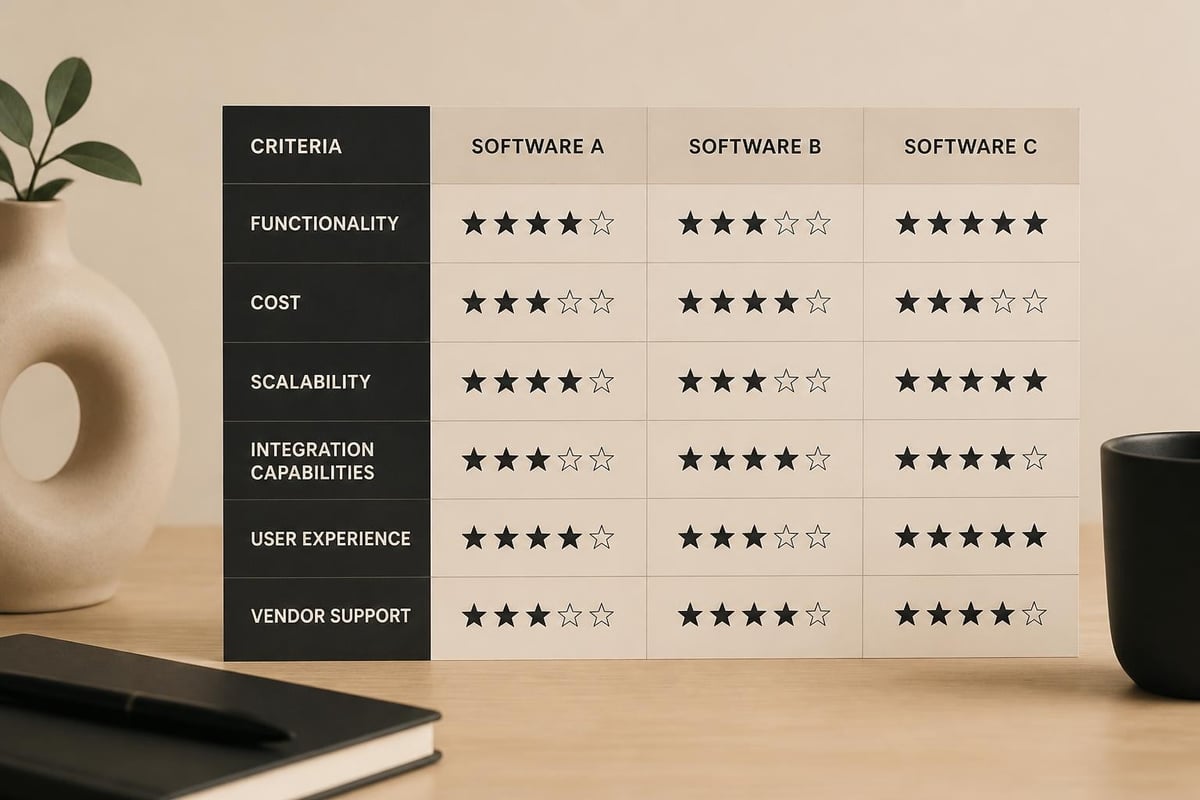
HR software selection criteria

Implementation Best Practices

Successful HR software implementation requires methodical planning, strong change management, and realistic timelines. Organizations that rush deployment or underestimate the complexity often struggle with user adoption and fail to realize expected benefits.

Phased Rollout Approach

The four-phase implementation framework provides a proven roadmap for successful deployment. This structured approach minimizes disruption while building organizational capability progressively.

Phase One: Data Audit and Goal Setting

Clean, accurate data forms the foundation of any successful HR software implementation. Conduct a thorough audit of existing employee records, identifying inconsistencies, duplicates, and gaps. Establish clear success metrics aligned with business objectives before beginning configuration.

Phase Two: Change Management Planning

Technology alone doesn't drive transformation. Develop a comprehensive change management strategy addressing communication, training, and support needs across all user groups. The seven essentials for better HR software change management emphasize early stakeholder engagement and continuous communication throughout the process.

Phase Three: Piloted Rollout

Rather than organization-wide deployment, begin with a pilot group representing diverse departments and use cases. This controlled environment allows you to identify issues, refine processes, and gather feedback before broader release. Pilot participants often become valuable champions during full deployment.

Phase Four: Long-Term Adoption

Implementation doesn't end at go-live. Monitor usage patterns, gather user feedback, and continuously optimize configurations to match evolving needs. Regular training refreshers and updates on new features maintain engagement and maximize value realization.

Common Pitfalls to Avoid

Organizations frequently encounter predictable challenges during HR software implementation. Awareness of these issues enables proactive mitigation:

  • Inadequate executive sponsorship leading to resource constraints or competing priorities
  • Underestimating data migration complexity and timeline requirements
  • Insufficient end-user training resulting in poor adoption and workarounds
  • Customization overload that complicates upgrades and increases maintenance costs
  • Neglecting integration requirements with payroll, benefits, or other systems
  • Rushed timelines driven by unrealistic expectations rather than readiness

Working with experienced implementation partners who understand both the technology and organizational change dynamics significantly improves success rates. At Nero and Associates, we've guided numerous organizations through complex HR technology transformations by combining technical expertise with practical change management support.

Emerging Trends Shaping HR Software

The HR software landscape continues evolving rapidly as technology advances and workforce expectations shift. Understanding these trends helps organizations make forward-looking investment decisions rather than purchasing systems that become obsolete within months.

Artificial Intelligence and Machine Learning

AI integration represents the most significant development in modern HR software. These capabilities extend far beyond simple automation to include predictive analytics, intelligent recommendations, and natural language processing.

Practical AI applications include:

  • Resume screening and candidate matching based on success patterns
  • Predictive turnover modeling identifying at-risk employees
  • Personalized learning recommendations aligned with career paths
  • Chatbot assistants answering routine employee inquiries
  • Sentiment analysis of employee feedback and engagement surveys
  • Automated scheduling optimization considering preferences and requirements

The key HR software trends for 2026 highlight how AI-powered performance management and recruitment tools are becoming standard expectations rather than premium features.

Support for Distributed Workforces

The shift toward hybrid and remote work models demands HR software designed for flexibility and accessibility. Mobile-first interfaces, asynchronous communication tools, and location-independent processes enable consistent experiences regardless of where employees work.

Modern platforms support diverse work arrangements through features like flexible scheduling, distributed team management, virtual onboarding experiences, and remote performance monitoring that respects privacy while maintaining accountability.

Enhanced Focus on Employee Wellbeing

Progressive organizations recognize that employee wellness directly impacts productivity, engagement, and retention. HR software increasingly incorporates tools supporting mental health, financial wellness, and work-life integration.

Wellbeing-focused capabilities include:

  1. Integration with mental health resources and employee assistance programs
  2. Financial wellness tools providing budgeting guidance and debt management
  3. Earned wage access allowing employees to access earned pay before payday
  4. Wellness challenge tracking and incentive management
  5. Burnout risk indicators based on work patterns and time-off utilization

These features align with broader organizational strategies to empower employees to be proactive with their mental, physical, and financial health, creating cultures where people thrive rather than merely survive.
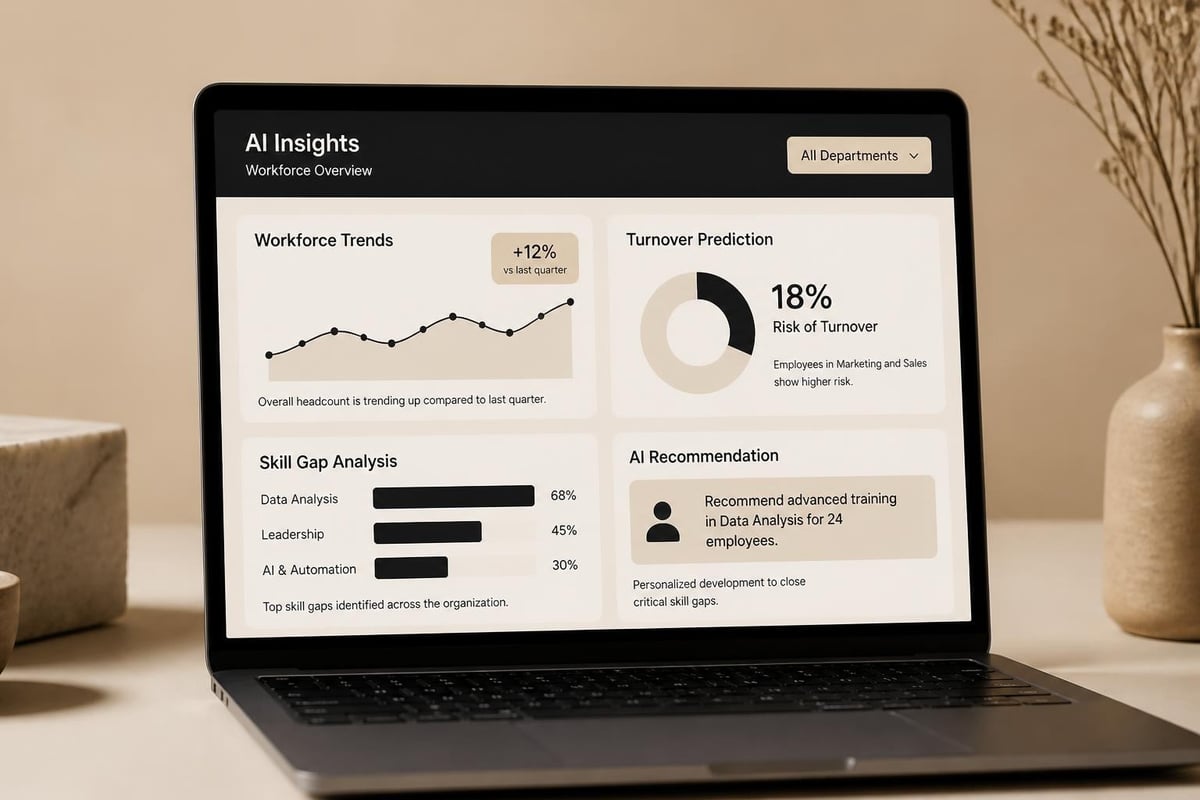
AI-powered HR analytics

Integration and Ecosystem Considerations

HR software rarely operates in isolation. Effective deployment requires seamless integration with existing systems including payroll providers, benefits carriers, time tracking tools, accounting software, and business intelligence platforms.

Critical Integration Points

Payroll and Benefits Administration

Bidirectional data flow between HR software and payroll systems ensures accuracy while eliminating duplicate data entry. Changes to employee status, compensation, deductions, or tax withholdings sync automatically, reducing errors and compliance risks.

Similarly, benefits administration integration enables real-time enrollment updates, qualifying event management, and carrier file generation without manual intervention. This connectivity proves essential during open enrollment periods when volume spikes dramatically.

Accounting and Financial Systems

Integration with accounting platforms ensures labor costs, benefits expenses, and tax liabilities flow accurately into financial reporting. This connection provides finance teams with real-time visibility into workforce expenses and supports more accurate forecasting.

Organizations implementing automation across accounts payable processes particularly benefit from HR system integration, creating end-to-end process efficiency from employee onboarding through expense processing and payment.

Time and Attendance Systems

For organizations with hourly employees or complex scheduling needs, time tracking integration eliminates manual timecard processing. Hours worked, overtime calculations, and paid time off automatically flow into payroll while providing managers with labor cost visibility.

Integration Type Business Impact Implementation Complexity
Payroll Systems High – Direct accuracy and compliance impact Medium – Standardized protocols available
Benefits Carriers High – Enrollment and eligibility management Medium – Carrier-dependent capabilities
Accounting Software Medium – Financial reporting accuracy Low – Standard chart of accounts mapping
Time Tracking High – Labor cost management Low – Common integration patterns
Learning Management Medium – Development tracking Medium – Varies by platform

API and Data Security Standards

Modern HR software should offer robust API capabilities supporting both standard integrations and custom connections. RESTful APIs with comprehensive documentation enable IT teams or integration partners to build reliable data flows meeting specific organizational requirements.

Data security becomes paramount when connecting systems containing sensitive employee information. Ensure vendors comply with SOC 2, ISO 27001, or comparable security frameworks. Encryption both in transit and at rest, multi-factor authentication, role-based access controls, and regular security audits should be standard rather than optional features.

Measuring Return on Investment

Justifying HR software investments requires demonstrating measurable returns that resonate with executive stakeholders. While some benefits prove difficult to quantify, most implementations deliver clear financial and operational improvements within the first year.

Quantifiable Metrics

Time Savings and Productivity Gains

Calculate hours previously spent on manual processes now handled automatically. Multiply these hours by average fully-loaded labor costs to determine annual savings. Organizations commonly report 30-50% reductions in administrative time following implementation.

Error Reduction and Compliance Savings

Track errors in payroll processing, benefits administration, and compliance reporting before and after implementation. Assign costs to each error type including correction time, penalties, and employee impact. The accuracy improvements delivered by automated systems typically generate substantial savings.

Turnover Cost Reduction

If improved employee experience and engagement reduce turnover by even 2-3%, the financial impact proves significant. Calculate turnover costs including recruiting, onboarding, lost productivity, and training investments. Multiply by the number of prevented departures to quantify this benefit.

Strategic Value Indicators

Beyond direct financial returns, HR software enables strategic capabilities that create competitive advantage:

  • Faster hiring cycles reducing lost productivity and revenue
  • Improved quality of hire through data-driven selection
  • Enhanced succession planning ensuring leadership continuity
  • Better workforce planning aligning talent with business strategy
  • Increased employee engagement driving discretionary effort

These strategic benefits compound over time, creating lasting organizational capability that extends far beyond the initial technology investment.

Industry-Specific Considerations

While core HR functions remain consistent across sectors, different industries face unique requirements that influence software selection and configuration.

Healthcare Organizations

Healthcare providers require HR software addressing complex credentialing requirements, shift scheduling for 24/7 operations, union contract management, and integration with revenue cycle management systems. Compliance tracking for certifications, licenses, and continuing education becomes critical to maintaining proper staffing.

Hospitality Sector

High-volume hiring, significant turnover, seasonal workforce fluctuations, and tip reporting create unique demands for hospitality organizations. HR software must handle rapid onboarding, simplified interfaces for employees with varying technology comfort levels, and flexible scheduling accommodating service delivery patterns. Solutions serving this sector should optimize the core of hospitality operations by streamlining workforce management.

Non-Profit Organizations

Resource constraints, volunteer management, grant compliance reporting, and mission-focused cultures influence HR software needs for non-profits. These organizations benefit from cost-effective solutions offering robust reporting for board governance and funder requirements while supporting the unique employment arrangements common in the sector. Platforms enabling non-profits to multiply mission impact through strategic efficiency deliver particular value.

Professional Services Firms

Project-based work, billable hour tracking, matrix reporting structures, and knowledge management needs distinguish professional services requirements. HR software should integrate with project management tools, support sophisticated time tracking, and enable skills-based resource allocation across engagements.

Future-Proofing Your HR Technology Investment

Technology selections made today should remain viable for at least five to seven years. Future-proofing requires evaluating not just current capabilities but vendor commitment to innovation, financial stability, and product evolution.

Vendor Viability Assessment

Research vendor financial health, customer retention rates, and investment in research and development. Companies consistently releasing new features and maintaining strong customer bases demonstrate commitment to long-term product excellence.

Review product roadmaps and assess alignment with emerging technologies. Vendors actively incorporating AI capabilities, expanding integration ecosystems, and enhancing mobile experiences position customers for future success.

Scalability and Flexibility

Select platforms that scale efficiently as your organization grows. Per-employee pricing models, unlimited user tiers, and modular functionality allow you to add capabilities as needs evolve without requiring complete system replacement.

Configuration flexibility proves equally important. Look for systems offering customizable workflows, fields, and reports without requiring expensive professional services for every adjustment. This adaptability enables the system to evolve with changing business requirements.

Continuous Improvement Culture

Successful organizations treat HR software as a living system requiring ongoing optimization rather than a one-time implementation. Establish regular review cycles examining usage patterns, gathering user feedback, and identifying enhancement opportunities.

Assign ownership for system administration to qualified staff members who understand both the technology and business processes. Provide them with ongoing training on new features and best practices to maximize platform value.


Selecting and implementing the right HR software transforms workforce management from an administrative burden into a strategic capability that drives measurable business results. By automating routine processes, providing data-driven insights, and empowering employees with self-service tools, modern platforms deliver significant returns while positioning organizations for sustainable growth. Nero and Associates, Inc. partners with organizations to implement HR technology solutions that eliminate thousands of manual hours, improve operational efficiency, and create healthier, more productive workforces through our comprehensive Human Capital Management services.

HR Software: Complete Guide for Modern Organizations

Modern organizations face mounting pressure to streamline operations, reduce administrative burden, and empower their workforce to thrive. As companies navigate complex compliance requirements, distributed teams, and evolving employee expectations, the right technology infrastructure becomes critical to success. HR software has evolved from simple record-keeping systems into comprehensive platforms that drive strategic decision-making, automate time-consuming processes, and deliver measurable improvements to both operational efficiency and employee satisfaction.

Understanding HR Software in Today's Business Landscape

HR software encompasses digital solutions designed to manage, automate, and optimize human resources functions across the employee lifecycle. These platforms handle everything from recruitment and onboarding to payroll processing, benefits administration, performance management, and workforce analytics.

The transformation of HR technology reflects broader shifts in how organizations approach workforce management. Traditional manual processes that once consumed countless administrative hours now run automatically, freeing HR professionals to focus on strategic initiatives that directly impact business outcomes.

Core Functions and Capabilities

Modern HR software platforms typically include several integrated modules:

  • Talent acquisition and applicant tracking systems that streamline recruitment workflows
  • Onboarding automation that ensures consistent new hire experiences
  • Time and attendance tracking with mobile accessibility for remote teams
  • Payroll processing and tax compliance management
  • Benefits enrollment and administration tools
  • Performance management systems that facilitate continuous feedback
  • Learning management capabilities for employee development
  • HR analytics and reporting dashboards for data-driven decisions

The integration of these functions within a single platform eliminates data silos and reduces the risk of errors that plague disconnected systems. When employee information flows seamlessly between modules, organizations gain both efficiency and accuracy.

HR software workflow automation

Strategic Benefits Driving Adoption

Organizations implementing comprehensive HR software solutions report significant improvements across multiple dimensions of workforce management. These benefits extend far beyond simple time savings to encompass strategic advantages that impact the bottom line.

Operational Efficiency and Cost Reduction

The automation capabilities within modern HR software eliminate thousands of manual hours previously spent on repetitive administrative tasks. Payroll calculations, benefits updates, compliance reporting, and document management all run automatically according to established rules and schedules.

This efficiency translates directly to cost savings. Organizations reduce headcount needs for routine processing, minimize expensive compliance penalties through automated tracking, and eliminate costly errors inherent in manual data entry. For mid-sized companies especially, automating payroll processes delivers measurable financial returns within the first year of implementation.

Enhanced Employee Experience

Self-service portals empower employees to manage their own information, submit time-off requests, enroll in benefits, and access important documents without HR intervention. This autonomy improves satisfaction while simultaneously reducing the administrative burden on HR teams.

The transparency these systems provide also builds trust. Employees can view their pay stubs, track accrued time off, monitor performance goals, and access learning resources whenever needed. This accessibility proves particularly valuable for distributed workforces and organizations operating across multiple time zones.

Data-Driven Decision Making

Robust analytics capabilities transform HR from a purely administrative function into a strategic partner. Real-time dashboards reveal workforce trends, highlight retention risks, identify skill gaps, and measure the effectiveness of talent initiatives.

Leaders gain visibility into metrics that directly correlate with business performance: time-to-hire, cost-per-hire, turnover rates by department, training completion rates, and productivity indicators. These insights enable proactive workforce planning rather than reactive problem-solving.

Metric Category Manual Tracking HR Software Solution
Time-to-Hire 5-7 days for reporting Real-time dashboard access
Payroll Accuracy 2-3% error rate 0.1% error rate or less
Compliance Reporting 40+ hours per quarter Automated generation in minutes
Employee Self-Service Not available 24/7 access to records and requests

Selecting the Right HR Software Solution

The market offers hundreds of HR software options ranging from all-in-one platforms to specialized point solutions. Making the right selection requires careful evaluation of organizational needs, technical requirements, and long-term strategic goals.

Assessment Framework

Begin by conducting a comprehensive needs assessment across your organization. Engage stakeholders from HR, finance, IT, and department leaders to identify pain points, requirements, and priorities.

Key considerations include:

  1. Organization size and anticipated growth trajectory
  2. Industry-specific compliance requirements and regulations
  3. Existing technology infrastructure and integration needs
  4. Budget constraints for both implementation and ongoing costs
  5. User experience requirements for employees and administrators
  6. Reporting and analytics capabilities needed for decision-making
  7. Mobile accessibility requirements for field or remote workers

The automation and tech-forward solutions dominating HR priorities for 2026 emphasize the importance of selecting platforms with robust AI capabilities and seamless integration options.

Vendor Evaluation Process

Once you've established requirements, develop a structured evaluation process to compare vendors objectively. Request demonstrations that focus on your specific use cases rather than generic feature tours.

Create a scoring matrix that weighs factors such as:

  • Functional fit with identified requirements
  • Implementation timeline and support resources
  • Total cost of ownership over three to five years
  • Scalability to accommodate growth
  • Security protocols and data protection measures
  • Customer references from similar organizations
  • Vendor financial stability and product roadmap

Don't overlook the importance of change management support during evaluation. Vendors offering comprehensive training resources, implementation guidance, and ongoing support typically deliver better outcomes than those focused solely on software features.

HR software selection criteria

Implementation Best Practices

Successful HR software implementation requires methodical planning, strong change management, and realistic timelines. Organizations that rush deployment or underestimate the complexity often struggle with user adoption and fail to realize expected benefits.

Phased Rollout Approach

The four-phase implementation framework provides a proven roadmap for successful deployment. This structured approach minimizes disruption while building organizational capability progressively.

Phase One: Data Audit and Goal Setting

Clean, accurate data forms the foundation of any successful HR software implementation. Conduct a thorough audit of existing employee records, identifying inconsistencies, duplicates, and gaps. Establish clear success metrics aligned with business objectives before beginning configuration.

Phase Two: Change Management Planning

Technology alone doesn't drive transformation. Develop a comprehensive change management strategy addressing communication, training, and support needs across all user groups. The seven essentials for better HR software change management emphasize early stakeholder engagement and continuous communication throughout the process.

Phase Three: Piloted Rollout

Rather than organization-wide deployment, begin with a pilot group representing diverse departments and use cases. This controlled environment allows you to identify issues, refine processes, and gather feedback before broader release. Pilot participants often become valuable champions during full deployment.

Phase Four: Long-Term Adoption

Implementation doesn't end at go-live. Monitor usage patterns, gather user feedback, and continuously optimize configurations to match evolving needs. Regular training refreshers and updates on new features maintain engagement and maximize value realization.

Common Pitfalls to Avoid

Organizations frequently encounter predictable challenges during HR software implementation. Awareness of these issues enables proactive mitigation:

  • Inadequate executive sponsorship leading to resource constraints or competing priorities
  • Underestimating data migration complexity and timeline requirements
  • Insufficient end-user training resulting in poor adoption and workarounds
  • Customization overload that complicates upgrades and increases maintenance costs
  • Neglecting integration requirements with payroll, benefits, or other systems
  • Rushed timelines driven by unrealistic expectations rather than readiness

Working with experienced implementation partners who understand both the technology and organizational change dynamics significantly improves success rates. At Nero and Associates, we've guided numerous organizations through complex HR technology transformations by combining technical expertise with practical change management support.

Emerging Trends Shaping HR Software

The HR software landscape continues evolving rapidly as technology advances and workforce expectations shift. Understanding these trends helps organizations make forward-looking investment decisions rather than purchasing systems that become obsolete within months.

Artificial Intelligence and Machine Learning

AI integration represents the most significant development in modern HR software. These capabilities extend far beyond simple automation to include predictive analytics, intelligent recommendations, and natural language processing.

Practical AI applications include:

  • Resume screening and candidate matching based on success patterns
  • Predictive turnover modeling identifying at-risk employees
  • Personalized learning recommendations aligned with career paths
  • Chatbot assistants answering routine employee inquiries
  • Sentiment analysis of employee feedback and engagement surveys
  • Automated scheduling optimization considering preferences and requirements

The key HR software trends for 2026 highlight how AI-powered performance management and recruitment tools are becoming standard expectations rather than premium features.

Support for Distributed Workforces

The shift toward hybrid and remote work models demands HR software designed for flexibility and accessibility. Mobile-first interfaces, asynchronous communication tools, and location-independent processes enable consistent experiences regardless of where employees work.

Modern platforms support diverse work arrangements through features like flexible scheduling, distributed team management, virtual onboarding experiences, and remote performance monitoring that respects privacy while maintaining accountability.

Enhanced Focus on Employee Wellbeing

Progressive organizations recognize that employee wellness directly impacts productivity, engagement, and retention. HR software increasingly incorporates tools supporting mental health, financial wellness, and work-life integration.

Wellbeing-focused capabilities include:

  1. Integration with mental health resources and employee assistance programs
  2. Financial wellness tools providing budgeting guidance and debt management
  3. Earned wage access allowing employees to access earned pay before payday
  4. Wellness challenge tracking and incentive management
  5. Burnout risk indicators based on work patterns and time-off utilization

These features align with broader organizational strategies to empower employees to be proactive with their mental, physical, and financial health, creating cultures where people thrive rather than merely survive.

AI-powered HR analytics

Integration and Ecosystem Considerations

HR software rarely operates in isolation. Effective deployment requires seamless integration with existing systems including payroll providers, benefits carriers, time tracking tools, accounting software, and business intelligence platforms.

Critical Integration Points

Payroll and Benefits Administration

Bidirectional data flow between HR software and payroll systems ensures accuracy while eliminating duplicate data entry. Changes to employee status, compensation, deductions, or tax withholdings sync automatically, reducing errors and compliance risks.

Similarly, benefits administration integration enables real-time enrollment updates, qualifying event management, and carrier file generation without manual intervention. This connectivity proves essential during open enrollment periods when volume spikes dramatically.

Accounting and Financial Systems

Integration with accounting platforms ensures labor costs, benefits expenses, and tax liabilities flow accurately into financial reporting. This connection provides finance teams with real-time visibility into workforce expenses and supports more accurate forecasting.

Organizations implementing automation across accounts payable processes particularly benefit from HR system integration, creating end-to-end process efficiency from employee onboarding through expense processing and payment.

Time and Attendance Systems

For organizations with hourly employees or complex scheduling needs, time tracking integration eliminates manual timecard processing. Hours worked, overtime calculations, and paid time off automatically flow into payroll while providing managers with labor cost visibility.

Integration Type Business Impact Implementation Complexity
Payroll Systems High – Direct accuracy and compliance impact Medium – Standardized protocols available
Benefits Carriers High – Enrollment and eligibility management Medium – Carrier-dependent capabilities
Accounting Software Medium – Financial reporting accuracy Low – Standard chart of accounts mapping
Time Tracking High – Labor cost management Low – Common integration patterns
Learning Management Medium – Development tracking Medium – Varies by platform

API and Data Security Standards

Modern HR software should offer robust API capabilities supporting both standard integrations and custom connections. RESTful APIs with comprehensive documentation enable IT teams or integration partners to build reliable data flows meeting specific organizational requirements.

Data security becomes paramount when connecting systems containing sensitive employee information. Ensure vendors comply with SOC 2, ISO 27001, or comparable security frameworks. Encryption both in transit and at rest, multi-factor authentication, role-based access controls, and regular security audits should be standard rather than optional features.

Measuring Return on Investment

Justifying HR software investments requires demonstrating measurable returns that resonate with executive stakeholders. While some benefits prove difficult to quantify, most implementations deliver clear financial and operational improvements within the first year.

Quantifiable Metrics

Time Savings and Productivity Gains

Calculate hours previously spent on manual processes now handled automatically. Multiply these hours by average fully-loaded labor costs to determine annual savings. Organizations commonly report 30-50% reductions in administrative time following implementation.

Error Reduction and Compliance Savings

Track errors in payroll processing, benefits administration, and compliance reporting before and after implementation. Assign costs to each error type including correction time, penalties, and employee impact. The accuracy improvements delivered by automated systems typically generate substantial savings.

Turnover Cost Reduction

If improved employee experience and engagement reduce turnover by even 2-3%, the financial impact proves significant. Calculate turnover costs including recruiting, onboarding, lost productivity, and training investments. Multiply by the number of prevented departures to quantify this benefit.

Strategic Value Indicators

Beyond direct financial returns, HR software enables strategic capabilities that create competitive advantage:

  • Faster hiring cycles reducing lost productivity and revenue
  • Improved quality of hire through data-driven selection
  • Enhanced succession planning ensuring leadership continuity
  • Better workforce planning aligning talent with business strategy
  • Increased employee engagement driving discretionary effort

These strategic benefits compound over time, creating lasting organizational capability that extends far beyond the initial technology investment.

Industry-Specific Considerations

While core HR functions remain consistent across sectors, different industries face unique requirements that influence software selection and configuration.

Healthcare Organizations

Healthcare providers require HR software addressing complex credentialing requirements, shift scheduling for 24/7 operations, union contract management, and integration with revenue cycle management systems. Compliance tracking for certifications, licenses, and continuing education becomes critical to maintaining proper staffing.

Hospitality Sector

High-volume hiring, significant turnover, seasonal workforce fluctuations, and tip reporting create unique demands for hospitality organizations. HR software must handle rapid onboarding, simplified interfaces for employees with varying technology comfort levels, and flexible scheduling accommodating service delivery patterns. Solutions serving this sector should optimize the core of hospitality operations by streamlining workforce management.

Non-Profit Organizations

Resource constraints, volunteer management, grant compliance reporting, and mission-focused cultures influence HR software needs for non-profits. These organizations benefit from cost-effective solutions offering robust reporting for board governance and funder requirements while supporting the unique employment arrangements common in the sector. Platforms enabling non-profits to multiply mission impact through strategic efficiency deliver particular value.

Professional Services Firms

Project-based work, billable hour tracking, matrix reporting structures, and knowledge management needs distinguish professional services requirements. HR software should integrate with project management tools, support sophisticated time tracking, and enable skills-based resource allocation across engagements.

Future-Proofing Your HR Technology Investment

Technology selections made today should remain viable for at least five to seven years. Future-proofing requires evaluating not just current capabilities but vendor commitment to innovation, financial stability, and product evolution.

Vendor Viability Assessment

Research vendor financial health, customer retention rates, and investment in research and development. Companies consistently releasing new features and maintaining strong customer bases demonstrate commitment to long-term product excellence.

Review product roadmaps and assess alignment with emerging technologies. Vendors actively incorporating AI capabilities, expanding integration ecosystems, and enhancing mobile experiences position customers for future success.

Scalability and Flexibility

Select platforms that scale efficiently as your organization grows. Per-employee pricing models, unlimited user tiers, and modular functionality allow you to add capabilities as needs evolve without requiring complete system replacement.

Configuration flexibility proves equally important. Look for systems offering customizable workflows, fields, and reports without requiring expensive professional services for every adjustment. This adaptability enables the system to evolve with changing business requirements.

Continuous Improvement Culture

Successful organizations treat HR software as a living system requiring ongoing optimization rather than a one-time implementation. Establish regular review cycles examining usage patterns, gathering user feedback, and identifying enhancement opportunities.

Assign ownership for system administration to qualified staff members who understand both the technology and business processes. Provide them with ongoing training on new features and best practices to maximize platform value.


Selecting and implementing the right HR software transforms workforce management from an administrative burden into a strategic capability that drives measurable business results. By automating routine processes, providing data-driven insights, and empowering employees with self-service tools, modern platforms deliver significant returns while positioning organizations for sustainable growth. Nero and Associates, Inc. partners with organizations to implement HR technology solutions that eliminate thousands of manual hours, improve operational efficiency, and create healthier, more productive workforces through our comprehensive Human Capital Management services.

Website developed in accordance with Web Content Accessibility Guidelines 2.2.
If you encounter any issues while using this site, please contact us: 215.526.5126