

Organizations seeking to maximize operational efficiency while supporting employee wellness must understand the strategic value of pre-tax benefits. These financial tools reduce taxable income for employees while helping businesses control costs and improve retention. As companies navigate an increasingly competitive talent landscape in 2026, offering comprehensive pre-tax benefit programs has become essential for attracting and retaining top performers.
Understanding Pre-Tax Benefits and Their Business Impact
Pre-tax benefits represent employer-sponsored programs that allow employees to pay for certain expenses with income earned before taxes are applied. This mechanism reduces an employee's taxable income, which subsequently lowers their tax liability and increases their take-home pay relative to after-tax deductions. For employers, these programs reduce payroll tax obligations while enhancing total compensation packages without significantly increasing costs.
The mechanics are straightforward yet powerful. When an employee contributes to a pre-tax benefit, that amount is deducted from gross income before federal income tax, Social Security tax, and Medicare tax calculations. Understanding tax-advantaged benefits helps organizations structure compensation packages that maximize value for both parties.
Key Categories of Pre-Tax Benefits
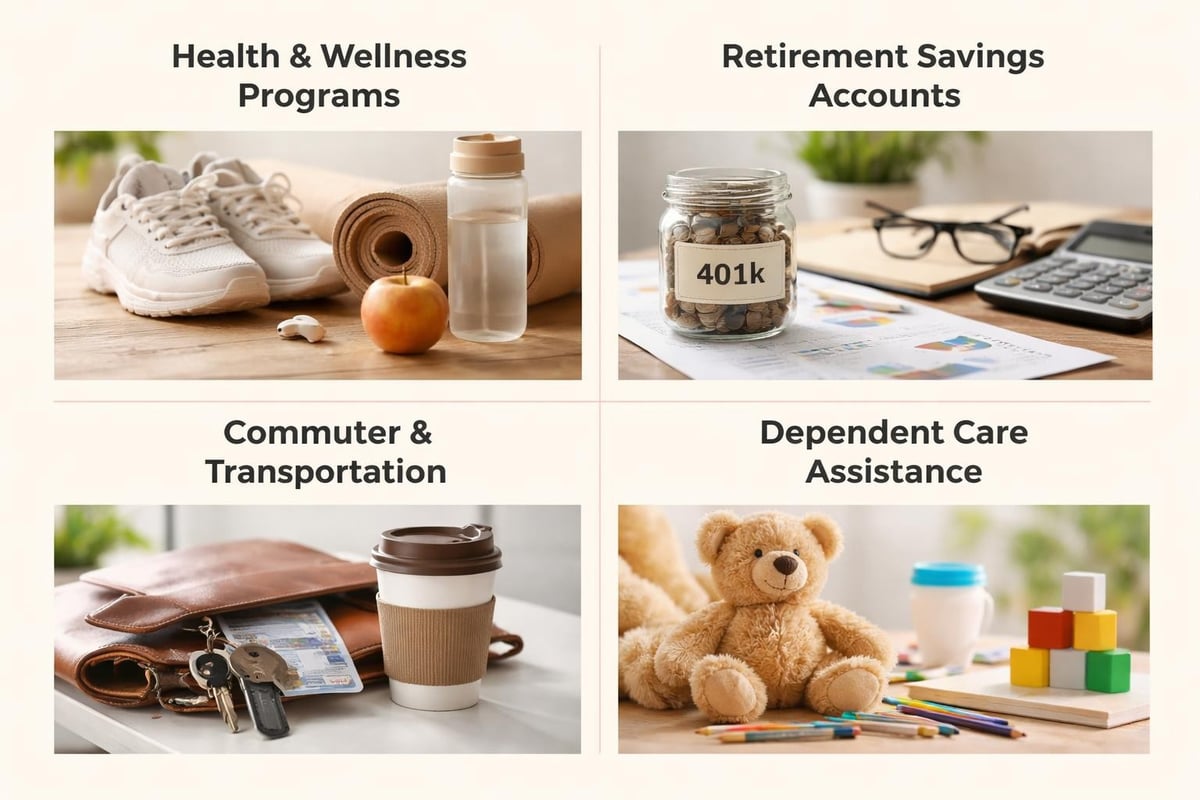
Health and Wellness Programs represent the most widely recognized category. These include:
- Health insurance premiums
- Health Savings Accounts (HSAs)
- Flexible Spending Accounts (FSAs)
- Dental and vision insurance
- Mental health support programs
Retirement savings vehicles form another critical component. Traditional 401(k) plans, 403(b) plans for nonprofit organizations, and similar retirement accounts allow employees to defer taxation on contributions and earnings until withdrawal.
Transportation and commuter benefits address practical daily expenses. Qualified parking expenses, transit passes, and vanpool arrangements can be paid with pre-tax dollars, providing relief for employees with significant commuting costs.
Financial Advantages for Organizations and Employees
The dual benefit structure of pre-tax programs creates a win-win scenario. Employees save money through reduced tax obligations, while employers decrease their payroll tax burden. How pre-tax benefits impact taxable income demonstrates the mathematical advantage these programs provide.
| Benefit Type | Employee Savings | Employer Savings | Administrative Complexity |
|---|---|---|---|
| Health Insurance | 20-30% on premiums | 7.65% payroll tax reduction | Low |
| FSA/HSA | 25-35% tax savings | 7.65% payroll tax reduction | Medium |
| 401(k) Contributions | Immediate tax deferral | 7.65% payroll tax reduction | Medium |
| Commuter Benefits | 20-30% on transit costs | 7.65% payroll tax reduction | Low |
Organizations implementing comprehensive pre-tax benefit programs typically see measurable improvements in employee satisfaction and retention rates. When employees understand they're receiving more value from their total compensation, engagement increases. This connection between financial wellness and workplace performance aligns perfectly with modern human capital management strategies.
Calculating Real-World Impact
Consider an employee earning $60,000 annually who contributes $3,000 to a traditional 401(k) and $2,000 to a healthcare FSA. Their taxable income drops to $55,000, potentially moving them into a lower tax bracket while saving approximately $1,500 in federal taxes alone. The employer simultaneously reduces their payroll tax obligation by roughly $383 on these contributions.
These savings compound when applied across an entire workforce. A company with 100 employees participating at similar levels could reduce payroll tax obligations by over $38,000 annually while providing substantial financial relief to their team members.
Implementing Pre-Tax Benefit Programs Effectively
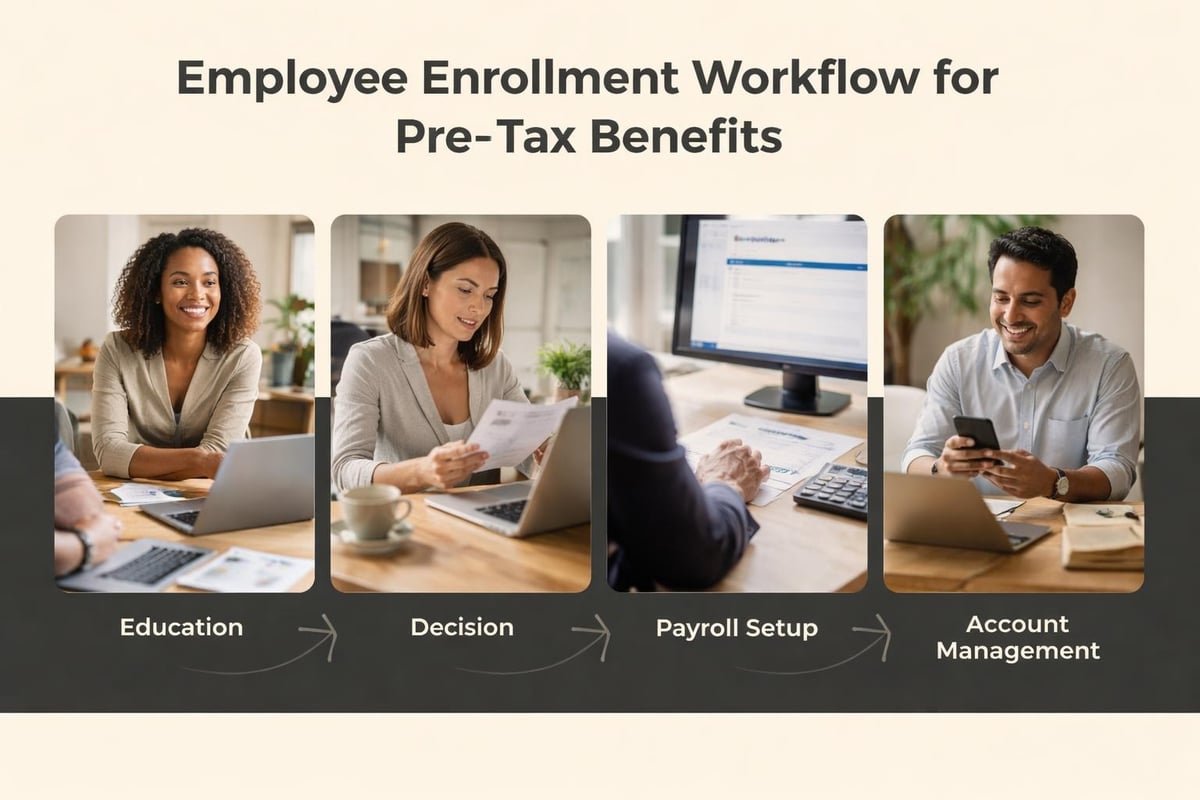
Successful implementation requires careful planning, clear communication, and robust administrative systems. Organizations must navigate regulatory compliance while ensuring employees understand and utilize available benefits. Payroll and human capital management solutions streamline this process by automating deductions and maintaining compliance.
Strategic Planning Steps
- Assess organizational needs and employee demographics to determine which benefits will provide maximum value
- Evaluate administrative capacity and technology infrastructure required for management
- Develop comprehensive communication materials explaining benefit options and enrollment procedures
- Establish clear timelines for open enrollment periods and qualifying life events
- Create ongoing education programs to maximize participation rates
Communication represents perhaps the most critical element. Employees cannot benefit from programs they don't understand. Regular educational sessions, clear written materials, and accessible support resources ensure that team members make informed decisions during enrollment periods.
Compliance and Regulatory Considerations
Pre-tax benefit programs operate within a complex regulatory environment. Federal agencies including the IRS, Department of Labor, and Department of Health and Human Services establish rules governing these programs. Understanding tax implications of pre-tax benefits helps organizations maintain compliance while maximizing advantages.
Critical Compliance Areas
Contribution limits change annually based on inflation adjustments. For 2026, organizations must ensure employee contributions remain within legal boundaries. HSA limits, 401(k) contribution caps, and FSA maximums all require careful monitoring.
Non-discrimination testing ensures that benefit programs don't disproportionately favor highly compensated employees. Organizations must conduct regular testing and adjust programs if necessary to maintain compliance.
Documentation requirements mandate proper recordkeeping for all benefit elections, changes, and qualifying events. Robust systems prevent compliance issues and facilitate audits when necessary.
Maximizing Employee Participation and Engagement
Even the most generous benefit program provides limited value if employees don't participate. Mechanics of pre-tax deductions become more impactful when organizations actively promote understanding and enrollment.
Organizations should consider these engagement strategies:
- Personalized benefit illustrations showing individual tax savings based on salary levels
- Decision support tools helping employees compare options and understand tradeoffs
- Success stories from colleagues who have maximized their benefits
- Financial wellness programs connecting benefits to broader financial planning goals
- Mobile-accessible resources enabling enrollment and management from any device
Technology plays an increasingly important role in benefit administration. Automated systems reduce administrative burden while improving accuracy. Integration between payroll, benefits administration, and financial planning tools creates seamless experiences for employees and administrators alike.
Health Savings Accounts and Flexible Spending Accounts
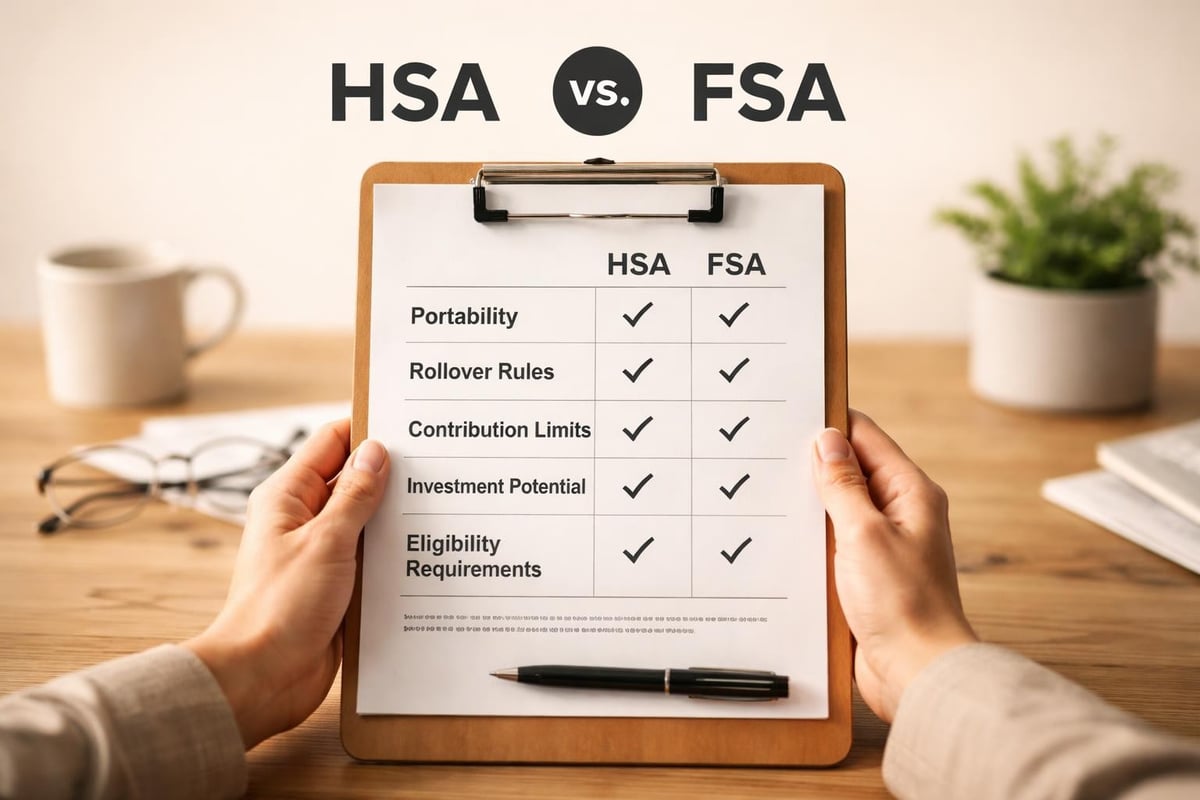
These specialized accounts deserve particular attention due to their unique advantages and growing popularity. Both allow pre-tax contributions for healthcare expenses, but they operate under different rules and serve different needs.
| Feature | Health Savings Account (HSA) | Flexible Spending Account (FSA) |
|---|---|---|
| Ownership | Employee-owned, portable | Employer-owned, non-portable |
| Rollover | Unlimited, accumulates over time | Limited ($640 in 2026) |
| Contribution Limit (2026) | $4,300 individual / $8,550 family | $3,200 |
| Investment Options | Available after minimum balance | Generally not available |
| Eligibility Requirement | High-deductible health plan | Any health plan |
HSAs offer exceptional long-term value for employees who can afford to save for future healthcare needs. The triple tax advantage (pre-tax contributions, tax-free growth, tax-free qualified withdrawals) makes HSAs powerful financial planning tools that extend well beyond immediate healthcare needs.
FSAs provide immediate relief for employees with predictable medical expenses. Dependent care FSAs also help working parents manage childcare costs with pre-tax dollars, addressing a significant financial pressure point for many families.
Retirement Benefits and Long-Term Financial Wellness
Retirement savings programs represent cornerstone pre-tax benefits that serve dual purposes. They help employees build financial security while demonstrating organizational commitment to long-term employee wellbeing. Traditional 401(k) plans remain the most common retirement benefit, but organizations increasingly offer Roth options, profit-sharing arrangements, and employer matching programs to enhance competitiveness.
The impact of employer matching cannot be overstated. When organizations match employee contributions, they're providing immediate returns on employee savings while encouraging higher participation rates. A 50% match on the first 6% of salary effectively increases total compensation by 3% for participating employees.
Retirement Program Design Considerations
Automatic enrollment significantly increases participation rates, particularly among younger employees who might otherwise postpone retirement savings. Default contribution rates of 3-6% with automatic annual increases help employees build savings without active decision-making.
Vesting schedules balance employer generosity with retention goals. While immediate vesting maximizes employee benefit, graded vesting schedules can improve retention during critical early employment years. Organizations must balance these competing interests based on workforce dynamics and strategic objectives.
Investment education empowers employees to make informed decisions about fund selection and asset allocation. Partnerships with financial advisors, educational resources, and simplified investment options help employees navigate complex decisions with confidence.
Commuter and Transportation Benefits
Transportation costs represent significant expenses for many employees, particularly those in metropolitan areas. Qualified transportation benefits allow employees to pay for parking and transit with pre-tax dollars, reducing commuting costs by 20-30% depending on tax brackets. Leveraging pre-tax benefits for savings demonstrates how these programs improve employee financial wellness.
The environmental benefits of commuter programs extend organizational impact beyond individual financial savings. By incentivizing public transportation use, organizations contribute to reduced traffic congestion and lower carbon emissions.
Dependent Care Assistance Programs
Working parents face substantial childcare expenses that can consume significant portions of household income. Dependent Care FSAs allow employees to set aside up to $5,000 annually (for married couples filing jointly) in pre-tax dollars for childcare expenses. This benefit addresses a critical need while supporting workforce participation among parents.
Eligibility extends beyond traditional daycare. Summer camps, before and after-school programs, and elder care expenses may qualify, providing flexibility for diverse family situations. Clear communication about eligible expenses ensures employees maximize program value.
Administrative Technology and Integration
Modern benefit administration demands sophisticated technology solutions. Manual processes create compliance risks, administrative burden, and employee frustration. Integrated systems connecting payroll, benefits administration, time tracking, and financial planning provide seamless experiences while reducing errors.
Key technological capabilities include:
- Real-time eligibility verification preventing over-contributions and compliance issues
- Automated compliance testing identifying potential non-discrimination problems before they become critical
- Self-service portals enabling employees to manage elections, view balances, and access resources independently
- Mobile applications facilitating enrollment and ongoing management from smartphones
- Data analytics providing insights into participation rates, program costs, and utilization patterns
Succession planning tools demonstrate how integrated technology solutions support broader organizational goals beyond basic benefit administration.
Measuring Program Success and Return on Investment
Organizations should establish clear metrics for evaluating pre-tax benefit program performance. Participation rates, employee satisfaction scores, retention improvements, and total compensation competitiveness all provide valuable insights into program effectiveness.
Key Performance Indicators
Participation rates by benefit type reveal which programs resonate with employees and which might need better communication or restructuring. Low participation despite generous offerings often indicates communication gaps rather than program design flaws.
Cost savings calculations should account for both employer payroll tax reductions and employee tax savings. Demonstrating total value helps justify program investments and identifies opportunities for expansion.
Retention analysis comparing tenure between employees who actively utilize benefits versus those who don't can reveal program impact on workforce stability. Common issues affecting organizational efficiency often connect to inadequate benefit utilization and employee financial stress.
Employee feedback through surveys, focus groups, and exit interviews provides qualitative insights that complement quantitative metrics. Understanding why employees choose or decline specific benefits informs continuous improvement efforts.
Future Trends in Pre-Tax Benefit Programs
The benefit landscape continues evolving as regulatory changes, workforce expectations, and economic conditions shift. Student loan repayment assistance programs, enhanced mental health support, and expanded wellness benefits represent emerging areas where organizations can differentiate their offerings.
Financial wellness programs increasingly integrate with traditional pre-tax benefits, recognizing that employees need holistic support to achieve financial security. Comprehensive approaches addressing budgeting, debt management, emergency savings, and long-term planning complement tax-advantaged benefit programs.
Personalization through artificial intelligence and advanced analytics enables organizations to recommend optimal benefit selections based on individual circumstances. These technologies help employees navigate complex decisions while improving overall program utilization and satisfaction.
Pre-tax benefits provide powerful tools for organizations seeking to maximize compensation value while controlling costs and supporting employee financial wellness. By implementing comprehensive programs with robust communication, efficient administration, and ongoing evaluation, businesses create competitive advantages in talent acquisition and retention. Nero and Associates, Inc. helps organizations optimize their human capital management strategies, including pre-tax benefit program design and implementation, ensuring companies maximize efficiency while empowering employees to achieve better financial health. Our performance-based approach delivers measurable improvements in operational efficiency and employee wellbeing.