

Private Equity: Creating Value Through Strategic Operations

Share on Facebook
Share on X
Share on LinkedIn

Private equity has evolved dramatically over the past decade, shifting from a purely financial engineering model to one focused on operational transformation and sustainable value creation. In 2026, successful private equity firms recognize that maximizing returns requires more than leverage and multiple expansion. Portfolio companies must achieve genuine operational improvements, streamline processes, and implement technology solutions that deliver measurable efficiency gains. This operational approach has become particularly relevant as firms face pressure to demonstrate value in an increasingly competitive market where traditional levers have diminished effectiveness.

Understanding the Private Equity Value Creation Framework

The modern private equity playbook centers on systematic operational improvements rather than relying solely on favorable entry and exit multiples. Firms now deploy specialized operating partners and consultants who work alongside portfolio company management to identify specific opportunities for performance enhancement.

Value creation initiatives typically fall into several core categories. Revenue enhancement focuses on pricing optimization, market expansion, and new customer acquisition strategies. Cost reduction targets operating expenses, supply chain inefficiencies, and redundant processes. Working capital optimization improves cash conversion cycles and reduces capital intensity. Each initiative requires detailed analysis, careful implementation planning, and consistent execution discipline.
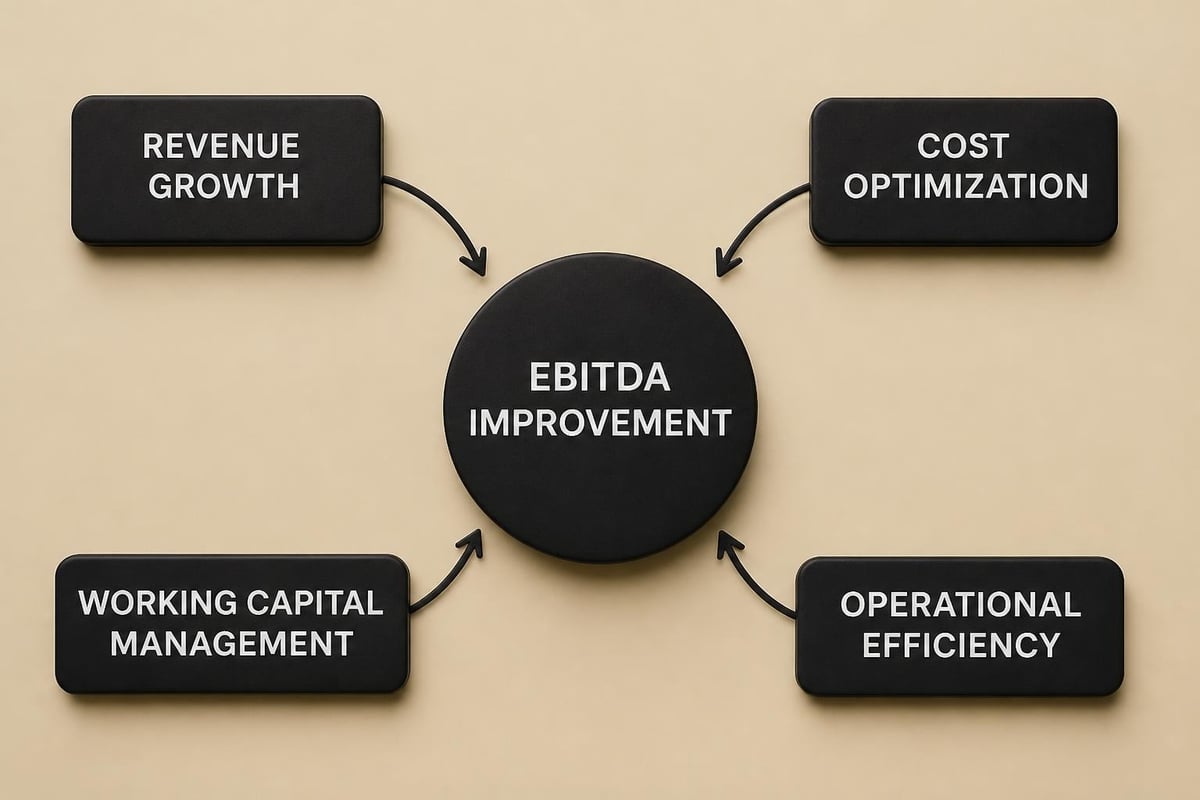
Private equity value creation framework

The Operational Due Diligence Imperative

Before acquisition, sophisticated private equity firms conduct extensive operational due diligence to identify both risks and opportunities within target companies. This assessment goes beyond traditional financial and legal reviews to examine operational infrastructure, technology systems, human capital capabilities, and process efficiency.

Key operational due diligence areas include:

  • Technology infrastructure assessment and digital maturity evaluation
  • Process efficiency analysis across core business functions
  • Organizational structure review and talent capability mapping
  • Vendor relationship analysis and contract optimization opportunities
  • Customer concentration risks and revenue quality assessment

The insights gained during operational due diligence inform the initial 100-day plan that guides early value creation activities. Private equity firms increasingly partner with specialized consultancies to accelerate these improvements and ensure consistent execution across their portfolios.

Leveraging Technology and Automation for Efficiency Gains

Technology implementation represents one of the most significant value creation opportunities for private equity portfolio companies in 2026. Many middle-market businesses acquired by private equity firms operate with outdated systems, manual processes, and limited data analytics capabilities. These inefficiencies create substantial room for improvement and rapid return generation.

Automation initiatives deliver particularly compelling returns. By eliminating manual data entry, streamlining approval workflows, and integrating disconnected systems, portfolio companies can reduce labor costs while improving accuracy and speed. Organizations implementing comprehensive automation strategies often eliminate thousands of hours of manual work annually, freeing employees to focus on higher-value activities.

Technology Investment Area Typical ROI Timeline Primary Benefits
Process Automation 6-12 months Labor cost reduction, error elimination
ERP Implementation 12-24 months Data integration, reporting capability
CRM Systems 9-18 months Revenue growth, customer retention
Analytics Platforms 12-18 months Decision quality, insight generation

Building a Technology Roadmap

Successful technology transformation requires a phased approach that balances quick wins with longer-term strategic initiatives. The roadmap should prioritize projects based on expected return, implementation complexity, and organizational readiness.

First-phase initiatives typically focus on automating repetitive tasks and integrating critical systems. These projects deliver visible improvements quickly, building momentum and stakeholder support for subsequent phases. Second-phase efforts often involve more comprehensive system replacements or advanced analytics implementations that require longer timelines but generate substantial long-term value.

Throughout implementation, change management becomes essential. Employees must understand how new systems benefit both the organization and their individual roles. Training programs, clear communication, and executive sponsorship help ensure successful adoption and realize projected benefits.

Optimizing Human Capital Management and Employee Productivity

People remain the most valuable asset in most private equity portfolio companies, yet human capital management often presents significant optimization opportunities. Many acquired businesses struggle with inefficient HR processes, outdated payroll systems, and limited employee development programs.

Modern human capital management solutions enable portfolio companies to streamline administrative functions while enhancing employee experience. Integrated platforms handle payroll processing, benefits administration, time tracking, and compliance reporting through unified systems that reduce errors and administrative burden.

Strategic human capital improvements deliver multiple benefits:

  1. Administrative efficiency through automated payroll and benefits processing
  2. Compliance risk reduction via systematic regulatory requirement tracking
  3. Employee satisfaction enhancement through self-service capabilities and improved benefits
  4. Talent retention improvement by creating better workplace experiences
  5. Data-driven decision making enabled by workforce analytics

Private equity firms recognize that employee wellness initiatives contribute directly to productivity and retention. Programs supporting mental health, physical wellness, and financial security reduce absenteeism, improve engagement, and lower turnover costs. These investments generate measurable returns while creating more sustainable businesses.

Human capital optimization

Financial Wellness as Competitive Advantage

Financial stress significantly impacts employee productivity and retention. Portfolio companies offering comprehensive financial wellness programs experience higher engagement and lower voluntary turnover. These programs include earned wage access, debt management support, retirement planning guidance, and financial education resources.

Earned wage access has emerged as particularly valuable, allowing employees to access earned wages before traditional pay cycles without employer cost. This benefit reduces financial stress, decreases reliance on predatory lending, and improves employee satisfaction. Implementation requires minimal investment while delivering substantial employee value.

Revenue Cycle Management in Healthcare Portfolio Companies

Healthcare represents a significant portion of private equity investment activity, with revenue cycle management presenting particularly compelling value creation opportunities. Many healthcare providers operate with inefficient billing processes, inadequate denial management, and limited analytics capabilities that leave substantial revenue unrealized.

Comprehensive revenue cycle optimization addresses the entire patient financial experience from registration through final payment. Front-end improvements ensure accurate patient information capture and insurance verification. Mid-cycle enhancements optimize coding accuracy and charge capture. Back-end initiatives reduce denials, accelerate collections, and identify underpayment opportunities.

Revenue Cycle Component Common Issues Optimization Approach
Patient Access Insurance verification errors Automated eligibility checking
Charge Capture Missed billable services Real-time charge capture systems
Claims Management High denial rates Predictive analytics, proactive edits
Collections Extended DSO Automated payment plans, patient portals
Underpayment Recovery Unidentified shortfalls Contract modeling, variance analysis

Underpayment Identification and Recovery

Healthcare providers frequently receive payments below contracted rates due to payer errors, contract complexity, and insufficient monitoring. Systematic underpayment recovery programs identify these shortfalls and pursue appropriate reimbursement.

Advanced analytics platforms compare actual payments against contract terms, identifying discrepancies that represent recovery opportunities. These systems analyze millions of transactions to detect patterns indicating systematic underpayment. Recovery programs can generate substantial returns with limited downside risk, making them attractive quick-win initiatives for healthcare portfolio companies.

Performance Measurement and Continuous Improvement

Effective value creation requires robust performance measurement systems that track progress against targets and identify emerging opportunities. Private equity firms establish key performance indicators aligned with value creation priorities, monitoring these metrics through regular reporting cadences.

Leading indicators provide early warning of potential issues, enabling proactive management intervention before problems escalate. These might include sales pipeline metrics, employee turnover rates, or quality indicators. Lagging indicators measure ultimate outcomes like revenue growth, EBITDA margin, or cash conversion.

Essential performance metrics across portfolio companies:

  • Revenue metrics: Growth rate, customer acquisition cost, lifetime value
  • Profitability metrics: EBITDA, EBITDA margin, contribution margin by segment
  • Efficiency metrics: Revenue per employee, operating expense ratio, time savings from automation
  • Cash metrics: Days sales outstanding, inventory turns, free cash flow conversion
  • People metrics: Employee turnover, engagement scores, productivity measures

Dashboard tools consolidate these metrics into accessible formats that facilitate quick decision-making. Executive teams review performance regularly, investigating variances and adjusting strategies as needed. This disciplined approach ensures continuous progress toward value creation goals.

Performance tracking dashboard

Creating a Continuous Improvement Culture

Sustainable value creation extends beyond discrete initiatives to encompass organizational culture change. Portfolio companies that embrace continuous improvement mindsets consistently identify and capture incremental opportunities that compound over time.

Lean methodologies provide structured approaches to process improvement, engaging frontline employees in identifying waste and developing solutions. Kaizen events bring cross-functional teams together to solve specific problems, generating rapid improvements while building problem-solving capabilities.

Recognition programs celebrating improvement contributions reinforce desired behaviors and encourage ongoing participation. When employees see their ideas implemented and understand the business impact, engagement increases and innovation accelerates.

Building Scalable Systems for Growth

Private equity portfolio companies must balance optimization of current operations with building capabilities to support future growth. Systems and processes that work effectively at current scale often break down as businesses expand, creating bottlenecks that limit growth potential.

Scalability assessment examines whether existing infrastructure can support anticipated volume increases without proportional cost growth. Technology systems, organizational structures, and operational processes all require evaluation through this lens. Investments made to enhance scalability pay dividends as companies grow, preventing costly disruptions and enabling smoother expansion.

Cloud-based systems offer particular advantages for scalability, providing flexible capacity that adjusts to changing needs without large upfront capital investments. These platforms enable rapid deployment of new capabilities and support geographic expansion more easily than traditional on-premise solutions.

Documentation and Knowledge Management

Growing organizations require systematic knowledge capture to prevent critical information from residing solely in individual employees' minds. Process documentation, standard operating procedures, and training materials enable consistent execution across expanding teams.

Knowledge management systems centralize important information, making it accessible to employees when needed. These repositories reduce onboarding time for new hires, minimize errors from inconsistent practices, and preserve institutional knowledge despite employee turnover.

Strategic Partnership Selection and Management

Portfolio companies rarely possess all necessary capabilities internally to achieve ambitious value creation targets. Strategic partnerships with specialized service providers enable access to expertise, technology, and resources that would be impractical to build internally.

Selecting the right partners requires careful evaluation of capabilities, cultural fit, and alignment with value creation priorities. Performance-based arrangements ensure partner incentives align with portfolio company objectives, creating shared commitment to success.

Effective partner management includes clear communication of expectations, regular performance reviews, and collaborative problem-solving. The best partnerships evolve into true strategic relationships where both parties invest in mutual success rather than transactional vendor-customer dynamics.

Enterprise organizations and mid-market businesses alike benefit from partnerships that provide specialized expertise while maintaining operational control of core business activities.

Risk Mitigation Through Operational Excellence

Operational improvements reduce business risk while driving value creation. Companies with efficient processes, strong systems, and capable people demonstrate greater resilience during market downturns and operational disruptions. This resilience protects investment value and creates more stable platforms for growth.

Compliance risks decrease when systematic processes replace ad-hoc approaches to regulatory requirements. Automated systems enforce controls consistently, maintain audit trails, and generate required documentation. These capabilities prove particularly valuable in heavily regulated industries where compliance failures carry significant consequences.

Cybersecurity represents an increasingly critical operational risk area. Portfolio companies must implement appropriate security measures to protect sensitive data and maintain business continuity. Security investments prevent potentially catastrophic breaches while demonstrating responsible stewardship to customers and partners.


Operational excellence has become the cornerstone of private equity value creation, with technology, process optimization, and human capital management driving sustainable EBITDA improvements across portfolio companies. These operational transformations require specialized expertise, systematic implementation, and consistent execution discipline to achieve projected returns. Nero and Associates, Inc. partners with portfolio companies to accelerate value creation through AI-powered automation, comprehensive human capital management solutions, and revenue cycle optimization that deliver measurable efficiency gains and bottom-line impact. Our performance-based approach ensures alignment with your value creation objectives while eliminating thousands of hours of manual work and empowering your teams to focus on strategic priorities.

Private Equity: Creating Value Through Strategic Operations

Private equity has evolved dramatically over the past decade, shifting from a purely financial engineering model to one focused on operational transformation and sustainable value creation. In 2026, successful private equity firms recognize that maximizing returns requires more than leverage and multiple expansion. Portfolio companies must achieve genuine operational improvements, streamline processes, and implement technology solutions that deliver measurable efficiency gains. This operational approach has become particularly relevant as firms face pressure to demonstrate value in an increasingly competitive market where traditional levers have diminished effectiveness.

Understanding the Private Equity Value Creation Framework

The modern private equity playbook centers on systematic operational improvements rather than relying solely on favorable entry and exit multiples. Firms now deploy specialized operating partners and consultants who work alongside portfolio company management to identify specific opportunities for performance enhancement.

Value creation initiatives typically fall into several core categories. Revenue enhancement focuses on pricing optimization, market expansion, and new customer acquisition strategies. Cost reduction targets operating expenses, supply chain inefficiencies, and redundant processes. Working capital optimization improves cash conversion cycles and reduces capital intensity. Each initiative requires detailed analysis, careful implementation planning, and consistent execution discipline.

Private equity value creation framework

The Operational Due Diligence Imperative

Before acquisition, sophisticated private equity firms conduct extensive operational due diligence to identify both risks and opportunities within target companies. This assessment goes beyond traditional financial and legal reviews to examine operational infrastructure, technology systems, human capital capabilities, and process efficiency.

Key operational due diligence areas include:

  • Technology infrastructure assessment and digital maturity evaluation
  • Process efficiency analysis across core business functions
  • Organizational structure review and talent capability mapping
  • Vendor relationship analysis and contract optimization opportunities
  • Customer concentration risks and revenue quality assessment

The insights gained during operational due diligence inform the initial 100-day plan that guides early value creation activities. Private equity firms increasingly partner with specialized consultancies to accelerate these improvements and ensure consistent execution across their portfolios.

Leveraging Technology and Automation for Efficiency Gains

Technology implementation represents one of the most significant value creation opportunities for private equity portfolio companies in 2026. Many middle-market businesses acquired by private equity firms operate with outdated systems, manual processes, and limited data analytics capabilities. These inefficiencies create substantial room for improvement and rapid return generation.

Automation initiatives deliver particularly compelling returns. By eliminating manual data entry, streamlining approval workflows, and integrating disconnected systems, portfolio companies can reduce labor costs while improving accuracy and speed. Organizations implementing comprehensive automation strategies often eliminate thousands of hours of manual work annually, freeing employees to focus on higher-value activities.

Technology Investment Area Typical ROI Timeline Primary Benefits
Process Automation 6-12 months Labor cost reduction, error elimination
ERP Implementation 12-24 months Data integration, reporting capability
CRM Systems 9-18 months Revenue growth, customer retention
Analytics Platforms 12-18 months Decision quality, insight generation

Building a Technology Roadmap

Successful technology transformation requires a phased approach that balances quick wins with longer-term strategic initiatives. The roadmap should prioritize projects based on expected return, implementation complexity, and organizational readiness.

First-phase initiatives typically focus on automating repetitive tasks and integrating critical systems. These projects deliver visible improvements quickly, building momentum and stakeholder support for subsequent phases. Second-phase efforts often involve more comprehensive system replacements or advanced analytics implementations that require longer timelines but generate substantial long-term value.

Throughout implementation, change management becomes essential. Employees must understand how new systems benefit both the organization and their individual roles. Training programs, clear communication, and executive sponsorship help ensure successful adoption and realize projected benefits.

Optimizing Human Capital Management and Employee Productivity

People remain the most valuable asset in most private equity portfolio companies, yet human capital management often presents significant optimization opportunities. Many acquired businesses struggle with inefficient HR processes, outdated payroll systems, and limited employee development programs.

Modern human capital management solutions enable portfolio companies to streamline administrative functions while enhancing employee experience. Integrated platforms handle payroll processing, benefits administration, time tracking, and compliance reporting through unified systems that reduce errors and administrative burden.

Strategic human capital improvements deliver multiple benefits:

  1. Administrative efficiency through automated payroll and benefits processing
  2. Compliance risk reduction via systematic regulatory requirement tracking
  3. Employee satisfaction enhancement through self-service capabilities and improved benefits
  4. Talent retention improvement by creating better workplace experiences
  5. Data-driven decision making enabled by workforce analytics

Private equity firms recognize that employee wellness initiatives contribute directly to productivity and retention. Programs supporting mental health, physical wellness, and financial security reduce absenteeism, improve engagement, and lower turnover costs. These investments generate measurable returns while creating more sustainable businesses.

Human capital optimization

Financial Wellness as Competitive Advantage

Financial stress significantly impacts employee productivity and retention. Portfolio companies offering comprehensive financial wellness programs experience higher engagement and lower voluntary turnover. These programs include earned wage access, debt management support, retirement planning guidance, and financial education resources.

Earned wage access has emerged as particularly valuable, allowing employees to access earned wages before traditional pay cycles without employer cost. This benefit reduces financial stress, decreases reliance on predatory lending, and improves employee satisfaction. Implementation requires minimal investment while delivering substantial employee value.

Revenue Cycle Management in Healthcare Portfolio Companies

Healthcare represents a significant portion of private equity investment activity, with revenue cycle management presenting particularly compelling value creation opportunities. Many healthcare providers operate with inefficient billing processes, inadequate denial management, and limited analytics capabilities that leave substantial revenue unrealized.

Comprehensive revenue cycle optimization addresses the entire patient financial experience from registration through final payment. Front-end improvements ensure accurate patient information capture and insurance verification. Mid-cycle enhancements optimize coding accuracy and charge capture. Back-end initiatives reduce denials, accelerate collections, and identify underpayment opportunities.

Revenue Cycle Component Common Issues Optimization Approach
Patient Access Insurance verification errors Automated eligibility checking
Charge Capture Missed billable services Real-time charge capture systems
Claims Management High denial rates Predictive analytics, proactive edits
Collections Extended DSO Automated payment plans, patient portals
Underpayment Recovery Unidentified shortfalls Contract modeling, variance analysis

Underpayment Identification and Recovery

Healthcare providers frequently receive payments below contracted rates due to payer errors, contract complexity, and insufficient monitoring. Systematic underpayment recovery programs identify these shortfalls and pursue appropriate reimbursement.

Advanced analytics platforms compare actual payments against contract terms, identifying discrepancies that represent recovery opportunities. These systems analyze millions of transactions to detect patterns indicating systematic underpayment. Recovery programs can generate substantial returns with limited downside risk, making them attractive quick-win initiatives for healthcare portfolio companies.

Performance Measurement and Continuous Improvement

Effective value creation requires robust performance measurement systems that track progress against targets and identify emerging opportunities. Private equity firms establish key performance indicators aligned with value creation priorities, monitoring these metrics through regular reporting cadences.

Leading indicators provide early warning of potential issues, enabling proactive management intervention before problems escalate. These might include sales pipeline metrics, employee turnover rates, or quality indicators. Lagging indicators measure ultimate outcomes like revenue growth, EBITDA margin, or cash conversion.

Essential performance metrics across portfolio companies:

  • Revenue metrics: Growth rate, customer acquisition cost, lifetime value
  • Profitability metrics: EBITDA, EBITDA margin, contribution margin by segment
  • Efficiency metrics: Revenue per employee, operating expense ratio, time savings from automation
  • Cash metrics: Days sales outstanding, inventory turns, free cash flow conversion
  • People metrics: Employee turnover, engagement scores, productivity measures

Dashboard tools consolidate these metrics into accessible formats that facilitate quick decision-making. Executive teams review performance regularly, investigating variances and adjusting strategies as needed. This disciplined approach ensures continuous progress toward value creation goals.

Performance tracking dashboard

Creating a Continuous Improvement Culture

Sustainable value creation extends beyond discrete initiatives to encompass organizational culture change. Portfolio companies that embrace continuous improvement mindsets consistently identify and capture incremental opportunities that compound over time.

Lean methodologies provide structured approaches to process improvement, engaging frontline employees in identifying waste and developing solutions. Kaizen events bring cross-functional teams together to solve specific problems, generating rapid improvements while building problem-solving capabilities.

Recognition programs celebrating improvement contributions reinforce desired behaviors and encourage ongoing participation. When employees see their ideas implemented and understand the business impact, engagement increases and innovation accelerates.

Building Scalable Systems for Growth

Private equity portfolio companies must balance optimization of current operations with building capabilities to support future growth. Systems and processes that work effectively at current scale often break down as businesses expand, creating bottlenecks that limit growth potential.

Scalability assessment examines whether existing infrastructure can support anticipated volume increases without proportional cost growth. Technology systems, organizational structures, and operational processes all require evaluation through this lens. Investments made to enhance scalability pay dividends as companies grow, preventing costly disruptions and enabling smoother expansion.

Cloud-based systems offer particular advantages for scalability, providing flexible capacity that adjusts to changing needs without large upfront capital investments. These platforms enable rapid deployment of new capabilities and support geographic expansion more easily than traditional on-premise solutions.

Documentation and Knowledge Management

Growing organizations require systematic knowledge capture to prevent critical information from residing solely in individual employees' minds. Process documentation, standard operating procedures, and training materials enable consistent execution across expanding teams.

Knowledge management systems centralize important information, making it accessible to employees when needed. These repositories reduce onboarding time for new hires, minimize errors from inconsistent practices, and preserve institutional knowledge despite employee turnover.

Strategic Partnership Selection and Management

Portfolio companies rarely possess all necessary capabilities internally to achieve ambitious value creation targets. Strategic partnerships with specialized service providers enable access to expertise, technology, and resources that would be impractical to build internally.

Selecting the right partners requires careful evaluation of capabilities, cultural fit, and alignment with value creation priorities. Performance-based arrangements ensure partner incentives align with portfolio company objectives, creating shared commitment to success.

Effective partner management includes clear communication of expectations, regular performance reviews, and collaborative problem-solving. The best partnerships evolve into true strategic relationships where both parties invest in mutual success rather than transactional vendor-customer dynamics.

Enterprise organizations and mid-market businesses alike benefit from partnerships that provide specialized expertise while maintaining operational control of core business activities.

Risk Mitigation Through Operational Excellence

Operational improvements reduce business risk while driving value creation. Companies with efficient processes, strong systems, and capable people demonstrate greater resilience during market downturns and operational disruptions. This resilience protects investment value and creates more stable platforms for growth.

Compliance risks decrease when systematic processes replace ad-hoc approaches to regulatory requirements. Automated systems enforce controls consistently, maintain audit trails, and generate required documentation. These capabilities prove particularly valuable in heavily regulated industries where compliance failures carry significant consequences.

Cybersecurity represents an increasingly critical operational risk area. Portfolio companies must implement appropriate security measures to protect sensitive data and maintain business continuity. Security investments prevent potentially catastrophic breaches while demonstrating responsible stewardship to customers and partners.


Operational excellence has become the cornerstone of private equity value creation, with technology, process optimization, and human capital management driving sustainable EBITDA improvements across portfolio companies. These operational transformations require specialized expertise, systematic implementation, and consistent execution discipline to achieve projected returns. Nero and Associates, Inc. partners with portfolio companies to accelerate value creation through AI-powered automation, comprehensive human capital management solutions, and revenue cycle optimization that deliver measurable efficiency gains and bottom-line impact. Our performance-based approach ensures alignment with your value creation objectives while eliminating thousands of hours of manual work and empowering your teams to focus on strategic priorities.

Website developed in accordance with Web Content Accessibility Guidelines 2.2.
If you encounter any issues while using this site, please contact us: 215.526.5126