

In 2026, organizations face growing pressure from rising costs and complex regulations, making revenue cycle consulting more crucial than ever. This essential guide delivers a comprehensive overview of revenue cycle consulting, highlighting its importance and offering actionable strategies to optimize revenue processes for sustainable success. You will explore core concepts, challenges, consulting steps, technology trends, vendor selection, and future outlook. Ready to unlock proven methods for revenue optimization? Dive in and discover the insights you need to thrive in today's evolving landscape.
Understanding Revenue Cycle Consulting in 2026
Revenue cycle consulting is rapidly evolving as organizations strive to enhance financial performance and meet new regulatory demands. In 2026, the complexity of healthcare and business environments requires a fresh approach, leveraging advanced technology and holistic strategies to optimize every stage of the revenue cycle.
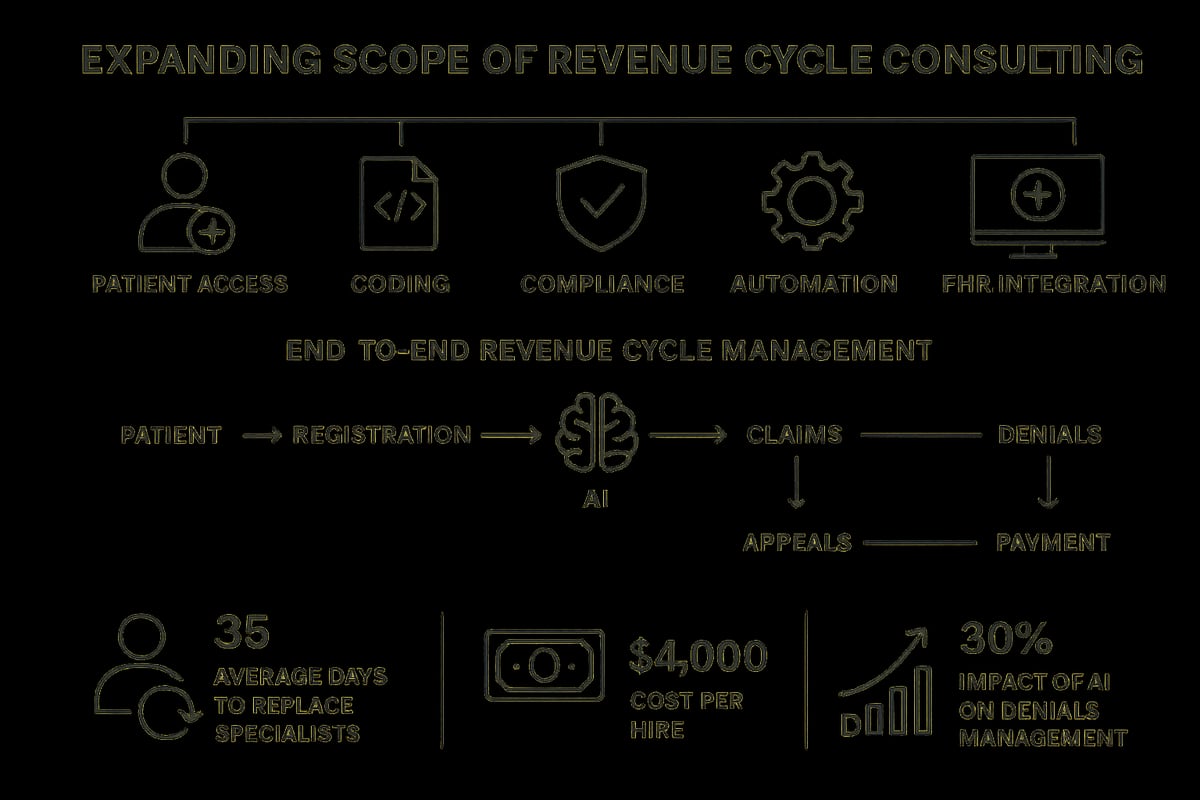
Definition and Scope of Revenue Cycle Consulting
Revenue cycle consulting refers to the specialized advisory services that help organizations manage the entire process of generating revenue from patient intake to final payment. In healthcare, this means overseeing every touchpoint across the continuum of care, from scheduling and registration to coding, billing, and collections.
The scope of revenue cycle consulting in 2026 is broader than ever before. Consultants now address not only billing and collections but also compliance, automation, and technology integration. This shift moves organizations from isolated, department-focused improvements to comprehensive, tech-enabled strategies. Services often include patient access optimization, accurate coding, robust documentation, patient account management, and EHR system enhancement.
For a closer look at how holistic, end-to-end approaches are transforming organizations, see End-to-End Revenue Cycle Management.
The Importance of Revenue Cycle Optimization
Optimizing the revenue cycle is vital for an organization’s financial health, sustainability, and ability to serve patients effectively. Rising operating costs and declining reimbursement rates are squeezing margins, making efficient revenue cycle consulting more important than ever.
A well-optimized revenue cycle improves cash flow, boosts profitability, and enhances patient satisfaction by reducing billing errors and delays. Recent data highlights the impact of workforce challenges, with the average cost to replace a specialist ranging from $2,167 to $5,699 and an average replacement time of 84 days (Akasa, 2022). Many organizations have improved revenue and reduced costs by partnering with expert consultants to streamline operations and drive measurable outcomes.
Key Drivers and Trends in 2026
Several factors are shaping the demand for revenue cycle consulting in 2026. Regulatory changes, such as stricter pricing transparency laws and evolving compliance requirements, are top drivers. Labor shortages and payer complexities also put pressure on organizations to do more with less.
Technology adoption is accelerating, with artificial intelligence, machine learning, and robotic process automation (RPA) playing critical roles. The need for automation and data-driven solutions is growing, particularly in areas like denials management, where AI is making a significant impact (Forbes, 2024). As a result, consulting services are evolving to provide expertise in both regulatory strategy and advanced technology implementation.
Who Needs Revenue Cycle Consulting?
Revenue cycle consulting is essential for a wide range of organizations. Healthcare providers, hospitals, clinics, and medical practices are the primary audiences, but any entity with complex billing processes can benefit. In 2026, community health centers, long-term care facilities, and accountable care organizations face unique challenges that require tailored consulting solutions.
Non-healthcare organizations with intricate revenue streams also seek consulting to manage scaling, compliance, and technology integration. Leading firms like BerryDunn and FTI Consulting deliver customized strategies to help organizations address workforce shortages, regulatory changes, and the increasing demand for digital transformation.
The Revenue Cycle Consulting Process: Step-by-Step
Navigating the complexities of revenue cycle consulting requires a structured, proven approach. Organizations that adopt a step-by-step process see greater clarity, accountability, and measurable results. Let us break down each phase to reveal how expert guidance unlocks sustainable revenue growth.
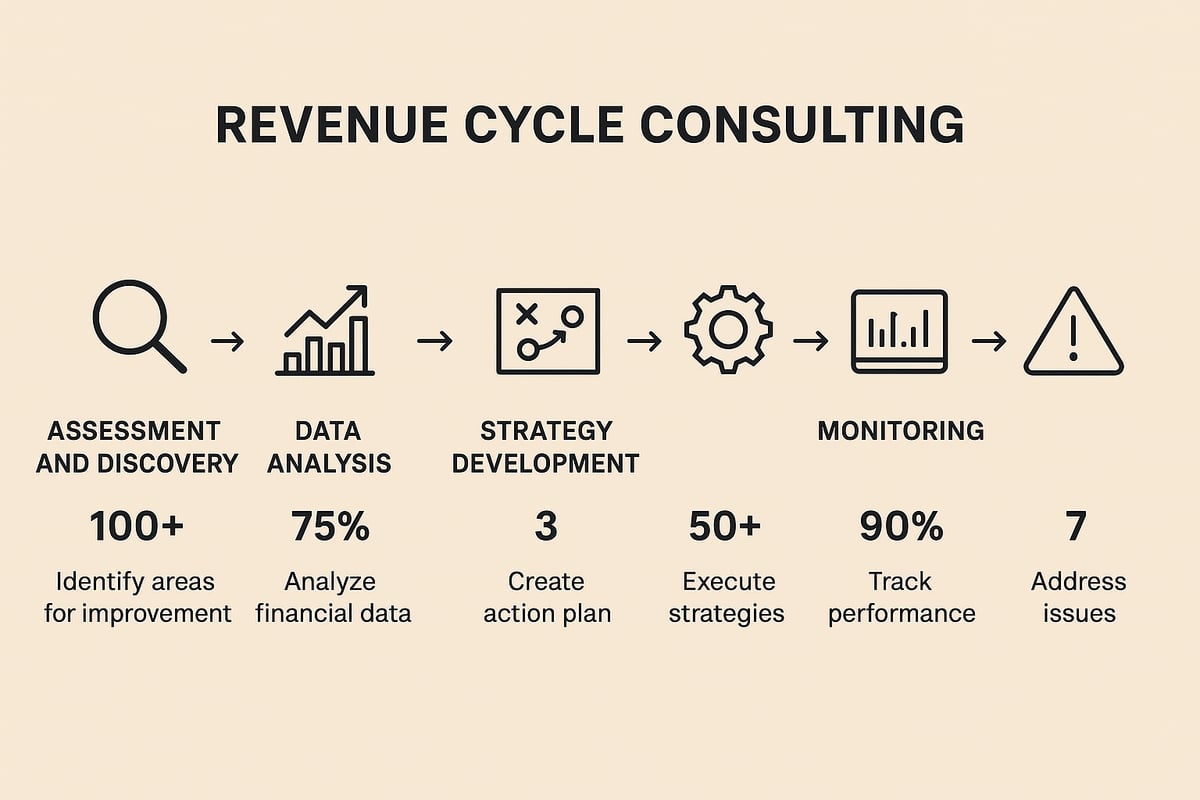
Step 1: Assessment and Discovery
The first phase of revenue cycle consulting is a comprehensive assessment of your current processes, policies, and systems. Consultants conduct stakeholder interviews and map workflows from patient access to final payment. This includes reviewing front-end registration, documentation, and billing practices.
Data collection is crucial. Benchmarks are established by analyzing accounts receivable (A/R) aging, claim denials, and cash flow patterns. Objective reviews, as emphasized by industry leaders, ensure that all pain points are identified early. By understanding current-state operations, organizations can create a clear baseline for improvement.
This foundation sets the stage for the entire revenue cycle consulting process, ensuring all subsequent actions are targeted and effective.
Step 2: Data Analysis and Opportunity Identification
Once assessment data is gathered, the next step in revenue cycle consulting focuses on deep analysis of key performance metrics. Consultants examine denial rates, write-offs, claim lag days, and cash flow efficiency. Root cause analysis uncovers sources of revenue leakage and process inefficiency.
For example, competitor studies have shown that identifying recurring denial trends can lead to rapid improvements. Consulting teams also spot compliance gaps and missed revenue opportunities, enabling organizations to prioritize their efforts.
Using real-world statistics, such as a 74.1 percent resolution of aged A/R and a 9 to 1 ROI, consultants demonstrate the tangible value of data-driven analysis in the revenue cycle consulting journey.
Step 3: Strategy Development and Solution Design
With clear opportunities identified, revenue cycle consulting shifts to crafting tailored strategies. Consultants collaborate with stakeholders to design both short-term fixes and long-term transformation plans. These strategies may include technology integration, workflow redesign, and enhanced compliance measures.
Common solutions involve denials prevention, charge capture optimization, and pricing rationalization. Consultants develop playbooks and performance improvement plans to guide implementation.
A collaborative, client-focused approach ensures that every strategy aligns with organizational goals and builds a foundation for sustainable success through revenue cycle consulting.
Step 4: Implementation and Change Management
The implementation phase of revenue cycle consulting is where planning becomes action. Consultants oversee the rollout of new technologies, revised workflows, and staff training programs. Detailed documentation, such as standard operating procedures and playbooks, supports consistency.
Change management is critical. Staff receive hands-on training, and interim leadership may be provided to bridge expertise gaps. Communication plans ensure all stakeholders are informed and engaged.
Flexibility is essential, as organizations adapt to evolving requirements. Successful implementation relies on ongoing support and the ability to pivot as challenges arise, keeping the revenue cycle consulting process on track.
Step 5: Monitoring, Reporting, and Continuous Improvement
After implementation, revenue cycle consulting focuses on tracking key performance indicators (KPIs) and maintaining accountability. Consultants set up dashboards for biweekly or monthly reporting, tracking metrics like cash targets, denial rates, and workflow gaps.
Continuous improvement is achieved through feedback loops and root-cause analysis. Regular reporting provides transparency, while trend monitoring helps organizations stay proactive.
This ongoing vigilance ensures that revenue cycle consulting delivers lasting value, not just one-time results. By embedding continuous improvement into daily operations, organizations maximize their financial health.
Common Challenges and Pitfalls in the Consulting Process
Despite careful planning, revenue cycle consulting faces common challenges. Resistance to change, data silos, and lack of stakeholder buy-in can slow progress. Technology integration may reveal compatibility issues or regulatory compliance hurdles.
Staffing shortages, budget constraints, and rapid regulatory shifts are frequent obstacles. Failed implementations often result from inadequate training or unclear objectives. To avoid these pitfalls, organizations must foster open communication and invest in robust change management.
For a deeper dive into typical errors and how to avoid them, see Common Medical Billing Mistakes. By learning from past missteps, organizations strengthen their approach to revenue cycle consulting and improve their odds of long-term success.
Key Areas of Focus in Revenue Cycle Consulting
Revenue cycle consulting delivers measurable improvements when organizations focus on the right operational areas. In 2026, effective consulting strategies address every stage of the revenue cycle, from patient access to compliance. Let’s explore the essential domains where targeted interventions drive sustainable results.
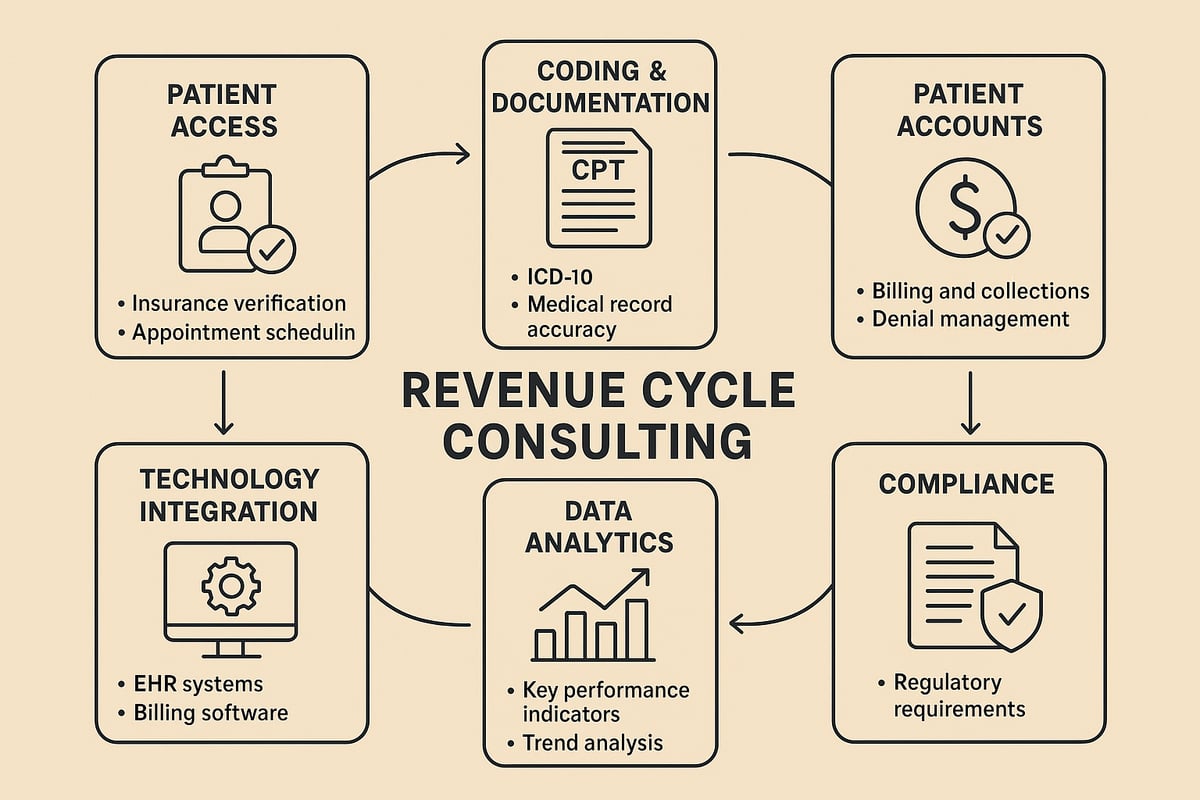
Patient Access and Front-End Optimization
Patient access is a cornerstone of revenue cycle consulting, directly influencing both financial outcomes and patient satisfaction. In 2026, front-end workflows such as scheduling, pre-registration, and insurance authorization are streamlined for accuracy and efficiency.
Consultants help organizations centralize operations, reduce registration errors, and improve scheduling accuracy. For example, implementing robust eligibility checks at the start reduces downstream denials and billing delays. Interim leadership roles often support these transformations, ensuring that process changes are embedded and sustainable.
An optimized patient access process sets the tone for the entire revenue cycle and lays the groundwork for improved collections and patient experience.
Coding, Documentation, and Compliance
Accurate coding and clinical documentation are critical focus areas in revenue cycle consulting. Without precise documentation, organizations risk compliance violations, missed revenue, and increased audit exposure.
Consultants evaluate chargemaster accuracy, recommend clinical documentation improvement (CDI) programs, and ensure all coding aligns with the latest regulatory standards, including HIPAA. Pricing transparency and rationalization strategies are emphasized, enabling organizations to meet legal requirements and foster patient trust.
By prioritizing these elements, organizations can mitigate fraud risks, enhance charge capture, and secure appropriate reimbursement for services provided.
Patient Accounts and Back-End Optimization
The back-end of the revenue cycle is where claims are managed, denials are addressed, and accounts receivable is followed up. Revenue cycle consulting identifies workflow gaps, optimizes clearinghouse processes, and introduces best practices for A/R management.
For instance, consultants analyze work queues to accelerate cash flow and reduce denials. Implementing effective A/R follow-up protocols often leads to significant improvements, such as 74.1% resolution of aged accounts. Interim management roles provide stability during transitions, ensuring the continuity of improved processes.
Effective patient accounts strategies are essential for cash acceleration and long-term financial health.
Technology Integration: EHR and Automation
Technology integration is at the forefront of revenue cycle consulting in 2026. EHR optimization, bolt-on solutions, and automation tools drive efficiency and reduce manual errors. Consultants guide organizations through implementation and integration, ensuring systems work seamlessly together.
The adoption of AI and RPA for tasks like claim scrubbing and eligibility verification has become standard. Solutions such as AI Automation Integration Solutions help organizations automate repetitive processes, improve accuracy, and boost departmental performance.
Streamlined technology integration empowers teams, reduces costs, and supports a data-driven revenue cycle.
Data Analytics and KPI Tracking
Data analytics has transformed revenue cycle consulting by enabling organizations to identify trends, monitor performance, and make informed decisions. Tracking key performance indicators like denial rates, A/R aging, and patient satisfaction allows for proactive management.
Consultants implement dashboards for real-time monitoring and use predictive analytics to forecast collections and spot emerging issues. Machine learning models reveal hidden patterns that drive targeted process improvements.
Continuous analytics and KPI tracking ensure that organizations can adapt quickly and sustain revenue cycle gains over time.
Regulatory and Compliance Strategies
Regulatory compliance remains a central pillar of revenue cycle consulting. In 2026, organizations face evolving laws around pricing transparency, billing practices, and data privacy. Consulting teams help clients stay compliant through regular audits, documentation reviews, and staff training.
Strategies include risk mitigation, audit preparedness, and ongoing education on new requirements. Consultants often conduct compliance gap assessments and develop action plans tailored to each client’s risk profile.
By embedding compliance into every phase of the revenue cycle, organizations safeguard their reputation and minimize costly penalties.
Technology and Innovation Shaping Revenue Cycle Consulting
Advancements in technology are redefining revenue cycle consulting in 2026. Organizations now face mounting pressure to streamline operations, boost revenue, and safeguard data. Consultants are leveraging a suite of emerging tools to meet these demands. From artificial intelligence to cybersecurity, every innovation shapes the path to greater financial health and operational resilience.
AI, Automation, and Robotics Process Automation (RPA)
AI and automation are transforming revenue cycle consulting by automating routine tasks and uncovering new efficiencies. Machine learning algorithms now handle eligibility checks, claim scrubbing, and even predict denials, reducing manual errors and accelerating cash flow. RPA streamlines repetitive workflows, freeing staff for higher value activities. According to a recent report, health systems are prioritizing AI-driven solutions for underpayment recovery and denials management. These advancements not only cut costs but also position organizations for sustainable growth in an increasingly complex environment.
EHR Optimization and Digital Integration
EHR systems are now central to revenue cycle consulting. Effective integration of EHR platforms with other digital tools leads to seamless charge capture, reduced claim rejections, and improved data accuracy. Consultants focus on optimizing EHR workflows to support coding, billing, and compliance. Common challenges include data silos and interoperability gaps, but tailored consulting helps overcome these barriers. Bolt-on technologies, such as claim scrubbers or contract management modules, further enhance the EHR ecosystem. Ultimately, digital integration supports real-time access to revenue data, enabling faster decision-making and better overall performance.
Predictive Analytics and Real-Time Reporting
Predictive analytics have become a cornerstone of revenue cycle consulting. With access to vast datasets, consultants deploy machine learning models to forecast cash collections, identify denial trends, and flag compliance risks before they escalate. Real-time dashboards offer transparency into KPIs such as denial rates and A/R aging, empowering leaders to take swift, informed action. Advanced analytics also reveal hidden revenue opportunities and inefficiencies. By leveraging predictive tools, organizations can move from reactive problem-solving to proactive revenue management, making data-driven decisions routine rather than exceptional.
Cybersecurity and Data Privacy in Revenue Cycle Operations
Protecting sensitive financial and patient data is a top priority in revenue cycle consulting. With the rise of digital solutions and third-party integrations, security risks are increasing. Consultants assess vulnerabilities, implement robust safeguards, and ensure compliance with evolving regulations like HIPAA. Strategies include regular risk assessments, employee training, and advanced encryption protocols. Consulting also involves preparing organizations for potential audits and breaches. By prioritizing cybersecurity, consultants help clients maintain trust, avoid costly penalties, and support uninterrupted revenue operations in a digital-first world.
Emerging Technologies and Future Trends
The future of revenue cycle consulting is marked by rapid innovation. Blockchain technology promises secure claims verification and transparent transactions. Advanced interoperability tools facilitate seamless data sharing across systems. Patient engagement platforms, such as digital wallets, simplify payments and boost satisfaction. Consultants stay ahead by monitoring industry forecasts and piloting new tools. As technology evolves, organizations must remain agile and open to change. Embracing these emerging trends ensures that revenue cycle consulting continues to deliver measurable value and adaptability for years to come.
Selecting the Right Revenue Cycle Consulting Partner
Choosing the right partner for revenue cycle consulting is a pivotal decision for organizations aiming to achieve financial transformation. The right consulting firm acts as both a guide and an accelerator, ensuring your revenue cycle is robust, compliant, and future ready.
Criteria for Evaluating Consulting Firms
When evaluating revenue cycle consulting firms, consider a broad set of criteria to ensure alignment with your organization’s goals. Look for deep industry expertise, a proven track record, and robust technology capabilities. Review client references to validate past performance and ask about their experience with organizations of similar size and scope.
Assess each firm’s approach to compliance, data security, and change management. Alignment with your organizational culture is essential for a successful engagement. Many leading firms now offer performance-based engagement models, linking compensation to measurable outcomes. This structure helps ensure that your investment in revenue cycle consulting translates into real-world results.
The Vendor Selection and Onboarding Process
The vendor selection process for revenue cycle consulting starts with developing a comprehensive RFP that clearly outlines your needs. Evaluate potential partners based on their responses, technical capabilities, and cultural fit. Conduct thorough due diligence, including interviews with consulting teams and reviews of case studies.
During onboarding, prioritize transparent data sharing and pre-implementation planning. Leading consulting firms, like FTI, emphasize collaborative process documentation and clear KPIs from the outset. This structured approach reduces miscommunication and sets a strong foundation for ongoing partnership. Transparency and accountability are essential throughout the revenue cycle consulting journey.
Expectations and Best Practices for Vendor Engagement
Setting clear expectations is key to a successful revenue cycle consulting partnership. Define communication frequency, reporting standards, and escalation procedures before the project begins. Biweekly or monthly reporting, including dashboard reviews and KPI tracking, should be standard practice.
Regular meetings allow both parties to address challenges and celebrate progress. Maintain control of your accounts receivable and ensure system visibility at all times. Success factors include clarity, responsiveness, and a genuine sense of partnership between your team and the consulting firm. These best practices help organizations get the most value from revenue cycle consulting.
Case Study: Successful Revenue Cycle Consulting Engagements
Real-world results highlight the tangible benefits of revenue cycle consulting. For example, FTI’s engagement with a major health system led to $53.3 million in additional cash collections and a 9:1 return on investment. BerryDunn’s multi-disciplinary approach improved patient access, coding accuracy, and accounts management for several clients.
Metrics before and after consulting often show dramatic improvements in A/R aging, denial rates, and cash acceleration. These case studies demonstrate that targeted strategies and expert guidance can drive measurable financial outcomes. For organizations seeking to recover underpayments, solutions like Efficiently Recover Underpayments can be a valuable part of the consulting toolkit.
How Nero & Associates, Inc. Empowers Organizations with Revenue Cycle Consulting
Nero & Associates, Inc. stands out in the revenue cycle consulting landscape with its performance-based, risk-free model. The firm delivers end-to-end solutions, combining AI-driven automation, human capital management, and tailored revenue cycle management optimization.
Clients see measurable outcomes, such as cost savings, faster revenue cycles, and improved employee well-being. Nero & Associates customizes its services for both healthcare and non-healthcare clients, ensuring solutions are relevant and scalable. Their integrated technology and focus on employee empowerment create sustainable transformation and lasting results in revenue cycle consulting.
Future Outlook: The Evolution of Revenue Cycle Consulting
The future of revenue cycle consulting is rapidly taking shape. As organizations navigate complex regulatory, technological, and market shifts, the need for expert guidance and adaptive strategies has never been more critical. What trends and challenges will define the next era of revenue cycle consulting? Let us explore the key forces driving transformation and the actionable steps organizations should take to stay ahead.
Anticipated Regulatory and Market Changes
By 2026, regulatory requirements will become even more stringent. Increased transparency, value-based care initiatives, and payer reforms are set to reshape the landscape. Revenue cycle consulting will play a pivotal role in helping organizations adapt to new billing standards and compliance expectations.
For example, consulting teams will guide clients through evolving audit protocols and payer-driven AI adoption. Staying proactive is essential for mitigating risk and maintaining financial stability. Forward-thinking organizations will engage revenue cycle consulting partners to prepare for upcoming audits and implement best practices before regulations change.
The Growing Role of Technology and Data
Advanced technology will be central to revenue cycle consulting in the coming years. The adoption of AI, automation, and predictive analytics is accelerating, transforming how revenue processes are managed and optimized.
Consultants will enable organizations to integrate new digital platforms, leverage real-time data, and deploy self-service analytics. According to McKinsey’s insights on AI in RCM, AI-driven solutions have the potential to reduce costs and improve payment accuracy across the revenue cycle consulting spectrum.
The consultant’s role is evolving from process advisor to technology enabler, ensuring that data integrity and interoperability are prioritized. This shift will support more agile responses to market demands and regulatory changes.
Shifting Client Expectations and Consulting Models
Clients are demanding more from revenue cycle consulting engagements. Performance-based, outcome-driven models are replacing traditional time-based contracts. Organizations now seek flexible, scalable, and customized solutions that deliver measurable results.
Long-term partnerships and continuous improvement are becoming the norm. Subscription-based consulting, embedded analytics teams, and shared risk models are examples of how consulting is adapting to meet evolving client needs.
Consultants must provide clarity, transparency, and accountability while delivering sustained value. Those who can align with client goals and drive transformation will stand out in an increasingly competitive market.
Preparing for the Future: Actionable Steps for Organizations
To remain competitive, organizations should take a strategic approach to revenue cycle consulting. Start by assessing the current state of revenue processes and identifying areas for improvement. Invest in modern technology, prioritize compliance, and choose consulting partners with the expertise to guide transformation.
Continuous education and workforce development are crucial. Implement regular process reviews, ongoing training, and technology refreshes to keep teams aligned with industry changes. Data-driven decision-making should be the foundation of every improvement effort.
By proactively engaging with revenue cycle consulting experts, organizations can future-proof their operations and achieve lasting financial health.
As you consider the strategies and innovations outlined in this essential guide, it’s clear that navigating revenue cycle consulting in 2026 requires a fresh perspective and proven expertise. We’ve explored how a holistic, technology-driven approach can elevate your organization’s efficiency, boost your bottom line, and empower your team’s well-being. If you’re ready to take the next step and discover exactly how these solutions can be tailored to your unique needs, I invite you to connect with us for a personalized conversation. Let’s build a roadmap for your success together—Book a Consultation.