
Tangible Property Regulations: A Guide for Businesses

Share on Facebook
Share on X
Share on LinkedIn

Understanding the financial and tax implications of asset management is critical for organizations aiming to optimize their operational efficiency and bottom-line performance. Tangible property regulations represent a complex but essential framework that determines how businesses treat expenditures related to physical assets. These rules, established by the Internal Revenue Service, govern whether costs associated with acquiring, producing, or improving tangible property should be capitalized as assets or deducted as current expenses. For businesses seeking to maximize tax efficiency while maintaining compliance, mastering these regulations is not optional but imperative.

The Foundation of Tangible Property Regulations

Tangible property regulations provide the structural framework for how organizations classify and account for expenditures on physical assets. These rules distinguish between routine maintenance expenses that can be immediately deducted and capital improvements that must be depreciated over time. The IRS Tangible Property Regulations establish clear guidelines that impact financial reporting, tax liability, and strategic asset management decisions.

The regulations apply to a broad spectrum of tangible assets, including buildings, machinery, equipment, vehicles, and furniture. Understanding which expenses qualify for immediate deduction versus capitalization can significantly impact cash flow and tax planning strategies. Organizations that fail to properly apply these rules may face audit risks, penalties, and missed opportunities for tax optimization.

Key Components of the Regulatory Framework

The tangible property regulations encompass several critical elements that businesses must navigate:

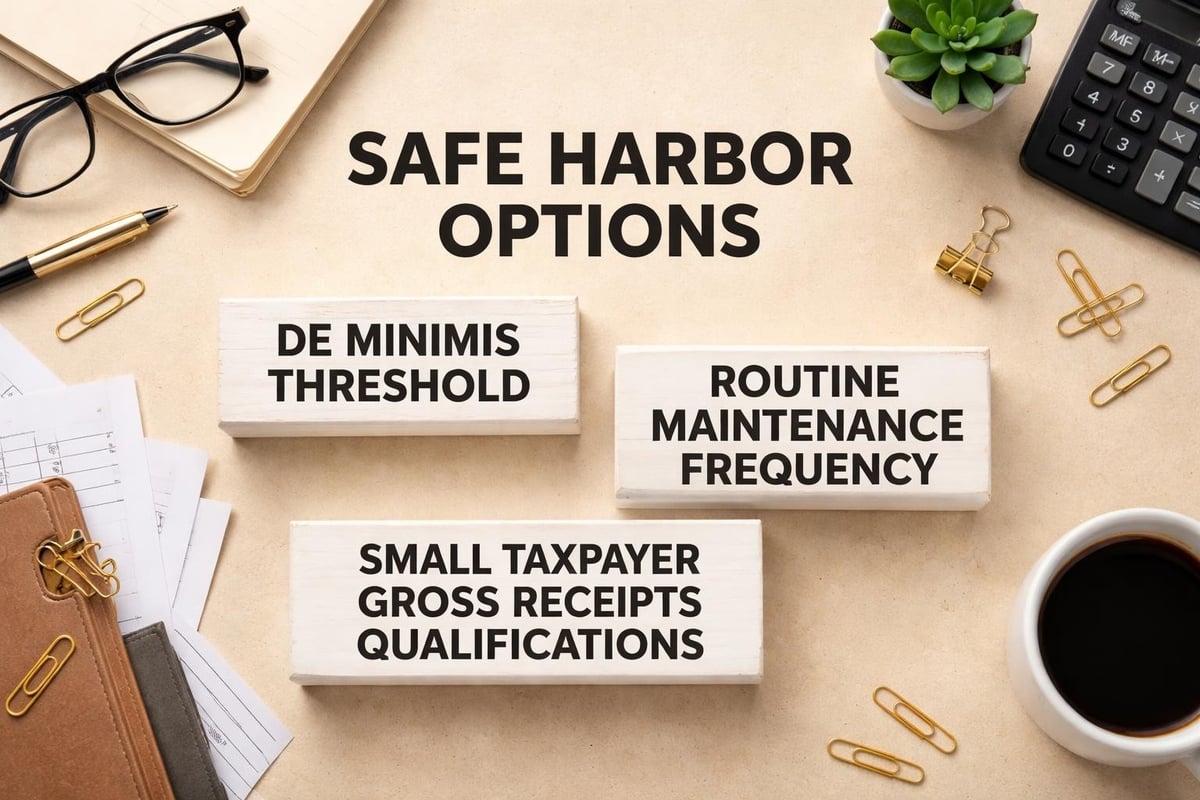
  • De minimis safe harbor election allows businesses to deduct qualifying property costing below a specified threshold
  • Routine maintenance safe harbor permits deductions for recurring activities that keep property in ordinary efficient operating condition
  • Small taxpayer safe harbor provides simplified treatment for eligible businesses with lower average annual gross receipts
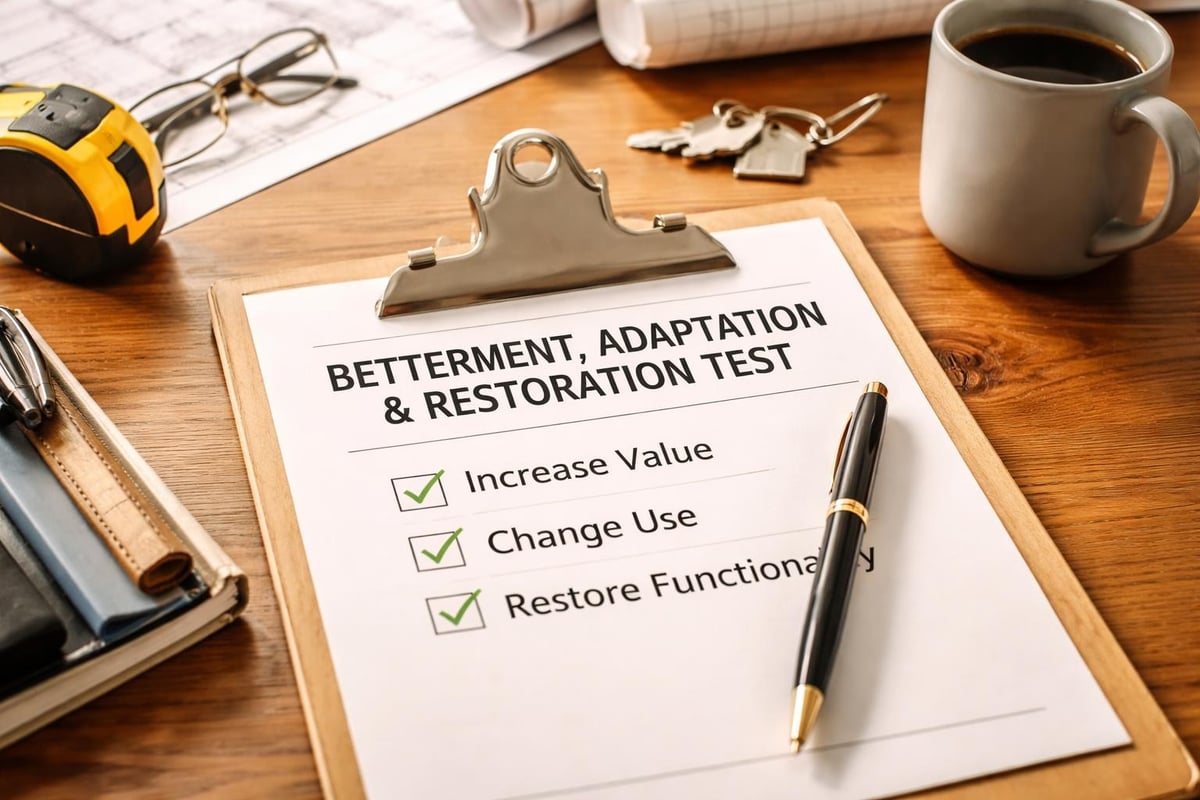
  • Betterment, adaptation, and restoration (BAR) test determines whether improvements must be capitalized

These components work together to create a comprehensive system that balances the need for accurate financial reporting with practical considerations for business operations. The capitalization rules and safe harbor elections provide multiple pathways for organizations to optimize their tax positions within compliant frameworks.
BAR test criteria

Capitalization Versus Deduction Decisions

Determining whether an expenditure should be capitalized or deducted represents one of the most consequential decisions under tangible property regulations. This classification affects not only current-year tax liability but also future depreciation schedules and financial statement presentation. The regulations provide specific tests and criteria to guide this determination, though application often requires professional judgment and detailed documentation.

The Betterment-Adaptation-Restoration Framework

The BAR test serves as the primary analytical tool for evaluating whether improvements to tangible property must be capitalized. This three-pronged assessment examines different aspects of the expenditure:

Betterment occurs when an improvement increases the value, strength, or quality of the property beyond its original condition. This includes fixing a material defect, enhancing the property's capacity or productivity, or addressing a weakness that arose during ownership. When automation solutions enhance manufacturing equipment capabilities, for instance, these enhancements typically constitute betterments requiring capitalization.

Adaptation involves modifying property for a use that differs significantly from its original intended purpose. Converting office space into specialized laboratory facilities or repurposing warehouse areas for cold storage would trigger adaptation rules. Organizations implementing AI and automation solutions may need to adapt physical facilities, creating capitalization requirements.

Restoration applies when expenditures return property to its former condition after deterioration or damage, rebuild property to a like-new state, or replace major components or substantial structural parts. Understanding restoration rules becomes particularly relevant for businesses managing aging infrastructure or recovering from casualty events.

BAR Component Triggers Capitalization When Example Scenario
Betterment Fixes material defect or increases capacity Upgrading HVAC system efficiency by 40%
Adaptation Changes property to different use Converting retail space to medical clinic
Restoration Returns property to like-new condition Replacing entire building roof structure

Safe Harbor Elections and Tax Planning Opportunities

Tangible property regulations include several safe harbor provisions that offer flexibility and simplification for qualifying businesses. These elections provide predictable treatment for certain expenditures and can reduce administrative burden while optimizing tax outcomes. Strategic use of safe harbor elections requires advance planning and timely election filing with tax returns.

De Minimis Safe Harbor for Small Purchases

The de minimis safe harbor allows businesses to deduct amounts paid for tangible property up to a specified dollar threshold. For businesses with applicable financial statements, this threshold is $5,000 per invoice or item. For those without applicable financial statements, the limit is $2,500. This election must be made annually and requires written accounting procedures in place at the beginning of the tax year.

This provision significantly streamlines accounting for organizations that purchase numerous smaller equipment items, tools, or technology assets. Rather than capitalizing and depreciating hundreds of individual items, businesses can claim immediate deductions, improving cash flow and reducing record-keeping complexity.

Routine Maintenance Safe Harbor Benefits

The routine maintenance safe harbor permits current deduction of costs for recurring activities expected to keep property in ordinary efficient operating condition. To qualify, activities must be performed more than once during the property's class life, or in the case of buildings, more than once during a 10-year period.

This safe harbor proves particularly valuable for organizations with extensive equipment fleets or building portfolios. Regular HVAC servicing, equipment calibration, and preventive maintenance programs often qualify for this treatment. Companies focused on operational efficiency can leverage this provision to align tax treatment with ongoing maintenance strategies.
Safe harbor election types

Small Taxpayer Safe Harbor Advantages

Businesses with average annual gross receipts of $10 million or less over the prior three years may elect the small taxpayer safe harbor. This election allows immediate deduction of amounts paid for repairs, maintenance, and improvements to eligible building property, provided the total amount doesn't exceed the lesser of $10,000 or 2% of the building's unadjusted basis.

This simplified approach reduces compliance burden for qualifying small and mid-sized businesses. Organizations serving SMB clients should evaluate whether this election aligns with their financial profiles and building-related expenditure patterns.

Unit of Property Determination

One of the most technical yet consequential aspects of tangible property regulations involves correctly identifying the "unit of property" for capitalization analysis. This determination establishes the appropriate level at which to evaluate whether expenditures represent improvements requiring capitalization or repairs eligible for deduction. Incorrect unit of property identification can lead to systematic misapplication of the regulations.

For buildings, the regulations identify nine distinct systems that each constitute separate units of property:

  • HVAC systems
  • Plumbing systems
  • Electrical systems
  • Escalators and elevators
  • Fire protection and alarm systems
  • Security systems
  • Gas distribution systems
  • Other structural components

For property other than buildings, the unit of property generally comprises all functionally interdependent components. Components are functionally interdependent when placing one component in service depends on being placed in service with the other components. This principle applies to manufacturing equipment, vehicles, and other operational assets.

Property Classification Impact on Depreciation

Properly classifying tangible property affects not only capitalization decisions but also depreciation methods and recovery periods. The Modified Accelerated Cost Recovery System (MACRS) assigns different class lives to various property types, ranging from three years for certain manufacturing equipment to 39 years for nonresidential real property.

Understanding these classifications becomes essential for accurate financial modeling and tax planning. Businesses implementing automation and integration solutions must carefully evaluate whether technology installations qualify for accelerated depreciation under specific asset classes or must follow longer building depreciation schedules.

State-Level Variations and Compliance Considerations

While federal tangible property regulations provide the primary framework, state tax jurisdictions may impose additional or different requirements. Organizations operating across multiple states must navigate varying definitions, valuation methodologies, and compliance obligations. These differences create complexity but also present opportunities for strategic tax planning at the state level.

California regulations, for example, provide specific guidance on qualified property definitions and valuation approaches that may differ from federal standards. Similarly, Florida appraisal guidelines and New York property factor computations establish jurisdiction-specific frameworks that impact multi-state operations.

Organizations must maintain systems capable of tracking tangible property across different jurisdictions while applying appropriate rules for each location. This complexity underscores the value of robust property management systems and expert advisory support for compliance assurance.

Documentation and Substantiation Requirements

Effective compliance with tangible property regulations demands comprehensive documentation and substantiation practices. The IRS expects taxpayers to maintain detailed records supporting their treatment of expenditures as either capital improvements or deductible repairs. Inadequate documentation represents one of the primary vulnerabilities organizations face during tax audits.

Essential Documentation Elements

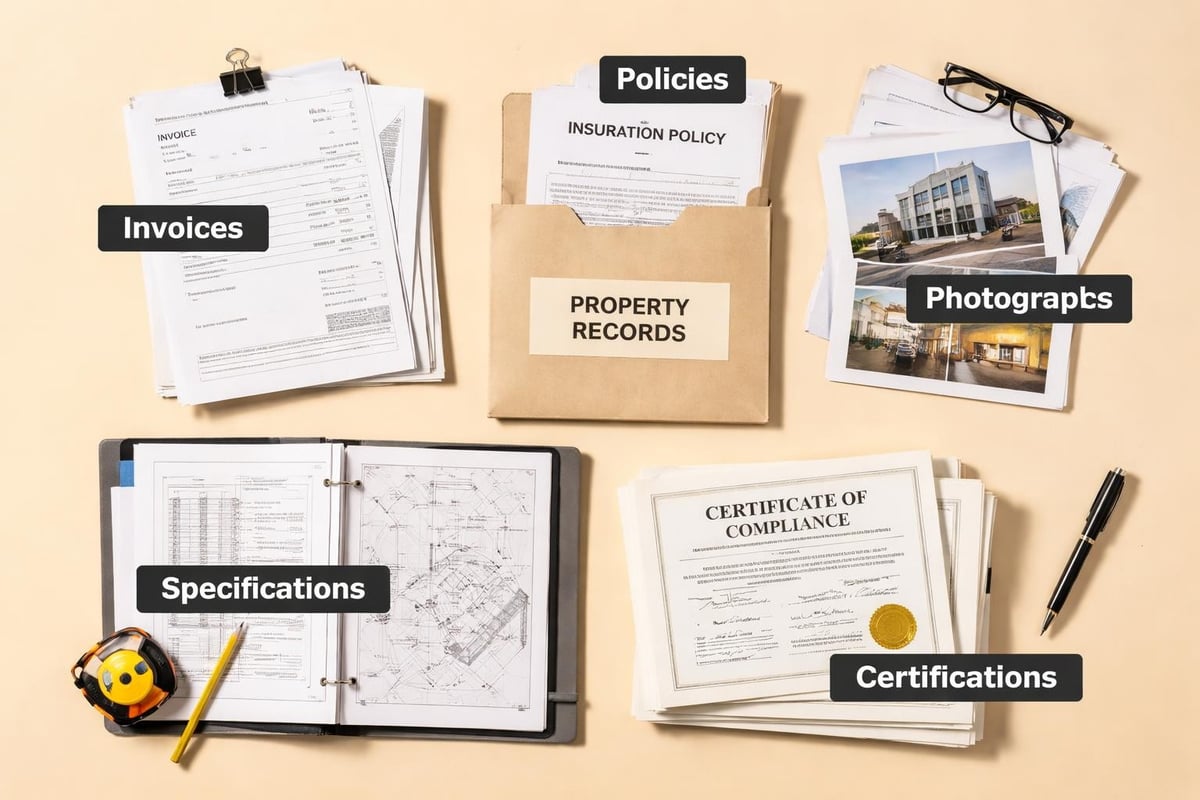
Strong substantiation includes:

  1. Detailed invoices and contracts specifying the nature and scope of work performed
  2. Written policies and procedures governing capitalization thresholds and safe harbor elections
  3. Property records identifying units of property, acquisition dates, and basis amounts
  4. Photographic evidence documenting property condition before and after improvements
  5. Technical specifications describing functional capabilities and changes
  6. Vendor certifications confirming routine maintenance nature of services

Organizations should implement document retention policies ensuring accessibility of supporting records throughout applicable statute of limitations periods. Digital document management systems enhance retrieval capabilities while reducing physical storage requirements.
Documentation requirements

Integration with Financial Systems

Effective tangible property management requires integration between tax compliance processes and core financial systems. Many organizations struggle with disconnects between accounts payable systems, fixed asset registers, and tax workpapers. These gaps create risks of inconsistent treatment, missed elections, and compliance failures.

Modern automation solutions can bridge these divides by creating workflows that capture necessary classification decisions at the point of invoice approval. When purchasing departments and accounts payable teams understand capitalization criteria, front-end data capture improves, reducing downstream rework and audit risk.

Industry-Specific Applications and Challenges

Different industries face unique tangible property regulation challenges based on their asset profiles and operational models. Healthcare organizations manage specialized medical equipment and facility improvements subject to specific regulatory considerations. Hospitality businesses navigate frequent renovation cycles and property enhancement programs. Understanding industry-specific applications enables more effective compliance and planning.

Healthcare Sector Considerations

Healthcare organizations contend with substantial tangible property investments in medical equipment, diagnostic technology, and facility infrastructure. The rapid pace of medical technology advancement creates frequent equipment replacement cycles. Determining whether upgrades constitute betterments or routine maintenance requires careful analysis of functional capability changes versus simple technological refreshes.

Federal property management guidance from entities like the Administration for Children and Families adds another compliance layer for organizations receiving federal funding. These requirements may impose additional tracking and disposition rules beyond standard tax regulations.

Hospitality and Real Estate Intensive Businesses

Hospitality operations and property-intensive enterprises face continuous property improvement needs. Guest room renovations, common area enhancements, and system upgrades occur regularly as businesses maintain competitive positioning. The tangible property regulations guide provides specialized insights for real estate businesses navigating these challenges.

Distinguishing between capitalized improvements and deductible repairs becomes particularly consequential given the volume and frequency of expenditures. Strategic use of safe harbor elections and proper unit of property determinations can significantly impact financial results.

Strategic Planning and Organizational Optimization

Beyond compliance obligations, tangible property regulations present strategic planning opportunities for forward-thinking organizations. Aligning asset acquisition timing, expenditure bundling approaches, and election strategies with business objectives creates value beyond mere tax minimization. Sophisticated planning considers cash flow optimization, financial reporting impacts, and operational efficiency goals.

Multi-Year Planning Approaches

Organizations can enhance outcomes through multi-year planning that anticipates future expenditures and coordinates timing to maximize beneficial elections. For businesses expecting significant property improvements, evaluating whether to accelerate or defer work based on taxable income projections, safe harbor eligibility, and strategic priorities creates optimization opportunities.

Scenario modeling helps quantify the financial impact of different approaches. Comparing the present value of tax benefits from various treatment strategies reveals optimal paths forward. This analytical rigor transforms compliance activities into value-creation exercises.

Technology Enablement and Process Automation

Manual tangible property tracking and compliance processes create inefficiency and increase error risk. Organizations investing in specialized fixed asset management software, automated workflow tools, and integrated financial systems realize substantial benefits. These technological solutions reduce manual hours, improve accuracy, and provide real-time visibility into property portfolios.

Integration between purchasing systems, project management platforms, and tax compliance tools creates seamless data flows that capture decisions at optimal intervention points. Rather than retrospectively classifying expenditures during tax preparation, real-time classification during procurement reduces workload spikes and improves decision quality.

Risk Management and Audit Preparedness

Tangible property regulations represent a high-priority audit focus area for tax authorities. The subjective nature of some determinations, the material dollar amounts involved, and the frequency of taxpayer errors combine to make this an attractive examination target. Organizations must approach compliance with recognition of audit risk and implement appropriate risk management strategies.

Common Audit Triggers and Vulnerabilities

Several patterns increase audit scrutiny probability:

Risk Factor Audit Concern Mitigation Strategy
Inconsistent treatment Same types of expenditures treated differently Establish clear written policies and training
Aggressive positions Deducting clearly capital items Conservative application with documented analysis
Missing elections Claiming benefits without proper filing Election tracking calendar and confirmation
Poor documentation Inadequate substantiation of repair treatment Comprehensive documentation protocols

Organizations should conduct periodic internal reviews assessing compliance quality and identifying improvement opportunities. Self-audit processes reveal vulnerabilities before regulatory authorities identify them, enabling proactive remediation.

Professional Advisory Relationships

Given the complexity and materiality of tangible property regulations, many organizations benefit from external advisory relationships with tax professionals specializing in this area. These experts provide technical guidance on complex determinations, review compliance positions for reasonableness, and represent businesses during audits.

Selecting advisors with deep expertise in your specific industry enhances value delivery. Professionals familiar with healthcare, hospitality, manufacturing, or non-profit sector dynamics bring relevant experience to bear on organization-specific challenges.

Emerging Trends and Future Developments

The landscape of tangible property regulations continues to evolve as business models change, new technologies emerge, and regulatory authorities respond to compliance challenges. Organizations must monitor developments to maintain effective compliance and capitalize on planning opportunities. Several trends warrant particular attention in 2026 and beyond.

Technology and Digital Asset Treatment

As businesses increasingly invest in cloud infrastructure, software platforms, and digital capabilities, questions arise regarding the application of tangible property regulations to these assets. While traditional tangible property refers to physical assets, the lines blur with technology investments that include both hardware and integrated software components.

Regulatory guidance continues developing in this area, but uncertainty remains regarding optimal treatment of various technology expenditures. Organizations should document their positions carefully and monitor guidance updates affecting their specific technology investments.

Sustainability and Environmental Improvements

Growing focus on environmental sustainability drives investment in energy-efficient systems, renewable energy installations, and environmental remediation projects. These expenditures raise tangible property regulation questions regarding capitalization treatment and qualification for specialized tax incentives. Coordinating tangible property analysis with renewable energy credits, energy efficiency deductions, and environmental incentives requires integrated planning.

Organizations pursuing sustainability initiatives should evaluate whether improvements qualify for accelerated depreciation, specialized deductions, or other beneficial tax treatment beyond standard tangible property rules. This holistic approach maximizes financial returns on environmental investments.

Regulatory Simplification Initiatives

Tax authorities periodically update tangible property regulations to address compliance challenges and simplify administration. Recent years have seen threshold adjustments, safe harbor expansions, and clarifying guidance addressing common questions. Businesses should stay informed about regulatory updates that may provide new planning opportunities or require process adjustments.

Professional development, industry publications, and advisory relationships help organizations remain current with regulatory evolution. Proactive monitoring enables timely implementation of beneficial changes rather than reactive scrambling to achieve compliance.


Mastering tangible property regulations requires ongoing attention, robust systems, and strategic thinking that extends beyond mere compliance to value creation. Organizations that invest in understanding these rules, implementing effective processes, and aligning tax treatment with business objectives realize substantial financial benefits. As businesses navigate the complexities of asset management, capitalization decisions, and tax optimization, partnering with experts who understand both regulatory requirements and operational efficiency becomes invaluable. Nero and Associates, Inc. helps organizations streamline their financial processes, implement automation solutions that enhance compliance accuracy, and develop strategies that improve bottom-line performance while reducing manual workload.

Tangible Property Regulations: A Guide for Businesses

Understanding the financial and tax implications of asset management is critical for organizations aiming to optimize their operational efficiency and bottom-line performance. Tangible property regulations represent a complex but essential framework that determines how businesses treat expenditures related to physical assets. These rules, established by the Internal Revenue Service, govern whether costs associated with acquiring, producing, or improving tangible property should be capitalized as assets or deducted as current expenses. For businesses seeking to maximize tax efficiency while maintaining compliance, mastering these regulations is not optional but imperative.

The Foundation of Tangible Property Regulations

Tangible property regulations provide the structural framework for how organizations classify and account for expenditures on physical assets. These rules distinguish between routine maintenance expenses that can be immediately deducted and capital improvements that must be depreciated over time. The IRS Tangible Property Regulations establish clear guidelines that impact financial reporting, tax liability, and strategic asset management decisions.

The regulations apply to a broad spectrum of tangible assets, including buildings, machinery, equipment, vehicles, and furniture. Understanding which expenses qualify for immediate deduction versus capitalization can significantly impact cash flow and tax planning strategies. Organizations that fail to properly apply these rules may face audit risks, penalties, and missed opportunities for tax optimization.

Key Components of the Regulatory Framework

The tangible property regulations encompass several critical elements that businesses must navigate:

  • De minimis safe harbor election allows businesses to deduct qualifying property costing below a specified threshold
  • Routine maintenance safe harbor permits deductions for recurring activities that keep property in ordinary efficient operating condition
  • Small taxpayer safe harbor provides simplified treatment for eligible businesses with lower average annual gross receipts
  • Betterment, adaptation, and restoration (BAR) test determines whether improvements must be capitalized

These components work together to create a comprehensive system that balances the need for accurate financial reporting with practical considerations for business operations. The capitalization rules and safe harbor elections provide multiple pathways for organizations to optimize their tax positions within compliant frameworks.

BAR test criteria

Capitalization Versus Deduction Decisions

Determining whether an expenditure should be capitalized or deducted represents one of the most consequential decisions under tangible property regulations. This classification affects not only current-year tax liability but also future depreciation schedules and financial statement presentation. The regulations provide specific tests and criteria to guide this determination, though application often requires professional judgment and detailed documentation.

The Betterment-Adaptation-Restoration Framework

The BAR test serves as the primary analytical tool for evaluating whether improvements to tangible property must be capitalized. This three-pronged assessment examines different aspects of the expenditure:

Betterment occurs when an improvement increases the value, strength, or quality of the property beyond its original condition. This includes fixing a material defect, enhancing the property's capacity or productivity, or addressing a weakness that arose during ownership. When automation solutions enhance manufacturing equipment capabilities, for instance, these enhancements typically constitute betterments requiring capitalization.

Adaptation involves modifying property for a use that differs significantly from its original intended purpose. Converting office space into specialized laboratory facilities or repurposing warehouse areas for cold storage would trigger adaptation rules. Organizations implementing AI and automation solutions may need to adapt physical facilities, creating capitalization requirements.

Restoration applies when expenditures return property to its former condition after deterioration or damage, rebuild property to a like-new state, or replace major components or substantial structural parts. Understanding restoration rules becomes particularly relevant for businesses managing aging infrastructure or recovering from casualty events.

BAR Component Triggers Capitalization When Example Scenario
Betterment Fixes material defect or increases capacity Upgrading HVAC system efficiency by 40%
Adaptation Changes property to different use Converting retail space to medical clinic
Restoration Returns property to like-new condition Replacing entire building roof structure

Safe Harbor Elections and Tax Planning Opportunities

Tangible property regulations include several safe harbor provisions that offer flexibility and simplification for qualifying businesses. These elections provide predictable treatment for certain expenditures and can reduce administrative burden while optimizing tax outcomes. Strategic use of safe harbor elections requires advance planning and timely election filing with tax returns.

De Minimis Safe Harbor for Small Purchases

The de minimis safe harbor allows businesses to deduct amounts paid for tangible property up to a specified dollar threshold. For businesses with applicable financial statements, this threshold is $5,000 per invoice or item. For those without applicable financial statements, the limit is $2,500. This election must be made annually and requires written accounting procedures in place at the beginning of the tax year.

This provision significantly streamlines accounting for organizations that purchase numerous smaller equipment items, tools, or technology assets. Rather than capitalizing and depreciating hundreds of individual items, businesses can claim immediate deductions, improving cash flow and reducing record-keeping complexity.

Routine Maintenance Safe Harbor Benefits

The routine maintenance safe harbor permits current deduction of costs for recurring activities expected to keep property in ordinary efficient operating condition. To qualify, activities must be performed more than once during the property's class life, or in the case of buildings, more than once during a 10-year period.

This safe harbor proves particularly valuable for organizations with extensive equipment fleets or building portfolios. Regular HVAC servicing, equipment calibration, and preventive maintenance programs often qualify for this treatment. Companies focused on operational efficiency can leverage this provision to align tax treatment with ongoing maintenance strategies.

Safe harbor election types

Small Taxpayer Safe Harbor Advantages

Businesses with average annual gross receipts of $10 million or less over the prior three years may elect the small taxpayer safe harbor. This election allows immediate deduction of amounts paid for repairs, maintenance, and improvements to eligible building property, provided the total amount doesn't exceed the lesser of $10,000 or 2% of the building's unadjusted basis.

This simplified approach reduces compliance burden for qualifying small and mid-sized businesses. Organizations serving SMB clients should evaluate whether this election aligns with their financial profiles and building-related expenditure patterns.

Unit of Property Determination

One of the most technical yet consequential aspects of tangible property regulations involves correctly identifying the "unit of property" for capitalization analysis. This determination establishes the appropriate level at which to evaluate whether expenditures represent improvements requiring capitalization or repairs eligible for deduction. Incorrect unit of property identification can lead to systematic misapplication of the regulations.

For buildings, the regulations identify nine distinct systems that each constitute separate units of property:

  • HVAC systems
  • Plumbing systems
  • Electrical systems
  • Escalators and elevators
  • Fire protection and alarm systems
  • Security systems
  • Gas distribution systems
  • Other structural components

For property other than buildings, the unit of property generally comprises all functionally interdependent components. Components are functionally interdependent when placing one component in service depends on being placed in service with the other components. This principle applies to manufacturing equipment, vehicles, and other operational assets.

Property Classification Impact on Depreciation

Properly classifying tangible property affects not only capitalization decisions but also depreciation methods and recovery periods. The Modified Accelerated Cost Recovery System (MACRS) assigns different class lives to various property types, ranging from three years for certain manufacturing equipment to 39 years for nonresidential real property.

Understanding these classifications becomes essential for accurate financial modeling and tax planning. Businesses implementing automation and integration solutions must carefully evaluate whether technology installations qualify for accelerated depreciation under specific asset classes or must follow longer building depreciation schedules.

State-Level Variations and Compliance Considerations

While federal tangible property regulations provide the primary framework, state tax jurisdictions may impose additional or different requirements. Organizations operating across multiple states must navigate varying definitions, valuation methodologies, and compliance obligations. These differences create complexity but also present opportunities for strategic tax planning at the state level.

California regulations, for example, provide specific guidance on qualified property definitions and valuation approaches that may differ from federal standards. Similarly, Florida appraisal guidelines and New York property factor computations establish jurisdiction-specific frameworks that impact multi-state operations.

Organizations must maintain systems capable of tracking tangible property across different jurisdictions while applying appropriate rules for each location. This complexity underscores the value of robust property management systems and expert advisory support for compliance assurance.

Documentation and Substantiation Requirements

Effective compliance with tangible property regulations demands comprehensive documentation and substantiation practices. The IRS expects taxpayers to maintain detailed records supporting their treatment of expenditures as either capital improvements or deductible repairs. Inadequate documentation represents one of the primary vulnerabilities organizations face during tax audits.

Essential Documentation Elements

Strong substantiation includes:

  1. Detailed invoices and contracts specifying the nature and scope of work performed
  2. Written policies and procedures governing capitalization thresholds and safe harbor elections
  3. Property records identifying units of property, acquisition dates, and basis amounts
  4. Photographic evidence documenting property condition before and after improvements
  5. Technical specifications describing functional capabilities and changes
  6. Vendor certifications confirming routine maintenance nature of services

Organizations should implement document retention policies ensuring accessibility of supporting records throughout applicable statute of limitations periods. Digital document management systems enhance retrieval capabilities while reducing physical storage requirements.

Documentation requirements

Integration with Financial Systems

Effective tangible property management requires integration between tax compliance processes and core financial systems. Many organizations struggle with disconnects between accounts payable systems, fixed asset registers, and tax workpapers. These gaps create risks of inconsistent treatment, missed elections, and compliance failures.

Modern automation solutions can bridge these divides by creating workflows that capture necessary classification decisions at the point of invoice approval. When purchasing departments and accounts payable teams understand capitalization criteria, front-end data capture improves, reducing downstream rework and audit risk.

Industry-Specific Applications and Challenges

Different industries face unique tangible property regulation challenges based on their asset profiles and operational models. Healthcare organizations manage specialized medical equipment and facility improvements subject to specific regulatory considerations. Hospitality businesses navigate frequent renovation cycles and property enhancement programs. Understanding industry-specific applications enables more effective compliance and planning.

Healthcare Sector Considerations

Healthcare organizations contend with substantial tangible property investments in medical equipment, diagnostic technology, and facility infrastructure. The rapid pace of medical technology advancement creates frequent equipment replacement cycles. Determining whether upgrades constitute betterments or routine maintenance requires careful analysis of functional capability changes versus simple technological refreshes.

Federal property management guidance from entities like the Administration for Children and Families adds another compliance layer for organizations receiving federal funding. These requirements may impose additional tracking and disposition rules beyond standard tax regulations.

Hospitality and Real Estate Intensive Businesses

Hospitality operations and property-intensive enterprises face continuous property improvement needs. Guest room renovations, common area enhancements, and system upgrades occur regularly as businesses maintain competitive positioning. The tangible property regulations guide provides specialized insights for real estate businesses navigating these challenges.

Distinguishing between capitalized improvements and deductible repairs becomes particularly consequential given the volume and frequency of expenditures. Strategic use of safe harbor elections and proper unit of property determinations can significantly impact financial results.

Strategic Planning and Organizational Optimization

Beyond compliance obligations, tangible property regulations present strategic planning opportunities for forward-thinking organizations. Aligning asset acquisition timing, expenditure bundling approaches, and election strategies with business objectives creates value beyond mere tax minimization. Sophisticated planning considers cash flow optimization, financial reporting impacts, and operational efficiency goals.

Multi-Year Planning Approaches

Organizations can enhance outcomes through multi-year planning that anticipates future expenditures and coordinates timing to maximize beneficial elections. For businesses expecting significant property improvements, evaluating whether to accelerate or defer work based on taxable income projections, safe harbor eligibility, and strategic priorities creates optimization opportunities.

Scenario modeling helps quantify the financial impact of different approaches. Comparing the present value of tax benefits from various treatment strategies reveals optimal paths forward. This analytical rigor transforms compliance activities into value-creation exercises.

Technology Enablement and Process Automation

Manual tangible property tracking and compliance processes create inefficiency and increase error risk. Organizations investing in specialized fixed asset management software, automated workflow tools, and integrated financial systems realize substantial benefits. These technological solutions reduce manual hours, improve accuracy, and provide real-time visibility into property portfolios.

Integration between purchasing systems, project management platforms, and tax compliance tools creates seamless data flows that capture decisions at optimal intervention points. Rather than retrospectively classifying expenditures during tax preparation, real-time classification during procurement reduces workload spikes and improves decision quality.

Risk Management and Audit Preparedness

Tangible property regulations represent a high-priority audit focus area for tax authorities. The subjective nature of some determinations, the material dollar amounts involved, and the frequency of taxpayer errors combine to make this an attractive examination target. Organizations must approach compliance with recognition of audit risk and implement appropriate risk management strategies.

Common Audit Triggers and Vulnerabilities

Several patterns increase audit scrutiny probability:

Risk Factor Audit Concern Mitigation Strategy
Inconsistent treatment Same types of expenditures treated differently Establish clear written policies and training
Aggressive positions Deducting clearly capital items Conservative application with documented analysis
Missing elections Claiming benefits without proper filing Election tracking calendar and confirmation
Poor documentation Inadequate substantiation of repair treatment Comprehensive documentation protocols

Organizations should conduct periodic internal reviews assessing compliance quality and identifying improvement opportunities. Self-audit processes reveal vulnerabilities before regulatory authorities identify them, enabling proactive remediation.

Professional Advisory Relationships

Given the complexity and materiality of tangible property regulations, many organizations benefit from external advisory relationships with tax professionals specializing in this area. These experts provide technical guidance on complex determinations, review compliance positions for reasonableness, and represent businesses during audits.

Selecting advisors with deep expertise in your specific industry enhances value delivery. Professionals familiar with healthcare, hospitality, manufacturing, or non-profit sector dynamics bring relevant experience to bear on organization-specific challenges.

Emerging Trends and Future Developments

The landscape of tangible property regulations continues to evolve as business models change, new technologies emerge, and regulatory authorities respond to compliance challenges. Organizations must monitor developments to maintain effective compliance and capitalize on planning opportunities. Several trends warrant particular attention in 2026 and beyond.

Technology and Digital Asset Treatment

As businesses increasingly invest in cloud infrastructure, software platforms, and digital capabilities, questions arise regarding the application of tangible property regulations to these assets. While traditional tangible property refers to physical assets, the lines blur with technology investments that include both hardware and integrated software components.

Regulatory guidance continues developing in this area, but uncertainty remains regarding optimal treatment of various technology expenditures. Organizations should document their positions carefully and monitor guidance updates affecting their specific technology investments.

Sustainability and Environmental Improvements

Growing focus on environmental sustainability drives investment in energy-efficient systems, renewable energy installations, and environmental remediation projects. These expenditures raise tangible property regulation questions regarding capitalization treatment and qualification for specialized tax incentives. Coordinating tangible property analysis with renewable energy credits, energy efficiency deductions, and environmental incentives requires integrated planning.

Organizations pursuing sustainability initiatives should evaluate whether improvements qualify for accelerated depreciation, specialized deductions, or other beneficial tax treatment beyond standard tangible property rules. This holistic approach maximizes financial returns on environmental investments.

Regulatory Simplification Initiatives

Tax authorities periodically update tangible property regulations to address compliance challenges and simplify administration. Recent years have seen threshold adjustments, safe harbor expansions, and clarifying guidance addressing common questions. Businesses should stay informed about regulatory updates that may provide new planning opportunities or require process adjustments.

Professional development, industry publications, and advisory relationships help organizations remain current with regulatory evolution. Proactive monitoring enables timely implementation of beneficial changes rather than reactive scrambling to achieve compliance.


Mastering tangible property regulations requires ongoing attention, robust systems, and strategic thinking that extends beyond mere compliance to value creation. Organizations that invest in understanding these rules, implementing effective processes, and aligning tax treatment with business objectives realize substantial financial benefits. As businesses navigate the complexities of asset management, capitalization decisions, and tax optimization, partnering with experts who understand both regulatory requirements and operational efficiency becomes invaluable. Nero and Associates, Inc. helps organizations streamline their financial processes, implement automation solutions that enhance compliance accuracy, and develop strategies that improve bottom-line performance while reducing manual workload.

Website developed in accordance with Web Content Accessibility Guidelines 2.2.
If you encounter any issues while using this site, please contact us: 215.526.5126