

Organizations face increasing pressure to manage escalating healthcare costs while maintaining competitive employee benefits packages. Benefits brokers have evolved from transactional insurance agents into strategic advisors who deliver measurable value through cost optimization, compliance expertise, and comprehensive wellness solutions. This transformation reflects the growing complexity of employee benefits administration and the critical need for specialized guidance in navigating regulatory landscapes, technology integration, and workforce expectations.
The Expanding Role of Benefits Brokers in 2026
The traditional perception of benefits brokers as simple intermediaries between employers and insurance carriers has fundamentally shifted. Modern benefits brokers serve as strategic partners who address multiple dimensions of organizational performance. Research from LIMRA indicates that employer reliance on benefits brokers has increased significantly, particularly for benefits administration guidance and technology implementation.
Today's benefits brokers deliver comprehensive services that extend far beyond plan selection:
- Strategic benefits planning aligned with organizational objectives
- Compliance monitoring and regulatory guidance
- Technology evaluation and implementation support
- Employee communication and engagement strategies
- Data analytics for benefits optimization
- Vendor management and performance oversight
- Cost containment initiatives and alternative funding strategies
The scope of these responsibilities reflects the recognition that employee benefits directly impact recruitment, retention, productivity, and overall organizational health. Benefits brokers who understand this interconnected ecosystem provide value that transcends traditional insurance placement.

Cost Savings and Financial Optimization
Financial performance remains a primary driver for organizations engaging benefits brokers. Rising healthcare costs are increasing demand for benefits brokers’ expertise, as employers seek assistance in managing expenses while maintaining quality coverage. The ability to deliver measurable cost savings distinguishes effective benefits brokers from commodity vendors.
Data-Driven Cost Management Strategies
Benefits brokers leverage sophisticated analytics to identify cost-saving opportunities that organizations might overlook when managing benefits internally. These professionals analyze claims data, utilization patterns, and market trends to recommend targeted interventions.
| Cost Management Approach | Typical Savings Range | Implementation Complexity |
|---|---|---|
| Plan design optimization | 8-15% annual savings | Medium |
| Alternative funding models | 12-25% annual savings | High |
| Wellness program integration | 5-12% long-term savings | Medium |
| Pharmacy benefit management | 10-20% annual savings | Low to Medium |
| Telemedicine implementation | 3-8% annual savings | Low |
Organizations that partner with skilled benefits brokers often discover opportunities for improvement across multiple benefit categories simultaneously. This comprehensive approach ensures that cost reductions in one area do not create unintended consequences elsewhere in the benefits portfolio.
Performance-Based Outcomes
The shift toward performance-based consulting aligns perfectly with how modern benefits brokers operate. Rather than focusing solely on premium rates, these professionals examine total cost of ownership, employee satisfaction metrics, and health outcomes. Solutions that emphasize automation and integration enable benefits brokers to deliver more precise recommendations based on real-time data analysis.
Benefits brokers who adopt performance-based models typically establish clear metrics at engagement inception, including premium cost targets, employee participation rates, health risk reduction goals, and administrative efficiency improvements. This transparency creates accountability and ensures alignment between broker incentives and organizational objectives.
Compliance Expertise and Risk Mitigation
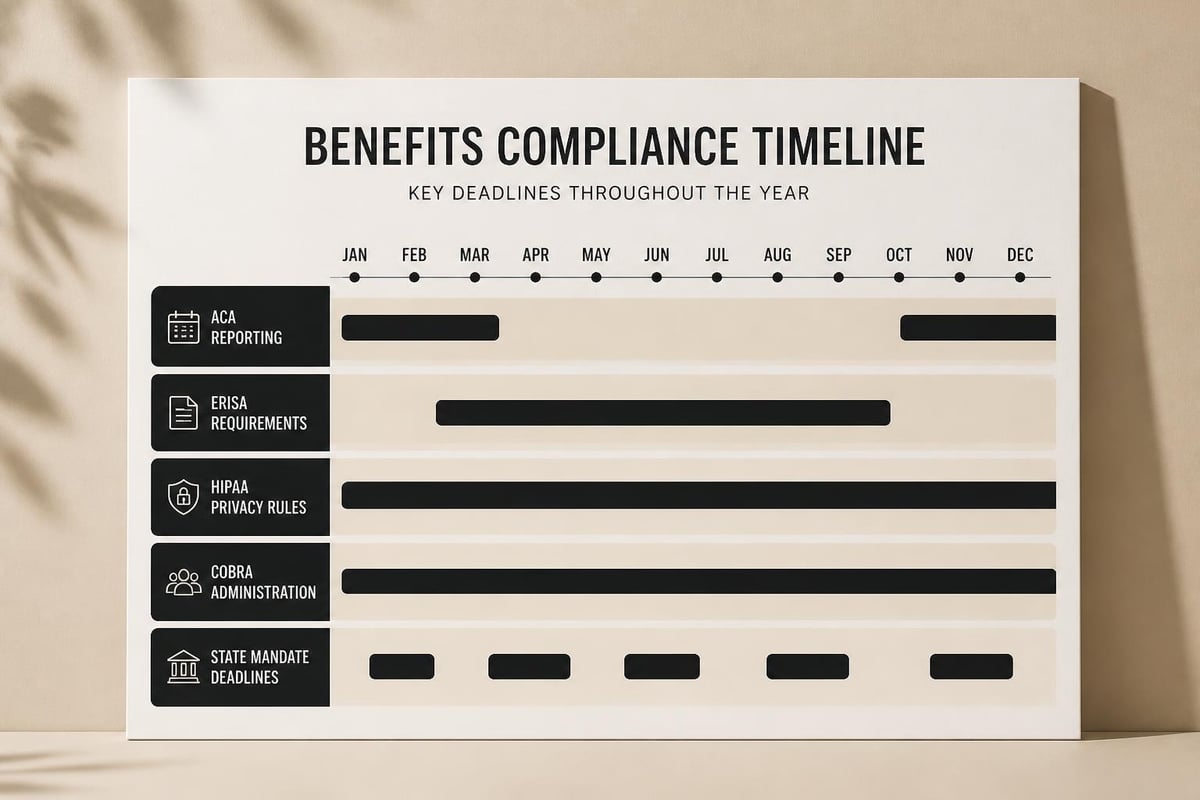
The regulatory environment surrounding employee benefits grows increasingly complex each year. Benefits brokers serve as essential guides through this labyrinth of federal and state requirements, helping organizations avoid costly penalties while maintaining compliant programs.
Navigating Regulatory Complexity
Organizations face compliance obligations under multiple regulatory frameworks, including the Affordable Care Act, ERISA, HIPAA, COBRA, and numerous state-specific mandates. Benefits brokers maintain current knowledge of these requirements and translate regulatory language into actionable implementation steps.
Consider the compliance challenges facing mid-sized organizations:
- Annual reporting requirements across multiple government agencies
- Plan document updates reflecting legislative changes
- Notice distribution to employees and beneficiaries
- Non-discrimination testing for certain benefit programs
- Privacy and security protocols for health information
- State-specific mandates varying by jurisdiction
Benefits brokers who specialize in compliance reduce the administrative burden on internal teams while minimizing organizational risk exposure. This expertise proves particularly valuable for SMBs navigating mid-market growth, where internal resources may be limited.
Technology Integration and Administrative Efficiency
Key employee benefits trends for 2026 emphasize personalized benefits packages and the integration of AI and automation in benefits administration. Benefits brokers facilitate this technological transformation by evaluating platforms, managing implementations, and ensuring systems deliver promised efficiency gains.
Streamlining Benefits Administration
Manual benefits processes consume thousands of employee hours annually across enrollment, eligibility management, carrier communication, and reporting functions. Benefits brokers identify opportunities to eliminate these inefficiencies through strategic technology deployment.
Modern benefits administration platforms offer capabilities that would have seemed impossible just a few years ago:
- Automated eligibility management with real-time carrier updates
- AI-powered benefits recommendations personalized to employee demographics
- Integrated payroll and benefits deduction eliminating reconciliation errors
- Mobile-first enrollment experiences improving participation rates
- Predictive analytics identifying high-risk populations for intervention
Organizations implementing these solutions through experienced benefits brokers report dramatic improvements in administrative efficiency. The time savings achieved through automation can be redirected toward strategic initiatives that drive organizational growth, similar to benefits realized through business automation for operational efficiency.
Selecting the Right Technology Partners
The benefits technology landscape includes hundreds of vendors offering seemingly similar solutions. Benefits brokers bring valuable perspective on which platforms deliver genuine value versus those that overpromise and underdeliver. This guidance helps organizations avoid expensive implementation failures.
Effective benefits brokers evaluate technology solutions across multiple dimensions:
- Integration capabilities with existing HR and payroll systems
- User experience for both administrators and employees
- Vendor stability and long-term viability
- Customer support quality and responsiveness
- Compliance feature robustness
- Reporting and analytics functionality
- Total cost of ownership including hidden fees
Employee Wellness and Engagement
Expanding advisory roles for benefits brokers increasingly include comprehensive wellness program development and employee engagement strategies. This evolution reflects growing recognition that employee health directly impacts organizational performance through reduced absenteeism, improved productivity, and lower healthcare costs.
Comprehensive Wellness Strategy Development
Benefits brokers design wellness initiatives that address mental, physical, and financial health dimensions. This holistic approach recognizes the interconnected nature of employee wellbeing and organizational success.
| Wellness Component | Program Examples | Measurable Outcomes |
|---|---|---|
| Physical Health | Biometric screenings, fitness challenges, nutrition counseling | Reduced health risks, lower claims costs |
| Mental Health | EAP services, stress management, resilience training | Decreased absenteeism, improved engagement |
| Financial Wellness | Retirement planning, debt management, emergency savings | Reduced financial stress, better benefits utilization |
Organizations that implement comprehensive wellness programs with benefits broker guidance typically see improvements across multiple performance indicators. Employee participation rates increase when programs are well-designed and effectively communicated, creating positive feedback loops that reinforce healthy behaviors.
Strategic Communication and Education
Even the most comprehensive benefits package delivers limited value if employees do not understand or utilize available resources. Benefits brokers develop communication strategies that cut through information overload and drive meaningful engagement.
Effective communication approaches include:
- Multi-channel messaging reaching employees through preferred platforms
- Personalized content relevant to different demographic segments
- Decision support tools simplifying complex benefit choices
- Year-round education extending beyond annual enrollment periods
- Outcome measurement tracking comprehension and utilization
Benefits brokers who excel at communication create measurable improvements in employee satisfaction scores and benefits utilization rates. This increased engagement translates directly into better health outcomes and improved return on benefits investment.
Market Insights and Competitive Intelligence
Benefits brokers continue to dominate the voluntary market, accounting for over two-thirds of sales. This market position provides valuable perspective on industry trends, emerging solutions, and competitive benchmarking opportunities.
Benchmarking and Best Practices
Benefits brokers work with dozens or hundreds of client organizations across various industries and sizes. This broad exposure creates unique insights into what constitutes competitive benefits packages and where specific organizations stand relative to their peers.
Organizations leveraging benefits broker benchmarking capabilities gain clarity on:
- Benefit offering competitiveness compared to similar employers
- Cost efficiency relative to industry standards
- Plan design effectiveness measured against peer outcomes
- Employee contribution strategies balancing cost-sharing and retention
- Emerging benefit categories gaining traction in the marketplace
This competitive intelligence proves particularly valuable for organizations recruiting in tight labor markets or competing for specialized talent. Benefits brokers translate market data into actionable recommendations that strengthen employer value propositions.

Specialized Expertise for Complex Situations
Certain organizational circumstances require specialized benefits expertise that generalist internal teams may lack. Benefits brokers bring depth of knowledge in niche areas that can prove critical during specific situations or for particular organization types.
Industry-Specific Challenges
Different industries face unique benefits challenges requiring specialized knowledge. Healthcare organizations navigating revenue cycle management complexities need benefits brokers who understand provider networks and clinical workforce dynamics. Non-profit organizations focusing on mission impact require brokers familiar with their unique tax considerations and budget constraints.
Benefits brokers develop expertise in specific verticals, enabling them to anticipate challenges and recommend solutions proven effective in similar environments. This specialization accelerates implementation timelines and reduces trial-and-error experimentation.
Managing Organizational Transitions
Mergers, acquisitions, rapid growth periods, and workforce restructurings create benefits challenges that demand immediate, expert attention. Benefits brokers guide organizations through these transitions while maintaining compliance and minimizing employee disruption.
Transition scenarios where benefits brokers deliver exceptional value include:
- Merger and acquisition integration harmonizing disparate benefits programs
- Multi-state expansion addressing varying regulatory requirements
- Workforce reductions managing COBRA and severance benefits
- Executive compensation planning structuring competitive leadership packages
- Union negotiations balancing collective bargaining obligations with cost management
Future-Proofing Benefits Strategy
Emerging trends for brokers in 2026 highlight increasing importance of compliance expertise and the impact of AI on advisory services. Benefits brokers who help organizations anticipate future developments create resilience against market disruptions and regulatory changes.
Adapting to Workforce Evolution
The composition and expectations of the American workforce continue evolving. Benefits brokers who monitor demographic shifts, generational preferences, and work arrangement trends help organizations stay ahead of employee expectations.
Key workforce trends shaping benefits strategy include:
- Multi-generational workforces requiring diverse benefit options
- Remote and hybrid work models challenging traditional benefit structures
- Gig economy integration blending traditional and contract workers
- Increased focus on work-life balance emphasizing flexibility and time off
- Mental health prioritization demanding comprehensive behavioral health coverage
Organizations partnering with forward-thinking benefits brokers position themselves to attract and retain talent in competitive markets. This strategic advantage compounds over time as employee preferences continue diverging from traditional benefit models.
Leveraging Artificial Intelligence and Automation
The integration of AI and automation technologies represents a fundamental shift in how benefits are administered and optimized. Benefits brokers who understand these capabilities help organizations realize efficiency gains while avoiding implementation pitfalls. Similar to advantages offered through AI and automation integration solutions, benefits technology platforms increasingly leverage machine learning to personalize recommendations and predict utilization patterns.
AI applications transforming benefits administration include:
- Predictive modeling for high-cost claim identification
- Chatbot support providing 24/7 employee assistance
- Automated document processing reducing administrative workload
- Personalization engines matching employees with optimal benefit selections
- Fraud detection protecting organizations from improper claims
Benefits brokers who facilitate successful AI implementation deliver measurable improvements in both employee experience and administrative efficiency. Organizations gain competitive advantages through faster response times, more accurate recommendations, and reduced operational costs.
Measuring Benefits Broker Value
Quantifying the return on investment from benefits broker relationships ensures accountability and informs renewal decisions. Organizations should establish clear performance metrics that align with strategic objectives and evaluate broker contributions against these standards.
Key Performance Indicators
Effective measurement frameworks track multiple dimensions of benefits broker performance:
| KPI Category | Specific Metrics | Target Performance |
|---|---|---|
| Cost Management | Premium trend vs. market, total cost of care | Better than market average |
| Compliance | Audit findings, penalty avoidance | Zero violations |
| Employee Satisfaction | Benefits satisfaction scores, NPS | Top quartile vs. peers |
| Administrative Efficiency | Enrollment completion rates, query resolution time | 95%+ completion, <24 hour response |
| Strategic Value | Recommendations implemented, cost savings identified | Minimum 10:1 ROI |
Organizations that implement structured evaluation processes make more informed decisions about broker relationships and identify opportunities for partnership enhancement. Regular performance reviews create accountability while celebrating successes and addressing shortfalls promptly.
Continuous Improvement Mindset
The most valuable benefits broker relationships embrace continuous improvement principles. Rather than maintaining status quo approaches, these partnerships explore emerging solutions, test innovative programs, and refine strategies based on outcome data.
Benefits brokers committed to continuous improvement actively bring new ideas to client organizations, pilot innovative programs, share lessons learned from other implementations, and invest in ongoing professional development. This proactive approach ensures organizations benefit from the latest thinking and proven practices.
Strategic Partnership Selection
Market drivers impacting employee benefits brokers include rising customer expectations and the need for operational efficiency. Organizations selecting benefits brokers should evaluate capabilities across multiple dimensions to ensure strong partnership alignment.
Evaluation Criteria
Choosing the right benefits broker requires careful assessment of both technical capabilities and cultural fit. Organizations should consider:
- Industry expertise and client portfolio composition
- Service team structure and dedicated resource availability
- Technology platform capabilities and integration support
- Compliance resources and regulatory monitoring processes
- Data analytics sophistication and reporting capabilities
- Communication approach and employee engagement methodologies
- Performance guarantees and accountability mechanisms
The selection process should include reference checks with current clients, particularly those facing similar challenges or operating in comparable environments. Candid discussions about broker strengths and limitations inform realistic expectation-setting.
Building Productive Relationships
Successful benefits broker partnerships require active collaboration from both parties. Organizations maximize value by maintaining open communication channels, sharing strategic objectives and constraints, providing timely data and documentation, participating in recommended programs and initiatives, and evaluating results objectively.
Benefits brokers reciprocate by proactively identifying opportunities, delivering responsive service and support, maintaining transparency about capabilities and limitations, investing in client team education, and demonstrating measurable results. This mutual commitment creates partnerships that deliver sustained value over many years.
Benefits brokers have evolved into strategic partners delivering measurable value through cost optimization, compliance expertise, technology integration, and comprehensive wellness solutions. Organizations that leverage these specialized professionals gain competitive advantages in talent markets while improving financial performance and employee wellbeing. Nero and Associates, Inc. helps organizations maximize the value of their benefits investments through performance-based consulting that integrates AI, automation, and human capital management solutions. Our approach delivers measurable improvements in operational efficiency, cost management, and employee health outcomes that drive bottom-line results.