

Healthcare Analytics: Transforming Data into Outcomes

Share on Facebook
Share on X
Share on LinkedIn

The healthcare industry generates massive volumes of data every single day, from electronic health records and claims processing to patient monitoring devices and administrative systems. Organizations that harness this information through healthcare analytics gain the ability to improve patient outcomes, reduce operational costs, and make evidence-based decisions that directly impact their bottom line. As healthcare systems face increasing pressure to deliver better care at lower costs while managing complex regulatory requirements, analytics has evolved from a competitive advantage to an operational necessity that determines organizational success.

The Foundation of Healthcare Analytics

Healthcare analytics encompasses the systematic use of data and statistical methods to gain insights into patient care, operational performance, and financial outcomes. This discipline transforms raw information from disparate sources into actionable intelligence that drives strategic decision-making across all levels of healthcare organizations.

The foundation rests on several critical data sources. Clinical data from electronic health records provides comprehensive patient histories, treatment plans, and outcomes. Financial data tracks revenue cycles, claim denials, and reimbursement patterns. Operational data monitors bed utilization, staff productivity, and supply chain efficiency. Together, these streams create a holistic view of organizational performance.

Modern healthcare analytics leverages advanced technologies including artificial intelligence, machine learning, and predictive modeling to identify patterns that human analysts might miss. These capabilities enable organizations to move beyond descriptive reporting toward predictive and prescriptive analytics that anticipate future trends and recommend specific actions.

Core Components of Effective Analytics Programs

Successful implementation requires several interconnected elements working in harmony:

  • Data governance frameworks that ensure accuracy, security, and compliance with HIPAA regulations
  • Integration platforms that consolidate information from multiple systems into unified datasets
  • Analytical tools ranging from business intelligence dashboards to advanced statistical software
  • Skilled personnel who can interpret findings and translate them into operational improvements
  • Executive sponsorship that aligns analytics initiatives with strategic organizational goals

Healthcare analytics data integration

Organizations must also establish clear metrics and key performance indicators that align with their specific objectives. The Agency for Healthcare Research and Quality provides comprehensive data tools and resources that support standardized measurement approaches across the industry.

Operational Efficiency Through Data-Driven Insights

Healthcare analytics directly addresses one of the most pressing challenges facing healthcare organizations: operational inefficiency. Manual processes, redundant workflows, and disconnected systems drain resources that could be better allocated to patient care.

Revenue cycle management represents a prime opportunity for analytics-driven improvement. By analyzing claim submission patterns, denial rates, and reimbursement timelines, organizations can identify bottlenecks and implement targeted interventions. This analytical approach reduces the time between service delivery and payment while minimizing revenue leakage from preventable claim denials.

Staffing optimization benefits tremendously from predictive analytics. Historical data on patient volumes, acuity levels, and seasonal variations enables more accurate forecasting of staffing needs. This prevents both understaffing situations that compromise care quality and overstaffing scenarios that inflate labor costs unnecessarily.

Automating Manual Processes

The integration of healthcare analytics with automation technologies eliminates thousands of hours spent on repetitive manual tasks:

  1. Prior authorization processing using rules-based algorithms that automatically approve qualifying requests
  2. Appointment scheduling optimization that reduces no-shows and maximizes provider utilization
  3. Supply chain management with automated reordering based on predictive consumption patterns
  4. Quality reporting generation that compiles regulatory submissions without manual data entry
  5. Patient outreach campaigns triggered by analytical risk stratification models

Understanding data sources for healthcare quality measures provides the foundation for automating quality improvement initiatives effectively.

Process Area Manual Hours (Monthly) Automated Hours Time Savings
Claims Processing 480 120 75%
Quality Reporting 160 40 75%
Patient Scheduling 320 80 75%
Denial Management 240 60 75%

These efficiency gains translate directly into cost savings and improved employee satisfaction, as staff members can focus on higher-value activities requiring human judgment and empathy.

Clinical Outcomes and Population Health Management

Beyond operational metrics, healthcare analytics fundamentally improves the quality of care delivered to patients. Clinical analytics identifies best practices, predicts adverse events, and personalizes treatment approaches based on individual patient characteristics and historical outcomes data.

Risk stratification models analyze patient populations to identify individuals at high risk for specific conditions or complications. This enables proactive interventions before problems escalate, reducing emergency department visits and hospital readmissions while improving patient quality of life.

Chronic disease management programs leverage analytics to monitor patient adherence to treatment protocols, medication compliance, and lifestyle modifications. Real-time alerts notify care teams when patients deviate from recommended plans, enabling timely outreach and support.

Predictive Analytics in Clinical Settings

Predictive models powered by machine learning algorithms anticipate clinical deterioration hours or days before traditional monitoring would detect problems. Sepsis prediction models, readmission risk scores, and fall risk assessments exemplify how analytics saves lives through early intervention.

Resources on healthcare analytics methodologies demonstrate the scientific rigor behind these clinical applications and their proven impact on patient outcomes.
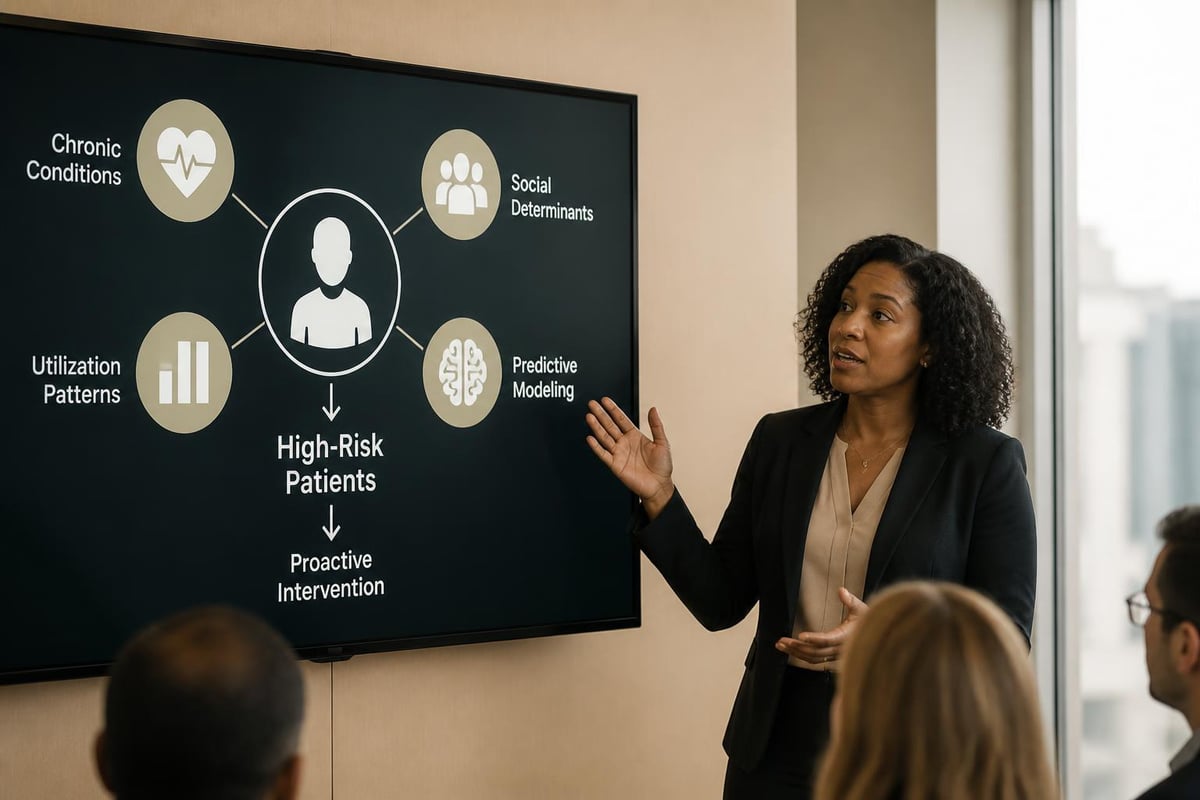
Patient risk stratification

Organizations implementing comprehensive clinical analytics programs report measurable improvements in key quality metrics including reduced mortality rates, decreased hospital-acquired infection rates, and improved patient satisfaction scores. These outcomes align directly with value-based care payment models that reward quality over volume.

Financial Performance and Revenue Optimization

Healthcare analytics transforms financial management by providing unprecedented visibility into revenue cycles, cost structures, and profitability across service lines. This transparency enables data-driven decisions that improve financial sustainability while maintaining care quality.

Payer contract optimization uses analytics to evaluate the profitability of different payer relationships and service categories. Organizations can identify underperforming contracts, negotiate better terms, and make informed decisions about which services to expand or reduce based on actual margin analysis rather than assumptions.

Charge capture analytics ensures that all billable services are documented and coded appropriately. By analyzing patterns in undercoding or missed charges, organizations can implement targeted education programs and workflow improvements that capture previously lost revenue without increasing service volume.

Price Transparency and Competitive Positioning

Analytics enables sophisticated market analysis that informs pricing strategies:

  • Competitive benchmarking against peer institutions for similar services
  • Geographic market analysis identifying underserved populations and service opportunities
  • Service line profitability assessment guiding strategic investment decisions
  • Patient price sensitivity modeling to optimize charity care and payment plans

The Healthcare Data & Analytics Association offers valuable insights into industry benchmarks and best practices for financial analytics implementation.

Technology Infrastructure and Implementation Considerations

Successful healthcare analytics requires robust technological infrastructure capable of handling large volumes of diverse data types while maintaining security and compliance. Cloud-based platforms offer scalability and flexibility that on-premises solutions struggle to match.

Interoperability stands as a critical challenge and opportunity. Healthcare organizations typically operate multiple systems that don't communicate seamlessly. Integration engines and application programming interfaces create bridges between electronic health records, financial systems, scheduling platforms, and other operational tools.

Data quality determines the reliability of analytical insights. Organizations must implement validation rules, cleansing processes, and master data management practices that ensure accuracy and consistency. Garbage in, garbage out remains an unavoidable reality in analytics work.

Building Analytical Capabilities

Organizations face a build-versus-buy decision when developing analytics capabilities:

Approach Advantages Disadvantages
In-house Development Full customization, data control, institutional knowledge High upfront costs, lengthy implementation, ongoing maintenance burden
Vendor Solutions Faster deployment, proven functionality, vendor support Less customization, potential vendor lock-in, recurring licensing costs
Hybrid Model Balance of control and efficiency, phased implementation Complexity in integration, requires skilled management, coordination challenges

Many organizations benefit from partnering with experienced consultancies that bring specialized expertise in healthcare analytics implementation, change management, and optimization. Nero and Associates, Inc. specializes in helping healthcare organizations implement performance-based solutions that deliver measurable results.

Analytics implementation roadmap

Employee Wellness and Workforce Analytics

Healthcare analytics extends beyond patient care and operational efficiency to encompass workforce management and employee wellbeing. The healthcare industry faces persistent challenges with burnout, turnover, and workforce shortages that analytics can help address.

Predictive turnover models identify employees at high risk of leaving based on factors including tenure, compensation, work schedules, and engagement survey responses. This enables proactive retention interventions targeted at valuable team members before they decide to depart.

Workforce scheduling analytics balances patient care needs with employee preferences and wellbeing considerations. Algorithms optimize shift assignments to minimize fatigue, ensure adequate skill mix, and accommodate work-life balance requests while maintaining appropriate staffing levels.

Mental and Physical Health Analytics

Progressive healthcare organizations apply analytics to their own employee populations:

  • Utilization patterns in employee health benefits identifying opportunities for preventive care programs
  • Absence trends revealing departments or roles with elevated stress or injury risks
  • Engagement metrics correlating with patient satisfaction and quality outcomes
  • Financial wellness indicators highlighting employees who might benefit from financial planning resources

These insights enable targeted wellness programs that improve employee health while reducing healthcare costs and absenteeism. Organizations that invest in employee wellbeing through data-driven programs see returns through improved retention, productivity, and patient care quality.

Advanced Analytics and Future Directions

The evolution of healthcare analytics continues accelerating as new technologies and methodologies emerge. Natural language processing extracts valuable insights from unstructured clinical notes that traditional analytics miss. Computer vision analyzes medical imaging more quickly and accurately than human radiologists in certain applications.

Real-time analytics enables immediate decision support at the point of care rather than retrospective analysis. Streaming data from patient monitors, wearable devices, and clinical systems feeds algorithms that provide instantaneous recommendations to clinicians.

Precision medicine represents the convergence of clinical analytics, genomics, and personalized treatment planning. By analyzing genetic profiles alongside clinical histories and outcomes data, healthcare providers can tailor therapies to individual patients with greater effectiveness and fewer adverse effects.

Ethical Considerations and Data Privacy

As healthcare analytics becomes more sophisticated, organizations must navigate complex ethical terrain:

  1. Patient consent for data usage beyond direct care delivery
  2. Algorithm bias that might disadvantage certain demographic groups
  3. Privacy protection exceeding minimum HIPAA requirements
  4. Transparency in how analytical models inform clinical decisions
  5. Data ownership rights and patient access to their information

Resources from HealthTech Analytics provide ongoing coverage of emerging ethical frameworks and regulatory developments in healthcare analytics.

Measuring Return on Investment

Healthcare analytics initiatives require significant investments in technology, personnel, and organizational change. Demonstrating clear return on investment ensures continued executive support and guides resource allocation decisions.

Direct financial returns include reduced claim denials, improved contract terms, eliminated waste, and captured revenue from better charge capture. These benefits often exceed implementation costs within the first year for well-designed programs.

Operational improvements translate into financial value through reduced labor costs, improved asset utilization, and eliminated redundant processes. The thousands of hours saved through automation and optimization represent real dollars that flow to the bottom line.

Quality improvements have both direct and indirect financial impacts. Better patient outcomes reduce readmission penalties, improve performance bonuses under value-based contracts, and enhance organizational reputation that attracts more patients and top-tier clinicians.

ROI Category Measurement Approach Typical Timeline
Revenue Cycle Increased collections, reduced denials 6-12 months
Operational Efficiency Labor hours saved, supply costs reduced 3-9 months
Clinical Quality Avoided readmissions, performance bonuses 12-24 months
Strategic Positioning Market share growth, payer contract terms 18-36 months

Organizations should establish baseline metrics before implementation and track improvements consistently to document value creation and identify areas requiring additional optimization.

Integration with Broader Business Strategy

Healthcare analytics delivers maximum value when tightly integrated with organizational strategy rather than operating as a standalone technical function. Analytics should inform and support strategic priorities including market expansion, service line development, and competitive positioning.

Strategic planning processes incorporate analytical insights about market demographics, competitor positioning, and internal capabilities. This data-driven approach replaces intuition-based decisions with evidence-supported strategies that align resources with high-value opportunities.

Merger and acquisition activities benefit tremendously from thorough analytical due diligence. Evaluating potential partners' operational efficiency, quality performance, and financial health through analytics reduces integration risks and identifies synergy opportunities.

Enterprise organizations particularly benefit from enterprise-wide analytics platforms that provide consistent metrics and insights across multiple facilities and service lines, enabling coordinated strategy execution.


Healthcare analytics represents far more than a technological trend; it fundamentally transforms how healthcare organizations operate, deliver care, and achieve financial sustainability in an increasingly complex environment. Organizations that embrace analytics-driven decision-making position themselves for success in value-based care models while improving outcomes for patients and employees alike. Nero and Associates, Inc. partners with healthcare organizations to implement comprehensive analytics solutions that eliminate manual processes, optimize revenue cycles, and empower healthier, more productive workforces through proven, performance-based approaches that deliver measurable results.

Healthcare Analytics: Transforming Data into Outcomes

The healthcare industry generates massive volumes of data every single day, from electronic health records and claims processing to patient monitoring devices and administrative systems. Organizations that harness this information through healthcare analytics gain the ability to improve patient outcomes, reduce operational costs, and make evidence-based decisions that directly impact their bottom line. As healthcare systems face increasing pressure to deliver better care at lower costs while managing complex regulatory requirements, analytics has evolved from a competitive advantage to an operational necessity that determines organizational success.

The Foundation of Healthcare Analytics

Healthcare analytics encompasses the systematic use of data and statistical methods to gain insights into patient care, operational performance, and financial outcomes. This discipline transforms raw information from disparate sources into actionable intelligence that drives strategic decision-making across all levels of healthcare organizations.

The foundation rests on several critical data sources. Clinical data from electronic health records provides comprehensive patient histories, treatment plans, and outcomes. Financial data tracks revenue cycles, claim denials, and reimbursement patterns. Operational data monitors bed utilization, staff productivity, and supply chain efficiency. Together, these streams create a holistic view of organizational performance.

Modern healthcare analytics leverages advanced technologies including artificial intelligence, machine learning, and predictive modeling to identify patterns that human analysts might miss. These capabilities enable organizations to move beyond descriptive reporting toward predictive and prescriptive analytics that anticipate future trends and recommend specific actions.

Core Components of Effective Analytics Programs

Successful implementation requires several interconnected elements working in harmony:

  • Data governance frameworks that ensure accuracy, security, and compliance with HIPAA regulations
  • Integration platforms that consolidate information from multiple systems into unified datasets
  • Analytical tools ranging from business intelligence dashboards to advanced statistical software
  • Skilled personnel who can interpret findings and translate them into operational improvements
  • Executive sponsorship that aligns analytics initiatives with strategic organizational goals

Healthcare analytics data integration

Organizations must also establish clear metrics and key performance indicators that align with their specific objectives. The Agency for Healthcare Research and Quality provides comprehensive data tools and resources that support standardized measurement approaches across the industry.

Operational Efficiency Through Data-Driven Insights

Healthcare analytics directly addresses one of the most pressing challenges facing healthcare organizations: operational inefficiency. Manual processes, redundant workflows, and disconnected systems drain resources that could be better allocated to patient care.

Revenue cycle management represents a prime opportunity for analytics-driven improvement. By analyzing claim submission patterns, denial rates, and reimbursement timelines, organizations can identify bottlenecks and implement targeted interventions. This analytical approach reduces the time between service delivery and payment while minimizing revenue leakage from preventable claim denials.

Staffing optimization benefits tremendously from predictive analytics. Historical data on patient volumes, acuity levels, and seasonal variations enables more accurate forecasting of staffing needs. This prevents both understaffing situations that compromise care quality and overstaffing scenarios that inflate labor costs unnecessarily.

Automating Manual Processes

The integration of healthcare analytics with automation technologies eliminates thousands of hours spent on repetitive manual tasks:

  1. Prior authorization processing using rules-based algorithms that automatically approve qualifying requests
  2. Appointment scheduling optimization that reduces no-shows and maximizes provider utilization
  3. Supply chain management with automated reordering based on predictive consumption patterns
  4. Quality reporting generation that compiles regulatory submissions without manual data entry
  5. Patient outreach campaigns triggered by analytical risk stratification models

Understanding data sources for healthcare quality measures provides the foundation for automating quality improvement initiatives effectively.

Process Area Manual Hours (Monthly) Automated Hours Time Savings
Claims Processing 480 120 75%
Quality Reporting 160 40 75%
Patient Scheduling 320 80 75%
Denial Management 240 60 75%

These efficiency gains translate directly into cost savings and improved employee satisfaction, as staff members can focus on higher-value activities requiring human judgment and empathy.

Clinical Outcomes and Population Health Management

Beyond operational metrics, healthcare analytics fundamentally improves the quality of care delivered to patients. Clinical analytics identifies best practices, predicts adverse events, and personalizes treatment approaches based on individual patient characteristics and historical outcomes data.

Risk stratification models analyze patient populations to identify individuals at high risk for specific conditions or complications. This enables proactive interventions before problems escalate, reducing emergency department visits and hospital readmissions while improving patient quality of life.

Chronic disease management programs leverage analytics to monitor patient adherence to treatment protocols, medication compliance, and lifestyle modifications. Real-time alerts notify care teams when patients deviate from recommended plans, enabling timely outreach and support.

Predictive Analytics in Clinical Settings

Predictive models powered by machine learning algorithms anticipate clinical deterioration hours or days before traditional monitoring would detect problems. Sepsis prediction models, readmission risk scores, and fall risk assessments exemplify how analytics saves lives through early intervention.

Resources on healthcare analytics methodologies demonstrate the scientific rigor behind these clinical applications and their proven impact on patient outcomes.

Patient risk stratification

Organizations implementing comprehensive clinical analytics programs report measurable improvements in key quality metrics including reduced mortality rates, decreased hospital-acquired infection rates, and improved patient satisfaction scores. These outcomes align directly with value-based care payment models that reward quality over volume.

Financial Performance and Revenue Optimization

Healthcare analytics transforms financial management by providing unprecedented visibility into revenue cycles, cost structures, and profitability across service lines. This transparency enables data-driven decisions that improve financial sustainability while maintaining care quality.

Payer contract optimization uses analytics to evaluate the profitability of different payer relationships and service categories. Organizations can identify underperforming contracts, negotiate better terms, and make informed decisions about which services to expand or reduce based on actual margin analysis rather than assumptions.

Charge capture analytics ensures that all billable services are documented and coded appropriately. By analyzing patterns in undercoding or missed charges, organizations can implement targeted education programs and workflow improvements that capture previously lost revenue without increasing service volume.

Price Transparency and Competitive Positioning

Analytics enables sophisticated market analysis that informs pricing strategies:

  • Competitive benchmarking against peer institutions for similar services
  • Geographic market analysis identifying underserved populations and service opportunities
  • Service line profitability assessment guiding strategic investment decisions
  • Patient price sensitivity modeling to optimize charity care and payment plans

The Healthcare Data & Analytics Association offers valuable insights into industry benchmarks and best practices for financial analytics implementation.

Technology Infrastructure and Implementation Considerations

Successful healthcare analytics requires robust technological infrastructure capable of handling large volumes of diverse data types while maintaining security and compliance. Cloud-based platforms offer scalability and flexibility that on-premises solutions struggle to match.

Interoperability stands as a critical challenge and opportunity. Healthcare organizations typically operate multiple systems that don't communicate seamlessly. Integration engines and application programming interfaces create bridges between electronic health records, financial systems, scheduling platforms, and other operational tools.

Data quality determines the reliability of analytical insights. Organizations must implement validation rules, cleansing processes, and master data management practices that ensure accuracy and consistency. Garbage in, garbage out remains an unavoidable reality in analytics work.

Building Analytical Capabilities

Organizations face a build-versus-buy decision when developing analytics capabilities:

Approach Advantages Disadvantages
In-house Development Full customization, data control, institutional knowledge High upfront costs, lengthy implementation, ongoing maintenance burden
Vendor Solutions Faster deployment, proven functionality, vendor support Less customization, potential vendor lock-in, recurring licensing costs
Hybrid Model Balance of control and efficiency, phased implementation Complexity in integration, requires skilled management, coordination challenges

Many organizations benefit from partnering with experienced consultancies that bring specialized expertise in healthcare analytics implementation, change management, and optimization. Nero and Associates, Inc. specializes in helping healthcare organizations implement performance-based solutions that deliver measurable results.

Analytics implementation roadmap

Employee Wellness and Workforce Analytics

Healthcare analytics extends beyond patient care and operational efficiency to encompass workforce management and employee wellbeing. The healthcare industry faces persistent challenges with burnout, turnover, and workforce shortages that analytics can help address.

Predictive turnover models identify employees at high risk of leaving based on factors including tenure, compensation, work schedules, and engagement survey responses. This enables proactive retention interventions targeted at valuable team members before they decide to depart.

Workforce scheduling analytics balances patient care needs with employee preferences and wellbeing considerations. Algorithms optimize shift assignments to minimize fatigue, ensure adequate skill mix, and accommodate work-life balance requests while maintaining appropriate staffing levels.

Mental and Physical Health Analytics

Progressive healthcare organizations apply analytics to their own employee populations:

  • Utilization patterns in employee health benefits identifying opportunities for preventive care programs
  • Absence trends revealing departments or roles with elevated stress or injury risks
  • Engagement metrics correlating with patient satisfaction and quality outcomes
  • Financial wellness indicators highlighting employees who might benefit from financial planning resources

These insights enable targeted wellness programs that improve employee health while reducing healthcare costs and absenteeism. Organizations that invest in employee wellbeing through data-driven programs see returns through improved retention, productivity, and patient care quality.

Advanced Analytics and Future Directions

The evolution of healthcare analytics continues accelerating as new technologies and methodologies emerge. Natural language processing extracts valuable insights from unstructured clinical notes that traditional analytics miss. Computer vision analyzes medical imaging more quickly and accurately than human radiologists in certain applications.

Real-time analytics enables immediate decision support at the point of care rather than retrospective analysis. Streaming data from patient monitors, wearable devices, and clinical systems feeds algorithms that provide instantaneous recommendations to clinicians.

Precision medicine represents the convergence of clinical analytics, genomics, and personalized treatment planning. By analyzing genetic profiles alongside clinical histories and outcomes data, healthcare providers can tailor therapies to individual patients with greater effectiveness and fewer adverse effects.

Ethical Considerations and Data Privacy

As healthcare analytics becomes more sophisticated, organizations must navigate complex ethical terrain:

  1. Patient consent for data usage beyond direct care delivery
  2. Algorithm bias that might disadvantage certain demographic groups
  3. Privacy protection exceeding minimum HIPAA requirements
  4. Transparency in how analytical models inform clinical decisions
  5. Data ownership rights and patient access to their information

Resources from HealthTech Analytics provide ongoing coverage of emerging ethical frameworks and regulatory developments in healthcare analytics.

Measuring Return on Investment

Healthcare analytics initiatives require significant investments in technology, personnel, and organizational change. Demonstrating clear return on investment ensures continued executive support and guides resource allocation decisions.

Direct financial returns include reduced claim denials, improved contract terms, eliminated waste, and captured revenue from better charge capture. These benefits often exceed implementation costs within the first year for well-designed programs.

Operational improvements translate into financial value through reduced labor costs, improved asset utilization, and eliminated redundant processes. The thousands of hours saved through automation and optimization represent real dollars that flow to the bottom line.

Quality improvements have both direct and indirect financial impacts. Better patient outcomes reduce readmission penalties, improve performance bonuses under value-based contracts, and enhance organizational reputation that attracts more patients and top-tier clinicians.

ROI Category Measurement Approach Typical Timeline
Revenue Cycle Increased collections, reduced denials 6-12 months
Operational Efficiency Labor hours saved, supply costs reduced 3-9 months
Clinical Quality Avoided readmissions, performance bonuses 12-24 months
Strategic Positioning Market share growth, payer contract terms 18-36 months

Organizations should establish baseline metrics before implementation and track improvements consistently to document value creation and identify areas requiring additional optimization.

Integration with Broader Business Strategy

Healthcare analytics delivers maximum value when tightly integrated with organizational strategy rather than operating as a standalone technical function. Analytics should inform and support strategic priorities including market expansion, service line development, and competitive positioning.

Strategic planning processes incorporate analytical insights about market demographics, competitor positioning, and internal capabilities. This data-driven approach replaces intuition-based decisions with evidence-supported strategies that align resources with high-value opportunities.

Merger and acquisition activities benefit tremendously from thorough analytical due diligence. Evaluating potential partners' operational efficiency, quality performance, and financial health through analytics reduces integration risks and identifies synergy opportunities.

Enterprise organizations particularly benefit from enterprise-wide analytics platforms that provide consistent metrics and insights across multiple facilities and service lines, enabling coordinated strategy execution.


Healthcare analytics represents far more than a technological trend; it fundamentally transforms how healthcare organizations operate, deliver care, and achieve financial sustainability in an increasingly complex environment. Organizations that embrace analytics-driven decision-making position themselves for success in value-based care models while improving outcomes for patients and employees alike. Nero and Associates, Inc. partners with healthcare organizations to implement comprehensive analytics solutions that eliminate manual processes, optimize revenue cycles, and empower healthier, more productive workforces through proven, performance-based approaches that deliver measurable results.

Website developed in accordance with Web Content Accessibility Guidelines 2.2.
If you encounter any issues while using this site, please contact us: 215.526.5126